Oregon Affidavit regarding Minor Children
Overview of this form
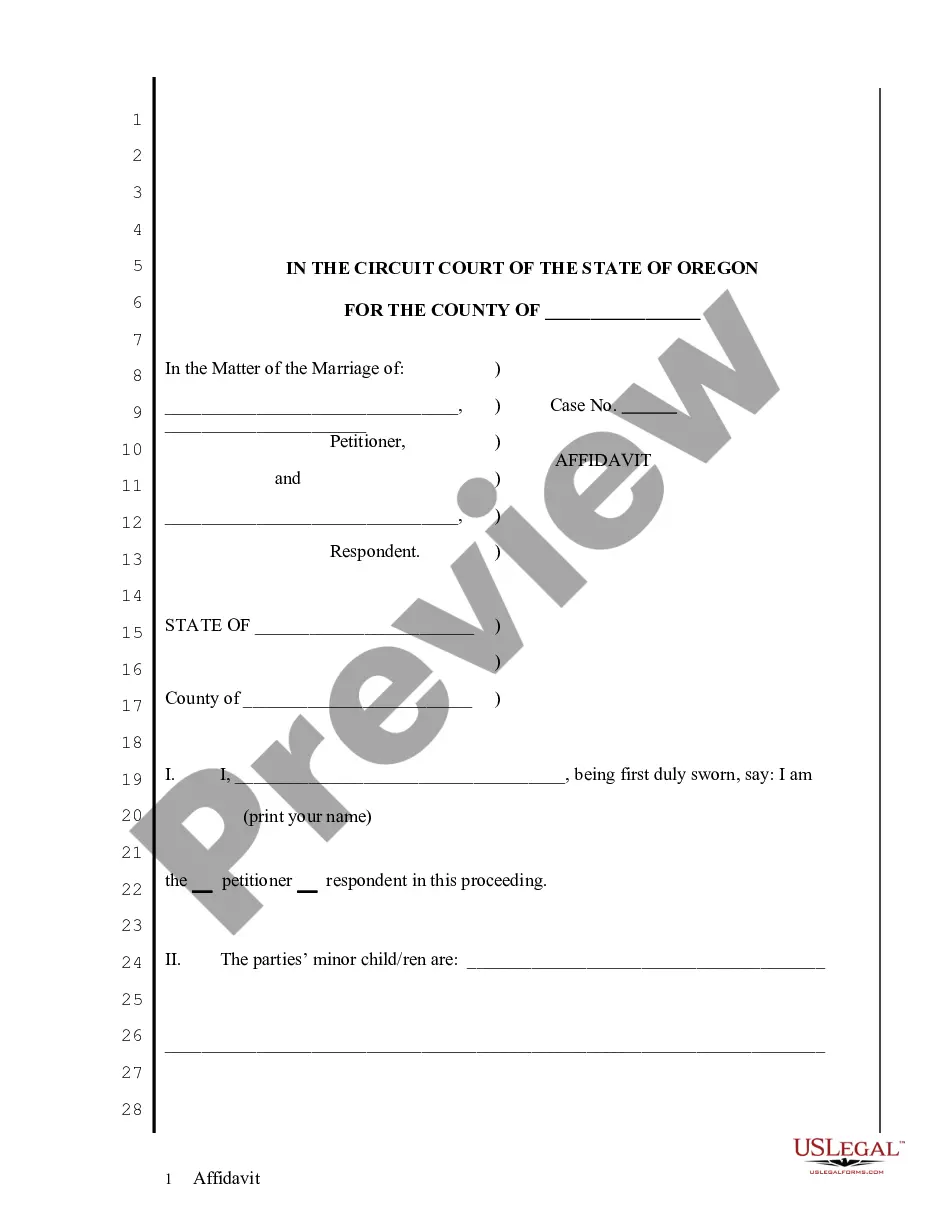
The Affidavit regarding Minor Children is a legal document used during marriage dissolution proceedings to provide essential information about the parties' minor children. This form outlines the children's names and addresses, as well as details about custody, visitation, and parenting rights. It is crucial for establishing legal responsibilities and ensuring the welfare of the children involved.
Form components explained
- Names and addresses of the minor children
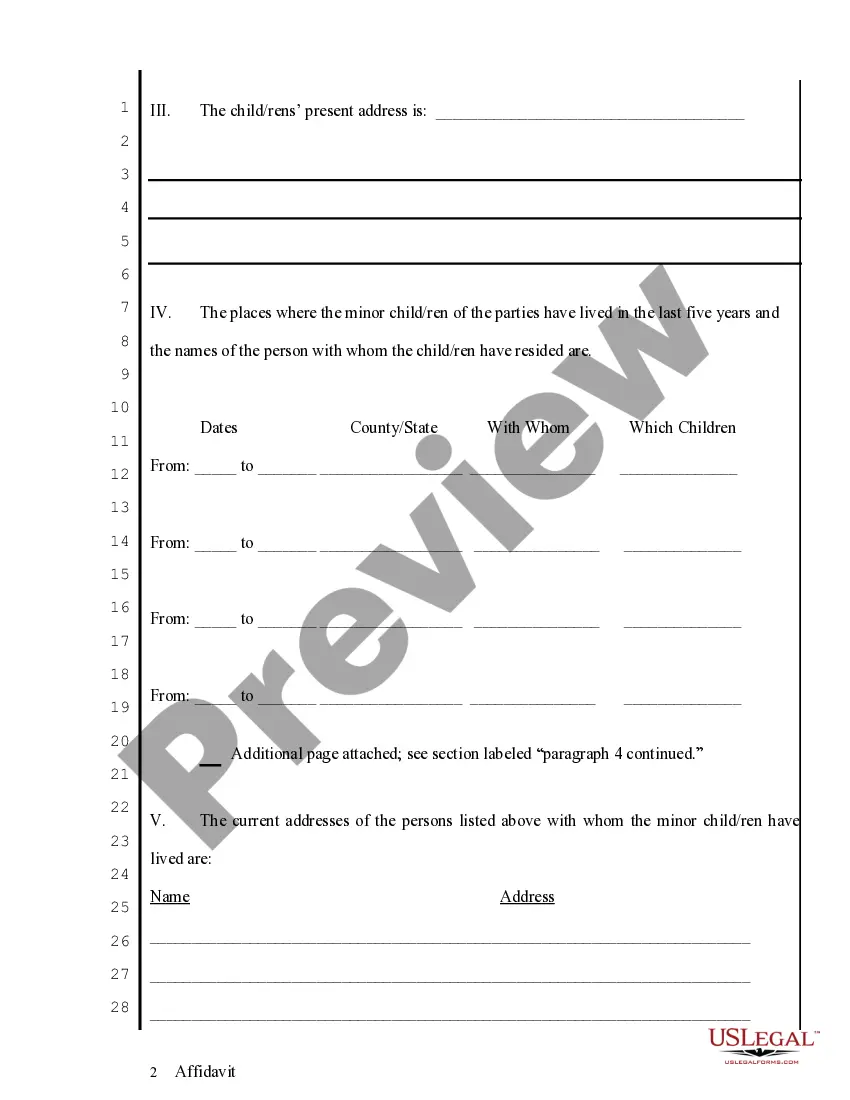
- Current addresses of individuals the children have lived with
- History of where the children have lived in the past five years
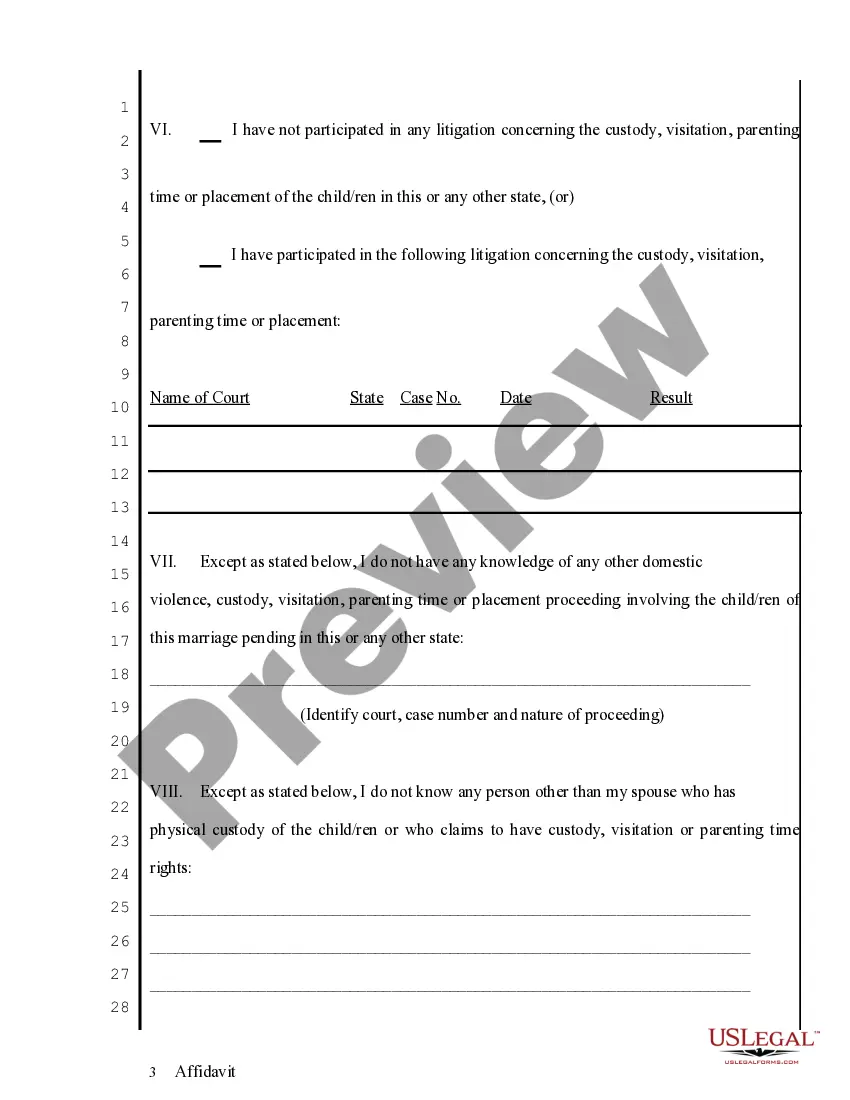
- Details of any previous custody or visitation litigation
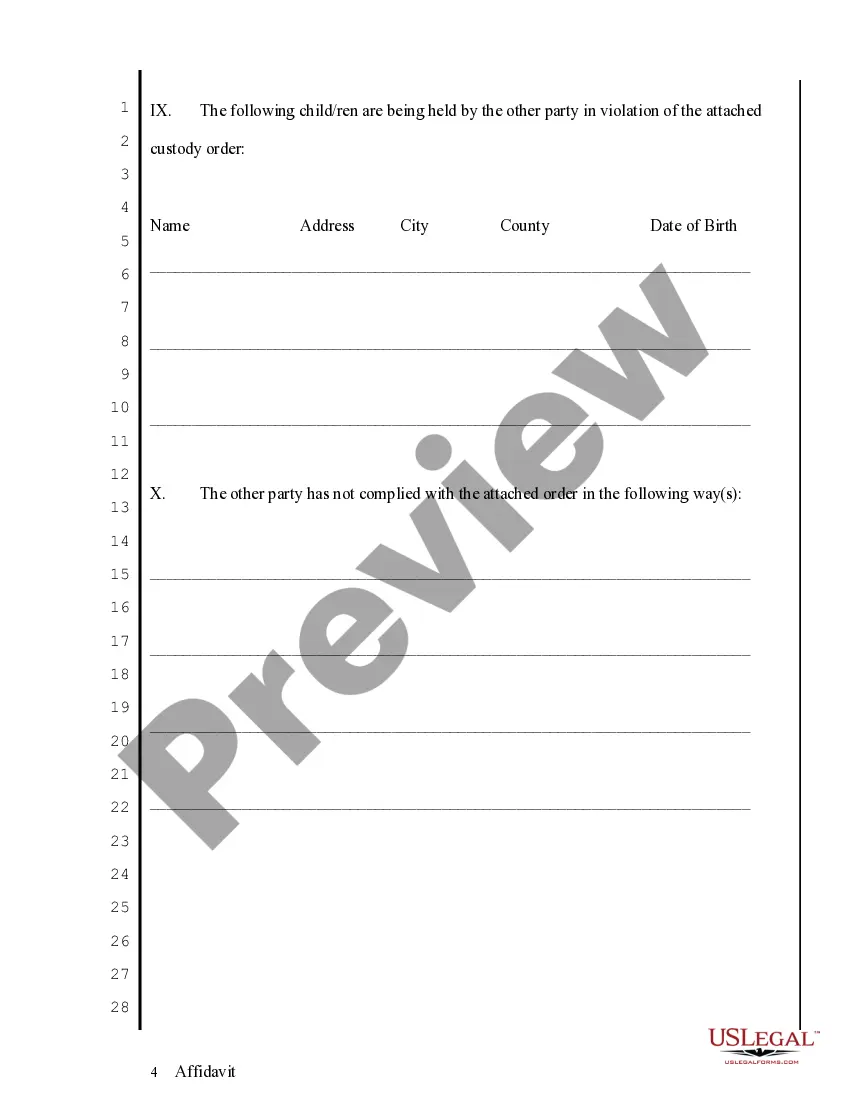
- Information regarding violations of custody orders
When this form is needed
This form should be used when a marriage is being dissolved and there are minor children involved. It is necessary in circumstances where custody agreements need to be established or clarified, particularly in legal settings such as court hearings. Using this affidavit aids in documenting custody arrangements and ensuring compliance with any court orders regarding the children.
Who should use this form
- Petitioners or respondents involved in a divorce or separation
- Parents seeking legal resolution regarding custody, visitation, or parenting time
- Individuals interested in documenting the care and living situations of minor children during litigation
How to complete this form
- Identify the parties involved as either petitioner or respondent.
- List the names and addresses of all minor children.
- Provide details about where the children have lived in the last five years.
- Document any previous custody or visitation litigation if applicable.
- Specify any violations of existing custody orders, if relevant.
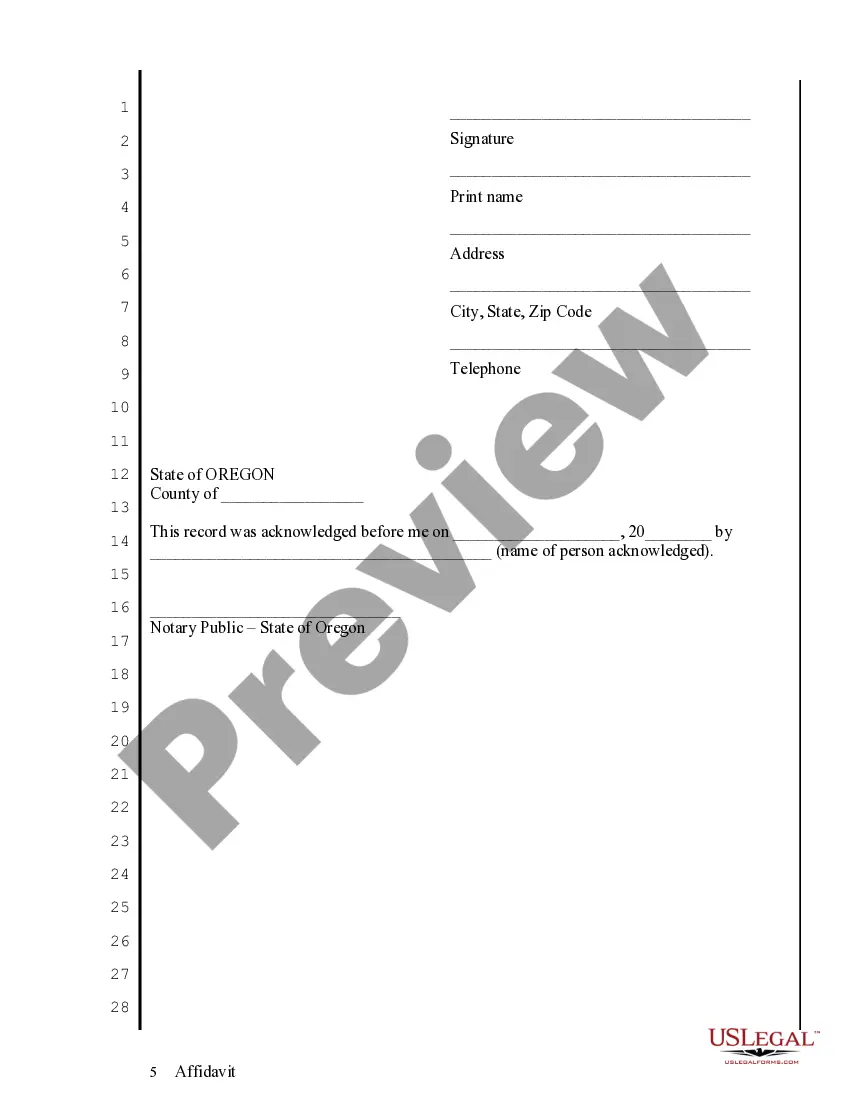
- Sign and date the affidavit in front of a notary public.
Does this document require notarization?
Notarization is required for this form to take effect. Our online notarization service, powered by Notarize, lets you verify and sign documents remotely through an encrypted video session, available 24/7.
Get your form ready online
Our built-in tools help you complete, sign, share, and store your documents in one place.
Make edits, fill in missing information, and update formatting in US Legal Forms—just like you would in MS Word.
Download a copy, print it, send it by email, or mail it via USPS—whatever works best for your next step.
Sign and collect signatures with our SignNow integration. Send to multiple recipients, set reminders, and more. Go Premium to unlock E-Sign.
If this form requires notarization, complete it online through a secure video call—no need to meet a notary in person or wait for an appointment.
We protect your documents and personal data by following strict security and privacy standards.

Make edits, fill in missing information, and update formatting in US Legal Forms—just like you would in MS Word.

Download a copy, print it, send it by email, or mail it via USPS—whatever works best for your next step.

Sign and collect signatures with our SignNow integration. Send to multiple recipients, set reminders, and more. Go Premium to unlock E-Sign.

If this form requires notarization, complete it online through a secure video call—no need to meet a notary in person or wait for an appointment.

We protect your documents and personal data by following strict security and privacy standards.
Common mistakes to avoid
- Forgetting to list all minor children involved in the proceedings.
- Neglecting to include the current addresses of individuals the children have lived with.
- Failing to disclose previous custody litigation.
- Not signing the document in the presence of a notary.
Why use this form online
- Convenience of downloading the form from home at any time.
- Editability allows for easy customization to fit specific situations.
- Access to legal templates drafted by licensed attorneys, ensuring reliability.
Legal use & context
- The affidavit is a sworn statement and is considered a vital part of custody proceedings.
- Failure to accurately complete this form may impact custody determinations by the court.
- This document may be used to support custody claims in other jurisdictions if necessary.
What to keep in mind
- The Affidavit regarding Minor Children is essential in divorce proceedings with children.
- Accurate information must be provided to meet legal standards.
- Notarization is required for the document's validity.
Looking for another form?


Form popularity
FAQ
An affidavit is a written statement. It considers having a format under oath. It's only valid when it is on a voluntary basis and without coercion. When you sign an affidavit, you say that the evidence is accurate and that you are aware of the details in the affidavit personally.
Although affidavits are considered legal documents, anyone can draft one. As long as it is signed, witnessed, and notarized correctly, it will be valid. That means that you do not have to use a lawyer to create an affidavit.
Step 2: Write the purpose of the Affidavit or the Heading. Step 3: Write the name of the parties in case of an affidavit being filled in Court or Write the name of the Deponent in case of other affidavits. Step 4: Write the complete address of the deponent.
I ____ (Applicant Name as per id proof), residing at _______(Address as per address proof) do solemnly affirm and stated as under: I am _____ and my name _______, appearing on the enclosed ID proof, is single name. My father's name is ________________.
Title the affidavit. First, you'll need to title your affidavit. Craft a statement of identity. The very next section of your affidavit is what's known as a statement of identity. Write a statement of truth. State the facts. Reiterate your statement of truth. Sign and notarize.
In a nutshell, an affidavit is a sworn statement that is in writing. Affidavits are usually used in a court or in negotiations. They are common in family law cases and bankruptcy cases. They are also used in civil and criminal cases, though not as often as family or bankruptcy law cases.
In the sentence, the person writing the statement must state that he or she is stating that the information is accurate. (Example: I, Jane Doe, solemnly swear that the contents of this document are true and correct, and that I agree to abide by the terms in this affidavit.)
An affidavit is used for the purpose of proving in court that a claim is true, and is typically used in conjunction with witness statements and other corroborating evidence. Through an affidavit, an individual swears that the information contained within is true to the best of their knowledge.