New York Affidavit of Occupancy and Possession
What is this form?
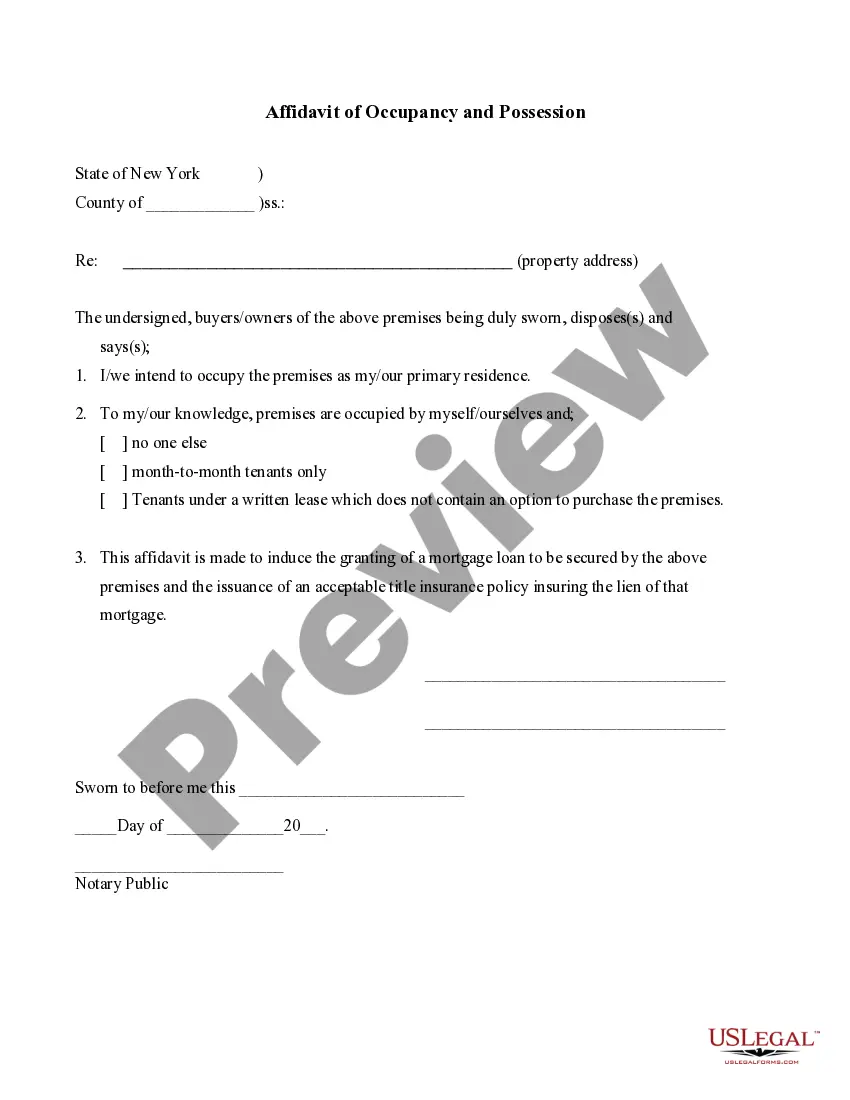
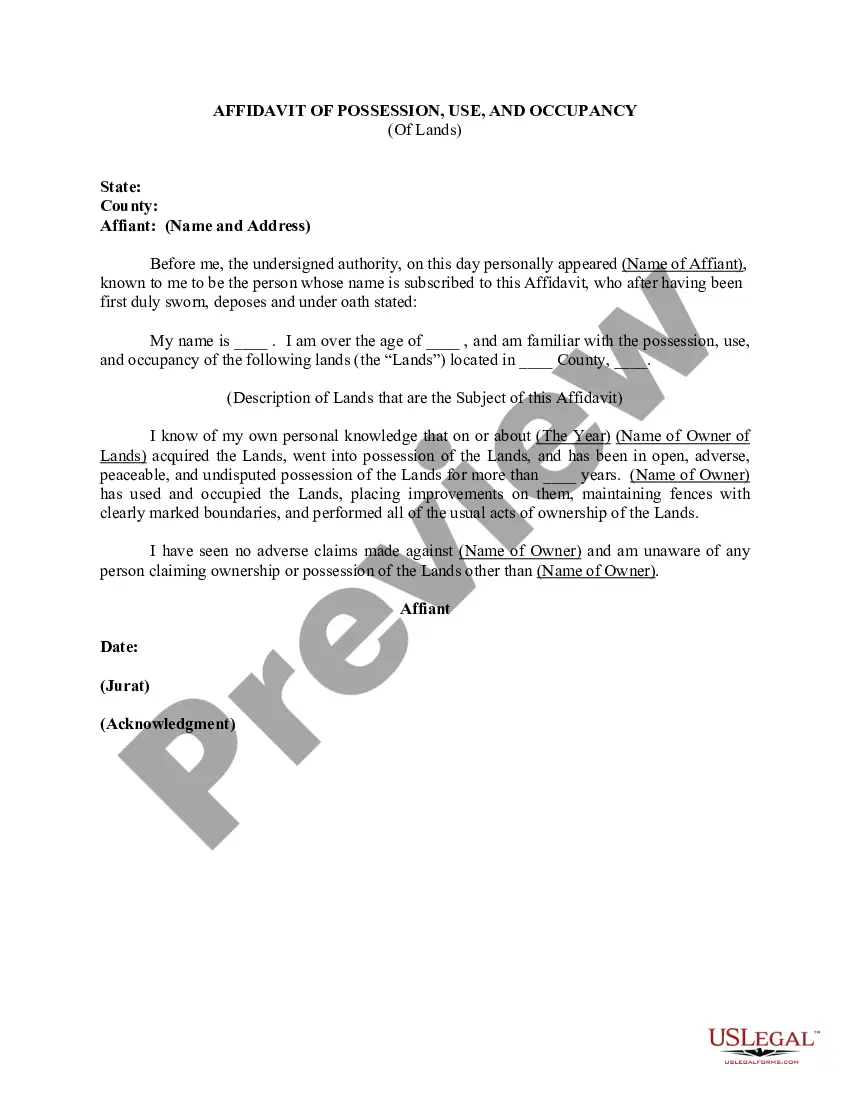
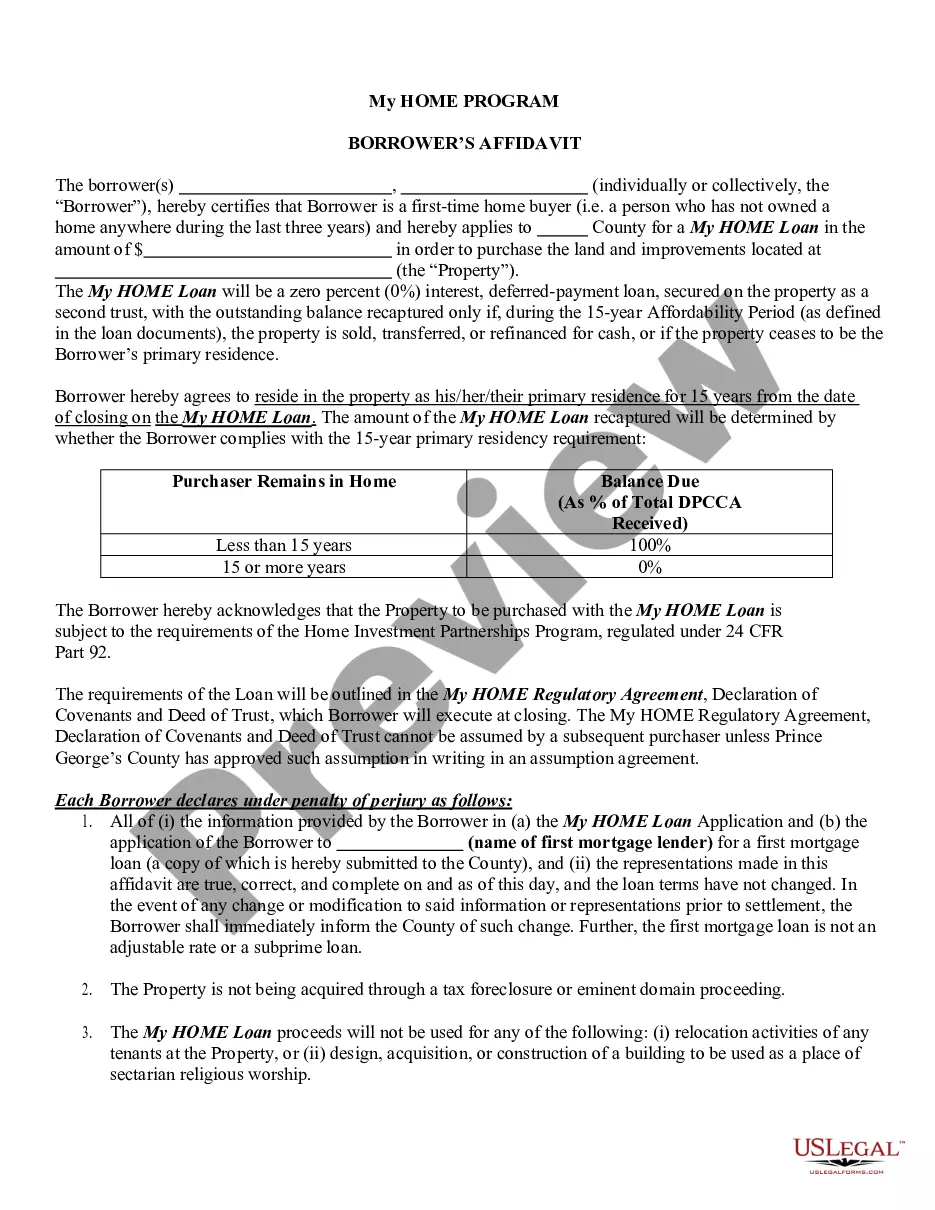
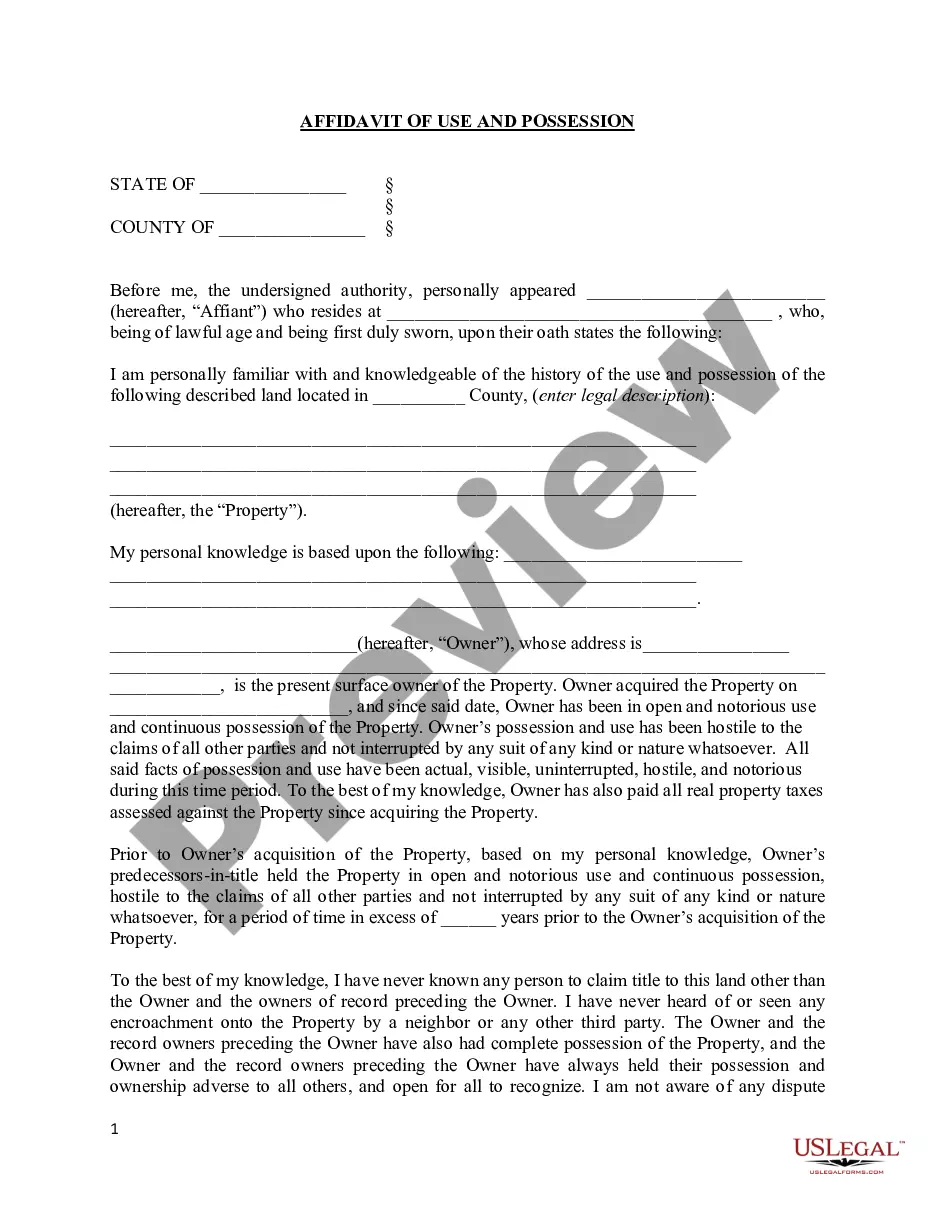
The Affidavit of Occupancy and Possession is a legal document sworn before an authorized officer, typically a notary public. Its primary purpose is to affirm that the owners of a property intend to occupy it as their primary residence. Unlike other occupancy affidavits, this form specifically demonstrates the intent to secure mortgage financing based on the owner's commitment to reside at the property.
Key components of this form
- The property address clearly identifies the premises involved.
- The statement of intent from the buyers/owners regarding their primary residence.
- A section detailing the current occupancy status of the premises.
- A declaration that the affidavit is submitted to facilitate a mortgage loan.
- Signature lines for the buyers/owners and a notary public.
When this form is needed
This form is commonly used when homeowners are applying for a mortgage loan and need to confirm that they will be living in the property as their main residence. It serves as a crucial part of the mortgage application process, particularly for lenders who require proof of occupancy.
Who can use this document
- Property buyers or homeowners applying for a mortgage loan.
- Individuals who are declaring their intent to occupy a property as their primary residence.
- Anyone needing to provide evidence of intended occupancy for legal or financial purposes.
Completing this form step by step
- Identify the property by entering the complete address at the top of the form.
- Have all buyers or owners list their names as undersigned parties.
- State your intent to occupy the property as your primary residence.
- Indicate the current occupancy status of the premises in the provided section.
- Sign the document in the presence of a notary public and record the date.
Does this document require notarization?
Yes, this form must be notarized to be legally valid. US Legal Forms offers integrated online notarization services, allowing you to complete the notarization process securely via video callâavailable 24/7. This eliminates the need for travel and ensures the document's legal equivalence.
Get your form ready online
Our built-in tools help you complete, sign, share, and store your documents in one place.
Make edits, fill in missing information, and update formatting in US Legal Forms—just like you would in MS Word.
Download a copy, print it, send it by email, or mail it via USPS—whatever works best for your next step.
Sign and collect signatures with our SignNow integration. Send to multiple recipients, set reminders, and more. Go Premium to unlock E-Sign.
If this form requires notarization, complete it online through a secure video call—no need to meet a notary in person or wait for an appointment.
We protect your documents and personal data by following strict security and privacy standards.

Make edits, fill in missing information, and update formatting in US Legal Forms—just like you would in MS Word.

Download a copy, print it, send it by email, or mail it via USPS—whatever works best for your next step.

Sign and collect signatures with our SignNow integration. Send to multiple recipients, set reminders, and more. Go Premium to unlock E-Sign.

If this form requires notarization, complete it online through a secure video call—no need to meet a notary in person or wait for an appointment.

We protect your documents and personal data by following strict security and privacy standards.
Typical mistakes to avoid
- Failing to provide the correct property address.
- Not including all ownersâ names in the affidavit.
- Inaccurately stating the current occupancy status.
- Skipping the notarization step required for validation.
Why use this form online
- Convenient access to legal forms for immediate download.
- Editable templates allowing for personal customization.
- Reliable and accurate forms drafted by licensed attorneys.
Looking for another form?
Form popularity
FAQ
14 DAY NOTICE: The 14 day notice must state the amount of the rent due and the period of time for which the amount is due, together with a demand that the total amount be paid within 14 business days after service of the notice. The date of service, Saturdays, Sundays and holidays are excluded.
As a landlord, you may start a Holdover Summary Proceeding to evict the tenant immediately after that date if the tenant fails to leave unless the lease or other rental agreement says that you have to give the tenant additional notice of when to leave.
Most New York City evictions will take around 3 to 6 months. However, the reason for the eviction can impact the timing. If the tenant has violated the lease, you can evict them in less than 3 months. Evicting a holdover tenant can take a lot longer, especially if they claim you didn't properly serve them notice.
Holdover cases - Your landlord is not renewing your lease How long you have lived at the property or how long is your lease period (whichever is longer)Amount of NoticeLess than one (1) year30 days in advanceAt least one (1) year, but less than two (2) years60 days in advanceTwo (2) years or more90 days in advance
Talk to Your Landlord You may be able to come to an agreement without going to court. An eviction will cost both of you money (as well as time), and your landlord may be willing to stop the eviction if you agree to certain terms, such as paying rent you owe or stopping behavior that violates the lease.
In New York State and New York City, a holdover tenant is someone who refuses to leave or pay rent after their lease agreement has ended. They must be a month-to-month tenant or have lawfully occupied the property for more than 30 days.
For example, if the landlord wants the tenant to move out by November 1 and the rent is due on the first of each month, the landlord must give notice by September 30. In New York 5 Page 9 City, 30 days' notice is required, rather than one month.
Landlords in both New York State and New York City can evict holdover tenants through a holdover summary proceeding?a process that's similar to a regular eviction. However, NYC landlords have to show good cause to evict a holdover tenant who is in a rent-controlled apartment.