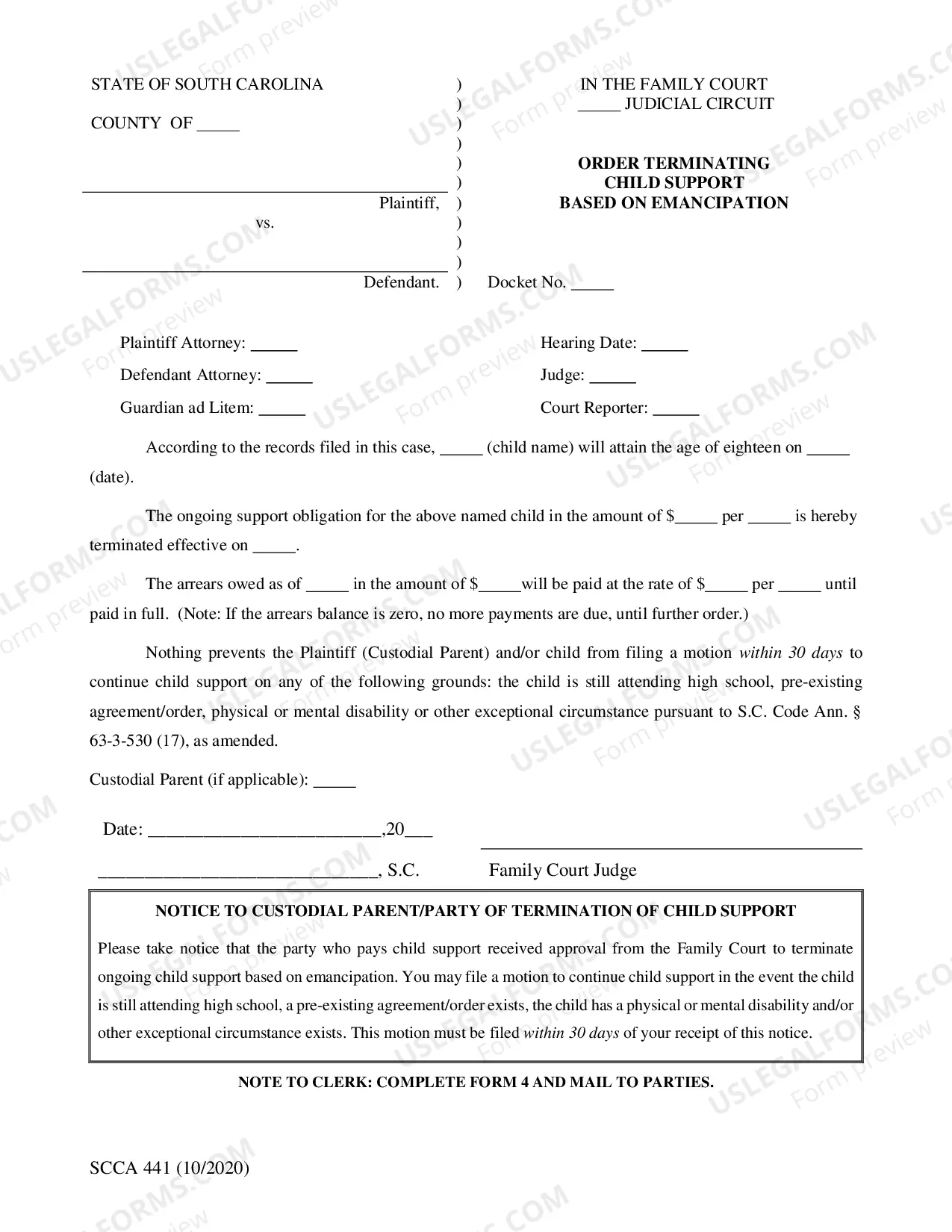
New Mexico Order Releasing Claim of Lien
Overview of this form
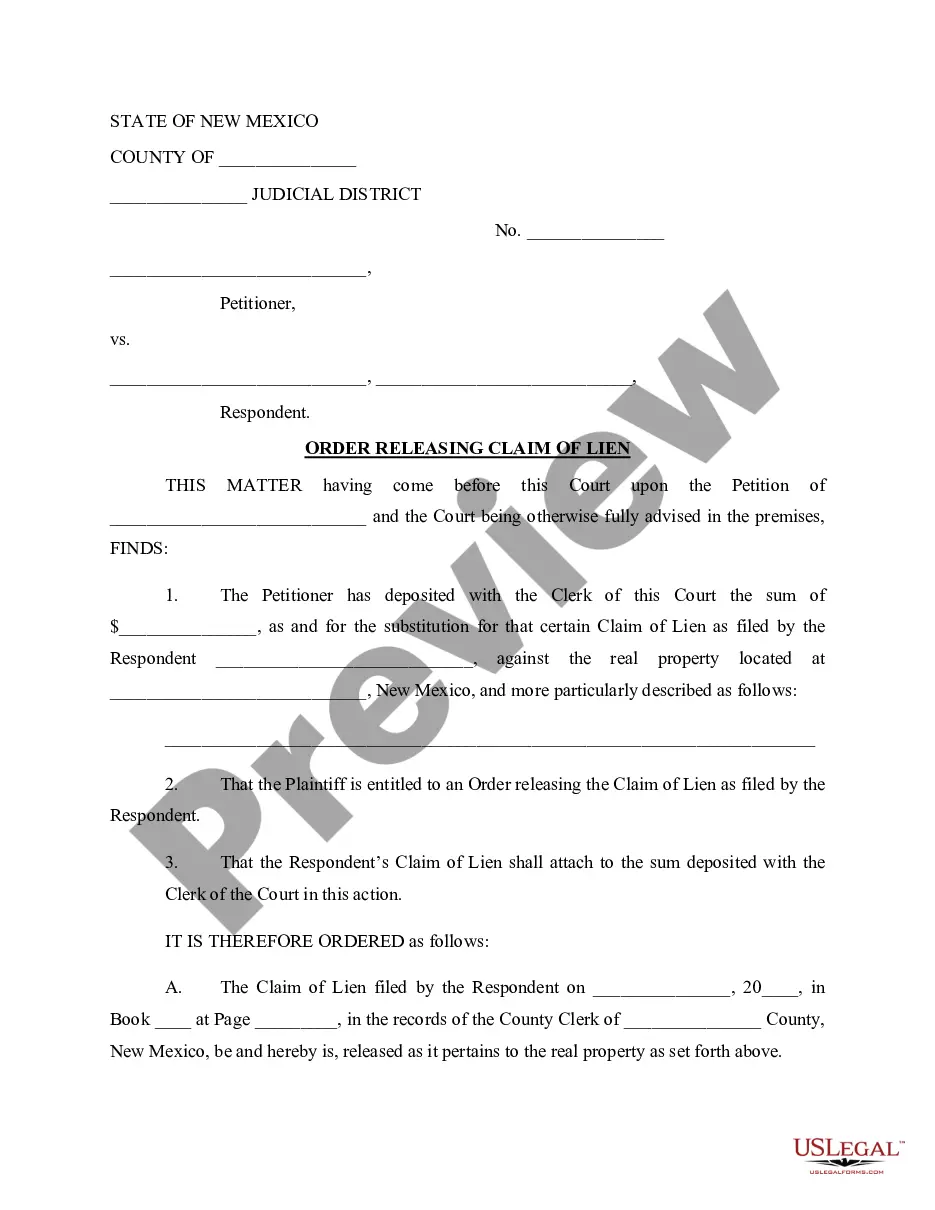
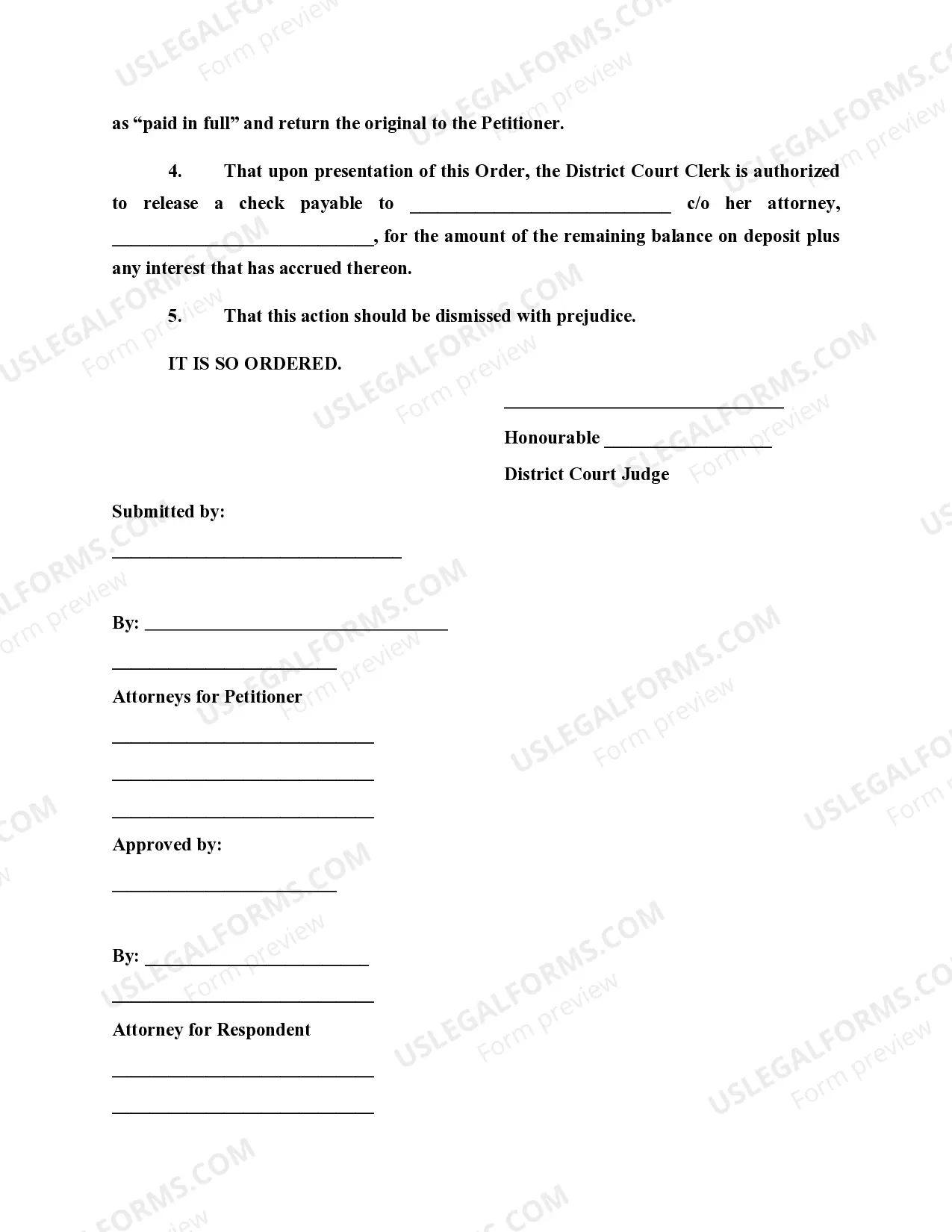
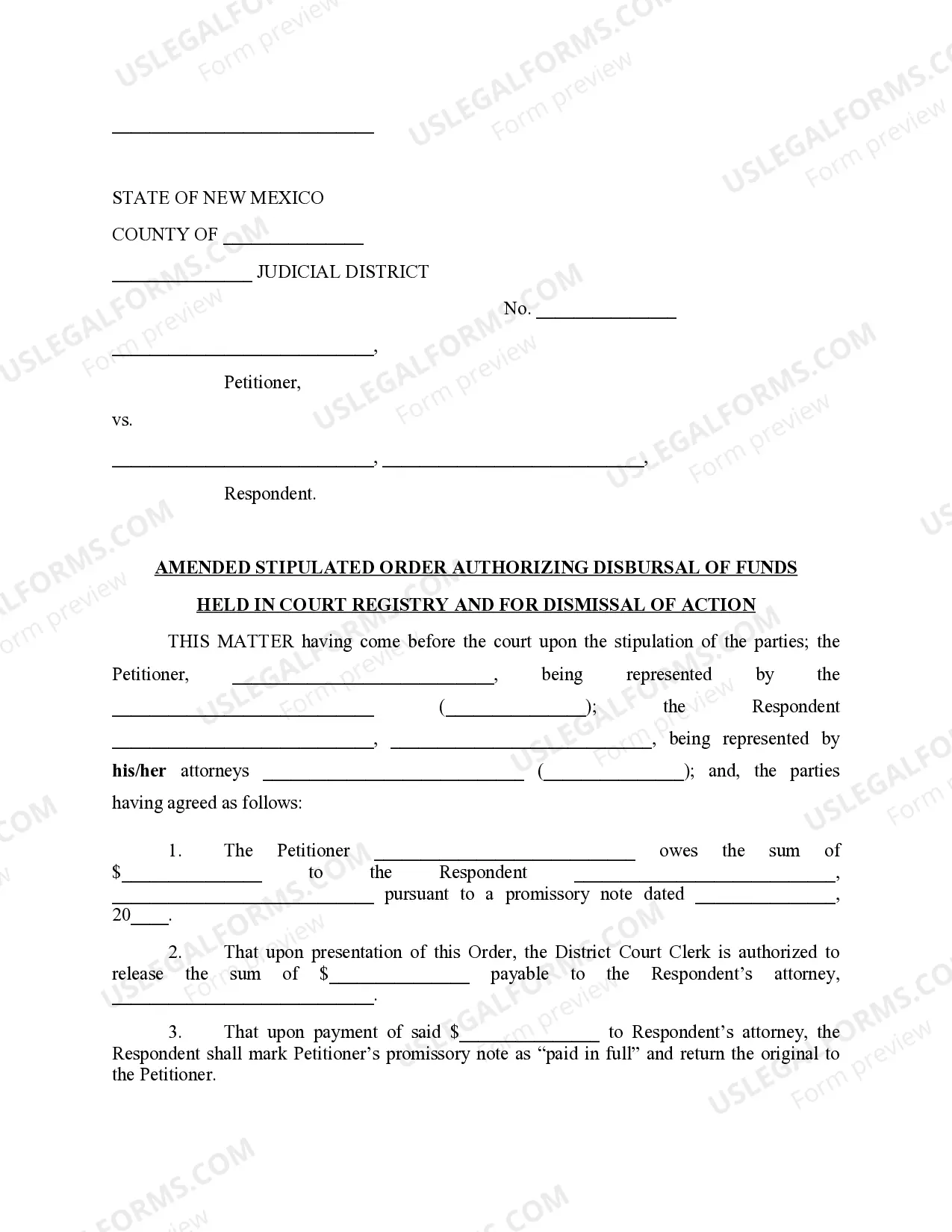
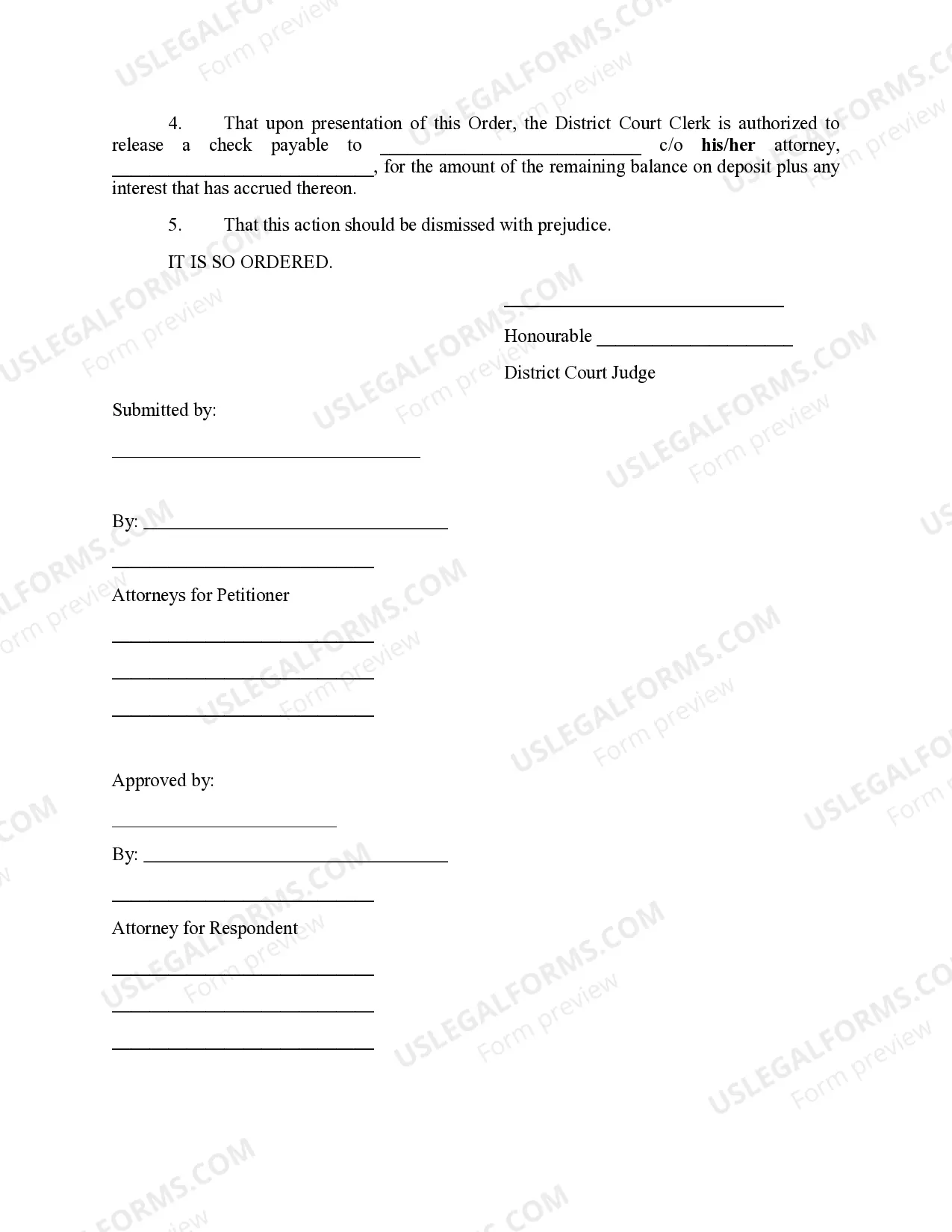
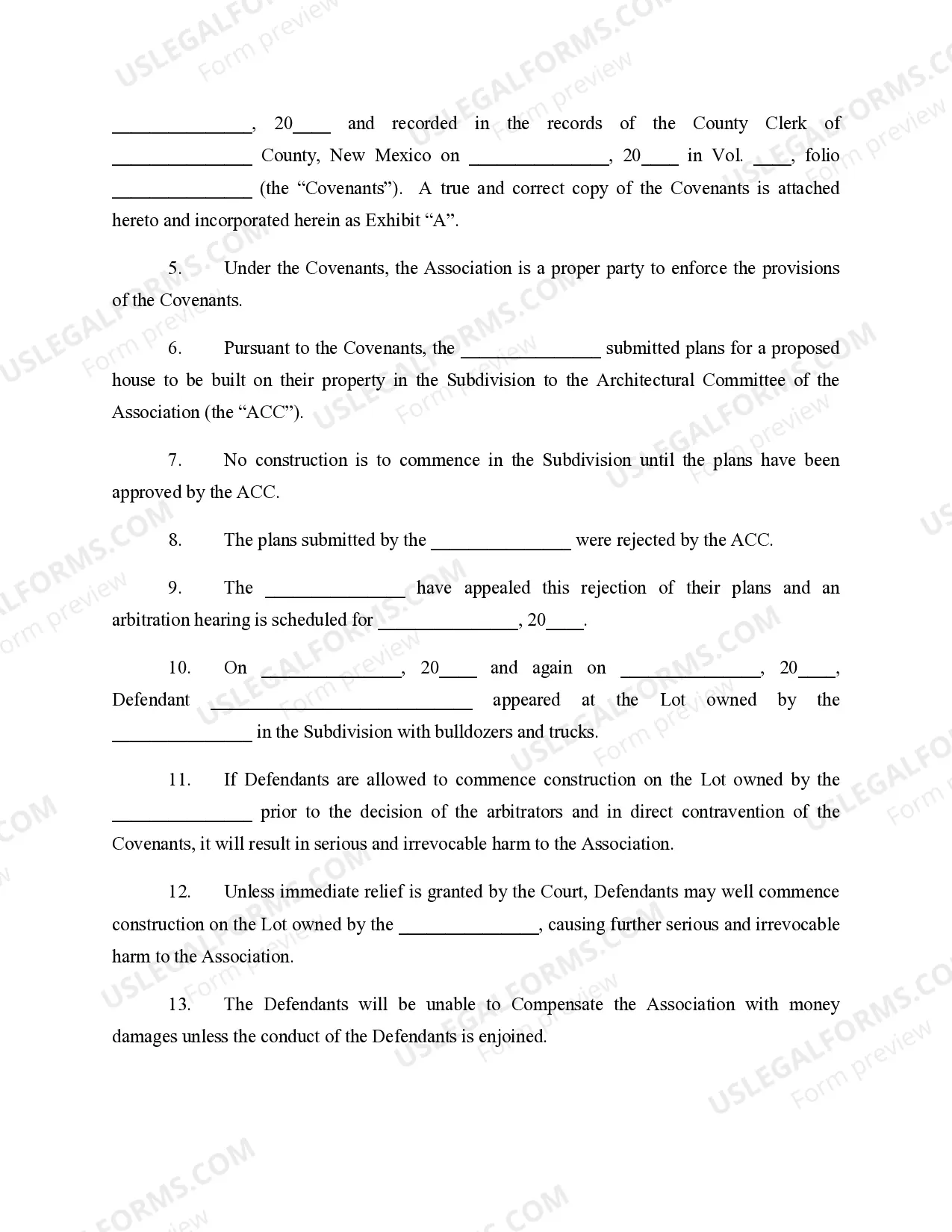
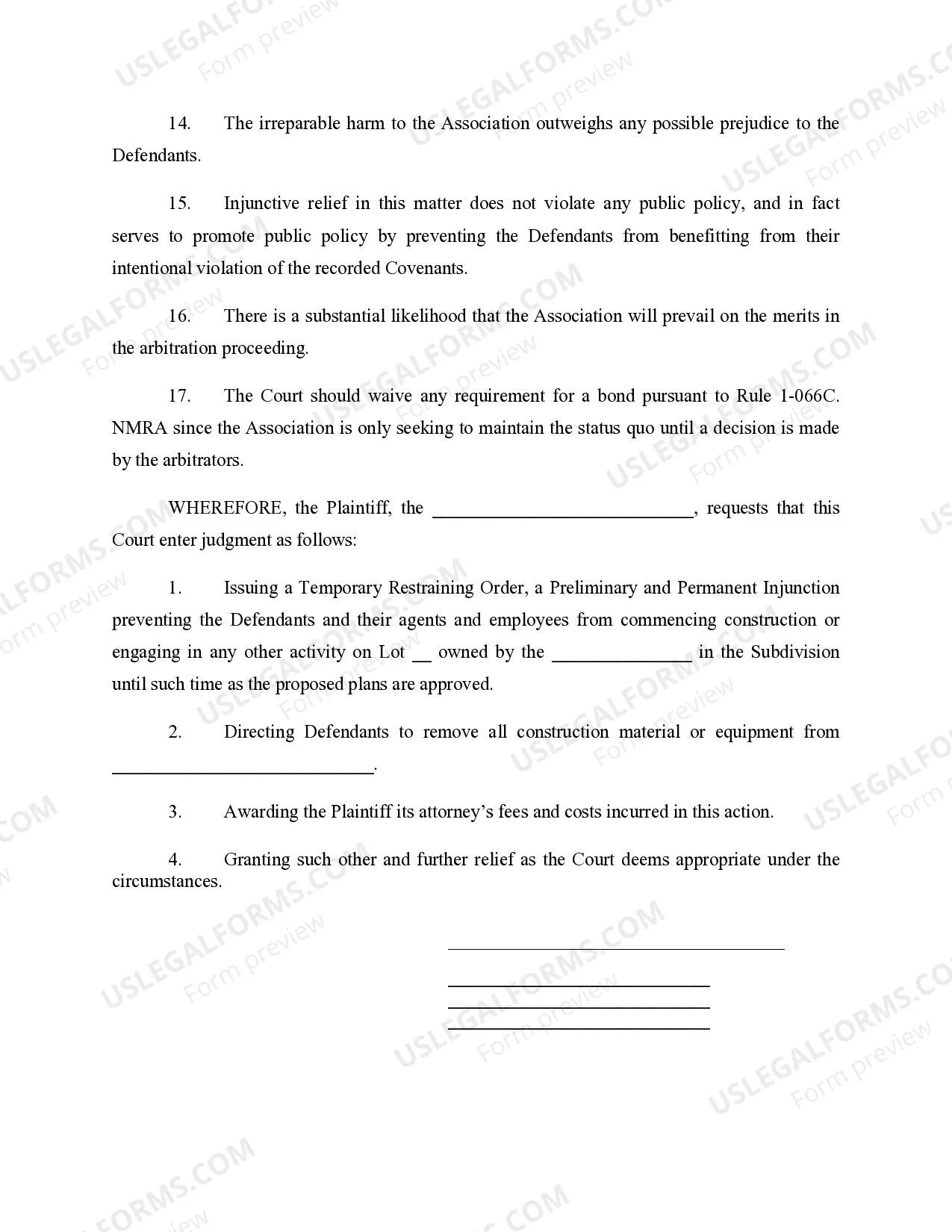
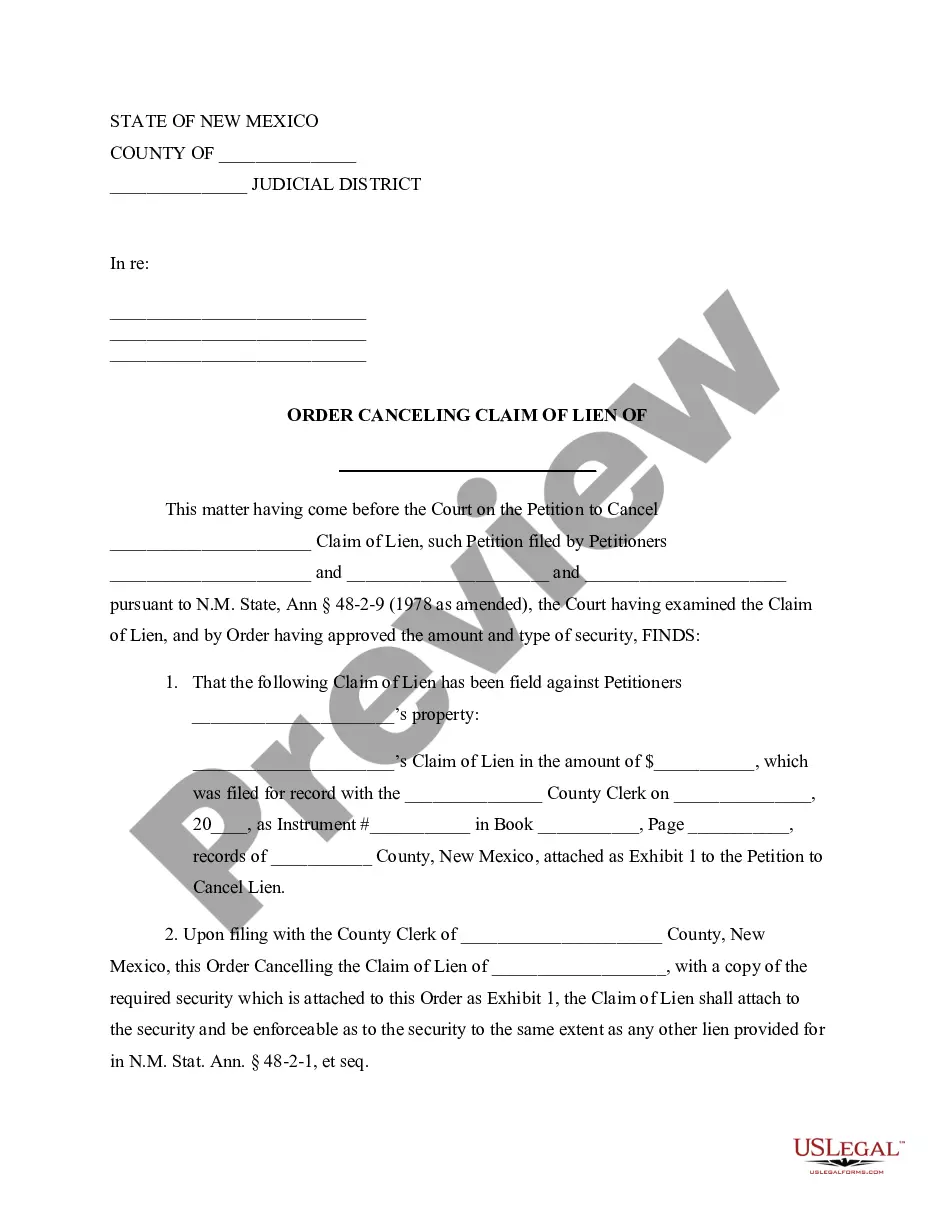
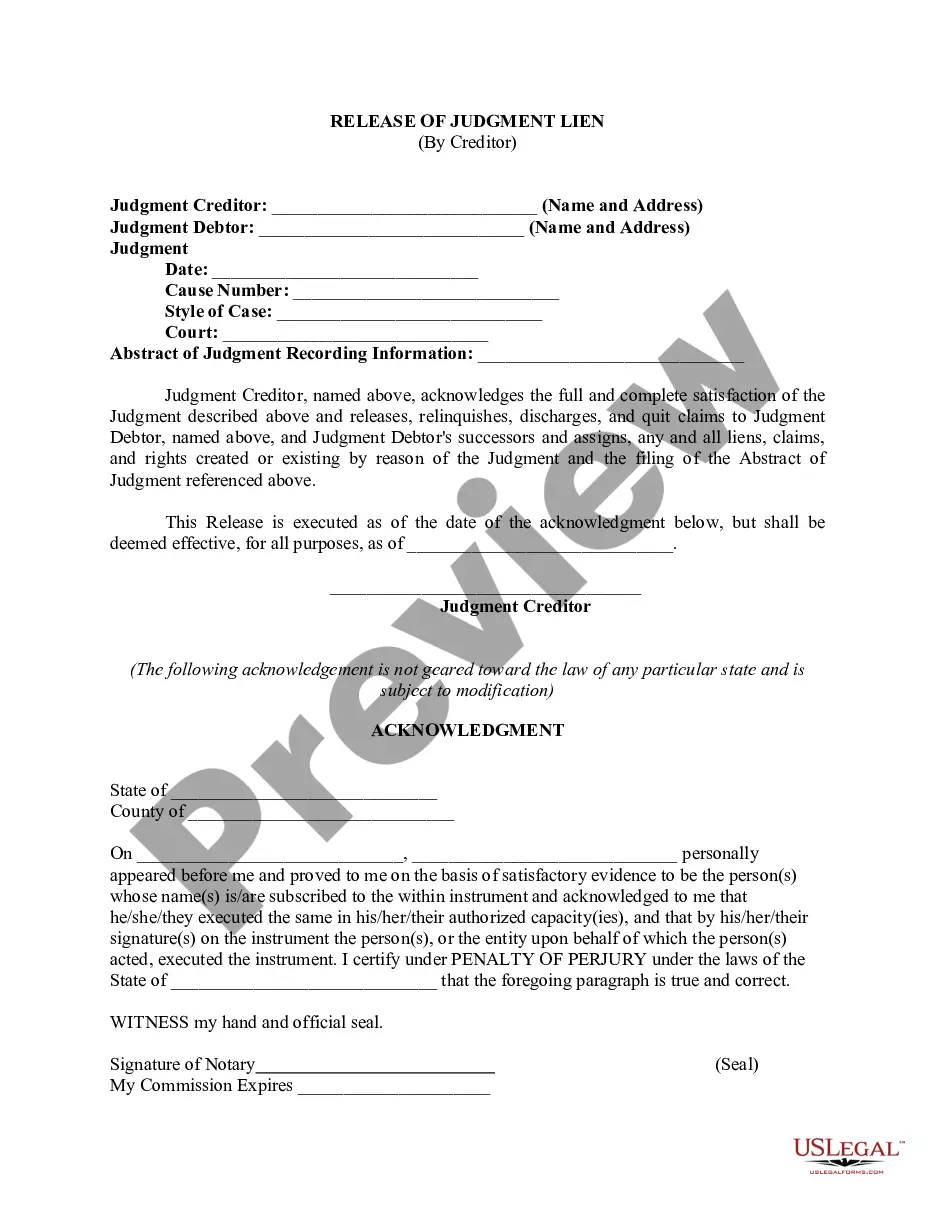
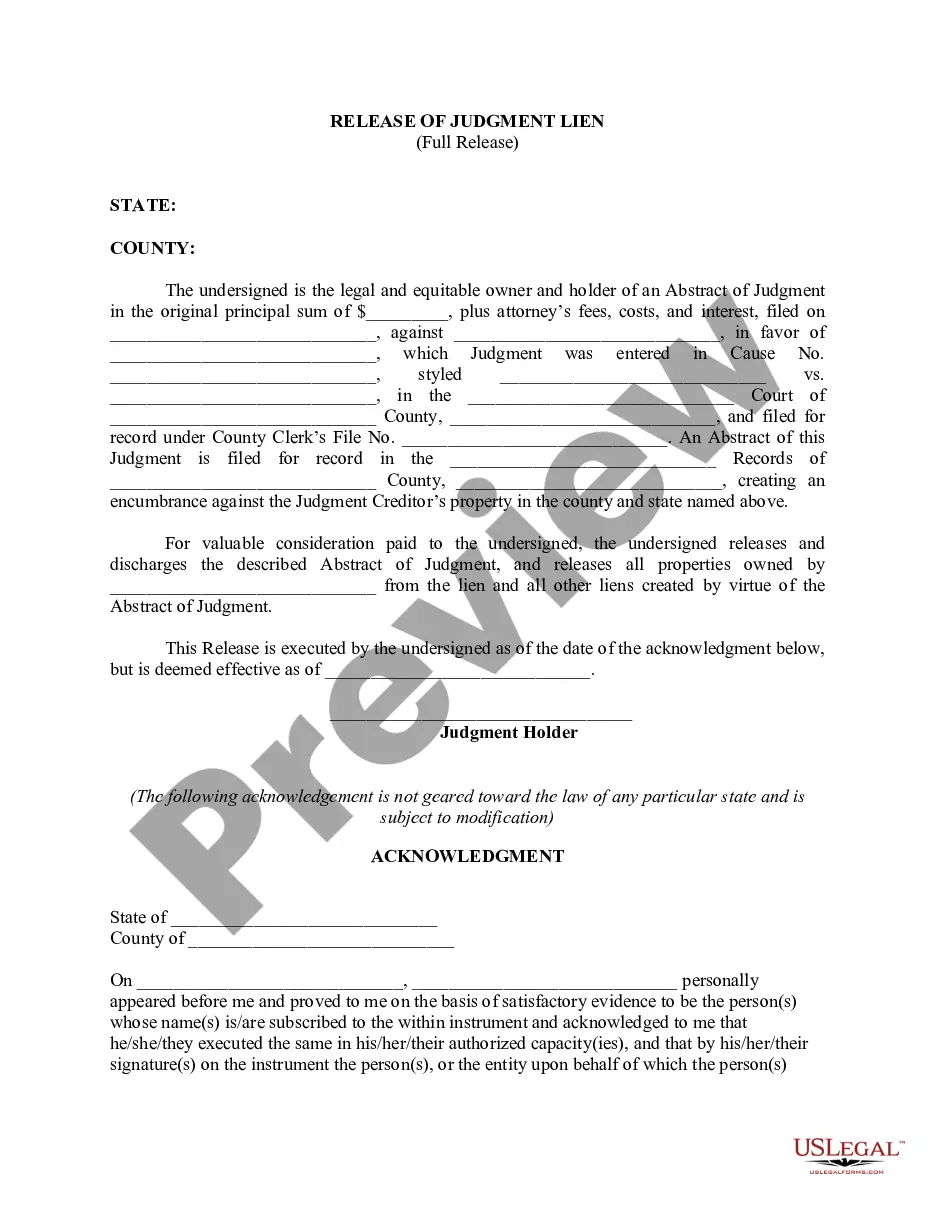
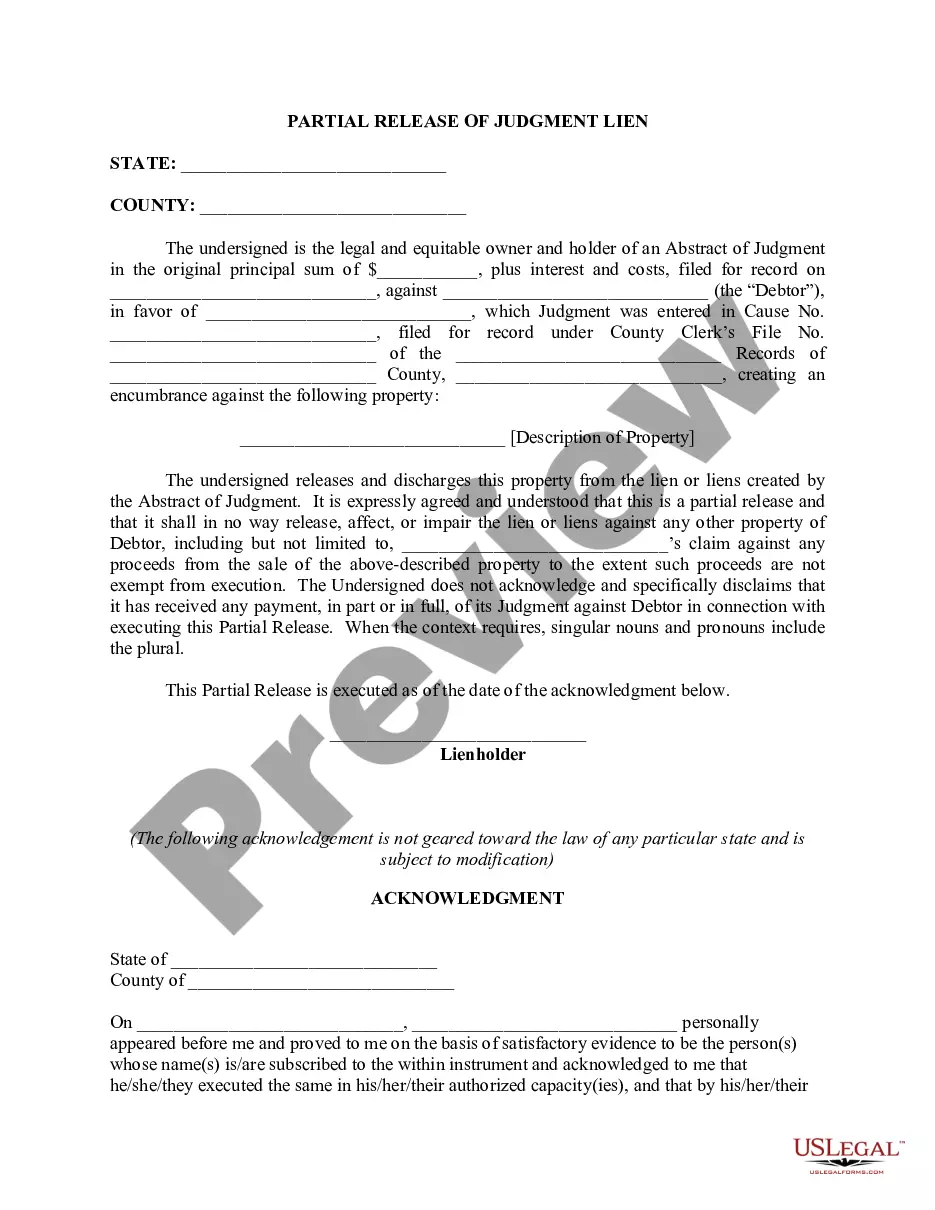
The Order Releasing Claim of Lien is a legal document issued by a court that formally releases a claim on a property. This form is typically used after a petitioner has deposited a sum of money with the court, which substitutes for the lien placed by a respondent. Unlike other lien-related documents, this order ensures that the lien is lifted, providing clarity and security for parties involved in real estate transactions.
Main sections of this form
- Details about the petitioner and respondent involved in the court proceedings.
- Specification of the sum deposited with the court as a substitute for the lien.
- Stipulations regarding the release of the claim and its attachment to the deposited funds.
- Instructions for court officials on handling the deposited funds and lien release.
- Identification of the district court and jurisdiction.

When this form is needed
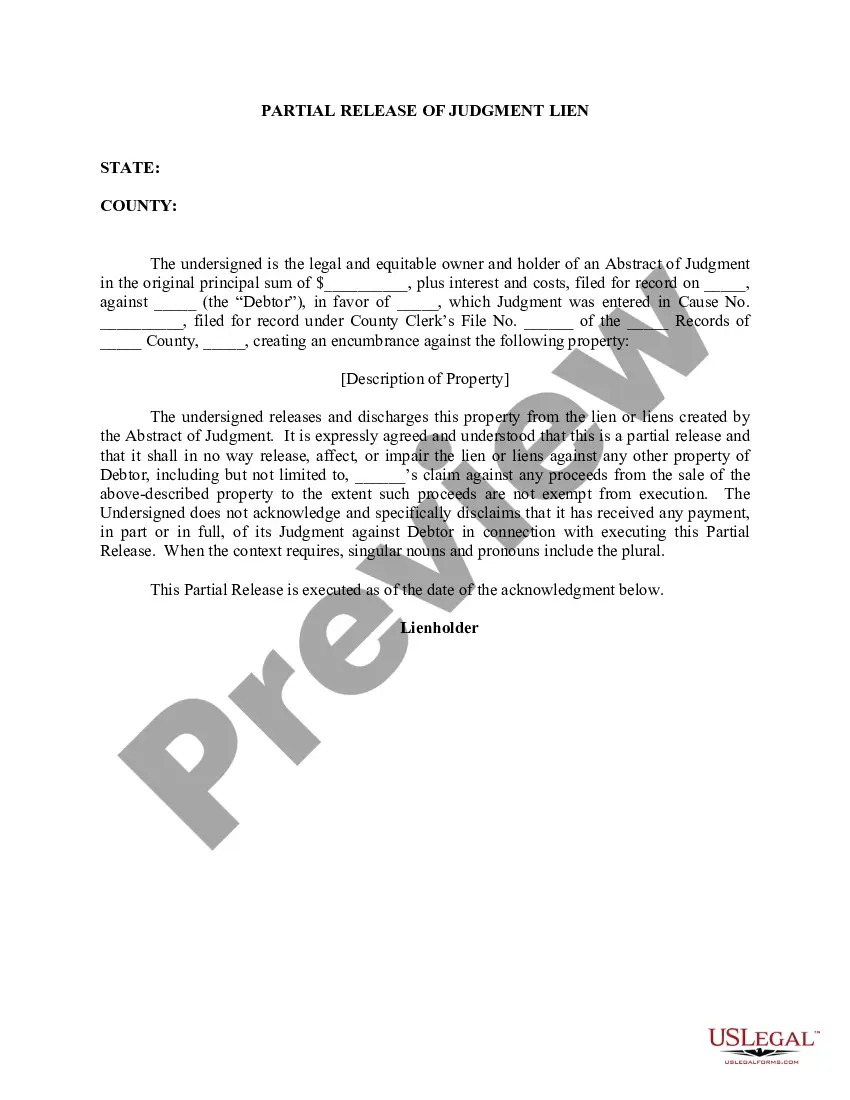
This form should be used when a claim of lien on a property needs to be released through a court order. This situation arises frequently in disputes over real estate where a lien has been placed but financial arrangements, such as a deposit in court, have been made to resolve the issue. It may be essential for property owners who aim to clear their title and for lienholders who wish to secure an agreement.
Who this form is for
Typically, this form is suitable for:
- Property owners (petitioners) who need to have a lien released.
- Respondents who have filed a claim and can agree to have it released under specified conditions.
- Attorneys representing clients in real estate disputes.
- Real estate professionals involved in closing transactions requiring lien clearance.
Instructions for completing this form
- Identify the correct judicial district and case number at the top of the form.
- Fill in the names of the petitioner and respondent, along with their respective attorneys, if applicable.
- Enter the sum deposited with the court and provide a description of the property affected by the lien.
- Complete the section detailing the original lien filed, including the date and recording information.
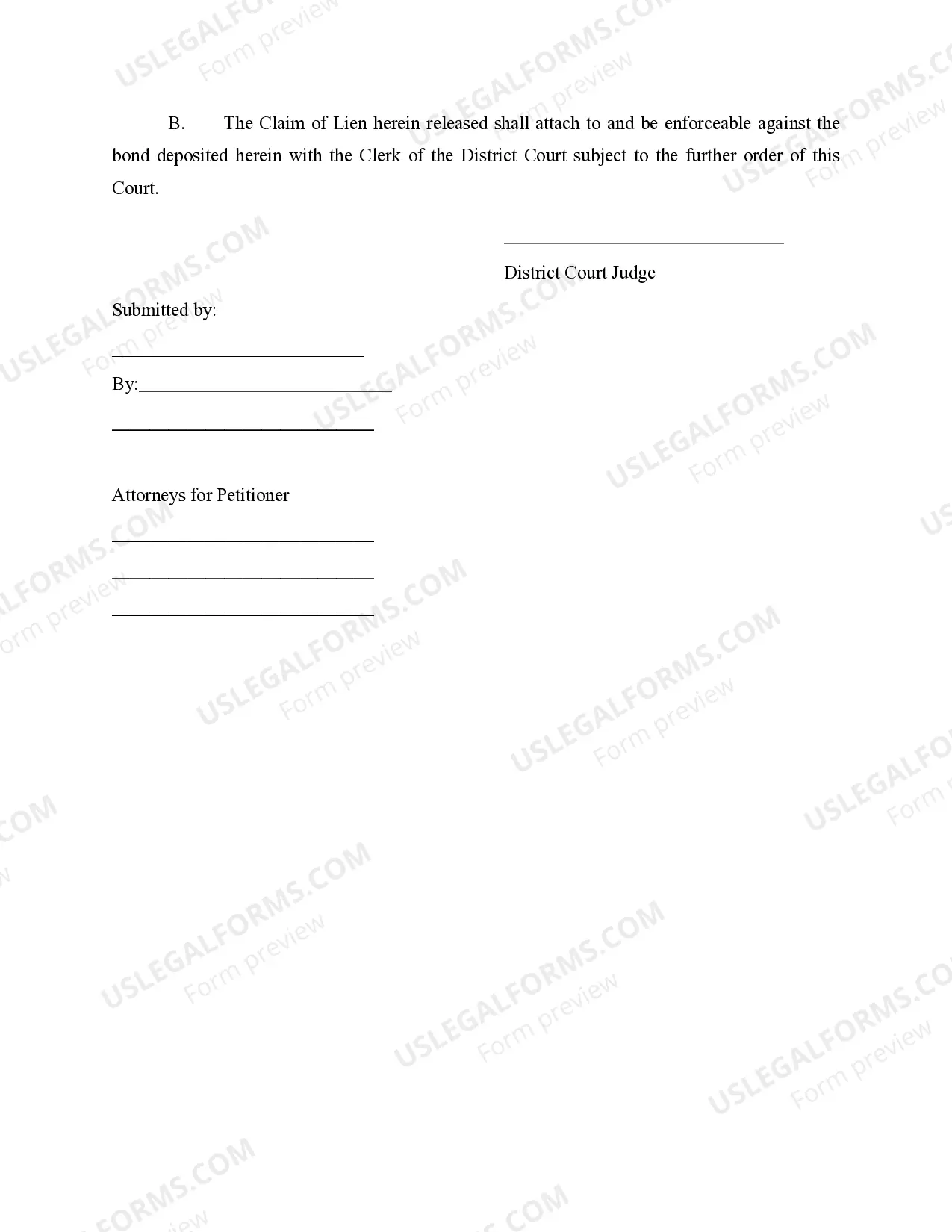
- Include the judge's signature line and the attorneys' names for submission.
Does this document require notarization?
This form does not typically require notarization unless specified by local law. Itâs important to check if additional conditions or requirements apply in your specific jurisdiction.
Get your form ready online
Our built-in tools help you complete, sign, share, and store your documents in one place.
Make edits, fill in missing information, and update formatting in US Legal Forms—just like you would in MS Word.
Download a copy, print it, send it by email, or mail it via USPS—whatever works best for your next step.
Sign and collect signatures with our SignNow integration. Send to multiple recipients, set reminders, and more. Go Premium to unlock E-Sign.
If this form requires notarization, complete it online through a secure video call—no need to meet a notary in person or wait for an appointment.
We protect your documents and personal data by following strict security and privacy standards.

Make edits, fill in missing information, and update formatting in US Legal Forms—just like you would in MS Word.

Download a copy, print it, send it by email, or mail it via USPS—whatever works best for your next step.

Sign and collect signatures with our SignNow integration. Send to multiple recipients, set reminders, and more. Go Premium to unlock E-Sign.

If this form requires notarization, complete it online through a secure video call—no need to meet a notary in person or wait for an appointment.

We protect your documents and personal data by following strict security and privacy standards.
Avoid these common issues
- Failing to provide accurate property descriptions can lead to legal issues.
- Not including the correct amount deposited, which can invalidate the order.
- Omitting essential party details, which may cause delays in processing.
Why complete this form online
- Instant access to the most current legal templates designed by licensed attorneys.
- Convenience of downloading and printing the form from your home.
- Editability, allowing you to enter necessary details easily before submission.
- Time-saving features that streamline the legal form filling process.
Looking for another form?

Form popularity
FAQ
A lien is a claim on property to ensure payment of a debt. When you borrow money to purchase a car, the lender files a lien on the vehicle with the state to insure that if the loan defaults, the lender can take the car. When the debt is fully repaid, a release of the lien is provided by the lender.
The lender will also notify the Department of Motor Vehicles (DMV) that the loan has been paid in full. If you don't receive the lien release, submit a request to your lender for proof that the loan has been satisfied. This request can be made through the DMV or directly to the lender.
The main purpose of a lien waiver is to provide protection to the paying party. In exchange for such payment, the lien waiver waives the payee's right to file a lien for the exact value of the payment they have received.
Satisfy the terms of the loan by paying the balance of the loan back to the lender, including any interest incurred. If you don't receive the lien release, submit a request to your lender for proof that the loan has been satisfied.
It basically states that you've paid the subcontractor what is owed, they accept the payment in full, and they waive the right to put a lien on your property. Simply present this form to the subcontractor with your payment and ask them to sign it. Make sure you get their signature!
Lien release/cancellations must be recorded, and not just emailed or faxed between parties. Lien waivers, on the other hand, are just exchanged between the parties. For lien waivers, electronic signatures are perfectly acceptable.
When a person pays off a loan in full, the lien is removed. The asset is no longer pledged to the creditor when the balance is completely paid. When this happens, the creditor acknowledges the release of the lien by signing a Mortgage Release of Lien Certificate.
Subject to some exceptions, a lien for materials, services, or wages may be registered any time up to 45 days from the day the last materials, services, or wages were provided, or since the contract was abandoned. After those 45 days elapse, the lien expires.