New Jersey Sample Affirmative Defenses
What is this form?
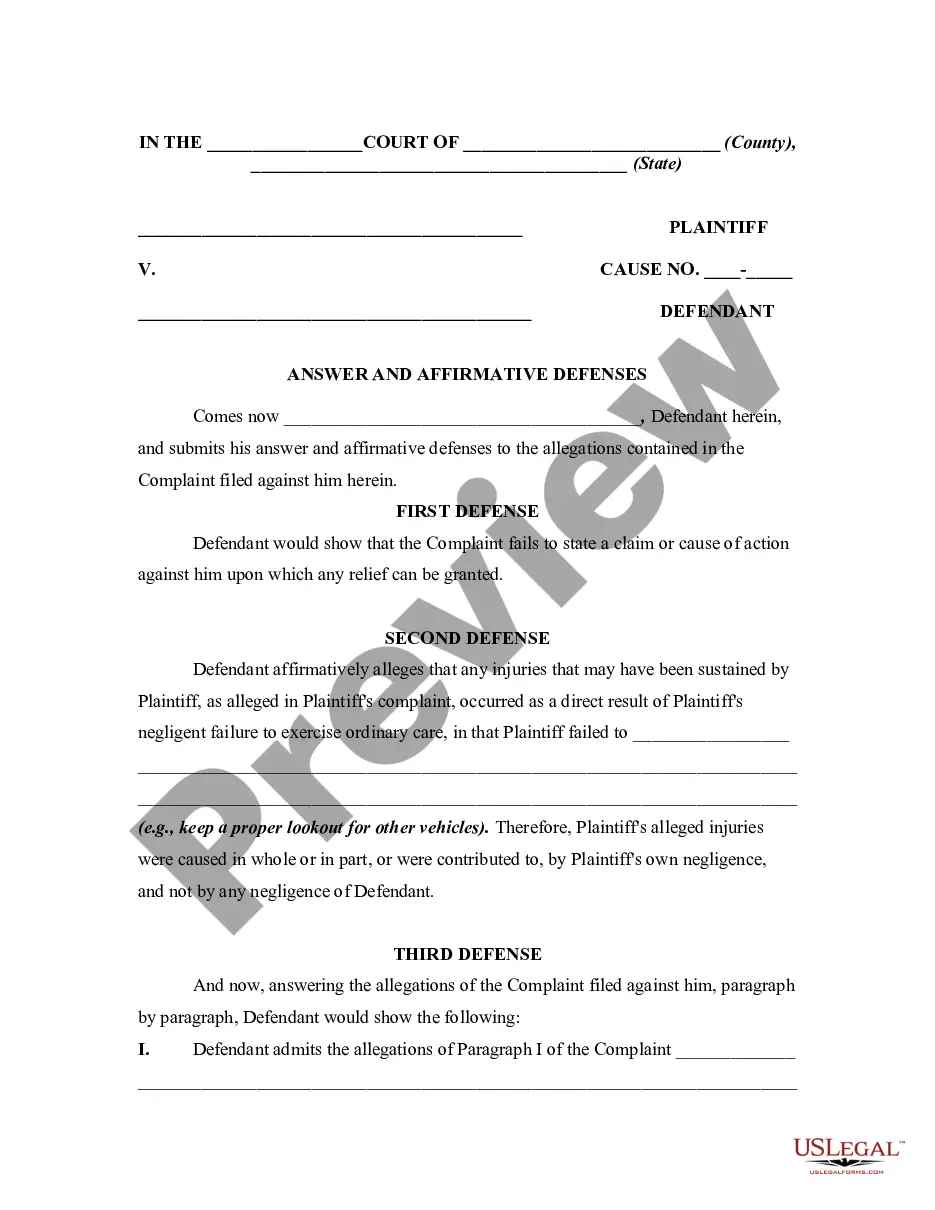
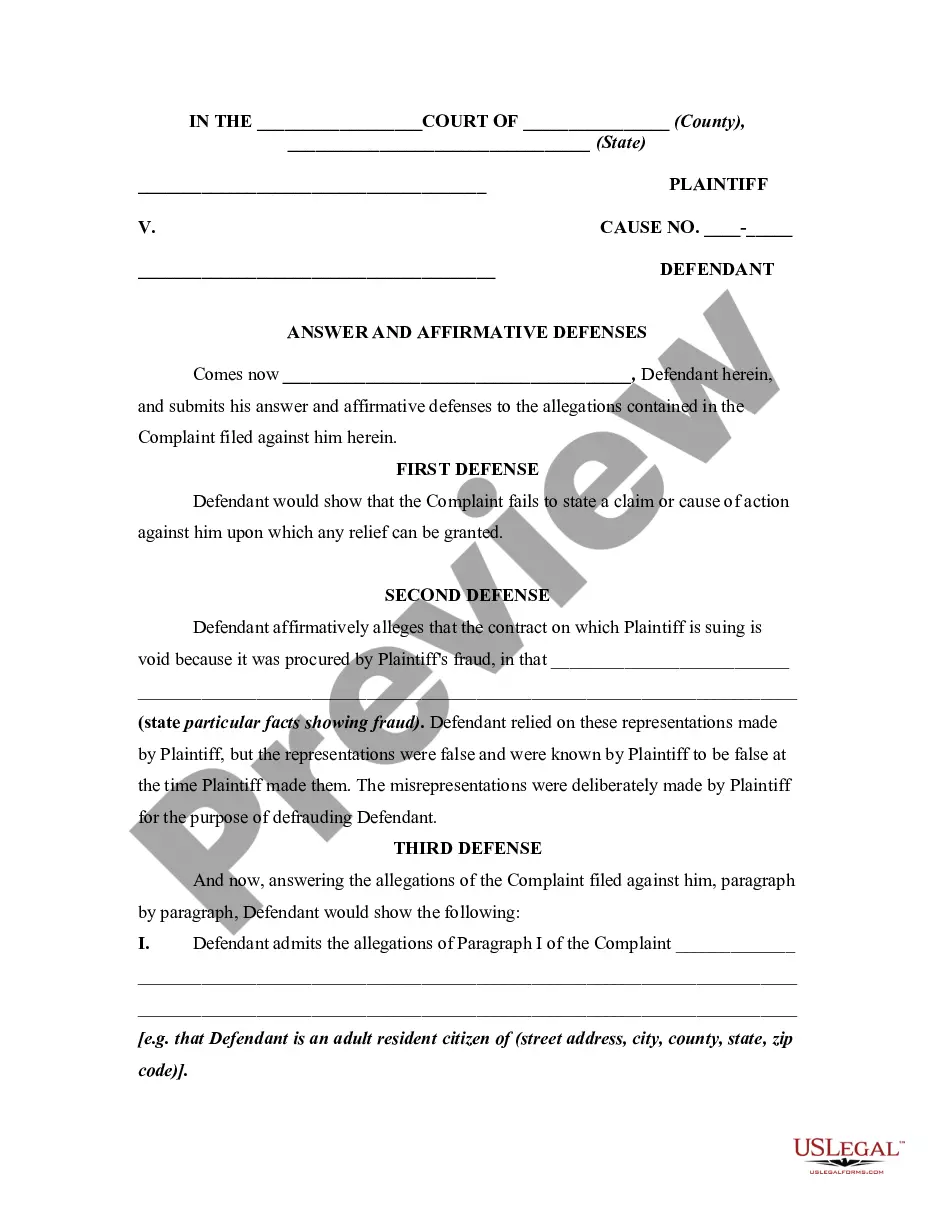
The Sample Affirmative Defenses form is a legal document that provides standard defenses that defendants can assert in response to a plaintiff's complaint. It serves to outline specific legal arguments against the claims made by the plaintiff. This form is particularly useful in civil litigation, allowing defendants to detail their counterarguments effectively. It differs from other legal forms focused solely on claims, as it specifically addresses defenses a party might raise.
Form components explained
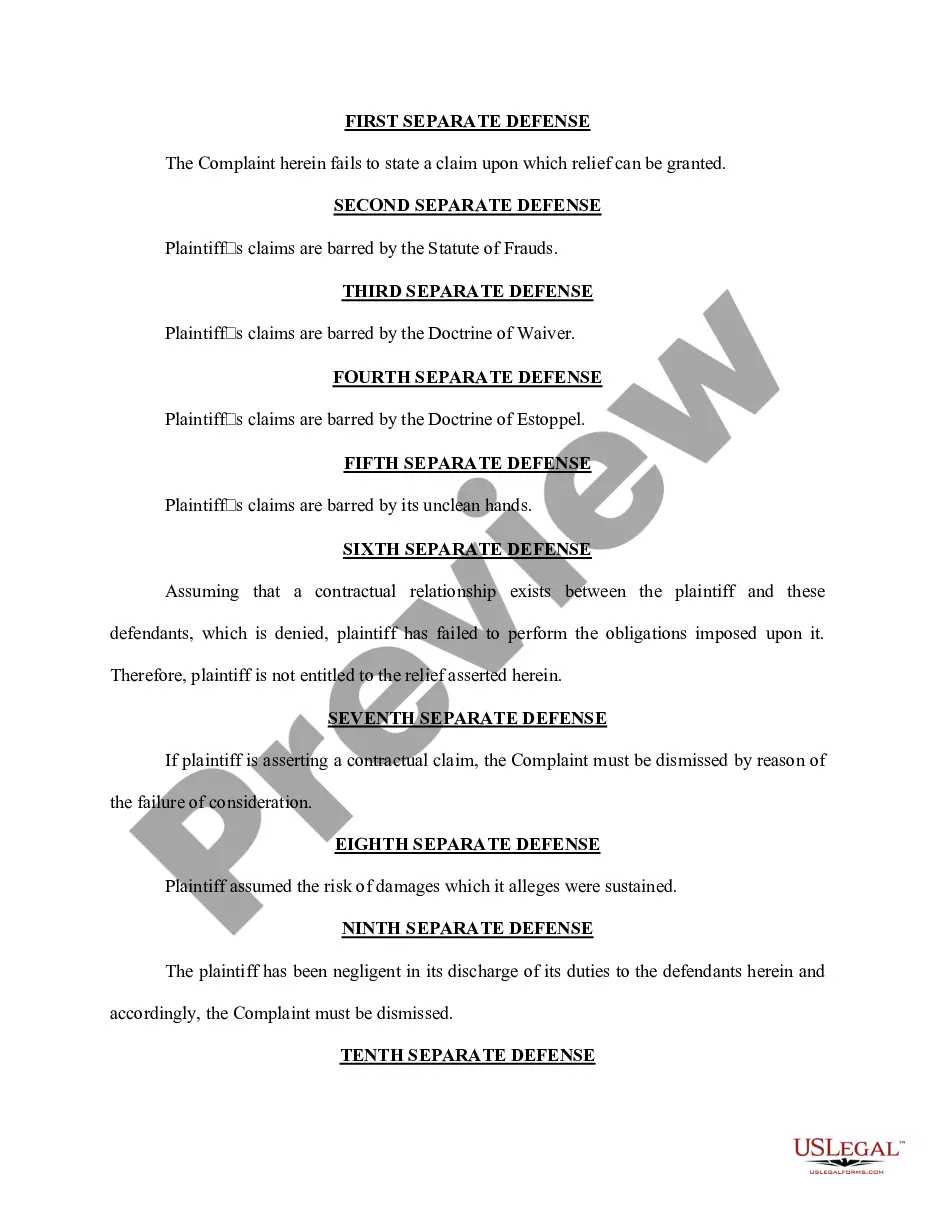
- First defense: Failure to state a claim upon which relief can be granted.
- Second defense: Claims barred by the Statute of Frauds.
- Third defense: Claims barred by the Doctrine of Waiver.
- Fourth defense: Claims barred by the Doctrine of Estoppel.
- Fifth defense: Claims barred due to unclean hands.
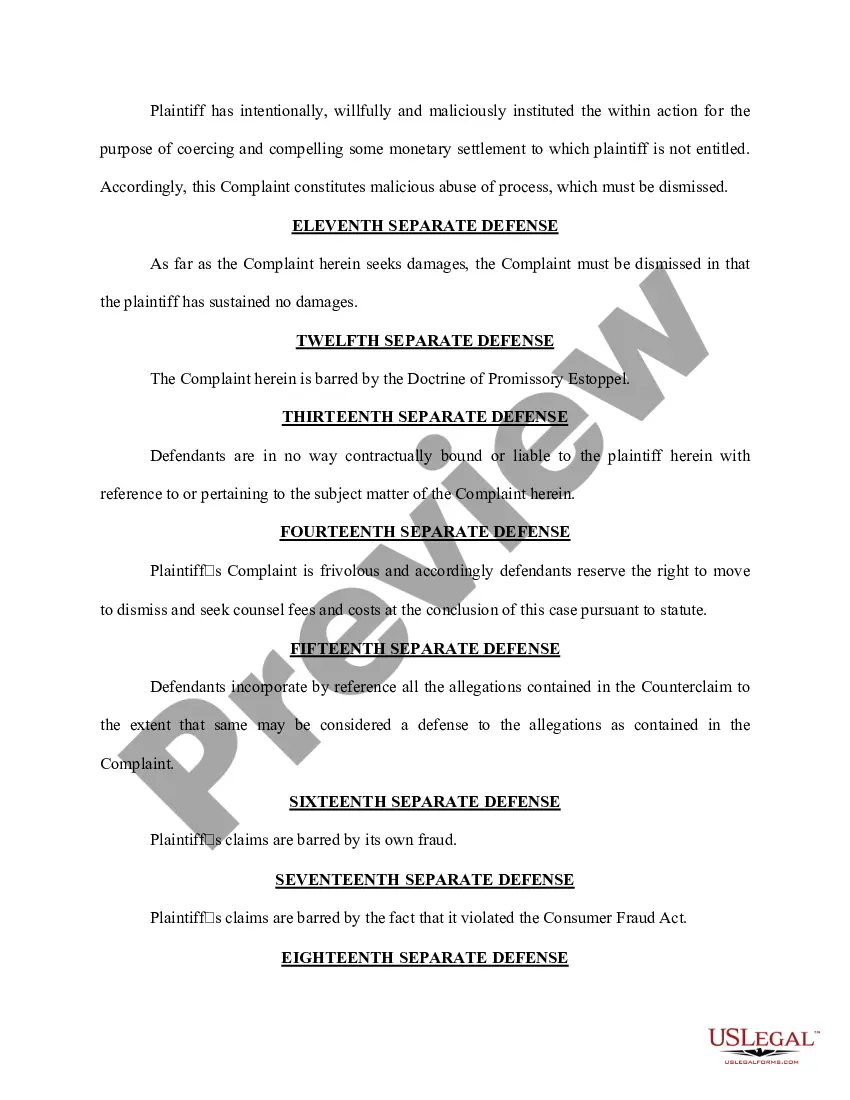
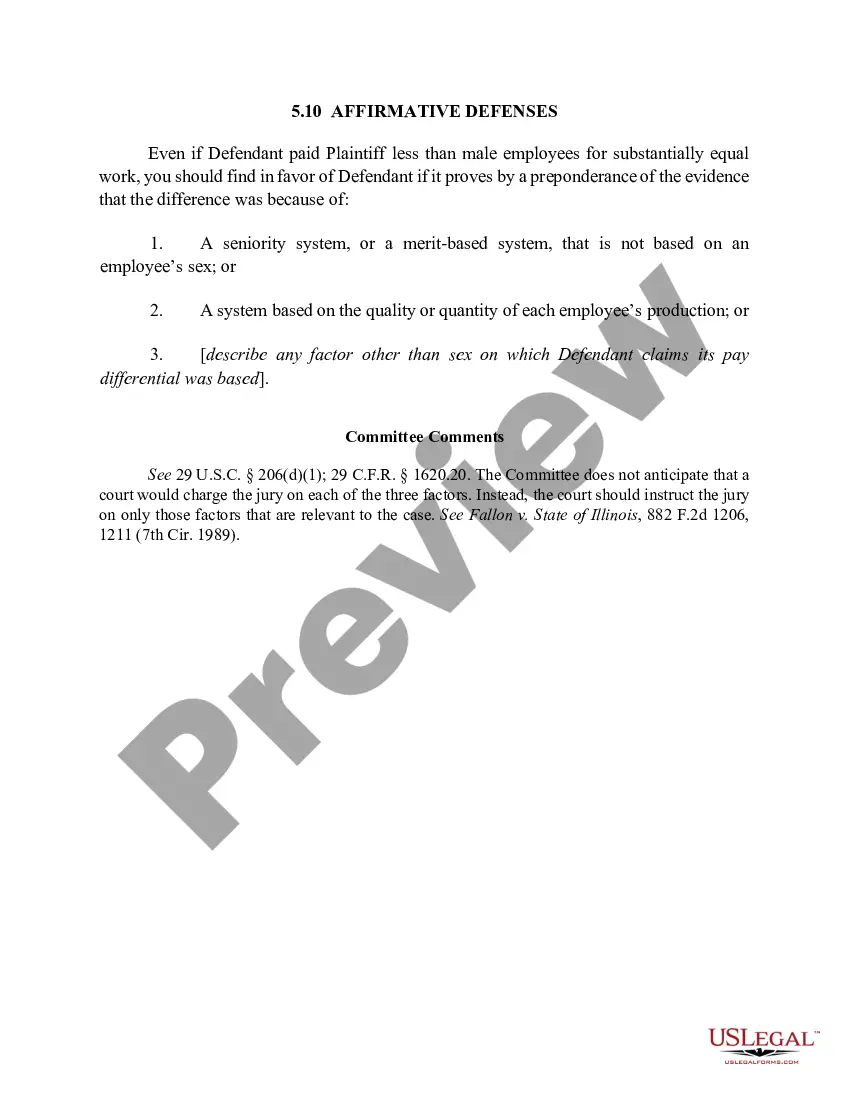
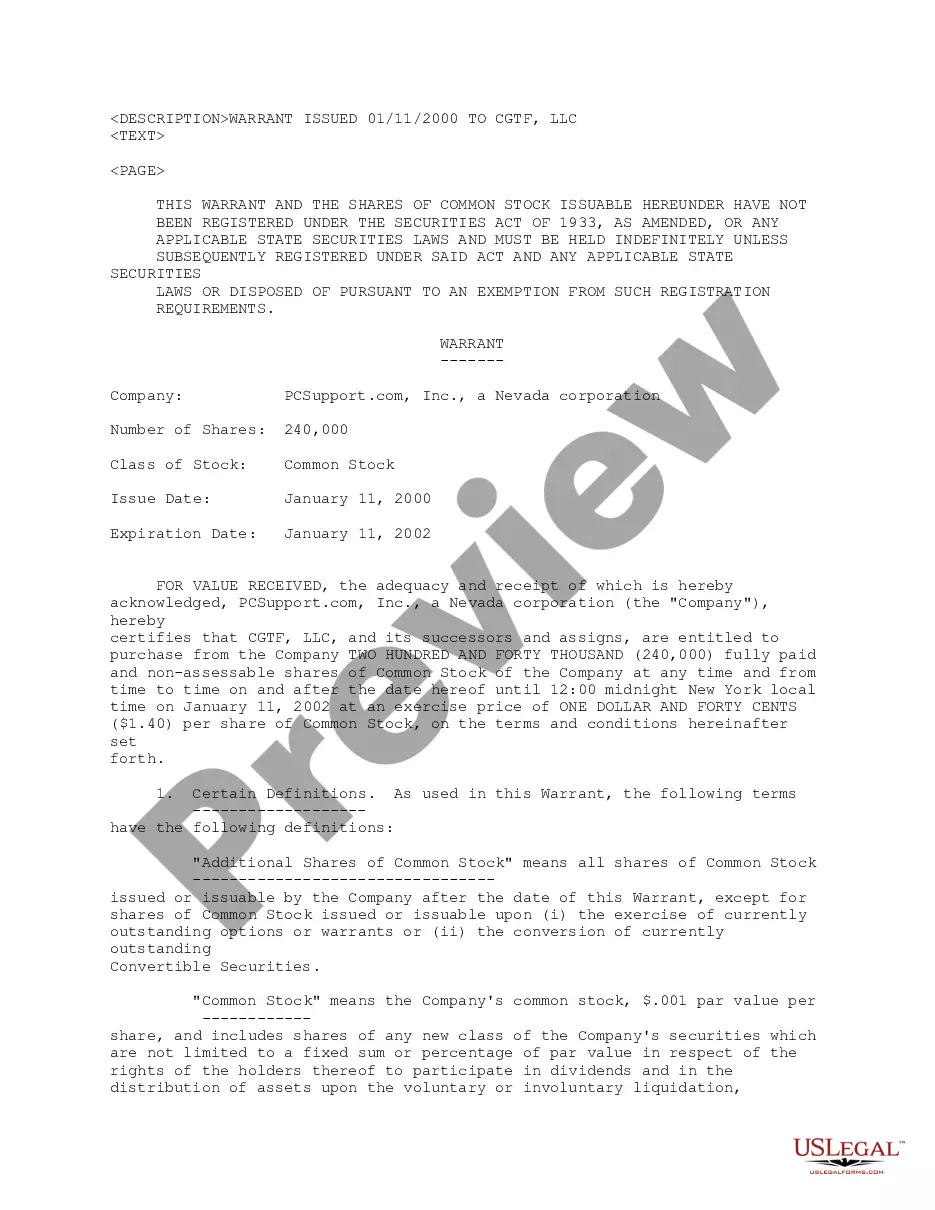
- Additional defenses addressing contractual obligations, negligence, bad faith actions, and others.

When this form is needed
This form should be used when a defendant needs to respond to a lawsuit with various affirmative defenses. If a plaintiff files a complaint and the defendant believes the case is weak or flawed due to legal principles, this form can be employed to articulate these defenses clearly. It is particularly useful in civil law situations involving contract disputes, tort claims, or allegations of wrongdoing.
Intended users of this form
This form is intended for:
- Defendants in civil litigation cases.
- Legal representatives of defendants needing to formulate defenses to a complaint.
- Individuals or entities engaged in disputes affecting their rights or obligations under the law.
Steps to complete this form
- Identify the parties involved in the complaint.
- Review the specific claims made by the plaintiff.
- Choose the relevant affirmative defenses applicable to your case.
- Clearly state each defense as outlined in the provided sections.
- Sign and date the form to finalize your response.
Notarization guidance
In most cases, this form does not require notarization. However, some jurisdictions or signing circumstances might. US Legal Forms offers online notarization powered by Notarize, accessible 24/7 for a quick, remote process.
Get your form ready online
Our built-in tools help you complete, sign, share, and store your documents in one place.
Make edits, fill in missing information, and update formatting in US Legal Forms—just like you would in MS Word.
Download a copy, print it, send it by email, or mail it via USPS—whatever works best for your next step.
Sign and collect signatures with our SignNow integration. Send to multiple recipients, set reminders, and more. Go Premium to unlock E-Sign.
If this form requires notarization, complete it online through a secure video call—no need to meet a notary in person or wait for an appointment.
We protect your documents and personal data by following strict security and privacy standards.

Make edits, fill in missing information, and update formatting in US Legal Forms—just like you would in MS Word.

Download a copy, print it, send it by email, or mail it via USPS—whatever works best for your next step.

Sign and collect signatures with our SignNow integration. Send to multiple recipients, set reminders, and more. Go Premium to unlock E-Sign.

If this form requires notarization, complete it online through a secure video call—no need to meet a notary in person or wait for an appointment.

We protect your documents and personal data by following strict security and privacy standards.
Mistakes to watch out for
- Failing to adequately identify the specific defenses relevant to the case.
- Neglecting to sign and date the document.
- Overlooking required jurisdiction-specific details or terms.
Benefits of using this form online
- Convenient access to a professionally crafted legal form.
- Editable templates that allow for customization per specific case needs.
- Secure downloading for easy referencing and filing.
Main things to remember
- The Sample Affirmative Defenses form helps organize and assert necessary defenses in a legal complaint.
- Understanding when and how to use each defense is crucial for effective legal representation.
- Accuracy and completeness are vital to make the most of this form in legal proceedings.
Looking for another form?

Form popularity
FAQ
An affirmative defense operates to prevent conviction even when the prosecutor has proof beyond a reasonable doubt as to every element of the crime. Some jurisdictions place the burden on the defendant to prove the defense, while others require that the prosecution disprove the defense beyond a reasonable doubt.
Legal defenses fall into two broad categories: justifications and excuses. Justification defenses are those where a defendant claims that the positives of the act outweigh the negatives.
An affirmative defense operates to prevent conviction even when the prosecutor has proof beyond a reasonable doubt as to every element of the crime. Some jurisdictions place the burden on the defendant to prove the defense, while others require that the prosecution disprove the defense beyond a reasonable doubt.
While the availability of an affirmative defense will depend on the state, there are generally two categories of affirmative defenses, justifications and excuses.
Accord and Satisfaction, Arbitration and Award, Assumption of the Risk, Contributory Negligence, Discharge in Bankruptcy, Duress, Estoppel, Failure of Consideration,
31 Affirmative Defenses And How To Assert Them.
Mental disorder (insanity) Automatism. Intoxication. Mistake of fact. Necessity/lesser harm. Lawful capacity of office. Self-defense. Duress.
Courts have developed a three part test in examining the affirmative defenses subject to a motion to strike: (1) the matter must be properly pleaded as an affirmative defense; (2) the matter must be adequately pleaded under the requirements of Federal Rules of Civil Procedure 8 and 9; and (3) the matter must withstand
Accord and Satisfaction,Arbitration and Award,Assumption of the Risk,Contributory Negligence,Discharge in Bankruptcy,Duress,Estoppel,Failure of Consideration,Raise It or Waive It: Potential Problems for Practitioners with Minimal\nwww.alabamainjurylaw-blog.com > raise-it-or-waive-it-potential-problems-...