Mississippi Release and Cancellation of Temporary Drainage Easement and Quitclaim
Overview of this form
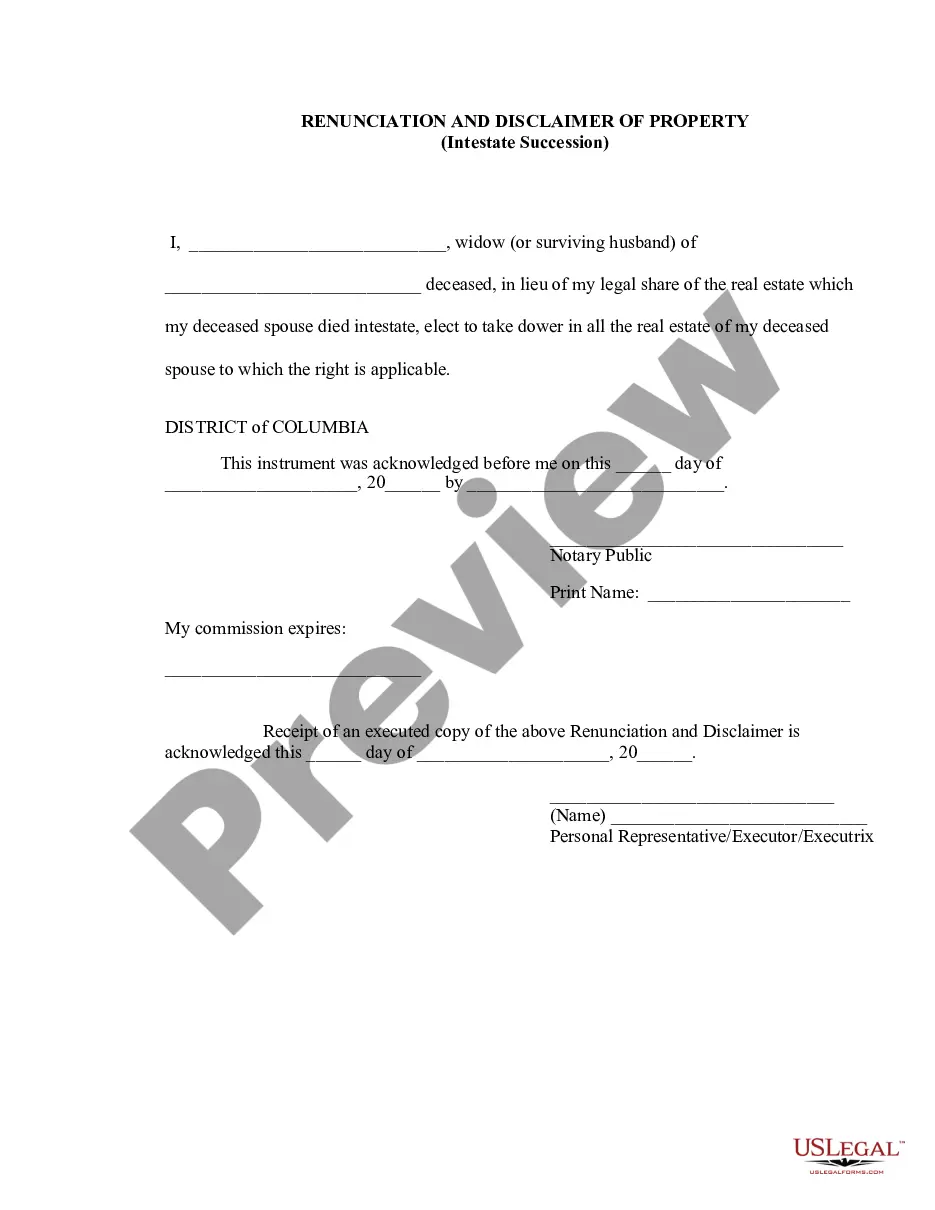
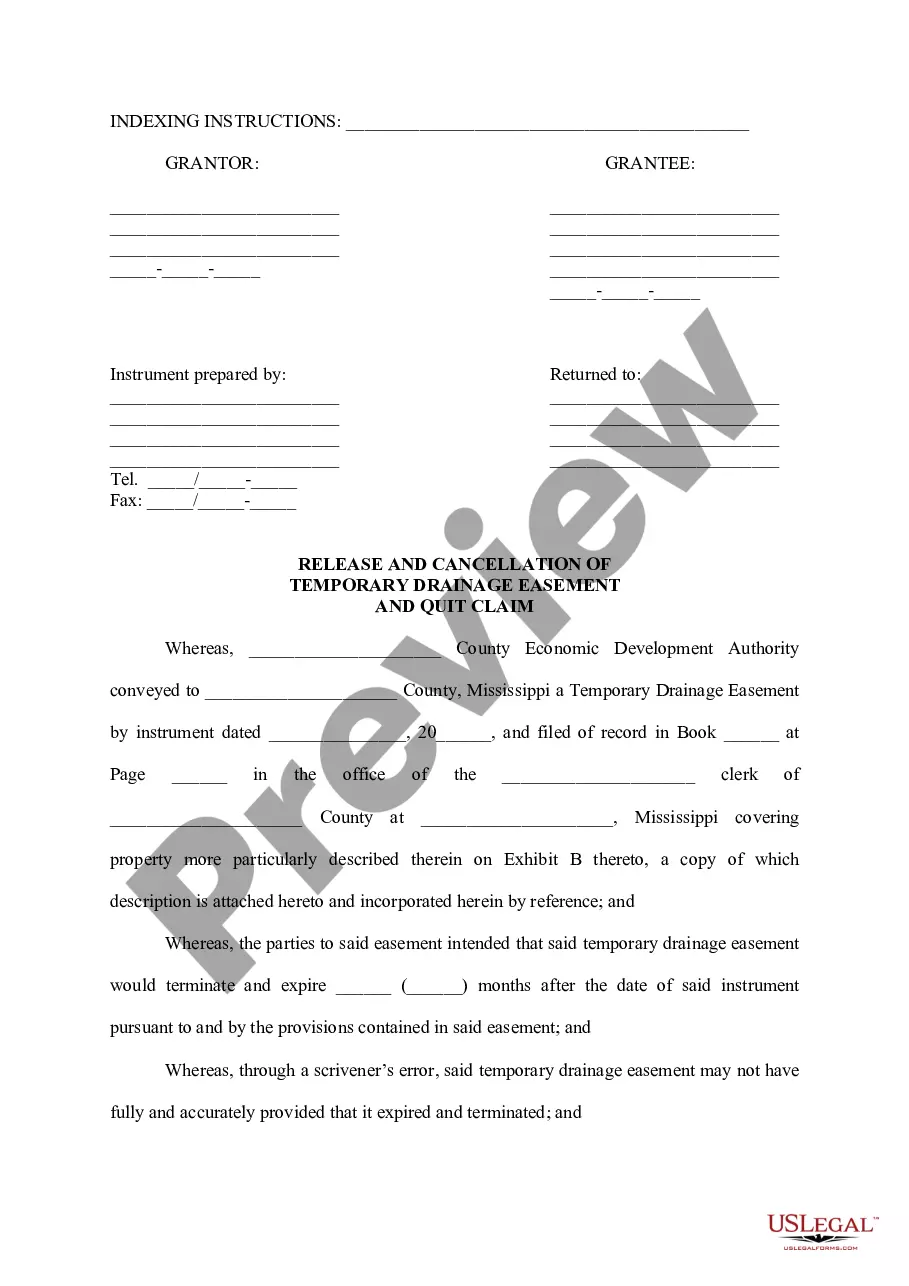
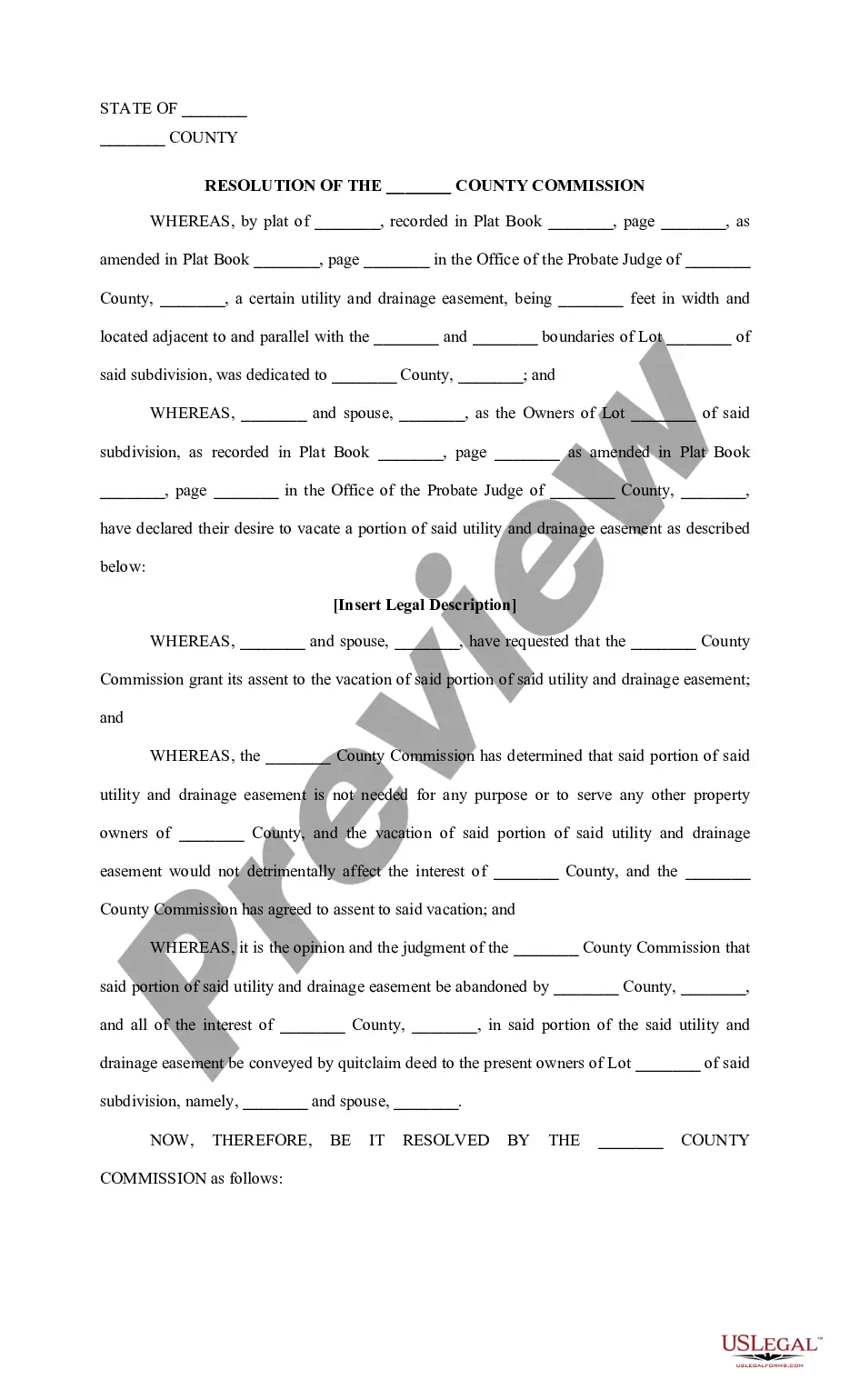
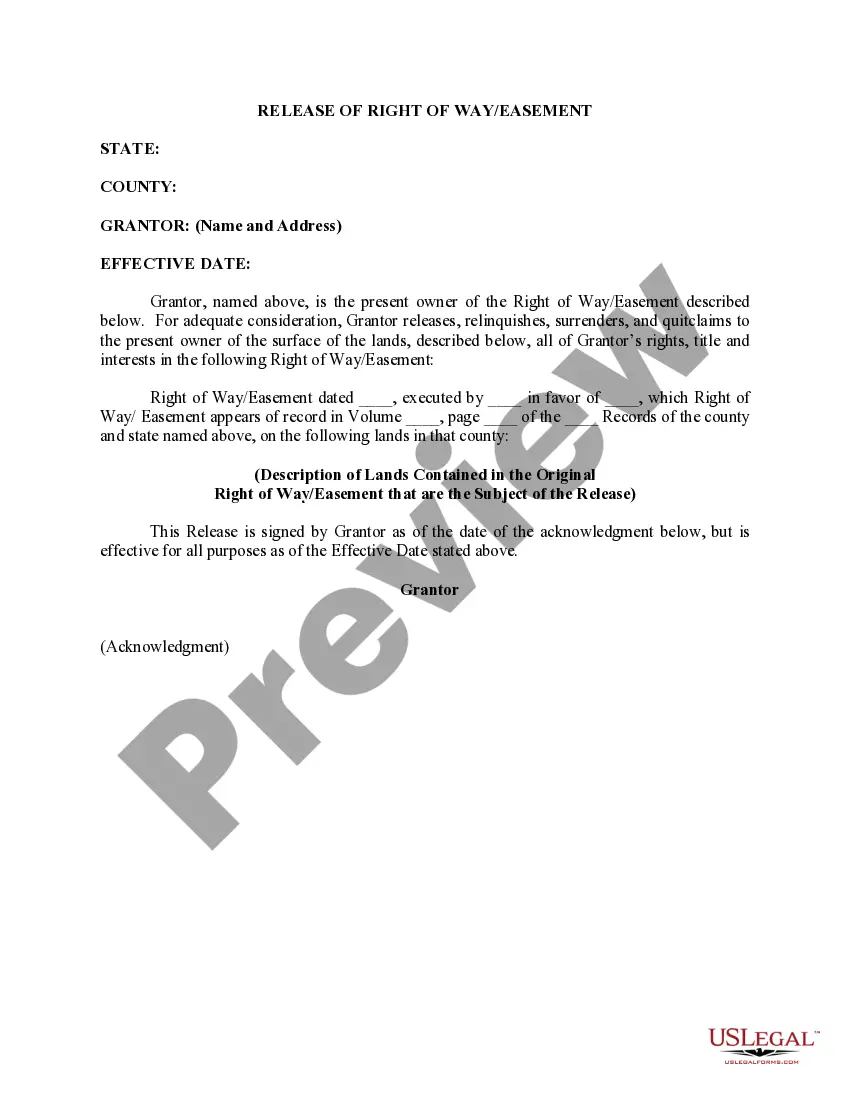
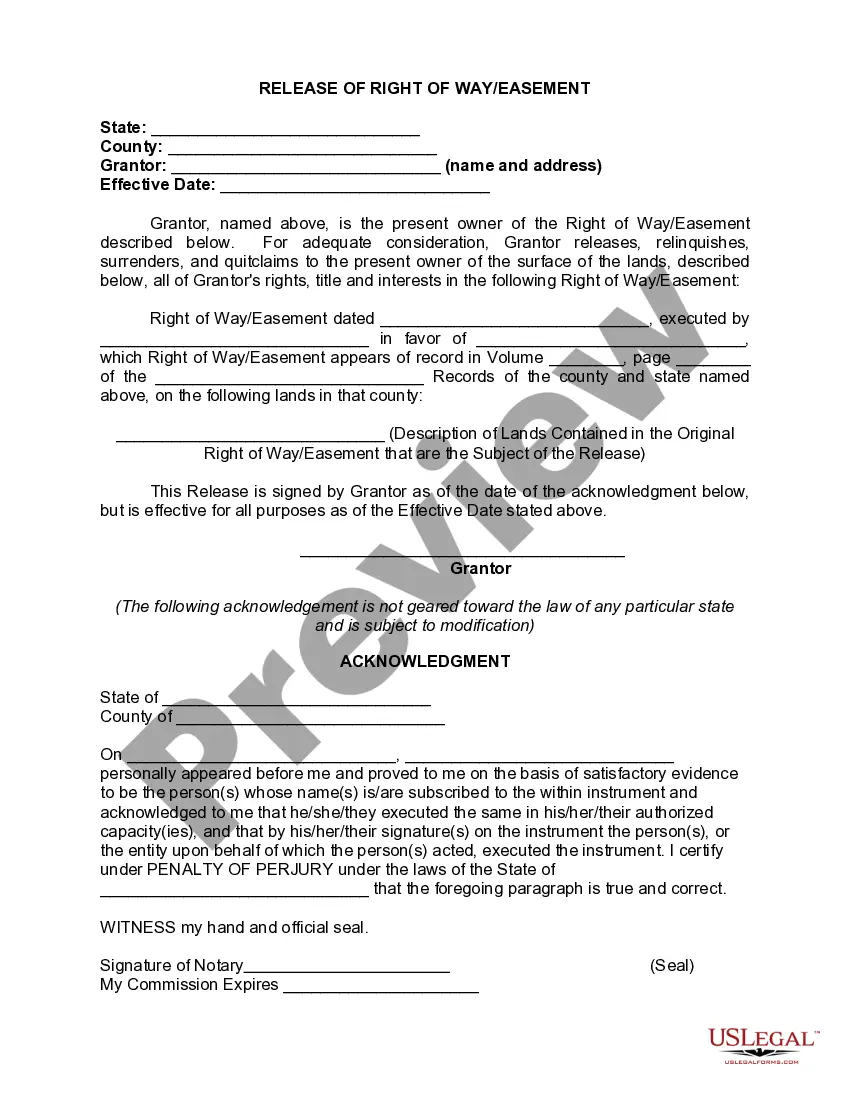
The Release and Cancellation of Temporary Drainage Easement and Quitclaim is a legal document used to formally cancel a temporary drainage easement previously granted by a county government. It ensures that the rights to the property in question are transferred back to the original grantor or another specified entity. This form is essential for restoring clear title of the property and clarifies the intention that the easement has expired, eliminating any potential disputes related to its continued existence.
Form components explained
- Identification of the grantor and grantee of the easement.
- Description of the temporary drainage easement and reference to the detailed exhibit.
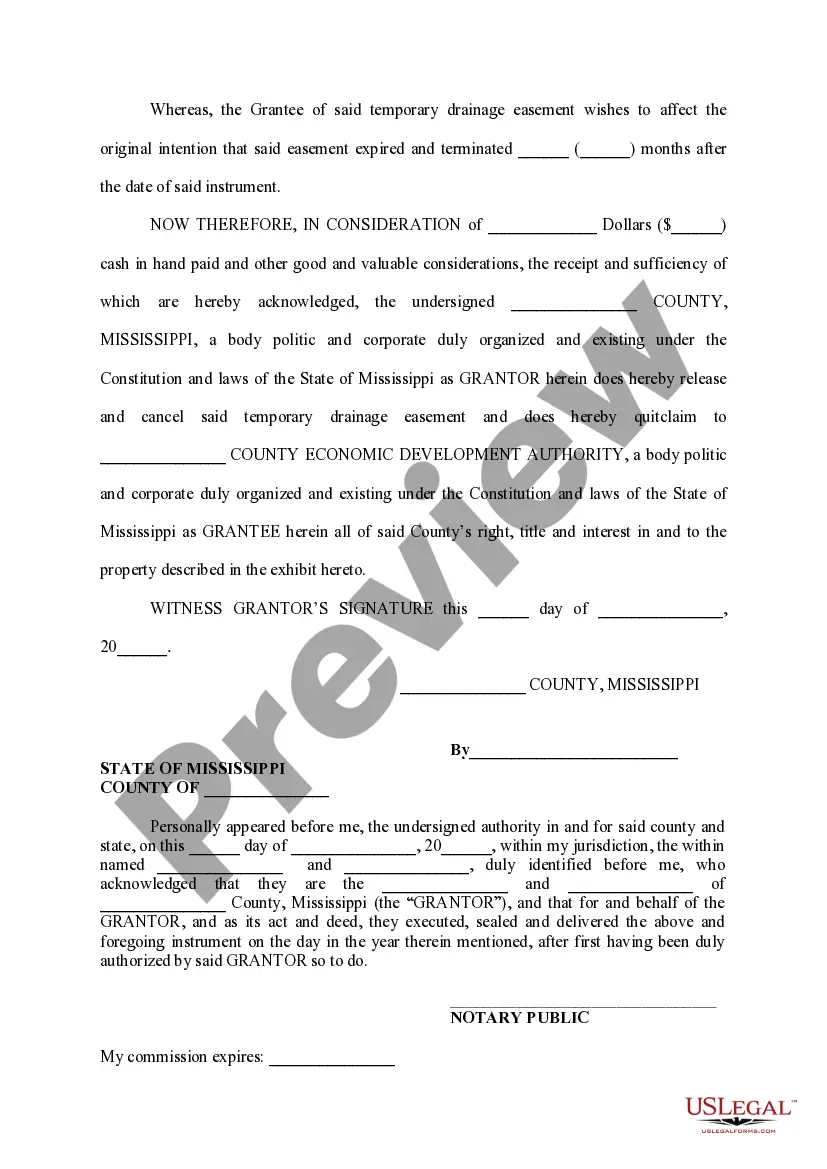
- Section specifying the original intent for the easement's expiration.
- Statement regarding the consideration for cancellation.
- Notarization clause to validate the document upon signing.
Situations where this form applies
This form should be used when there is a need to cancel an existing temporary drainage easement that was granted by a county government. Situations may include the expiration of the easement term, correction of prior documentation errors, or when the underlying needs for drainage no longer exist. Utilizing this form ensures legal clarity and property title integrity.
Intended users of this form
- County governments wishing to cancel temporary drainage easements.
- Government agencies that hold drainage easements and are ready to release them.
- Legal representatives of counties or municipalities involved in property rights and easement management.
Steps to complete this form
- Identify the parties involved by filling in the names of the grantor and grantee.
- Specify the property description where the easement is located, referring to the attached exhibit.
- Indicate the original date the easement was granted and its intended expiration period.
- State the amount of consideration being exchanged for the cancellation.
- Ensure all designated representatives for the grantor sign the document in the presence of a notary public.
Does this form need to be notarized?
Yes, this form must be notarized to be legally valid. US Legal Forms offers integrated online notarization, allowing you to complete the process via secure video calls. This provides a convenient, modern solution without the need for travel.
Get your form ready online
Our built-in tools help you complete, sign, share, and store your documents in one place.
Make edits, fill in missing information, and update formatting in US Legal Forms—just like you would in MS Word.
Download a copy, print it, send it by email, or mail it via USPS—whatever works best for your next step.
Sign and collect signatures with our SignNow integration. Send to multiple recipients, set reminders, and more. Go Premium to unlock E-Sign.
If this form requires notarization, complete it online through a secure video call—no need to meet a notary in person or wait for an appointment.
We protect your documents and personal data by following strict security and privacy standards.

Make edits, fill in missing information, and update formatting in US Legal Forms—just like you would in MS Word.

Download a copy, print it, send it by email, or mail it via USPS—whatever works best for your next step.

Sign and collect signatures with our SignNow integration. Send to multiple recipients, set reminders, and more. Go Premium to unlock E-Sign.

If this form requires notarization, complete it online through a secure video call—no need to meet a notary in person or wait for an appointment.

We protect your documents and personal data by following strict security and privacy standards.
Mistakes to watch out for
- Failing to include all necessary party names.
- Omitting the property description or exhibit reference.
- Inaccurately stating the expiration period of the easement.
- Not completing the notarization process after signing.
Benefits of completing this form online
- Convenience of downloading and filling out the form at your own pace.
- Editability allows for quick corrections or adjustments before finalizing.
- Reliable templates drafted by licensed attorneys ensure legal compliance.
Looking for another form?
Form popularity
FAQ
You can terminate an easement by release. A release is a surrender of a right or interest, such as an easement. Only the person holding the right can release it, such as the owner of the dominant estate in an easement appurtenant or the holder of an easement in gross.
An easement is extinguished when the dominant owner releases it, expressly or impliedly, to the servient owner. Such release can be made only in the circumstances and to the extent in and to which the dominant owner can alienate the dominant heritage.
An easement, right of way or profit can be expressly released by deed. Once this has been done then it is extinguished and cannot be revived.The owner must make it clear that he or she is abandoning the right not just for himself but also for his successors in title.
An easement is extinguished when the dominant owner releases it, expressly or impliedly, to the servient owner.
So to prevent a prescriptive right, the owner may interrupt the adverse use before the prescriptive 5 year period has passed. This can be done by causing the adverse user to stop the use or bring a legal action that results in establishing the owner's right to terminate the use.
An easement, right of way or profit can be expressly released by deed. Once this has been done then it is extinguished and cannot be revived. An easement, right of way or profit can be sometimes impliedly released by the owner's actions or in rare cases by the owner's inaction.
There are eight ways to terminate an easement: abandonment, merger, end of necessity, demolition, recording act, condemnation, adverse possession, and release.
Prescription. Just as an easement can be created by prescription (adverse possession), an easement can also be terminated by prescription if the owner of the servient tenement excludes the easement holder from the usage of the easement for the prescribed statutory period of time.
III. Vacating or Reopening a Public Way or Easement. Anytime after the municipality closes the public way or easement, a property owner may commence an action to either vacate (i.e., foreclose) the municipality's right to reopen the closed public way or easement or to have the closed public way or easement reopened.