Mississippi Jury Instruction - Damage Instruction - Product Liability Case
About this form
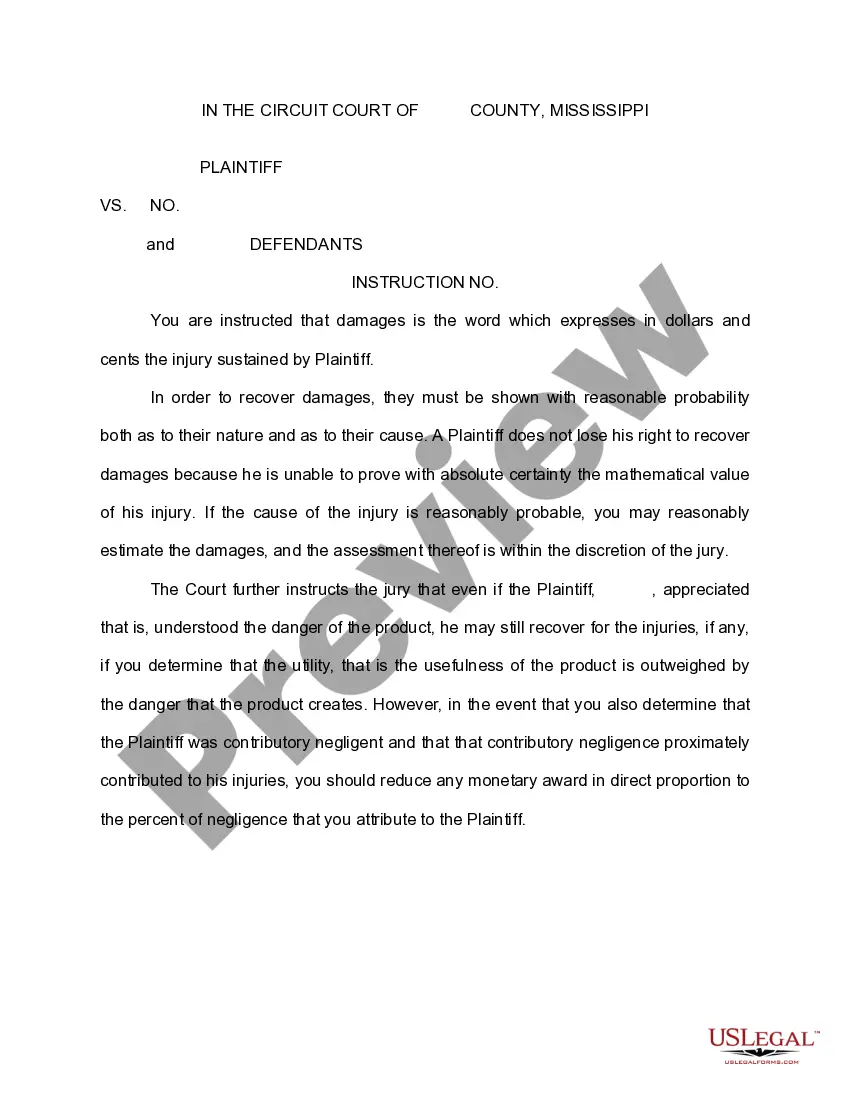
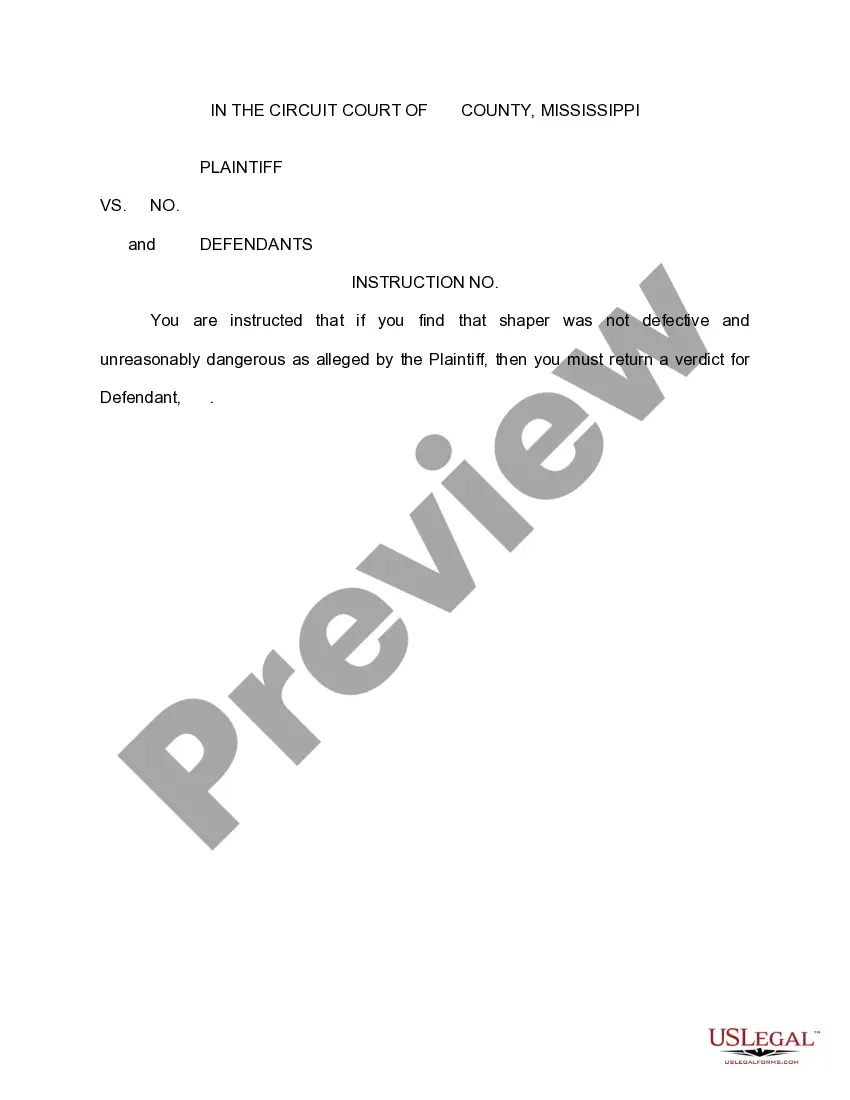
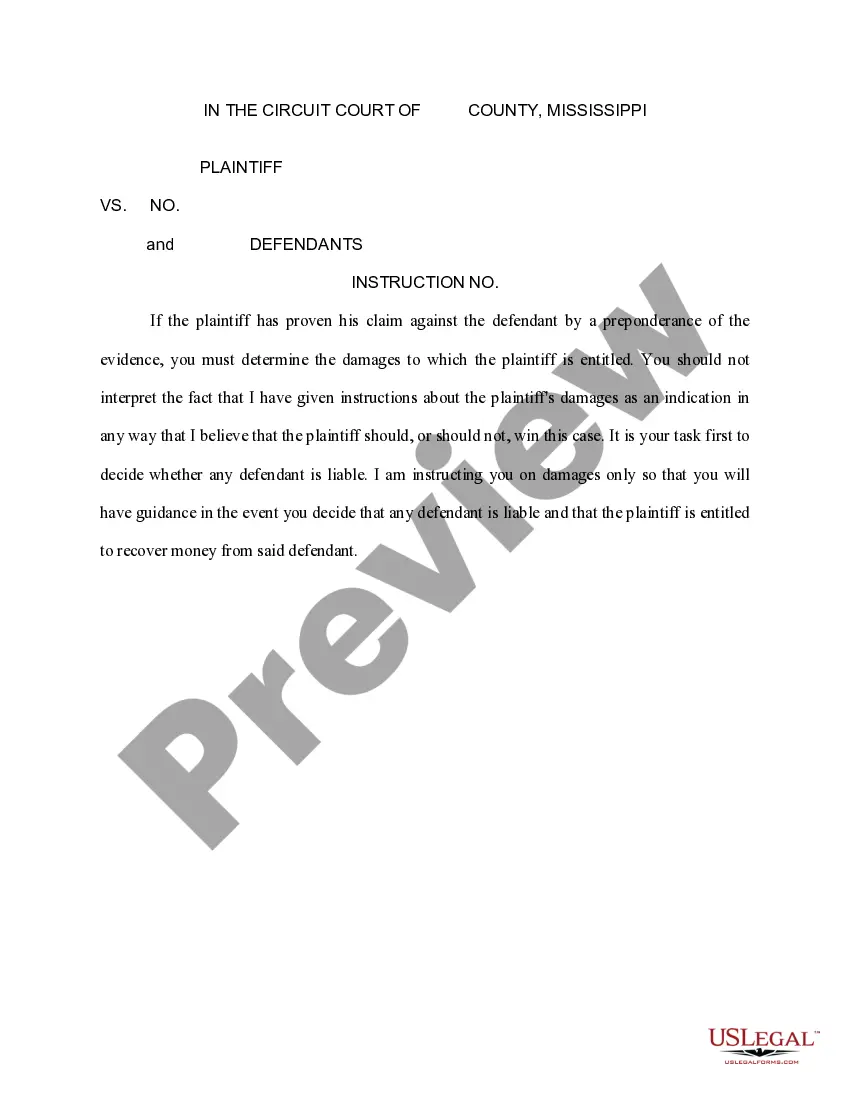
The Jury Instruction - Damage Instruction - Product Liability Case is a legal document that provides guidelines for juries on how to assess damages in product liability cases. This form helps jurors understand that while damages must be shown with reasonable probability, absolute certainty is not required. It differs from other forms by focusing specifically on how to evaluate damages from injuries related to defective products.
Main sections of this form
- Definition of reasonable probability concerning damages.
- Clarification that plaintiffs do not need absolute certainty to prove injury.
- Discretion given to jurors for damage assessment based on reasonable estimation.
When this form is needed
This jury instruction form is used in product liability cases where a claimant seeks damages due to injuries caused by a product. If you are involved in a trial as either a plaintiff or a juror, this form outlines the essential considerations for assessing the nature and extent of damages related to the case at hand.
Who needs this form
Eligible users include:
- Plaintiffs in product liability cases.
- Defense attorneys representing manufacturers or sellers.
- Jurors serving in product liability trials.
How to prepare this document
- Familiarize yourself with the general principles of product liability.
- Read the jury instruction carefully for key concepts.
- Assess the evidence presented during the trial to determine reasonable probability.
- Prepare to discuss and deliberate on the estimation of damages based on the instruction provided.
- Make sure all jurors understand their discretion in assessing damages.
Notarization guidance
Notarization is generally not required for this form. However, certain states or situations might demand it. You can complete notarization online through US Legal Forms, powered by Notarize, using a verified video call available anytime.
Get your form ready online
Our built-in tools help you complete, sign, share, and store your documents in one place.
Make edits, fill in missing information, and update formatting in US Legal Forms—just like you would in MS Word.
Download a copy, print it, send it by email, or mail it via USPS—whatever works best for your next step.
Sign and collect signatures with our SignNow integration. Send to multiple recipients, set reminders, and more. Go Premium to unlock E-Sign.
If this form requires notarization, complete it online through a secure video call—no need to meet a notary in person or wait for an appointment.
We protect your documents and personal data by following strict security and privacy standards.

Make edits, fill in missing information, and update formatting in US Legal Forms—just like you would in MS Word.

Download a copy, print it, send it by email, or mail it via USPS—whatever works best for your next step.

Sign and collect signatures with our SignNow integration. Send to multiple recipients, set reminders, and more. Go Premium to unlock E-Sign.

If this form requires notarization, complete it online through a secure video call—no need to meet a notary in person or wait for an appointment.

We protect your documents and personal data by following strict security and privacy standards.
Mistakes to watch out for
- Failing to recognize that absolute certainty is not necessary for damage recovery.
- Ignoring the importance of reasonable probability in the evaluation of claims.
- Not adequately discussing the discretion the jury has in estimating damages.
Benefits of completing this form online
- Convenient access to essential legal guidelines 24/7.
- Ability to download and print for use in trials.
- Reliable and up-to-date information drafted by licensed attorneys.
Legal use & context
- This form serves to guide jurors in making informed decisions regarding damages.
- It reflects the standards set by Mississippi law for product liability cases.
Summary of main points
- The form helps jurors evaluate damages based on reasonable probability.
- Plaintiffs are not required to prove injury with absolute certainty.
- It is specific to product liability cases and must adhere to Mississippi legal standards.
Looking for another form?
Form popularity
FAQ
There are three types of product defects that can result in product liability cases: Design defects, Manufacturing defects, and Marketing defects.
Product liability refers to a manufacturer or seller being held liable for placing a defective product into the hands of a consumer. Responsibility for a product defect that causes injury lies with all sellers of the product who are in the distribution chain.
Product liability negligence occurs when a supplier, such as a wholesaler, retailer, distributor, manufacturer, or other party in the supply chain, places a product the stream of commerce with inaccurate or inadequate labeling, or manufacturing or design defects or flaws.
Products Liability is a field of tort law which concerns the responsibility of the manufacturer or vendor of a product to ensure that products are safe and do not cause injury.Contact a product liability lawyer to consult your case.
A defective product can be defined as any product that is unreasonably dangerous when being used for its intended purpose, without any alterations or interference.Some of the most common examples of defective products include food items, medical devices, and children's toys.
Under California law, manufacturers, designers, and retailers are strictly liable for injuries that are caused to plaintiffs when they use defective products in a reasonably foreseeable way.The product's defect was the direct or proximate cause of the plaintiff's injury.
Although the particulars vary from state to state, products liability law usually requires that you prove all of the following things (these are called the "elements" in your claim) in order to win: You were injured or suffered losses. The product is defective. The defect caused your injury.
Generally, any manufacturers as well as any sellers down the distribution chain (i.e., distributors, wholesalers, and retailers) can be held legally responsible for a defective product causing injury.