Mississippi Answer to Motion for Modification and to Cite Respondent for Contempt and Counterclaim for Citation for Contempt
Understanding this form
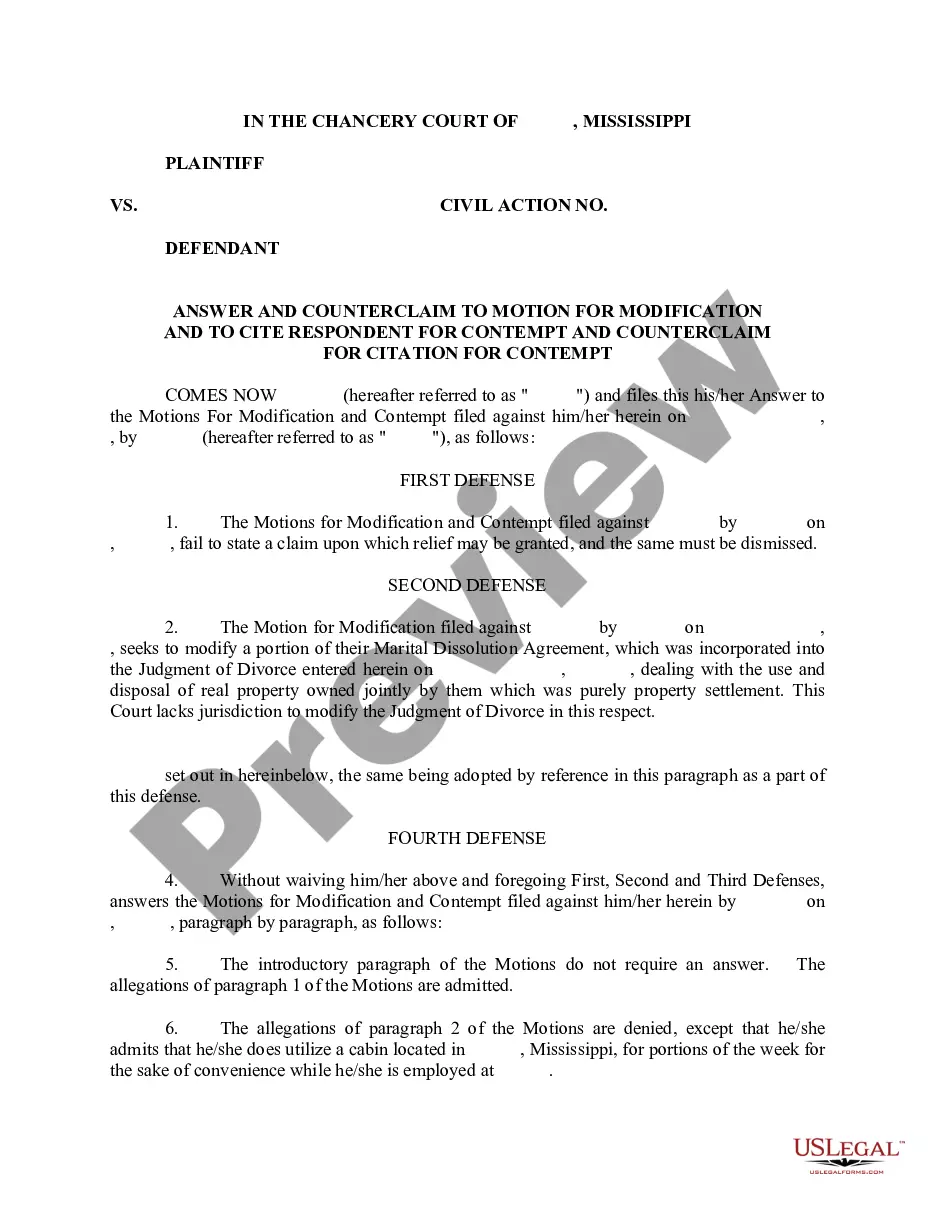
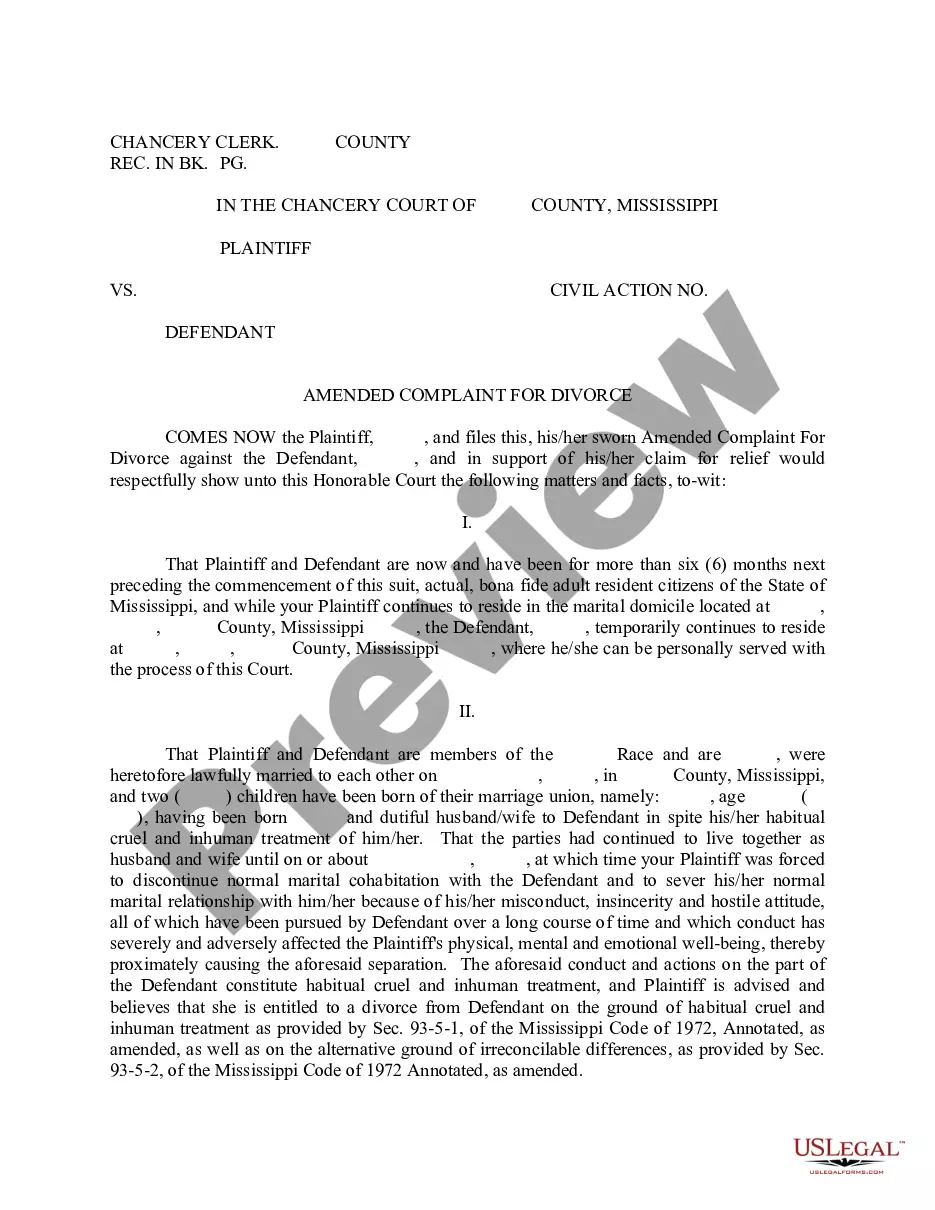
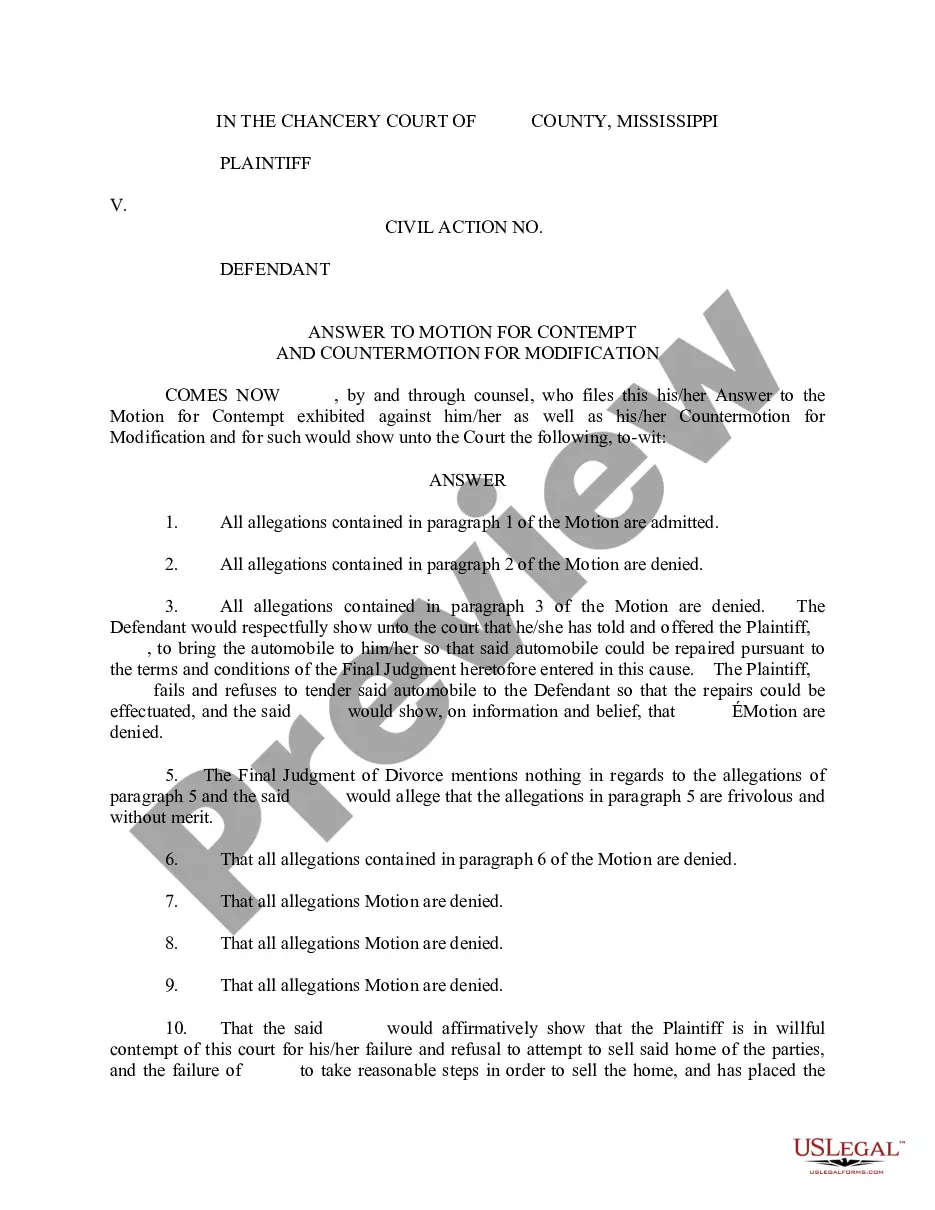
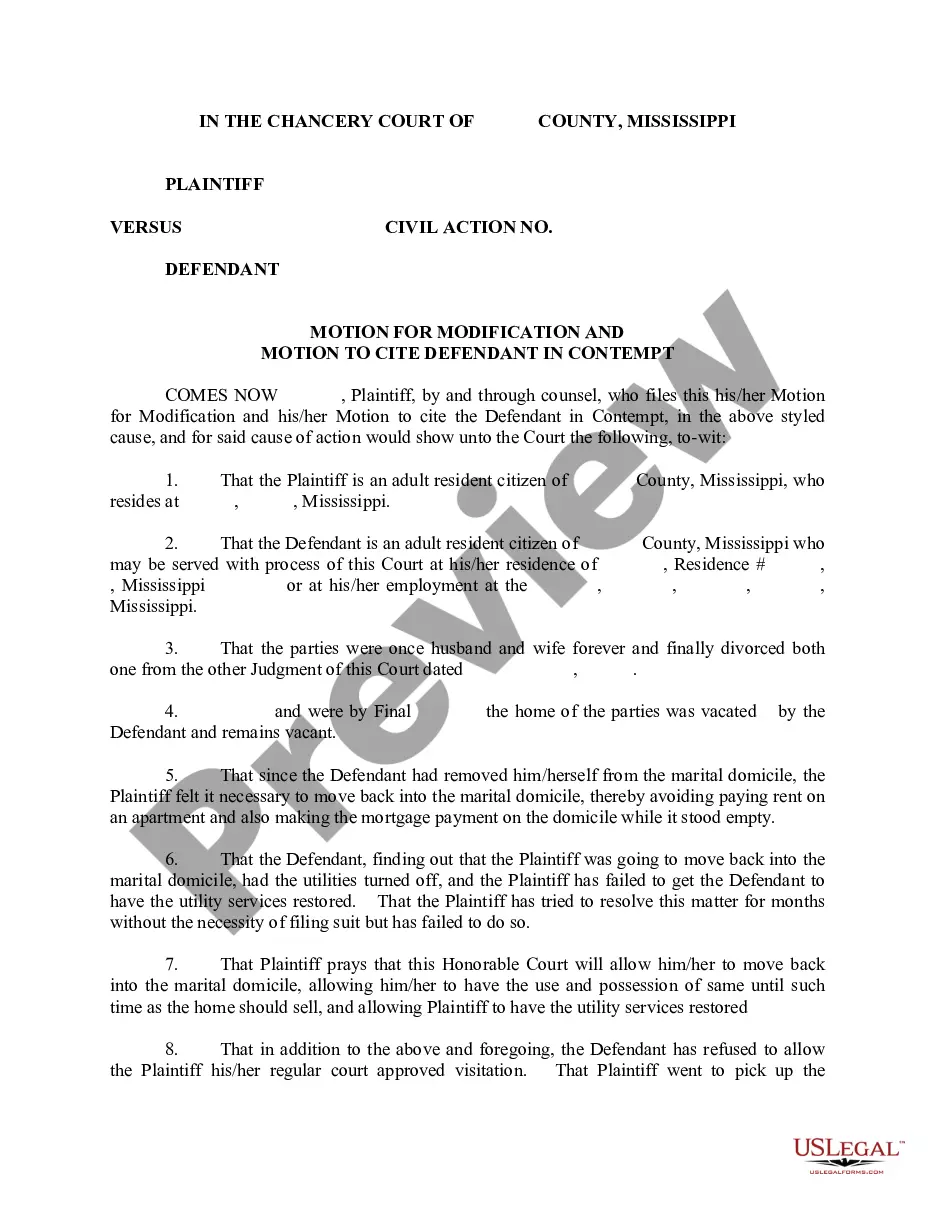
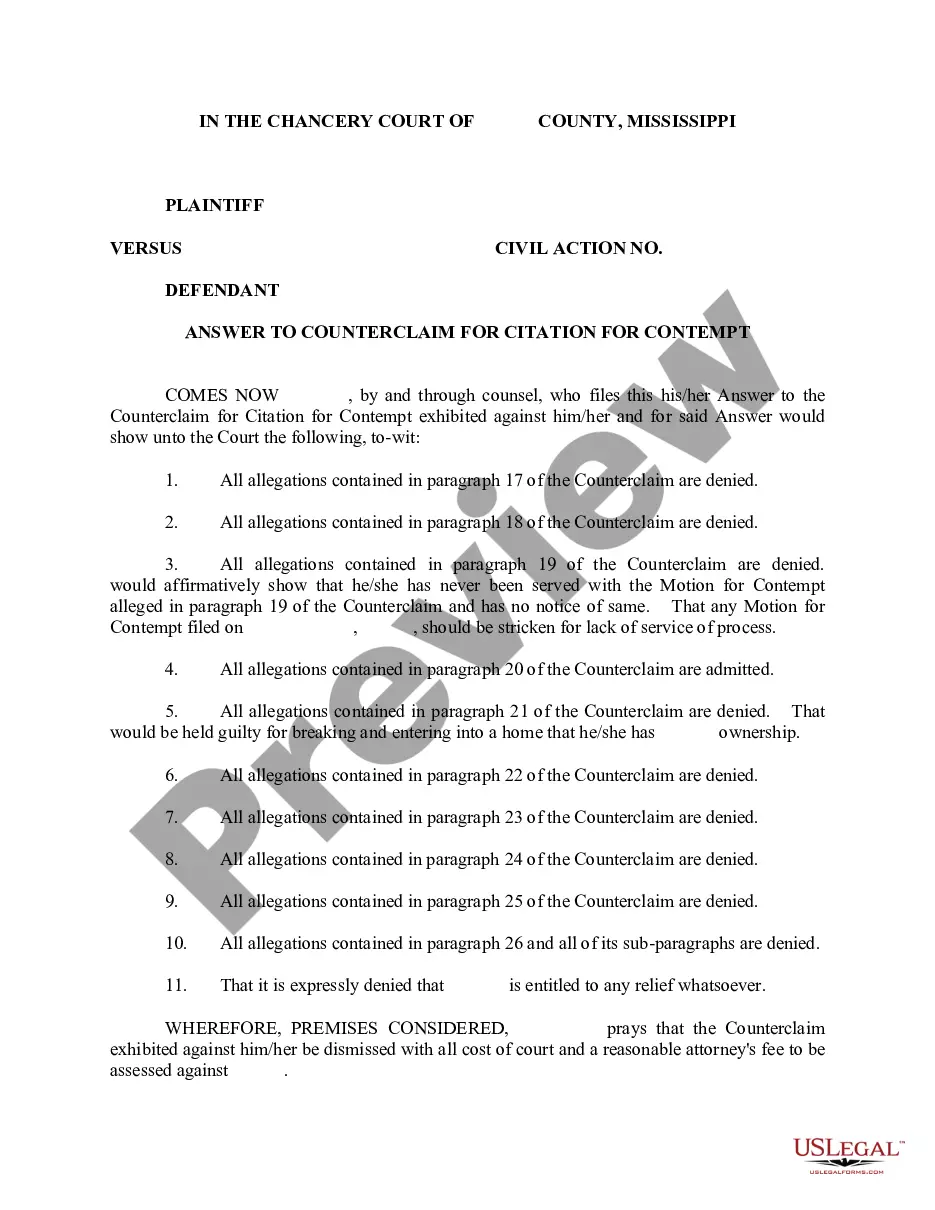
The Answer to Motion for Modification and to Cite Respondent for Contempt and Counterclaim for Citation for Contempt is a legal document used in family law cases. This form allows the respondent to formally reply to motions for modification of court orders, typically related to child custody, support, or visitation, and to raise counterclaims against the petitioner. This document is essential for ensuring that your legal rights are protected when facing modification requests and allegations of contempt.
What’s included in this form
- Identifies the parties involved in the case, specifying plaintiff and defendant.
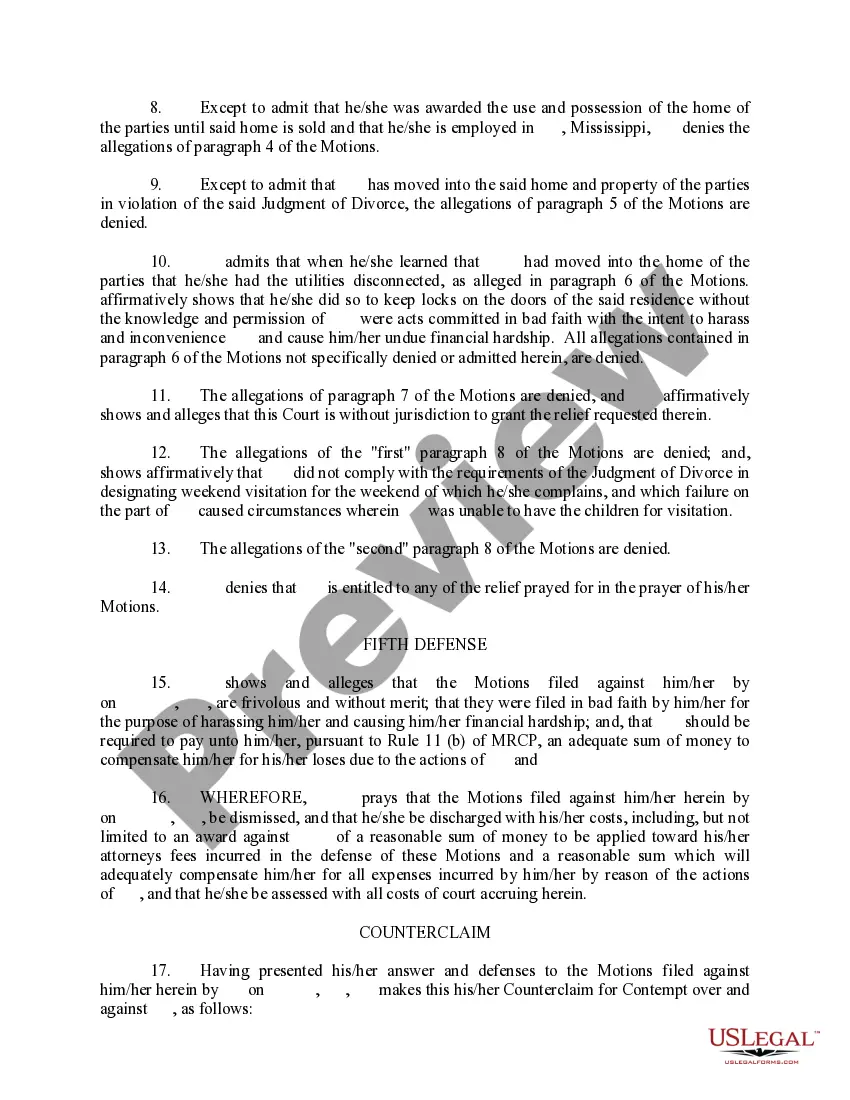
- Sets forth the respondentâs answer to the original motion, including defenses to the modification request.
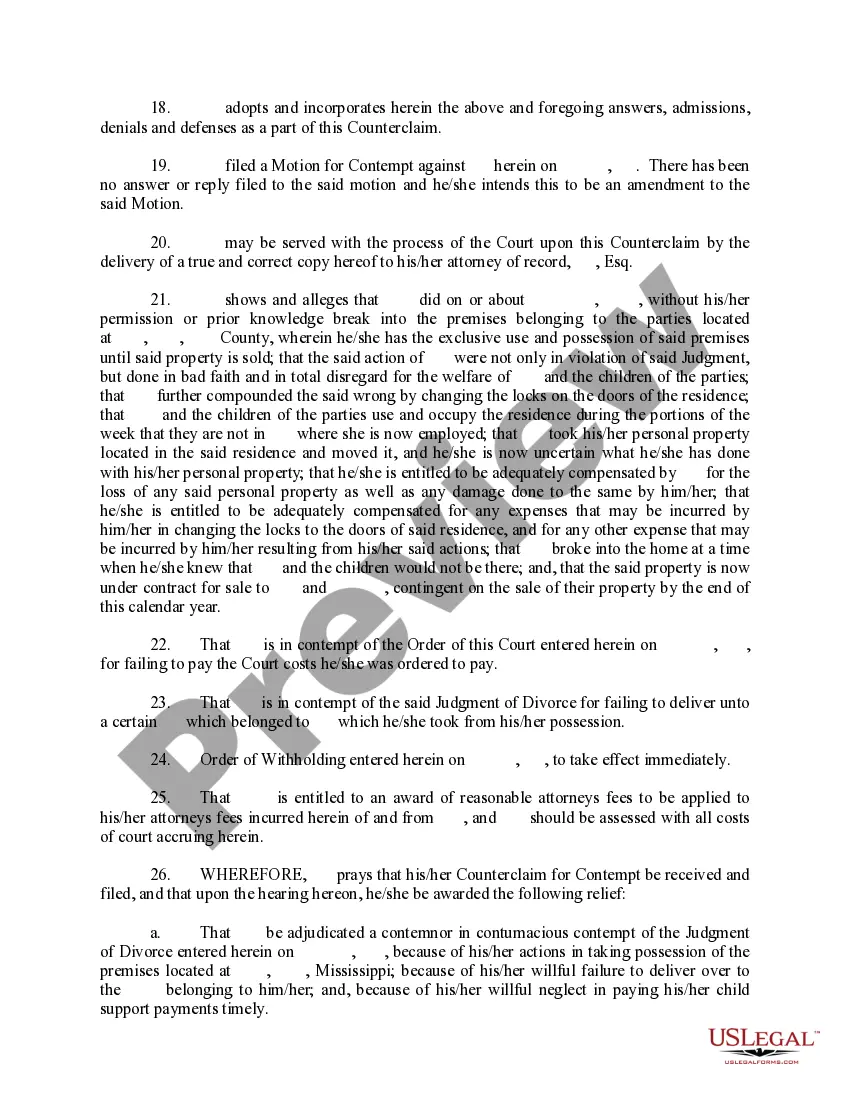
- Details the counterclaim for contempt, outlining specific allegations against the petitioner.
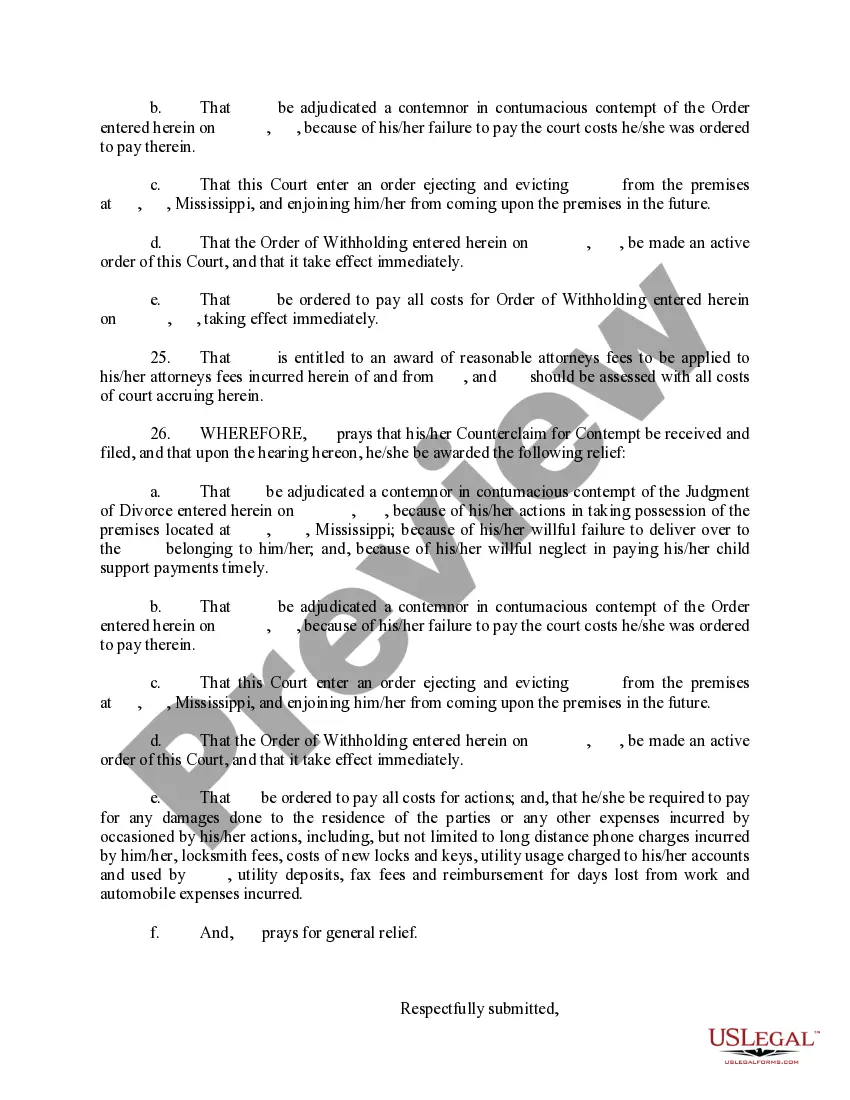
- Requests specific legal relief, including dismissal of the motion and relief for attorney fees.
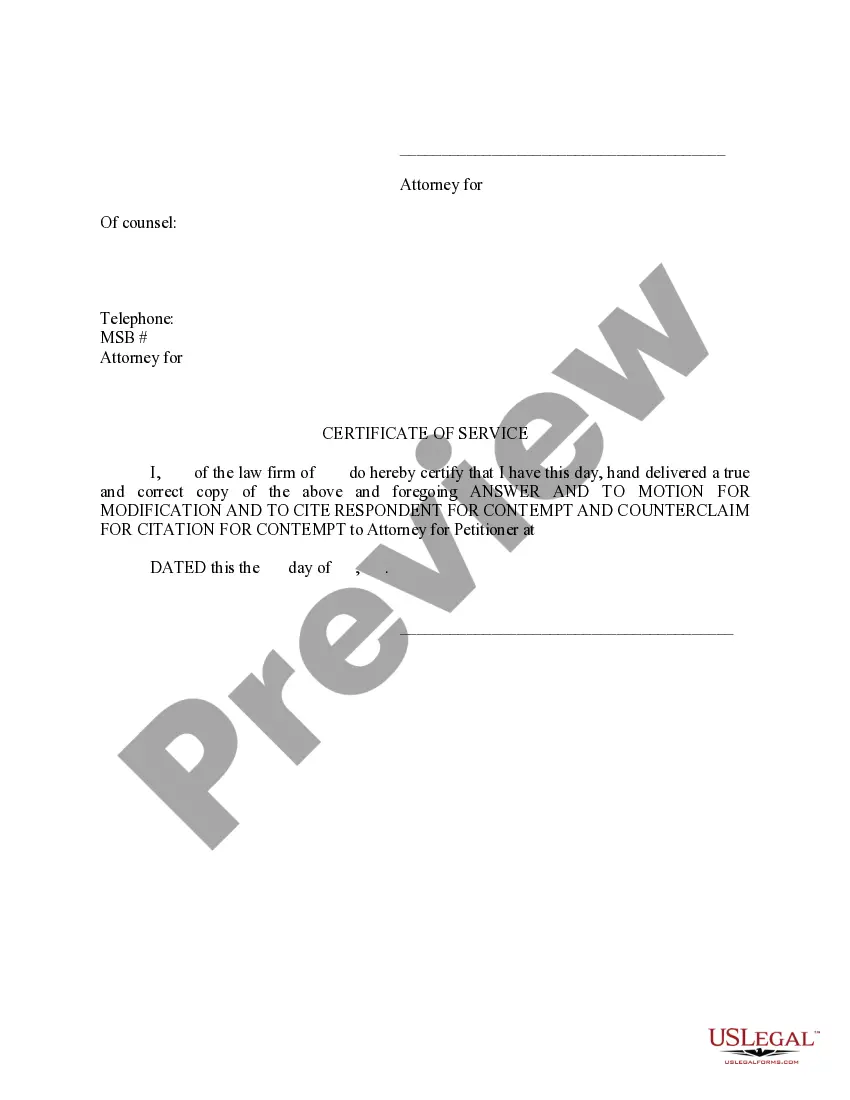
- Includes a certificate of service to confirm delivery of documents to the opposing party.
Common use cases
This form should be used when a party in a family law case receives a motion from the other party seeking to modify an existing court order, especially concerning custody or support arrangements. If the recipient wishes to contest the motion and assert their own allegations of contempt against the other party, this form is necessary to outline those defenses and counterclaims in a structured manner.
Who needs this form
- Individuals involved in a divorce or custody case who have received a motion for modification from the other parent or spouse.
- Respondents needing to assert defenses against requests to change legal agreements or orders.
- Those wishing to file counterclaims for contempt against the other party for failing to comply with previous court orders.
How to complete this form
- Identify the plaintiff and defendant by entering their full names and the civil action number at the beginning of the document.
- Clearly state your answers to the motions filed against you, addressing each allegation as either admitted or denied.
- Detail the counterclaims against the petitioner, providing specific incidents of contempt or violations of court orders.
- Specify the relief you are requesting from the court, including dismissal of the motion and compensation for legal fees.
- Sign and date the document, ensuring that you include a certificate of service to verify that a copy has been delivered to the other party.
Is notarization required?
Notarization is generally not required for this form. However, certain states or situations might demand it. You can complete notarization online through US Legal Forms, powered by Notarize, using a verified video call available anytime.
Get your form ready online
Our built-in tools help you complete, sign, share, and store your documents in one place.
Make edits, fill in missing information, and update formatting in US Legal Forms—just like you would in MS Word.
Download a copy, print it, send it by email, or mail it via USPS—whatever works best for your next step.
Sign and collect signatures with our SignNow integration. Send to multiple recipients, set reminders, and more. Go Premium to unlock E-Sign.
If this form requires notarization, complete it online through a secure video call—no need to meet a notary in person or wait for an appointment.
We protect your documents and personal data by following strict security and privacy standards.
Make edits, fill in missing information, and update formatting in US Legal Forms—just like you would in MS Word.
Download a copy, print it, send it by email, or mail it via USPS—whatever works best for your next step.
Sign and collect signatures with our SignNow integration. Send to multiple recipients, set reminders, and more. Go Premium to unlock E-Sign.

If this form requires notarization, complete it online through a secure video call—no need to meet a notary in person or wait for an appointment.

We protect your documents and personal data by following strict security and privacy standards.
Common mistakes
- Failing to respond to every allegation in the motion can weaken your defense.
- Omitting important details in your counterclaim may lead to the dismissal of your claims.
- Not serving the document to the other party properly can result in procedural issues.
Benefits of using this form online
- Immediate access to a professionally drafted template that can save time and reduce stress.
- Flexible editing capabilities that allow you to tailor the form to your specific circumstances.
- Secure downloading ensures that you have your documents saved for future reference and legal filing.
Summary of main points
- The form is essential for responding to modification requests and filing counterclaims in family law cases.
- It provides a structured approach to protecting your legal rights and interests.
- Ensure you follow state-specific guidelines when completing and submitting this form.
Looking for another form?
Form popularity
FAQ
In the United States legal system, an order to show cause (also known as a Request for Order in California,) is a court order that requires a person or entity to justify, explain, or prove something.
You file a Complaint for Contempt. In a contempt case, you ask the court to decide that the other parent is in contempt. Contempt means not obeying the child support order even though you are able to.This decision is a Judgment of Contempt.
PETITION FOR CITATION FOR CONTEMPT OF COURT That the defendant is able-bodied, capable of earning adequate funds with which to comply with the orders of this Court, and that said defendant has willfully failed or refused to pay support as ordered by the Court.
Depending on the infraction, contempt of court consequences can include fines, compensatory visitation, a modification to the custody arrangement, and in some instances even jail time. In most cases, if someone is held in contempt, the court will first give them the opportunity to make amends for the violation.
If a person is found to be in contempt, the court is able to impose sanctions, which may include the following: jail time (usually 1-30 days) ordering the party held in contempt to pay the money owed. ordering the party held in contempt to pay the other party's attorney's fees.
Fill out the forms. You have to fill out at least 2 forms, maybe more, to file your opposition. File the forms. Turn in your completed forms by mail or efiling. Serve the other party. Get ready for the hearing. Prepare an order.
To get a contempt finding, you must usually file a court document called a "motion for an order to show cause." That puts the burden on the parent who isn't following the custody or visitation order to explain to the court the reasons why he or she should not be held in contempt.
Read the summons and make sure you know the date you must answer by. Read the complaint carefully. Write your answer. Sign and date the answer. Make copies for the plaintiff and yourself. Mail a copy to the plaintiff. File your answer with the court by the date on the summons.
Depending on the infraction, contempt of court consequences can include fines, compensatory visitation, a modification to the custody arrangement, and in some instances even jail time. In most cases, if someone is held in contempt, the court will first give them the opportunity to make amends for the violation.