Mississippi Complaint by Contractor for Amount Due
Understanding this form
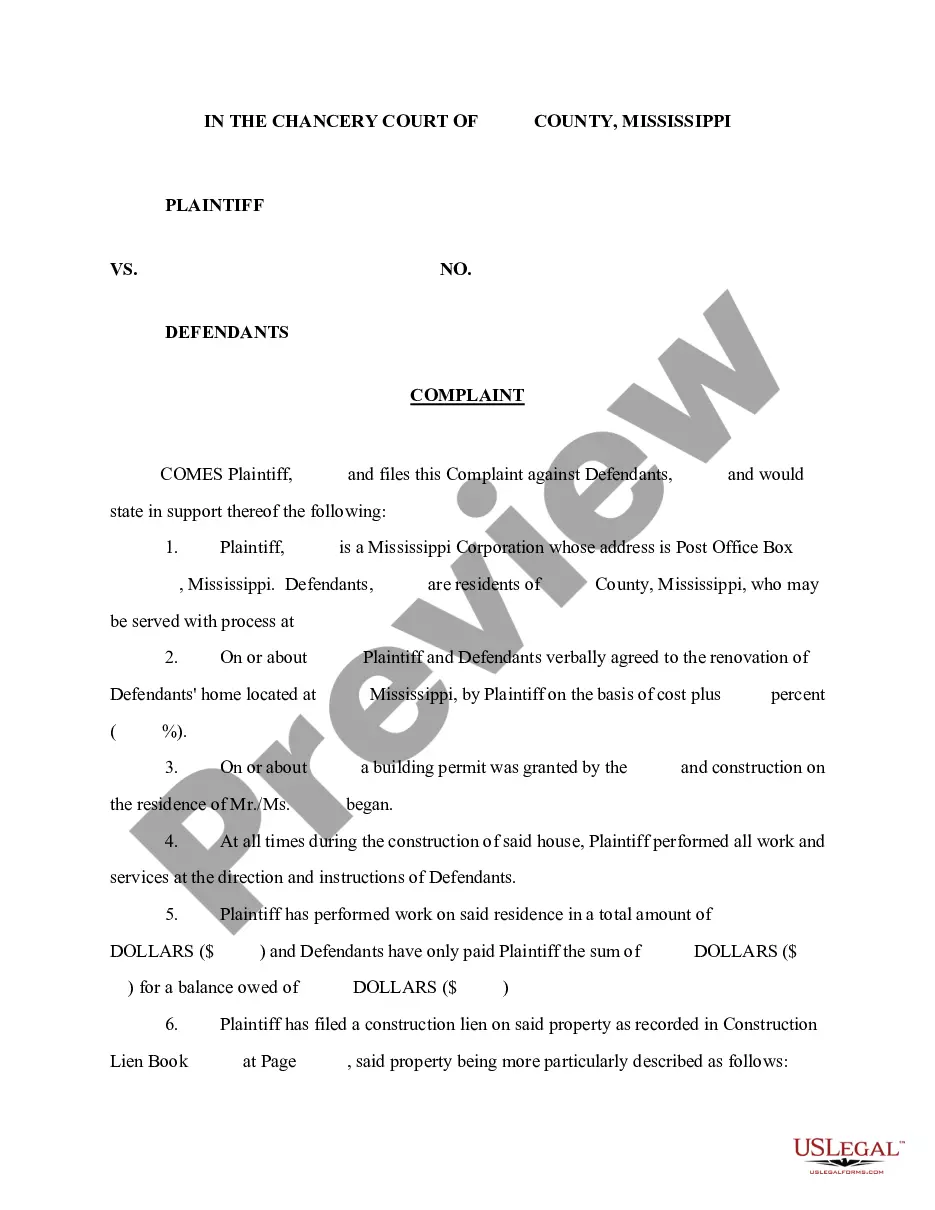
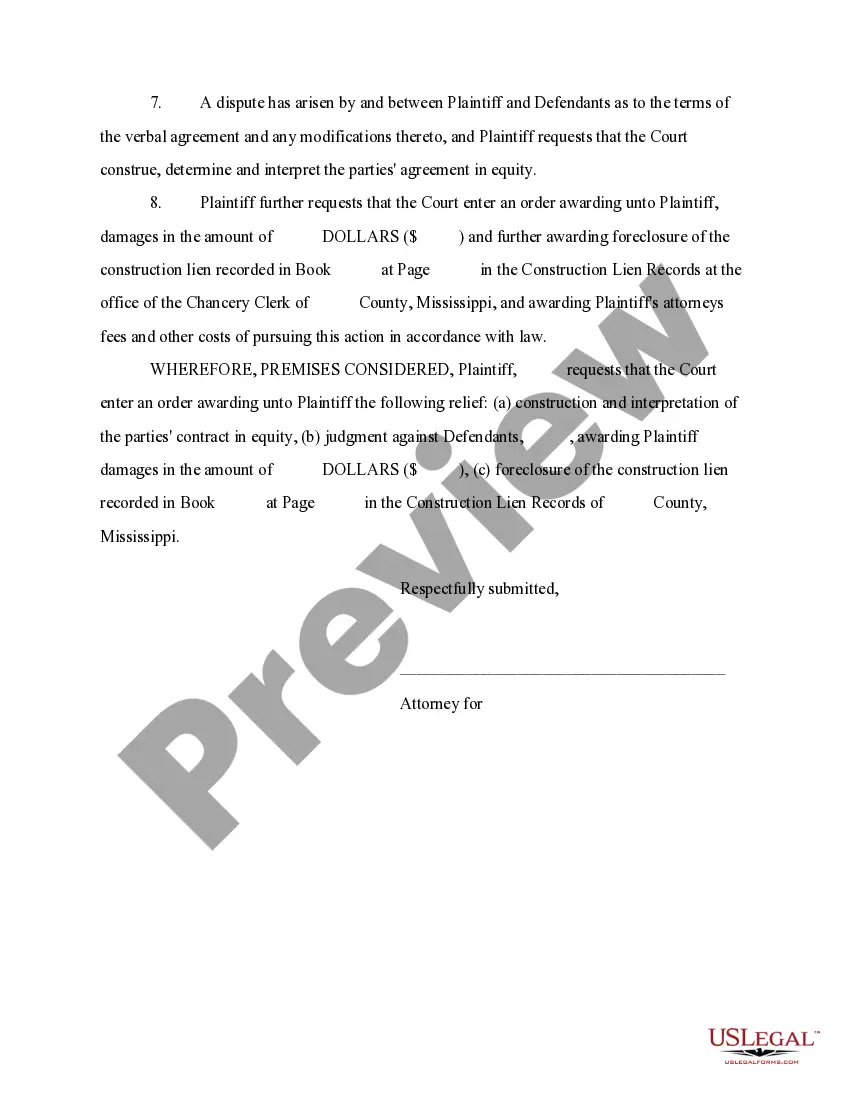
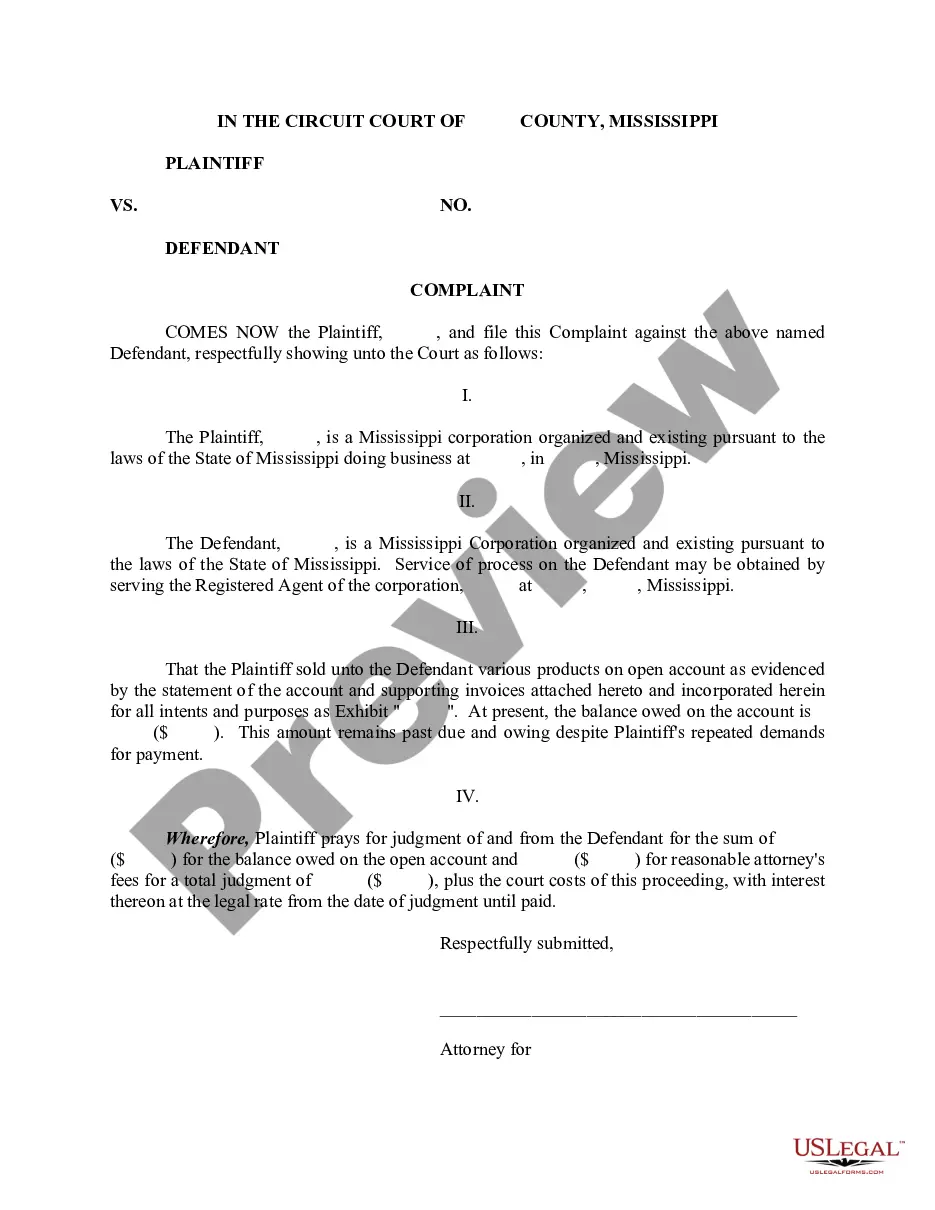
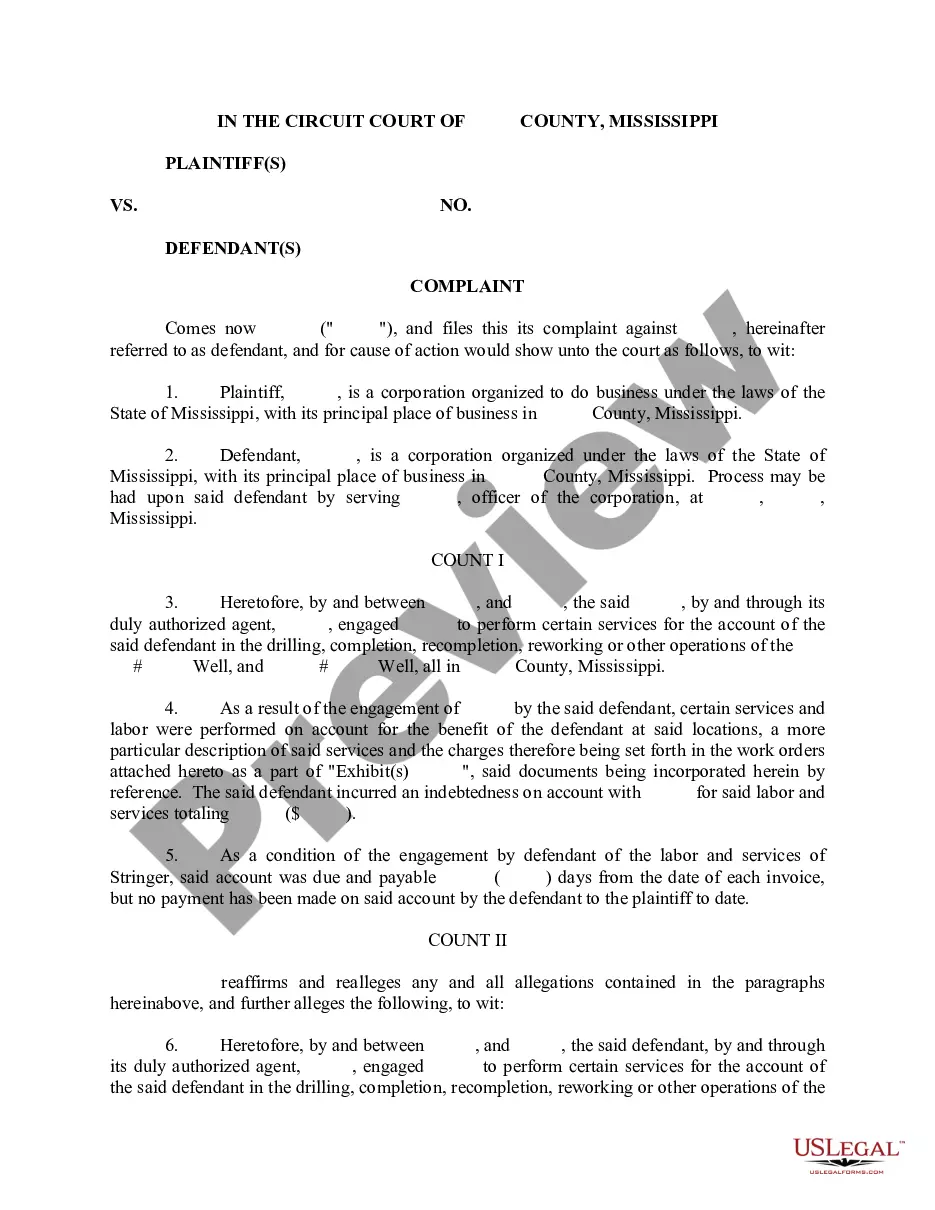
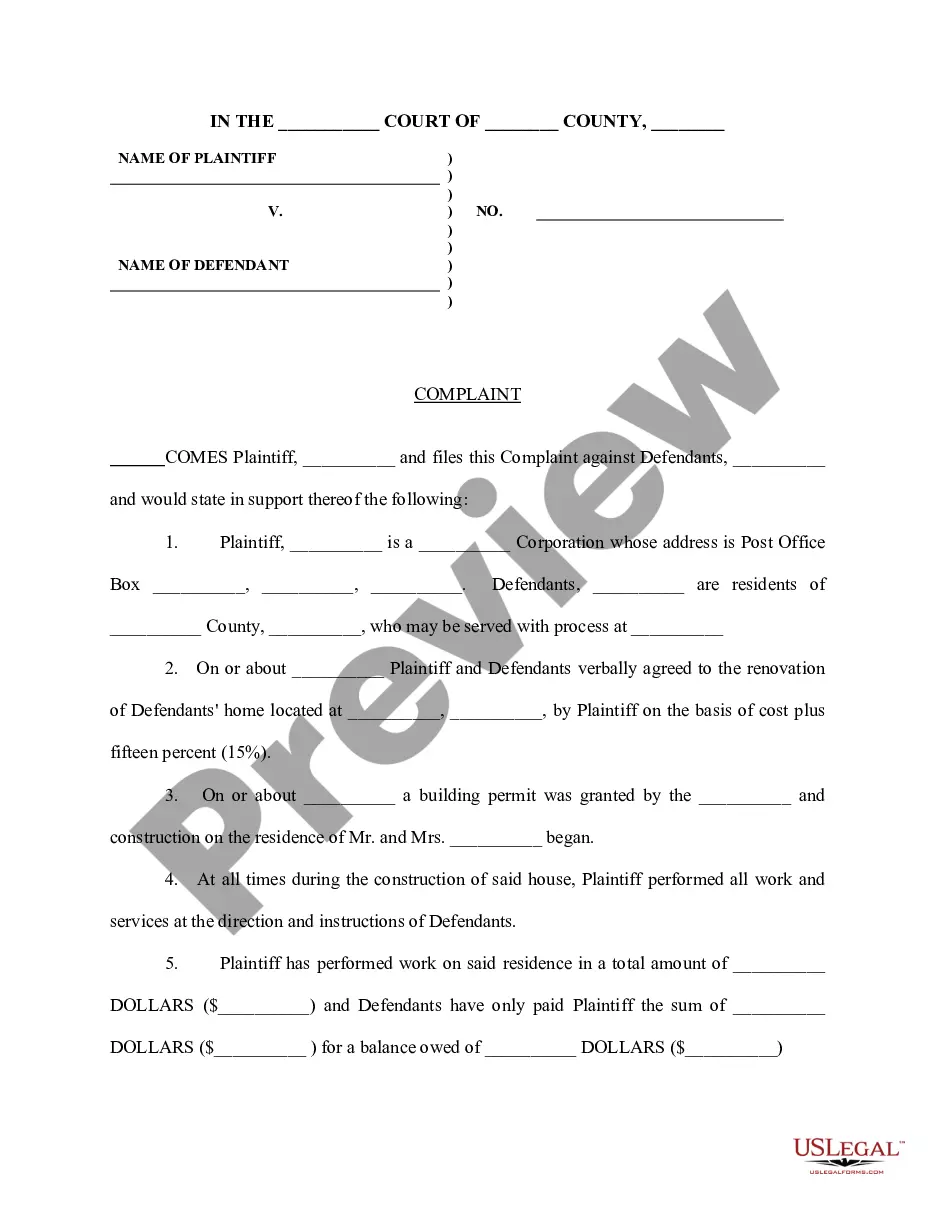
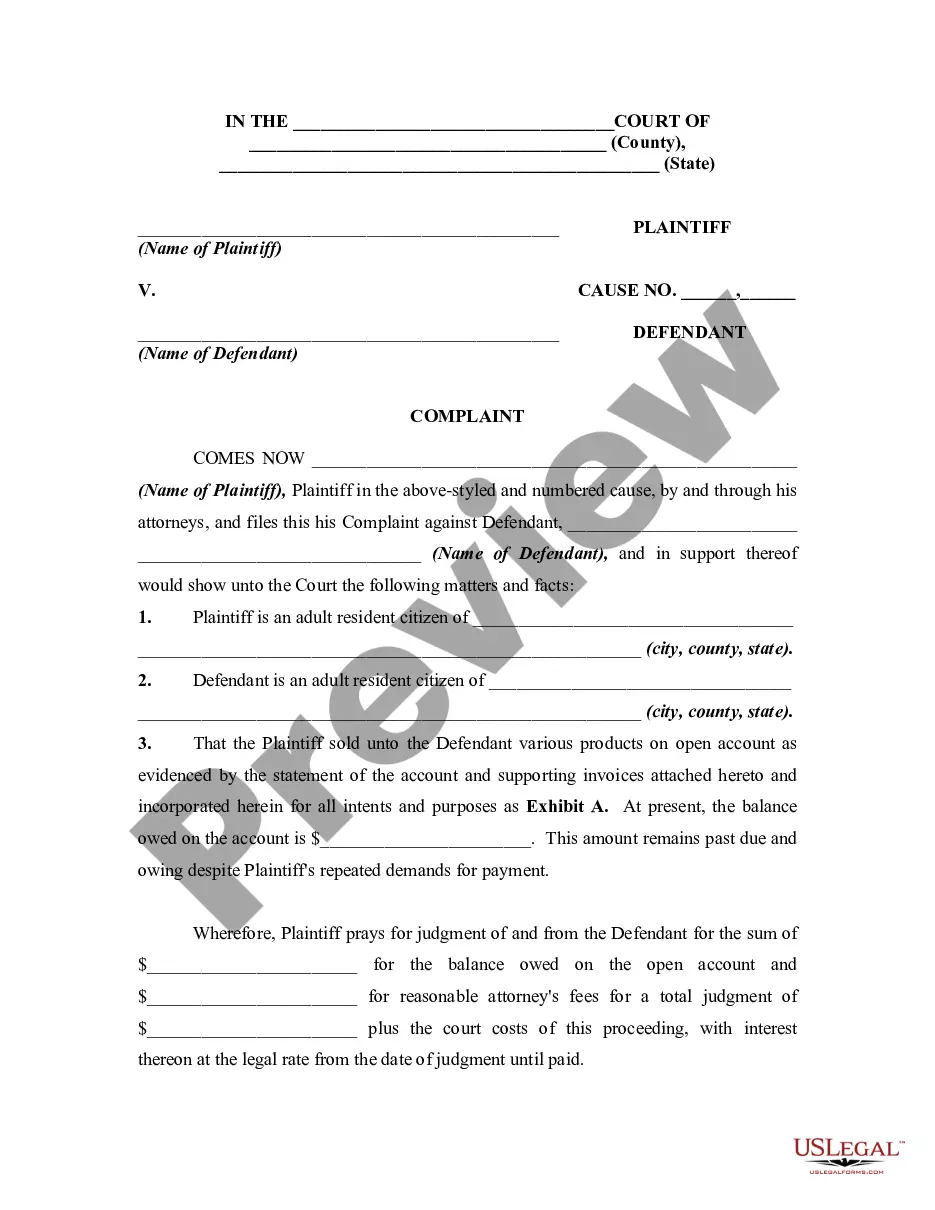
The Complaint by Contractor for Amount Due is a legal document used by contractors to file a complaint in a court when they have not received payment for work performed on a property. This form is specifically designed for cases of nonpayment following renovations and serves as a formal request for the court to address payment issues. It is distinct from other forms used in contracting disputes by focusing specifically on the claim for amounts owed.
Form components explained
- Identification of the parties involved, including the contractor and the property owner.
- Description of the work performed and any contracts or agreements in place.
- Details regarding the amount owed and any payments made to date.
- The legal basis for the claim, referencing applicable laws or contractual terms.
- A request for specific relief, such as the payment of the overdue amount.
Common use cases
This form should be used when a contractor has completed work on a property and has not been paid as agreed upon in a contract. It is appropriate in situations where attempts to collect payment have failed, and the contractor decides to pursue the matter legally. The form is typically filed before Mississippi Chancery Court under circumstances of disputed payments related to renovation or construction services.
Who should use this form
This form is suitable for contractors who:
- Have completed work on a property.
- Are owed money for services rendered, according to a contract or verbal agreement.
- Have tried to resolve the payment issue directly with the property owner without success.
- Are seeking legal recourse in Mississippi Chancery Court for unpaid invoices.
Completing this form step by step
- Identify the parties involved: clearly state the contractor's name and the property owner's name.
- Specify the details of the contract: provide information about the work done, including dates and scope of the project.
- Enter the amount due: clearly list any payments received and the remaining balance owed.
- Include legal references: cite any relevant laws or contractual provisions supporting your claim.
- Sign and date the form: ensure all parties involved have signed where required before submitting the complaint to the court.
Does this form need to be notarized?
Notarization is generally not required for this form. However, certain states or situations might demand it. You can complete notarization online through US Legal Forms, powered by Notarize, using a verified video call available anytime.
Get your form ready online
Our built-in tools help you complete, sign, share, and store your documents in one place.
Make edits, fill in missing information, and update formatting in US Legal Forms—just like you would in MS Word.
Download a copy, print it, send it by email, or mail it via USPS—whatever works best for your next step.
Sign and collect signatures with our SignNow integration. Send to multiple recipients, set reminders, and more. Go Premium to unlock E-Sign.
If this form requires notarization, complete it online through a secure video call—no need to meet a notary in person or wait for an appointment.
We protect your documents and personal data by following strict security and privacy standards.

Make edits, fill in missing information, and update formatting in US Legal Forms—just like you would in MS Word.

Download a copy, print it, send it by email, or mail it via USPS—whatever works best for your next step.

Sign and collect signatures with our SignNow integration. Send to multiple recipients, set reminders, and more. Go Premium to unlock E-Sign.

If this form requires notarization, complete it online through a secure video call—no need to meet a notary in person or wait for an appointment.

We protect your documents and personal data by following strict security and privacy standards.
Typical mistakes to avoid
- Failing to include all relevant parties in the complaint.
- Not specifying the exact amount owed or neglecting to provide documentation of past payments.
- Ignoring local legal requirements for formatting or procedures when filing the complaint.
- Forgetting to sign and date the form, which can render it invalid.
Benefits of completing this form online
- Convenience of accessing and downloading legal documents from anywhere, anytime.
- Editability allows contractors to customize the form easily to fit their specific situation.
- Reliability, as forms are drafted by licensed attorneys and adhere to legal standards.
Main things to remember
- The Complaint by Contractor for Amount Due is essential for contractors seeking payment through legal means.
- Completing this form accurately increases the likelihood of a successful claim in court.
- It is important to follow state-specific guidelines and procedural requirements when filing.
Looking for another form?


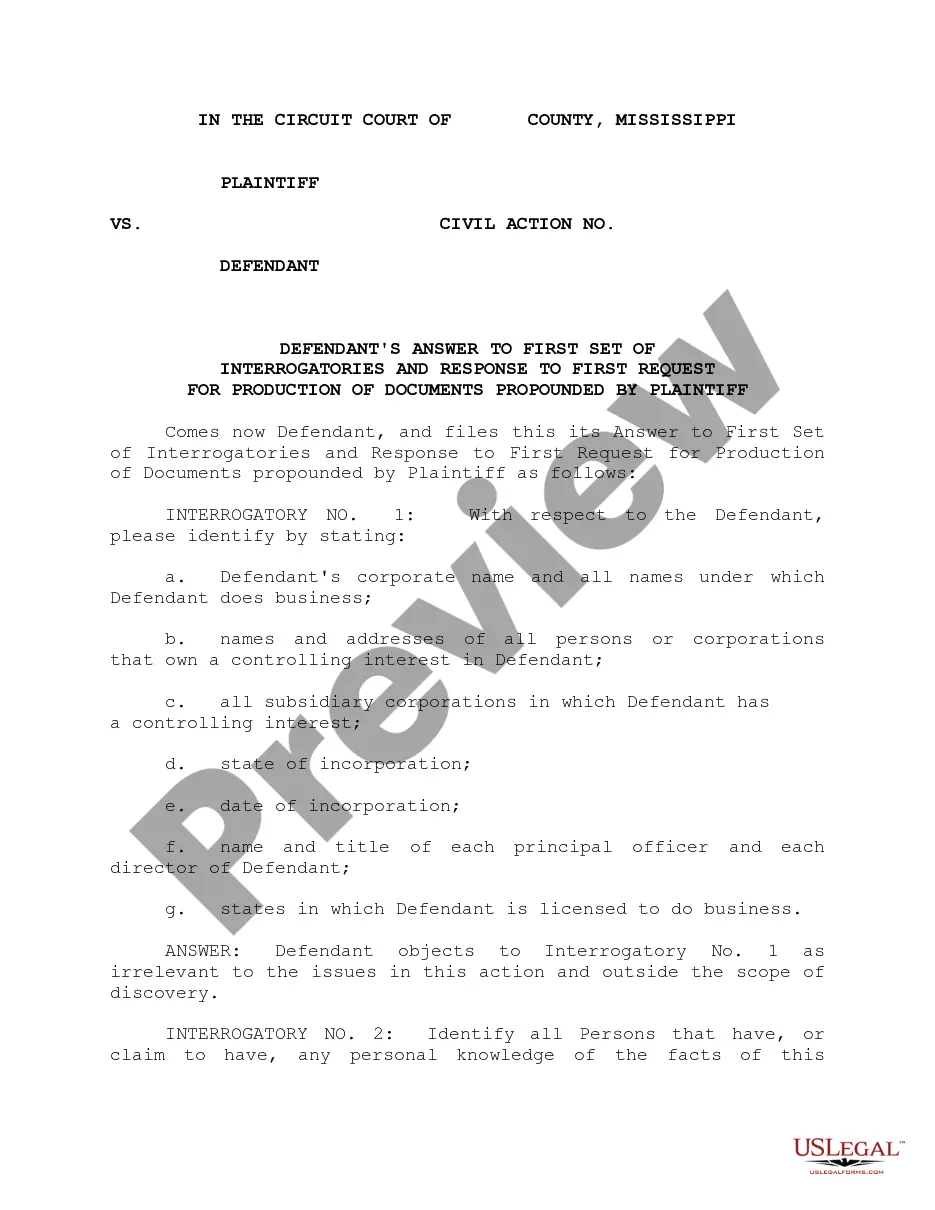
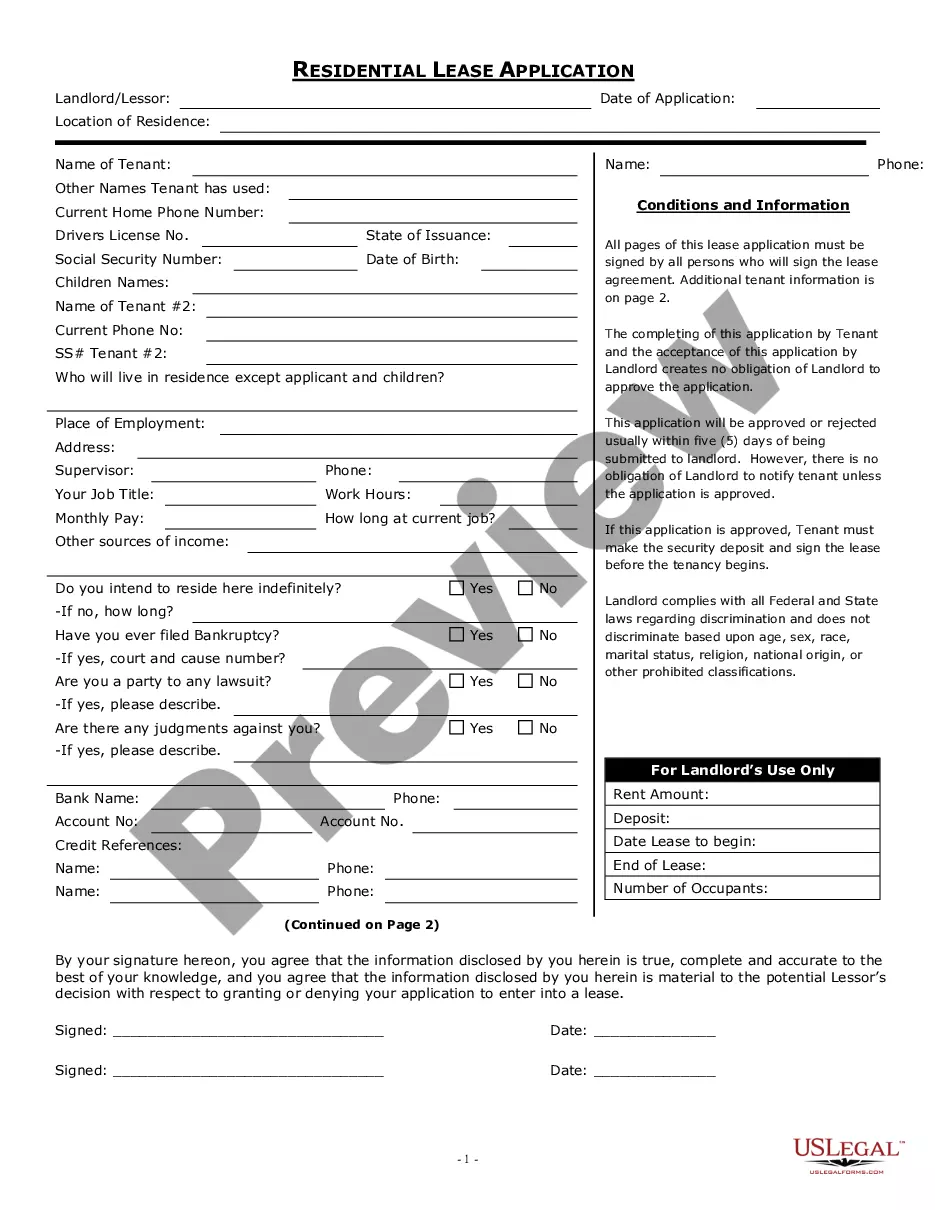
Form popularity
FAQ
First, Fire Your Contractor (If You Can) If The Contractor Is Bonded, Submit A Claim With The Proper Agency. File A Complaint With The Applicable State Licensing Board. Hire An Attorney. File A Case In Small Claims Court. Leave A Bad Review.
Never Tell a Contractor They are the Only One Bidding on the Job. Don't Tell a Contractor Your Budget. Never Ask a Contractor for a Discount if You Pay Upfront. Don't Tell a Contractor That You Aren't in A Hurry. Do Not Let a Contractor Choose the Materials.
If the job is incomplete and a solution cannot be found, you could stop paying the contractor, fire your contractor and/or hire another contractor to complete the job (remember to keep a paper trail of work completed and costs). 6. File a complaint with a local government agency, like the Consumer Beware List.
Assertively confront your contractor.When talking with the contractor, explain why you are unhappy with his work, and get him to sign a document detailing the solutions that you have both agreed on, so that if he flakes, you have written proof.
Failing to Communicate. There is nothing worse than having a contractor with whom you can't communicate. Subcontracting. Producing Low-Quality Work. Extending the Timeline. Lacking Cleanliness. Springing Additional Fees. Entering the Home Uninvited. Having No Concern for Safety.
First, compile all paperwork. Fire them. File a claim if contractor is bonded. File a complaint with the state licensing board if contractor is licensed. Request mediation or arbitration. File a suit in small claims court. Hire an attorney. File complaints and post public reviews.
It may become necessary to sue the contractor for breach of contract or an incomplete job done. Specific clauses in the contract will generally back up the owner in an attempt to hold the contractor for breach, violations and damages.
Make sure the contractor obtains a permit if the job requires one. Ask for a copy of the contractor's license and proof of insurance. Pay by check and get a receipt. Document any changes to the contract in writing.
They Don't Have Good Reviews. They Overcommit to Work. They Lack the Necessary Experience. They Start Work, Disappear, Then Start Again. Their Rates Are Significantly Lower Than Others. They Don't Get the Right Permits. They Don't Like Written Agreements. Can't Provide Current References & Project Samples.