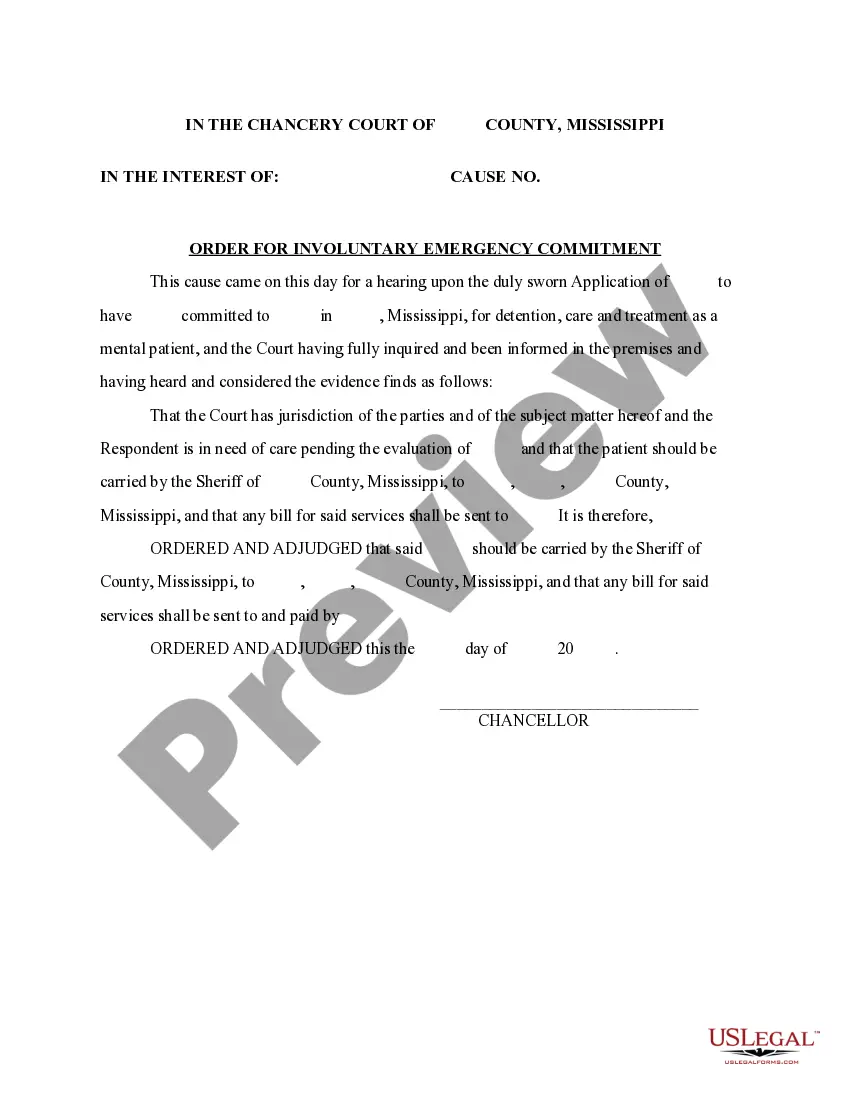
Mississippi Order for Involuntary Emergency Commitment
What this document covers
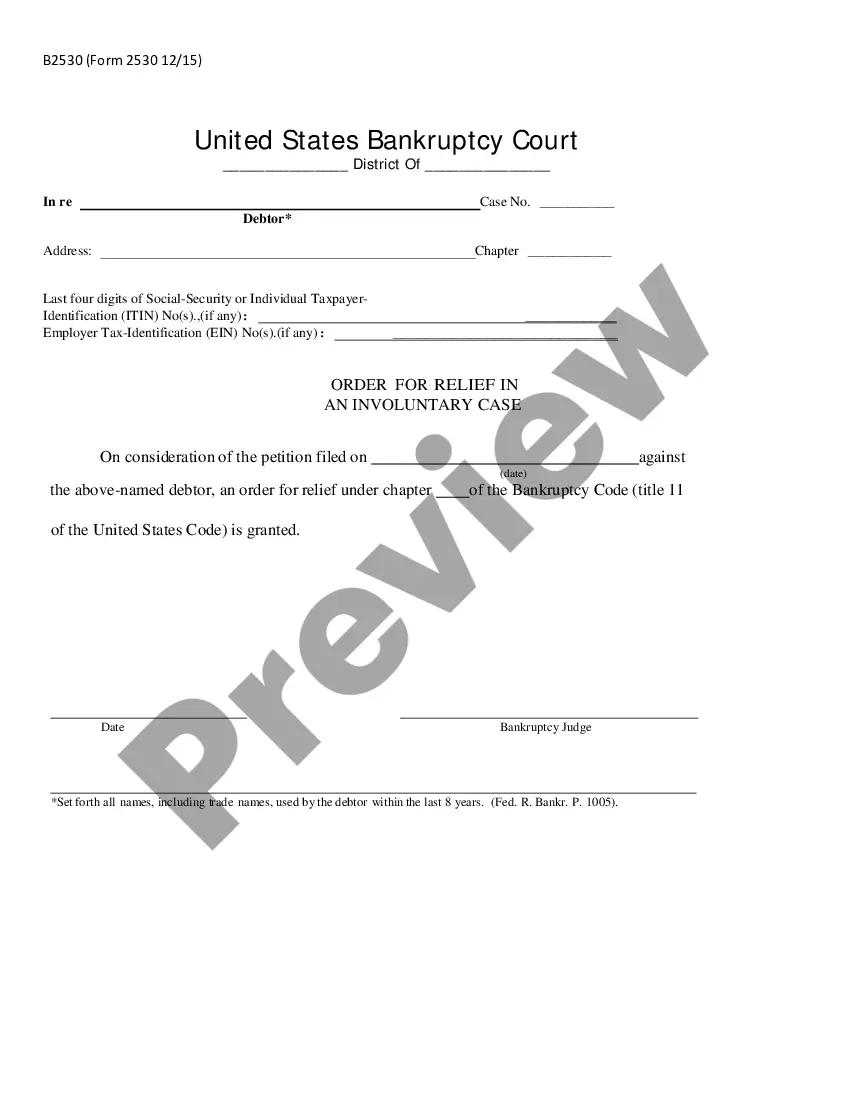
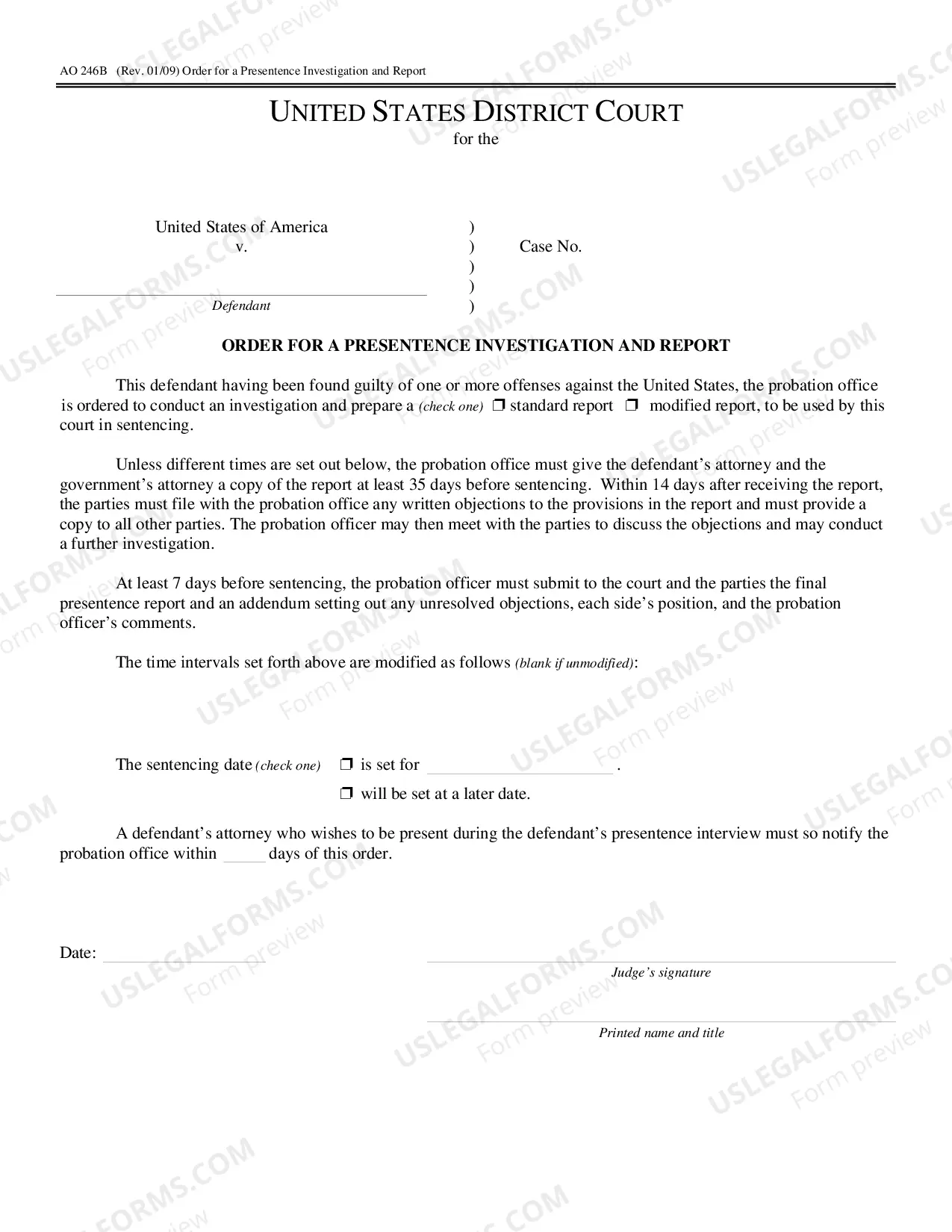
An Order for Involuntary Emergency Commitment is a legal document issued by a court that requires an individual to receive emergency mental health treatment against their will. This form is designed to initiate a process where a judge recognizes that a person poses a danger to themselves or others and mandates immediate intervention. It differs from voluntary commitment forms, as it does not require the consent of the individual being committed.
Key parts of this document
- Title of the order with court information
- Identification of the individual being committed
- Findings of fact justifying the commitment
- Terms of the commitment including duration and treatment requirements
- Signature and date from the presiding judge
Common use cases
This form should be used in situations where an individual is deemed to be a danger to themselves or others due to mental illness and requires immediate psychiatric intervention. It may be relevant during situations such as severe mental health crises, threats of harm, or when the person is incapable of making informed decisions about their treatment.
Who this form is for
- Family members or guardians seeking help for a loved one in crisis
- Mental health professionals recommending emergency commitment
- Legal representatives involved in mental health law
- Law enforcement officials responding to mental health emergencies
How to complete this form
- Begin by filling out the title of the court and related information at the top of the document.
- Provide full identification details for the individual being committed, including their name and any relevant identifiers.
- Detail the findings of fact that justify the need for commitment, clearly outlining the reasons for the emergency intervention.
- Specify the terms of the commitment, including the duration of the order and any required treatment protocols.
- Ensure the presiding judge signs the order and date it appropriately.
Does this document require notarization?
This form usually doesn’t need to be notarized. However, local laws or specific transactions may require it. Our online notarization service, powered by Notarize, lets you complete it remotely through a secure video session, available 24/7.
Get your form ready online
Our built-in tools help you complete, sign, share, and store your documents in one place.
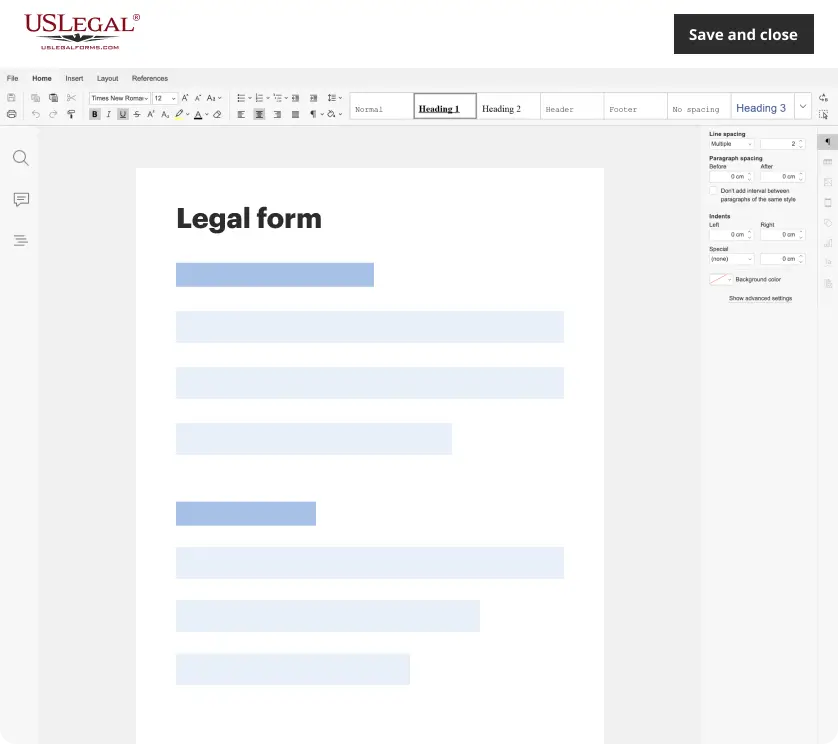
Make edits, fill in missing information, and update formatting in US Legal Forms—just like you would in MS Word.
Download a copy, print it, send it by email, or mail it via USPS—whatever works best for your next step.
Sign and collect signatures with our SignNow integration. Send to multiple recipients, set reminders, and more. Go Premium to unlock E-Sign.
If this form requires notarization, complete it online through a secure video call—no need to meet a notary in person or wait for an appointment.
We protect your documents and personal data by following strict security and privacy standards.
Make edits, fill in missing information, and update formatting in US Legal Forms—just like you would in MS Word.
Download a copy, print it, send it by email, or mail it via USPS—whatever works best for your next step.
Sign and collect signatures with our SignNow integration. Send to multiple recipients, set reminders, and more. Go Premium to unlock E-Sign.

If this form requires notarization, complete it online through a secure video call—no need to meet a notary in person or wait for an appointment.

We protect your documents and personal data by following strict security and privacy standards.
Common mistakes to avoid
- Failing to include sufficient evidence in the findings of fact section.
- Not providing accurate identification details for the individual.
- Leaving the judge's signature and date fields blank.
- Using outdated or incorrect legal terminology for your jurisdiction.
Why complete this form online
- Immediate access to accurately drafted legal documents, saving time and effort.
- Easy customization to fit specific legal needs and circumstances.
- Convenient downloading options for printing or electronic submission.
Looking for another form?


Form popularity
FAQ
What happens during an involuntary hold? When a person is detained for up to 72 hours, the emergency facility or hospital is required to do an evaluation of that person, taking into account his/her medical, psychological, educational, social, financial and legal situation.
Commitment Process Any citizen of Mississippi can initiate the process by submitting a sworn statement requesting psychiatric treatment for that person. The statement must include strong evidence that the person is dangerous to him or herself or to others by reason of mental illness.
Any citizen of Mississippi can initiate the process by submitting a sworn statement requesting psychiatric treatment for that person. The statement must include strong evidence that the person is dangerous to him or herself or to others by reason of mental illness.
The criteria for involuntary hospitalization are as follows: patients must exhibit dangerous behavior toward themselves or others, they must be helpless and unable to provide for their basic daily needs, and there is a danger of essential harm to their mental health if they do not receive mental care.
The laws for Treatment Orders vary by state, but generally speaking, a mental health professional can apply for an order, which must then be approved by a legal authority such as a magistrate or tribunal.
Involuntary Patients You have the right to refuse medical treatment or treatment with medications (except in an emergency) unless a capacity hearing is held and a hearing officer or a judge finds that you do not have the capacity to consent to or refuse treatment.
Call 1-800-273-TALK or text MHA to 741741 if you are in crisis. Look up your local MHA affiliate for services in your area. Find a therapist. Find a support group. Plan for crisis by setting up a Psychiatric Advance Directive. Is hospitalization necessary? Read more about inpatient options.