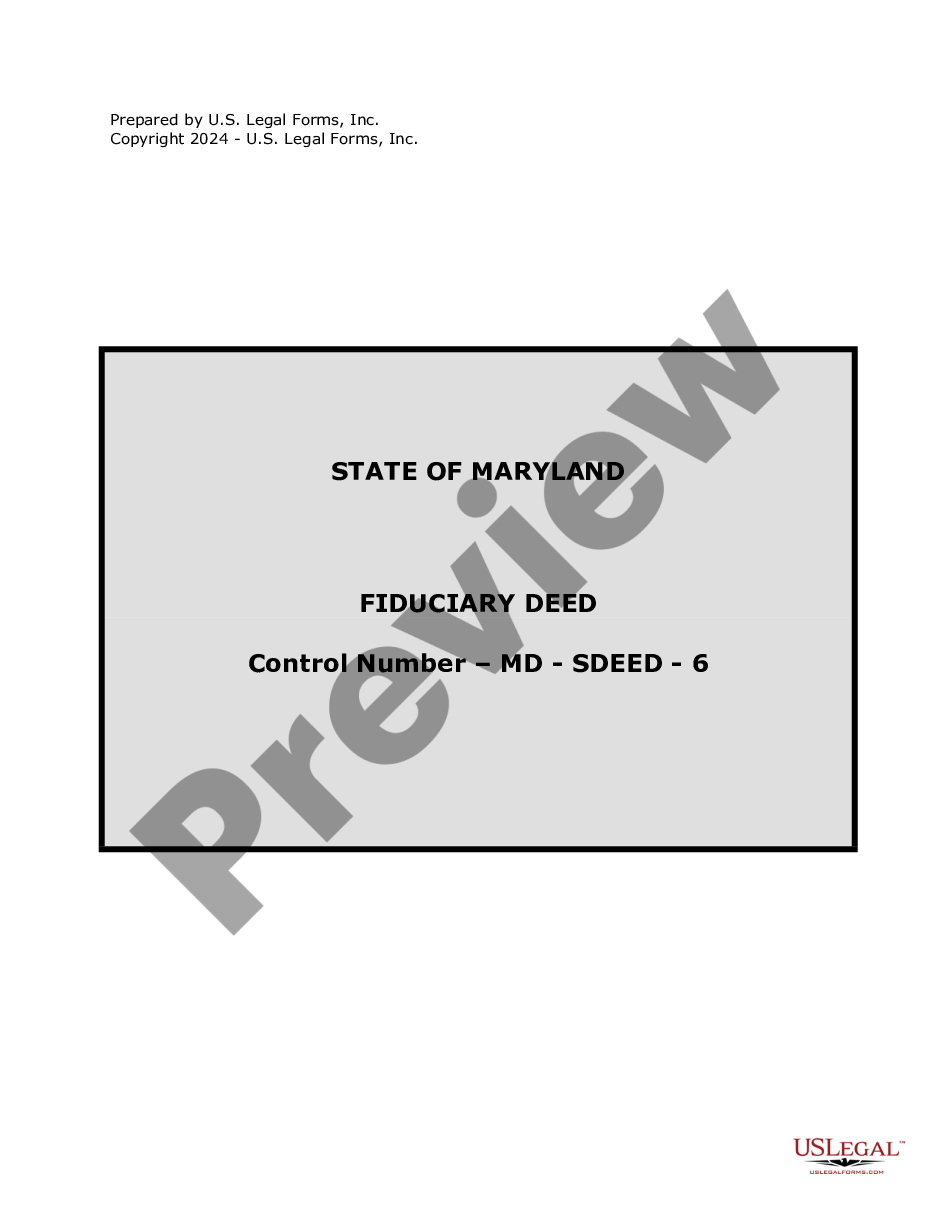
Maryland Fiduciary Deed for use by Executors, Trustees, Trustors, Administrators and other Fiduciaries
What is this form?
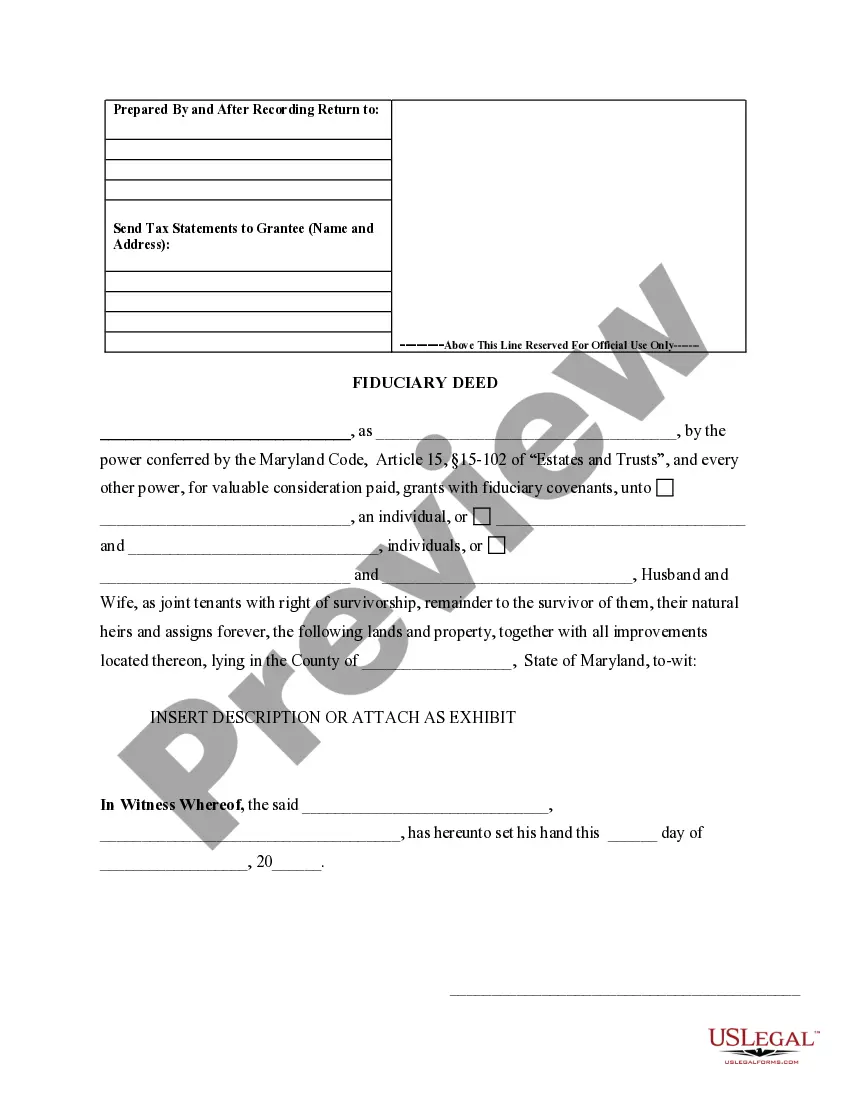
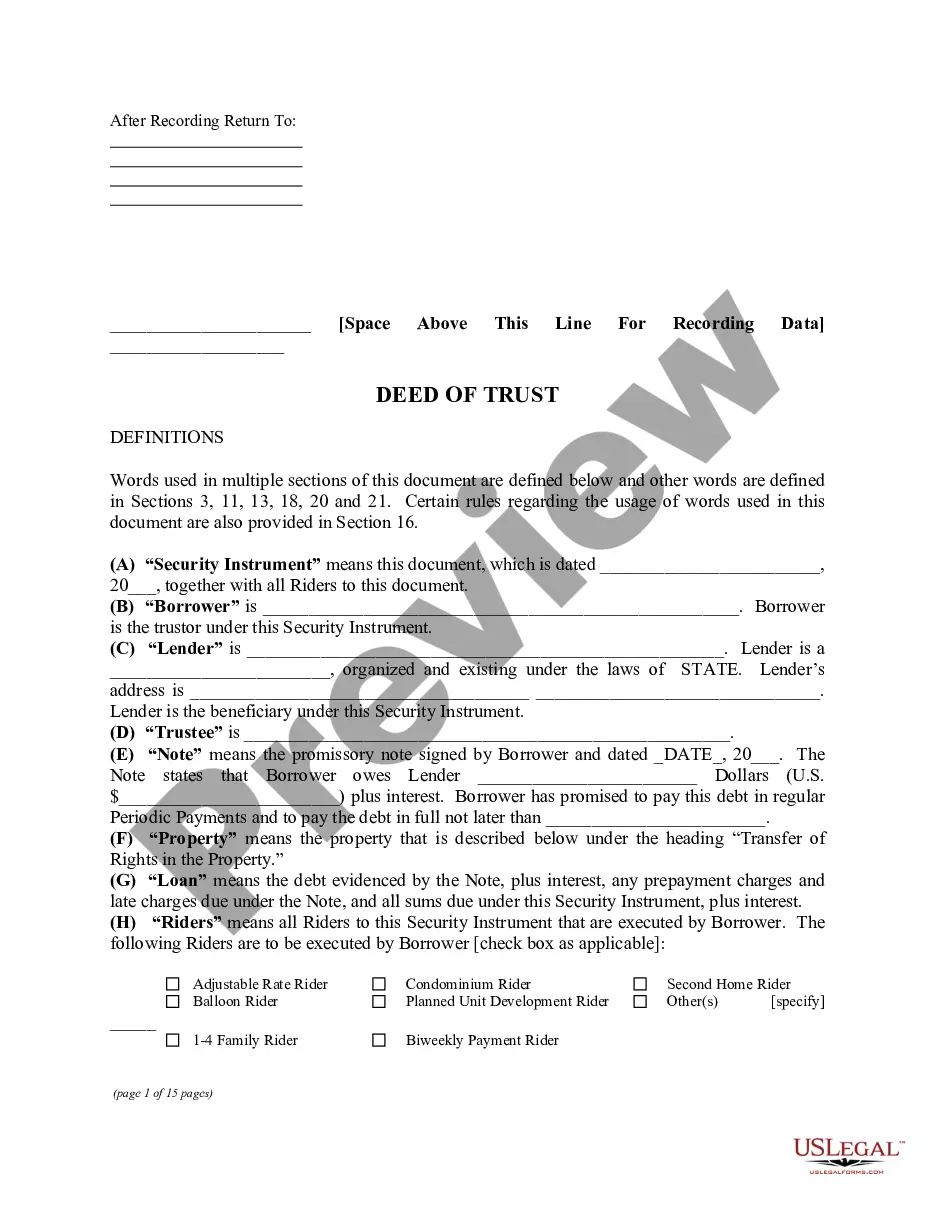
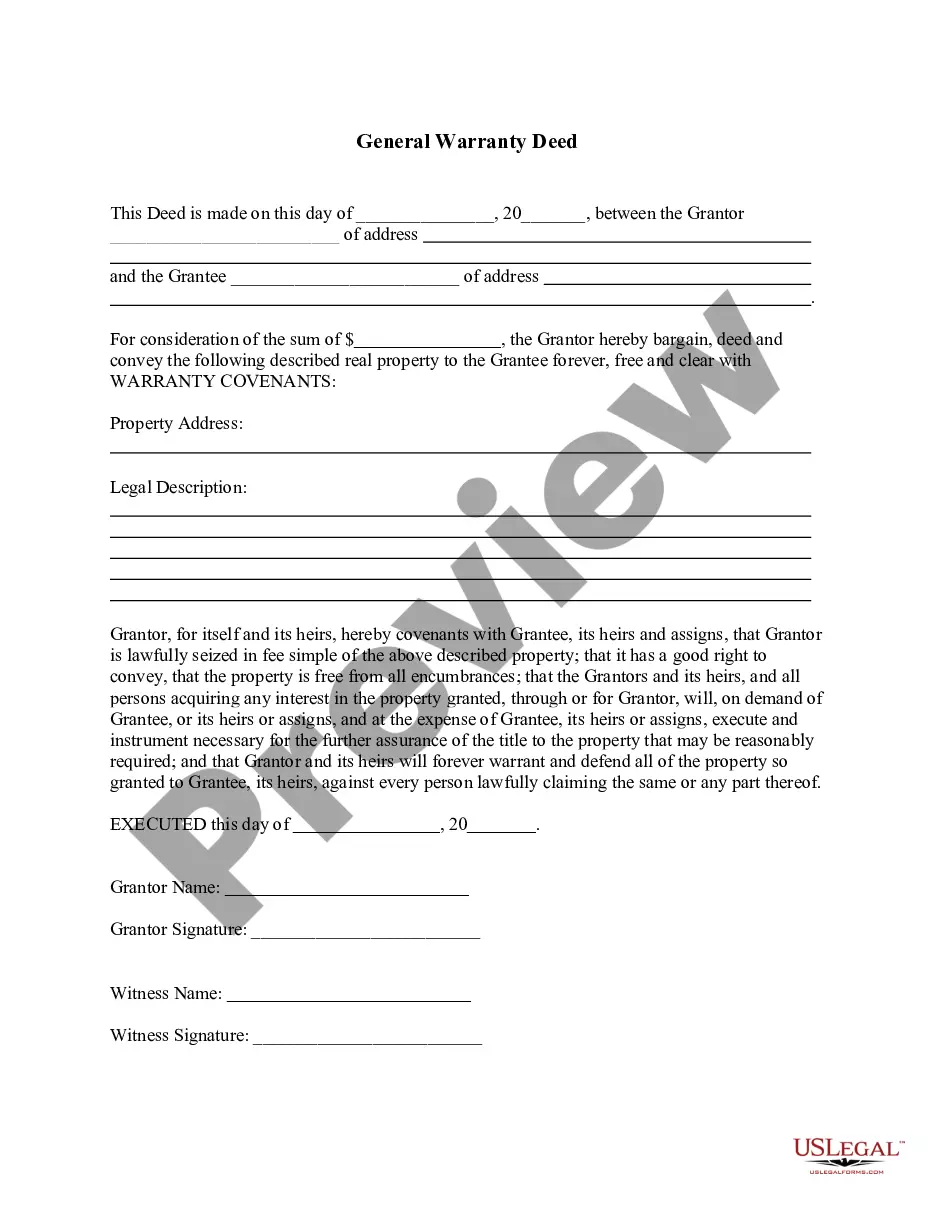
The Fiduciary Deed is a legal document used by individuals in fiduciary roles, such as executors, trustees, or administrators, to transfer real property. Unlike traditional deeds, this form receives special consideration due to the duties the grantor holds, ensuring that property transfers are handled according to the legal responsibilities inherent in their position. This form is essential for executing property transfers under the authority granted by the Maryland Code.
Key components of this form
- Grantor details, including name, title, and authority.
- Identification of the Grantee, who will receive the property.
- Description of the property being transferred.
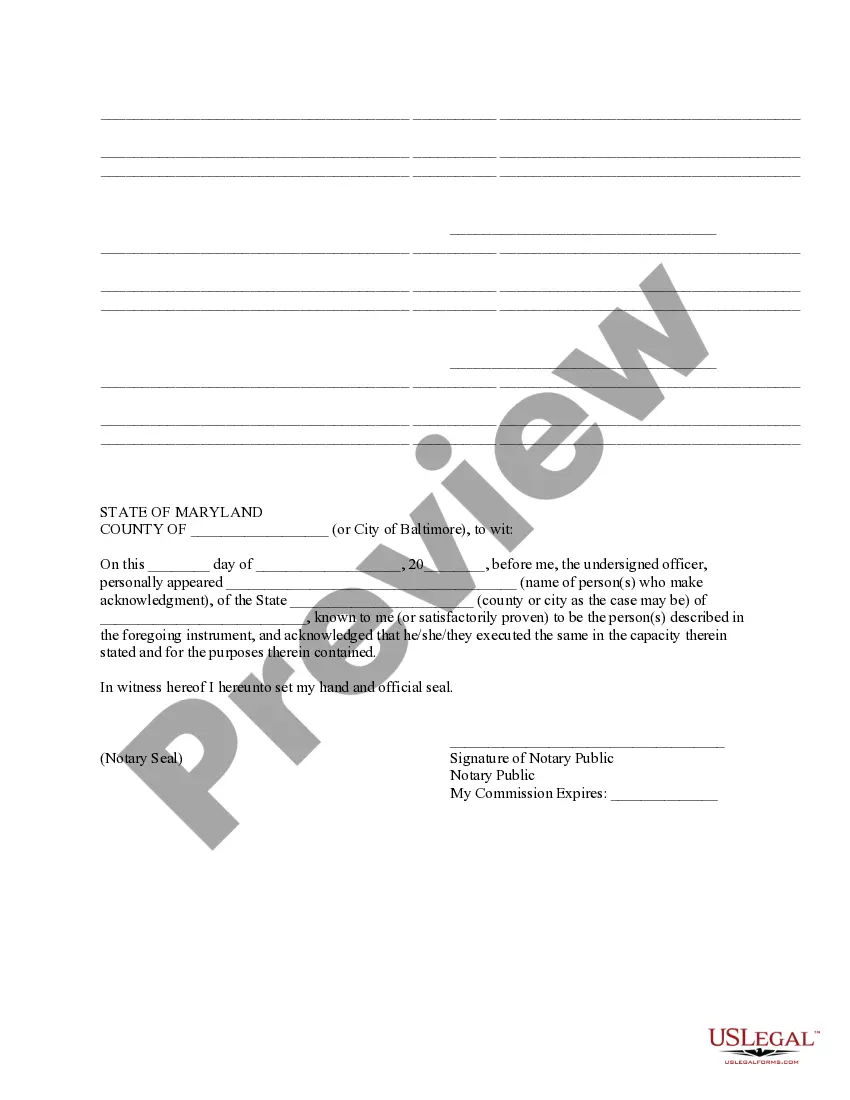
- Signature lines for the grantor and witnesses to validate the deed.
- Notary acknowledgment section for further legal confirmation.


When to use this document
This Fiduciary Deed should be used when an executor, trustee, guardian, or conservator needs to legally transfer ownership of real estate as part of their fiduciary responsibilities. Common scenarios include settling an estate, conveying trust property to beneficiaries, or managing conservatorship assets.
Who needs this form
- Executors of estates managing property after a person's death.
- Trustees overseeing trusts that require property transfers.
- Guardians handling the affairs of minors or incapacitated individuals.
- Administrators obligated to distribute assets of the deceased.
- Conservators managing the financial and property affairs of individuals unable to do so themselves.
Instructions for completing this form
- Identify the grantor's name and fiduciary title, indicating their authority.
- Specify the details of the grantee, including individual names or entities receiving the property.
- Describe the property being transferred, including any attachments if necessary.
- Gather signatures from the grantor and witnesses as required.
- Complete the notary block to certify the authenticity of the signatures.
Does this form need to be notarized?
This form must be notarized to be legally valid. US Legal Forms provides secure online notarization powered by Notarize, allowing you to complete the process through a verified video call.
Get your form ready online
Our built-in tools help you complete, sign, share, and store your documents in one place.
Make edits, fill in missing information, and update formatting in US Legal Forms—just like you would in MS Word.
Download a copy, print it, send it by email, or mail it via USPS—whatever works best for your next step.
Sign and collect signatures with our SignNow integration. Send to multiple recipients, set reminders, and more. Go Premium to unlock E-Sign.
If this form requires notarization, complete it online through a secure video call—no need to meet a notary in person or wait for an appointment.
We protect your documents and personal data by following strict security and privacy standards.

Make edits, fill in missing information, and update formatting in US Legal Forms—just like you would in MS Word.

Download a copy, print it, send it by email, or mail it via USPS—whatever works best for your next step.

Sign and collect signatures with our SignNow integration. Send to multiple recipients, set reminders, and more. Go Premium to unlock E-Sign.

If this form requires notarization, complete it online through a secure video call—no need to meet a notary in person or wait for an appointment.

We protect your documents and personal data by following strict security and privacy standards.
Common mistakes to avoid
- Failing to include complete property descriptions.
- Omitting signatures from witnesses which may invalidate the deed.
- Not completing the notary section, which may hinder legal enforceability.
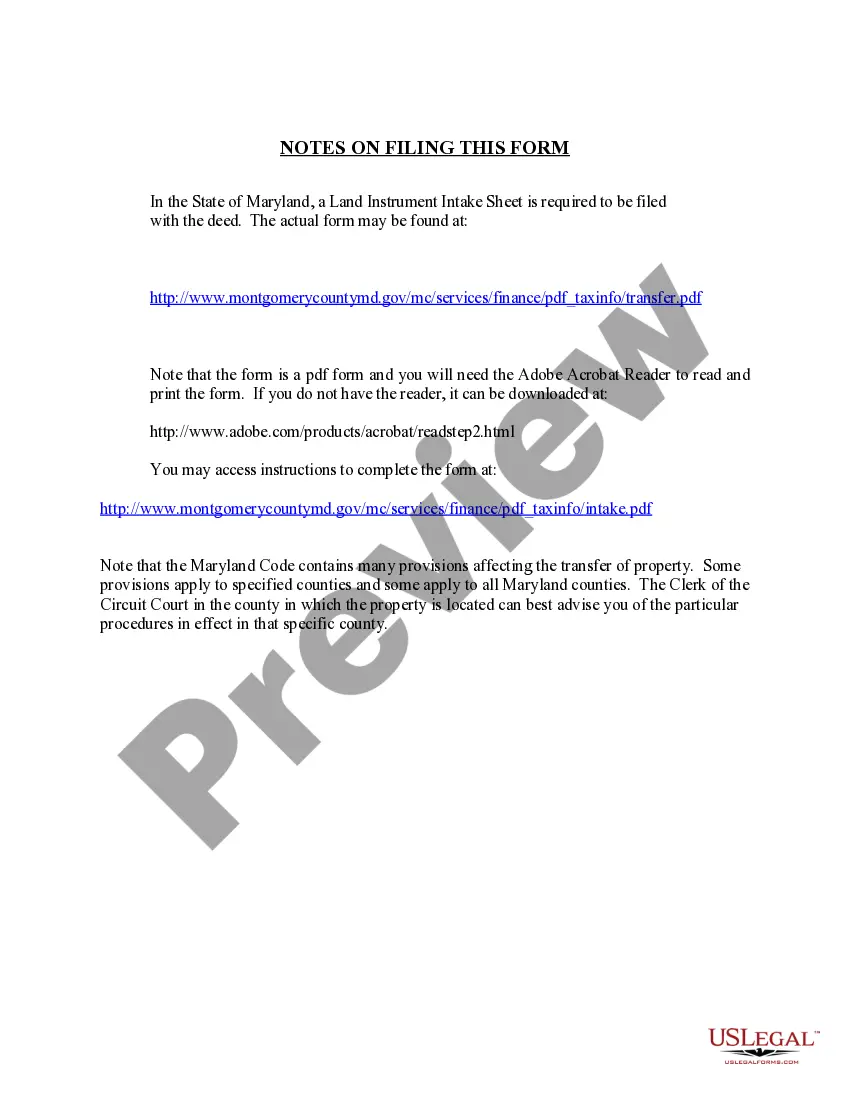
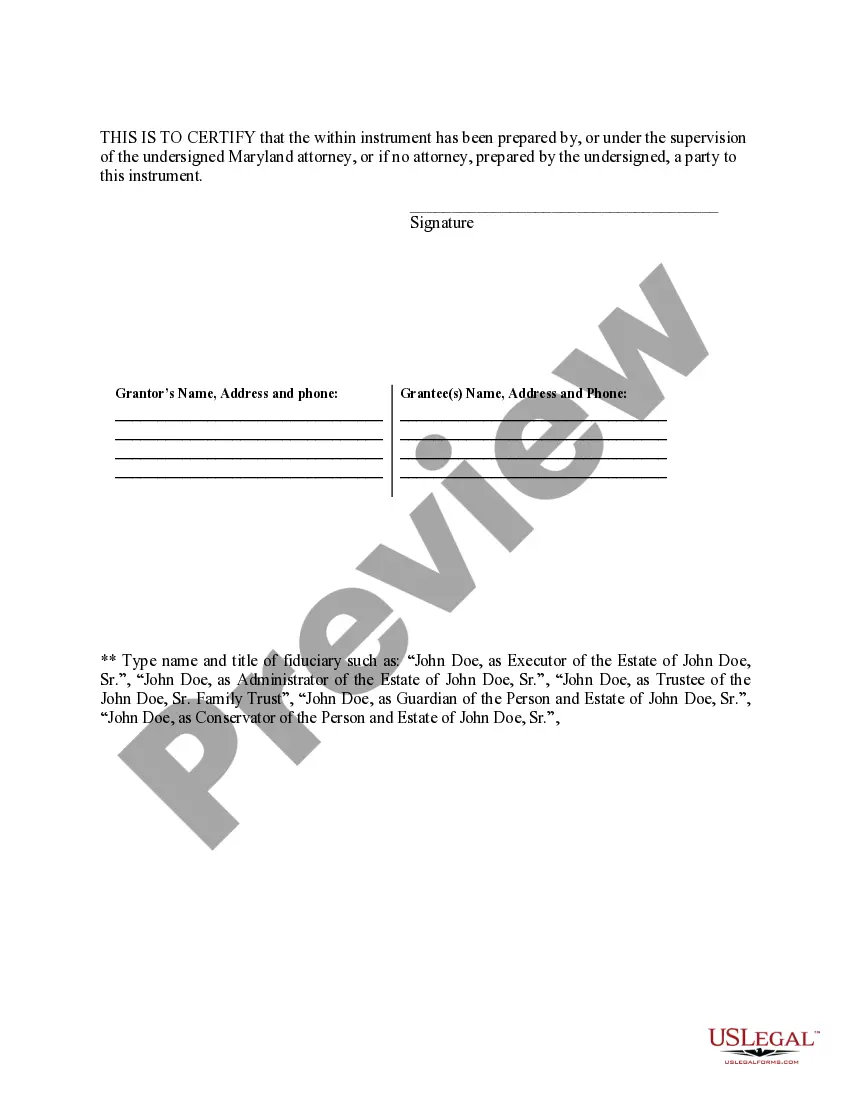
- Forgetting to attach the Land Instrument Intake Sheet required in Maryland.
Benefits of using this form online
- Immediate access to a legally vetted template drafted by licensed attorneys.
- Editable format allows for personalized changes before printing.
- Easy downloading for quick completion and filing.
- Help available to resolve any questions or issues during completion.
Summary of main points
- The Fiduciary Deed facilitates the legal transfer of property by fiduciaries.
- Proper completion and notarization are essential for legal validity.
- Understanding your role as a fiduciary is crucial before using the form.
- Always check local requirements for additional filings or procedures necessary for the deed.
Looking for another form?
Form popularity
FAQ
Realty trusts are a method of owning real estate used primarily in Massachusetts.The owner can make the gifts without having to record new deeds at the registry of deeds. Typically, a realty trust will refer to a schedule of beneficiaries which lists the true owners of the property.
Trusts have many varied uses and benefits, primary among them: 1) ongoing professional management of assets; 2) reduction of tax liabilities and probate costs; 3) keeping assets out of a surviving spouse's estate while providing income for life; 4) care for special needs individuals; 4) protecting individuals from poor
Typically, a realty trust will refer to a schedule of beneficiaries which lists the true owners of the property. The trustees simply act on behalf of the beneficiary or beneficiaries listed on the schedule, which is not recorded at the registry of deeds.
Only the trustee not the beneficiaries can access the trust checking account. They can write checks or make electronic transfers to a beneficiary, and even withdraw cash, though that could make it more difficult to keep track of the trust's finances. (The trustee must keep a record of all the trust's finances.)
A trust account is used exclusively for money received or held by a real estate agent for or on behalf of another person in relation to a real estate transaction and is not to be used to hold moneys for any other purpose.
The purpose of a trust account in real estateTrust accounts exist to protect everyone involved in the real estate transaction. They are heavily governed by legislation and failure to comply can result in hefty penalties and even loss of licence.
Trusts allow for assets to be split between family members and are an efficient way to house complex assets. They also offer protection from creditors. Assets that belong to a trust are also not subject to executors' fees, which can amount to up to 3.5% plus VAT on the gross value of your estate.
The advantages of placing your house in a trust include avoiding probate court, saving on estate taxes and possibly protecting your home from certain creditors. Disadvantages include the cost of creating the trust and the paperwork.