Maryland Rental Lease Pooling Provision
Overview of this form
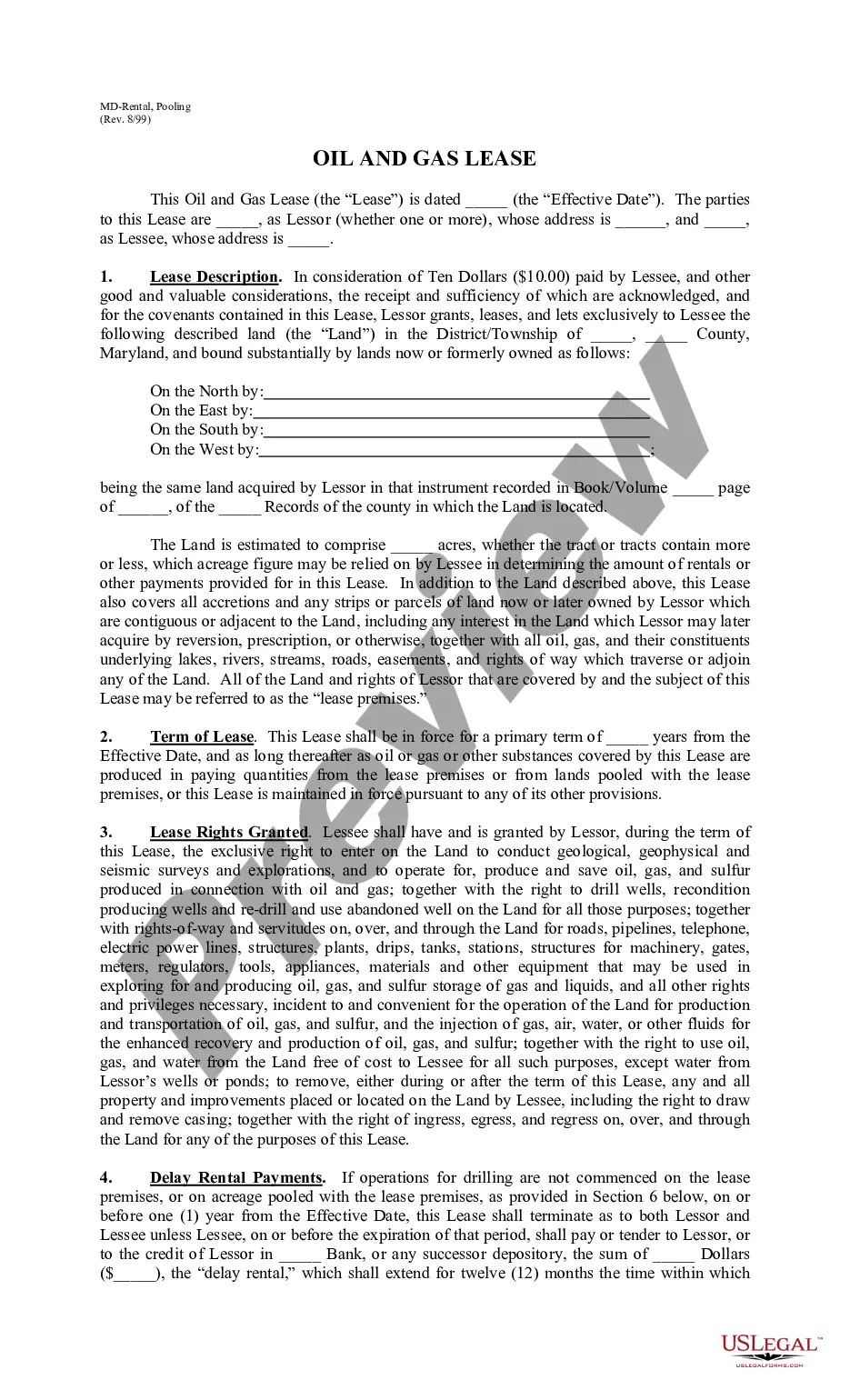
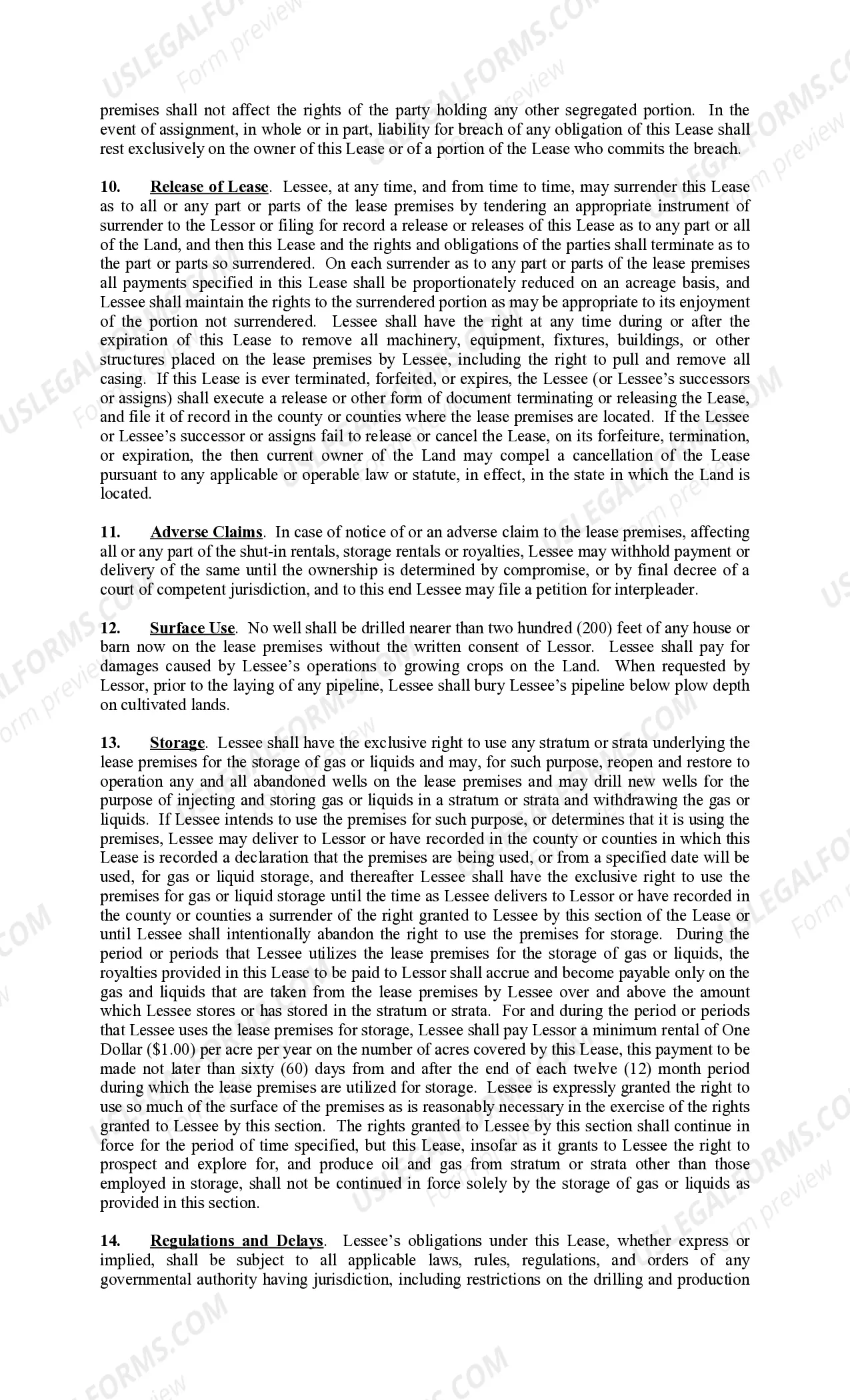
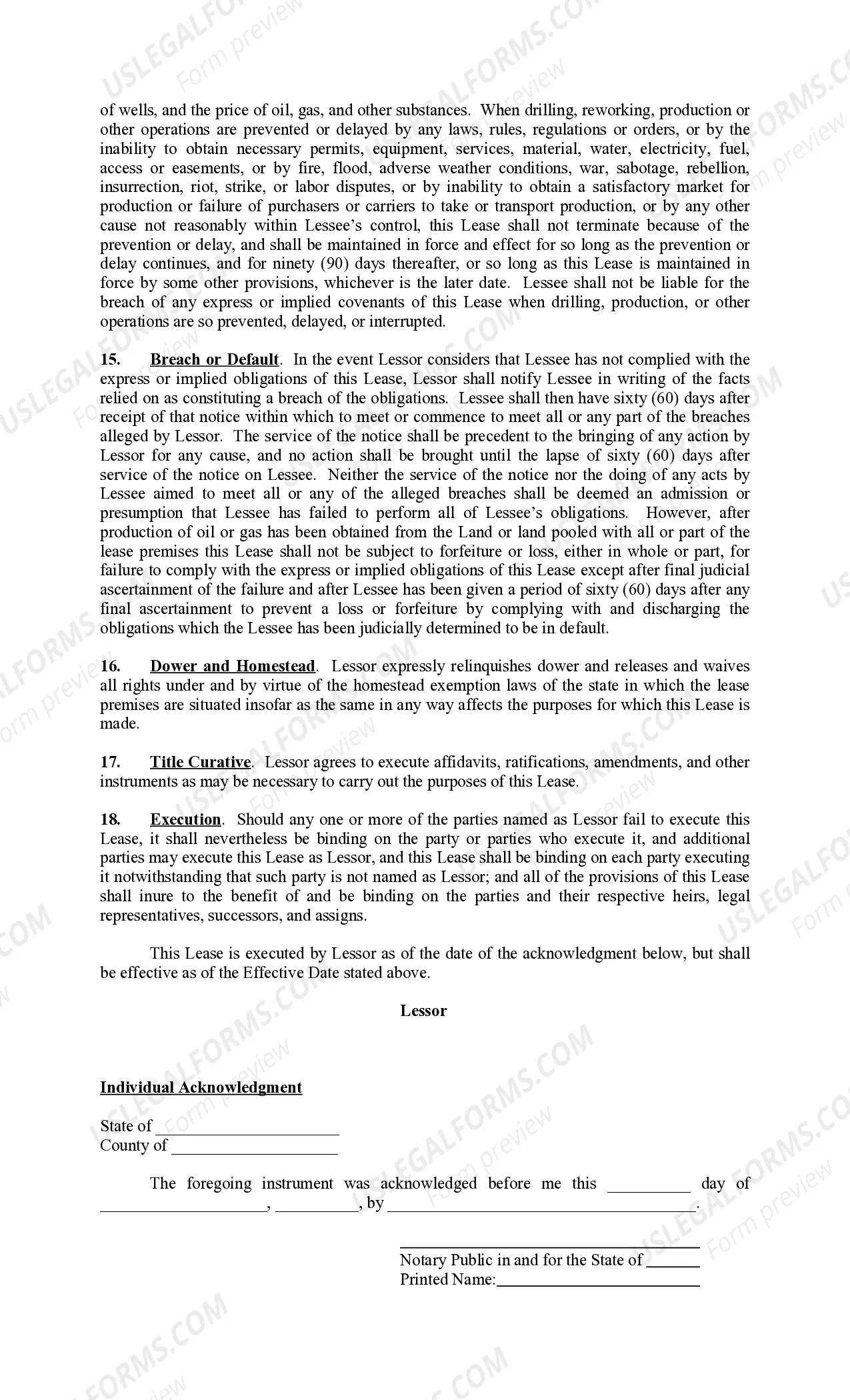
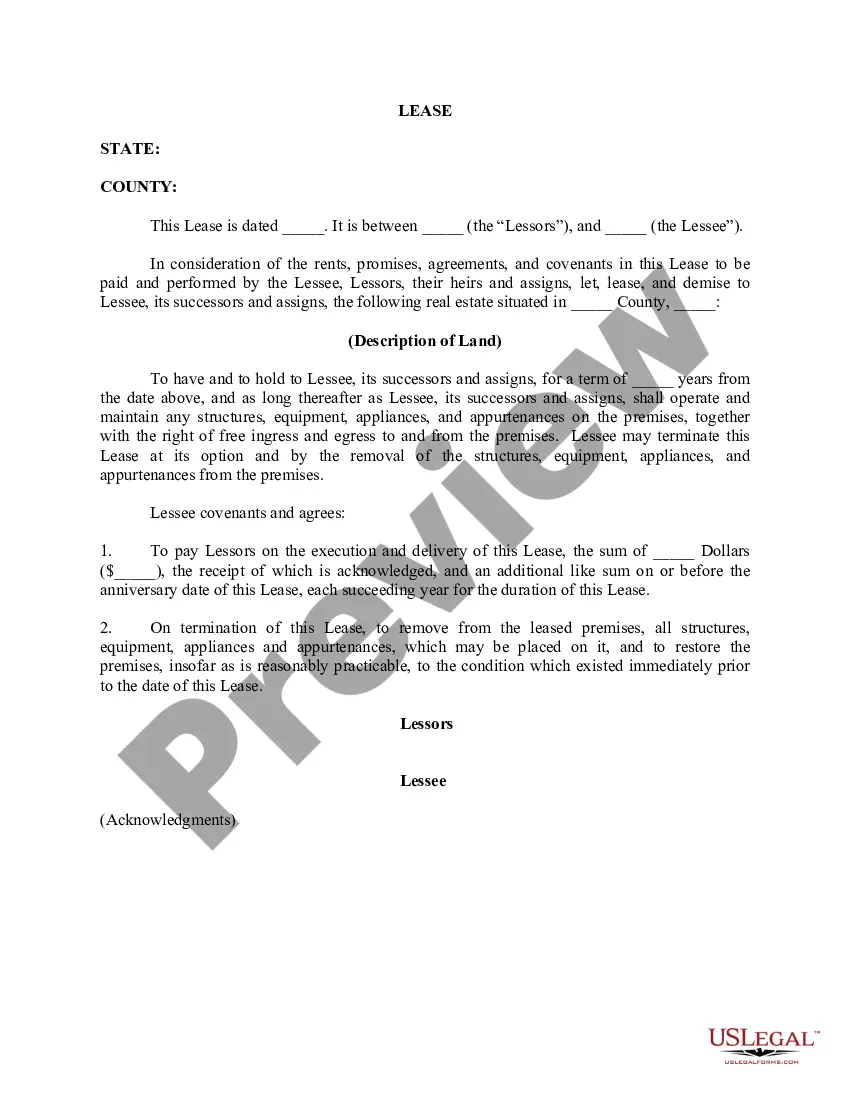
The Rental Lease Pooling Provision is a specialized lease agreement used in Maryland, granting rights to a lessee for seismic and geophysical operations on specified land for the production of oil, gas, sulfur, and other minerals. This form specifically includes provisions for pooling multiple leases to maximize resource extraction, distinguishing it from standard lease agreements that might not address these rights. This pooling provision allows lessees to combine multiple tracts of land, ensuring efficient operations and compliance with the applicable legislation.
Key parts of this document
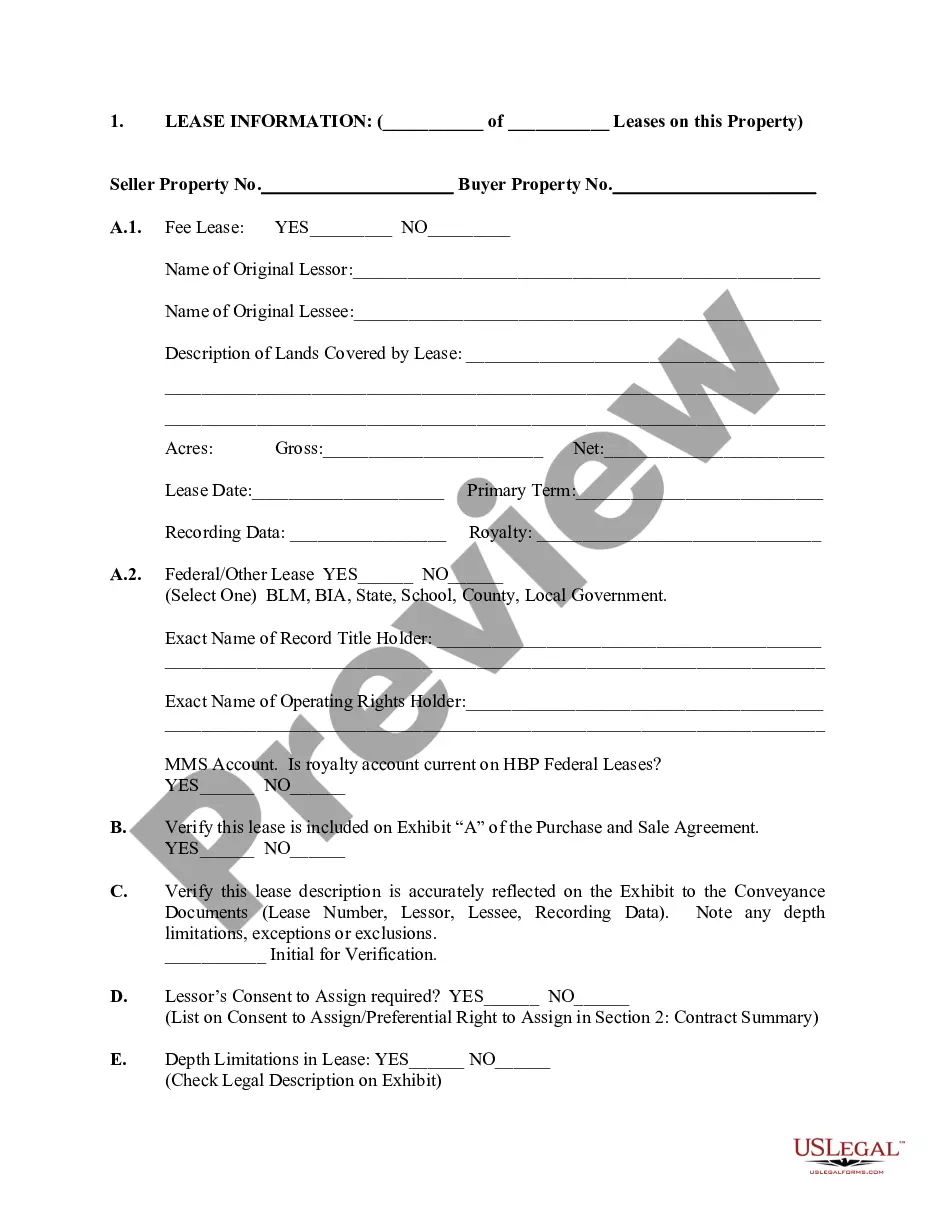
- Lease Description: Detailed identification of the land and rights being leased.
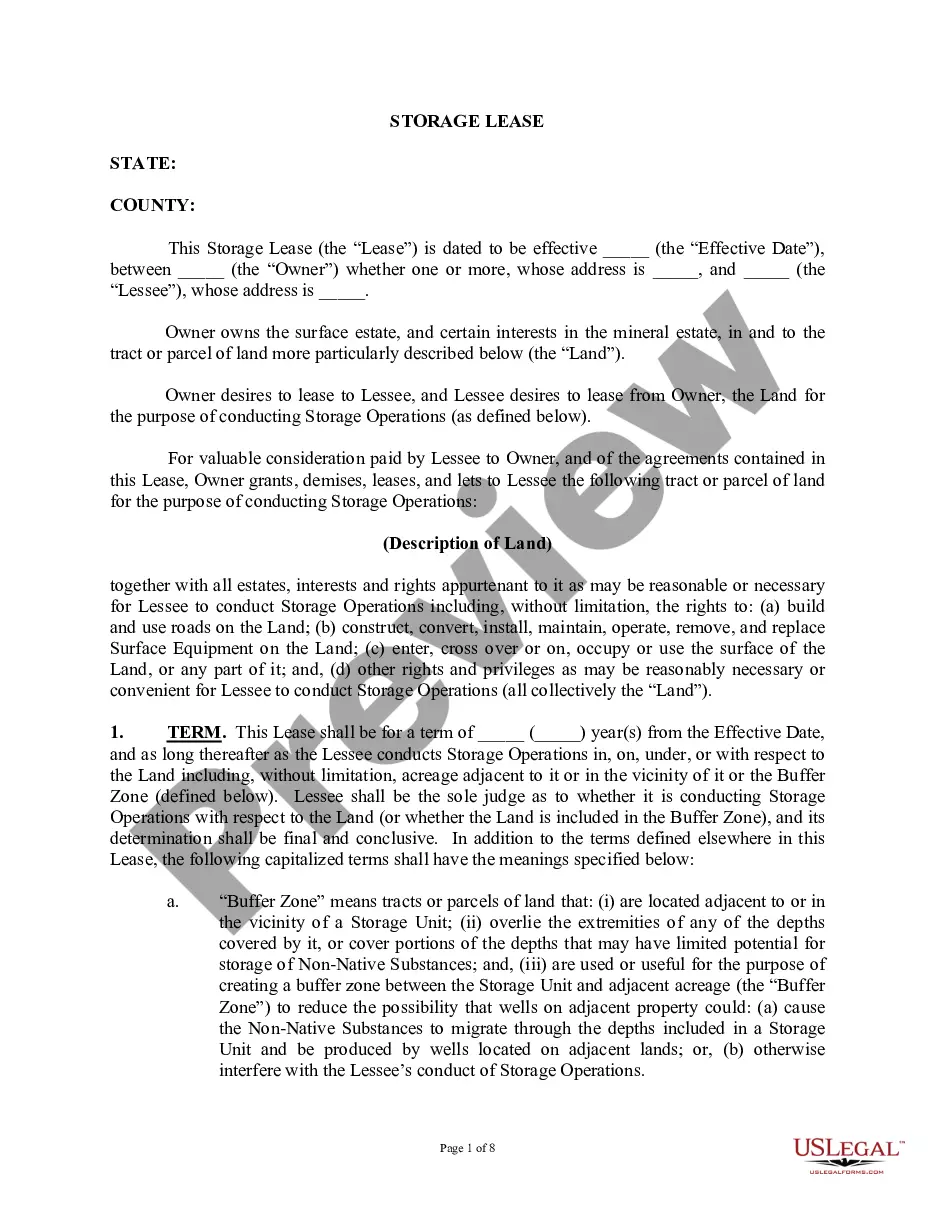
- Term of Lease: Information on the duration and conditions for extending the lease.
- Lease Rights Granted: Rights afforded to the lessee, including operations and maintenance of infrastructure.
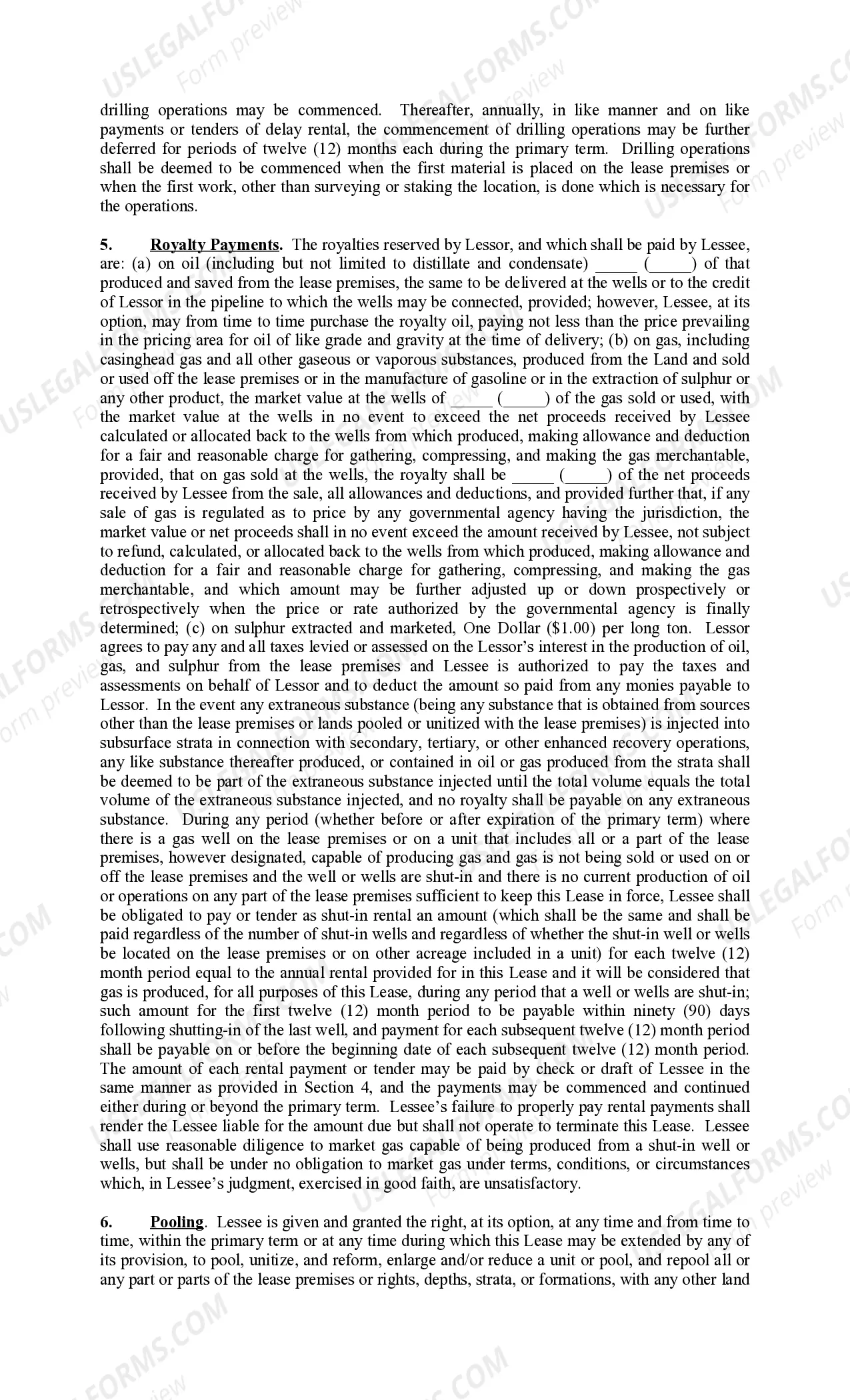
- Royalty Payments: Conditions regarding payments to the lessor based on resources extracted.
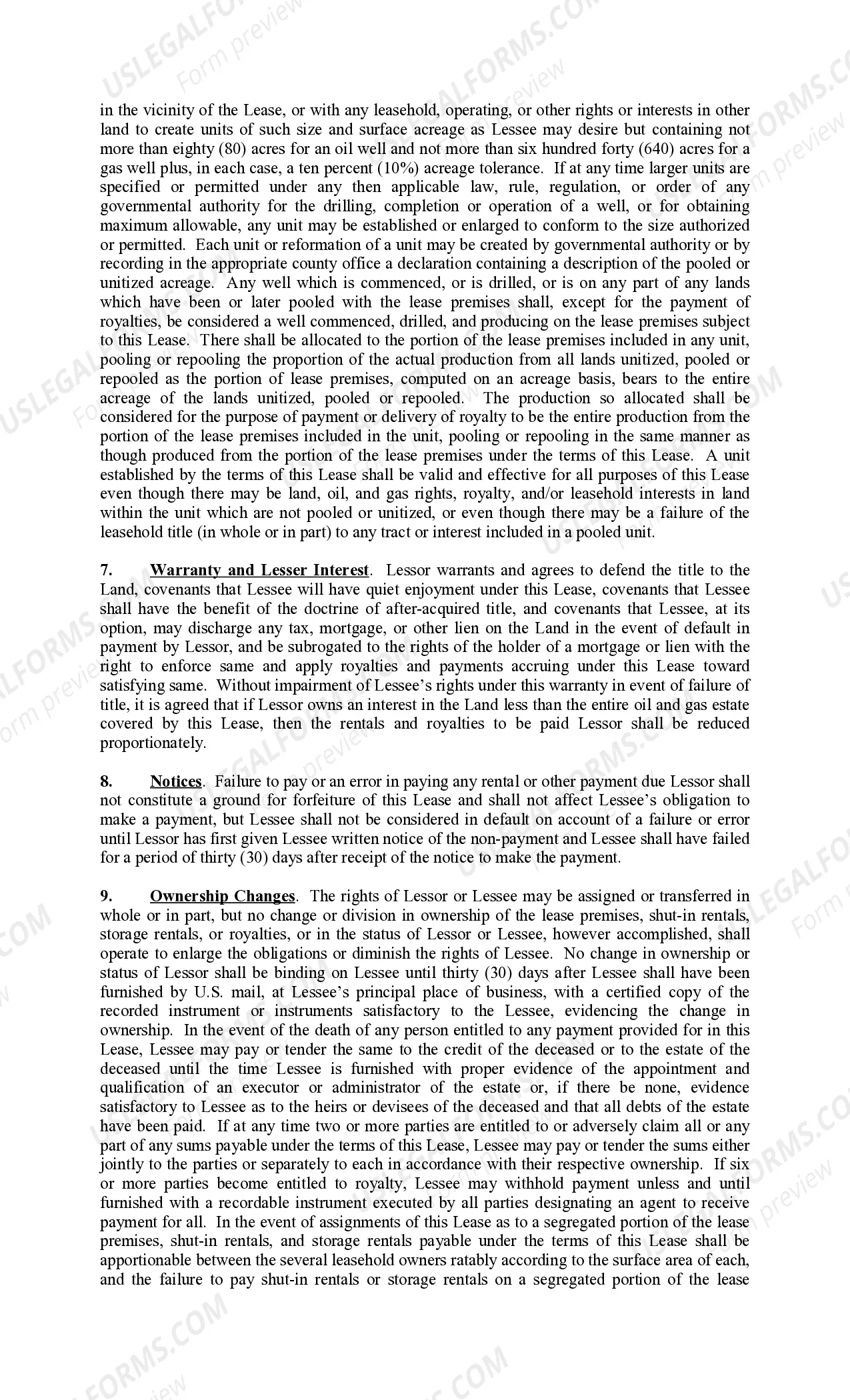
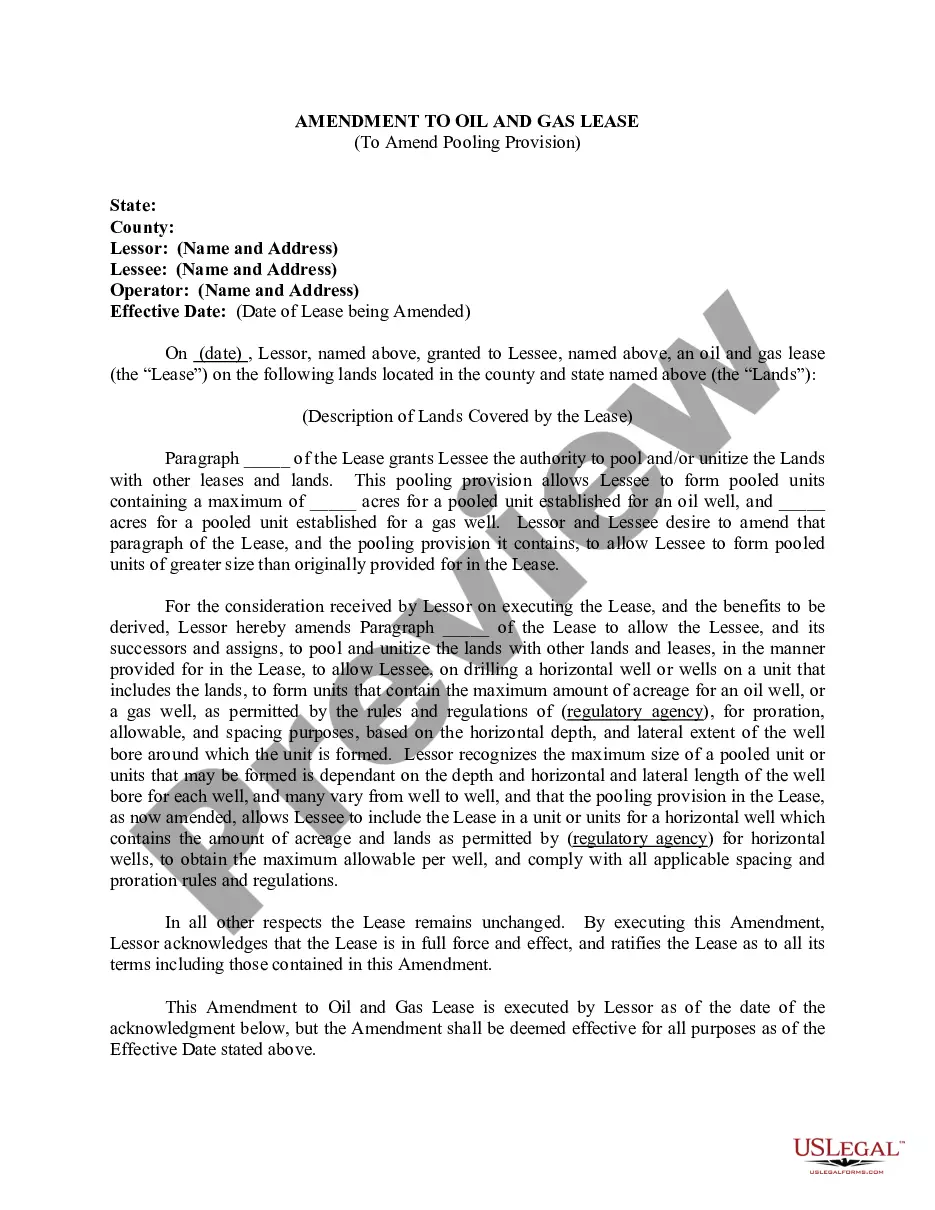
- Pooling Provisions: Rights to combine multiple lease areas to enhance production operations.
- Surface Use Regulations: Guidelines on how the lessee may use the surface area of the leased land.
When this form is needed
This form should be used when a property owner (lessor) wishes to lease their land for oil, gas, or mineral exploration and production while allowing the lessee to pool the leased land with other adjacent properties. It's typically needed in situations involving potential drilling activity, mineral extraction negotiations, and when regulatory compliance concerning pooling is necessary.
Intended users of this form
- Property owners in Maryland who want to lease their land for mineral extraction.
- Companies or individuals seeking to acquire rights to explore and produce oil or gas.
- Legal professionals involved in drafting or reviewing oil and gas lease agreements.
How to prepare this document
- Identify the parties: Clearly state the names and addresses of both the lessor and lessee.
- Specify the property: Include a detailed description of the land being leased.
- Enter effective dates: Fill in the start date and any relevant terms regarding the lease duration.
- Outline royalty and rental payments: Detail the financial agreements regarding extraction and usage of the property.
- Include pooling information: Describe any pooling arrangements to be made with adjacent lands.
Does this document require notarization?
This form does not typically require notarization unless specified by local law. However, for certain transactions or legal affirmations, obtaining a notarized signature may provide additional legal protection.
Get your form ready online
Our built-in tools help you complete, sign, share, and store your documents in one place.
Make edits, fill in missing information, and update formatting in US Legal Forms—just like you would in MS Word.
Download a copy, print it, send it by email, or mail it via USPS—whatever works best for your next step.
Sign and collect signatures with our SignNow integration. Send to multiple recipients, set reminders, and more. Go Premium to unlock E-Sign.
If this form requires notarization, complete it online through a secure video call—no need to meet a notary in person or wait for an appointment.
We protect your documents and personal data by following strict security and privacy standards.

Make edits, fill in missing information, and update formatting in US Legal Forms—just like you would in MS Word.

Download a copy, print it, send it by email, or mail it via USPS—whatever works best for your next step.

Sign and collect signatures with our SignNow integration. Send to multiple recipients, set reminders, and more. Go Premium to unlock E-Sign.

If this form requires notarization, complete it online through a secure video call—no need to meet a notary in person or wait for an appointment.

We protect your documents and personal data by following strict security and privacy standards.
Mistakes to watch out for
- Failing to accurately describe the property boundaries or land involved in the lease.
- Omitting critical terms about pooling or rights granted to the lessee.
- Not specifying the duration of the lease and renewal terms properly.
- Failing to consult with legal professionals for understanding complex terms and legal implications.
Benefits of completing this form online
- Convenience: Access and complete the form at any time, from anywhere.
- Editability: Easily make changes to fit specific agreements and needs.
- Reliability: These forms are drafted by licensed attorneys, ensuring legal validity.
Legal use & context
- The form serves as a legally enforceable document outlining the rights and obligations of both parties in the lease.
- Compliance with state regulations is essential to maintain the lease's validity and enforceability.
- Pooling arrangements must follow specific legal guidelines to be considered valid in court disputes.
Summary of main points
- The Rental Lease Pooling Provision is essential for legally allowing mineral exploration and extraction.
- Ensure the lease specifies the terms clearly to avoid potential disputes.
- Consider the pooling provision to enhance operational efficiency.
- Consult legal expertise when drafting and executing this form to ensure compliance with local laws.
Looking for another form?


Form popularity
FAQ
Lease provisions are usually described as "boilerplate," since many leases use standard language. Boilerplate language in a lease may include the terms of the lease, payment dates, and late fees, among others.
With Tenant Consent. If the tenant and landlord both agree to the change, the parties can either (1) execute a new lease or rental agreement that includes the new clause, or (2) amend the existing lease or rental agreement. Without Tenant Consent.
Names of all tenants. Limits on occupancy. Term of the tenancy. Rent. Deposits and fees. Repairs and maintenance. Entry to rental property. Restrictions on tenant illegal activity.
Make good refers to the clause in a lease that set out how a tenant should leave a property when the lease comes to an end, whether by the expiry of the term or earlier termination. Make good is one of the most commonly disputed provisions of a lease.
Collect each party's information. Include specifics about your property. Consider all of the property's utilities and services. Know the terms of your lease. Set the monthly rent amount and due date. Calculate any additional fees. Determine a payment method. Consider your rights and obligations.
What are Lease Clauses? Unlike lease rules that you decide, clauses are typically written specifically to comply with state and local landlord-tenant laws and are written in legal jargon.
A lease is automatically void when it is against the law, such as a lease for an illegal purpose. In other circumstances, like fraud or duress, a lease can be declared void at the request of one party but not the other.
Collect each party's information. Include specifics about your property. Consider all of the property's utilities and services. Know the terms of your lease. Set the monthly rent amount and due date. Calculate any additional fees. Determine a payment method. Consider your rights and obligations.
Names of all tenants. Limits on occupancy. Term of the tenancy. Rent. Deposits and fees. Repairs and maintenance. Entry to rental property. Restrictions on tenant illegal activity.