Louisiana Motion for Discovery
About this form
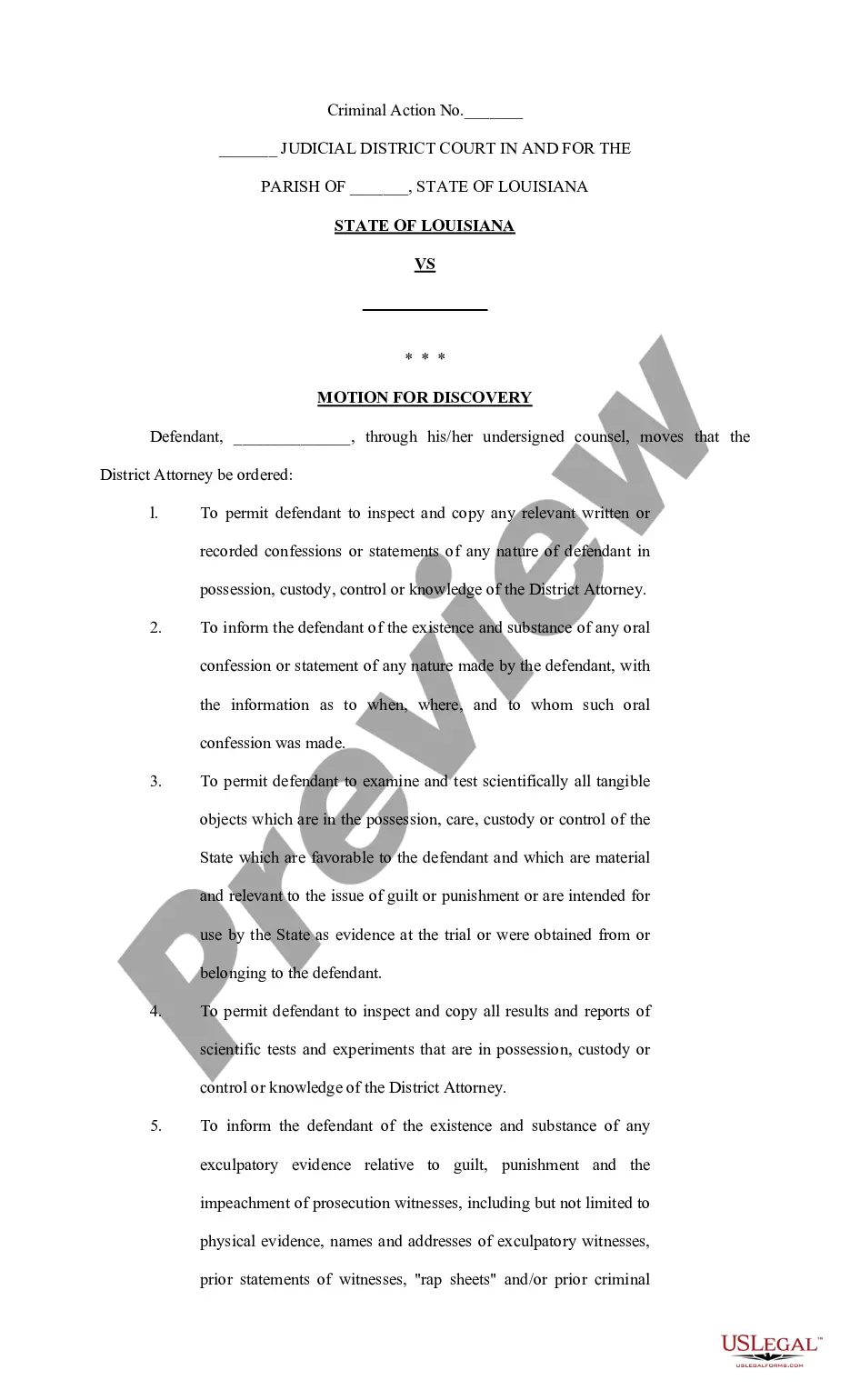
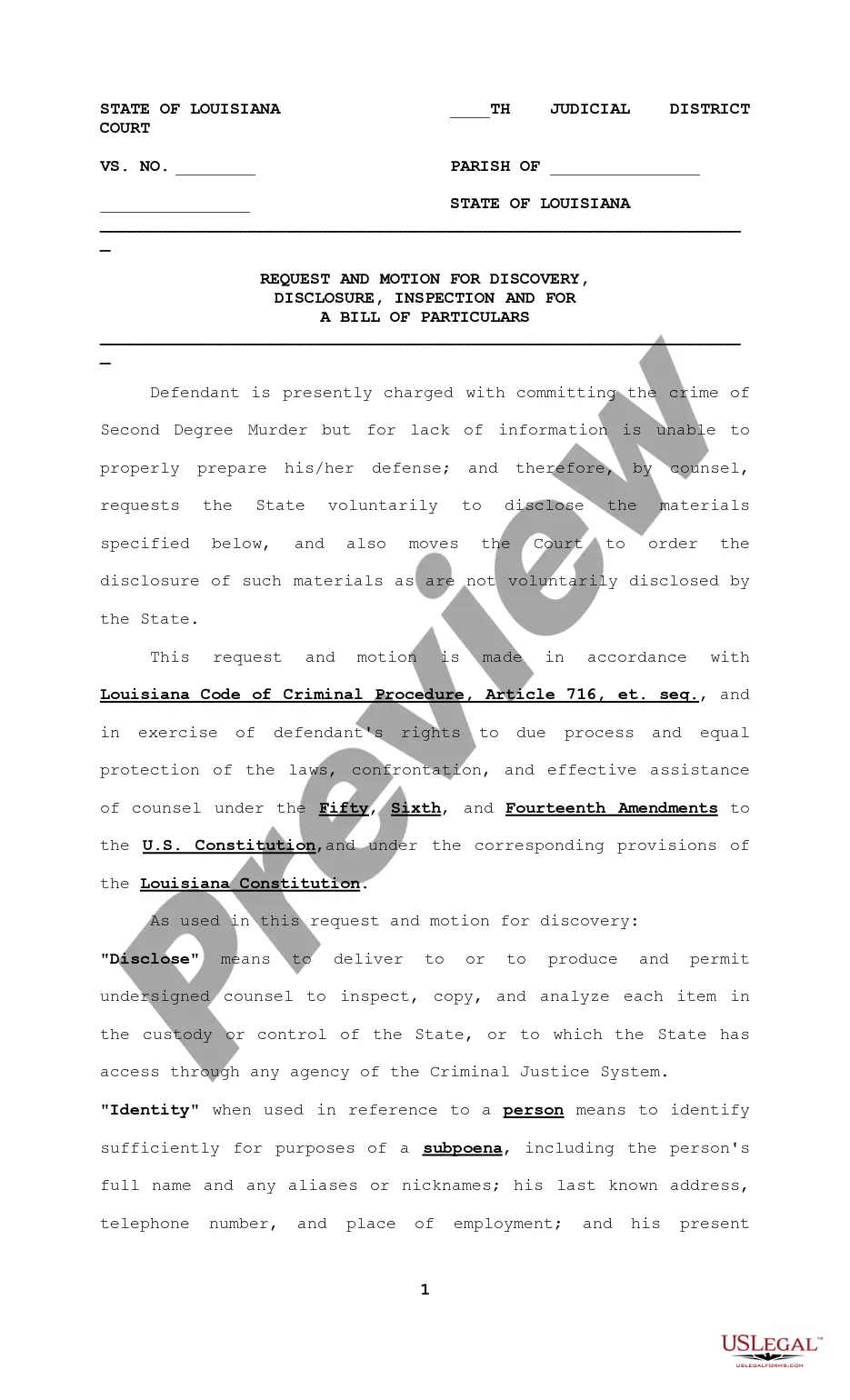
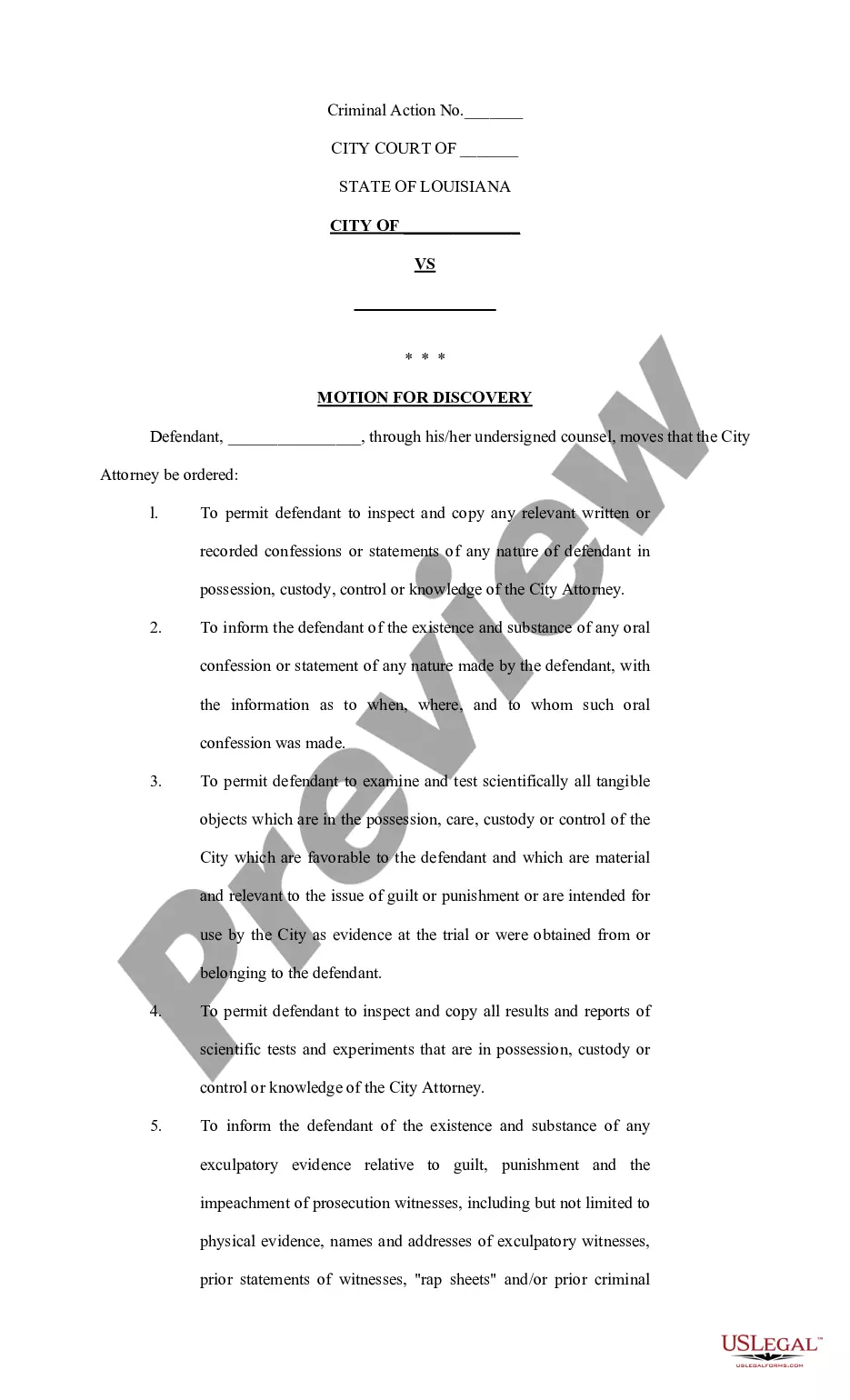
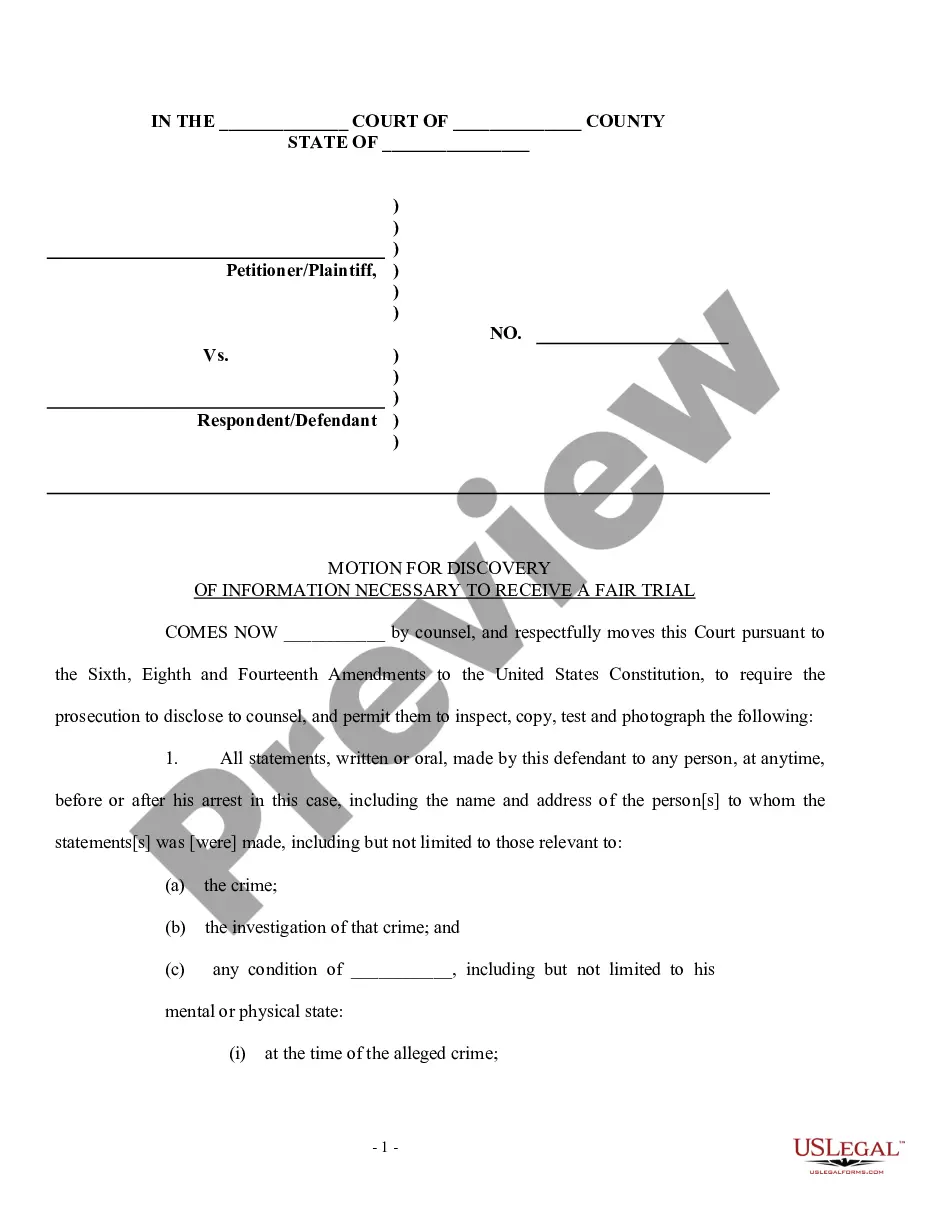
The Motion for Discovery is a legal document filed by a defendant in a criminal case to request information related to the prosecution's evidence. This form allows the defendant to obtain copies of statements, evidence, and documents that the state has in its possession, thereby ensuring a fair trial process. Unlike other motions, the focus of this form is specifically on uncovering evidence that may be beneficial to the defendant's case.
Key components of this form
- Request for relevant written or recorded confessions of the defendant.
- Notification of the existence of any oral confessions made by the defendant.
- Request to examine tangible objects in possession of the state that may help the defendant.
- Access to scientific test results and reports relevant to the case.
- Disclosure of exculpatory evidence that may affect the prosecution's case.
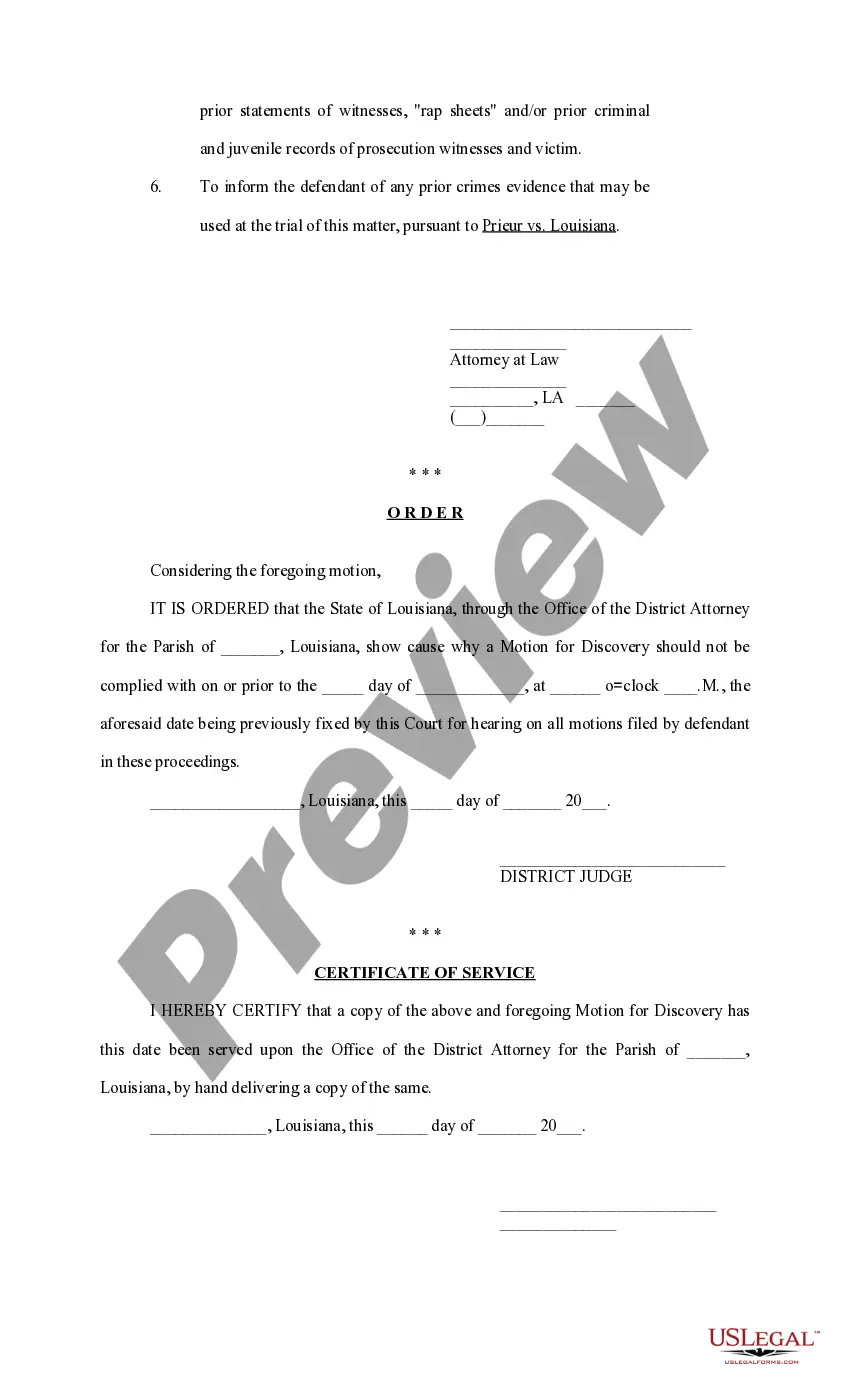
- Information on any prior crimes evidence that may be introduced at trial.
Situations where this form applies
This form is used when a defendant wishes to gain access to evidence and information that the prosecution intends to use against them in a criminal trial. It is particularly useful in cases where the defendant believes that the state may hold evidence that could prove their innocence or mitigate their guilt. Filing this motion can be crucial to ensuring that the defendant's rights are protected during the legal proceedings.
Who this form is for
This form is intended for:
- Criminal defendants seeking to obtain evidence from the prosecution.
- Attorneys representing clients in criminal cases.
- Individuals looking for fair access to information that impacts their case.
Instructions for completing this form
- Enter the judicial district and parish at the top of the form.
- Fill in the names of the parties involved in the case.
- Detail the specific requests for information and evidence according to the numbered sections of the form.
- Consult with legal counsel to ensure proper legal grounds for each request.
- Sign and date the motion, providing the necessary attorney details.
Does this form need to be notarized?
This form does not typically require notarization unless specified by local law. It is advisable to check with local legal requirements or consult with an attorney for further guidance.
Get your form ready online
Our built-in tools help you complete, sign, share, and store your documents in one place.
Make edits, fill in missing information, and update formatting in US Legal Forms—just like you would in MS Word.
Download a copy, print it, send it by email, or mail it via USPS—whatever works best for your next step.
Sign and collect signatures with our SignNow integration. Send to multiple recipients, set reminders, and more. Go Premium to unlock E-Sign.
If this form requires notarization, complete it online through a secure video call—no need to meet a notary in person or wait for an appointment.
We protect your documents and personal data by following strict security and privacy standards.

Make edits, fill in missing information, and update formatting in US Legal Forms—just like you would in MS Word.

Download a copy, print it, send it by email, or mail it via USPS—whatever works best for your next step.

Sign and collect signatures with our SignNow integration. Send to multiple recipients, set reminders, and more. Go Premium to unlock E-Sign.

If this form requires notarization, complete it online through a secure video call—no need to meet a notary in person or wait for an appointment.

We protect your documents and personal data by following strict security and privacy standards.
Common mistakes
- Failing to include relevant details in the requests, which may lead to incomplete responses from the prosecution.
- Not specifying the timeline for when the prosecution must respond.
- Forgetting to sign the motion, which renders it invalid.
- Submitting the form without consulting legal counsel, risking improper use of the form.
Benefits of completing this form online
- Convenient access to legal templates, allowing for quick completion and submission.
- Editability ensures specific details can be tailored to fit individual cases.
- Reliable and compliant forms drafted by licensed attorneys, ensuring legal validity.
Looking for another form?
Form popularity
FAQ
A motion to compel asks the court to enforce a request for information relevant to a case.The requesting party files a motion to compel discovery responses if the opposing party continues to deny the discovery request.
A motion to compel asks the court to enforce a request for information relevant to a case.Discovery requests: parties submit requests for evidence, documents, and other relevant information from the opposition. Each party is required to respond to requests by a specified deadline.
A motion to compel asks the court to order either the opposing party or a third party to take some action. This sort of motion most commonly deals with discovery disputes, when a party who has propounded discovery to either the opposing party or a third party believes that the discovery responses are insufficient.
Hearing on Motion to Compel When a motion to compel is filed with the court, a hearing is scheduled. At the hearing, the party that filed the motion will need to tell the judge why the other party should be compelled to do something.Once that happens, that party will not be able to use the documents at trial.
Explain to the judge that you asked the plaintiff to give you documents and, they did not. Tell the judge why you need the documents. Ask the judge to order the plaintiff to give you the documents you requested.
To sanction a party failing to comply with discovery, the court can order attorney's fees, or they can order the fact you are seeking to establish as having been established for purposes of your case, because the other side will not respond to the discovery on this issue.
Discovery, in the law of common law jurisdictions, is a pre-trial procedure in a lawsuit in which each party, through the law of civil procedure, can obtain evidence from the other party or parties by means of discovery devices such as interrogatories, requests for production of documents, requests for admissions and
Consequences of Refusing to Provide Evidence Requested in a Motion to Compel. If the court issues an order that compels your spouse to produce the discovery you are seeking but your spouse still refuses to provide evidence, the judge may impose further sanctions such as: A verdict in your favor.
The motion to compel further responses has to be brought within 45 days of service of the response. (C.C.P.