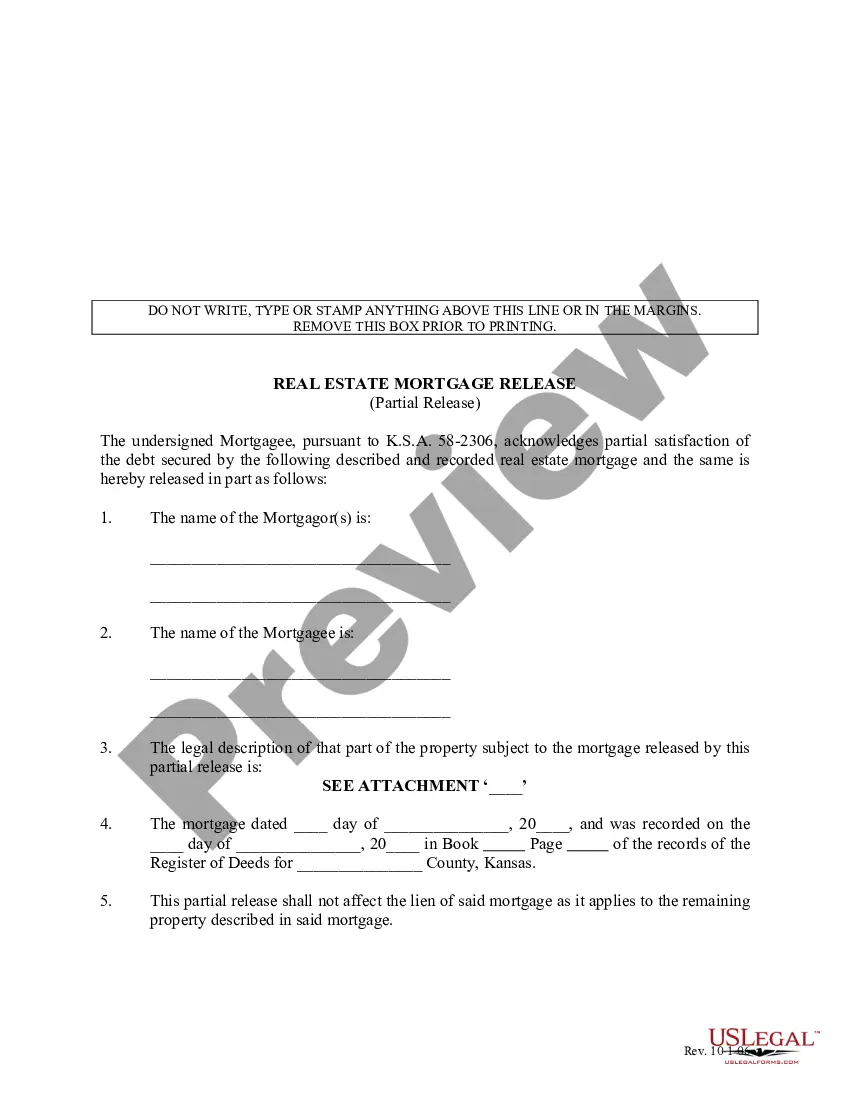
Indiana Temporary Order
What is this form?
A Temporary Order is a legal document issued by the court during divorce proceedings (Dissolution of Marriage) to address immediate issues, such as custody arrangements, child or spousal support, and property division. Unlike permanent orders, this form is meant to provide short-term solutions until a final decision is made. It's essential for those navigating complex family law matters to clearly understand the implications of such orders.
Key parts of this document
- Temporary possession of the marital residence for either party.
- Mandate for maintaining medical, dental, and optical insurance for specific individuals.
- Restrictions preventing the removal of children from the state without court permission.
- Prohibitions against transferring, encumbering, or disposing of property.
- Other specific provisions tailored to the situation.
When this form is needed
This form should be used when legal separation or divorce is underway, and there is a need to establish temporary arrangements for child custody, support, and property management. If urgent decisions about the family's welfare are required before a final divorce settlement, this Temporary Order is crucial in providing immediate guidance and structure.
Who can use this document
- Individuals initiating a divorce who require immediate court orders.
- Respondents in divorce actions needing to establish temporary arrangements.
- Parents seeking clarification on custody and support during divorce proceedings.
How to complete this form
- Identify the parties involved, including the petitioner and respondent.
- Specify the temporary possession of the marital residence.
- Detail the insurance coverage responsibilities for relevant individuals.
- Enter any restrictions regarding child relocation and property disposition.
- Review and sign the document according to court requirements.
Does this document require notarization?
Notarization is generally not required for this form. However, certain states or situations might demand it. You can complete notarization online through US Legal Forms, powered by Notarize, using a verified video call available anytime.
Get your form ready online
Our built-in tools help you complete, sign, share, and store your documents in one place.
Make edits, fill in missing information, and update formatting in US Legal Forms—just like you would in MS Word.
Download a copy, print it, send it by email, or mail it via USPS—whatever works best for your next step.
Sign and collect signatures with our SignNow integration. Send to multiple recipients, set reminders, and more. Go Premium to unlock E-Sign.
If this form requires notarization, complete it online through a secure video call—no need to meet a notary in person or wait for an appointment.
We protect your documents and personal data by following strict security and privacy standards.
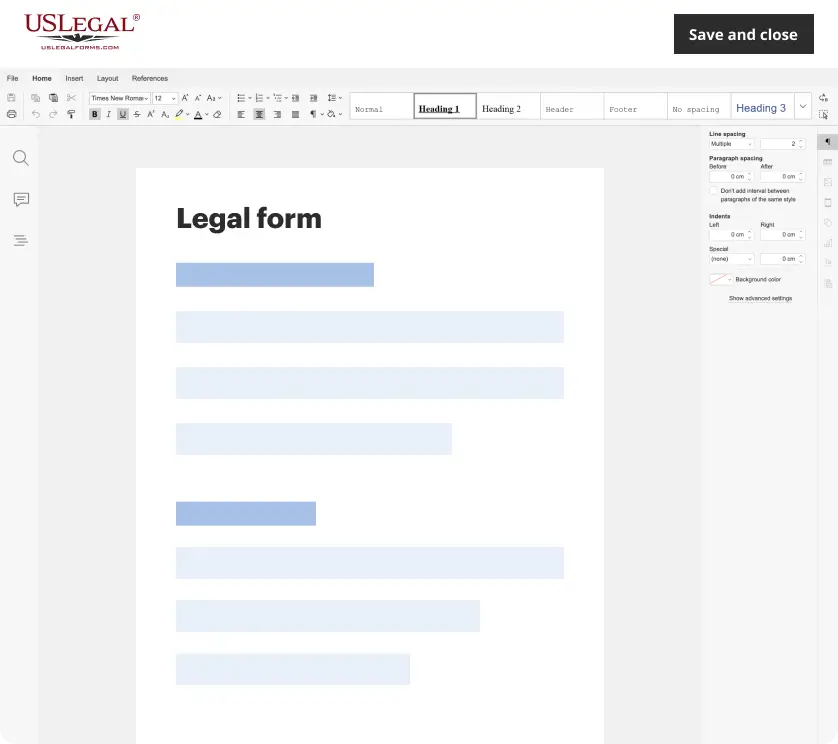
Make edits, fill in missing information, and update formatting in US Legal Forms—just like you would in MS Word.
Download a copy, print it, send it by email, or mail it via USPS—whatever works best for your next step.
Sign and collect signatures with our SignNow integration. Send to multiple recipients, set reminders, and more. Go Premium to unlock E-Sign.

If this form requires notarization, complete it online through a secure video call—no need to meet a notary in person or wait for an appointment.
We protect your documents and personal data by following strict security and privacy standards.
Avoid these common issues
- Failing to include necessary details about child custody arrangements.
- Not specifying the parties involved correctly.
- Leaving out required signatures or dates.
- Overlooking local laws that modify standard provisions.
Why use this form online
- Convenient access to legal forms from anywhere, anytime.
- Easy to edit and customize as per individual requirements.
- Reliable templates drafted by licensed attorneys ensure legal compliance.
Quick recap
- A Temporary Order is crucial for immediate decisions in divorce proceedings.
- It addresses custody, support, and property issues temporarily.
- Ensure compliance with local regulations for effective use.
Looking for another form?



Form popularity
FAQ
If a family court lawsuit is administratively dismissed, all temporary orders become void and any outstanding obligations under the temporary order also become void. If there is a prior final order between the parties, that final order regains its effect (to the extent a temporary order in the new action modified it).
Provisional Orders are orders that the court may issue during the time a divorce case is pending. These are only temporary orders and are not intended to last forever. Think of provisional orders as rules to play by while the divorce is in process.
Typically, a temporary orders hearing will be handled in one of two ways, either by calling witnesses (including the parties) to the stand and asking them questions aimed at eliciting direct testimony from them (referred to as an evidentiary hearing) or by your attorney offering summaries of what witnesses would say,
Typically, a temporary orders hearing will be handled in one of two ways, either by calling witnesses (including the parties) to the stand and asking them questions aimed at eliciting direct testimony from them (referred to as an evidentiary hearing) or by your attorney offering summaries of what witnesses would say,
Temporary orders are made by family courts at a hearing when couples separate.Decisions on issues that must be resolved quickly are made, and given temporary effect, until family court decisions can be made in a formal divorce hearing or until the parties agree through mediation or negotiation.
Temporary orders Normally, a temporary order remains in effect until a judge ends it, modifies it or issues a final order replacing it. Occasionally, a temporary order has an expiration date. If parents can agree how to co-parent for the duration of their case, they may not need a temporary order.
As their name says, temporary orders are not permanent. They're not intended to have a long-term, binding effect on a divorce settlement (though temporary orders can influence2026
Provisional Orders are orders that the court may issue during the time a divorce case is pending. These are only temporary orders and are not intended to last forever. Think of provisional orders as rules to play by while the divorce is in process.