Idaho Mineral and Royalty Deed
What this document covers
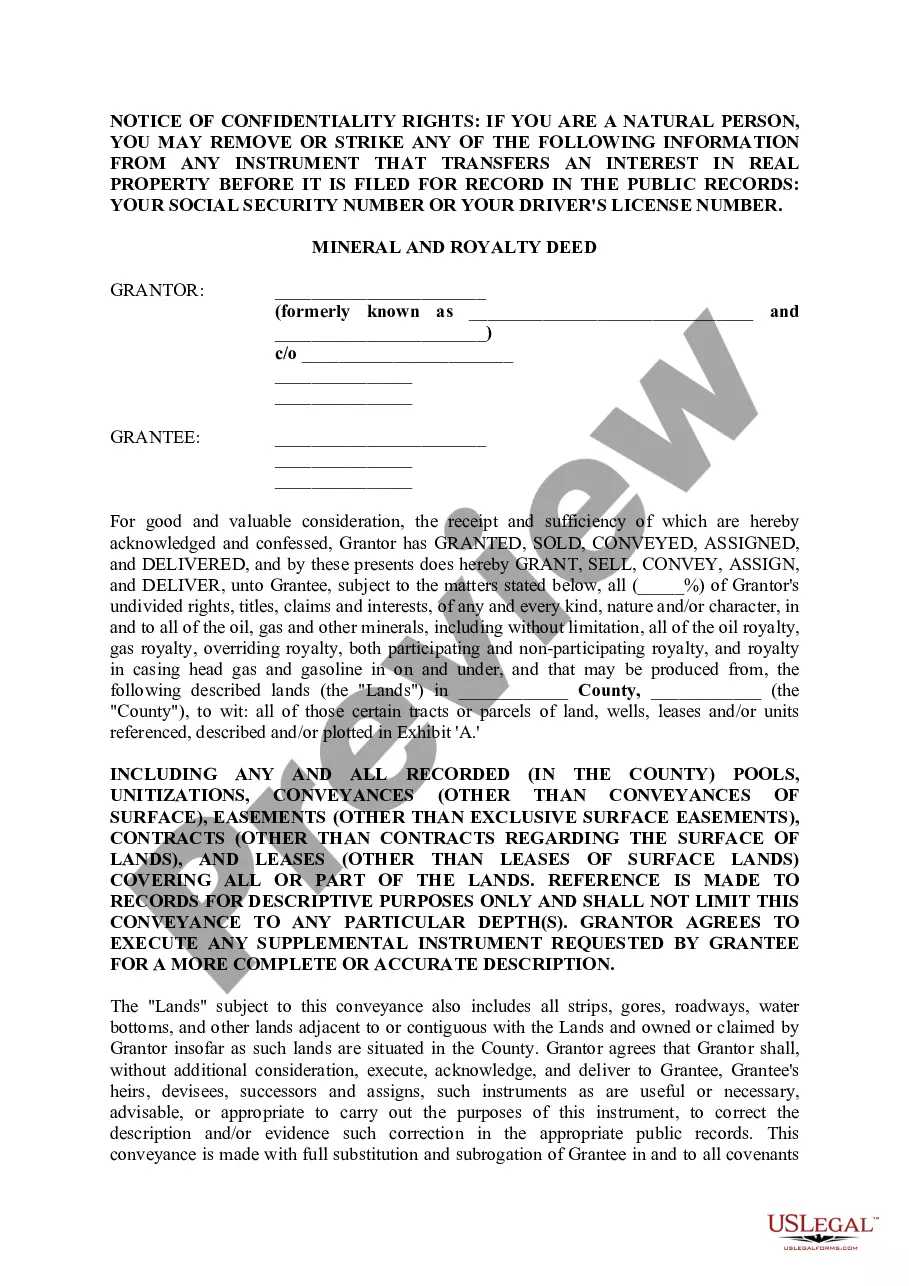
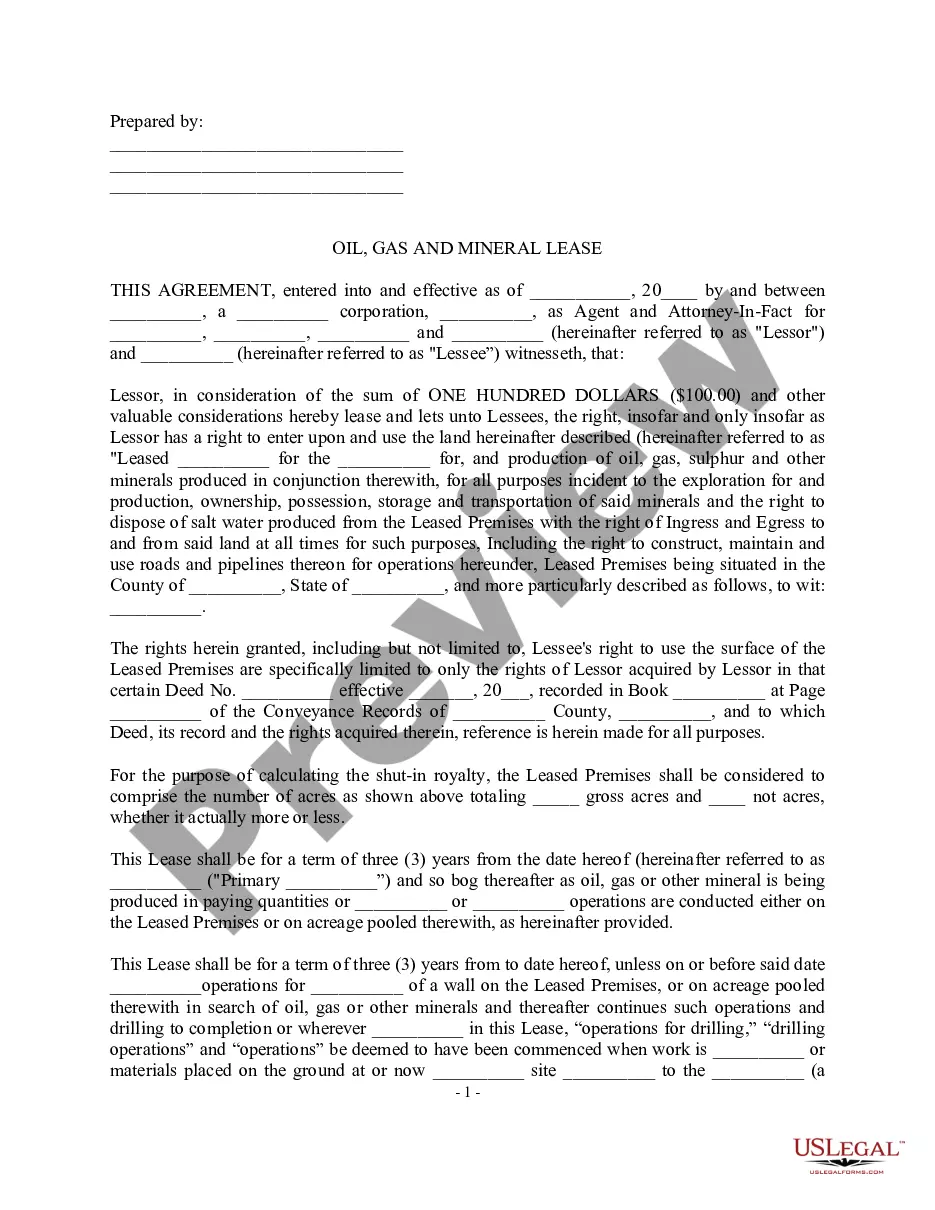
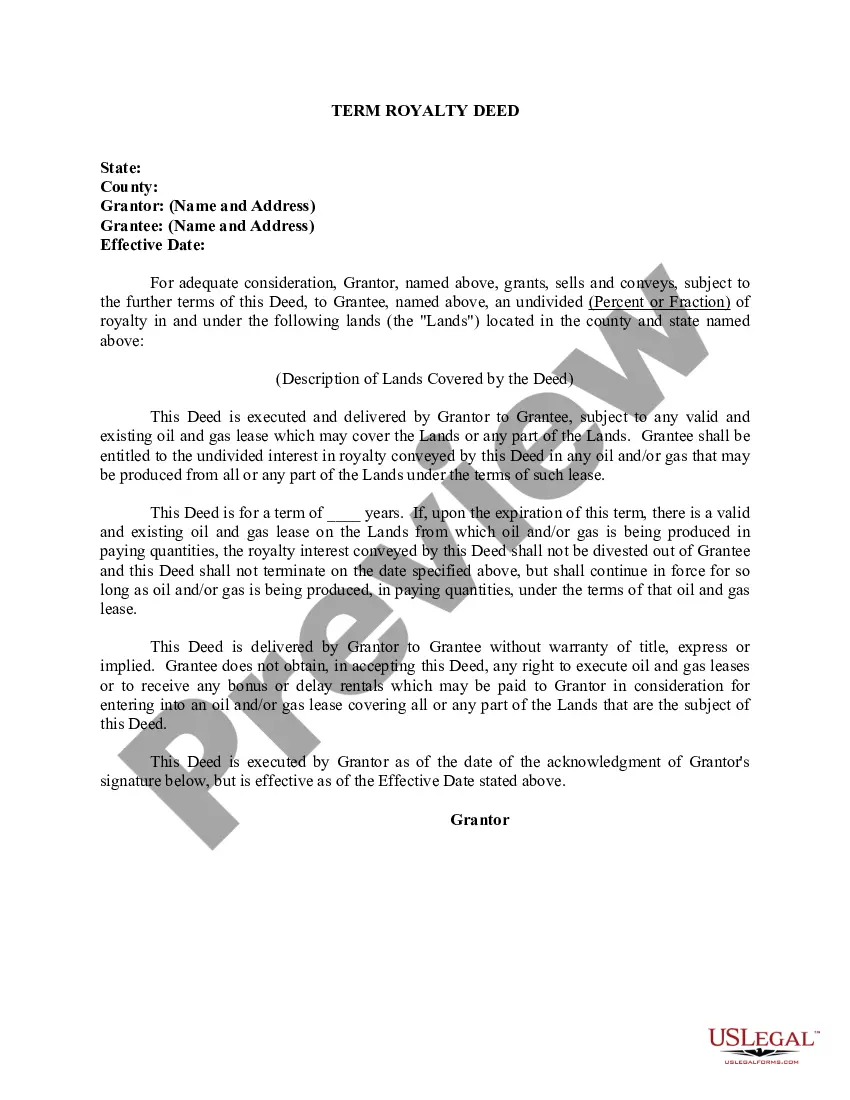
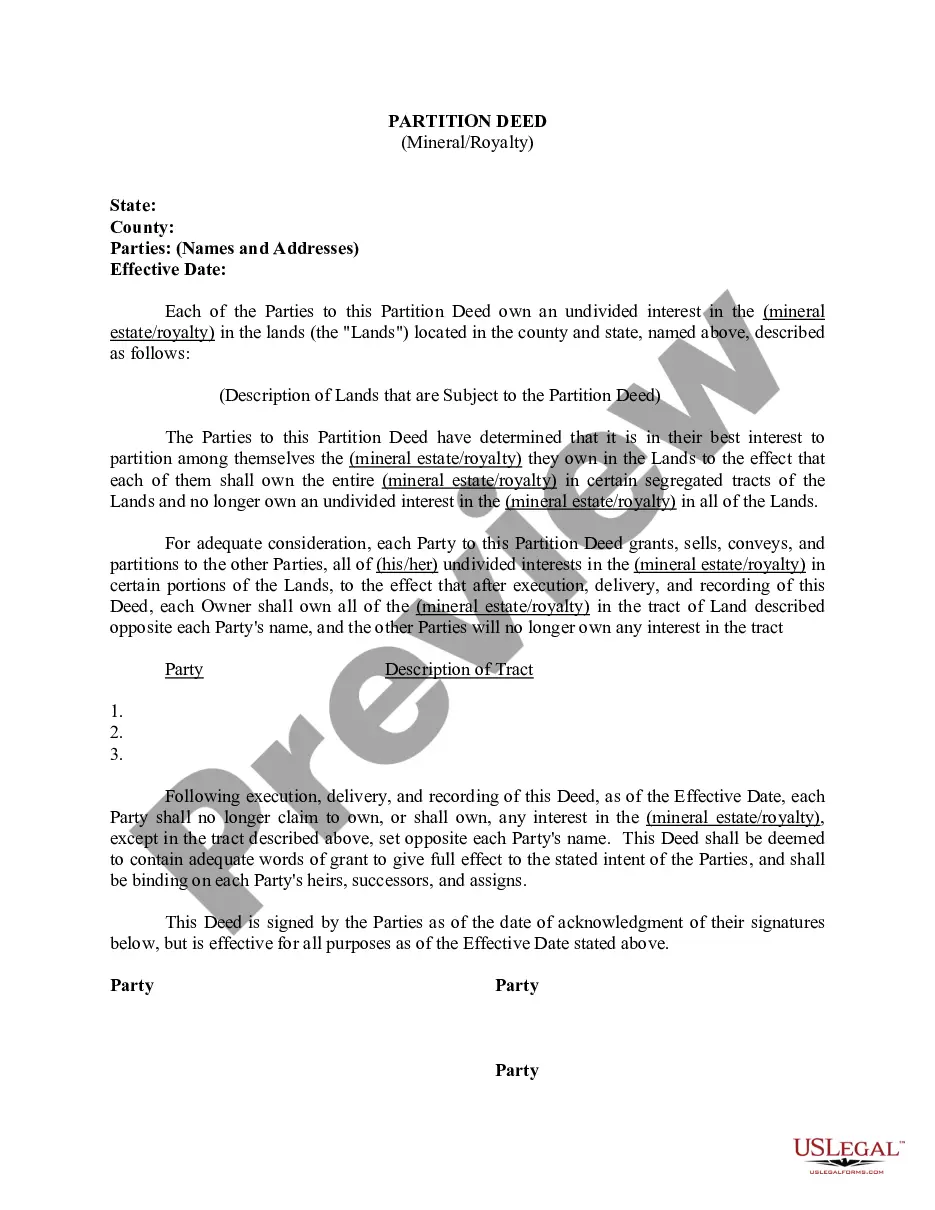
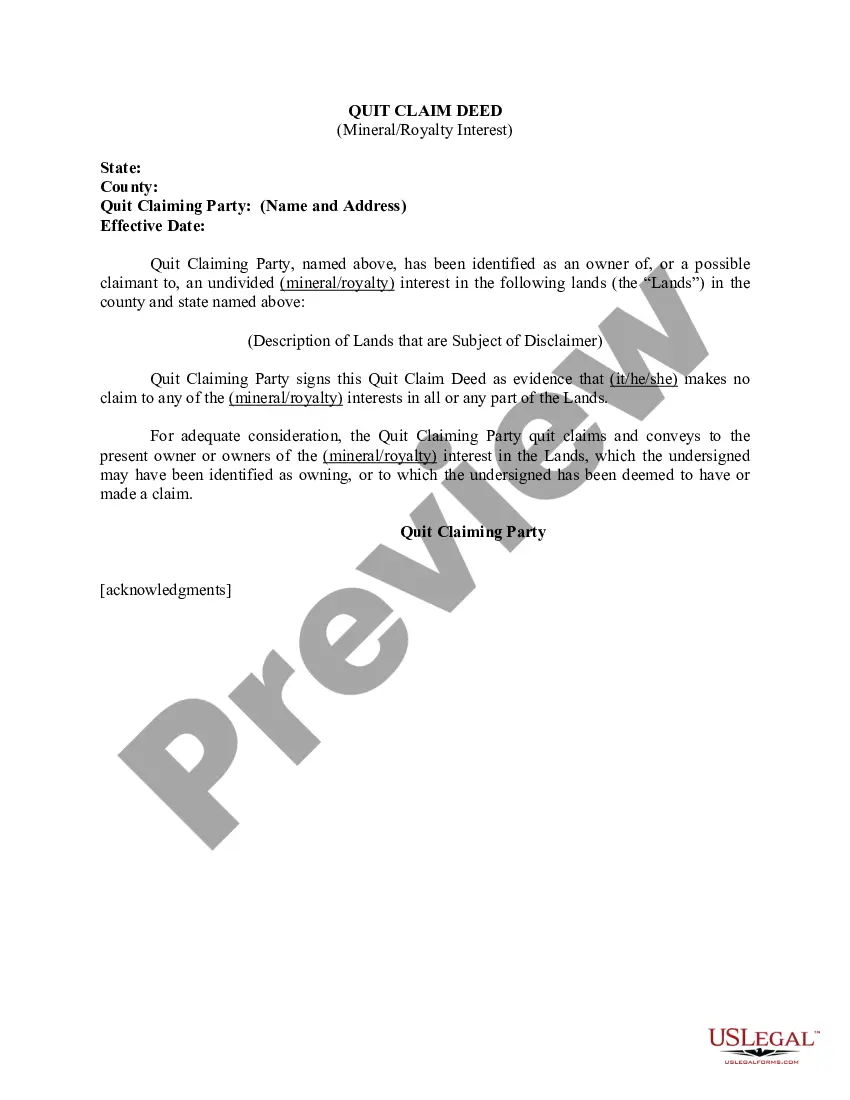
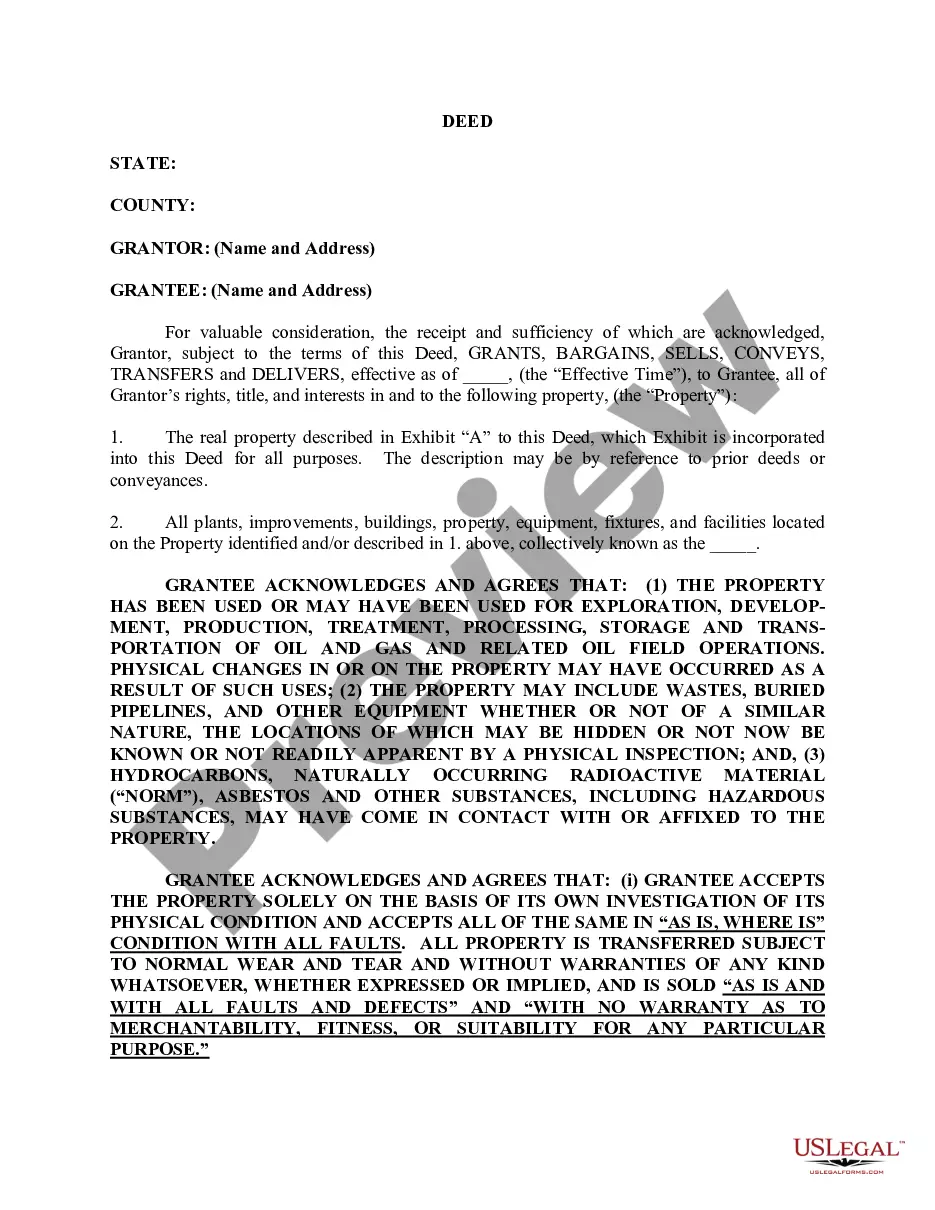
The Mineral and Royalty Deed is a legal document used to transfer ownership of mineral rights, such as oil and gas, from one party (Grantor) to another (Grantee). This deed conveys all rights, titles, and interests in the minerals associated with a specified piece of land, distinguishing it from other property transfer forms by focusing exclusively on mineral assets. It serves as a critical tool for individuals or entities involved in the exploration or extraction of resources beneath the land surface.
Key parts of this document
- Identification of the Grantor and Grantee, including former names.
- Specification of the percentage of interest being transferred.
- A detailed description of the lands affected, including any additional rights associated with the minerals.
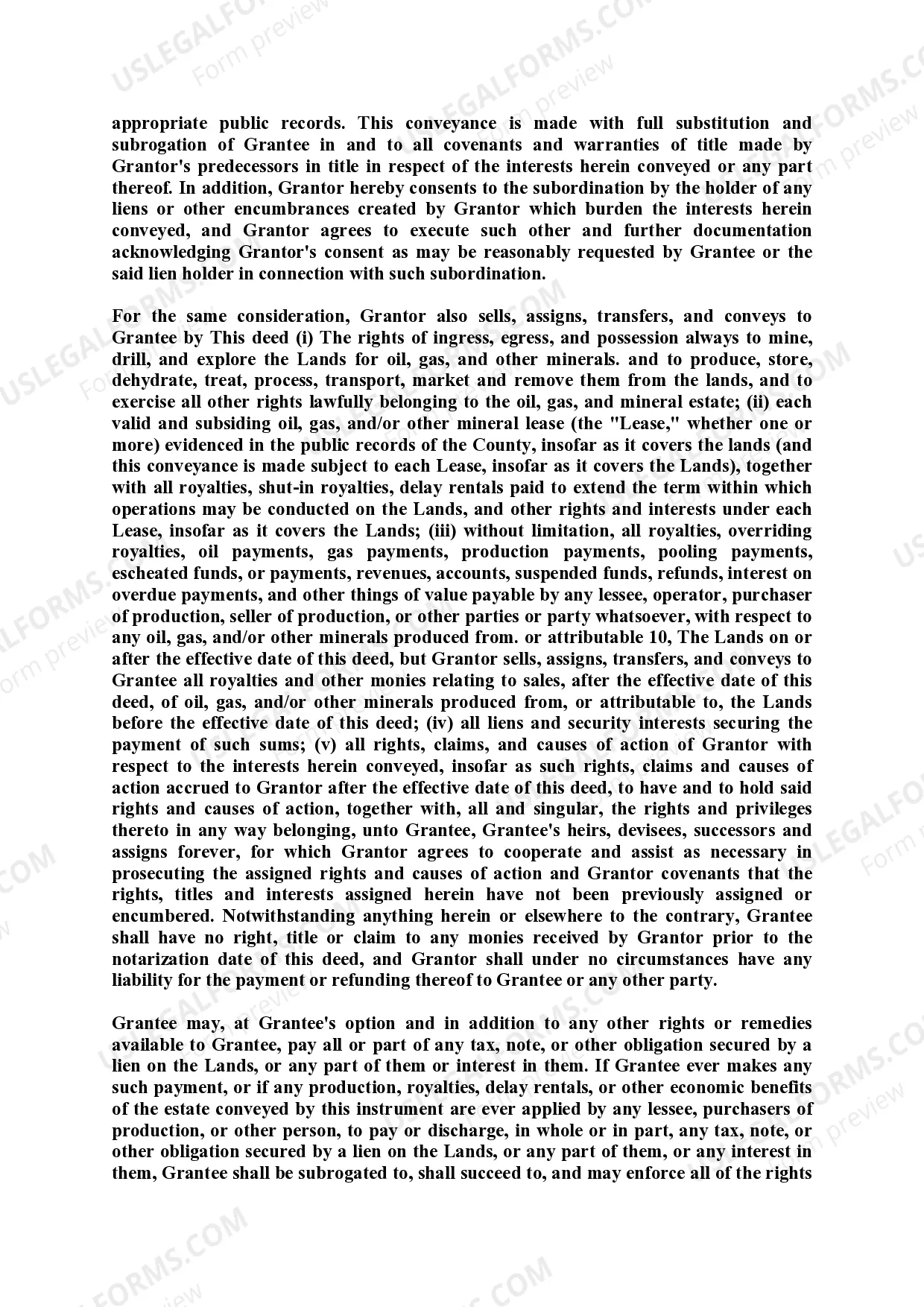
- Clauses covering the rights of ingress and egress for extraction purposes.
- Provisions for the responsibilities of the Grantor regarding payment of taxes and other obligations.
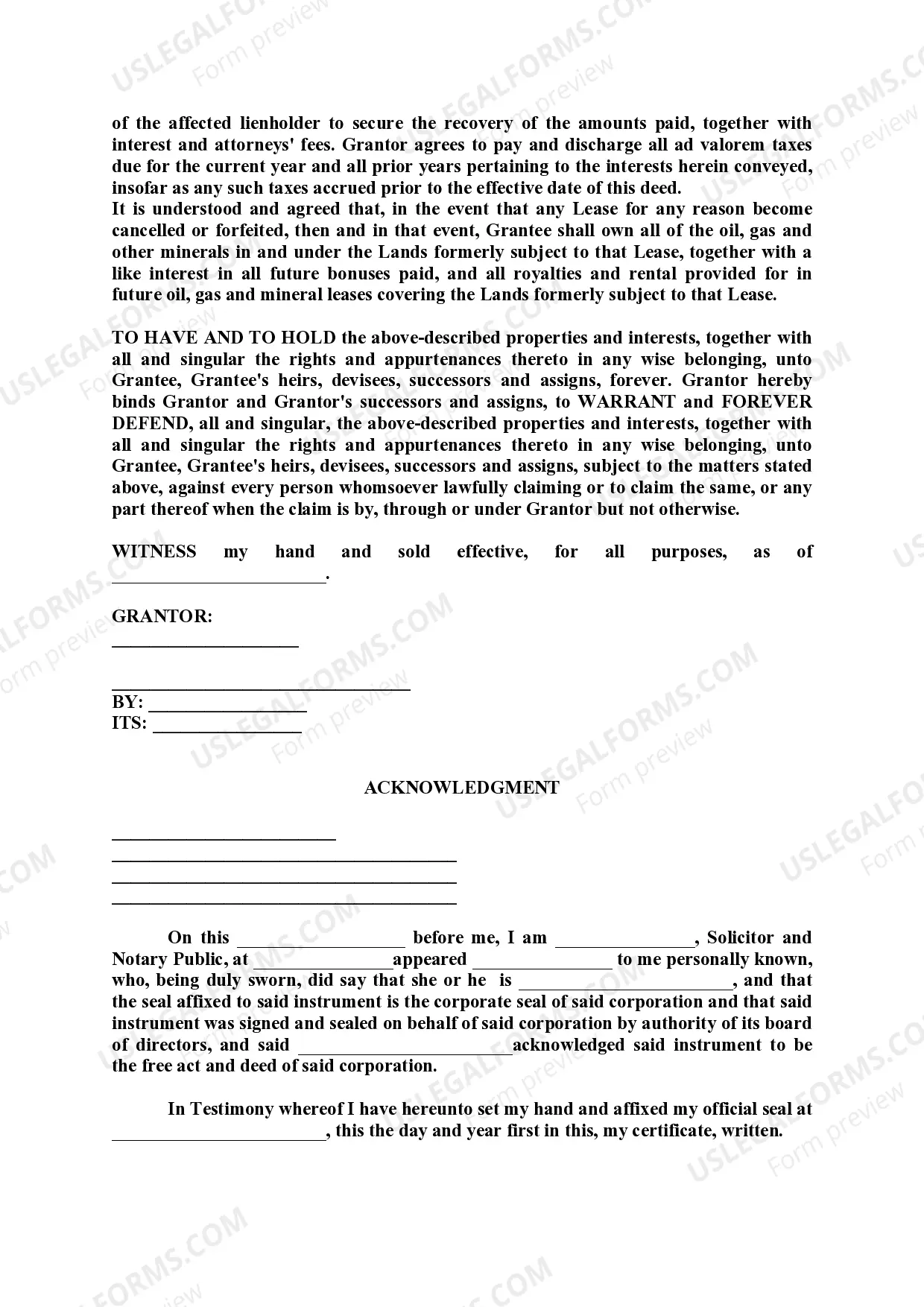
- Notarization section for legal validity and recording purposes.

Situations where this form applies
This form should be used when an individual or entity wishes to transfer mineral rights associated with a specific piece of property. Common scenarios include selling or gifting mineral interests, consolidating rights among heirs, or reallocating interests in a joint venture or partnership dealing with mineral exploration or extraction.
Intended users of this form
- Property owners looking to sell or transfer their mineral rights.
- Individuals involved in estate planning that includes mineral assets.
- Businesses or partnerships engaged in oil and gas production.
- Investors purchasing mineral interests for future profit.
Completing this form step by step
- Identify and enter the Grantorâs and Granteeâs complete names and addresses.
- Specify the percentage of mineral rights being transferred.
- Provide a detailed description of the property and the minerals included in the deed.
- Have all concerned parties sign the document in the designated areas.
- Ensure the form is notarized by a qualified notary public.
Notarization guidance
Yes, this form must be notarized to be legally valid. Notarization helps establish the authenticity of the signatures, ensuring that the transfer of mineral rights is recognized by local authorities. US Legal Forms provides integrated online notarization, allowing for secure video calls with notaries available 24/7, ensuring you can finalize your document without needing to travel.
Get your form ready online
Our built-in tools help you complete, sign, share, and store your documents in one place.
Make edits, fill in missing information, and update formatting in US Legal Forms—just like you would in MS Word.
Download a copy, print it, send it by email, or mail it via USPS—whatever works best for your next step.
Sign and collect signatures with our SignNow integration. Send to multiple recipients, set reminders, and more. Go Premium to unlock E-Sign.
If this form requires notarization, complete it online through a secure video call—no need to meet a notary in person or wait for an appointment.
We protect your documents and personal data by following strict security and privacy standards.

Make edits, fill in missing information, and update formatting in US Legal Forms—just like you would in MS Word.

Download a copy, print it, send it by email, or mail it via USPS—whatever works best for your next step.

Sign and collect signatures with our SignNow integration. Send to multiple recipients, set reminders, and more. Go Premium to unlock E-Sign.

If this form requires notarization, complete it online through a secure video call—no need to meet a notary in person or wait for an appointment.

We protect your documents and personal data by following strict security and privacy standards.
Common mistakes to avoid
- Failing to accurately describe the property and the minerals involved.
- Leaving out essential signatures or not having the document notarized.
- Not specifying the percentage of interest being transferred correctly.
- Using outdated forms that may not comply with current state laws.
Benefits of completing this form online
- Convenience of downloading and filling the form from any device.
- Editability allows users to customize details easily before finalizing.
- Reliable access to legal guidance ensures the form meets jurisdictional standards.
Looking for another form?

Form popularity
FAQ
When an individual owns mineral rights, they possess the legal rights to extract and sell any minerals located beneath the land. This can include valuable resources like oil, gas, and metals. Owning these rights does not mean they own the surface land, but they can profit from the minerals extracted below it. Understanding Idaho Mineral and Royalty Deeds can help clarify ownership and potential benefits.
Mineral rights can be complex. By law, property falls into two categories real or personal. Real property includes land and whatever is permanently attached to land, found on it either by nature, (water, trees, or minerals) or by man (buildings, fences, bridges, roads).
One important factor you must keep in mind is that if real estate contains mineral rights, simply buying the property doesn't make you the owner of them. Since mineral rights can be sold separately from the land itself, even if you own the land, someone else may hold ownership of what's below it.
Mineral interests and royalty interests both involve ownership of the minerals under the ground. The main difference between the two is that the owner of a mineral interest has the right to execute leases and collect bonus payments and the owner of royalty interests does not execute leases or collect bonus payments.
In Idaho, the Bureau of Land Management manages mineral rights on 3.4 million acres it doesn't have surface rights to. But millions of acres also are owned by private parties, and many of those people do not own anything deeper than a plow can till.
A mineral deed form is a legal document, regarding the ownership of the minerals below the surface of the earth.A royalty owner will only benefit economically if the mineral owner decides to produce and sell the minerals.
Mineral rights don't come into effect until you begin to dig below the surface of the property. But the bottom line is: if you do not have the mineral rights to a parcel of land, then you do not have the legal ability to explore, extract, or sell the naturally occurring deposits below.
In the United Kingdom, the ownership of oil, gas, gold and silver is held by the Crown Estate. Exploitation of these resources is overseen and run by the Crown Estate. The ownership and licensing of unworked coal and coal mines in the United Kingdom is managed by the Coal Authority.
Mineral rights are often sold separately from the land they are on. You may have title to the mineral rights on a property you own, or a previous owner may have sold or leased them in which case, they may not be yours to sell. But there is no need to abandon the idea of monetizing your mineral reserves!