California Complaint for TRO and Injunction - General
What this document covers
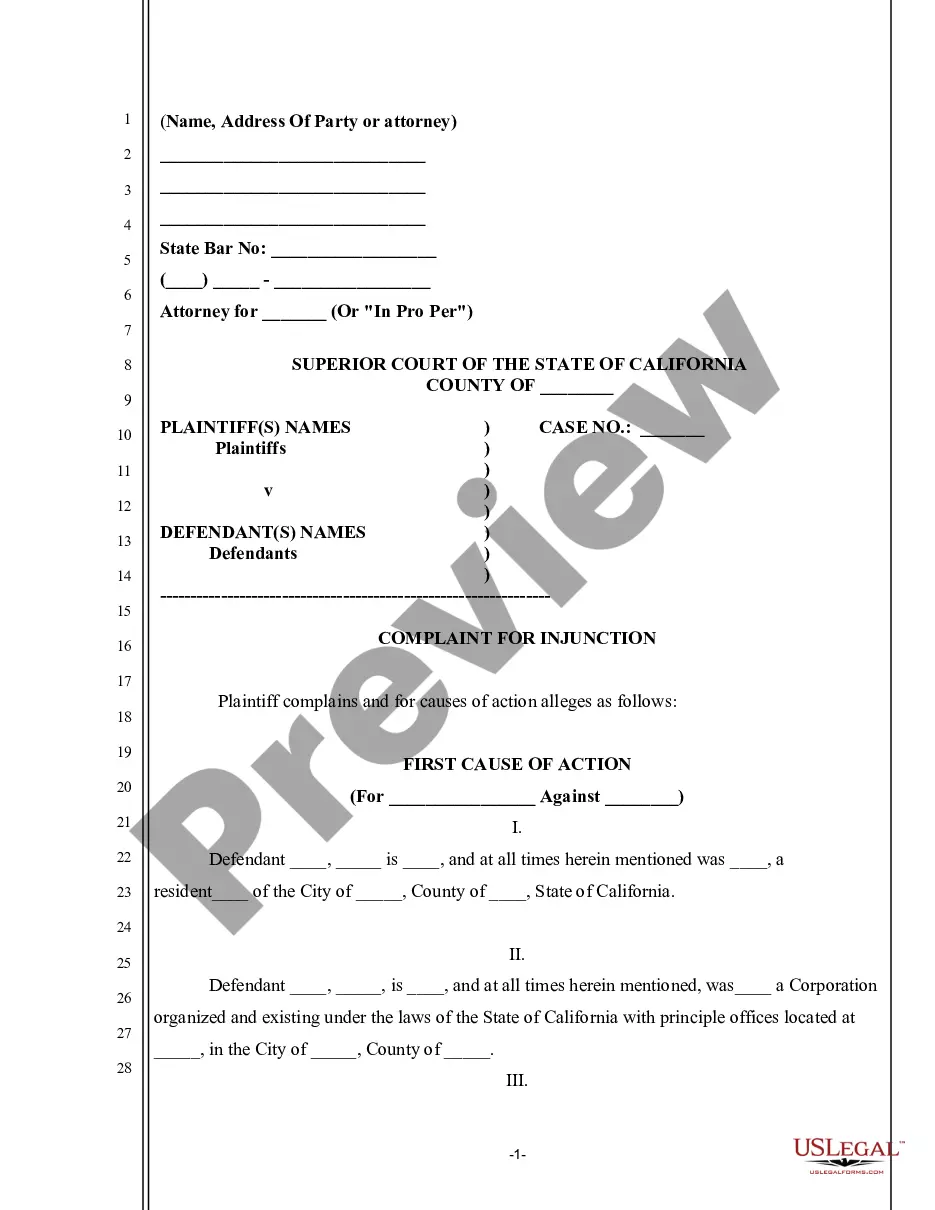
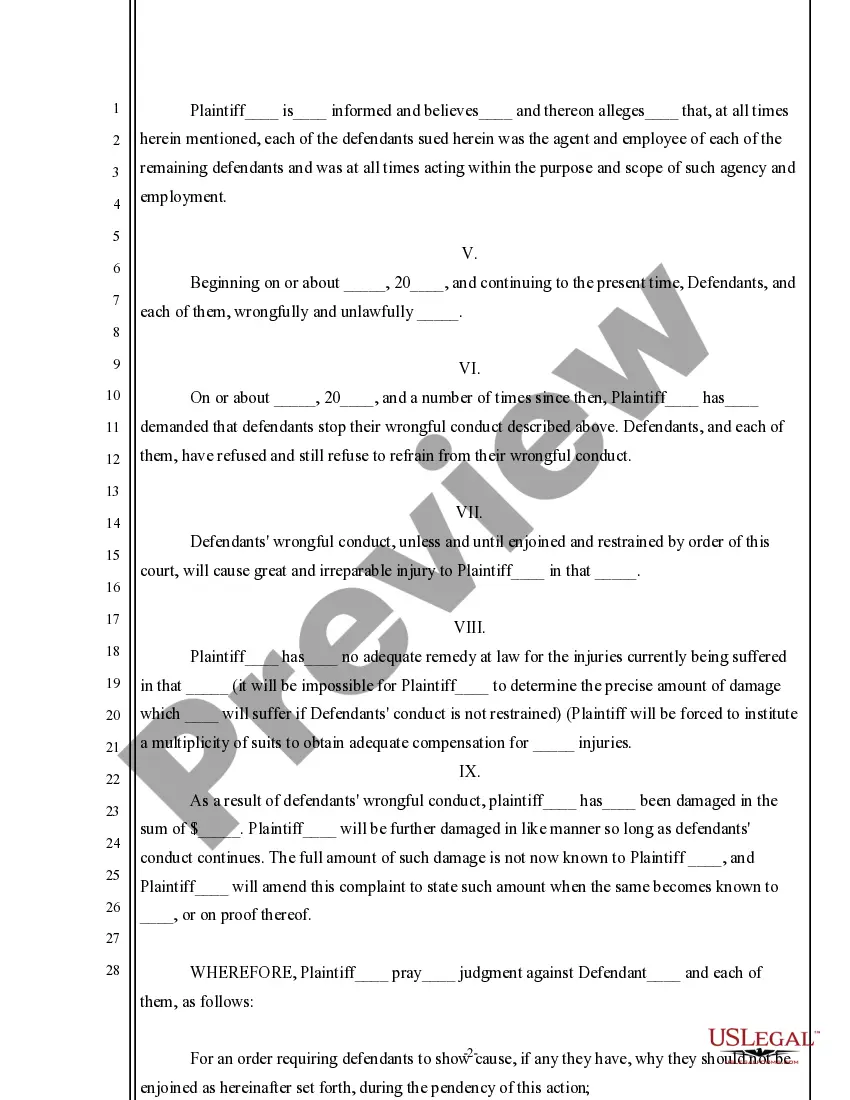
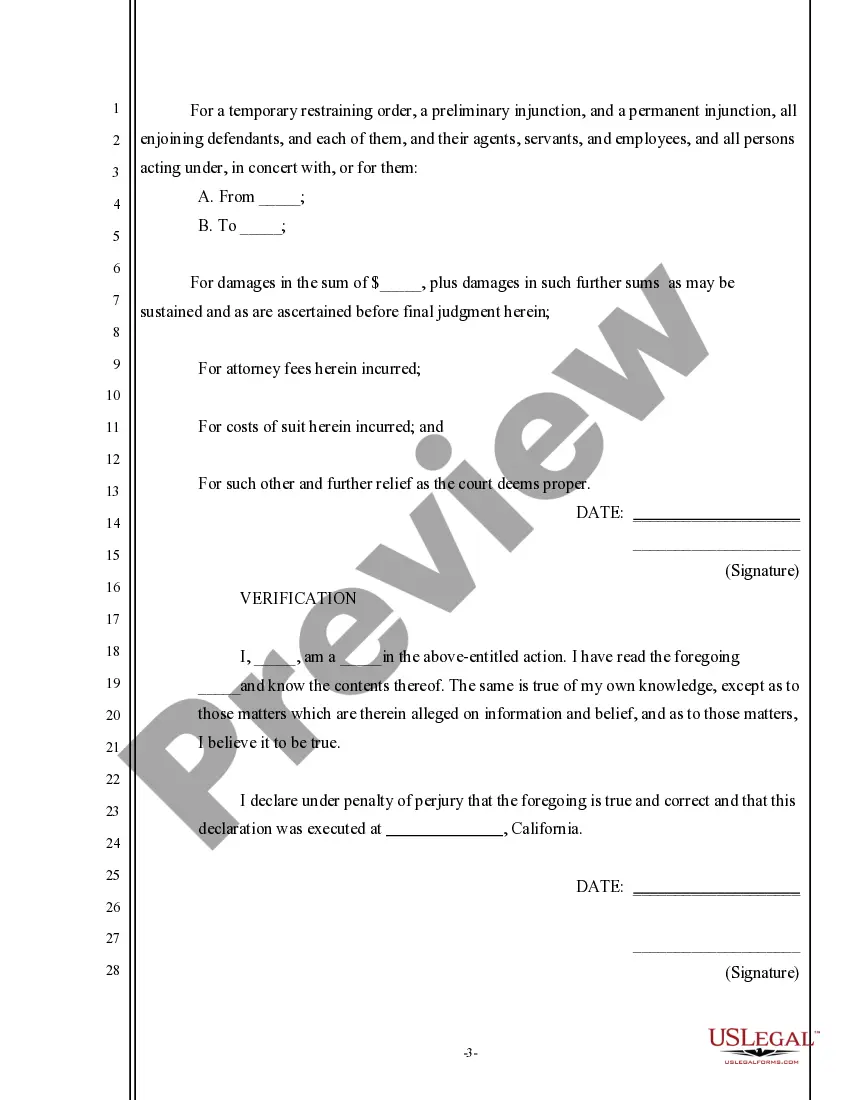
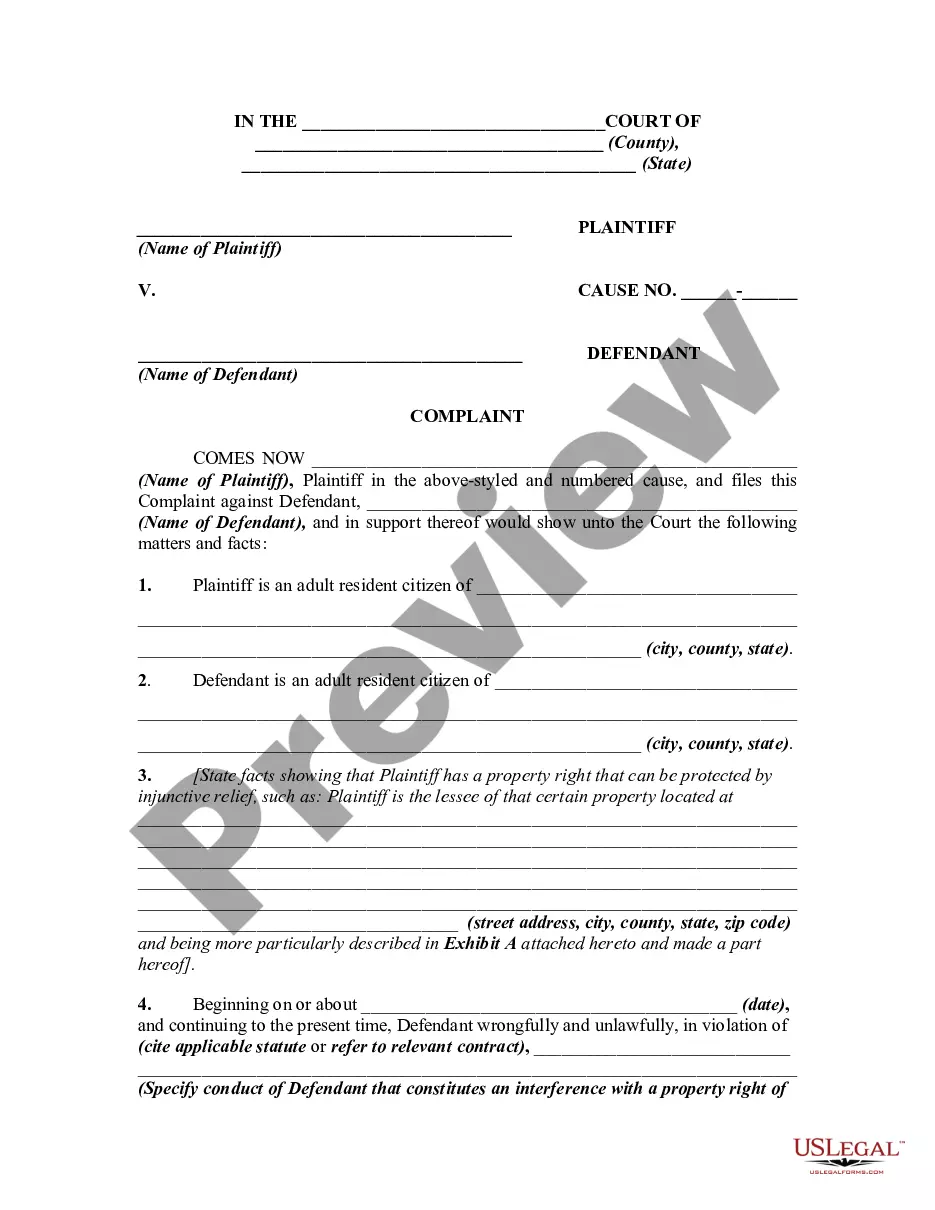
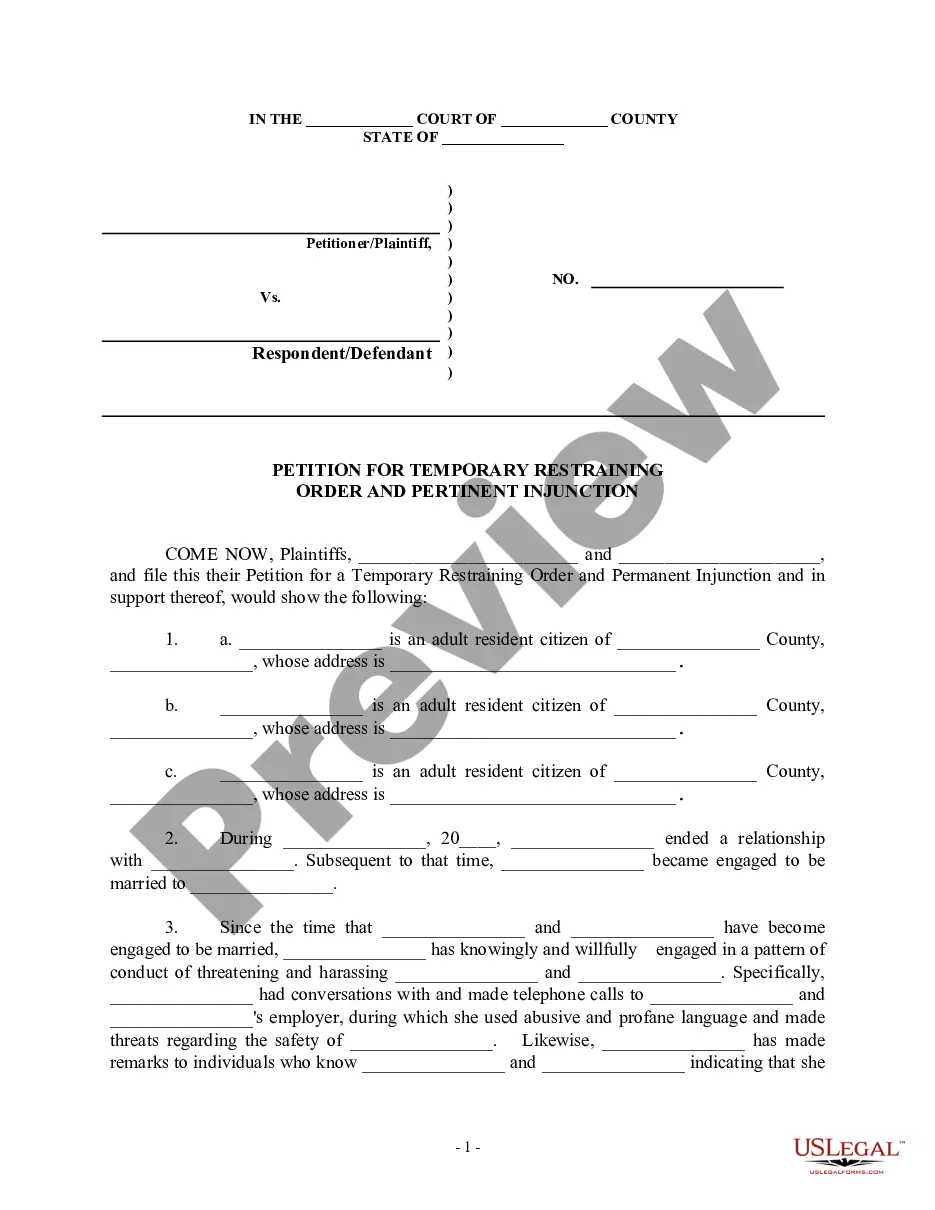
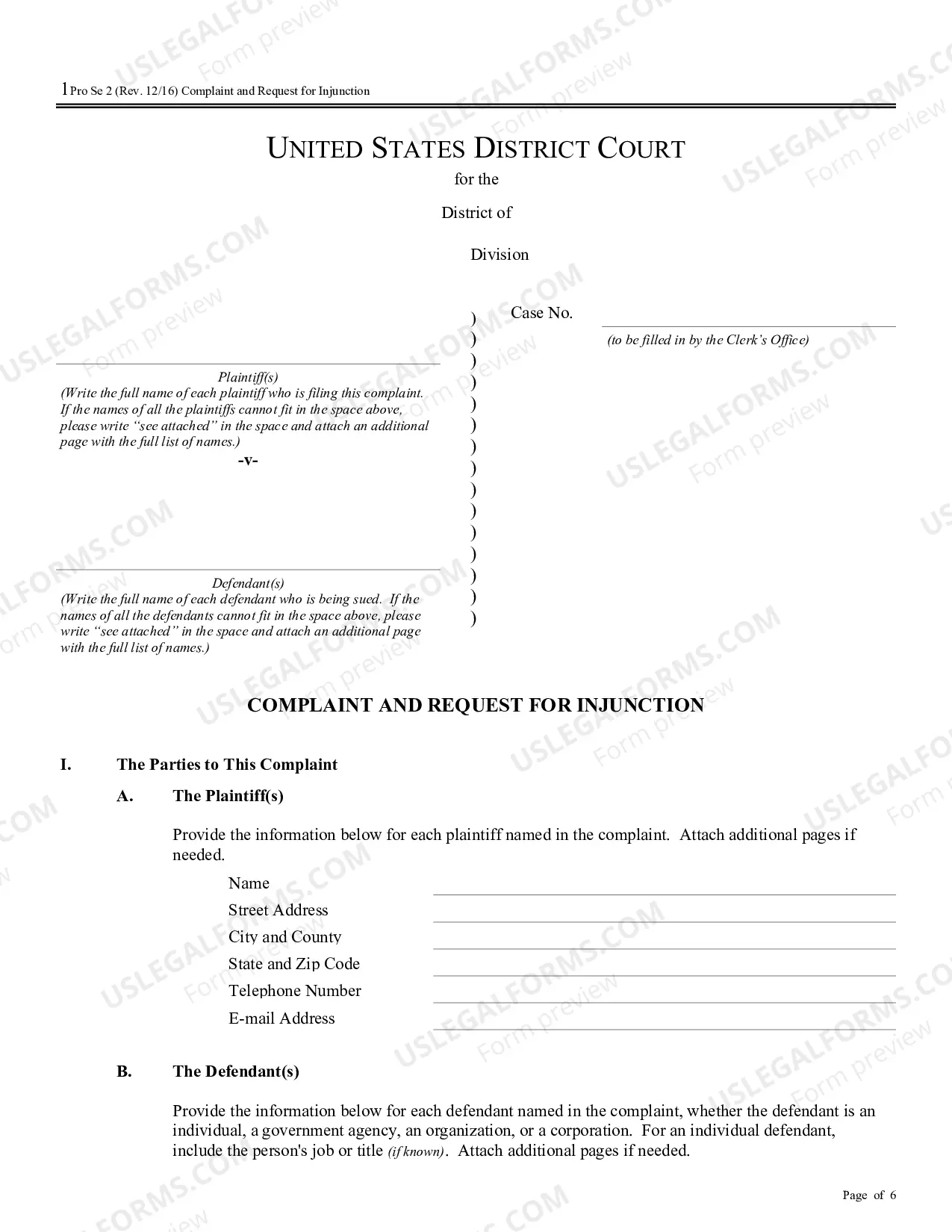
The Complaint for TRO and Injunction - General is a legal document that allows a plaintiff to request that a court prevent a defendant from continuing harmful actions. This form outlines the plaintiff's demands for a temporary restraining order, a preliminary injunction, and a permanent injunction. It differs from other legal forms by focusing specifically on situations where immediate action is necessary to protect the plaintiff from ongoing wrongful conduct.
Key parts of this document
- Details of the plaintiff and defendants, including their identities and roles.
- Allegations of wrongful conduct by the defendants that necessitate court action.
- Requests for temporary restraining orders and injunctions to prevent further injury.
- Statement of damages and the lack of an adequate remedy at law.
- Verification section to affirm the accuracy of the claims made in the complaint.


Situations where this form applies
This form is essential when you need to urgently stop someone from engaging in specific harmful behavior. Common scenarios include disputes involving harassment, breaches of contract, or imminent threats that could cause irreparable harm. If you have already asked the other party to cease their actions and they refuse, using this form can assist you in seeking judicial intervention.
Who should use this form
This form is intended for parties who believe they are suffering harm due to the actions of another individual or entity. It is suitable for:
- Individuals seeking to protect their rights in civil disputes.
- Businesses looking to prevent competitors from engaging in unfair practices.
- Anyone needing to address harassment or threats from another party.
Steps to complete this form
- Identify yourself as the plaintiff and provide your contact information.
- List the defendants and their relevant details, such as address and role.
- Clearly state the wrongful conduct that necessitates the injunction.
- Specify the type of injunction you are seeking (temporary, preliminary, and permanent).
- Include a section detailing the damages you have suffered and request for damages.
- Sign and date the verification section to confirm the accuracy of your complaint.
Notarization requirements for this form
This form does not typically require notarization unless specified by local law. Ensure you check local requirements to confirm if notarization is necessary for your complaint.
Get your form ready online
Our built-in tools help you complete, sign, share, and store your documents in one place.
Make edits, fill in missing information, and update formatting in US Legal Forms—just like you would in MS Word.
Download a copy, print it, send it by email, or mail it via USPS—whatever works best for your next step.
Sign and collect signatures with our SignNow integration. Send to multiple recipients, set reminders, and more. Go Premium to unlock E-Sign.
If this form requires notarization, complete it online through a secure video call—no need to meet a notary in person or wait for an appointment.
We protect your documents and personal data by following strict security and privacy standards.

Make edits, fill in missing information, and update formatting in US Legal Forms—just like you would in MS Word.

Download a copy, print it, send it by email, or mail it via USPS—whatever works best for your next step.

Sign and collect signatures with our SignNow integration. Send to multiple recipients, set reminders, and more. Go Premium to unlock E-Sign.

If this form requires notarization, complete it online through a secure video call—no need to meet a notary in person or wait for an appointment.

We protect your documents and personal data by following strict security and privacy standards.
Mistakes to watch out for
- Failing to adequately describe the wrongful conduct.
- Neglecting to list all defendants involved.
- Not specifying the type of injunction requested.
- Omitting the verification signature or date.
Benefits of using this form online
- Convenient access to the form from anywhere, anytime.
- Easy to edit and customize the form to fit your specific situation.
- Reliable templates drafted by licensed attorneys for legal accuracy.
Legal use & context
- This form is used to request injunctive relief in civil court cases.
- Filing this complaint properly is crucial for enforcing your rights.
- Courts may grant temporary restraining orders to prevent harm until a hearing can be conducted.
Main things to remember
- The Complaint for TRO and Injunction is vital for halting harmful conduct quickly.
- Ensure all necessary parties are identified and all allegations are clearly articulated.
- Consider the necessity of legal representation for filing this form effectively.
Looking for another form?



Form popularity
FAQ
Filling out a withholding exemption form involves providing accurate personal information and declaring your eligibility for exemptions. Follow the guidelines carefully to ensure compliance with state regulations. This form can have implications for your financial situation, so consult resources like the California Complaint for TRO and Injunction - General for relevant context or legal assistance if needed.
Writing an injunction letter requires clarity and purpose. Begin by stating who you are and the nature of the injunction you seek. Clearly outline the reasons for your request and reference any relevant sections from the California Complaint for TRO and Injunction - General to strengthen your case. Including specific details helps convey your position effectively.
To fill out a withholding allowance form, carefully read the instructions provided with the document. You will need to provide your personal information and the number of allowances you are claiming. This form can impact your tax withholdings, and it’s wise to consider consulting the California Complaint for TRO and Injunction - General for guidance on relevant legal statutes affecting withholding.
Completing PLDC010 requires careful attention to detail. Begin by providing all requested personal information and case details accurately. Ensure that you follow the instructions outlined for the California Complaint for TRO and Injunction - General, as the form is often related to specific proceedings in California's legal system.
To draft an answer to a debt collection lawsuit, first read the complaint carefully to understand the claims being made against you. Your answer should clearly respond to each allegation, either admitting, denying, or stating that you lack knowledge of the claims. Remember to reference your California Complaint for TRO and Injunction - General if applicable, as it may influence your response strategy.
Filling out a declaration of mailing is straightforward. Start by stating the purpose of the declaration at the top of the document. Include the names and addresses of both the sender and the recipient, along with the date of mailing. This information is essential in the context of a California Complaint for TRO and Injunction - General, as it confirms that relevant parties received proper notice.
When you wish to file a California Complaint for TRO and Injunction - General, it is essential to note the time limits involved. Generally, you have a certain period known as the statute of limitations, which varies depending on the specific circumstances of your case. In California, you typically have up to two years to file a complaint for most civil actions. However, it is crucial to consult with a legal expert to ensure you comply with all deadlines related to your complaint.
A suit for an injunction is most appropriate when there is a significant risk of immediate and irreparable harm that cannot be addressed through monetary damages. Situations may include disputes over property use, preventing continuing nuisances, or stopping unlawful activities. In these cases, a well-prepared California Complaint for TRO and Injunction - General becomes your critical tool to seek timely relief.
In California, there are several types of injunctions, including permanent injunctions, temporary restraining orders (TROs), and preliminary injunctions. Each serves different purposes and operates at different stages of a legal proceeding. Understanding these types is essential when drafting your California Complaint for TRO and Injunction - General, as it determines the appropriate relief you seek.
The burden of proof for a preliminary injunction in California falls on the party requesting it. You must show sufficient evidence to support your claims, particularly regarding the likelihood of success and potential irreparable harm. This is a critical aspect of your California Complaint for TRO and Injunction - General, as it establishes the foundation for your request.