Arizona Parenting Plan and Guidelines
Understanding this form
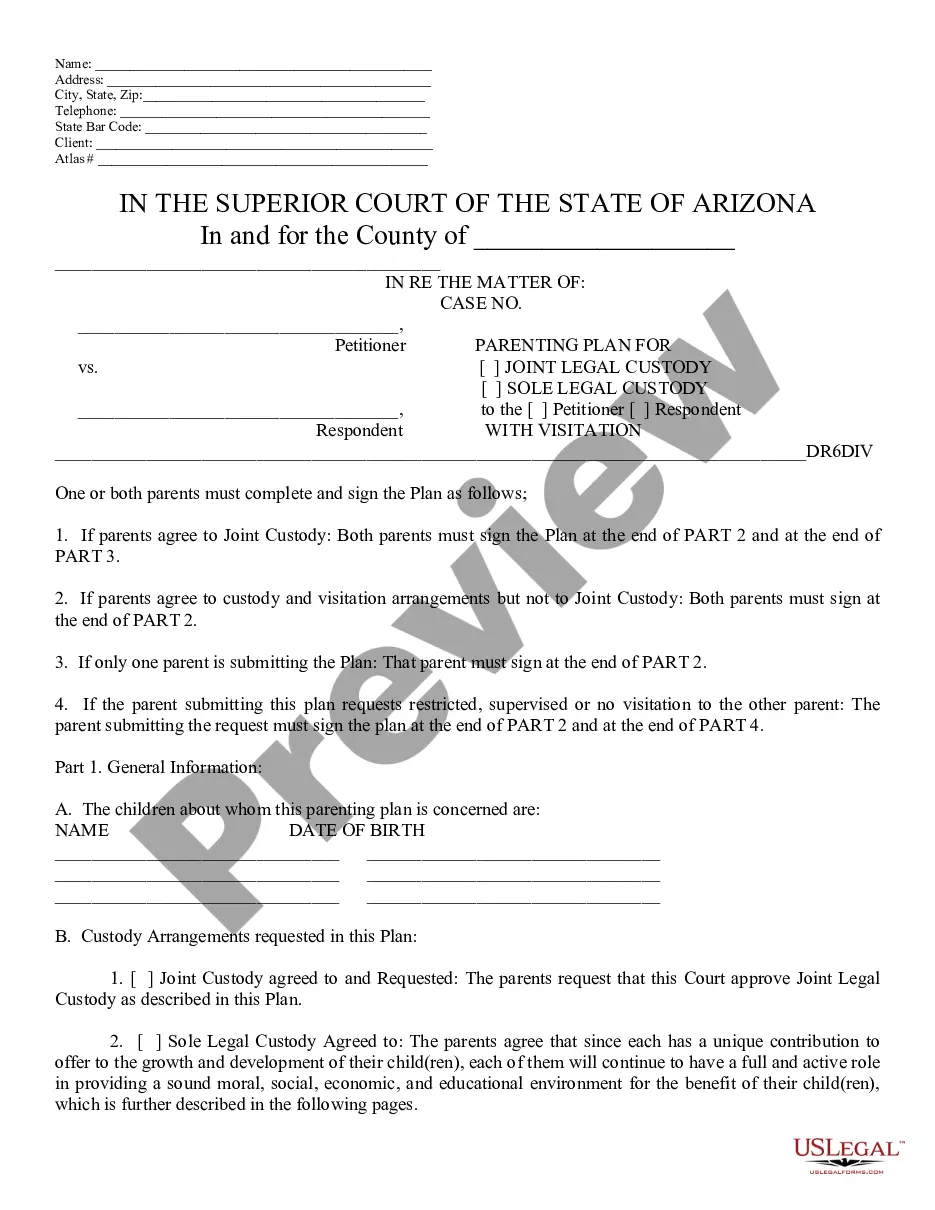
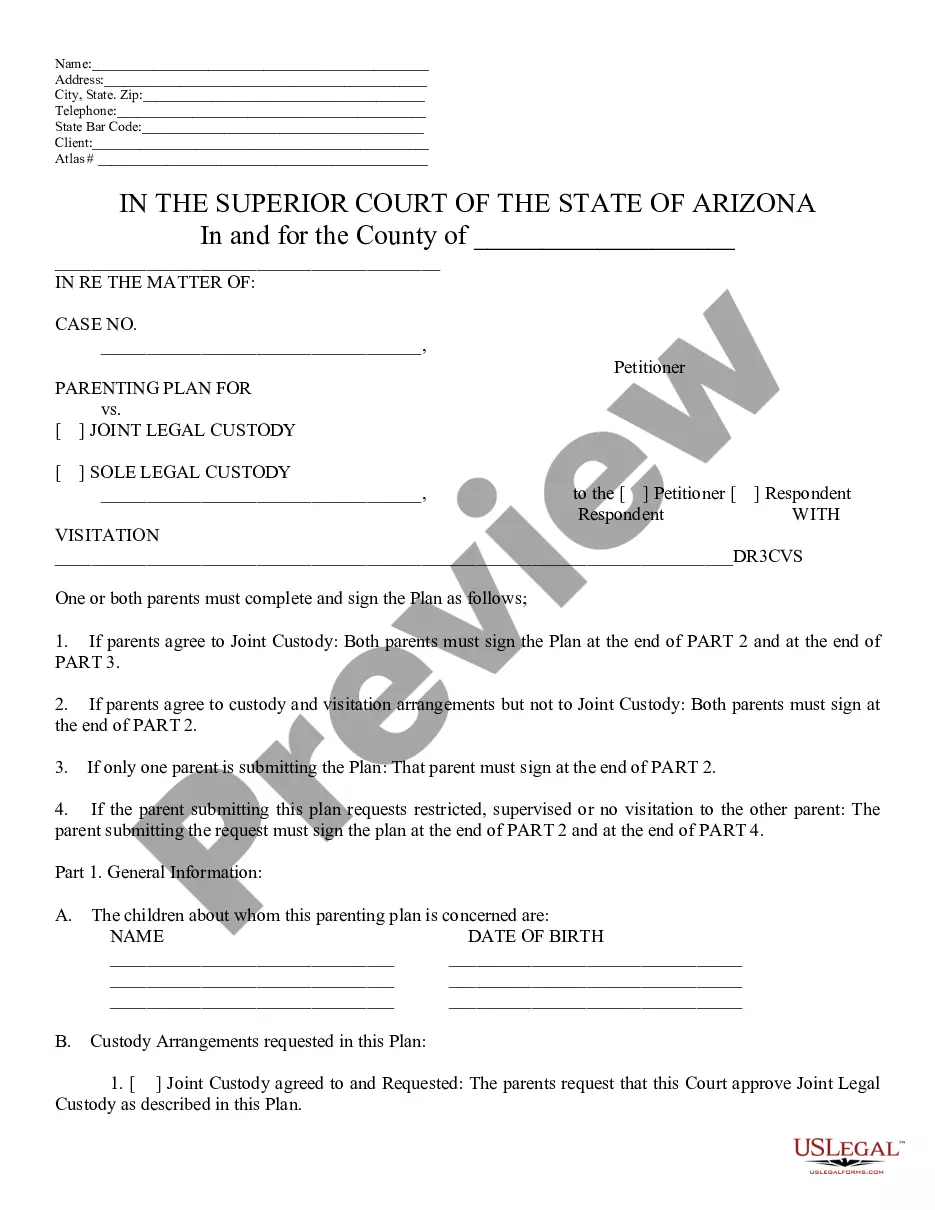
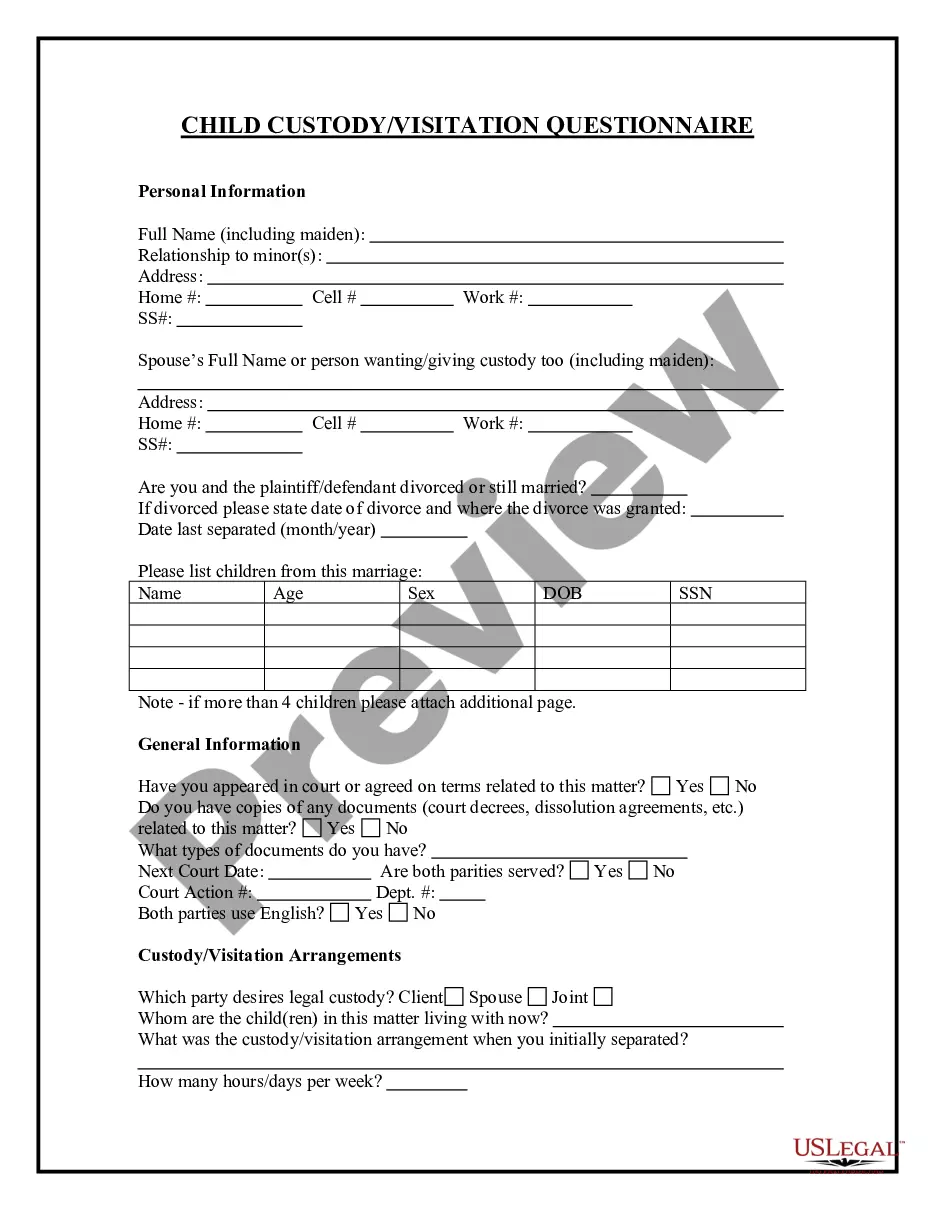
The Parenting Plan and Guidelines is a legal document that outlines custody agreements, visitation schedules, and other important details regarding the shared children of two parents. This form ensures clarity and mutual understanding between parents, which is essential for effective co-parenting. Unlike generic custody arrangements, this Parenting Plan is specifically tailored to meet the needs and preferences of the involved parents while adhering to state laws.
Key components of this form
- General information about the children, including names and dates of birth.
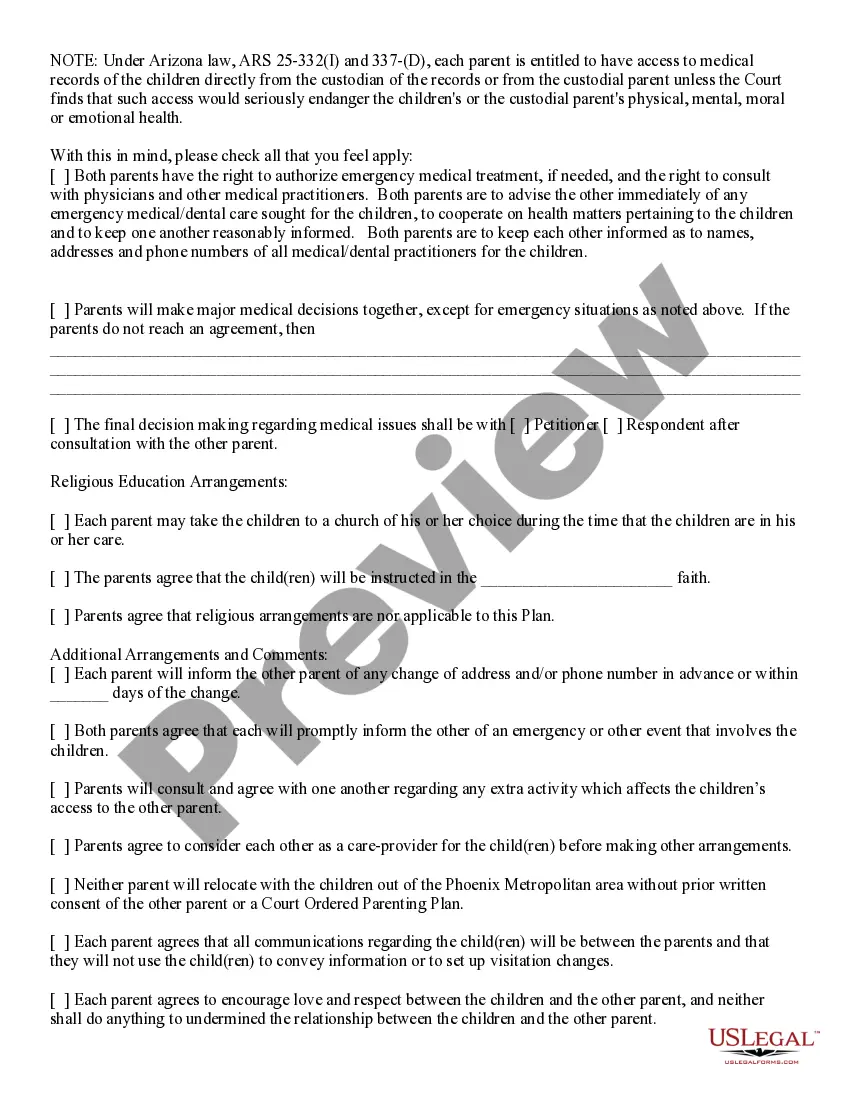
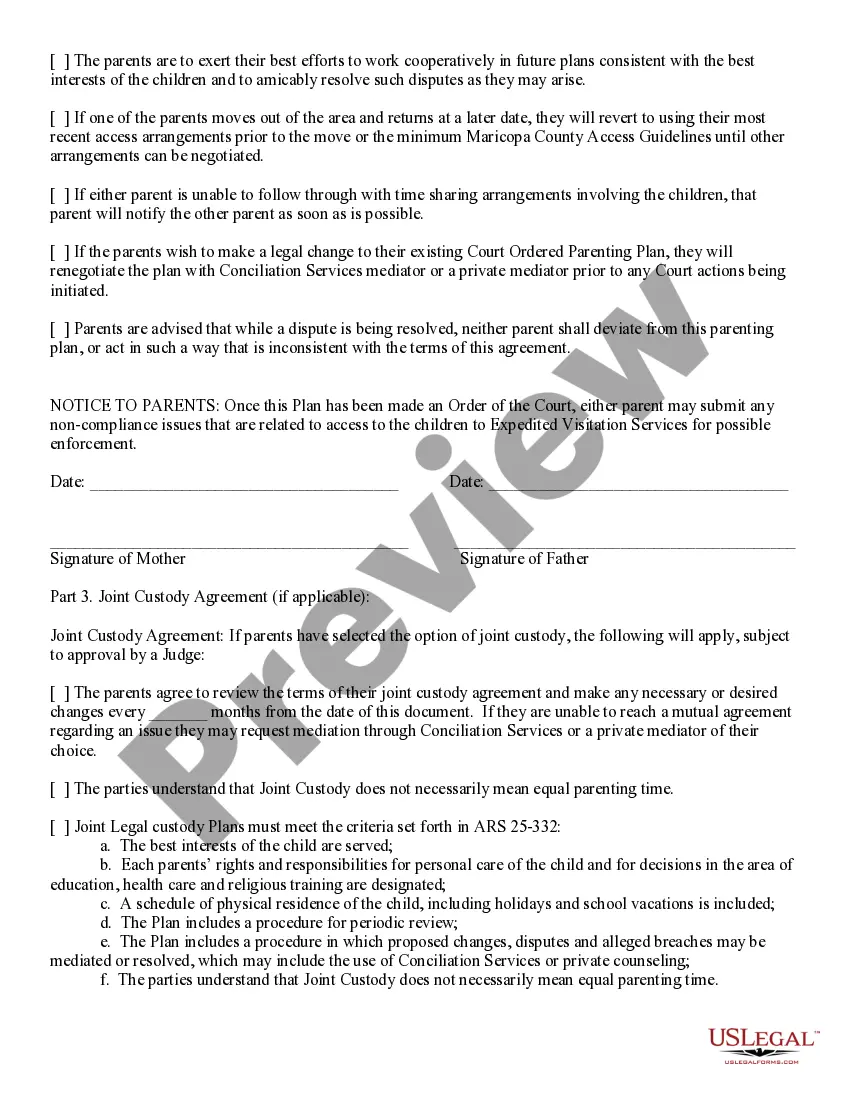
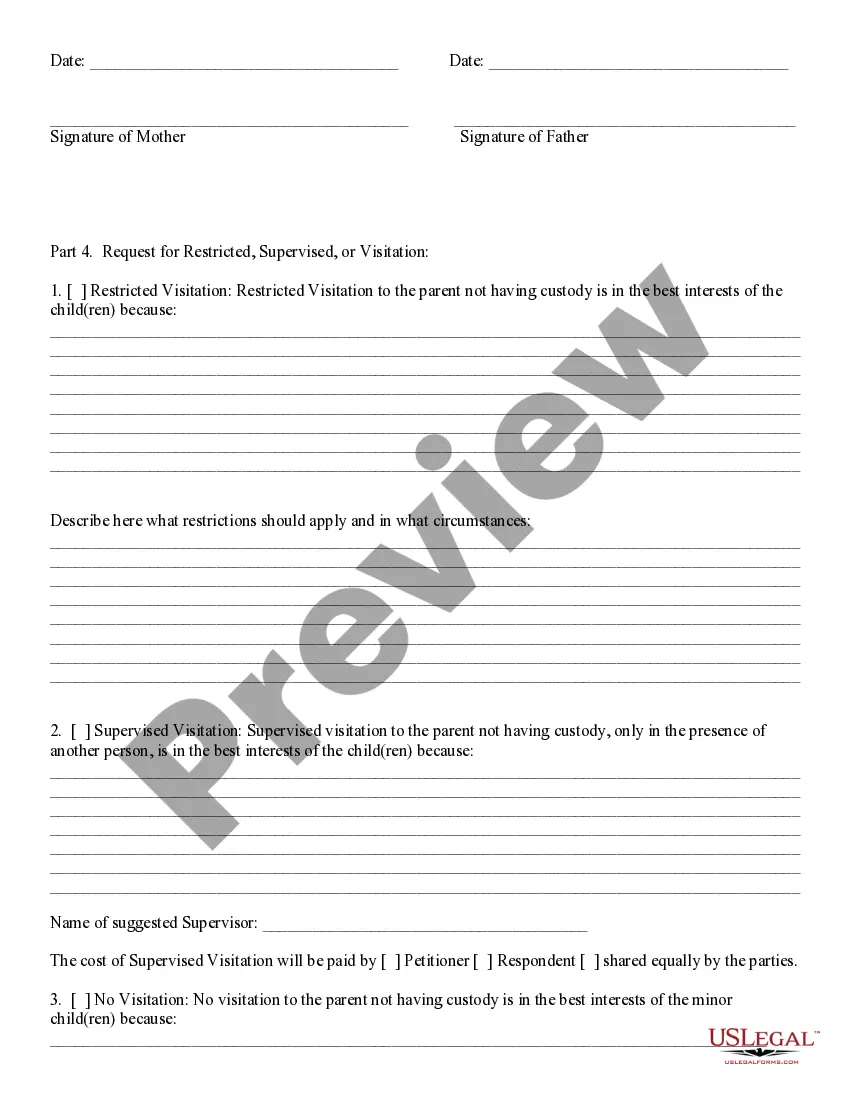
- Custody arrangements, distinguishing between joint and sole custody options.
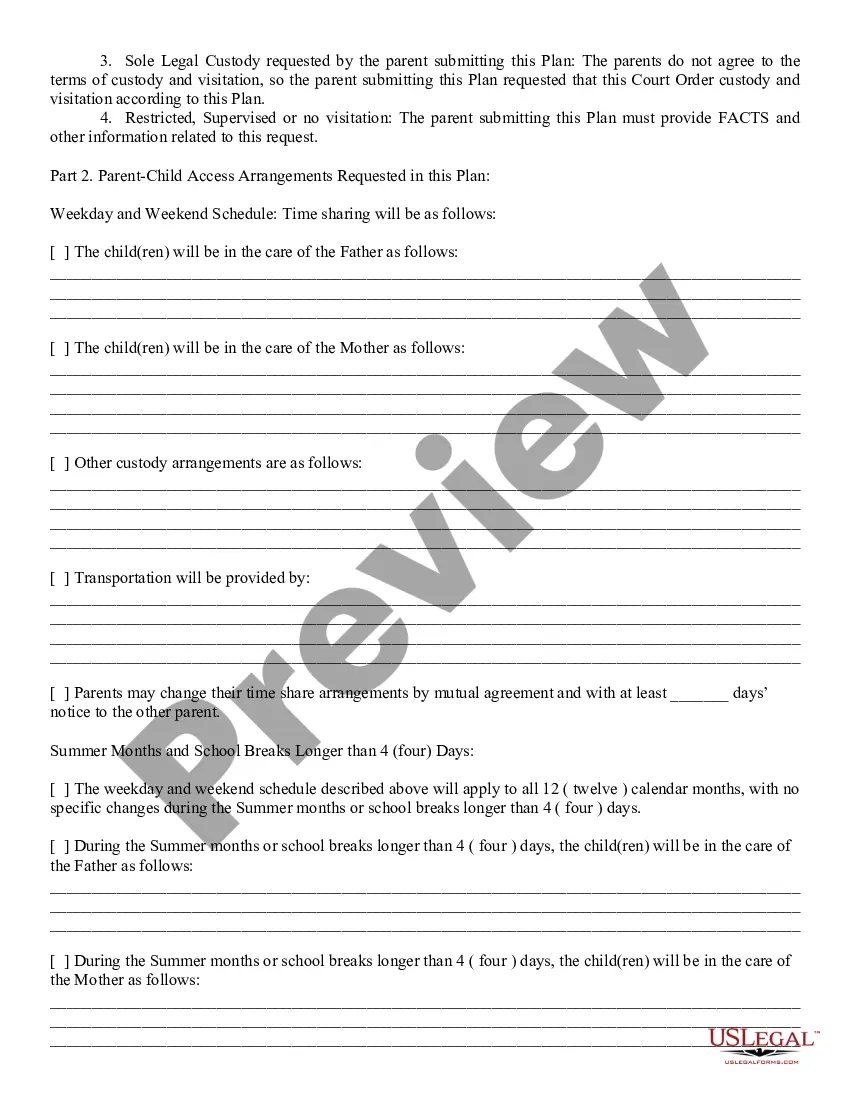
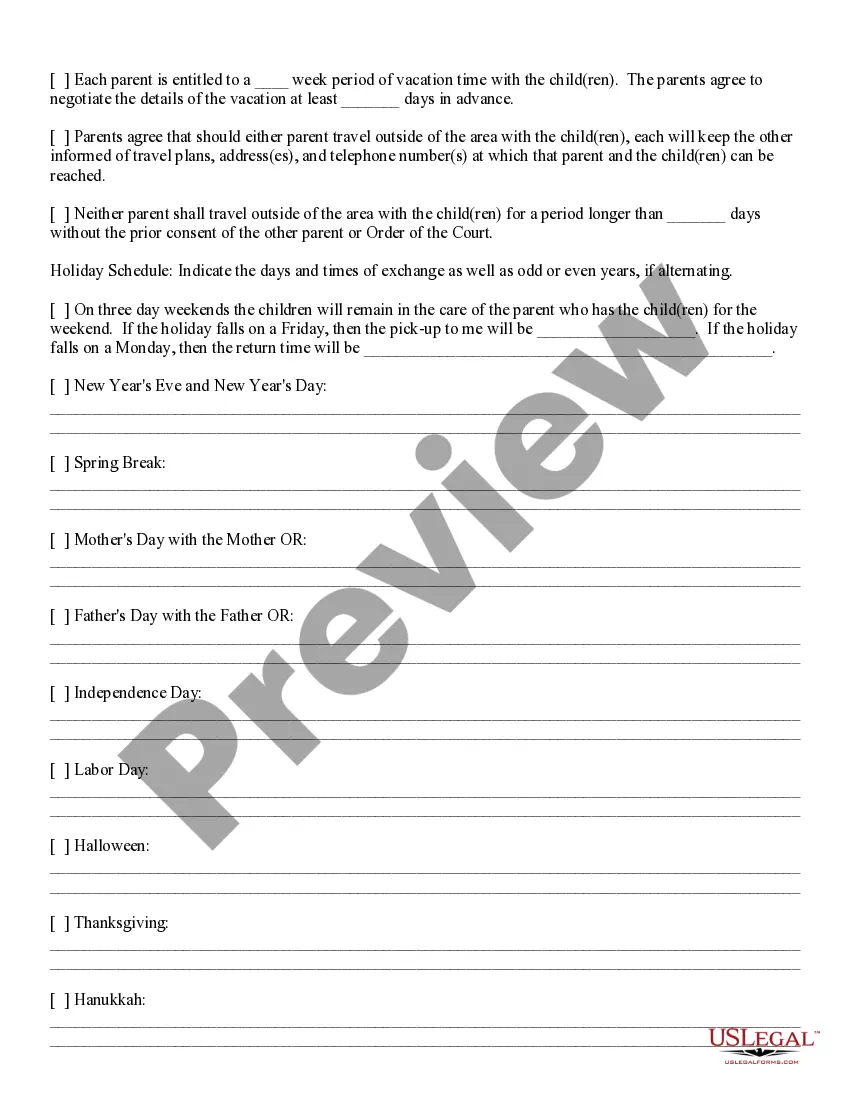
- Detailed visitation schedules, including weekday, weekend, and holiday arrangements.
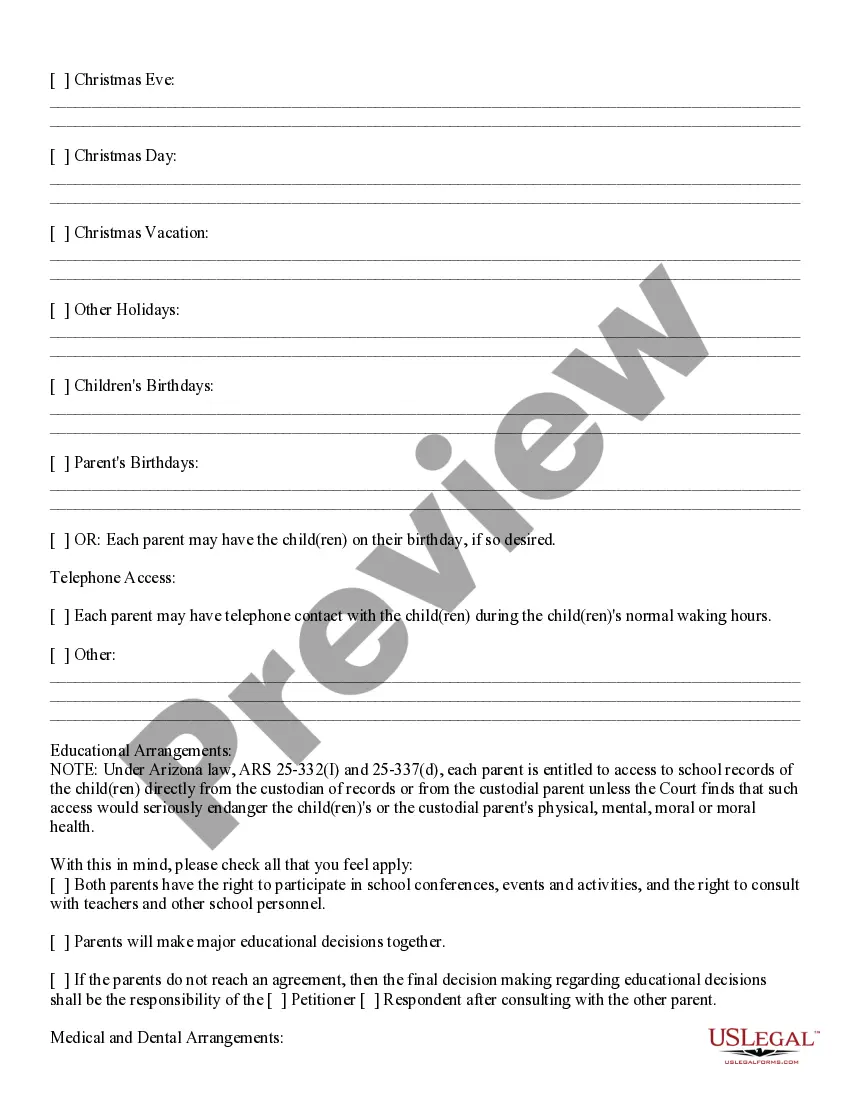
- Provisions for educational, medical, and religious arrangements for the children.
- Guidelines for communication and changes in custody or visitation plans.
- Options for restricted or supervised visitation if necessary.
When to use this form
This form is used when parents need a formalized plan for co-parenting after separation or divorce. It is essential in situations where custody agreements may not be mutually understood, or when there is a need to clarify visitation rights. Parents are encouraged to create or update their Parenting Plan when there are significant changes in their circumstances, such as a change in job, residence, or the children's needs.
Who needs this form
This form is intended for:
- Divorced or separated parents requiring a formal agreement for co-parenting.
- Parents negotiating custody arrangements for the first time.
- Individuals seeking to modify existing custody or visitation agreements.
- Any parent who wants to ensure their children's best interests are prioritized in the parenting process.
How to complete this form
To effectively complete this Parenting Plan, follow these steps:
- Identify the parties involved and the children covered under the plan.
- Specify the desired custody arrangements, indicating whether joint or sole custody is requested.
- Fill out the visitation schedule, detailing care times for weekdays, weekends, and holidays.
- Include sections related to education, medical arrangements, and any specific restrictions or requirements.
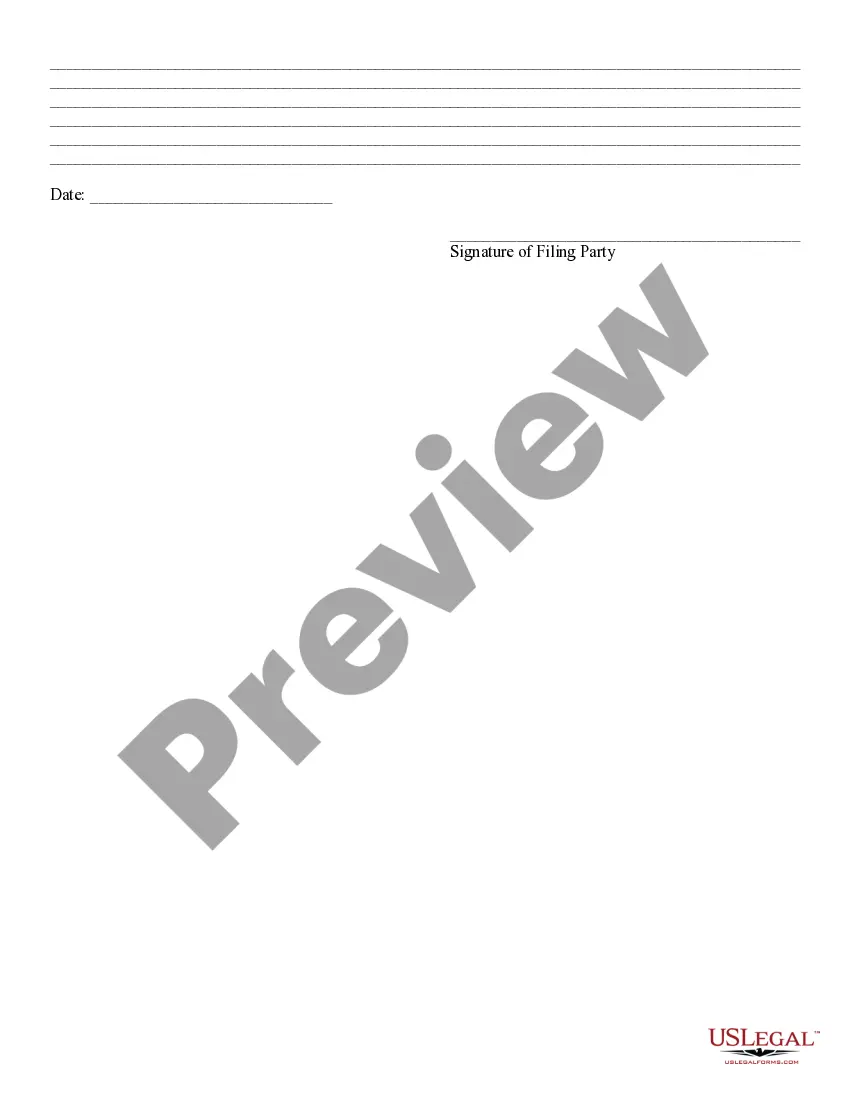
- Ensure both parents review and sign the agreement to validate the terms agreed upon.
Does this document require notarization?
This form does not typically require notarization unless specified by local law. However, it is recommended that parents sign the plan in the presence of a witness or notary to enhance its validity and enforceability in the future.
Get your form ready online
Our built-in tools help you complete, sign, share, and store your documents in one place.
Make edits, fill in missing information, and update formatting in US Legal Forms—just like you would in MS Word.
Download a copy, print it, send it by email, or mail it via USPS—whatever works best for your next step.
Sign and collect signatures with our SignNow integration. Send to multiple recipients, set reminders, and more. Go Premium to unlock E-Sign.
If this form requires notarization, complete it online through a secure video call—no need to meet a notary in person or wait for an appointment.
We protect your documents and personal data by following strict security and privacy standards.

Make edits, fill in missing information, and update formatting in US Legal Forms—just like you would in MS Word.

Download a copy, print it, send it by email, or mail it via USPS—whatever works best for your next step.

Sign and collect signatures with our SignNow integration. Send to multiple recipients, set reminders, and more. Go Premium to unlock E-Sign.

If this form requires notarization, complete it online through a secure video call—no need to meet a notary in person or wait for an appointment.

We protect your documents and personal data by following strict security and privacy standards.
Mistakes to watch out for
- Failing to include all relevant details regarding custody and visitation schedules.
- Not updating the plan when circumstances change, such as relocation or new job obligations.
- Forgetting to consult with the other parent before making unilateral changes to the plan.
- Leaving sections blank or not providing thorough explanations for visitation restrictions.
Benefits of completing this form online
- Convenient online access to the Parenting Plan, allowing for easy downloads and edits as needed.
- Reliability of the form drafted by licensed attorneys, ensuring it meets legal standards.
- The option to customize the plan to meet the unique needs of your family.
- Easy sharing and storage of legal documents in both Word and Rich Text formats.
Legal use & context
- This form serves as a legally binding agreement once approved by the court.
- It is enforceable under Arizona state law and must be followed unless modified by court order.
- Failure to comply with the terms may result in legal consequences, including court intervention.
What to keep in mind
- The Parenting Plan and Guidelines form is essential for clarifying custody and visitation agreements.
- It is suitable for divorced and unmarried parents seeking structured co-parenting solutions.
- Completing the form accurately and having both parents sign it is crucial for its enforceability.
Looking for another form?


Form popularity
FAQ
Judges in Arizona look for various factors to determine custody arrangements. They consider the child's safety, emotional well-being, and the ability of each parent to foster a positive relationship with the other parent. Following the Arizona Parenting Plan and Guidelines is crucial, as it encourages cooperation and provides a framework for a healthy co-parenting relationship. Ultimately, a judge seeks the living situation that serves the child's best interest.
Generally, the parent who can demonstrate a strong emotional bond with the child and an ability to provide a nurturing environment is more likely to receive full custody. Courts often favor stability, so parents with consistent housing and support systems tend to have advantageous positions. Additionally, following the Arizona Parenting Plan and Guidelines can help depict a parent as responsible and committed. Each case has unique factors, so being prepared is essential.
Obtaining full custody in Arizona can be challenging, as courts prioritize the child's best interest. Factors like the existing relationships between the child and each parent, stability, and cooperation play crucial roles in custody decisions. By adhering to the Arizona Parenting Plan and Guidelines, you can better position yourself during the custody evaluation process. It’s vital to demonstrate your commitment and capability as a parent.
Winning full custody in Arizona involves demonstrating that it serves the best interest of your child. You should gather evidence showing your ability to provide a stable, loving environment. This includes showcasing your involvement in your child's education, health, and daily life. Following the Arizona Parenting Plan and Guidelines can help present a strong case to the court.
Arizona practices gender neutrality in custody matters, prioritizing the child’s welfare over parental gender. Courts evaluate each parent’s ability to provide a stable environment, regardless of whether they are mothers or fathers. By consulting the Arizona Parenting Plan and Guidelines, you can better understand how courts make custody decisions. USLegalForms assists you in drafting plans that reflect the best interests of your child, giving both parents a fair chance in the process.
Arizona does not automatically enforce a 50/50 custody arrangement. Instead, the court's primary focus is the best interest of the child, which may result in various custody orders. Familiarizing yourself with the Arizona Parenting Plan and Guidelines will enable you to prepare a suitable proposal that can be presented to the court. Platforms like USLegalForms offer valuable tools to create effective parenting plans tailored to your family’s needs.
In Arizona, the division of assets and debts during a divorce does not automatically follow a 50/50 split. The court considers several factors, such as the length of the marriage and each spouse's financial situation. Understanding the Arizona Parenting Plan and Guidelines can help clarify how assets may be divided during divorce proceedings. Utilizing resources like USLegalForms can provide you with structured templates to create your own parenting plan.
A typical long-distance parenting plan in Arizona involves regular communication, set visitation times, and travel arrangements. Parents often schedule extended stays during school holidays, balancing time between homes. Clear expectations and flexible plans can help the child feel secure and connected to both parents. The Arizona Parenting Plan and Guidelines can be a valuable resource for creating an effective long-distance parenting strategy.
In Arizona, there is no specific distance limit for maintaining a 50/50 custody arrangement; it often depends on the parents' capacity to co-parent effectively. Proximity can enhance ease of access and reduce travel time for the child. However, it’s crucial to focus on what arrangement benefits the child most. The Arizona Parenting Plan and Guidelines will assist you in considering all factors necessary for your specific situation.
For long-distance custody, a flexible schedule that maximizes quality time is often ideal. Frequent video calls can help maintain relationships, while extended visits during holidays or school breaks allow for deeper connections. Each family's needs are different, which is why the Arizona Parenting Plan and Guidelines can help you create a personalized strategy that accommodates distance.