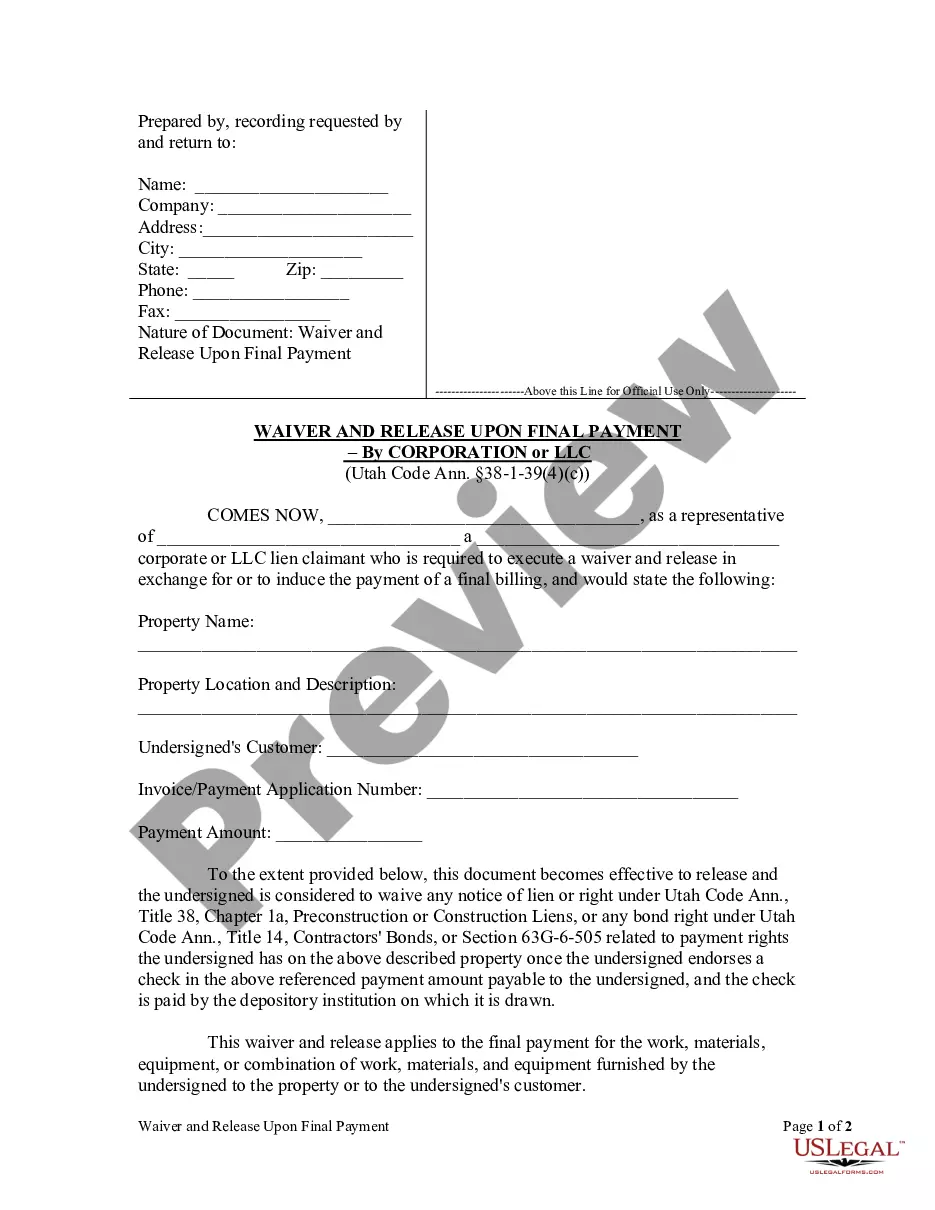
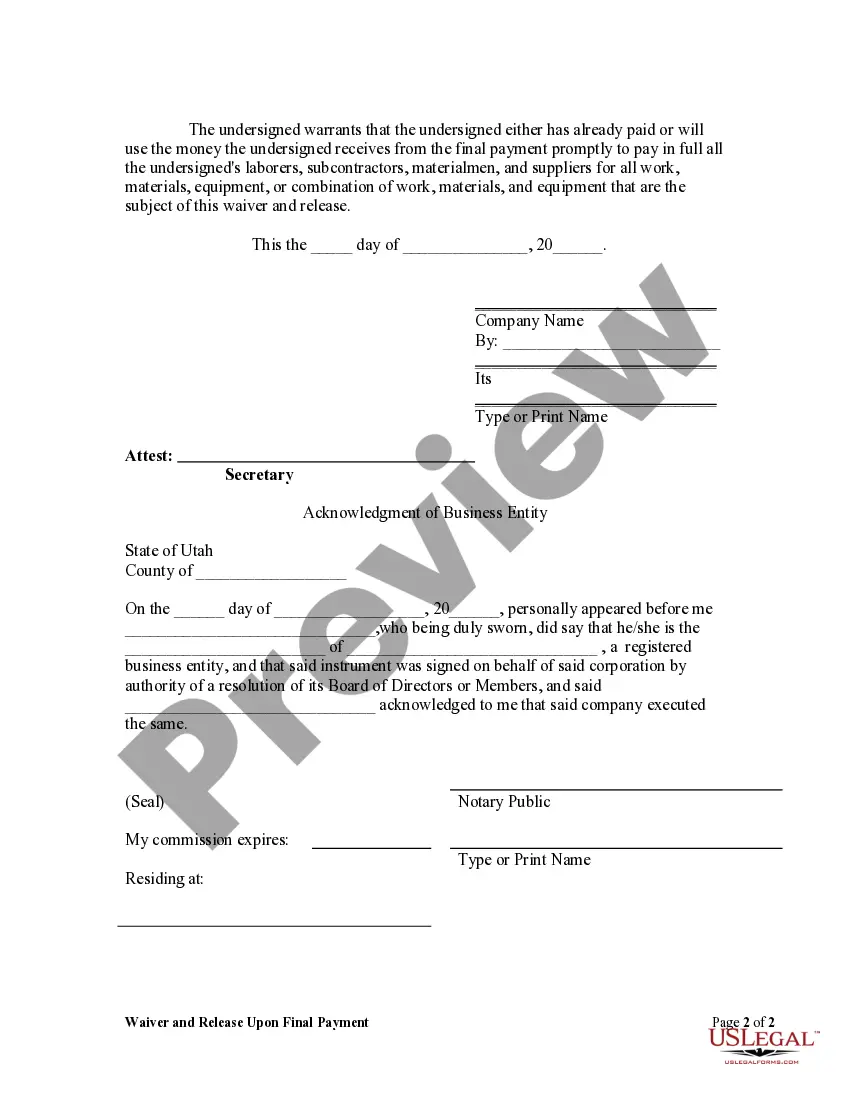
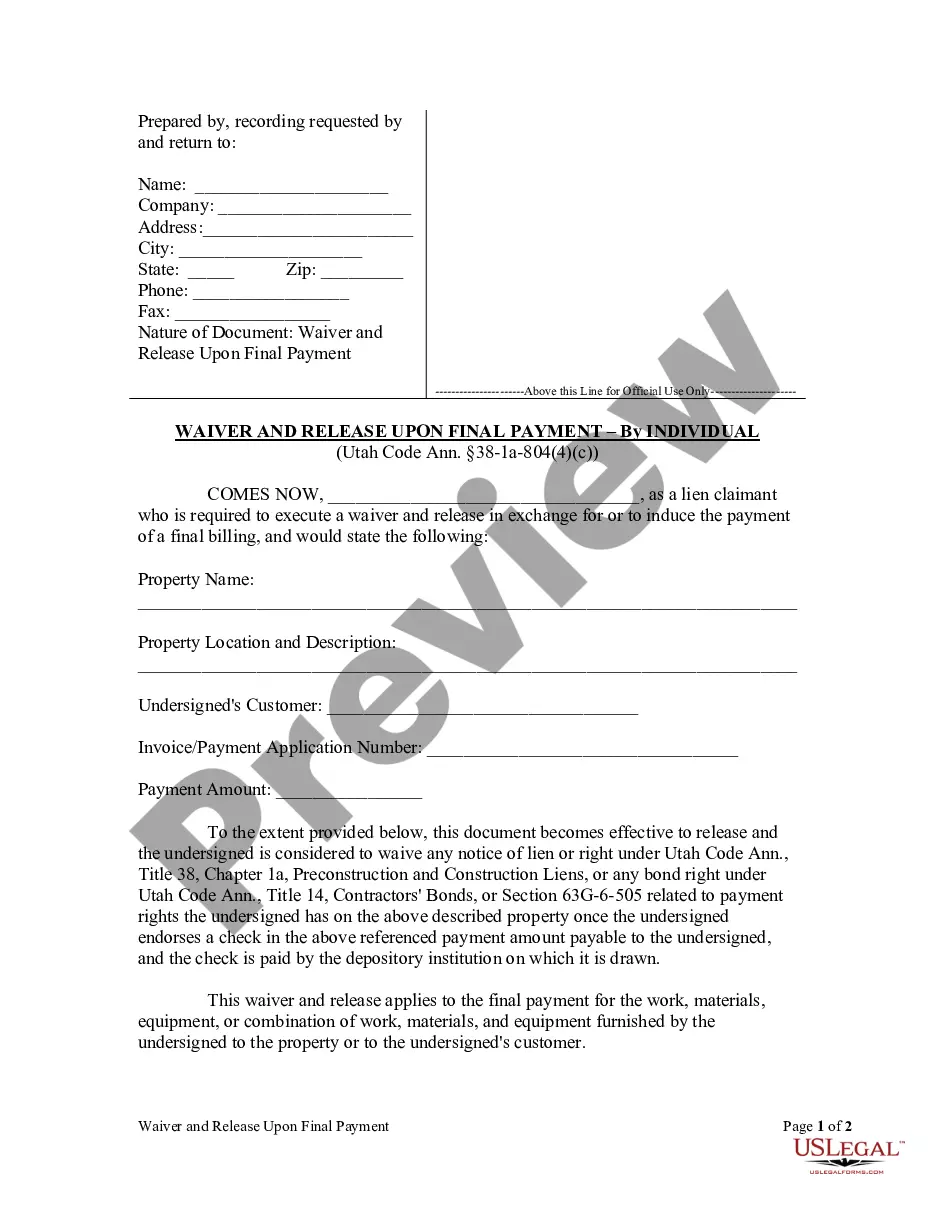
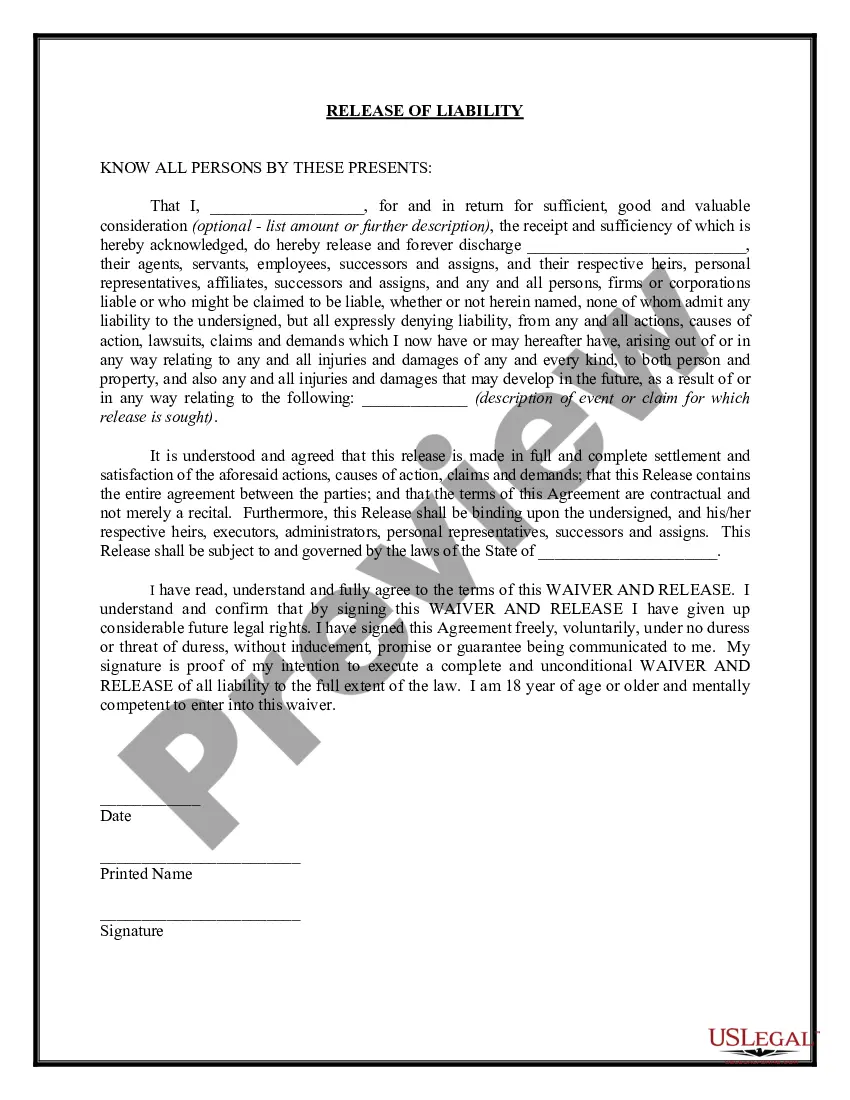
Utah Unconditional Lien Waiver Form
Description
Get your form ready online
Our built-in tools help you complete, sign, share, and store your documents in one place.
Make edits, fill in missing information, and update formatting in US Legal Forms—just like you would in MS Word.
Download a copy, print it, send it by email, or mail it via USPS—whatever works best for your next step.
Sign and collect signatures with our SignNow integration. Send to multiple recipients, set reminders, and more. Go Premium to unlock E-Sign.
If this form requires notarization, complete it online through a secure video call—no need to meet a notary in person or wait for an appointment.
We protect your documents and personal data by following strict security and privacy standards.

Make edits, fill in missing information, and update formatting in US Legal Forms—just like you would in MS Word.

Download a copy, print it, send it by email, or mail it via USPS—whatever works best for your next step.

Sign and collect signatures with our SignNow integration. Send to multiple recipients, set reminders, and more. Go Premium to unlock E-Sign.

If this form requires notarization, complete it online through a secure video call—no need to meet a notary in person or wait for an appointment.

We protect your documents and personal data by following strict security and privacy standards.
Looking for another form?


Form popularity
FAQ
Filling out a waiver form, such as the Utah unconditional lien waiver form, is straightforward. Start by entering the correct information, including your name, the property address, and the payment amount received. Next, include the date and sign the document to validate it. Make sure to retain a copy for your records to avoid any future disputes.
An unconditional waiver and release on final payment in Utah is a legal document that confirms the contractor or subcontractor has received full payment for work completed. By signing this form, the party waives any right to file a lien against the property for that specific project. It's essential for ensuring that all obligations are settled, providing peace of mind to both parties involved. Utilizing the Utah unconditional lien waiver form can help simplify this process.
The key difference between conditional and unconditional lien waivers lies in their stipulations. A conditional waiver becomes effective only after certain conditions are met, such as receiving a payment. In contrast, an unconditional waiver takes effect upon signing, regardless of any pending conditions. Therefore, using a Utah unconditional lien waiver form is a clear choice when you want no strings attached to your payment agreements.
Unconditional waivers are legal documents that allow parties involved in a construction project to waive their lien rights completely after receiving payment. Using the Utah unconditional lien waiver form protects property owners from potential claims and reduces disputes over unpaid work. This ensures everyone involved understands the payment status, minimizing misunderstandings that can disrupt projects.
In North Carolina, you will find several types of lien waivers, including partial and unconditional lien waivers. Each type serves a specific purpose in the construction and contracting industry. The Utah unconditional lien waiver form is particularly useful as it releases a contractor's claim to payment once they have been compensated. Understanding these types can help you navigate your contractual obligations more effectively.
Unconditional release is a commitment that a contractor makes, stating they will not pursue claims for payments once they confirm receipt of funds. This type of release follows the terms set in the Utah unconditional lien waiver form, which assures that all financial obligations have been met. By using this release, you help establish a reliable and trusting atmosphere in construction contracts. This process not only simplifies payments but also minimizes potential legal issues.
An unconditional waiver provides a straightforward way for contractors to confirm they have received payment, offering peace of mind for all involved. By submitting the Utah unconditional lien waiver form, a contractor relinquishes their right to claim any further payments related to the specified work. This waiver helps projects move forward smoothly and protects all parties from future claims. It promotes transparency in business transactions.
A conditional waiver serves as a tool for contractors and subcontractors to manage payment processes effectively. This type of waiver allows parties to relinquish their right to claim payment only upon receiving specific funds. By utilizing the Utah unconditional lien waiver form, you ensure all parties are clear about payment conditions, which helps prevent disputes. It's essential for maintaining trust in construction projects.
In California, lien waivers generally do not require notarization, which streamlines their use. However, some parties may prefer notarized waivers for added assurance in documentation. Ensuring all parties consent to the terms is crucial regardless of notarization. For consistent handling of waivers, you may want to use a Utah unconditional lien waiver form to set clear expectations.
In Utah, a lien is typically valid for a period of six months after it is recorded. If the claimant does not initiate legal action to enforce the lien within that timeframe, the lien may be considered expired. Therefore, it is crucial to take timely action if you wish to enforce your rights. The Utah unconditional lien waiver form can assist in clarifying timelines and protecting your interests.
