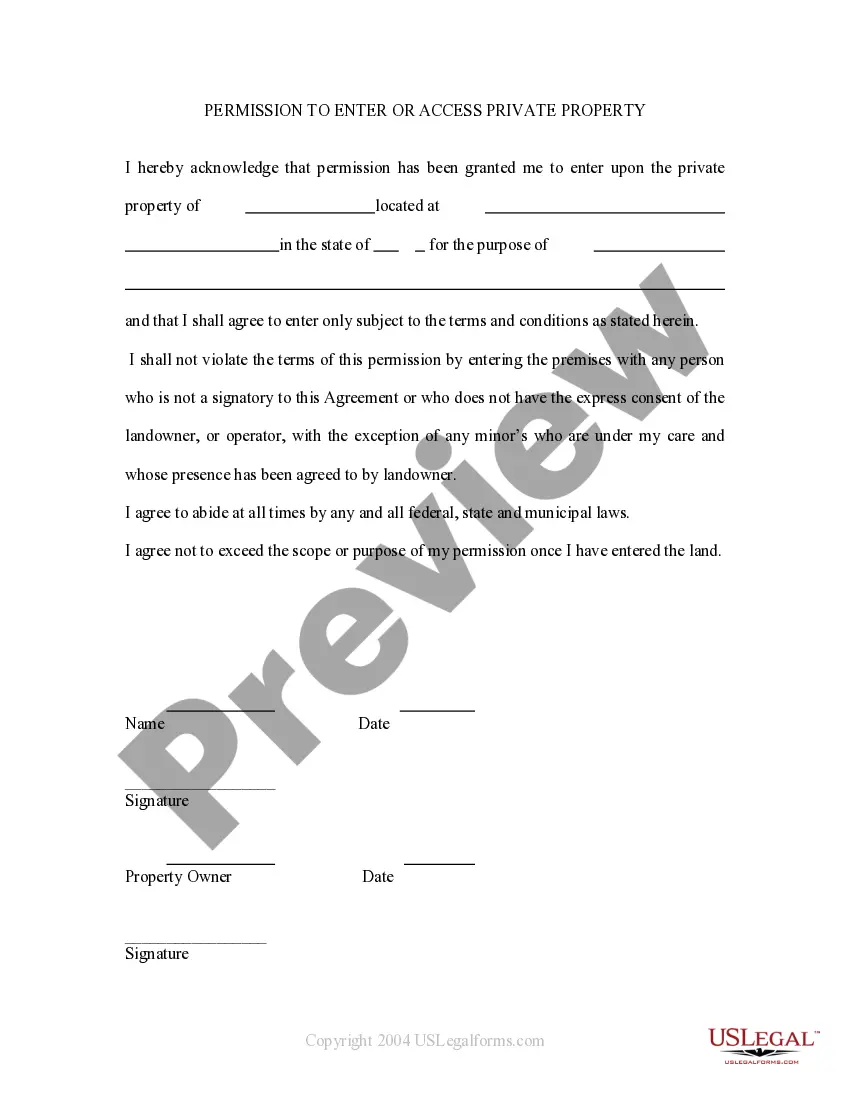
Access To Property Agreement For Unmarried Couples
Description
Get your form ready online
Our built-in tools help you complete, sign, share, and store your documents in one place.
Make edits, fill in missing information, and update formatting in US Legal Forms—just like you would in MS Word.
Download a copy, print it, send it by email, or mail it via USPS—whatever works best for your next step.
Sign and collect signatures with our SignNow integration. Send to multiple recipients, set reminders, and more. Go Premium to unlock E-Sign.
If this form requires notarization, complete it online through a secure video call—no need to meet a notary in person or wait for an appointment.
We protect your documents and personal data by following strict security and privacy standards.

Make edits, fill in missing information, and update formatting in US Legal Forms—just like you would in MS Word.

Download a copy, print it, send it by email, or mail it via USPS—whatever works best for your next step.

Sign and collect signatures with our SignNow integration. Send to multiple recipients, set reminders, and more. Go Premium to unlock E-Sign.

If this form requires notarization, complete it online through a secure video call—no need to meet a notary in person or wait for an appointment.

We protect your documents and personal data by following strict security and privacy standards.
Looking for another form?


How to fill out Permission To Enter Or Access Private Property?
The Access To Property Agreement For Unmarried Couples you see on this page is a versatile legal template crafted by expert attorneys in accordance with federal and state regulations.
For over 25 years, US Legal Forms has offered individuals, businesses, and lawyers with more than 85,000 authenticated, state-specific documents for any commercial and personal situation. It’s the quickest, simplest, and most reliable method to acquire the forms you require, as the service assures bank-level data protection and anti-virus safeguards.
Register for US Legal Forms to have verified legal templates for all of life’s situations at your fingertips.
- Search for the document you require and examine it.
- Browse through the example you looked for and preview it or verify the form description to ensure it meets your needs. If it doesn't, utilize the search bar to locate the right one. Click Buy Now once you have identified the template you need.
- Choose and Log In.
- Pick the pricing plan that fits your needs and create an account. Use PayPal or a credit card for a quick transaction. If you already possess an account, Log In and verify your subscription to proceed.
- Obtain the editable template.
- Select the format you wish for your Access To Property Agreement For Unmarried Couples (PDF, DOCX, RTF) and download the sample onto your device.
- Fill out and sign the document.
- Print the template to fill it out manually. Alternatively, utilize an online multifunctional PDF editor to swiftly and accurately complete and sign your form with an eSignature.
- Re-download your paperwork.
- Use the same document again whenever required. Access the My documents tab in your profile to redownload any previously acquired forms.
Form popularity
FAQ
More commonly, cohabitation agreements are used by couples to acknowledge the ownership details of the property and the respective financial or maintenance responsibilities of each partner. They are particularly important for unmarried couples who have children.
The agreement, among other matters, usually sets out the spouses' ownership in and/or division of property, and their support obligations. Cohabitation agreements cannot determine the rights of custody or access to children.
Living together with someone is also sometimes called 'cohabitation'. A cohabiting couple is a couple that lives together in an intimate and committed relationship, who are not married to each other and not in a civil partnership. Cohabiting couples can be opposite-sex or same-sex.
In short, if you are fair about things when entering into a cohabitation agreement, and follow the required rules, the chances are very good that your cohabitation agreement will be valid.
When it comes to dividing property and debts, couples who've lived together in a marriage-like relationship (you might call it being in a common-law relationship for two years are treated like married couples. This means you equally share all the property you got during your relationship.