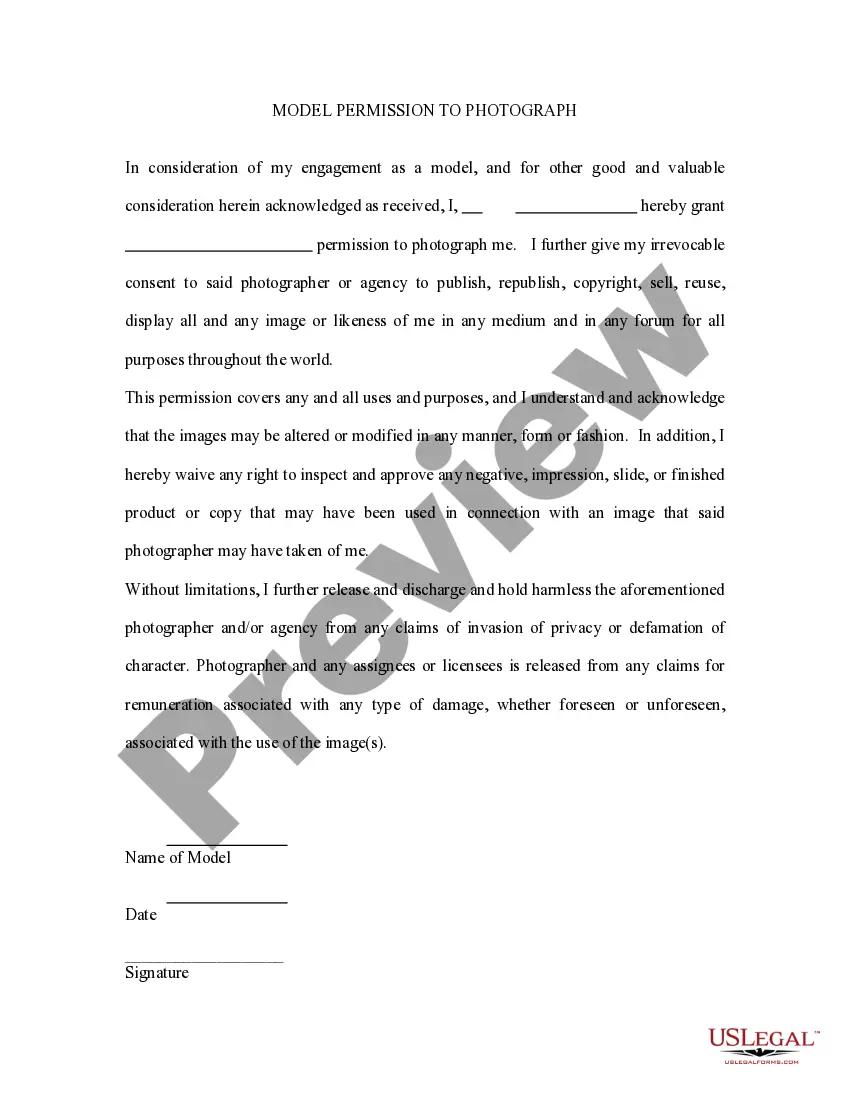
Picture Without Consent Philippines
Description
Get your form ready online
Our built-in tools help you complete, sign, share, and store your documents in one place.
Make edits, fill in missing information, and update formatting in US Legal Forms—just like you would in MS Word.
Download a copy, print it, send it by email, or mail it via USPS—whatever works best for your next step.
Sign and collect signatures with our SignNow integration. Send to multiple recipients, set reminders, and more. Go Premium to unlock E-Sign.
If this form requires notarization, complete it online through a secure video call—no need to meet a notary in person or wait for an appointment.
We protect your documents and personal data by following strict security and privacy standards.

Make edits, fill in missing information, and update formatting in US Legal Forms—just like you would in MS Word.

Download a copy, print it, send it by email, or mail it via USPS—whatever works best for your next step.

Sign and collect signatures with our SignNow integration. Send to multiple recipients, set reminders, and more. Go Premium to unlock E-Sign.

If this form requires notarization, complete it online through a secure video call—no need to meet a notary in person or wait for an appointment.

We protect your documents and personal data by following strict security and privacy standards.
Looking for another form?

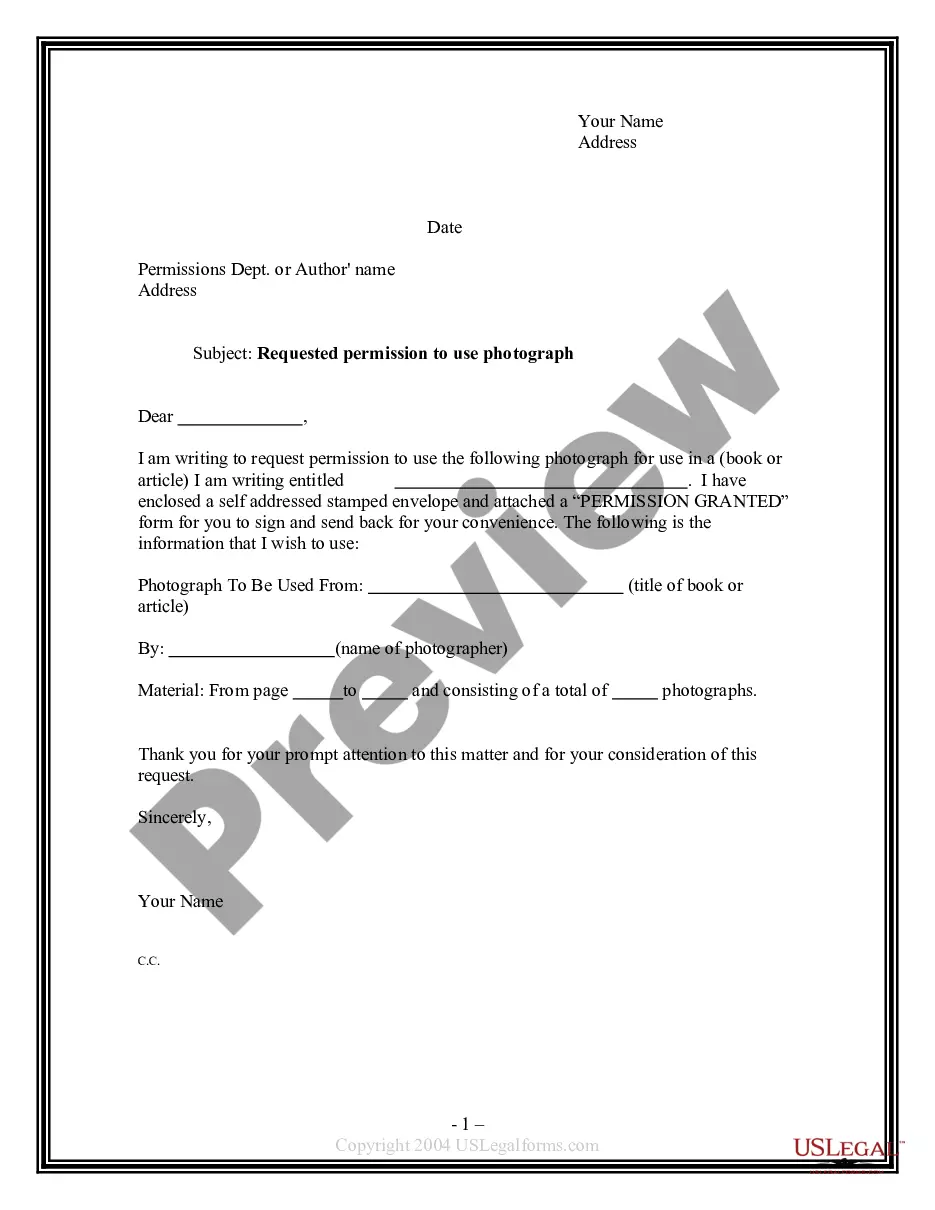
How to fill out Requested Permission To Use Photograph?
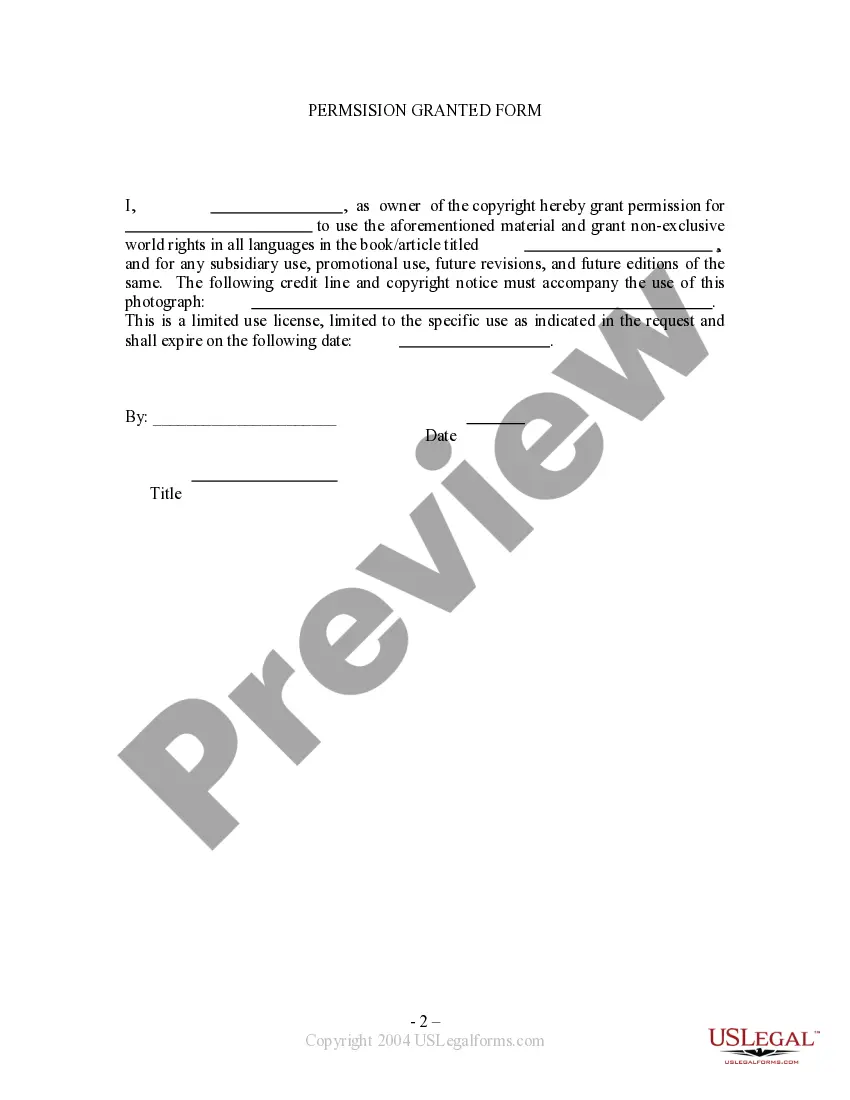
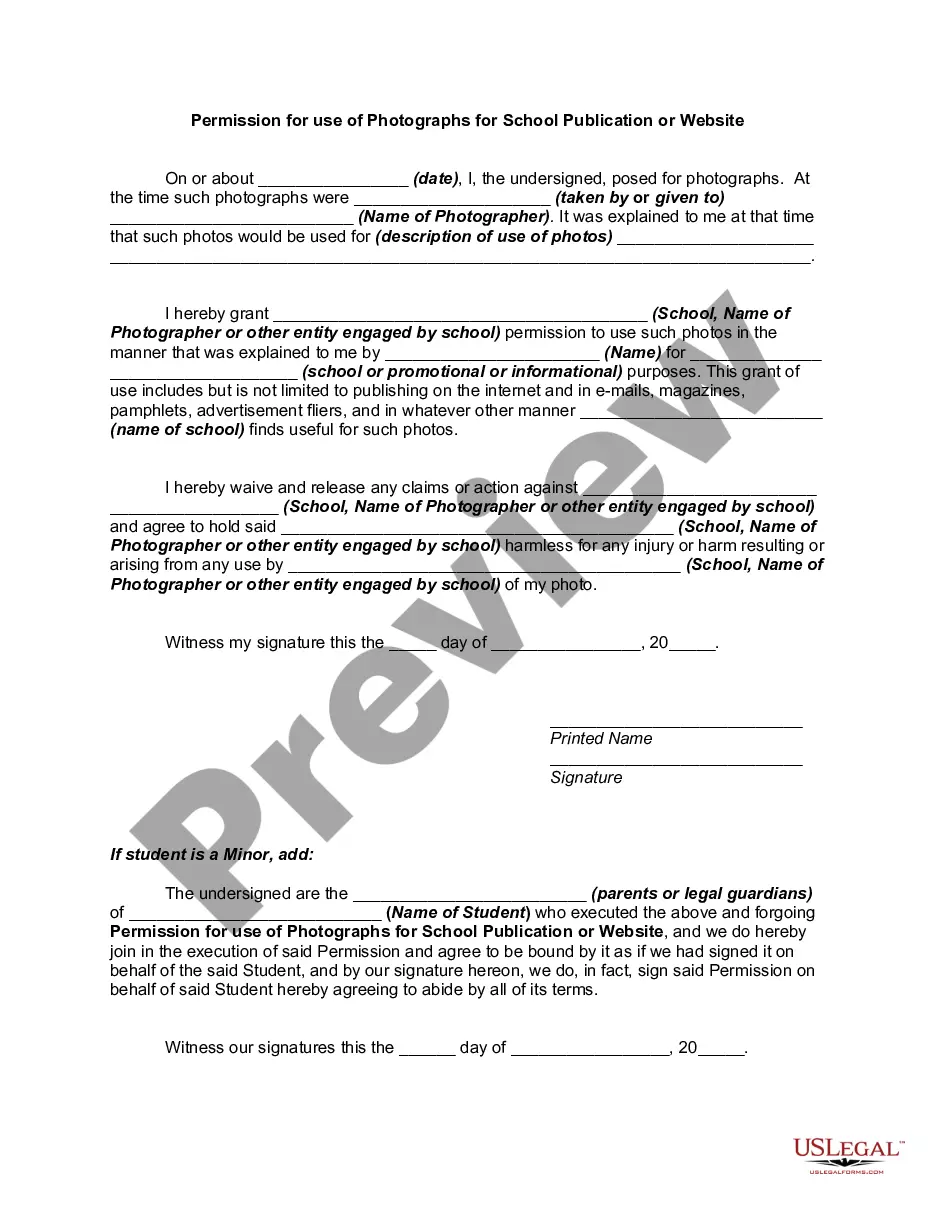
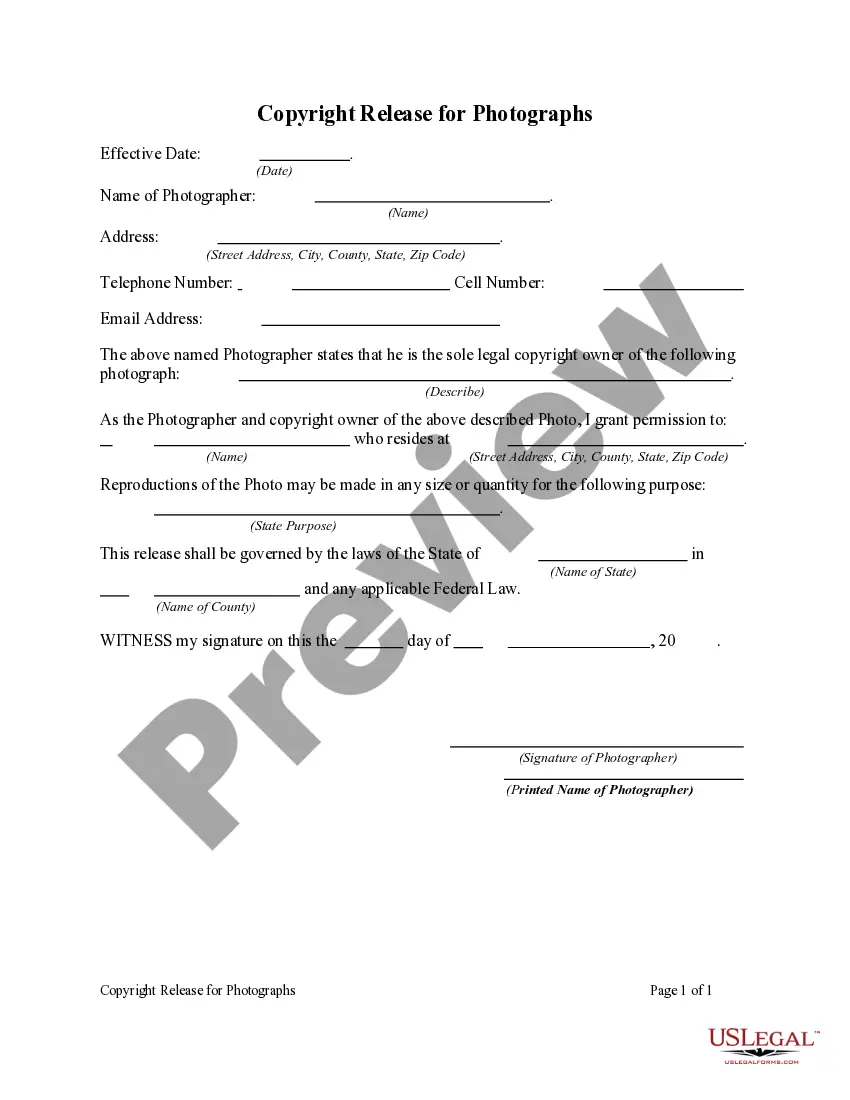
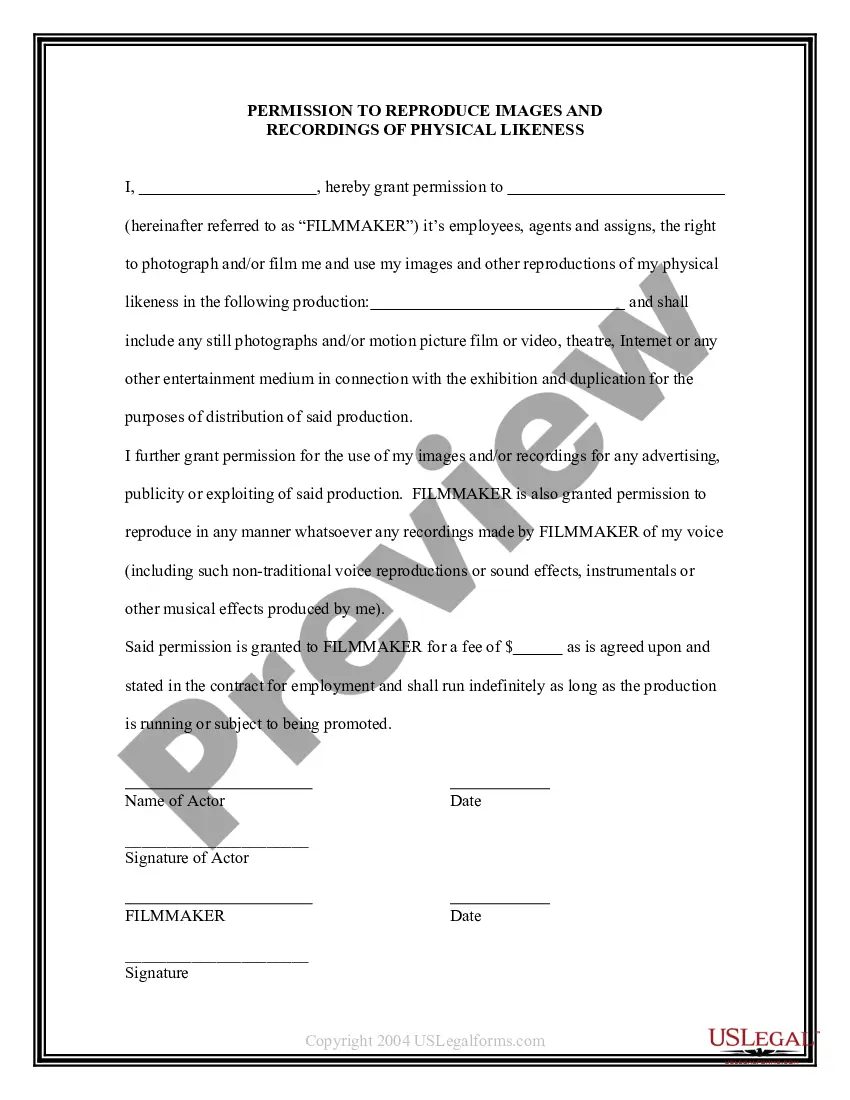
The Image Without Authorization Philippines featured on this page is a reusable legal document crafted by experienced attorneys in accordance with national and local regulations.
For over 25 years, US Legal Forms has been supplying individuals, businesses, and lawyers with more than 85,000 validated, state-specific templates for various business and personal scenarios. It’s the fastest, most direct, and most reliable method to acquire the documents you require, as the service ensures the utmost level of data confidentiality and anti-malware safeguards.
Register for US Legal Forms to access verified legal templates for all of life's situations at your fingertips.
- Search for the document you require and evaluate it.
- Browse through the file you sought and preview it or review the form description to confirm it meets your requirements. If it doesn’t, utilize the search function to find the suitable one. Click Buy Now once you have identified the template you need.
- Register and Log In.
- Select the pricing option that works for you and create an account. Use PayPal or a credit card for a swift transaction. If you already possess an account, Log In and check your subscription to move forward.
- Download the editable template.
- Decide on the format you prefer for your Image Without Authorization Philippines (PDF, Word, RTF) and save the document on your device.
- Complete and sign the document.
- Print the template to fill it out by hand. Alternatively, employ an online multifunctional PDF editor to quickly and accurately fill out and sign your form with a legally-binding electronic signature.
- Retrieve your documents once more.
- Use the same document again whenever required. Access the My documents tab in your profile to redownload any previously acquired forms.
Form popularity
FAQ
The legality of posting pictures without consent largely depends on the context and location. In the Philippines, privacy laws protect individuals, making it unlawful to share images without permission in many situations. It is essential to understand these laws to avoid potential legal complications. If you need assistance understanding your rights, US Legal Forms can provide clarity on this issue.
If someone posts your picture without permission on Facebook, you have several options. First, you can report the image to Facebook for violating privacy standards. Additionally, consider contacting the individual directly to request its removal. For further actions, such as pursuing legal recourse, US Legal Forms offers helpful templates and information to assist you in this process.
Posting a picture of someone without their permission is generally not advisable. In the Philippines, this can lead to legal issues under privacy laws. Consider obtaining consent before sharing images, especially in public forums or social media. If you are unsure about the legality of a specific situation, US Legal Forms can provide guidance and resources to navigate these complexities.
While it may not always be illegal to take photos without consent in the Philippines, certain circumstances can lead to legal issues, especially in private settings. The law generally upholds individual privacy rights, which means you should consider the context of the photograph. Being informed about the legality surrounding the picture without consent philippines will help you make informed choices.
Sending pictures without consent can lead to serious legal repercussions, particularly if the image is sensitive or personal. It is essential to respect the privacy of others and seek their permission before sharing their images. Understanding the implications of sharing pictures without consent in the context of the picture without consent philippines is crucial.
Yes, you can sue someone for recording you without your permission in the Philippines, especially if you feel your privacy has been violated. The local laws might outline specific conditions that support your case. Consulting with legal expertise about the nuances around picture without consent philippines will provide you with valuable insights.
If someone takes a picture of you without your permission, you can first address the situation directly by asking them to remove it. Alternatively, you can contact local authorities if the act feels intrusive or threatening. In addition, obtaining legal guidance on the picture without consent philippines could help you assess your options effectively.
You indeed have the option to sue someone for taking a picture of you without consent if it violates your privacy rights. Courts may consider factors like how the image is used and the context in which it was taken. Delving deeper into the implications of the picture without consent in the Philippines can guide you in your legal pursuit.
Yes, you can sue someone for taking pictures of you without your permission, especially if it results in emotional distress or damages your reputation. In such cases, you may seek legal advice to determine the most appropriate course of action. Exploring the details surrounding the picture without consent philippines can provide clarity on your legal standing.
In the Philippines, taking a picture of someone without their permission can be considered an invasion of privacy. While the law may not explicitly prohibit all forms of photography, it does protect individuals from the unauthorized use of their images. Understanding the legal nuances around the picture without consent philippines will empower you to protect your rights.