Request For Admissions Sample With Plaintiff
Description
Get your form ready online
Our built-in tools help you complete, sign, share, and store your documents in one place.
Make edits, fill in missing information, and update formatting in US Legal Forms—just like you would in MS Word.
Download a copy, print it, send it by email, or mail it via USPS—whatever works best for your next step.
Sign and collect signatures with our SignNow integration. Send to multiple recipients, set reminders, and more. Go Premium to unlock E-Sign.
If this form requires notarization, complete it online through a secure video call—no need to meet a notary in person or wait for an appointment.
We protect your documents and personal data by following strict security and privacy standards.

Make edits, fill in missing information, and update formatting in US Legal Forms—just like you would in MS Word.

Download a copy, print it, send it by email, or mail it via USPS—whatever works best for your next step.

Sign and collect signatures with our SignNow integration. Send to multiple recipients, set reminders, and more. Go Premium to unlock E-Sign.

If this form requires notarization, complete it online through a secure video call—no need to meet a notary in person or wait for an appointment.

We protect your documents and personal data by following strict security and privacy standards.
Looking for another form?



How to fill out Requests For Admissions?
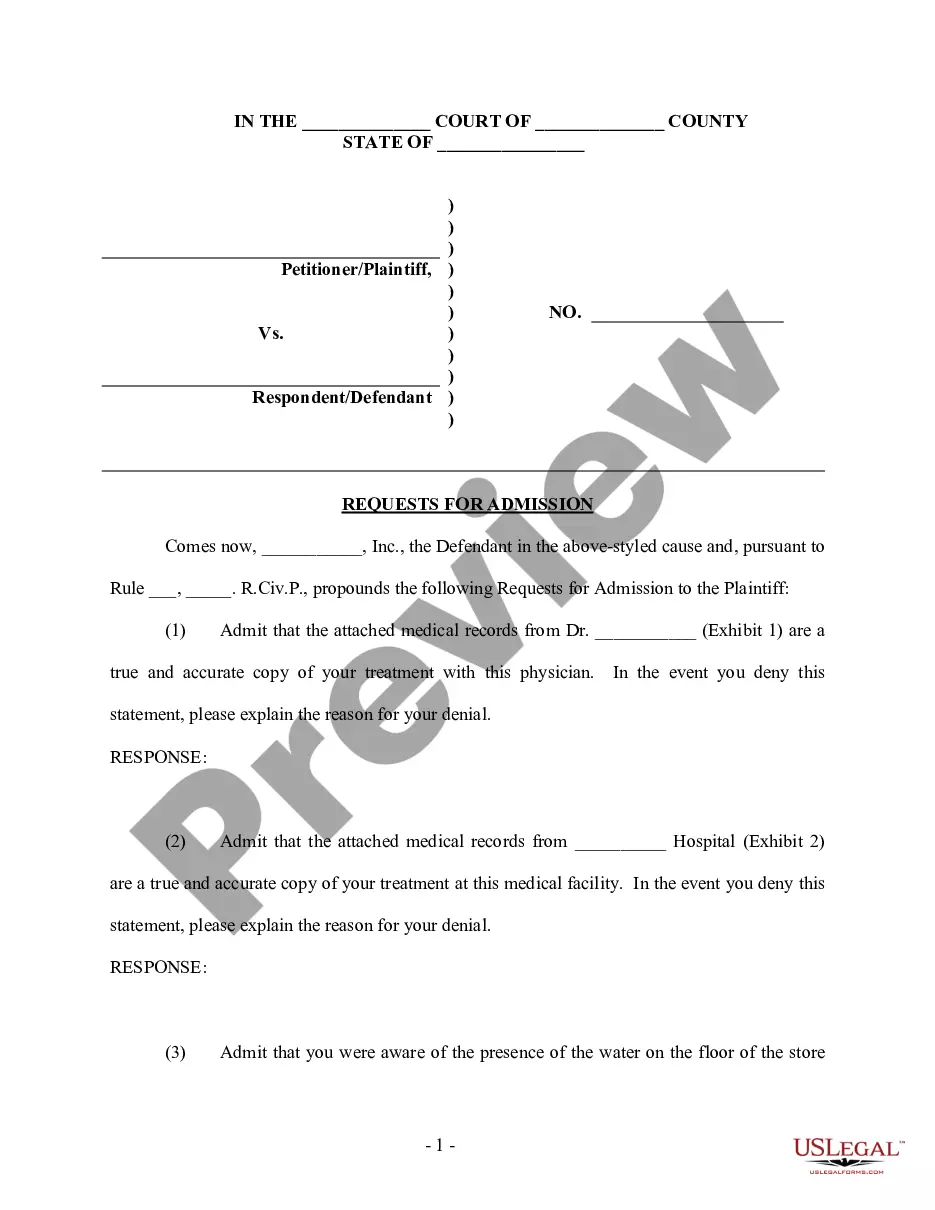
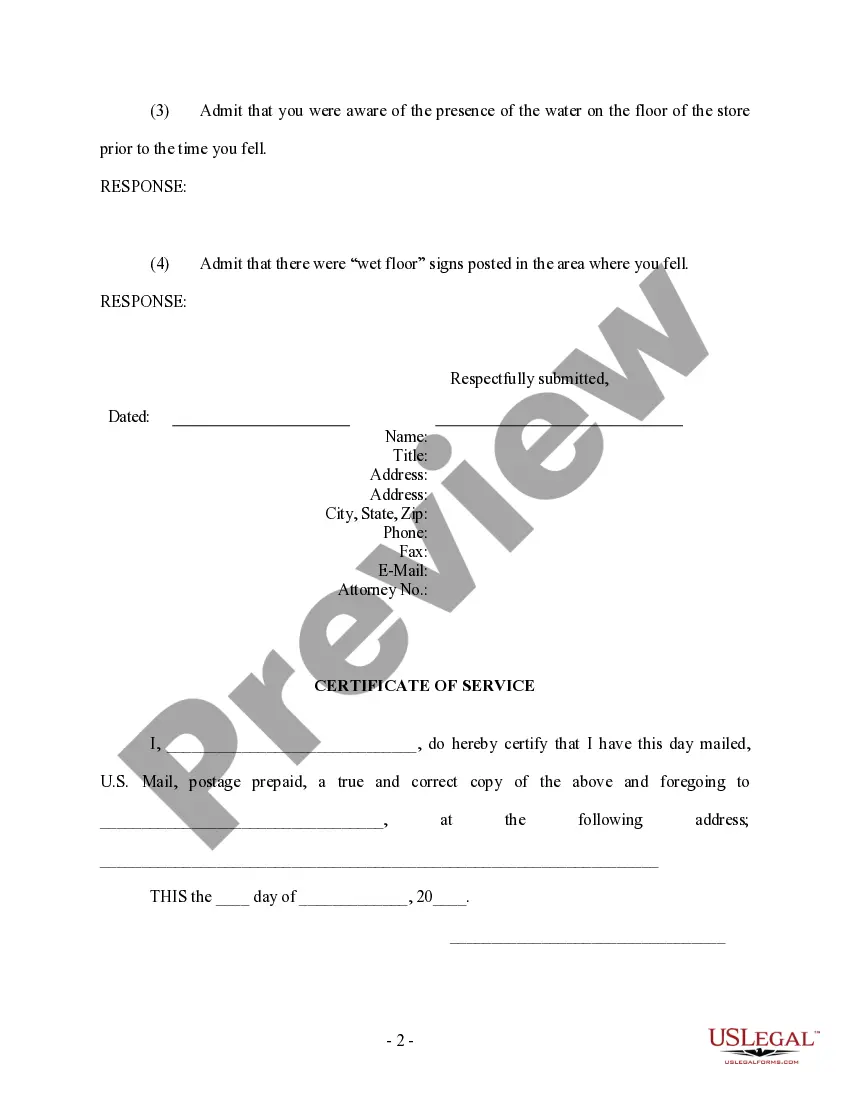
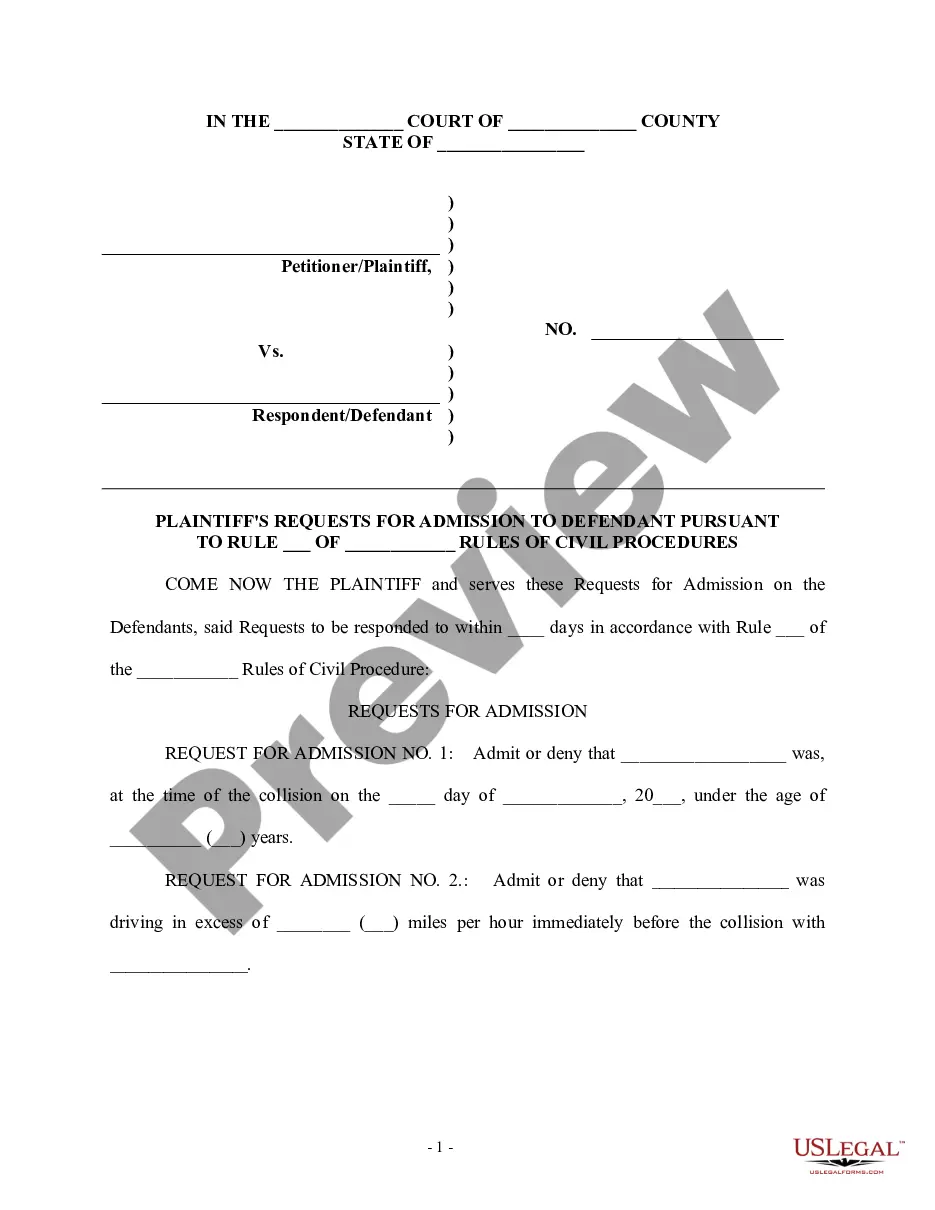
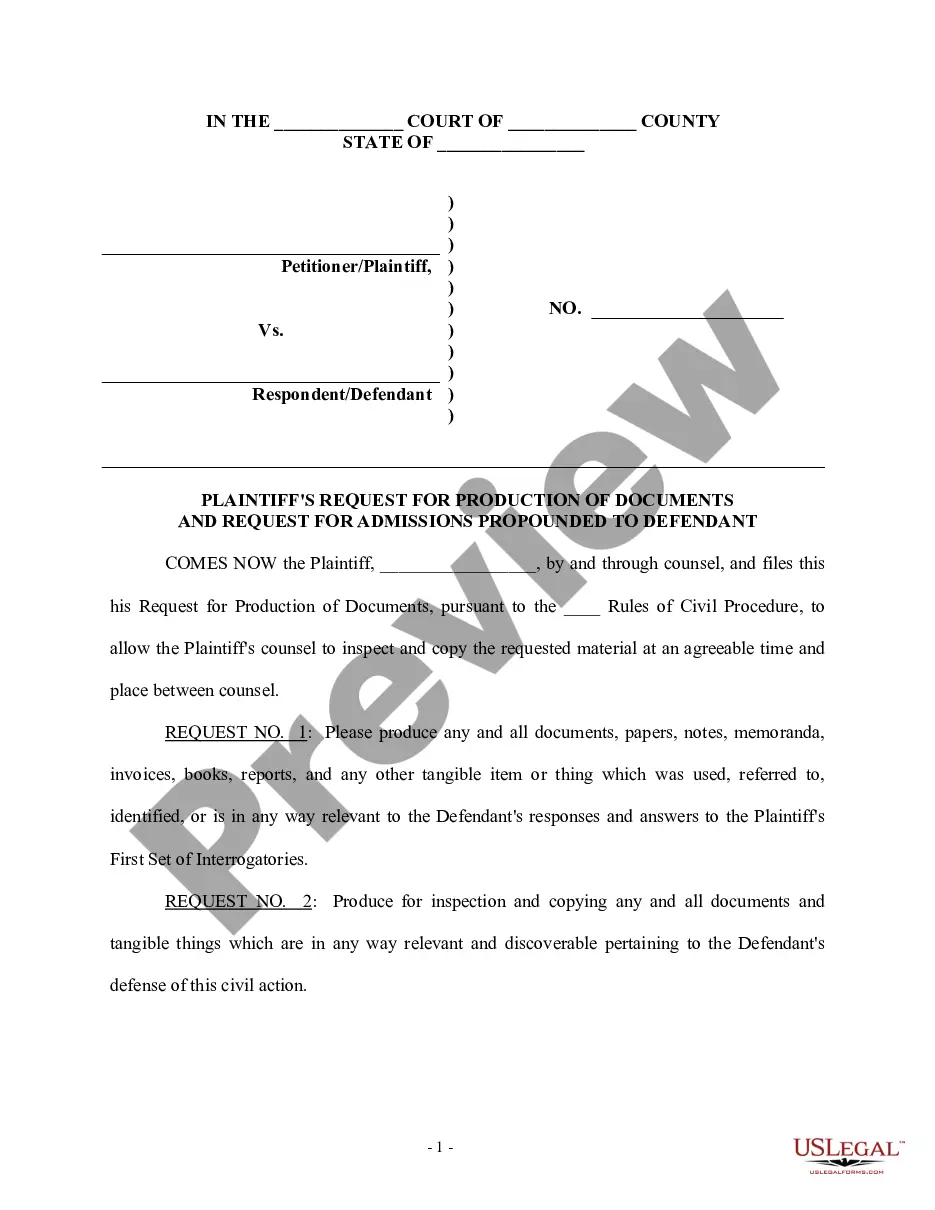
The Sample Request for Admissions with Plaintiff presented on this page is a reusable formal template crafted by expert attorneys in accordance with federal and state regulations.
For over 25 years, US Legal Forms has supplied individuals, businesses, and lawyers with upwards of 85,000 validated, state-specific forms for various professional and personal situations. It’s the quickest, simplest, and most trustworthy method to acquire the documents you require, as the service guarantees the utmost level of data security and anti-malware measures.
Register for US Legal Forms to have verified legal templates for all of life’s situations readily available.
- Examine the document you require and verify it.
- Review the sample you looked for and preview it or check the form description to confirm it meets your needs. If it doesn’t, use the search function to find the suitable one. Click Buy Now once you’ve found the template you want.
- Register and Log In to your account.
- Choose the pricing plan that fits you and set up an account. Use PayPal or a credit card for swift payment. If you already have an account, Log In and verify your subscription to continue.
- Acquire the fillable template.
- Choose the format you want for your Sample Request for Admissions with Plaintiff (PDF, DOCX, RTF) and download the sample onto your device.
- Fill out and sign the document.
- Print out the template to complete it manually. Alternatively, use an online multi-functional PDF editor to quickly and accurately fill out and sign your form with a legally-binding electronic signature.
- Download your documents once more.
- Utilize the same document again at any point in time. Access the My documents tab in your profile to redownload any previously saved forms.
Form popularity
FAQ
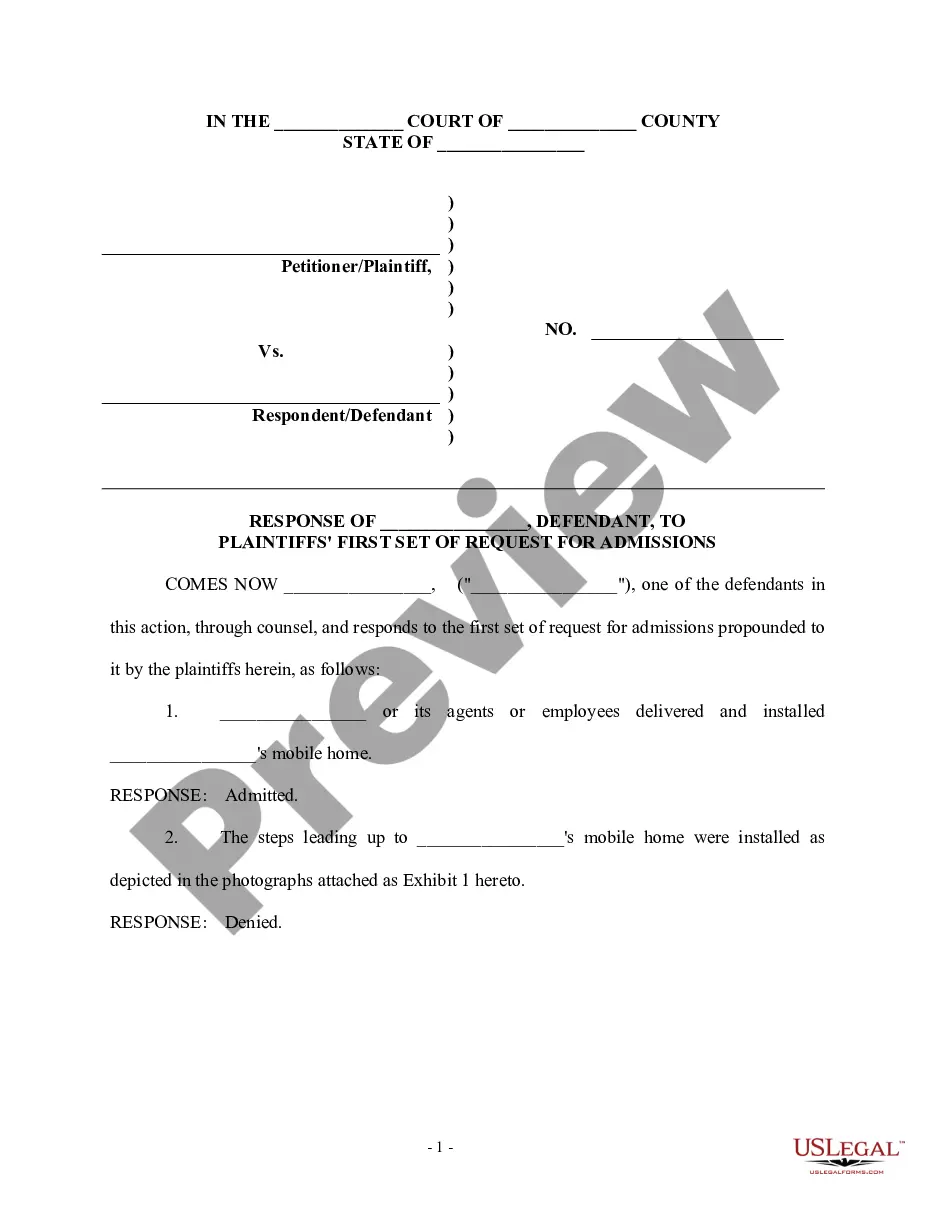
You should send requests for admission after the initial discovery phase and before trial preparations begin. This timing allows you to clarify key facts and streamline issues in the case. Using a request for admissions sample with plaintiff can help determine the right moments to employ this tool effectively. This process helps in focusing on the most critical aspects of the case.
To write a letter requesting admission, start by clearly stating the purpose of your letter. Include the relevant case details and specify the admissions you want the other party to acknowledge. For a solid approach, consider using a request for admissions sample with plaintiff as a framework to ensure all necessary elements are included, such as the deadline for responses. Finally, maintain a professional tone throughout the letter.
To use requests for admissions effectively, start by reviewing the relevant facts and legal claims in your case. A request for admissions sample with plaintiff can guide you in drafting clear and concise statements that the opposing party must either admit or deny. This process streamlines discussions by identifying undisputed facts, potentially saving time and resources during litigation. For added efficiency, consider using resources from USLegalForms, which offer templates aligned with your needs.
The best use of requests for admission is to clarify what facts are not disputed between the parties involved in a legal case. This tool helps to streamline the trial process, saving time and resources by eliminating unnecessary arguments over established facts. Utilizing a request for admissions sample with plaintiff can enhance your strategy in leveraging this powerful legal instrument.
A request for admission should include specific facts that require acknowledgment, relevant evidence supporting those facts, and a clear structure for the request. It is crucial to present each fact in a way that minimizes ambiguity, as this ensures a smoother legal process. Reviewing a request for admissions sample with plaintiff can provide valuable insights into effective phrasing.
An admission request is a formal request made in a legal context, asking the opposing party to acknowledge certain facts as true. This request is a critical part of pre-trial discovery, aimed at narrowing down the issues for trial. To better understand how this works in practice, consider looking at a request for admissions sample with plaintiff.
To write a request for admission, start by clearly stating the facts that you want the other party to admit. Use straightforward and concise language, ensuring that each statement is clear and unambiguous. This process becomes easier when you refer to a request for admissions sample with plaintiff to guide your wording and structure.
An example of a request for admission would be a legal document sent to the opposing party asking them to admit or deny certain facts related to the case. For instance, 'Admit that you were present at the scene of the incident on March 5, 2023.' Understanding this concept is crucial, especially when reviewing a request for admissions sample with plaintiff.
A request for admission quizlet is a study tool that helps individuals understand the legal concept of requests for admission. It typically includes definitions, examples, and explanations related to this legal procedure. Specifically, it assists users in grasping how a request for admissions sample with plaintiff can be utilized effectively in court.
Yes, you can amend a response to a request for admission, but it is important to do so in a timely manner. The rules allow for amendments if they are necessary to correct errors or clarify your position. If you find yourself needing to amend, reviewing a request for admissions sample with plaintiff can be beneficial in ensuring your new response aligns with legal expectations.