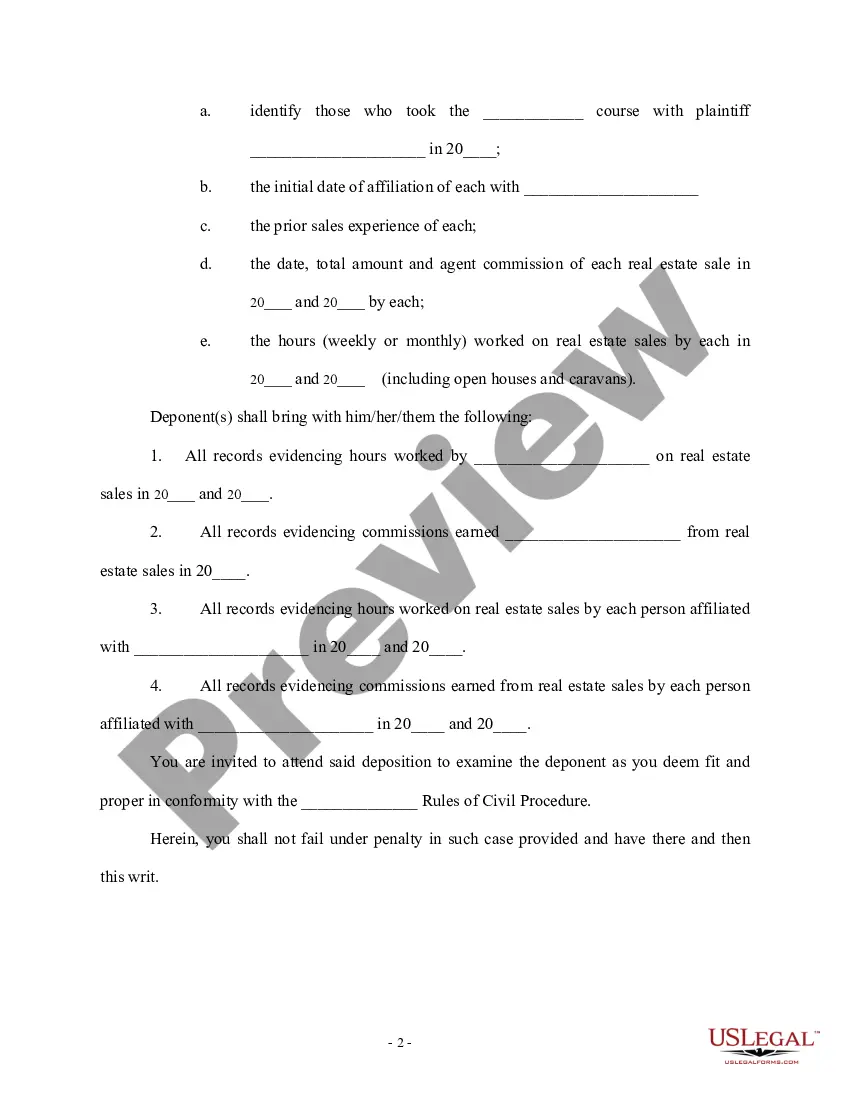
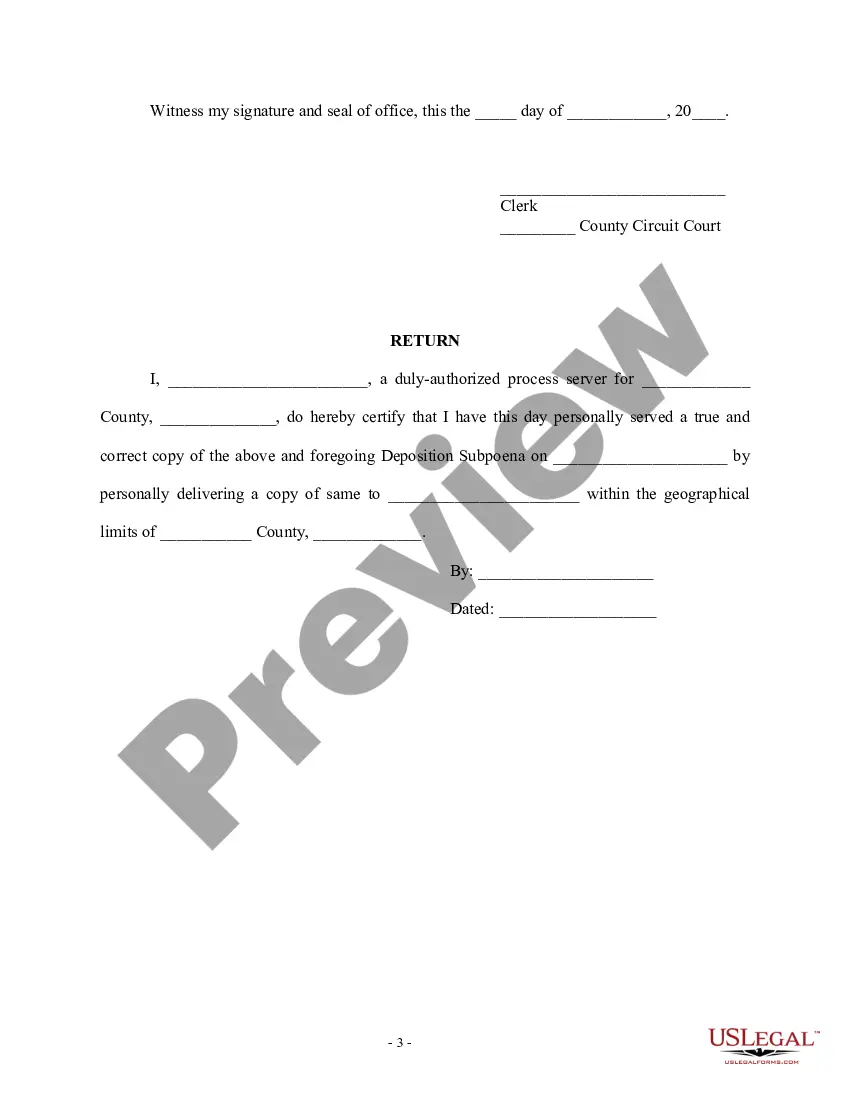
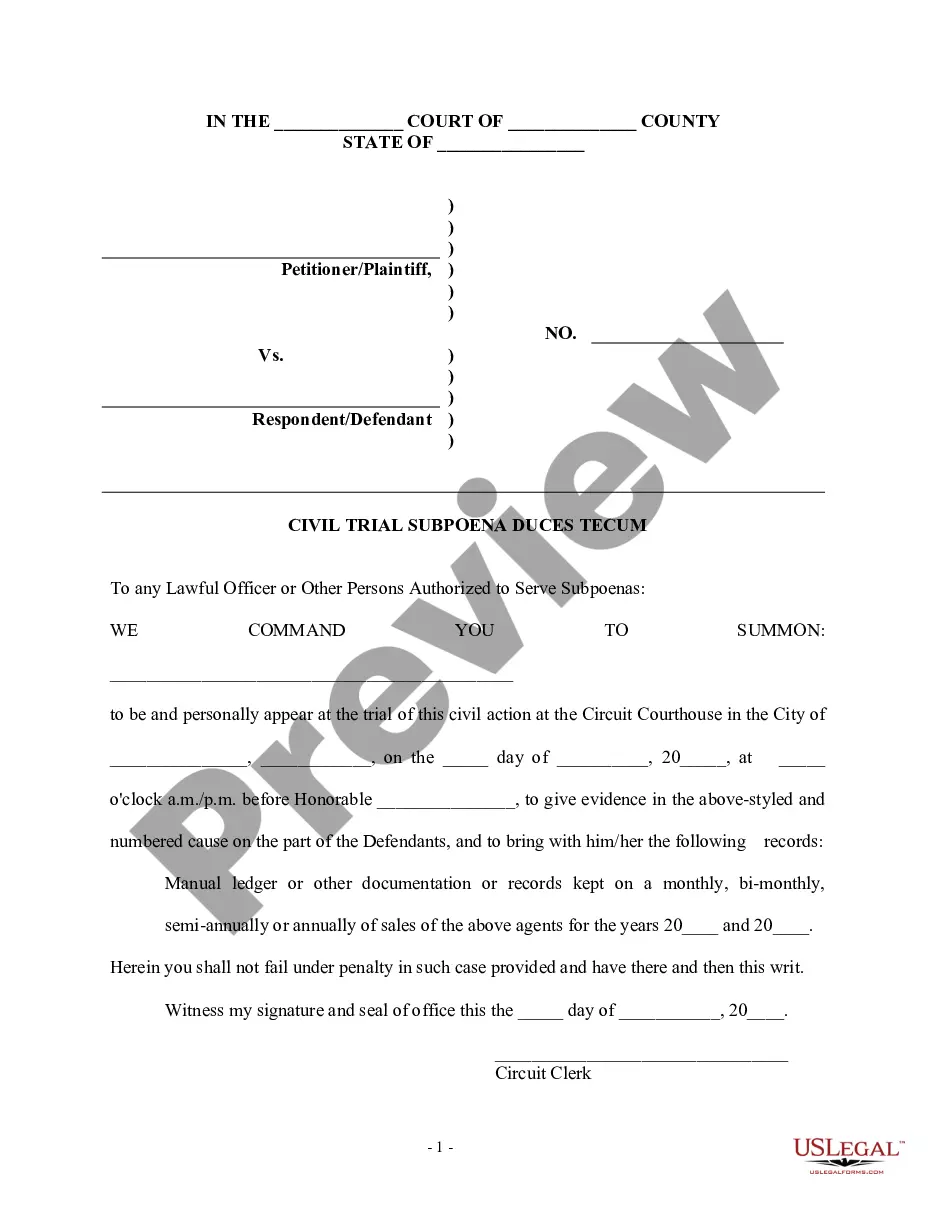
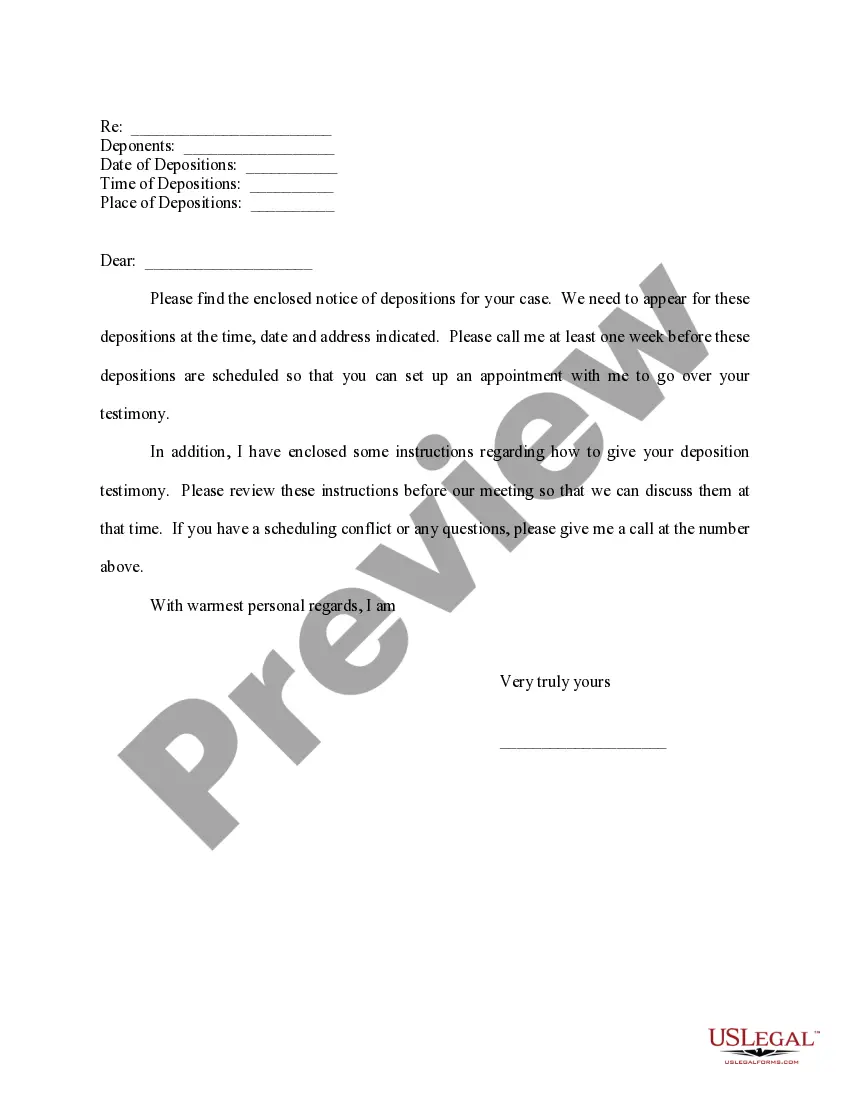
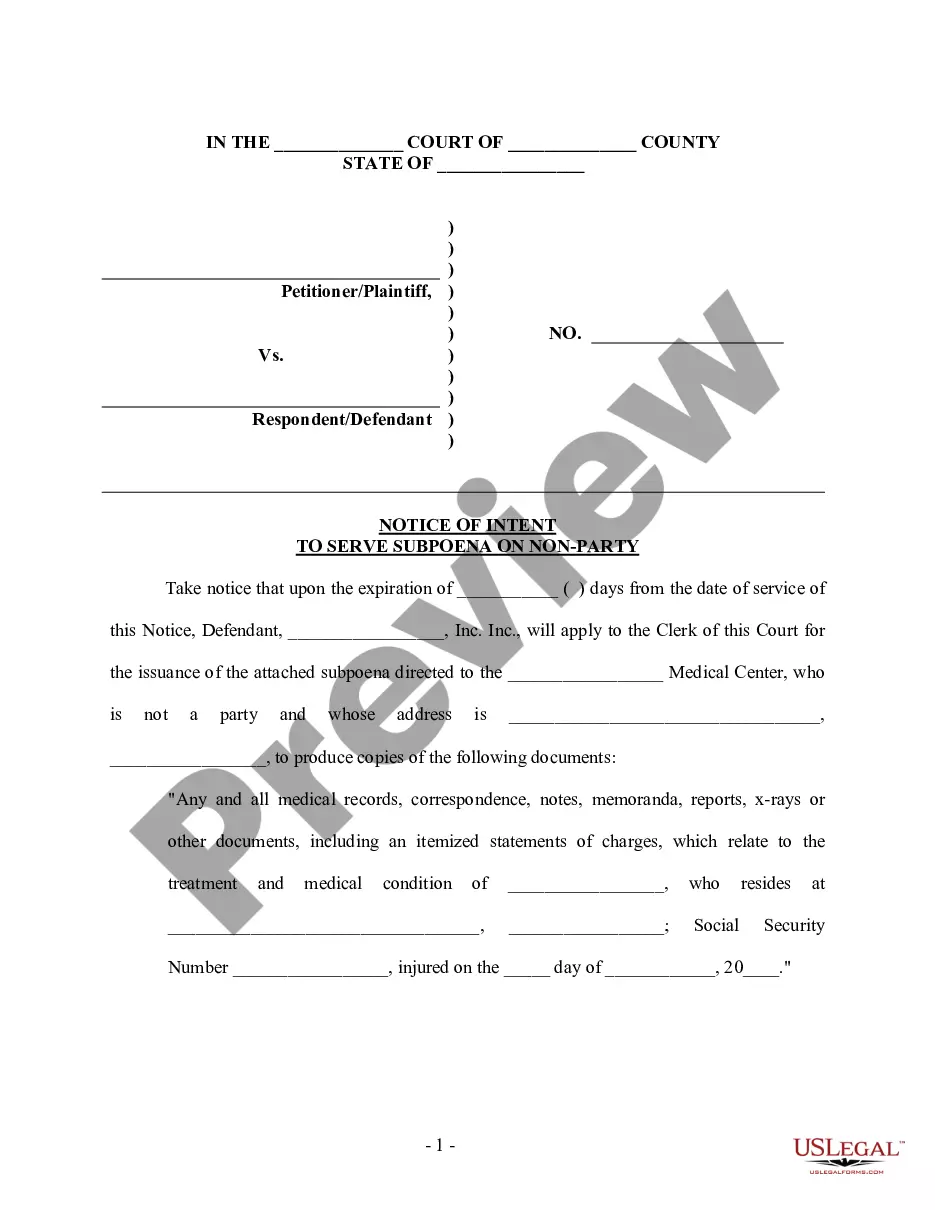
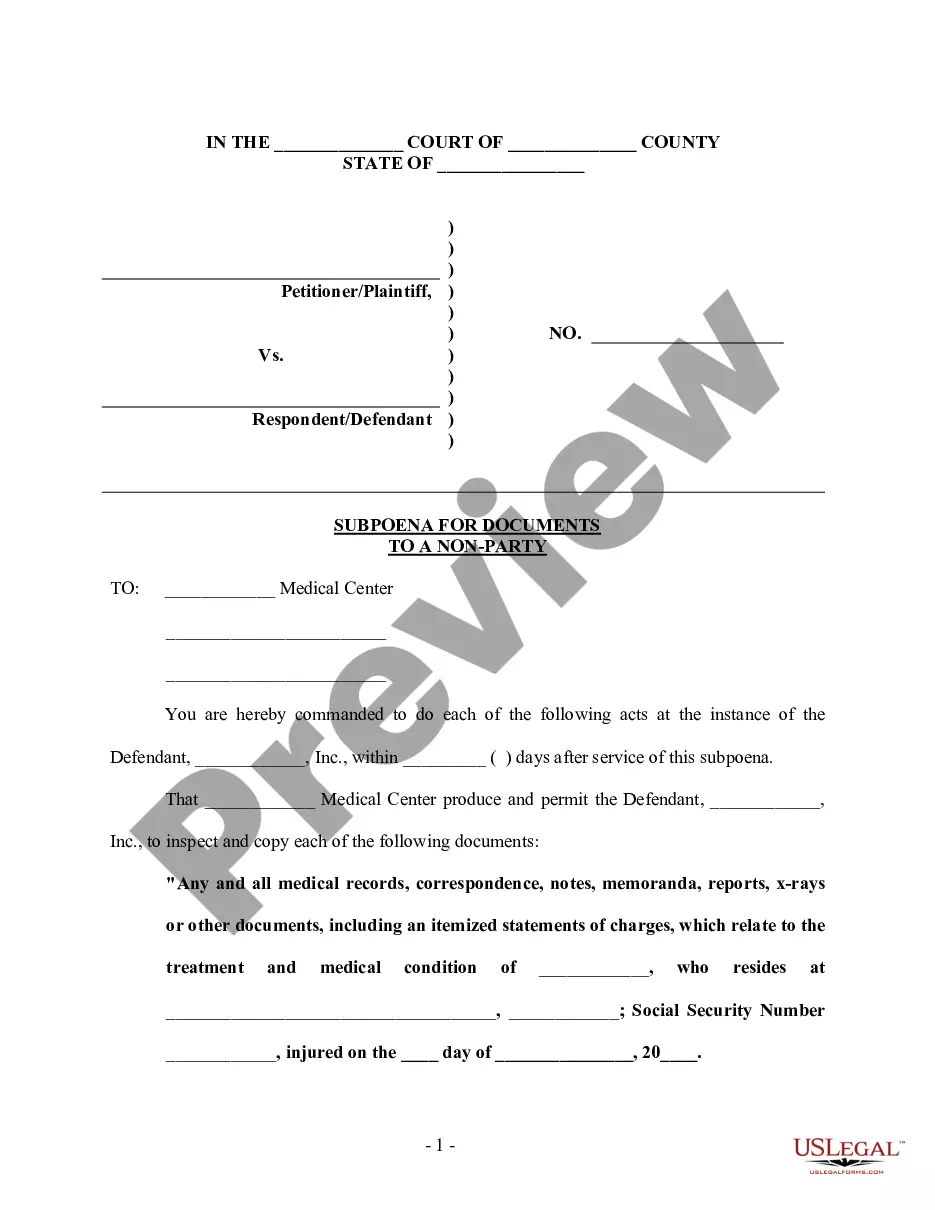
Take Deposition Subpoena Duces Tecum With A
Description

Get your form ready online
Our built-in tools help you complete, sign, share, and store your documents in one place.
Make edits, fill in missing information, and update formatting in US Legal Forms—just like you would in MS Word.
Download a copy, print it, send it by email, or mail it via USPS—whatever works best for your next step.
Sign and collect signatures with our SignNow integration. Send to multiple recipients, set reminders, and more. Go Premium to unlock E-Sign.
If this form requires notarization, complete it online through a secure video call—no need to meet a notary in person or wait for an appointment.
We protect your documents and personal data by following strict security and privacy standards.

Make edits, fill in missing information, and update formatting in US Legal Forms—just like you would in MS Word.

Download a copy, print it, send it by email, or mail it via USPS—whatever works best for your next step.

Sign and collect signatures with our SignNow integration. Send to multiple recipients, set reminders, and more. Go Premium to unlock E-Sign.

If this form requires notarization, complete it online through a secure video call—no need to meet a notary in person or wait for an appointment.

We protect your documents and personal data by following strict security and privacy standards.
Looking for another form?





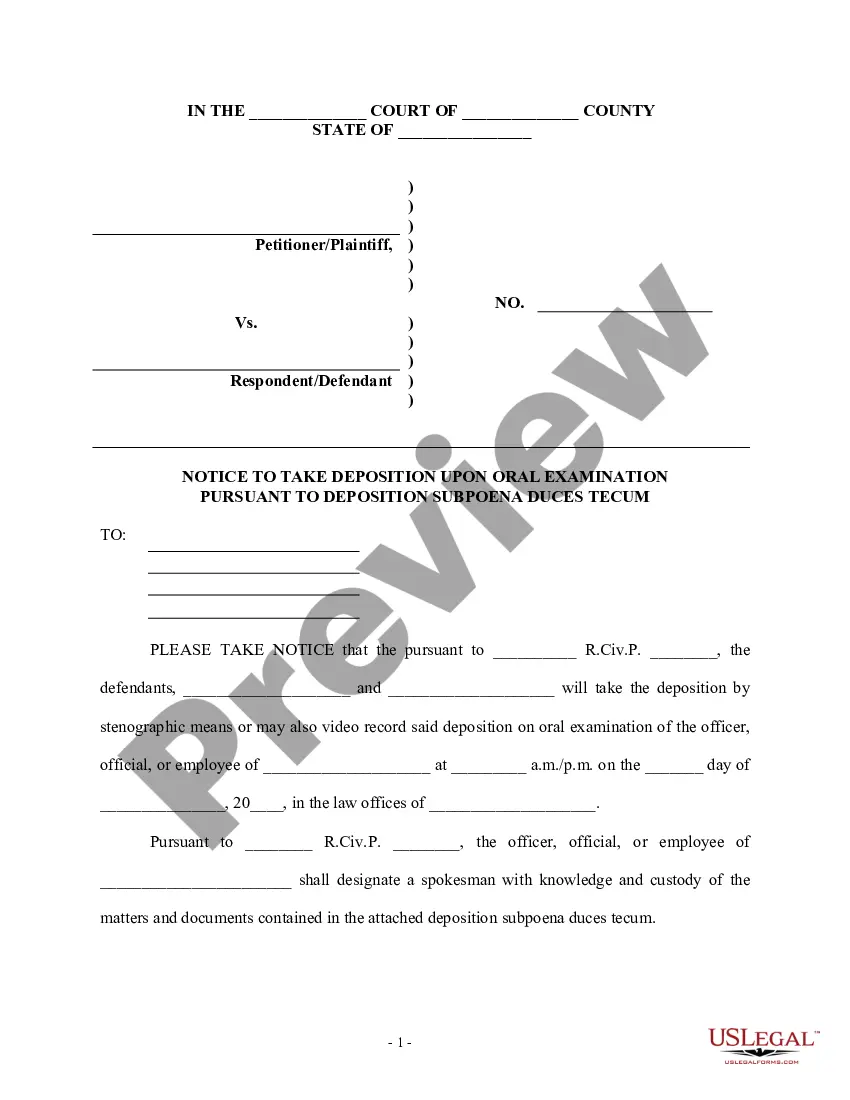
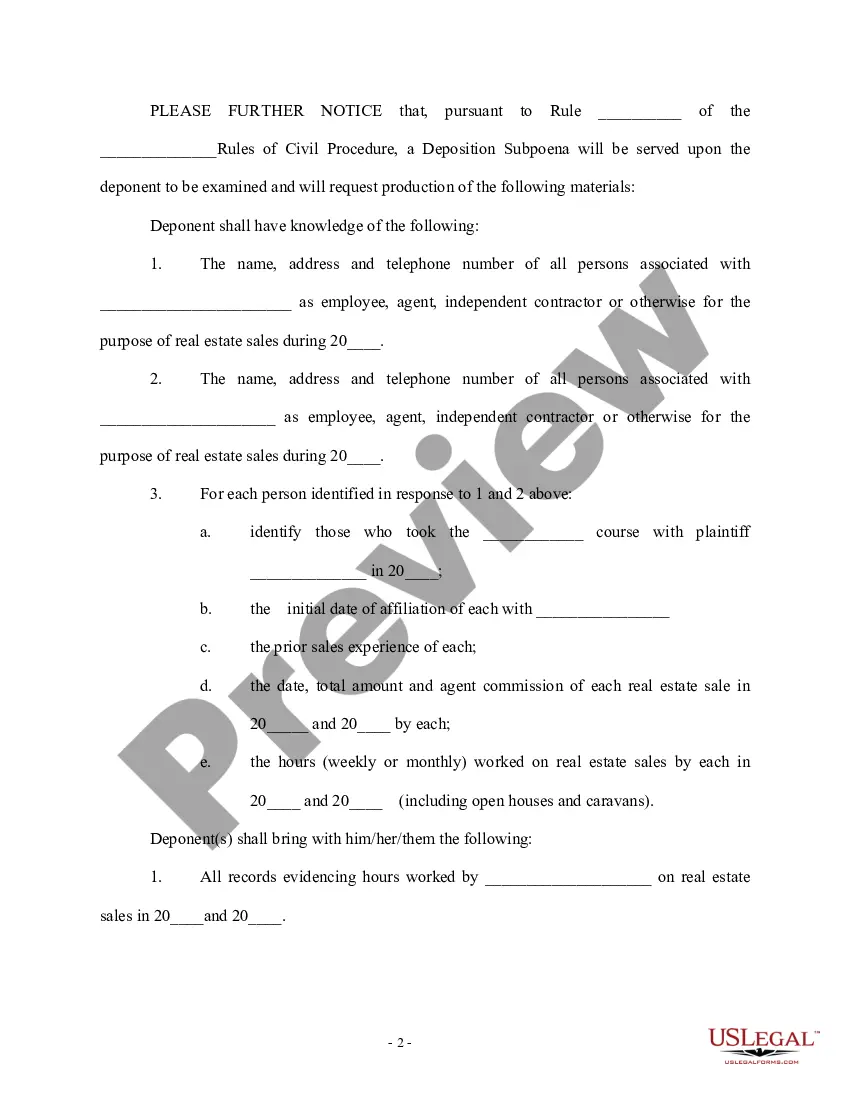
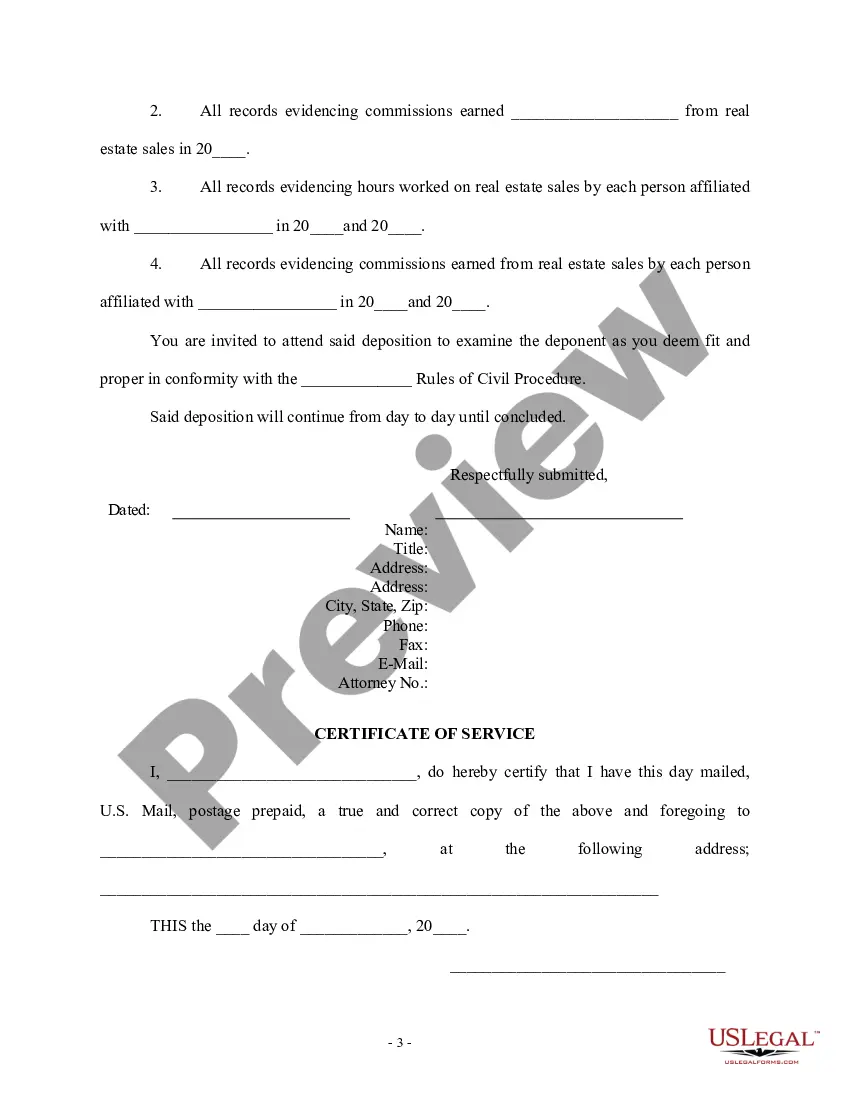
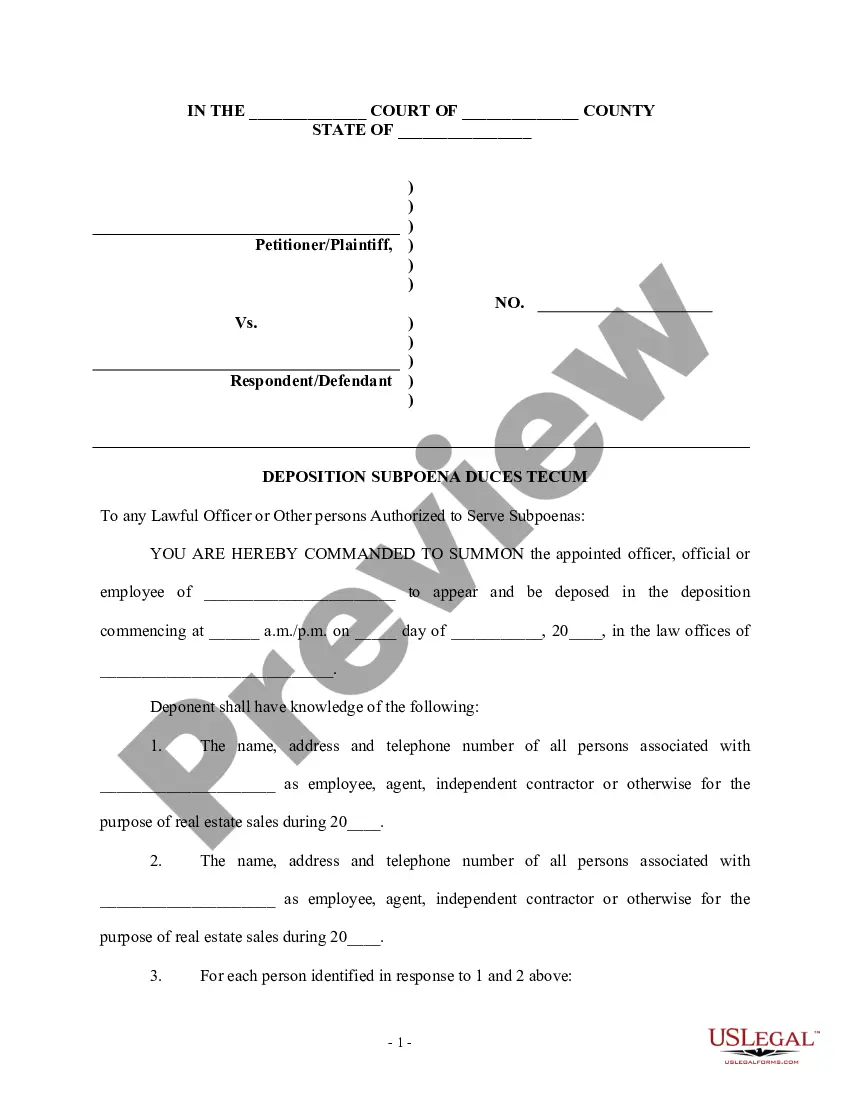
How to fill out Notice To Take Deposition Subpoena Duces Tecum?
- If you are a returning user, log in to your account and navigate to your profile to access and download the necessary template. Before proceeding, ensure your subscription is active; if not, renew it according to your payment plan.
- For first-time users, begin by previewing the document and reading the form description. Confirm that it meets your needs and aligns with local jurisdiction requirements.
- If the document doesn’t fit your criteria, utilize the Search tab to explore alternative templates until you find the right one.
- After selecting the correct document, proceed to purchase by clicking on the Buy Now button and choosing your preferred subscription plan. Please note that registration is required to gain access to the document library.
- Complete your purchase by entering your payment details, using either a credit card or your PayPal account.
- Finally, download the form to your device for completion, ensuring you have easy access later through the My Forms section of your account.
Utilizing US Legal Forms not only provides you with a robust collection of legal documents but also ensures that you can access premium expert assistance for form completion, making certain your documents are both precise and legally sound.
Don’t hesitate, streamline your legal document needs today with US Legal Forms. Start your journey now and experience the ease of legal processing!
Form popularity
FAQ
A deposition subpoena duces tecum is a legal document that compels a witness to appear for a deposition and bring specified documents or evidence relevant to the case. When you take deposition subpoena duces tecum with USLegalForms, you ensure that you gather all necessary information to support your case. This type of subpoena is crucial in litigation, as it allows you to obtain critical evidence directly from witnesses. Always remember that the proper use of this subpoena can significantly impact the outcome of your legal matters.
A deposition subpoena and a subpoena duces tecum serve different purposes. A deposition subpoena compels a witness to testify, while a subpoena duces tecum specifically requires the production of documents. If you need to take deposition subpoena duces tecum with a witness and obtain documents simultaneously, ensure both requirements are clearly stated in your legal documents.
To comply with a subpoena duces tecum, review the documents requested carefully and gather all relevant materials. Ensure you produce the documents by the deadline specified in the subpoena, and protect any privileged or confidential information by notifying the requesting party. Legal resources, such as US Legal Forms, can guide you through the compliance process to ensure you meet all requirements.
If someone ignores a subpoena duces tecum, they may face legal consequences. A court can hold them in contempt, leading to fines or even jail time. Additionally, the court may proceed with the case and allow the requesting party to present evidence without the ignored documents. It’s essential to take subpoenas seriously to avoid these repercussions.
To use a subpoena duces tecum, you must serve it to the individual or entity holding the documents you need. This legal order compels them to produce specific documents for examination in a legal proceeding. Make sure to clearly outline the documents requested to avoid confusion or disputes. Utilizing resources like US Legal Forms can streamline this process.
Several factors can render a subpoena duces tecum invalid. For instance, if it lacks proper jurisdiction, is overly broad, or does not specify the documents needed, it may not hold up in court. Additionally, if the issuing party fails to serve it correctly, it may also be considered invalid. Always consult with legal advisors to confirm validity.
To petition to quash a subpoena duces tecum, you need to file a motion in the court that issued the subpoena. Include specific arguments detailing why the subpoena should be quashed, such as lack of relevance or procedural issues. Be sure to cite any supporting laws or rules and consider seeking assistance from legal resources like US Legal Forms for accurate filing.
Yes, you can oppose a subpoena duces tecum. To do so, you must file a motion to quash the subpoena in the appropriate court. It's crucial to show valid reasons for your opposition, like demonstrating that the subpoena is overly broad or seeks irrelevant information. Engaging with legal experts can guide you through this process effectively.
The notice of taking deposition duces tecum serves as an alert to involved parties that a deposition will occur along with the requirement to produce documents. This notice is essential for ensuring everyone is informed and prepared. It includes important details such as the date, time, and location of the deposition. By taking deposition subpoena duces tecum with this notice in mind, all parties can efficiently collaborate and provide the required documentation.
A subpoena for deposition duces tecum is a legal request for a person to testify while also producing documents relevant to the case. This type of subpoena serves dual purposes: it compels attendance and mandates the sharing of specific records. This method helps streamline legal processes by collecting essential evidence simultaneously. Thus, when you take deposition subpoena duces tecum with a clear objective, you enhance your ability to present a solid case.