Modeling Forms With Javascript
Description


Get your form ready online
Our built-in tools help you complete, sign, share, and store your documents in one place.
Make edits, fill in missing information, and update formatting in US Legal Forms—just like you would in MS Word.
Download a copy, print it, send it by email, or mail it via USPS—whatever works best for your next step.
Sign and collect signatures with our SignNow integration. Send to multiple recipients, set reminders, and more. Go Premium to unlock E-Sign.
If this form requires notarization, complete it online through a secure video call—no need to meet a notary in person or wait for an appointment.
We protect your documents and personal data by following strict security and privacy standards.

Make edits, fill in missing information, and update formatting in US Legal Forms—just like you would in MS Word.

Download a copy, print it, send it by email, or mail it via USPS—whatever works best for your next step.

Sign and collect signatures with our SignNow integration. Send to multiple recipients, set reminders, and more. Go Premium to unlock E-Sign.

If this form requires notarization, complete it online through a secure video call—no need to meet a notary in person or wait for an appointment.

We protect your documents and personal data by following strict security and privacy standards.
Looking for another form?
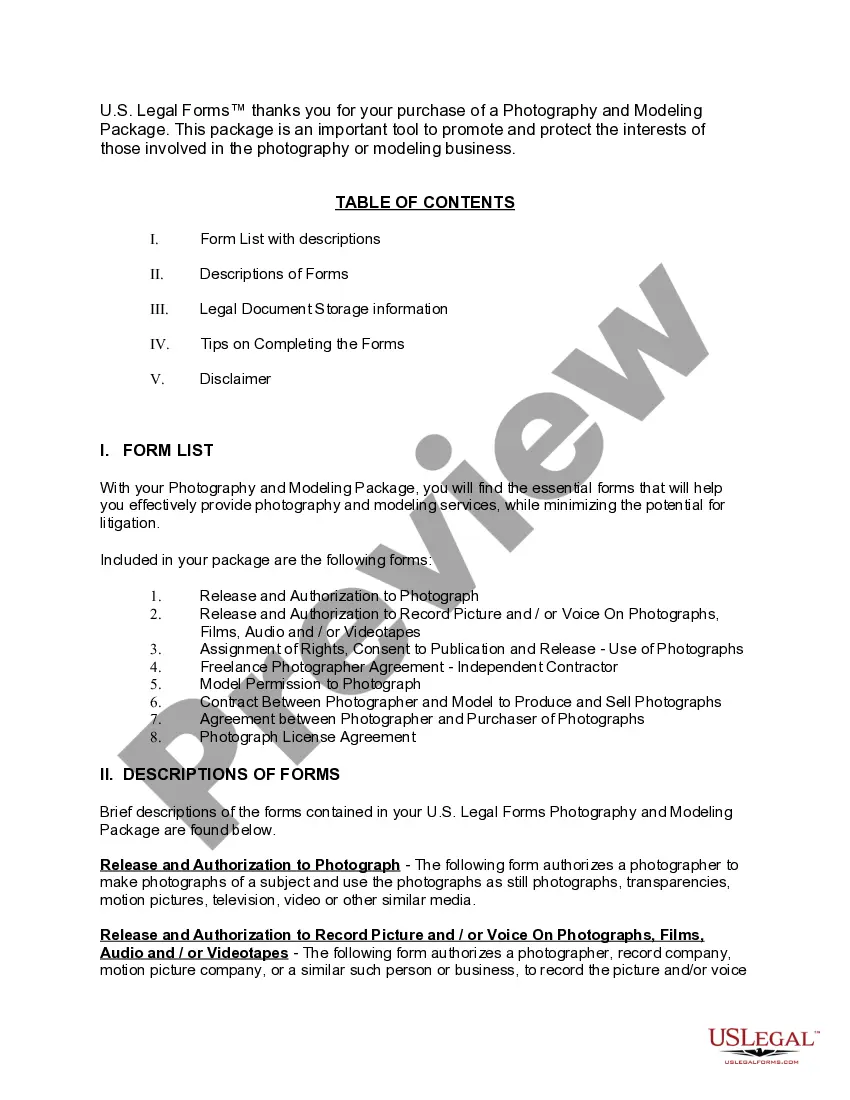
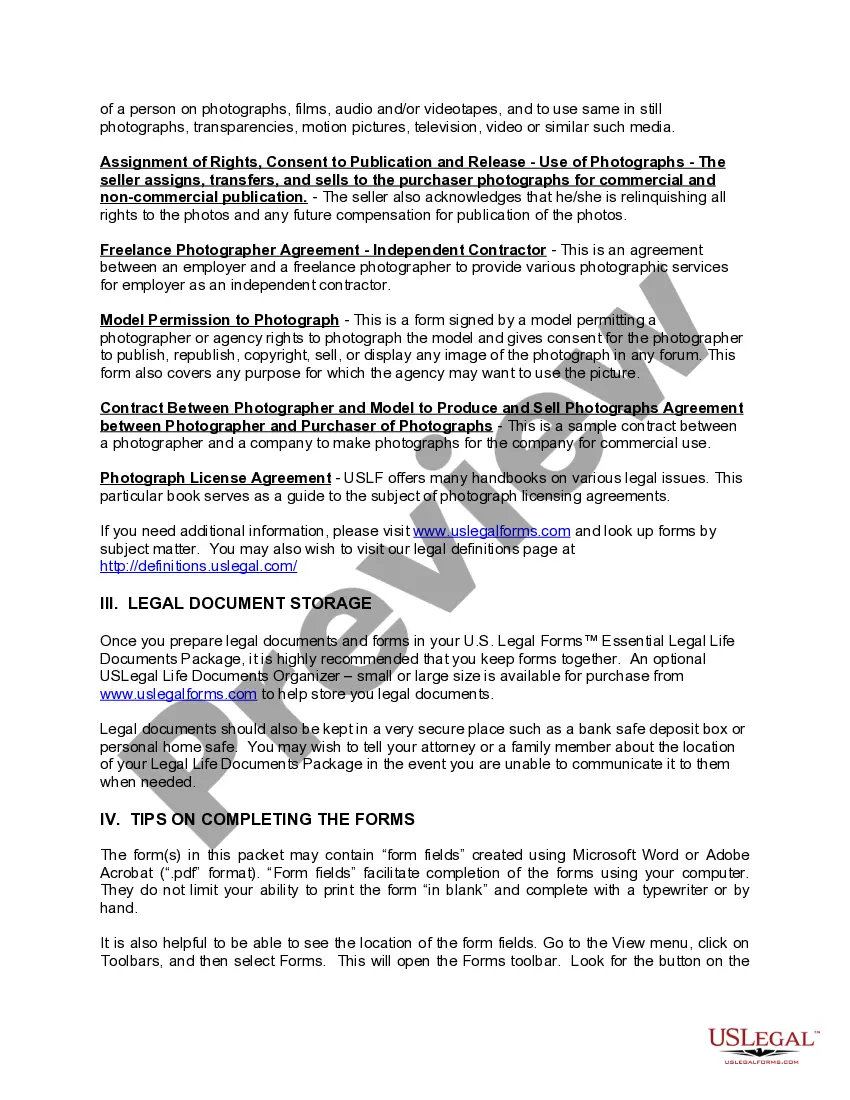
How to fill out Photography And Modeling Package?
The Modeling Forms With Javascript displayed on this site is a reusable legal template crafted by experienced attorneys in compliance with federal and state laws and regulations.
For over 25 years, US Legal Forms has supplied individuals, companies, and lawyers with more than 85,000 validated, state-specific forms for any business and personal situation. It’s the quickest, easiest, and most reliable method to acquire the documents you require, as the service assures the utmost level of data protection and anti-malware safeguards.
Subscribe to US Legal Forms to have validated legal templates for all of life’s situations at your fingertips.
- Browse for the document you need and review it.
- Look through the sample you searched and preview it or review the form description to verify it suits your needs. If it does not, use the search option to get the appropriate one. Click Buy Now when you have located the template you need.
- Subscribe and Log In.
- Select the pricing plan that suits you and create an account. Use PayPal or a credit card to make a quick payment. If you already have an account, Log In and check your subscription to continue.
- Acquire the fillable template.
- Choose the format you want for your Modeling Forms With Javascript (PDF, Word, RTF) and save the sample on your device.
- Complete and sign the document.
- Print out the template to complete it by hand. Alternatively, use an online multi-functional PDF editor to quickly and precisely fill out and sign your form with a legally-binding electronic signature.
- Download your papers one more time.
- Make use of the same document once again whenever needed. Open the My documents tab in your profile to redownload any earlier downloaded forms.
Form popularity
FAQ
How to create a dynamic form using JavaScript <! DOCTYPE html> ... let form = document.createElement("form"); form.setAttribute("method", "post"); ... let nameTag = document. ... let firstName = document. ... let email = document. ... let departmentData = [ ... let department = document.createElement("select"); ... let idea = document.
<form> declares a new form: name="myForm" names the form. Elsewhere in the JavaScript you can reference this form by the name myForm . ... action="" defines where you want the browser to send the form info. This field will be a URL when defined. ... method="GET" defines how the method data is passed to the action destination.
To get this form's data via JavaScript, you'll need to attach specific attributes to the form input field and the form itself. These attributes can be an id , a class , or even with the name tag. This will help get the data in JavaScript using their document methods.
JavaScript Form Submission To submit a form using JavaScript, we first need to prevent the default form submission behavior. We can do this by using the preventDefault method on the event object. Then, we can perform any necessary validation or processing before submitting the form data.
How to Get an Input's Value with JavaScript function getVal() { const val = document. querySelector('input'). value; console. log(val);