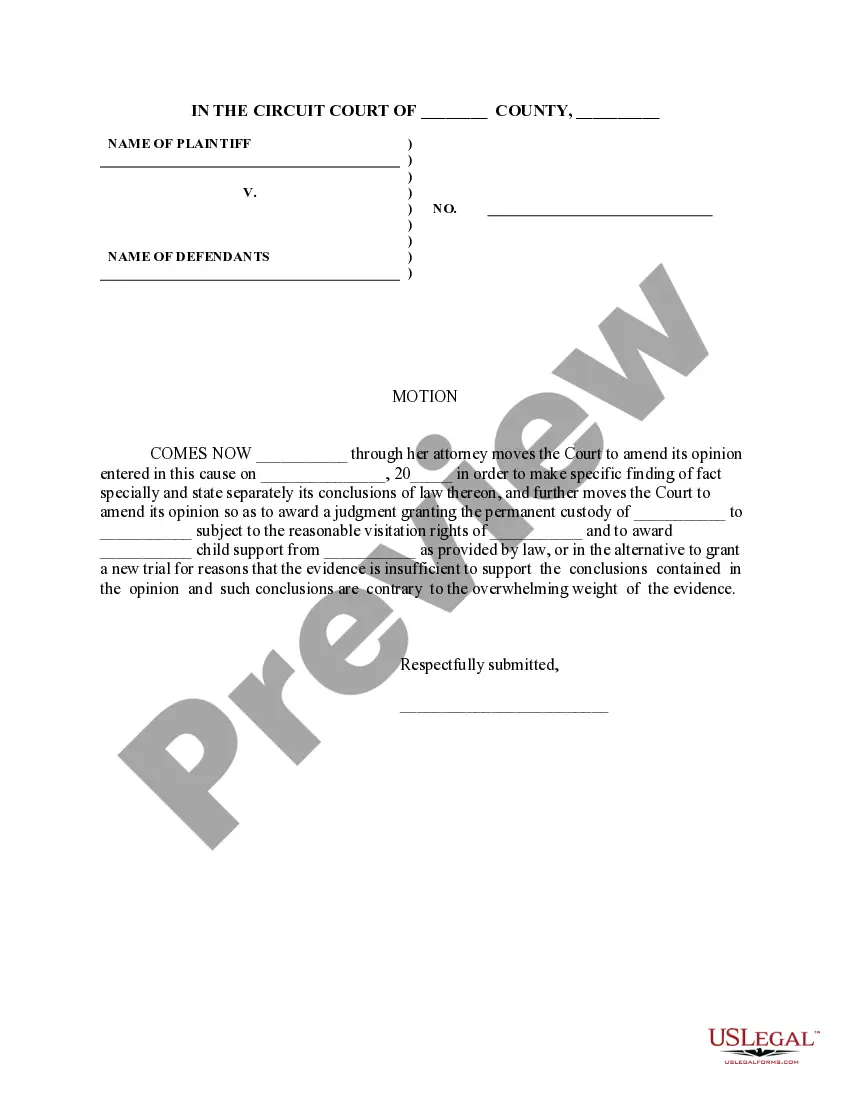
Finding Fact Sample With Margin Of Error
Description
Get your form ready online
Our built-in tools help you complete, sign, share, and store your documents in one place.
Make edits, fill in missing information, and update formatting in US Legal Forms—just like you would in MS Word.
Download a copy, print it, send it by email, or mail it via USPS—whatever works best for your next step.
Sign and collect signatures with our SignNow integration. Send to multiple recipients, set reminders, and more. Go Premium to unlock E-Sign.
If this form requires notarization, complete it online through a secure video call—no need to meet a notary in person or wait for an appointment.
We protect your documents and personal data by following strict security and privacy standards.

Make edits, fill in missing information, and update formatting in US Legal Forms—just like you would in MS Word.

Download a copy, print it, send it by email, or mail it via USPS—whatever works best for your next step.

Sign and collect signatures with our SignNow integration. Send to multiple recipients, set reminders, and more. Go Premium to unlock E-Sign.

If this form requires notarization, complete it online through a secure video call—no need to meet a notary in person or wait for an appointment.

We protect your documents and personal data by following strict security and privacy standards.
Looking for another form?





How to fill out Motion To Make Specific Findings Of Fact And State Conclusions Of Law - Domestic Relations?
Whether for corporate purposes or personal matters, everyone must confront legal situations at some point in their lives.
Filling out legal documents demands meticulous attention, starting with choosing the appropriate form template.
Once downloaded, you can complete the form using editing software or print it out and finish it by hand. With a comprehensive US Legal Forms catalog available, you need not waste time searching for the correct template online. Use the library's intuitive navigation to find the proper form for any occasion.
- Locate the template you require using the search bar or catalog navigation.
- Review the form’s details to ensure it corresponds with your circumstances, state, and county.
- Click on the form’s preview to inspect it.
- If it is the incorrect form, return to the search feature to find the Finding Fact Sample With Margin Of Error template you need.
- Obtain the template if it satisfies your needs.
- If you possess a US Legal Forms account, simply click Log in to access templates you've previously saved in My documents.
- In case you do not have an account yet, you can download the form by clicking Buy now.
- Select the appropriate pricing option.
- Fill out the profile registration form.
- Choose your payment method: you can pay with a credit card or PayPal account.
- Select the file format you desire and download the Finding Fact Sample With Margin Of Error.
Form popularity
FAQ
A 95% margin of error indicates that you can be 95% confident that the true value lies within the given range of your sample estimate. This means if you conduct the same survey multiple times, 95% of the time, the results will reflect the true population parameter within that margin. Understanding this concept is essential for interpreting data accurately. With US Legal Forms, you can grasp these ideas while finding fact sample with margin of error.
To find the sample size with a given margin of error, identify the typical Z-value for your confidence level, along with your estimated population proportion. Utilize the formula mentioned earlier to discover the required sample size. This approach ensures you achieve your desired precision in results. You can easily navigate these calculations using the tools available on US Legal Forms while finding fact sample with margin of error.
To calculate sample size given a margin of error, use the formula: n = (Z^2 p (1-p)) / E^2. Here, 'Z' represents the Z-value corresponding to your confidence level, 'p' is the estimated proportion of the population, and 'E' is the margin of error. By plugging your values into this formula, you can obtain the necessary sample size. Our platform, US Legal Forms, can assist you in this calculation while finding fact sample with margin of error.
To achieve a margin of error of 4% at a 95% confidence interval, you typically require a sample size of around 600 respondents, depending on the population size. This estimation is crucial for ensuring your data represents the larger community accurately. You can use sample size calculators available on our platform, US Legal Forms, to streamline this process and effectively find fact sample with margin of error.
Sample size directly affects the margin of error; larger samples tend to result in smaller margins of error. This relationship exists because a bigger sample provides more accurate data, leading to reliable estimates of population attributes. Therefore, as you seek to improve precision in your findings, keep in mind that increasing your sample size can help you achieve a smaller margin of error. Using our resources, you can effectively navigate this while finding fact sample with margin of error.
To calculate sample size, you need to know the population size, margin of error, and confidence level. Start by determining your desired margin of error and confidence level, typically expressed in percentages. Next, use the sample size formula, which incorporates these variables, to derive the necessary sample size. Utilizing our platform, US Legal Forms, can help you find fact sample with margin of error easily.
How to calculate the sample mean Add up the sample items. First, you will need to count how many sample items you have within a data set and add up the total amount of items. ... Divide sum by the number of samples. ... The result is the mean. ... Use the mean to find the variance. ... Use the variance to find the standard deviation.
To be 95% confident that the true value of the estimate will be within 5 percentage points of 0.5, (that is, between the values of 0.45 and 0.55), the required sample size is 385.
An acceptable margin of error used by most survey researchers typically falls between 4% and 8% at the 95% confidence level. It is affected by sample size, population size, and percentage.
How to calculate margin of error Get the population standard deviation (?) and sample size (n). Take the square root of your sample size and divide it into your population standard deviation. Multiply the result by the z-score consistent with your desired confidence interval ing to the following table: