Tortious Interference In Contract Law
Description
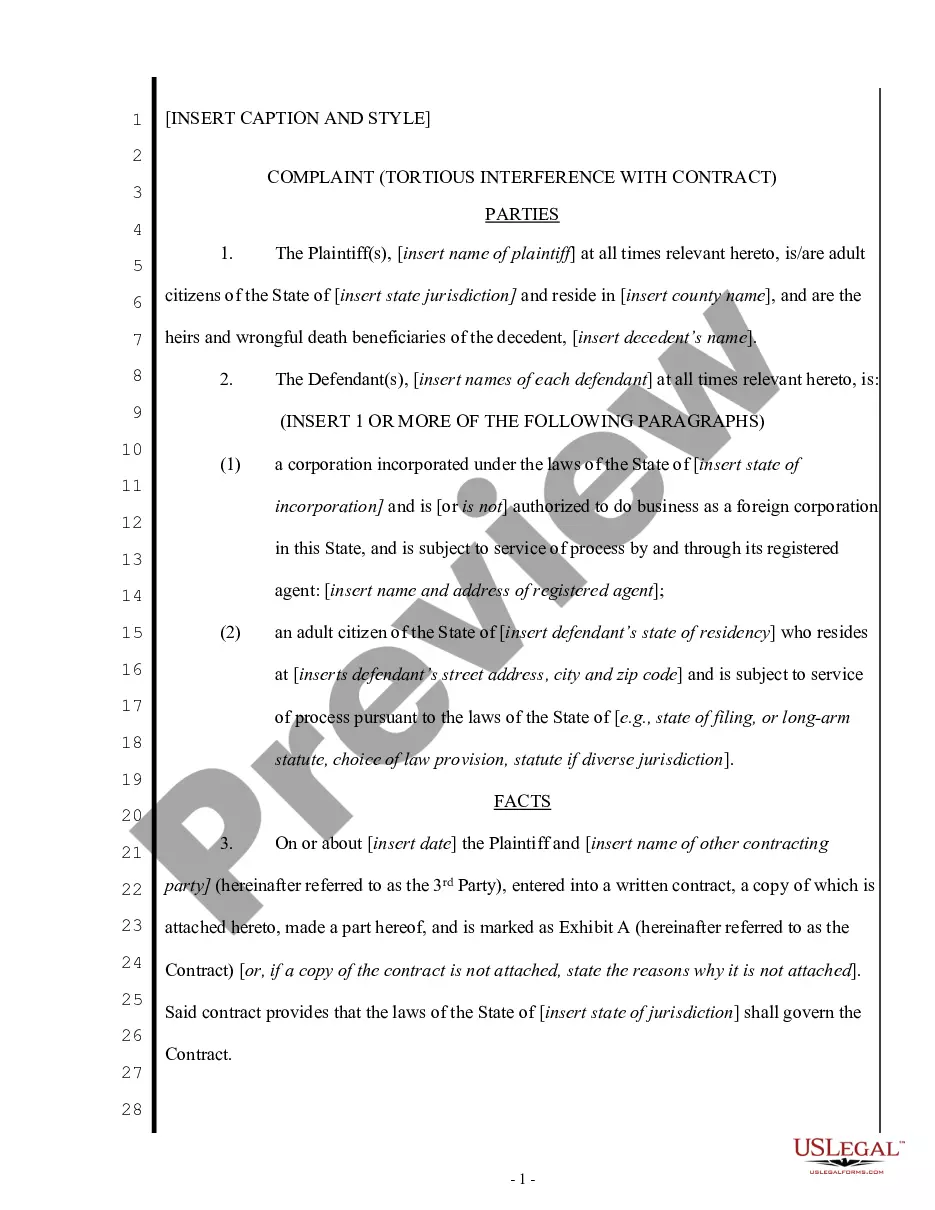
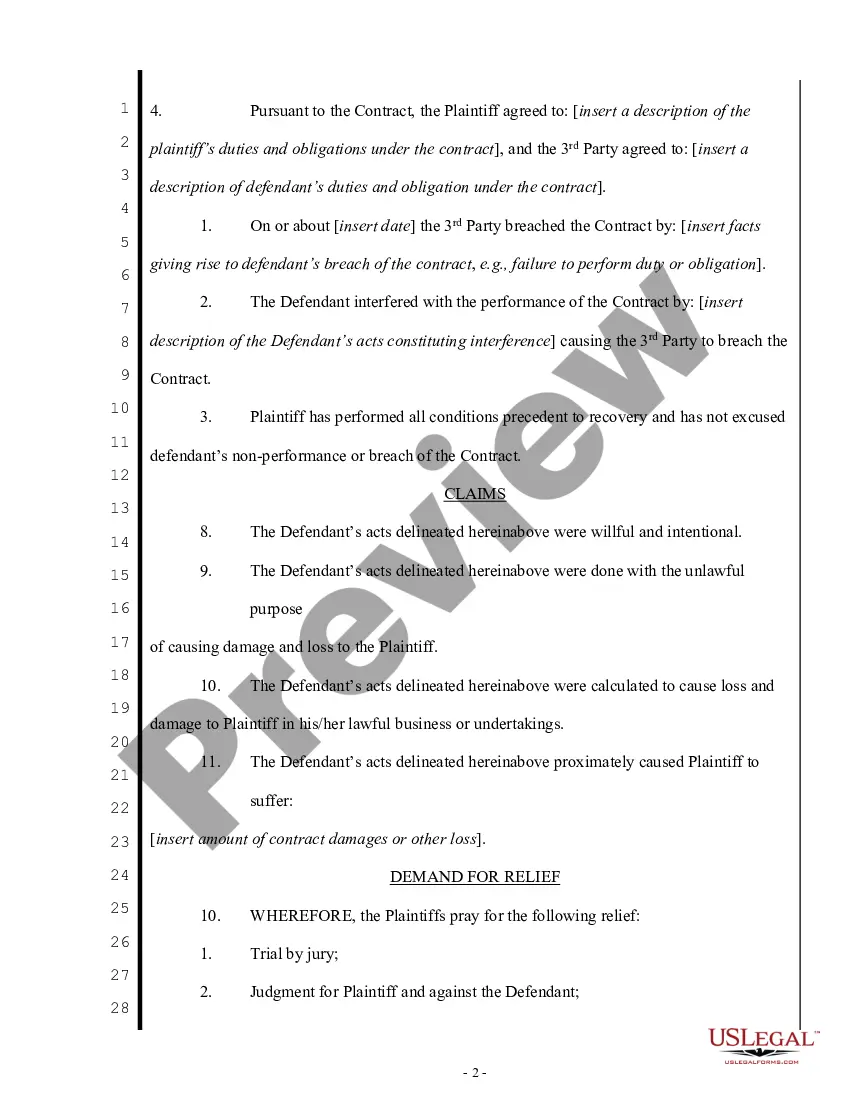
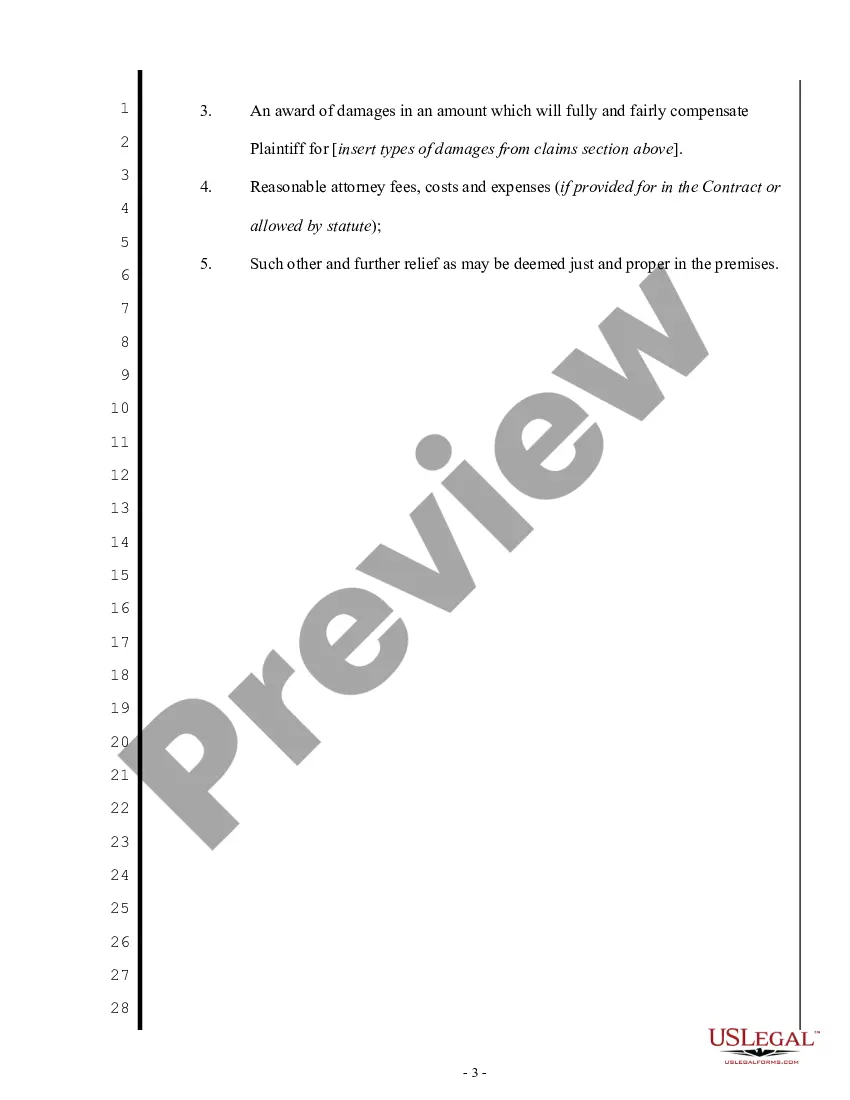

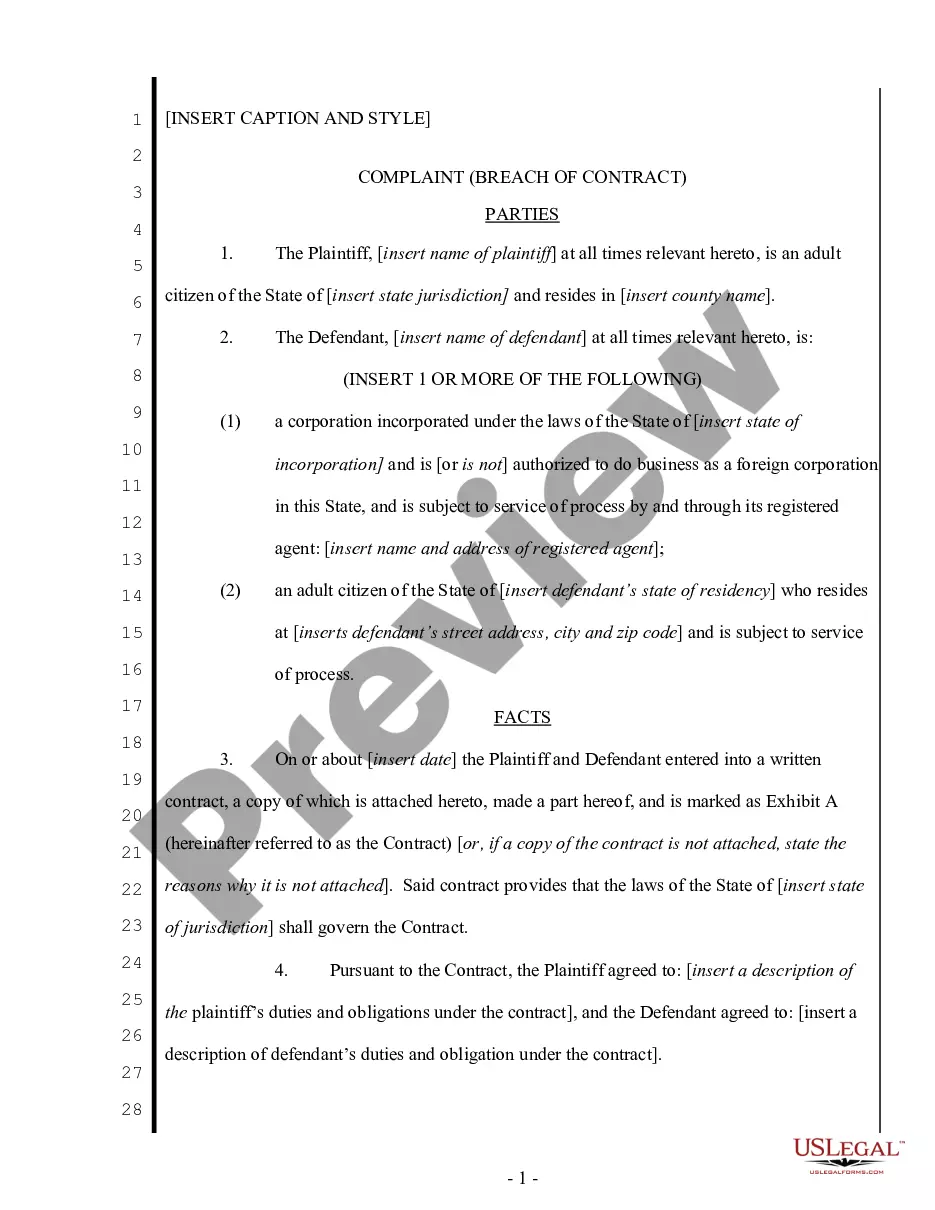
Get your form ready online
Our built-in tools help you complete, sign, share, and store your documents in one place.
Make edits, fill in missing information, and update formatting in US Legal Forms—just like you would in MS Word.
Download a copy, print it, send it by email, or mail it via USPS—whatever works best for your next step.
Sign and collect signatures with our SignNow integration. Send to multiple recipients, set reminders, and more. Go Premium to unlock E-Sign.
If this form requires notarization, complete it online through a secure video call—no need to meet a notary in person or wait for an appointment.
We protect your documents and personal data by following strict security and privacy standards.

Make edits, fill in missing information, and update formatting in US Legal Forms—just like you would in MS Word.

Download a copy, print it, send it by email, or mail it via USPS—whatever works best for your next step.

Sign and collect signatures with our SignNow integration. Send to multiple recipients, set reminders, and more. Go Premium to unlock E-Sign.

If this form requires notarization, complete it online through a secure video call—no need to meet a notary in person or wait for an appointment.

We protect your documents and personal data by following strict security and privacy standards.
Looking for another form?



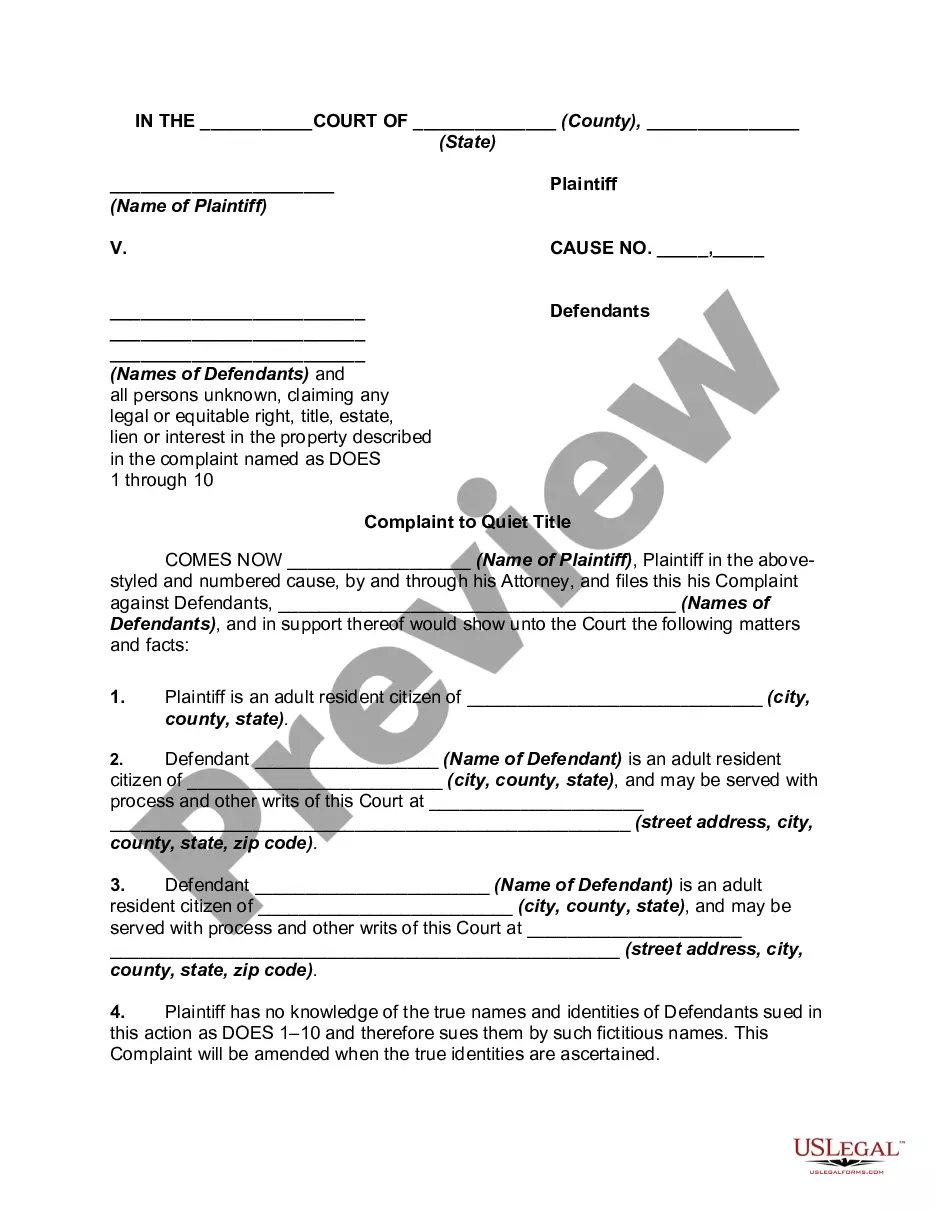


How to fill out Complaint Regarding Intentional Interference With Contract?
Be it for commercial reasons or personal matters, everyone eventually has to deal with legal issues at some point in their life.
Completing legal paperwork requires meticulous attention, starting with selecting the appropriate form template.
With an extensive library of US Legal Forms, you no longer need to waste time searching for the right template online. Utilize the library’s straightforward navigation to find the correct form for any scenario.
- Acquire the template you seek using the search bar or catalog browsing.
- Review the form's synopsis to confirm it suits your circumstances, state, and county.
- Press on the form's preview to view it.
- If it is the incorrect document, return to the search function to find the Tortious Interference In Contract Law template you need.
- Obtain the file when it aligns with your requirements.
- If you possess a US Legal Forms account, simply click Log in to access previously saved files in My documents.
- If you do not have an account yet, you can download the form by clicking Buy now.
- Choose the appropriate pricing option.
- Fill out the account registration form.
- Select your payment method: you can opt for a credit card or PayPal account.
- Choose the file type you want and download the Tortious Interference In Contract Law.
- Once saved, you can fill out the form using editing software or print it and complete it manually.
Form popularity
FAQ
To prove tortious interference in contract law, you need evidence that supports the existence of a contract, the defendant's knowledge of that contract, and intentional, wrongful interference from the defendant. Additionally, you must demonstrate that this interference caused measurable damages. Collecting documents, witness statements, and other relevant materials is key to building a solid case. Tools like US Legal Forms can assist in organizing this information effectively.
An example of tortious interference in contract law could involve a situation where one party convinces another to breach a contract without legal justification. For instance, if a competitor persuades a vendor to stop supplying products to your business despite a valid contract in place, this could be classified as tortious interference. Such actions can lead to significant damages, highlighting the need for legal recourse. Gathering evidence in such scenarios is vital for a strong claim.
The four required elements for tortious interference in contract law include the existence of a valid contract, knowledge of that contract by the defendant, intentional interference by the defendant, and resulting damages. All four elements must be clearly established to pursue a legal claim. Failing to demonstrate any one of these aspects might weaken your case significantly. Understanding these elements is crucial for a successful outcome.
To prove tortious interference in contract law, you need to establish that a valid contract existed and that the defendant intentionally interfered with it. This includes showing that the interference caused actual damages or losses. Documenting communications, actions of the defendant, and evidence of harm can strengthen your case. Using platforms like US Legal Forms can help in collecting necessary documents and evidence.
In tortious interference in contract law, the burden of proof lies with the plaintiff. They must demonstrate that the defendant knowingly interfered with a contractual relationship, causing damage. This often involves gathering clear evidence of the contract, the interference, and the resulting harm. It's essential to present a compelling case that connects these elements effectively.
Some examples of actionable interference may include convincing a shared supplier to renege on a contract or a third party interrupting the sale of property to a business.
Tortious interference is a common law tort allowing a claim for damages against a defendant who wrongfully interferes with the plaintiff's contractual or business relationships. See also intentional interference with contractual relations.
Typical legal damages for tortious interference include economic losses, if they can be proven with certainty, and mental distress. Additionally punitive damages may be awarded if malice on the part of the wrongdoer can be established.
To obtain punitive damages, the plaintiff must prove that the defendant willfully interfered with or destroyed the business relationship in a particularly ?egregious? manner. Tortious interference with business is a serious matter that can significantly affect a company's financial wellbeing.