Wrongful Form With Decimals
Description
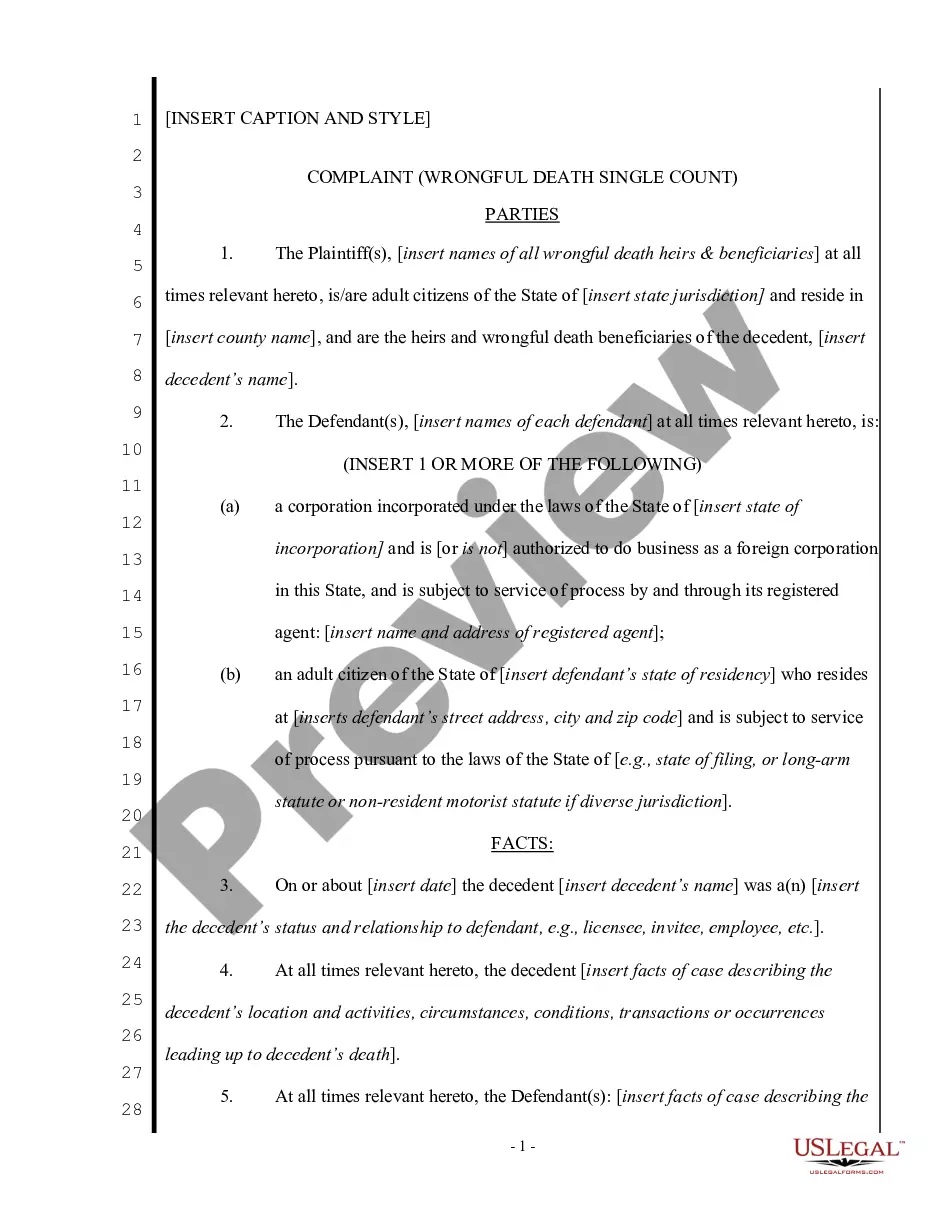

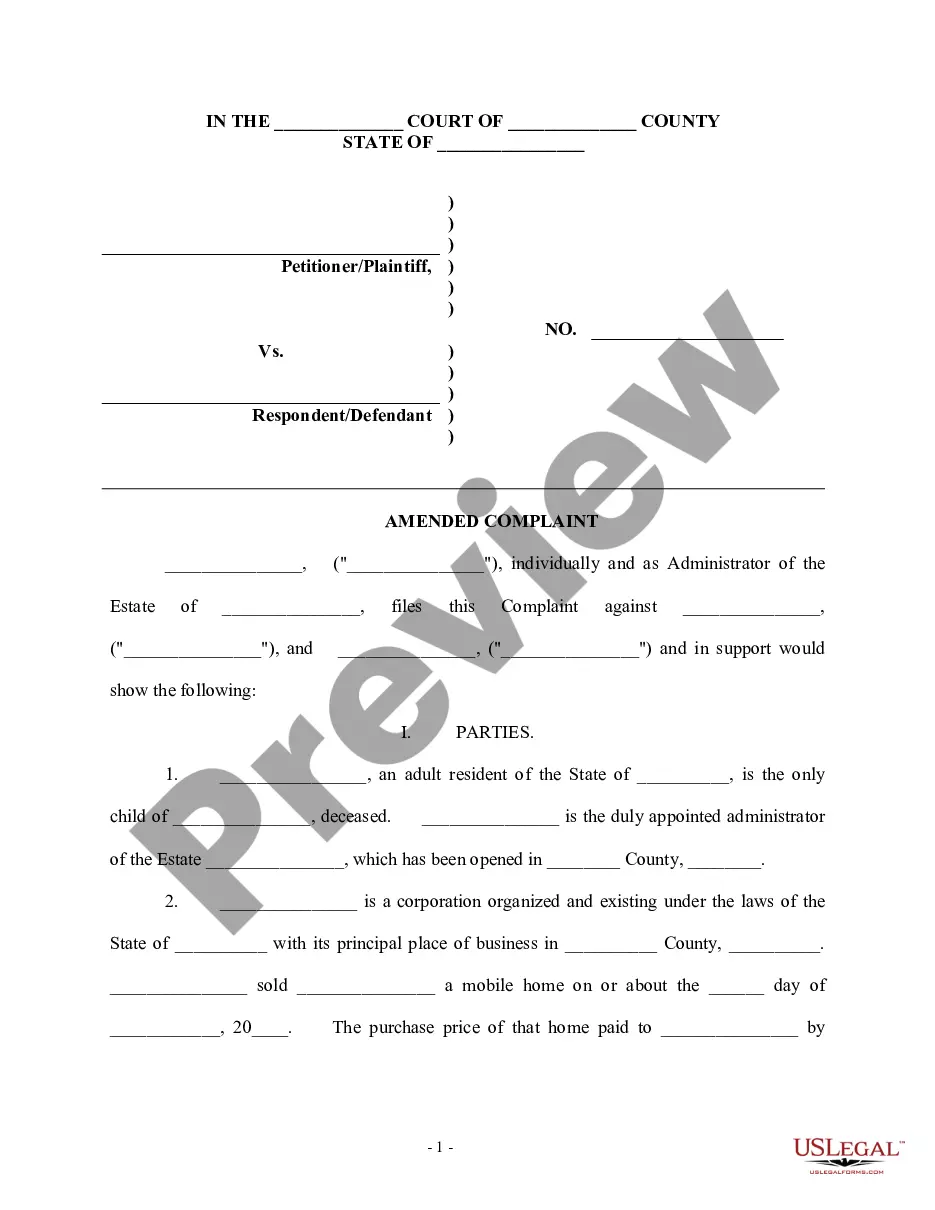
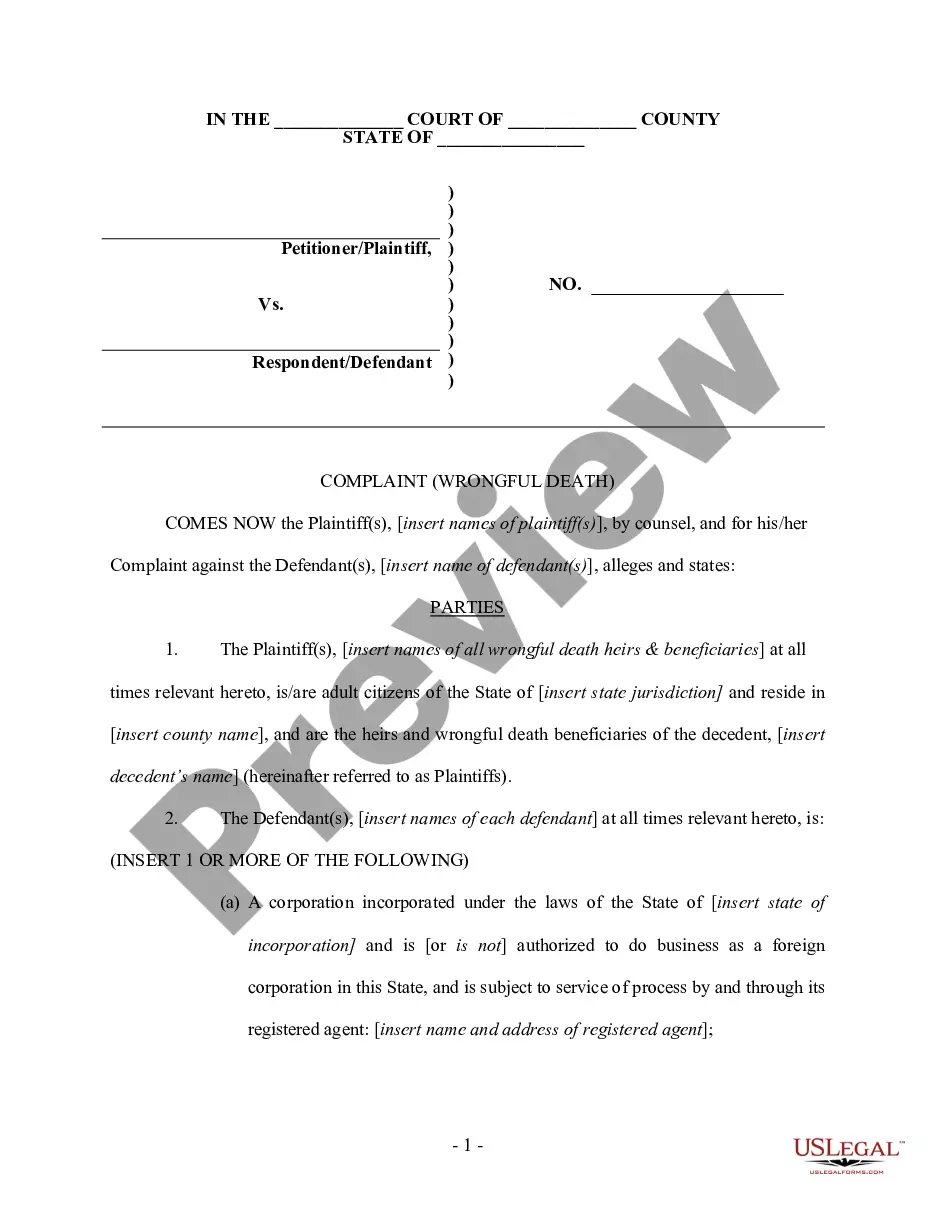
Get your form ready online
Our built-in tools help you complete, sign, share, and store your documents in one place.
Make edits, fill in missing information, and update formatting in US Legal Forms—just like you would in MS Word.
Download a copy, print it, send it by email, or mail it via USPS—whatever works best for your next step.
Sign and collect signatures with our SignNow integration. Send to multiple recipients, set reminders, and more. Go Premium to unlock E-Sign.
If this form requires notarization, complete it online through a secure video call—no need to meet a notary in person or wait for an appointment.
We protect your documents and personal data by following strict security and privacy standards.

Make edits, fill in missing information, and update formatting in US Legal Forms—just like you would in MS Word.

Download a copy, print it, send it by email, or mail it via USPS—whatever works best for your next step.

Sign and collect signatures with our SignNow integration. Send to multiple recipients, set reminders, and more. Go Premium to unlock E-Sign.

If this form requires notarization, complete it online through a secure video call—no need to meet a notary in person or wait for an appointment.

We protect your documents and personal data by following strict security and privacy standards.
Looking for another form?
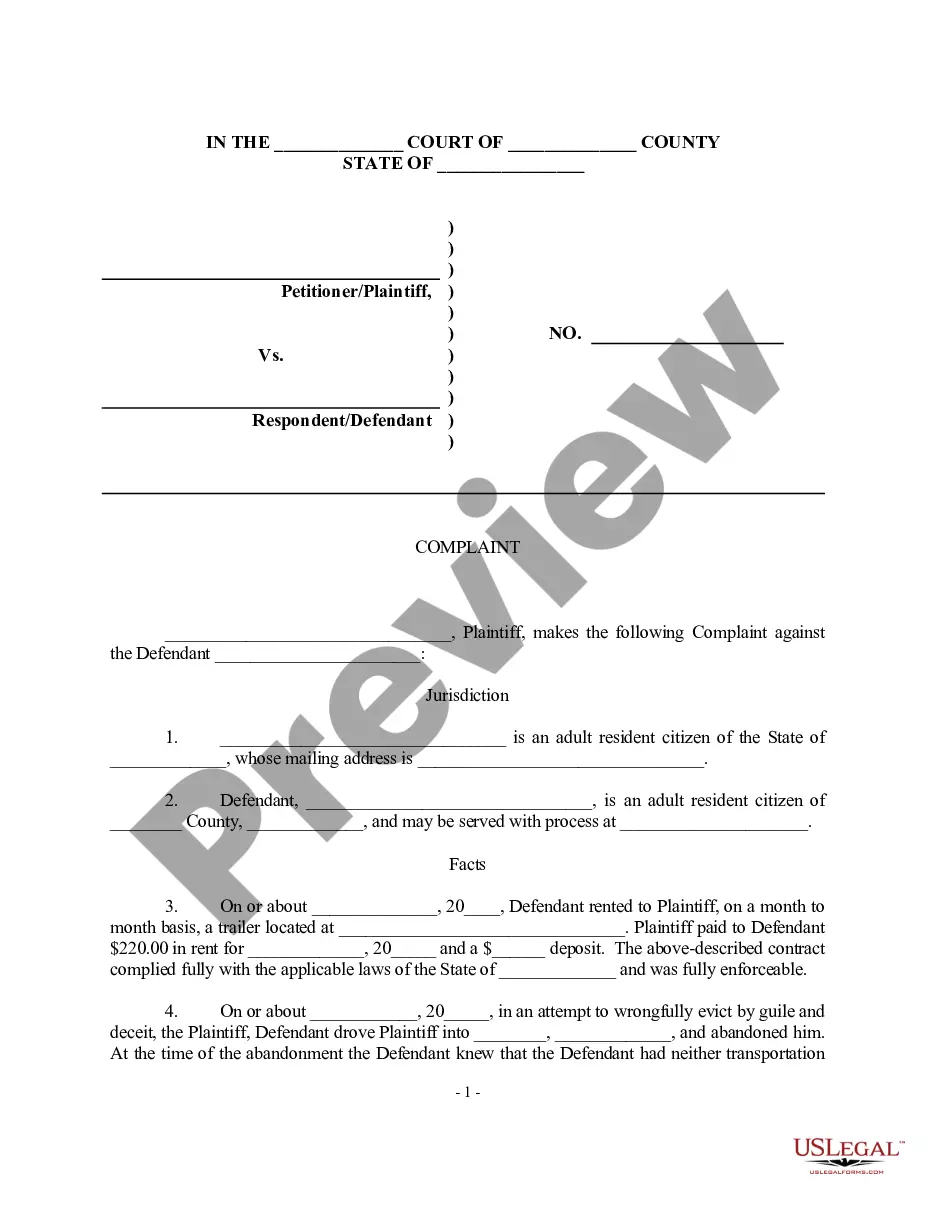

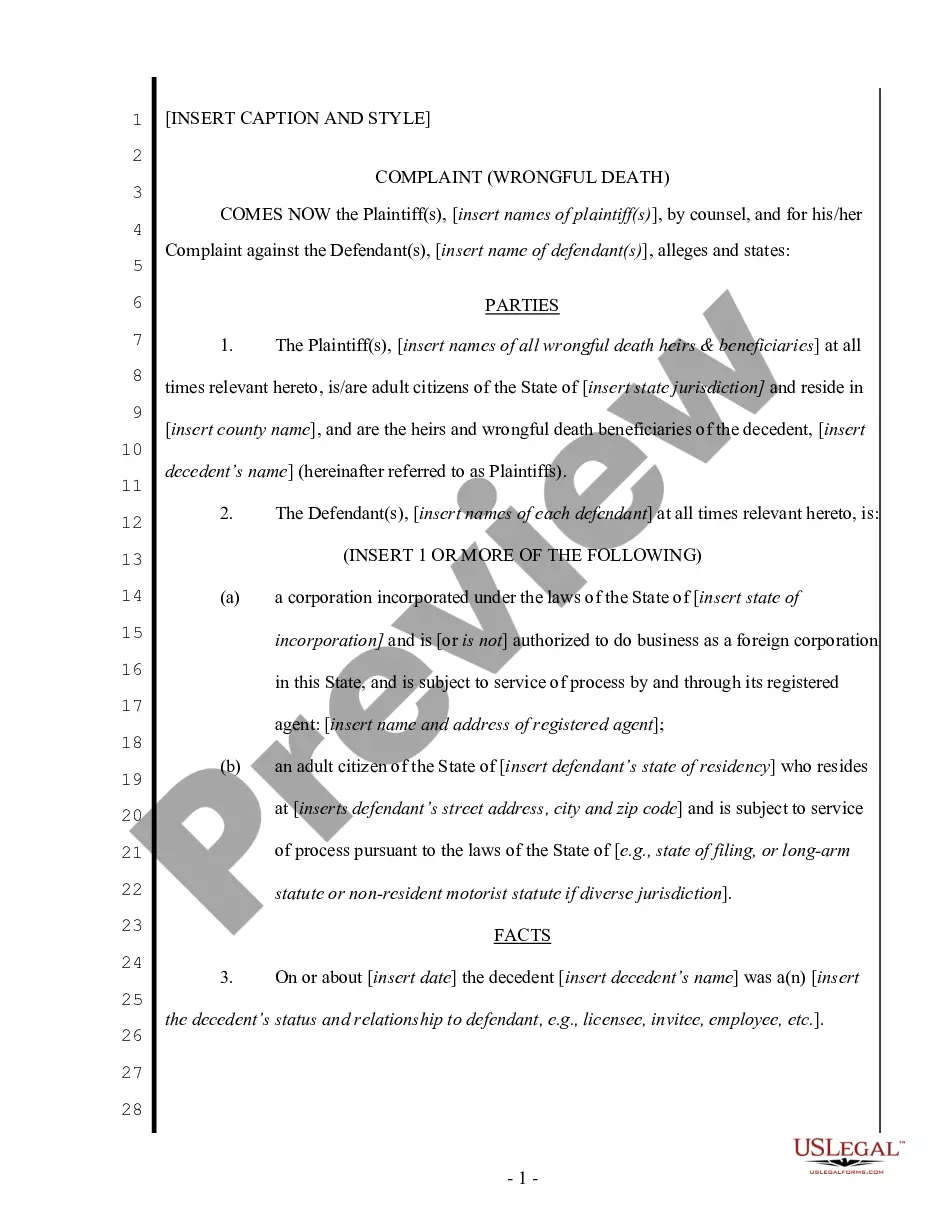
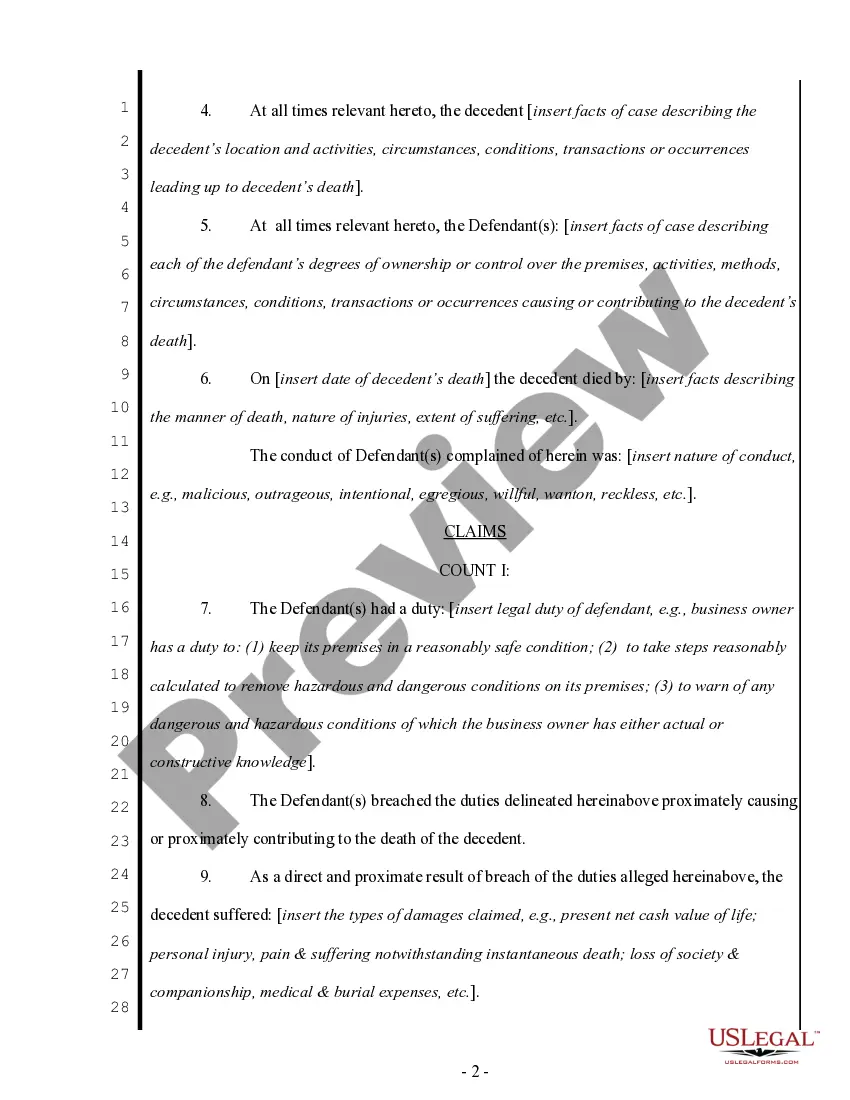
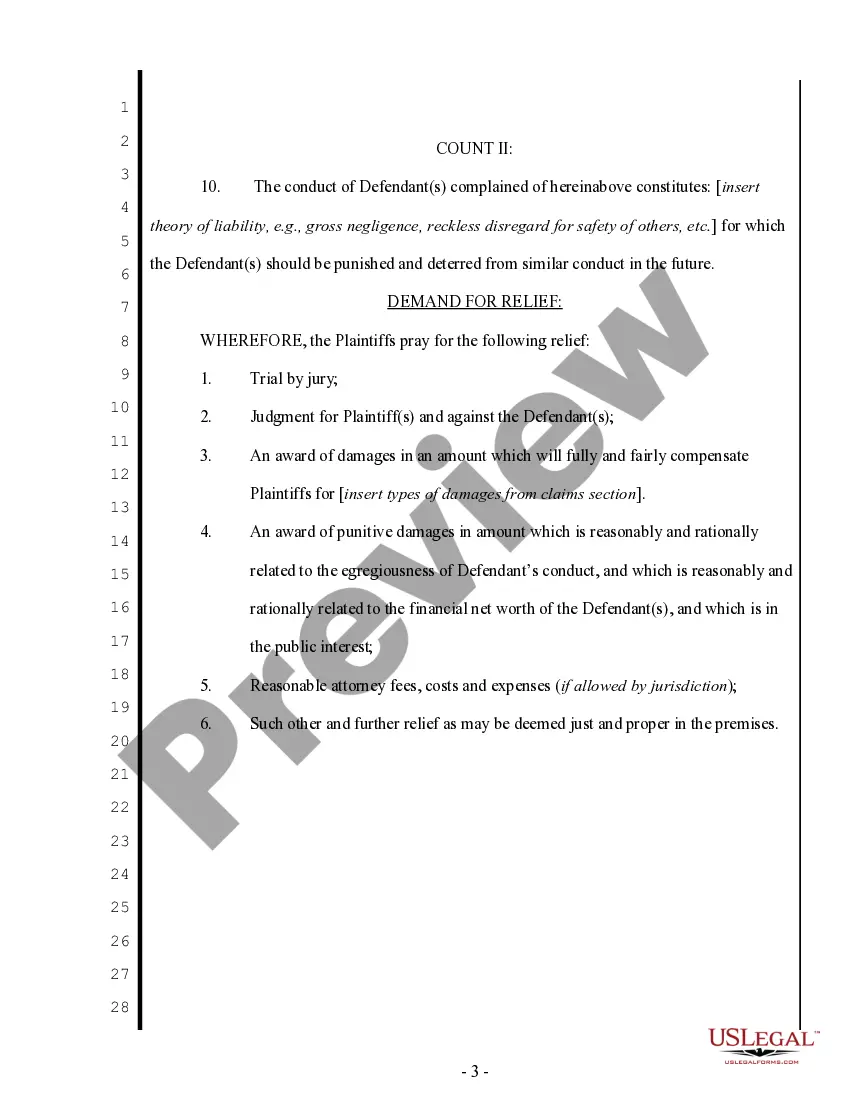
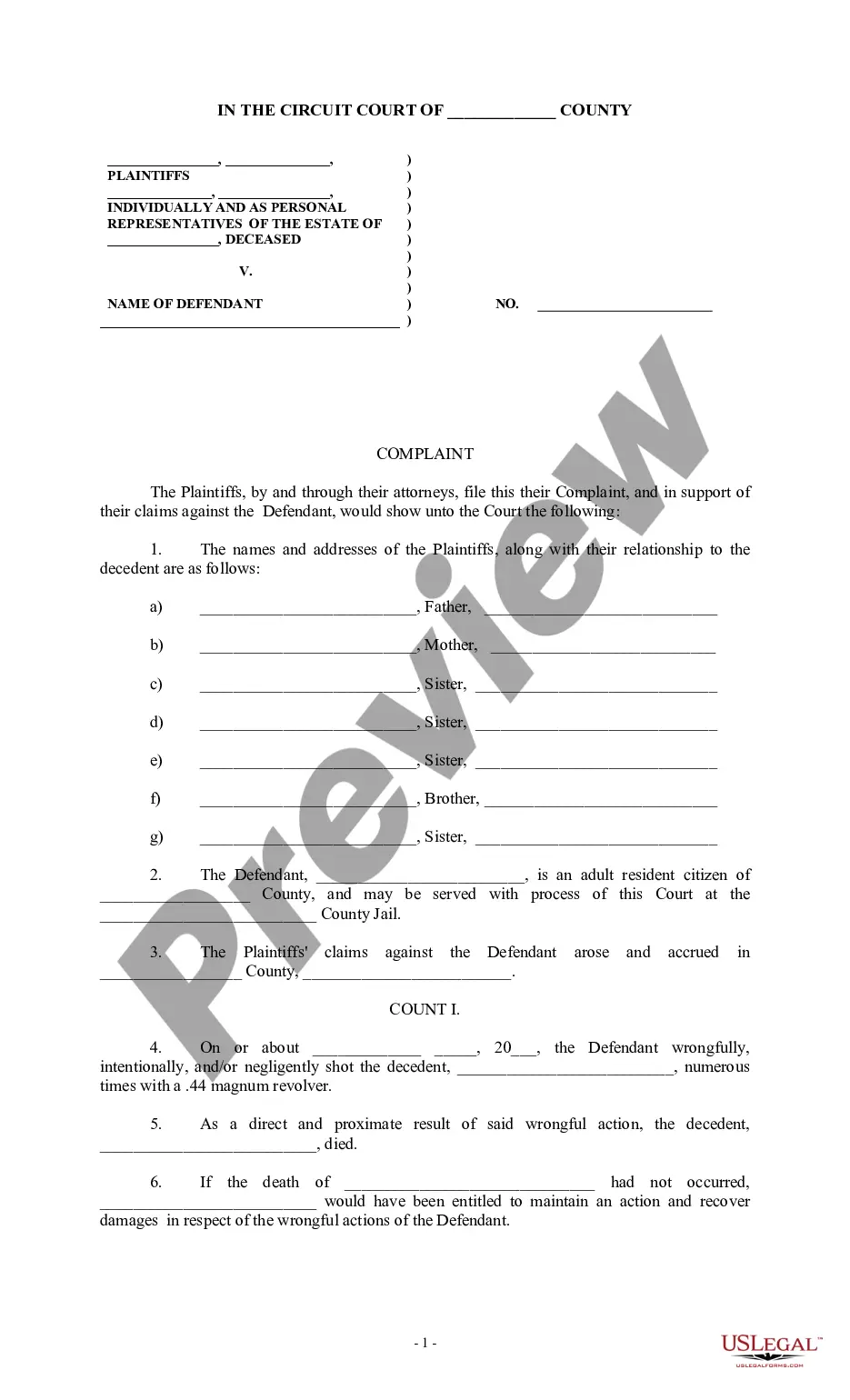
How to fill out Complaint For Wrongful Death - Multiple Counts?
The Incorrect Form With Decimals displayed on this site is a reusable official template crafted by experienced attorneys in accordance with federal and state regulations.
For over 25 years, US Legal Forms has supplied individuals, businesses, and legal practitioners with more than 85,000 authenticated, state-specific documents for any commercial and personal scenario. It’s the quickest, easiest, and most dependable method to acquire the paperwork you require, as the service ensures bank-level data encryption and anti-malware safeguards.
Access the same document again whenever required. Navigate to the My documents tab in your profile to redownload any forms previously acquired. Subscribe to US Legal Forms to have authentic legal templates for all of life's situations available at your fingertips.
- Search for the document you require and review it.
- Browse the sample you looked for and preview it or check the form description to confirm it meets your needs. If not, utilize the search bar to locate the correct one. Click Buy Now after you have discovered the template you seek.
- Choose a pricing plan that works for you and create an account. Use PayPal or a credit card for a swift payment. If you already possess an account, Log In and verify your subscription to continue.
- Select the fillable template you desire for your Incorrect Form With Decimals (PDF, DOCX, RTF) and store the sample on your device.
- Print the template to fill it out manually. Alternatively, utilize an online multifunctional PDF editor to quickly and accurately complete and sign your form with a valid signature.
Form popularity
FAQ
Getting an improper fraction from a decimal involves a few simple steps. Take the decimal and express it as a fraction, considering how many places it has after the decimal point. For example, 0.25 can be written as 25/100, which simplifies to 1/4. By mastering these conversions, you can confidently tackle wrongful form with decimals in your calculations.
To convert a decimal into an improper fraction, first identify the decimal's fractional equivalent. For instance, if you have 0.6, it can be expressed as 6/10. Next, simplify this fraction, if possible, to get to its lowest terms. This conversion process helps you understand how to manage wrongful form with decimals more effectively.
Eliminating decimals in an equation can simplify calculations. You can achieve this by multiplying every term in the equation by a power of ten that matches the highest decimal place. This method transforms the equation into a whole number format, allowing you to work with integers instead, which can prevent confusion often associated with wrongful form with decimals.
To express 4.75 as an improper fraction, first recognize that 4.75 can be rewritten as 4 + 0.75. The decimal 0.75 is equal to 3/4. Therefore, adding these together, you can convert 4 into a fraction by using 4 as 16/4, resulting in 16/4 + 3/4, which equals 19/4. This demonstrates how to transform decimals into a wrongful form with decimals effectively.
One major misconception when multiplying decimals is that you can ignore the decimal points completely. In reality, the placement of the decimal point in the product is crucial and depends on the total number of decimal places in the factors. Miscalculating these points can lead to wrongful form with decimals, impacting the accuracy of important documents.
When arranging the decimals 2.2, 2.02, 0.22, 0.02, 0.202, and 2.002 in ascending order, the correct order is 0.02, 0.22, 0.202, 2.002, 2.02, and finally 2.2. Understanding how to properly sequence decimals helps in avoiding wrongful form with decimals, especially in legal forms.
People often misplace the decimal point when performing calculations or conversions, leading to significant errors. For example, confusing 0.1 with 1.0 can change results drastically. Such mistakes can contribute to wrongful form with decimals, particularly in legal documents where accuracy is essential.
To convert a decimal to an improper fraction, first identify the place value of the last digit. For instance, 0.75 can be expressed as 75/100. Simplifying this fraction gives you 3/4, demonstrating how to handle decimals effectively and avoid wrongful form with decimals.
A common misconception is that all decimals are equal when they have the same number of digits. For example, 0.50 and 0.5 represent the same value, but many overlook this. Recognizing that trailing zeros do not affect value is crucial to avoid wrongful form with decimals, especially in legal documents.
Many people mistakenly believe that comparing decimals is as simple as looking at the whole numbers. However, decimals require a closer examination of place value. For instance, 0.5 is greater than 0.25, not just because of the whole number part, but due to the tenths and hundredths position. Understanding these nuances can prevent wrongful form with decimals.