Wrongful Death In Probate Court
Description
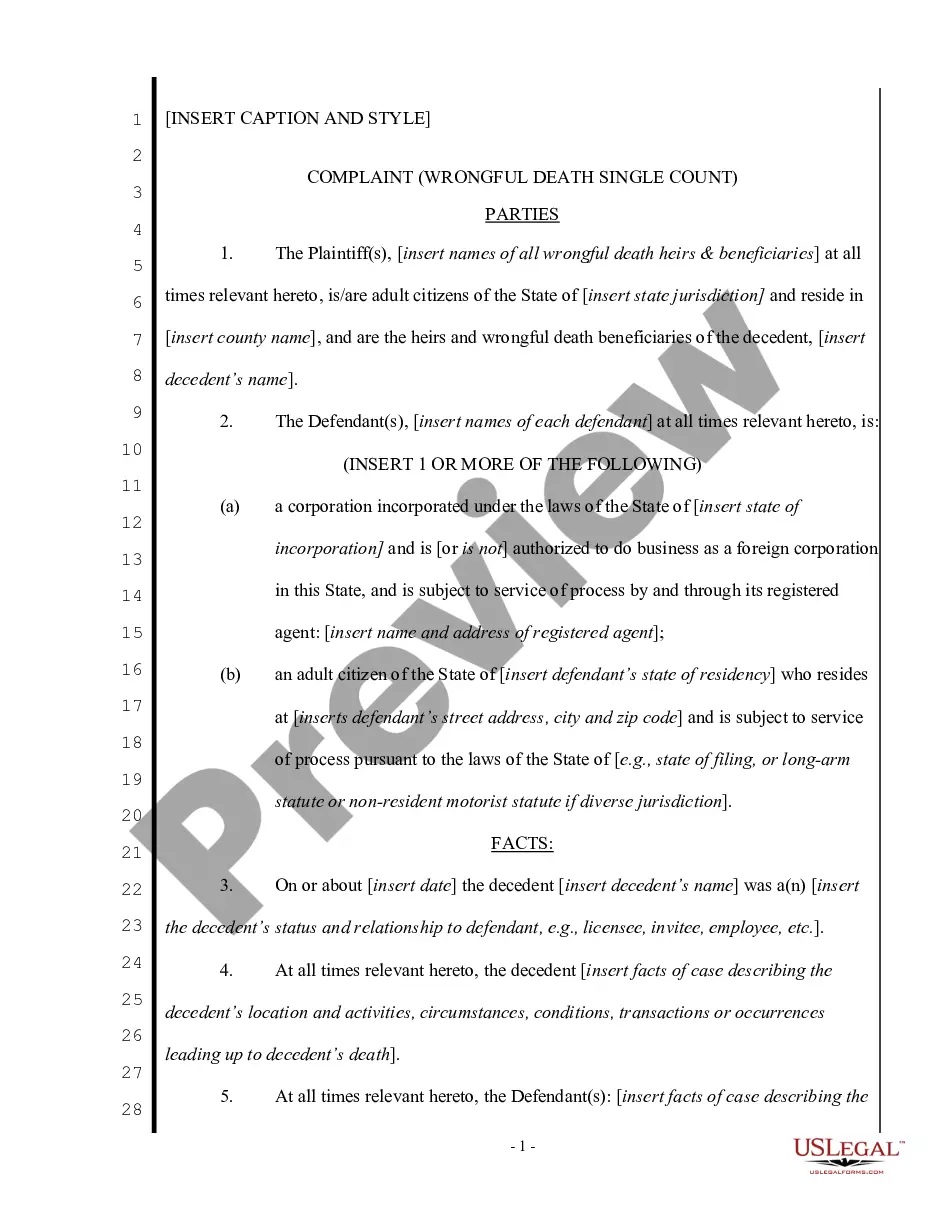

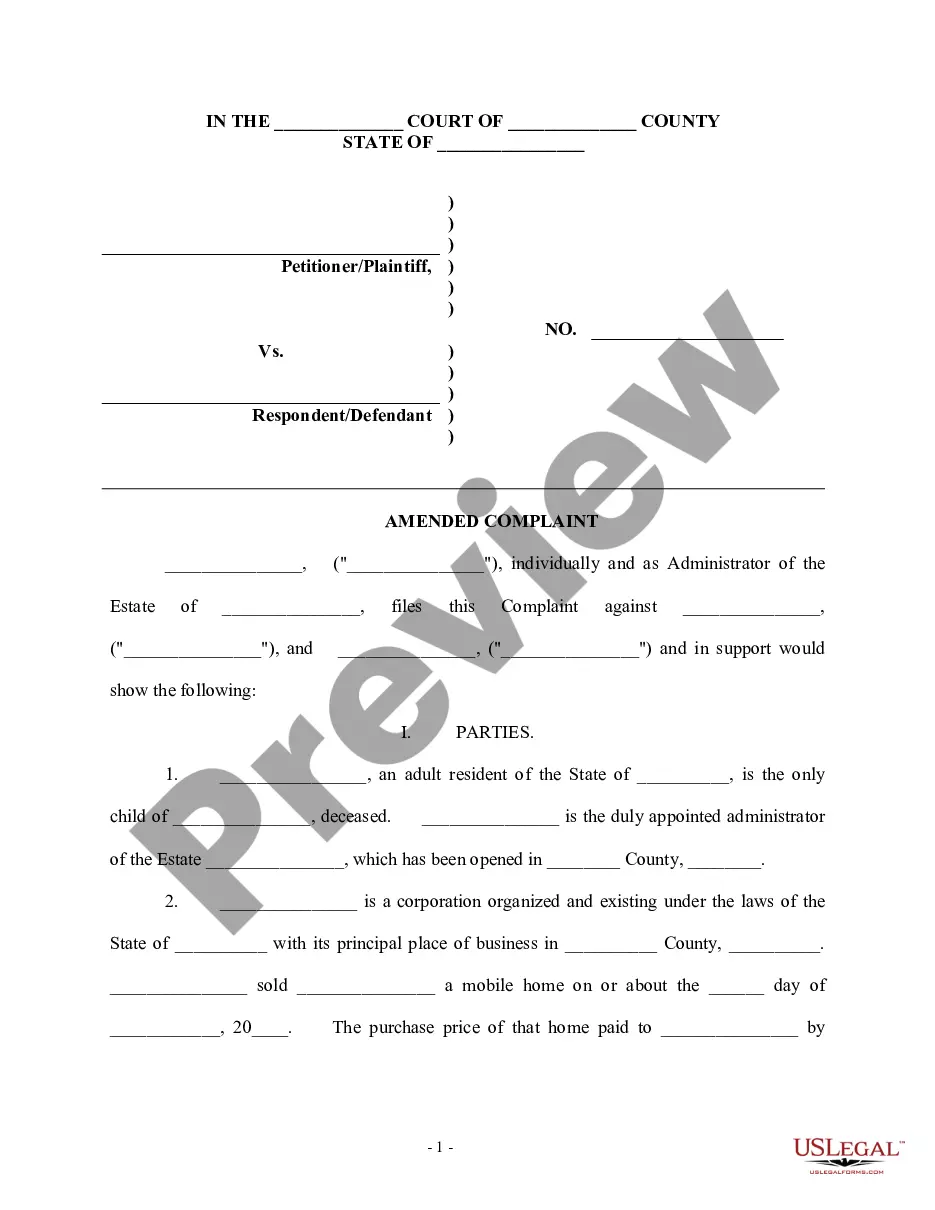
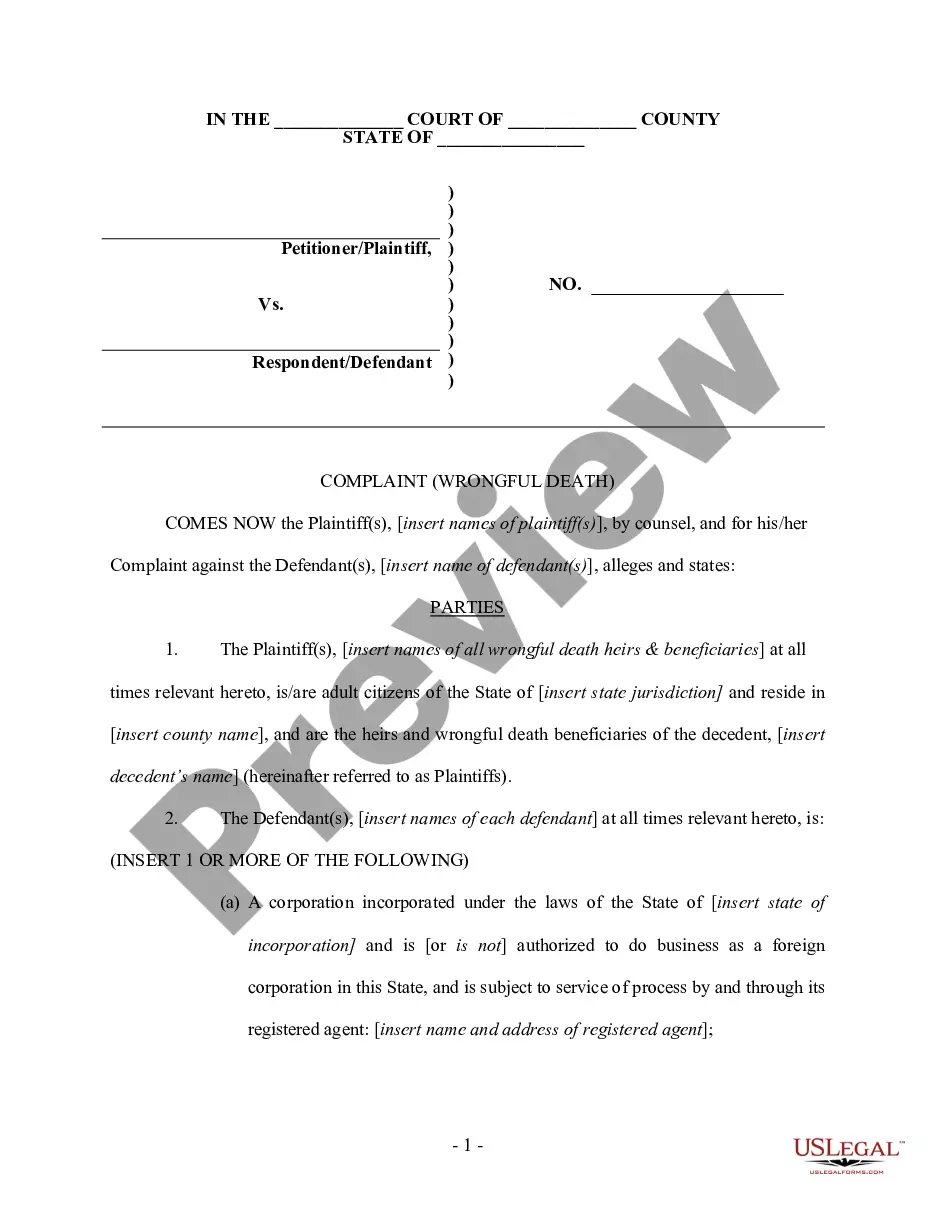
Get your form ready online
Our built-in tools help you complete, sign, share, and store your documents in one place.
Make edits, fill in missing information, and update formatting in US Legal Forms—just like you would in MS Word.
Download a copy, print it, send it by email, or mail it via USPS—whatever works best for your next step.
Sign and collect signatures with our SignNow integration. Send to multiple recipients, set reminders, and more. Go Premium to unlock E-Sign.
If this form requires notarization, complete it online through a secure video call—no need to meet a notary in person or wait for an appointment.
We protect your documents and personal data by following strict security and privacy standards.

Make edits, fill in missing information, and update formatting in US Legal Forms—just like you would in MS Word.

Download a copy, print it, send it by email, or mail it via USPS—whatever works best for your next step.

Sign and collect signatures with our SignNow integration. Send to multiple recipients, set reminders, and more. Go Premium to unlock E-Sign.

If this form requires notarization, complete it online through a secure video call—no need to meet a notary in person or wait for an appointment.

We protect your documents and personal data by following strict security and privacy standards.
Looking for another form?


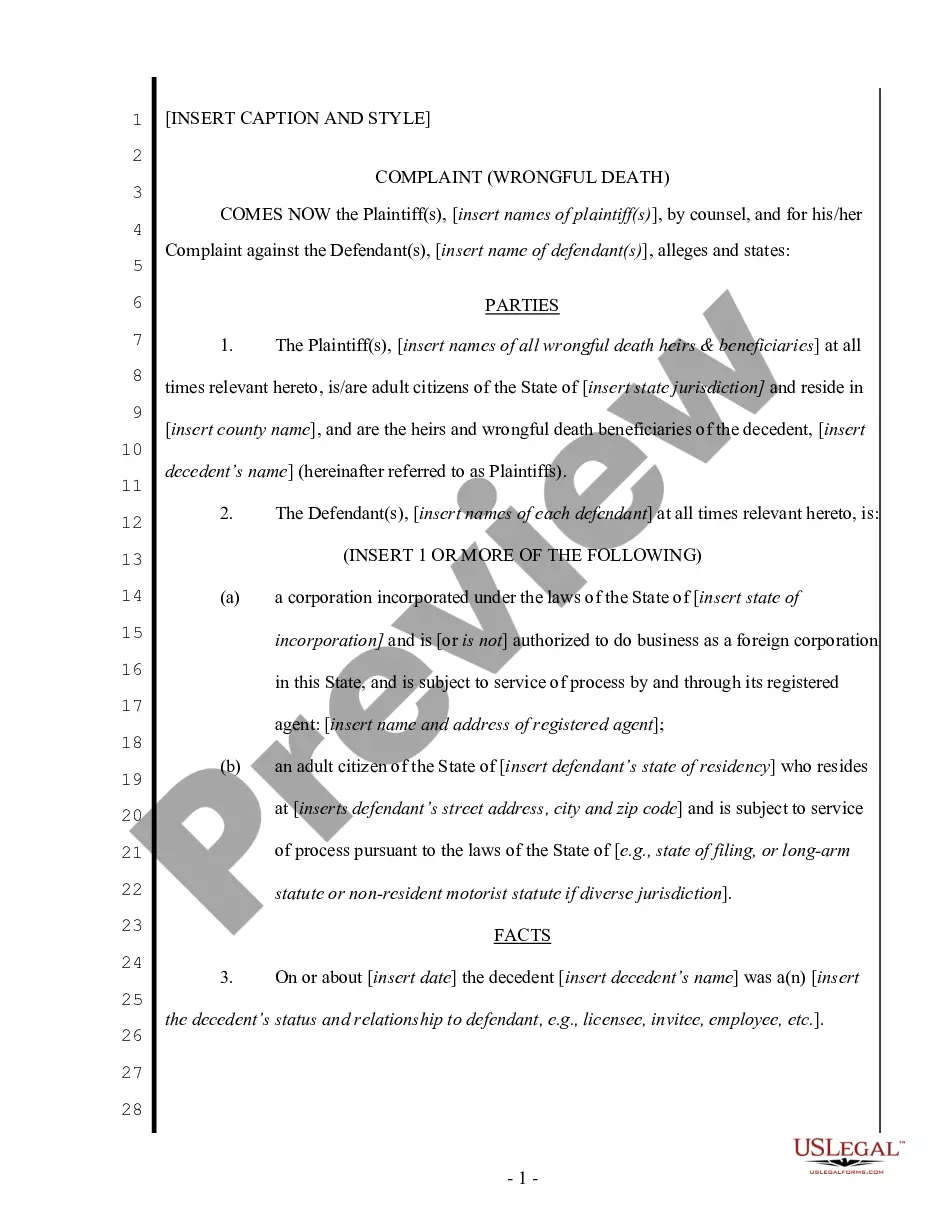
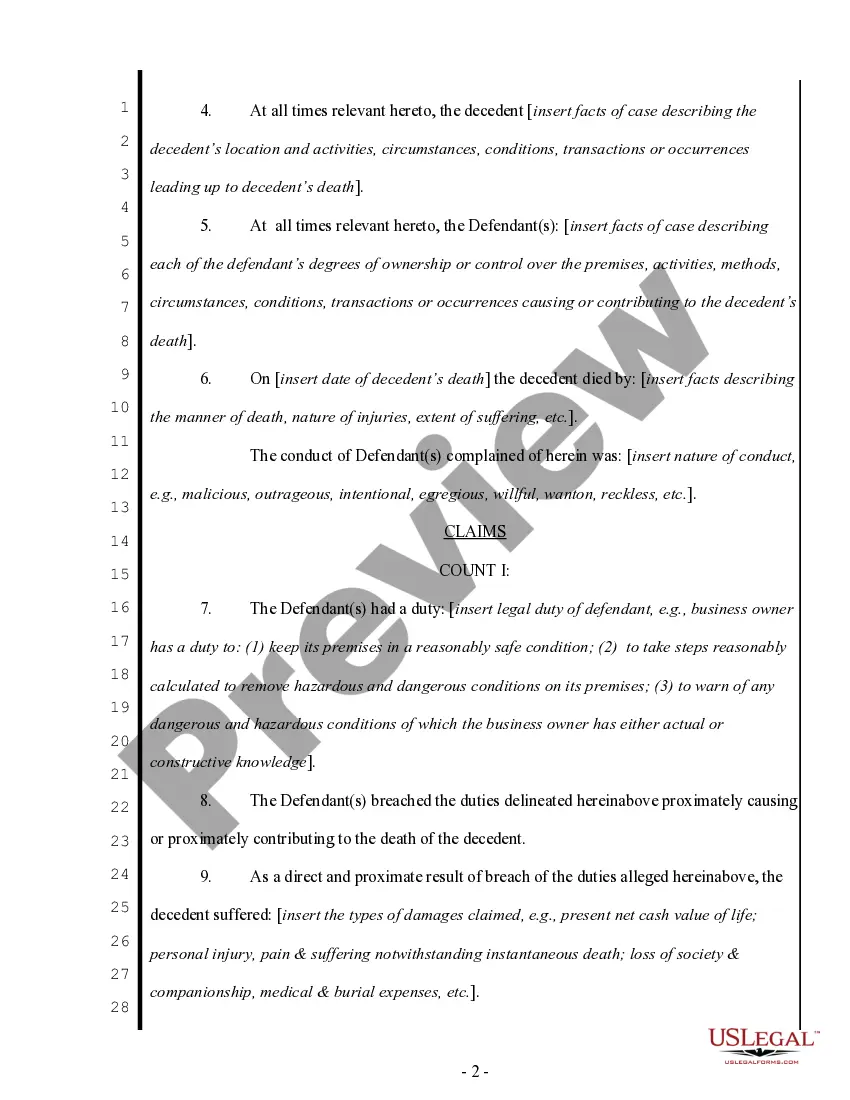
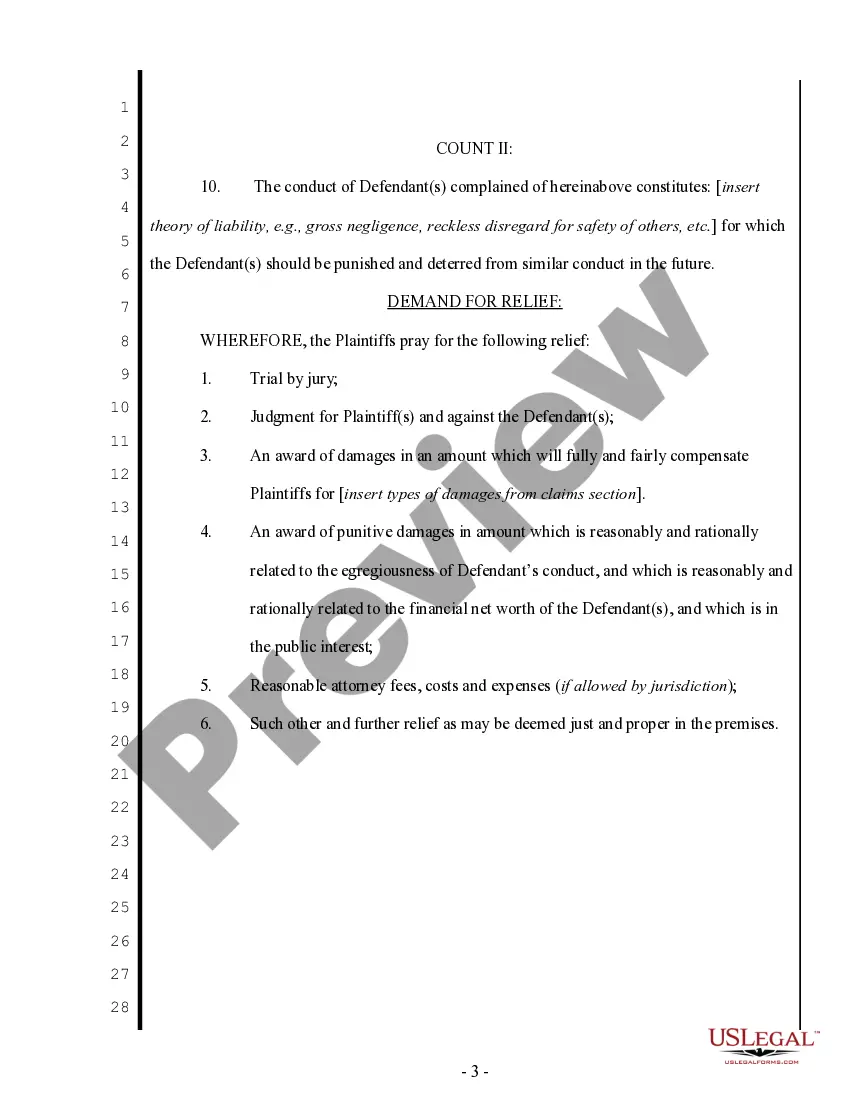
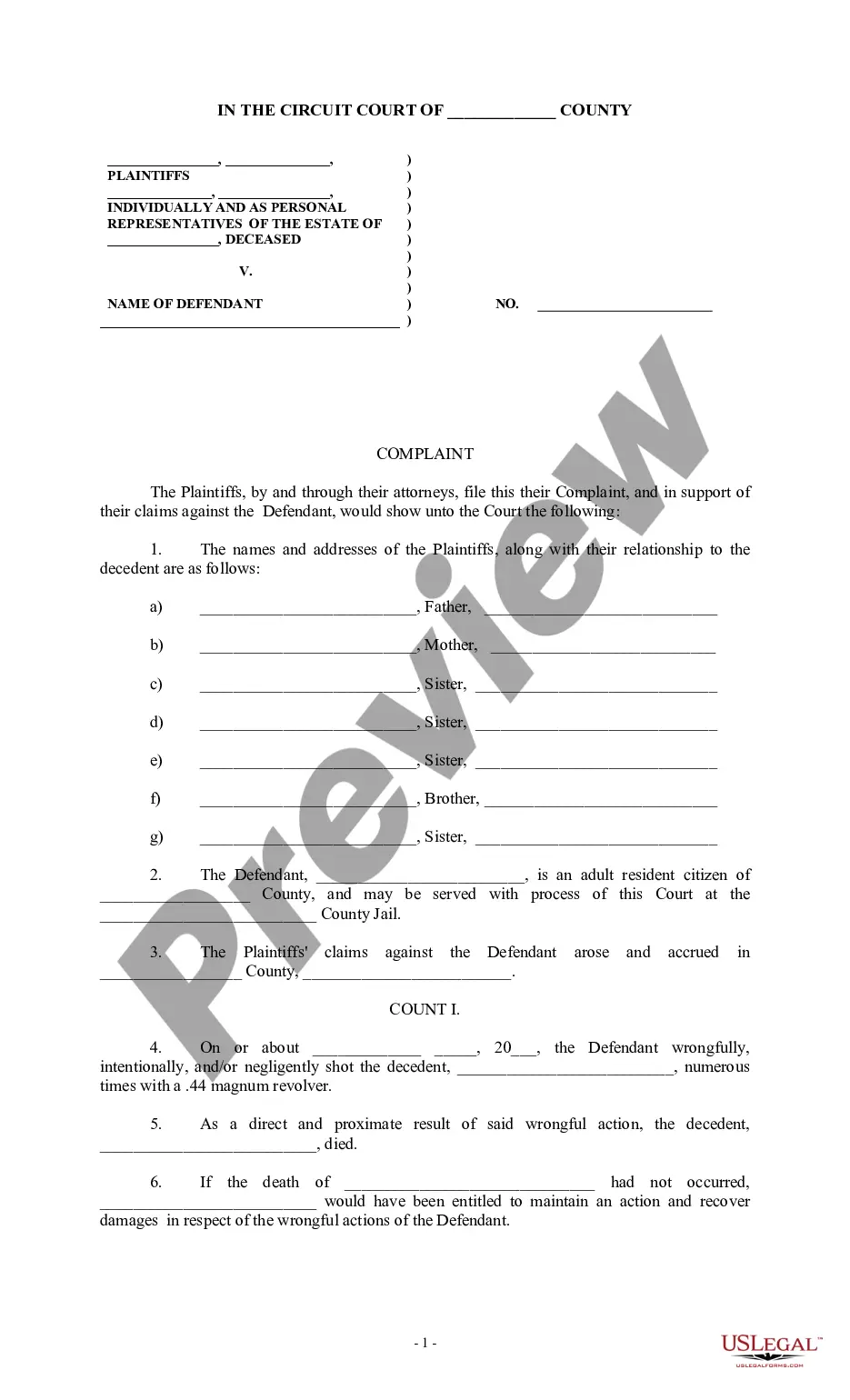
How to fill out Complaint For Wrongful Death - Multiple Counts?
It’s clear that you can’t become a legal authority overnight, nor can you become adept at swiftly drafting Wrongful Death In Probate Court without having a specialized background.
Compiling legal documentation is an extensive process that demands a particular education and expertise.
So why not entrust the preparation of the Wrongful Death In Probate Court to the experts.
Preview it (if this feature is available) and review the accompanying description to confirm if Wrongful Death In Probate Court is what you’re looking for.
If you require a different template, restart your search.
- With US Legal Forms, which boasts one of the largest legal template repositories, you can find everything from courtroom documents to templates for internal office communication.
- We recognize how critical adherence to federal and local laws is.
- That’s why, on our site, all templates are region-specific and current.
- Here’s how to start with our platform and obtain the document you need in just minutes.
- Locate the document you want using the search bar at the top of the page.
Form popularity
FAQ
How are wrongful death settlements paid out in Columbus, Ohio? Wrongful death settlements are paid in one of two ways: a lump sum or a structured settlement.
Who Can Sue for Wrongful Death in Michigan? The Michigan wrongful death statute gives authority to family members of the loved one to file a lawsuit for compensation for accidental deaths, fatal accidents, or intentional acts. Lawsuits can be brought by a spouse, parent, sibling, child, grandparent, or grandchild.
However, wrongful death settlements occur without a trial and must be approved by the court. After a settlement is approved or a jury verdict awards compensation, the estate's personal representative will file a motion asking the court for permission to distribute the money.
Who Can Sue Under the Michigan Wrongful Death Act? By law, the personal representative of the deceased person's estate must initiate a wrongful death lawsuit on behalf of the family. Only this person has the authority to bring the suit. In many cases, the personal representative will be a family member.
Under state law, a Michigan wrongful death claim must be brought by the personal representative, or executor, of the estate of the person who died. The personal representative must give notice of the wrongful death lawsuit to the people who may be entitled to compensation within 30 days of the claim's filing.