State Statute Law Without Violence
Description
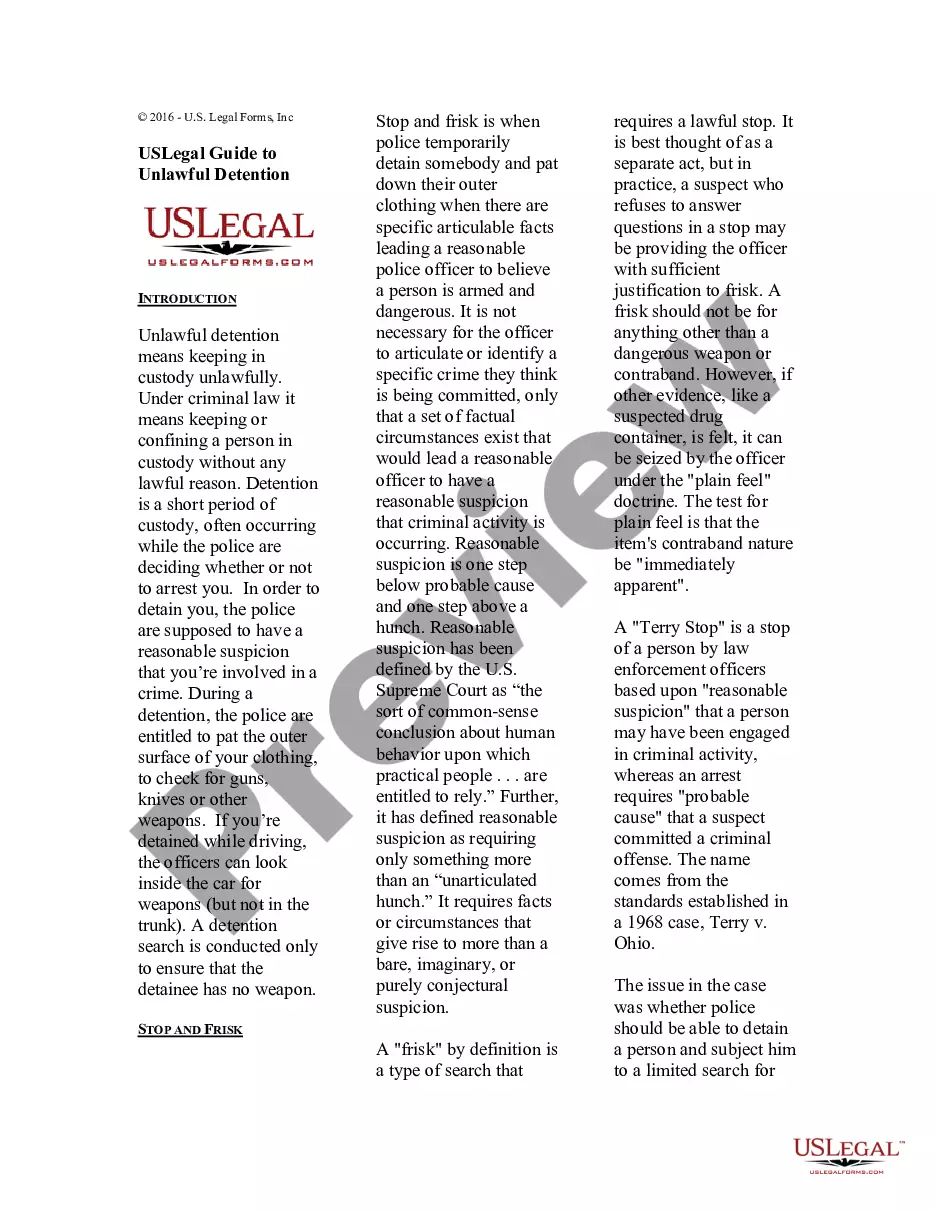
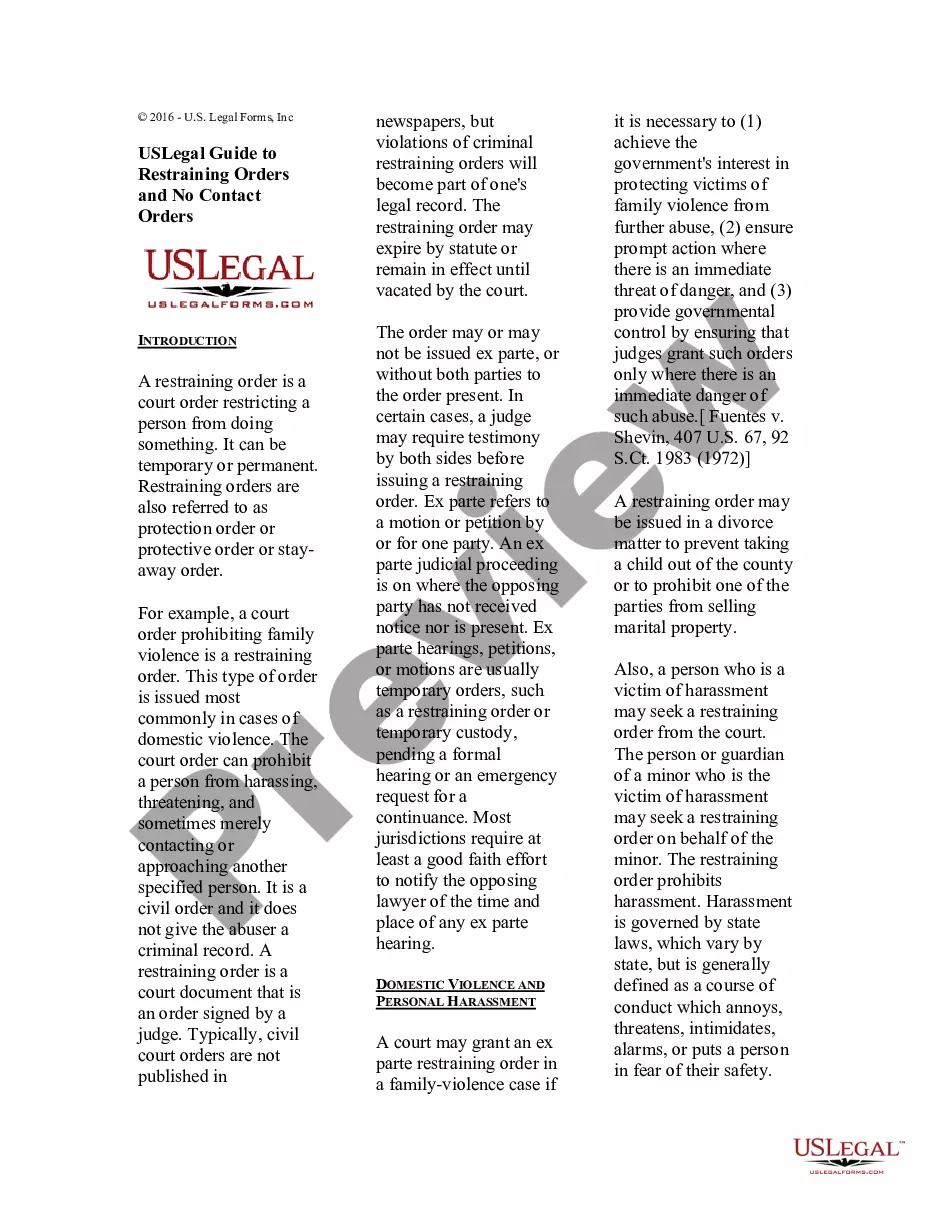
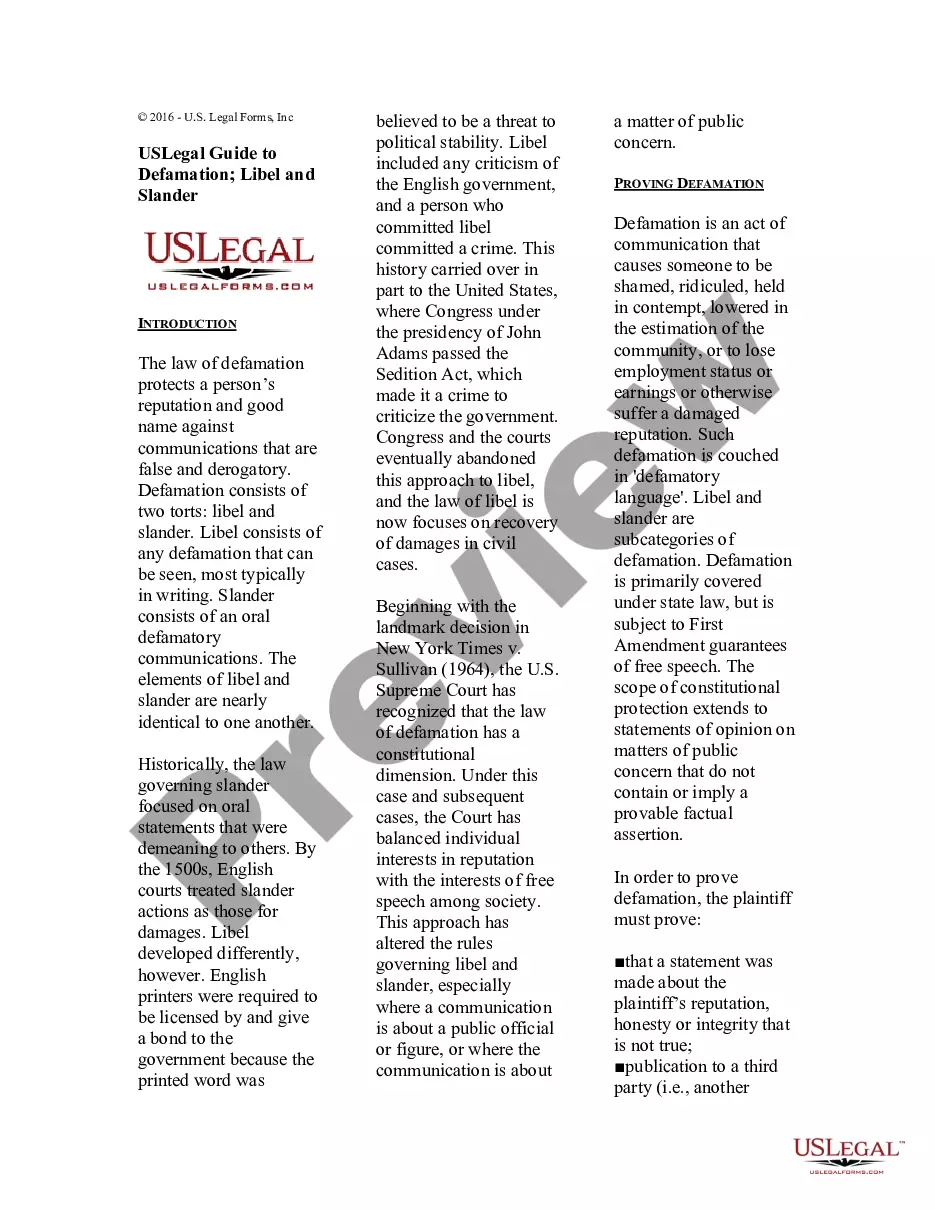
Get your form ready online
Our built-in tools help you complete, sign, share, and store your documents in one place.
Make edits, fill in missing information, and update formatting in US Legal Forms—just like you would in MS Word.
Download a copy, print it, send it by email, or mail it via USPS—whatever works best for your next step.
Sign and collect signatures with our SignNow integration. Send to multiple recipients, set reminders, and more. Go Premium to unlock E-Sign.
If this form requires notarization, complete it online through a secure video call—no need to meet a notary in person or wait for an appointment.
We protect your documents and personal data by following strict security and privacy standards.

Make edits, fill in missing information, and update formatting in US Legal Forms—just like you would in MS Word.

Download a copy, print it, send it by email, or mail it via USPS—whatever works best for your next step.

Sign and collect signatures with our SignNow integration. Send to multiple recipients, set reminders, and more. Go Premium to unlock E-Sign.

If this form requires notarization, complete it online through a secure video call—no need to meet a notary in person or wait for an appointment.

We protect your documents and personal data by following strict security and privacy standards.
Looking for another form?







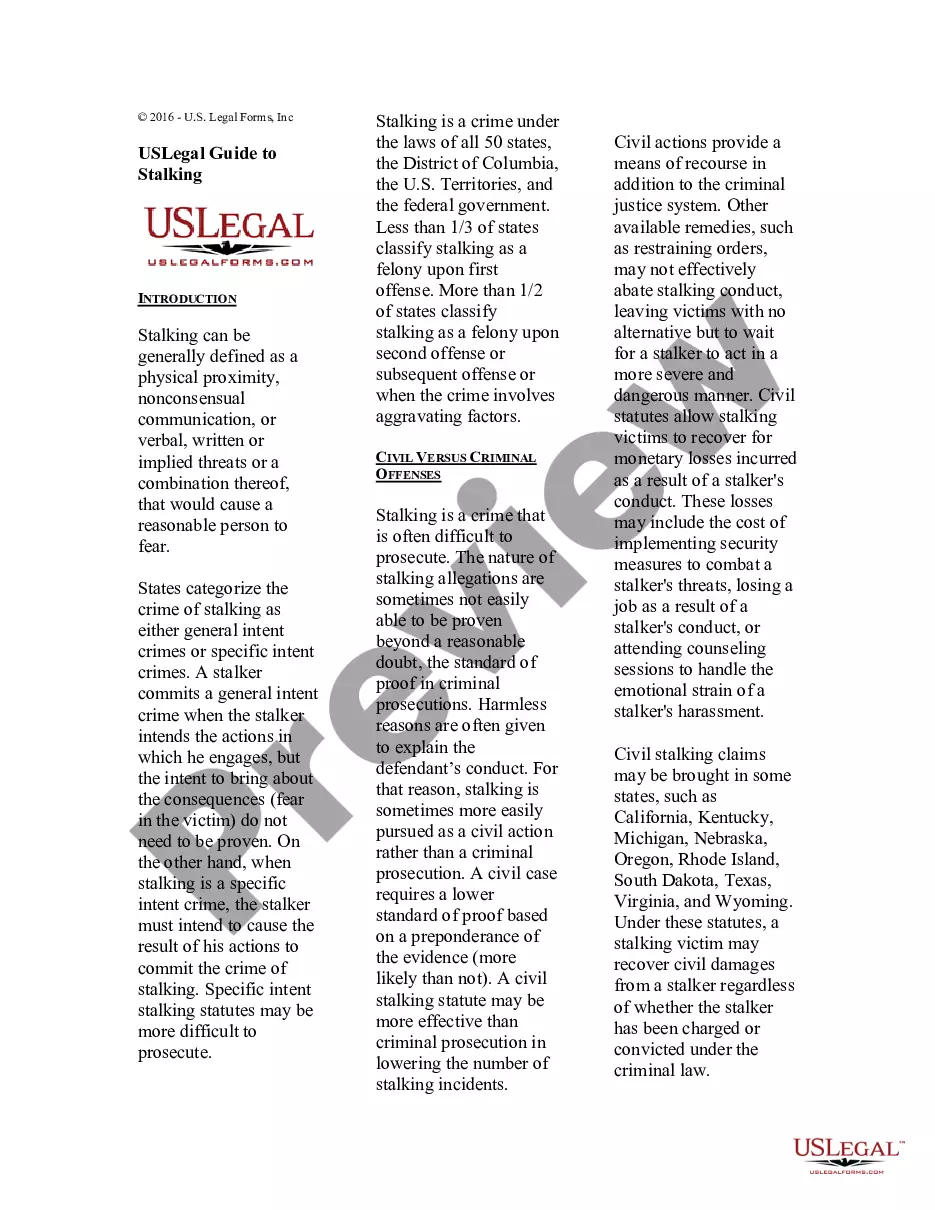
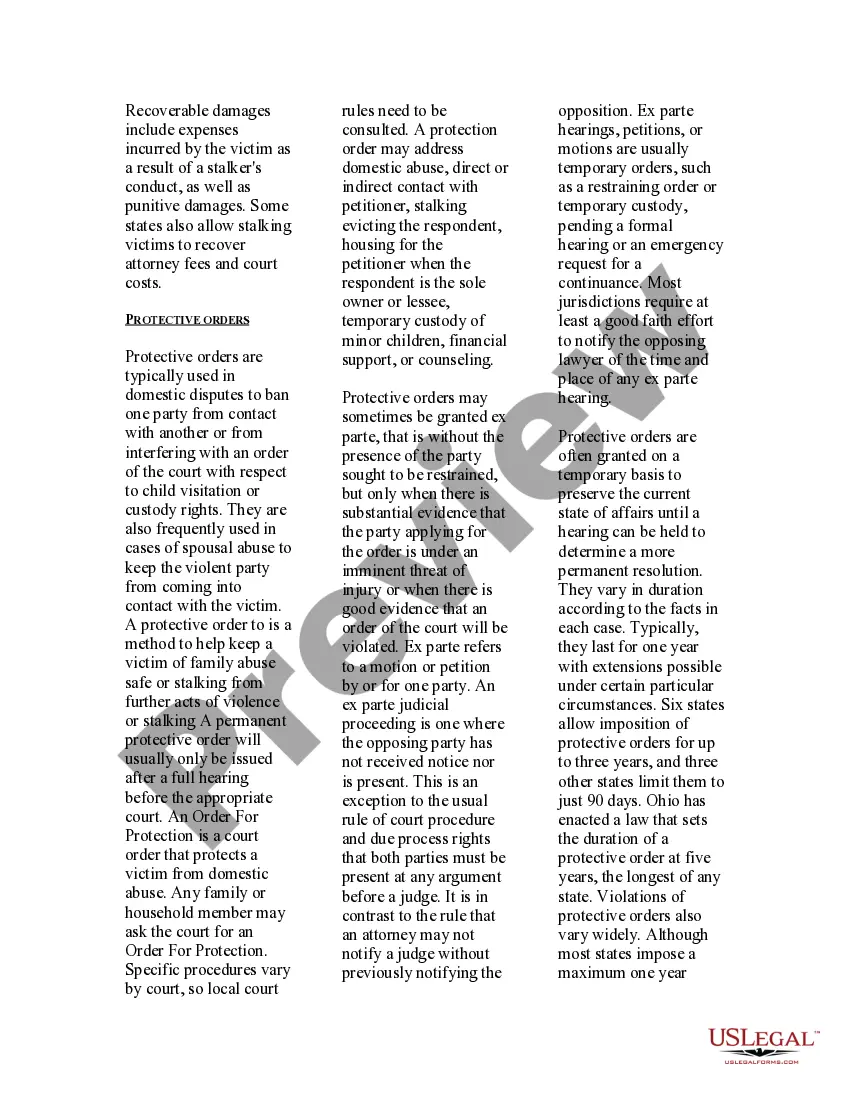
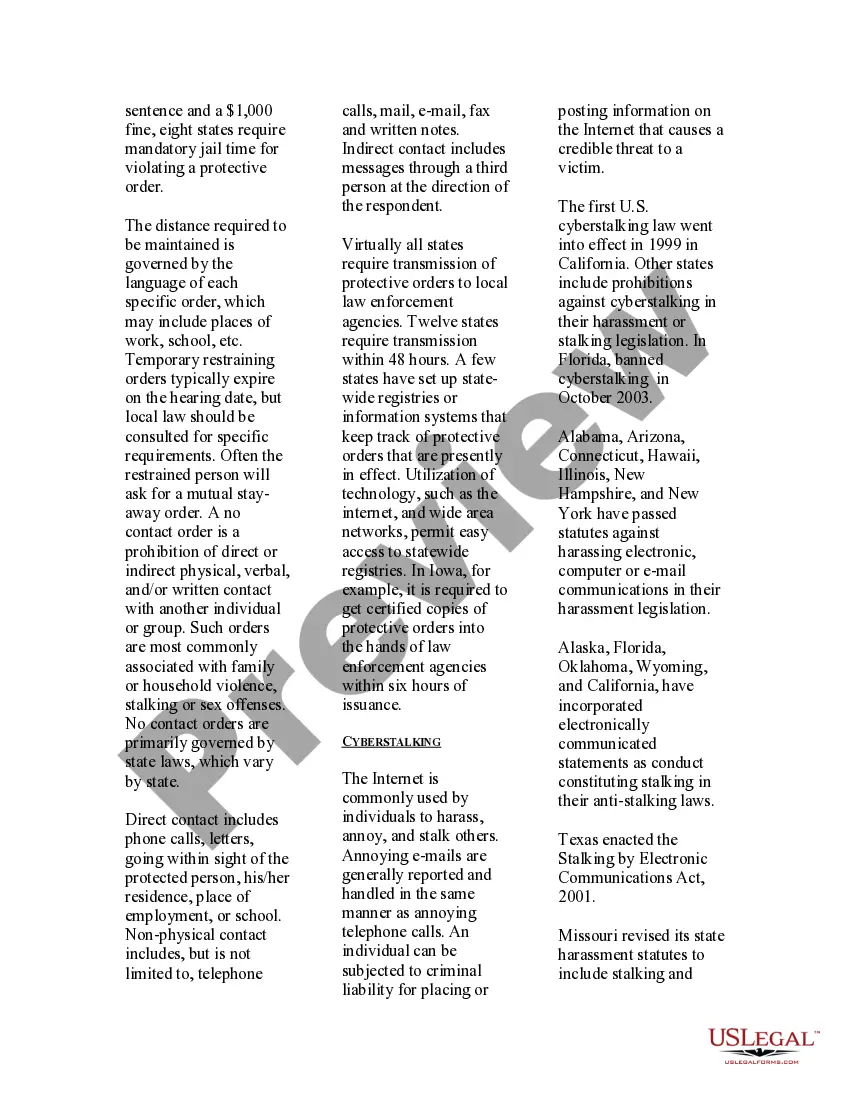
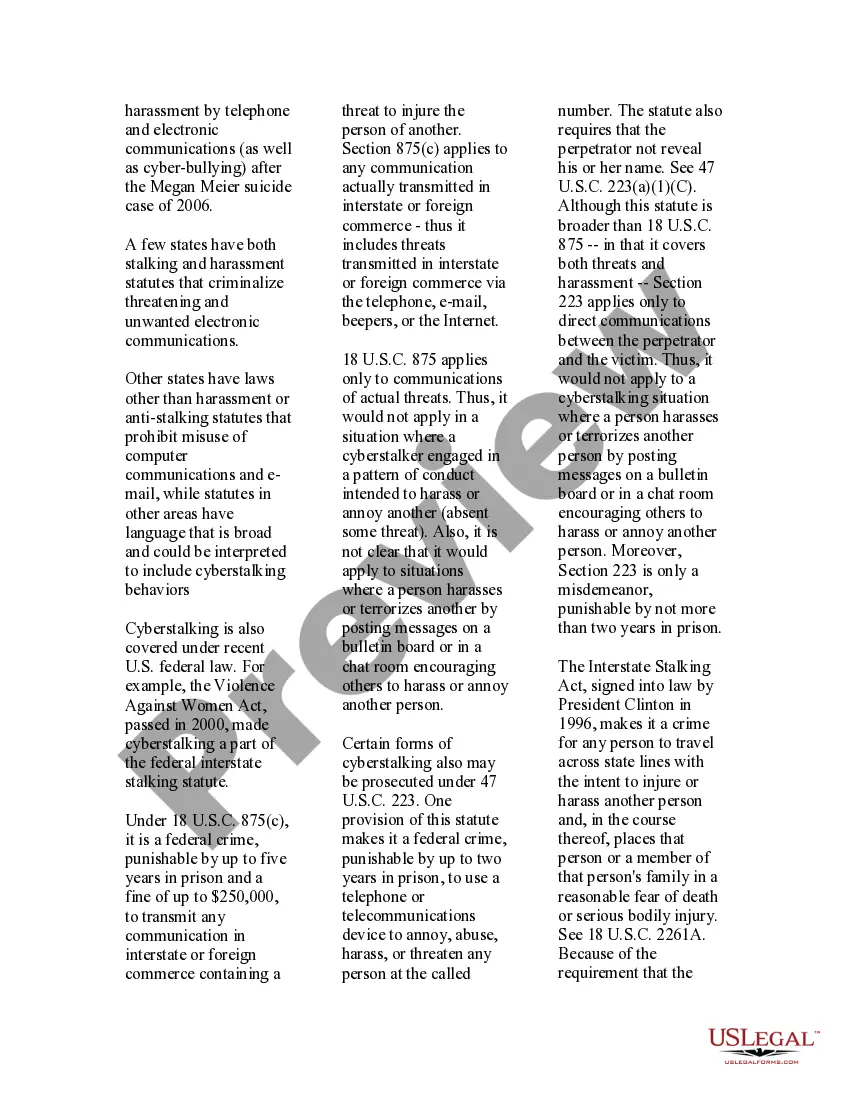
How to fill out USLegal Guide To Stalking?
Working with legal papers and operations might be a time-consuming addition to your day. State Statute Law Without Violence and forms like it typically need you to look for them and navigate how to complete them properly. Consequently, whether you are taking care of economic, legal, or individual matters, using a comprehensive and convenient web library of forms at your fingertips will greatly assist.
US Legal Forms is the best web platform of legal templates, offering more than 85,000 state-specific forms and numerous tools to help you complete your papers quickly. Explore the library of relevant papers available with just one click.
US Legal Forms provides you with state- and county-specific forms available at any moment for downloading. Protect your document administration processes with a top-notch services that allows you to make any form within minutes without any additional or hidden charges. Just log in to the account, find State Statute Law Without Violence and acquire it right away within the My Forms tab. You can also gain access to formerly saved forms.
Would it be the first time utilizing US Legal Forms? Register and set up up your account in a few minutes and you will gain access to the form library and State Statute Law Without Violence. Then, stick to the steps listed below to complete your form:
- Make sure you have the right form using the Preview feature and reading the form description.
- Select Buy Now as soon as all set, and choose the subscription plan that fits your needs.
- Select Download then complete, sign, and print out the form.
US Legal Forms has 25 years of expertise helping users manage their legal papers. Discover the form you want right now and streamline any operation without breaking a sweat.
Form popularity
FAQ
Color of law refers to the appearance of legal authority or an apparently legal right that may not exist. The term is often used to describe the abuse of power under the guise of state authority, and is therefore illegal.
A statute is a law enacted by a legislature. Statutes are also called acts, such as the Civil Rights Act of 1964 or the Sarbanes-Oxley Act.
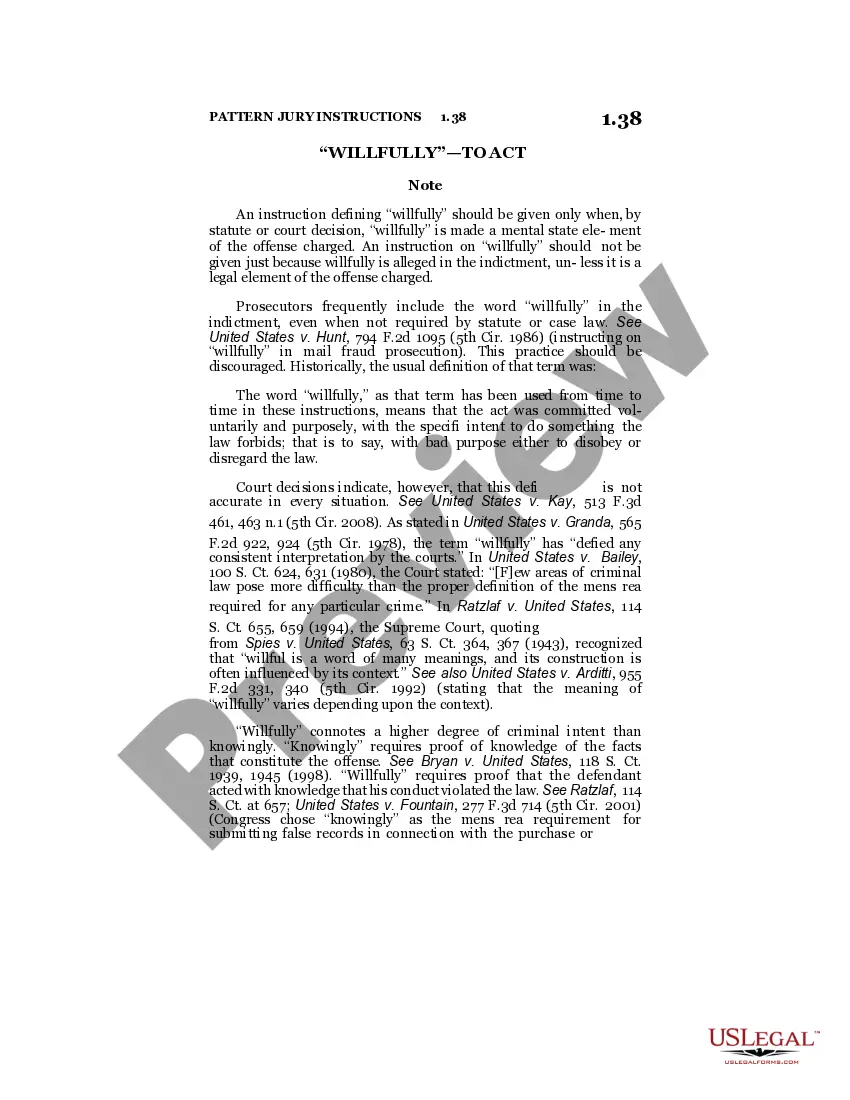
Deprivation of Rights Under Color of Law. This provision makes it a crime for someone acting under color of law to willfully deprive a person of a right or privilege protected by the Constitution or laws of the United States.
Statutes, also known as acts, are laws passed by a legislature. Federal statutes are the laws passed by Congress, usually with the approval of the President. Federal statutes are published in three formats: Initial publication as a slip law; Arranged by law number in the United States Statutes at Large1; and.
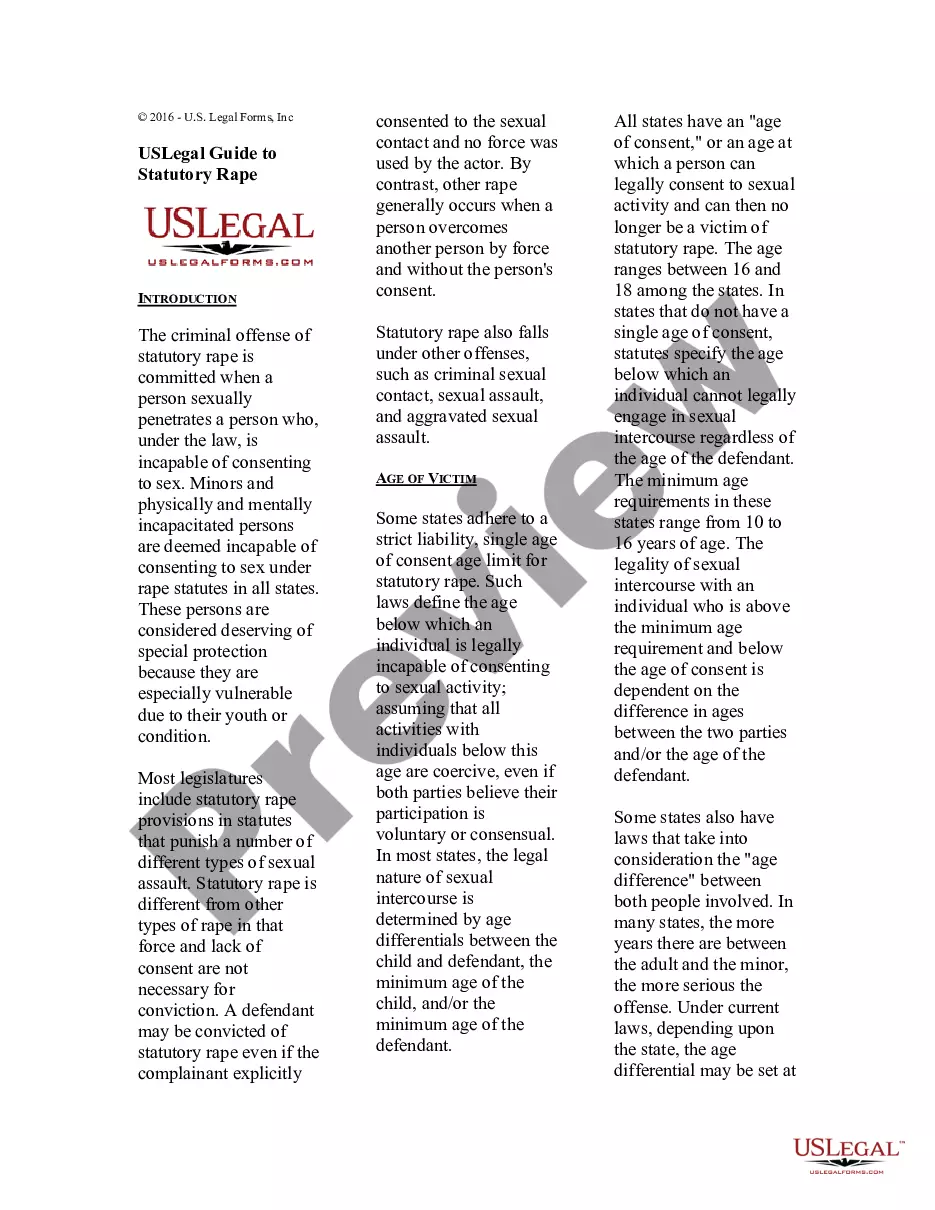
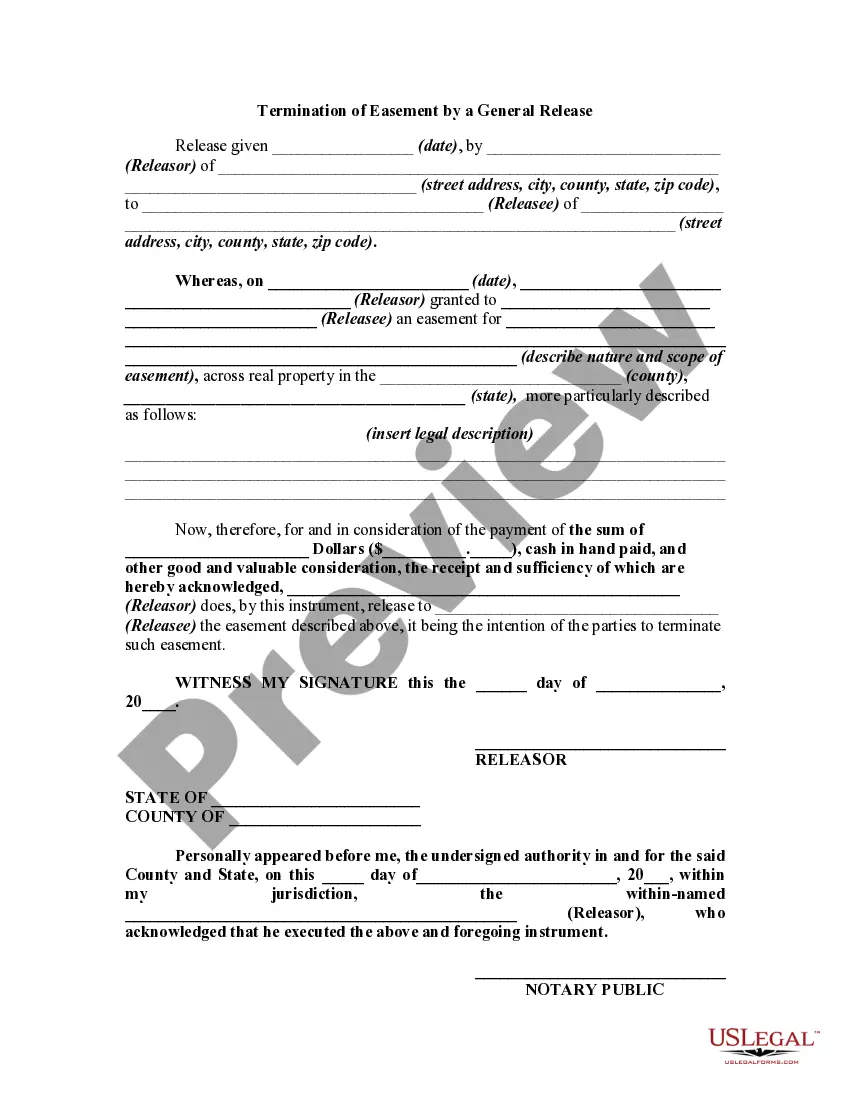
Section 784.06 defines sexual violence as one event of sexual battery, lewd and lascivious acts committed upon a person under sixteen or in the presence of a person sixteen-years-of-age or younger, enticing or luring a child, sexual performances by a child, or any other felony committed by force wherein a sexual act ...