Employ Accommodation Disability With Adhd
Description
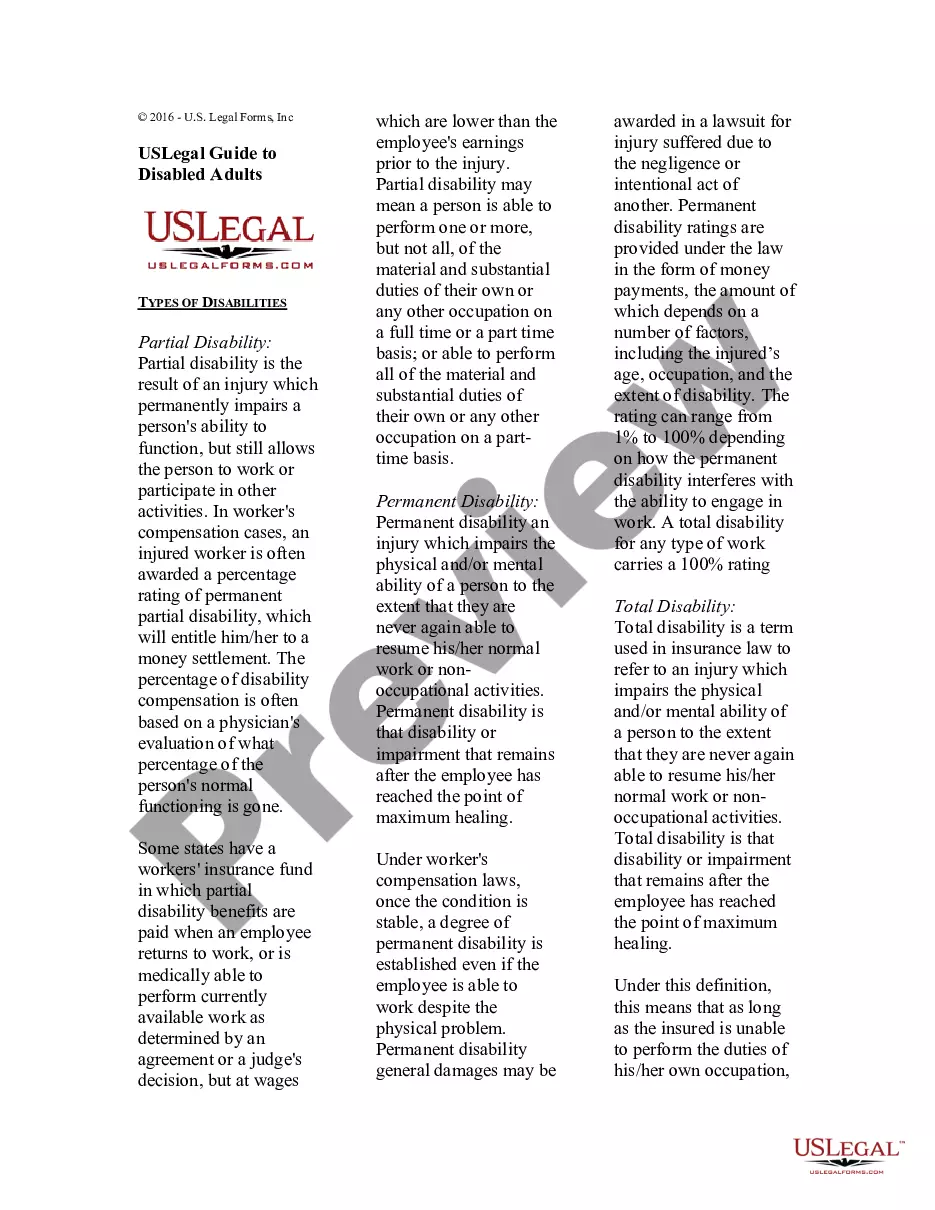
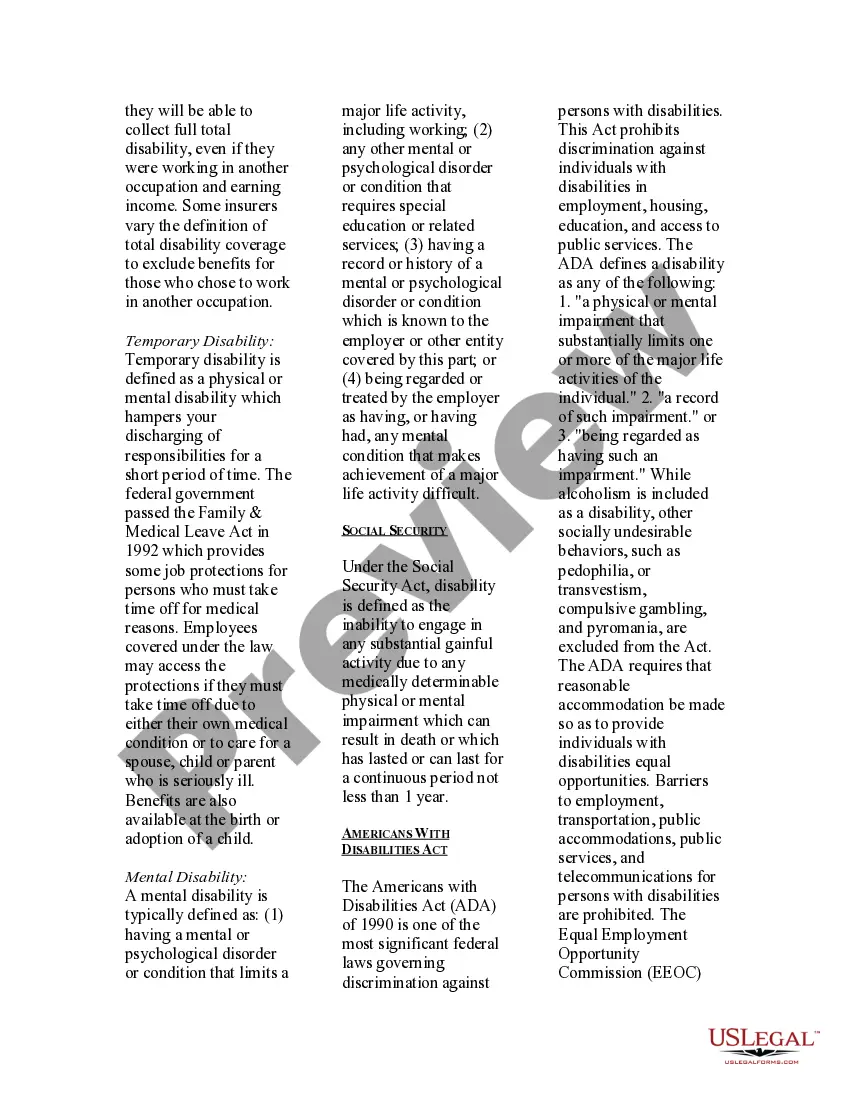
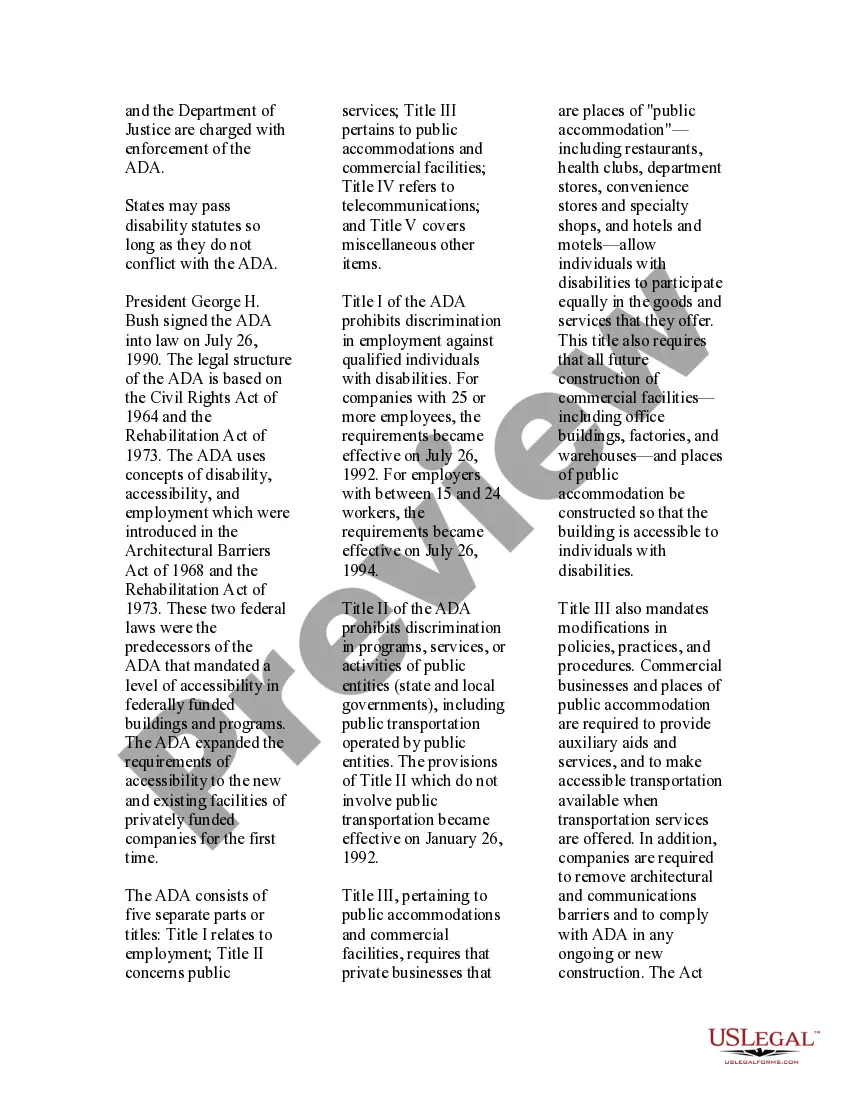
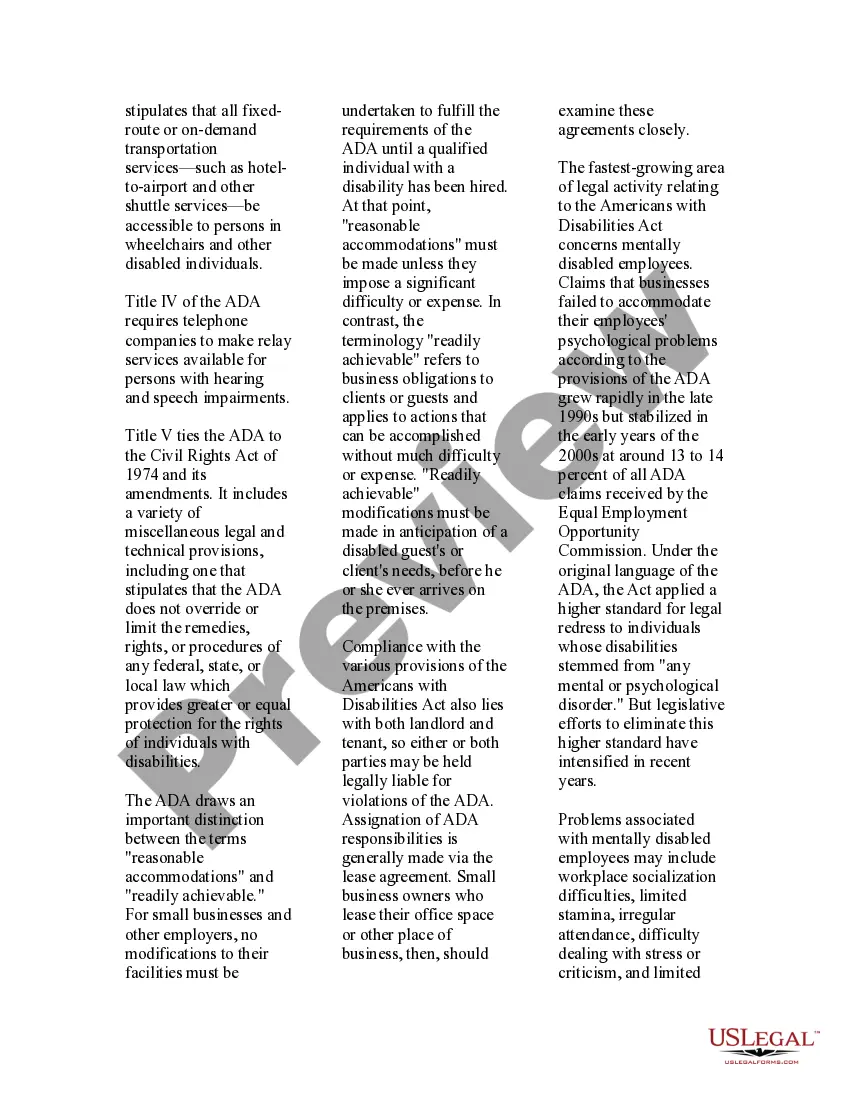


Get your form ready online
Our built-in tools help you complete, sign, share, and store your documents in one place.
Make edits, fill in missing information, and update formatting in US Legal Forms—just like you would in MS Word.
Download a copy, print it, send it by email, or mail it via USPS—whatever works best for your next step.
Sign and collect signatures with our SignNow integration. Send to multiple recipients, set reminders, and more. Go Premium to unlock E-Sign.
If this form requires notarization, complete it online through a secure video call—no need to meet a notary in person or wait for an appointment.
We protect your documents and personal data by following strict security and privacy standards.

Make edits, fill in missing information, and update formatting in US Legal Forms—just like you would in MS Word.

Download a copy, print it, send it by email, or mail it via USPS—whatever works best for your next step.

Sign and collect signatures with our SignNow integration. Send to multiple recipients, set reminders, and more. Go Premium to unlock E-Sign.

If this form requires notarization, complete it online through a secure video call—no need to meet a notary in person or wait for an appointment.

We protect your documents and personal data by following strict security and privacy standards.
Looking for another form?


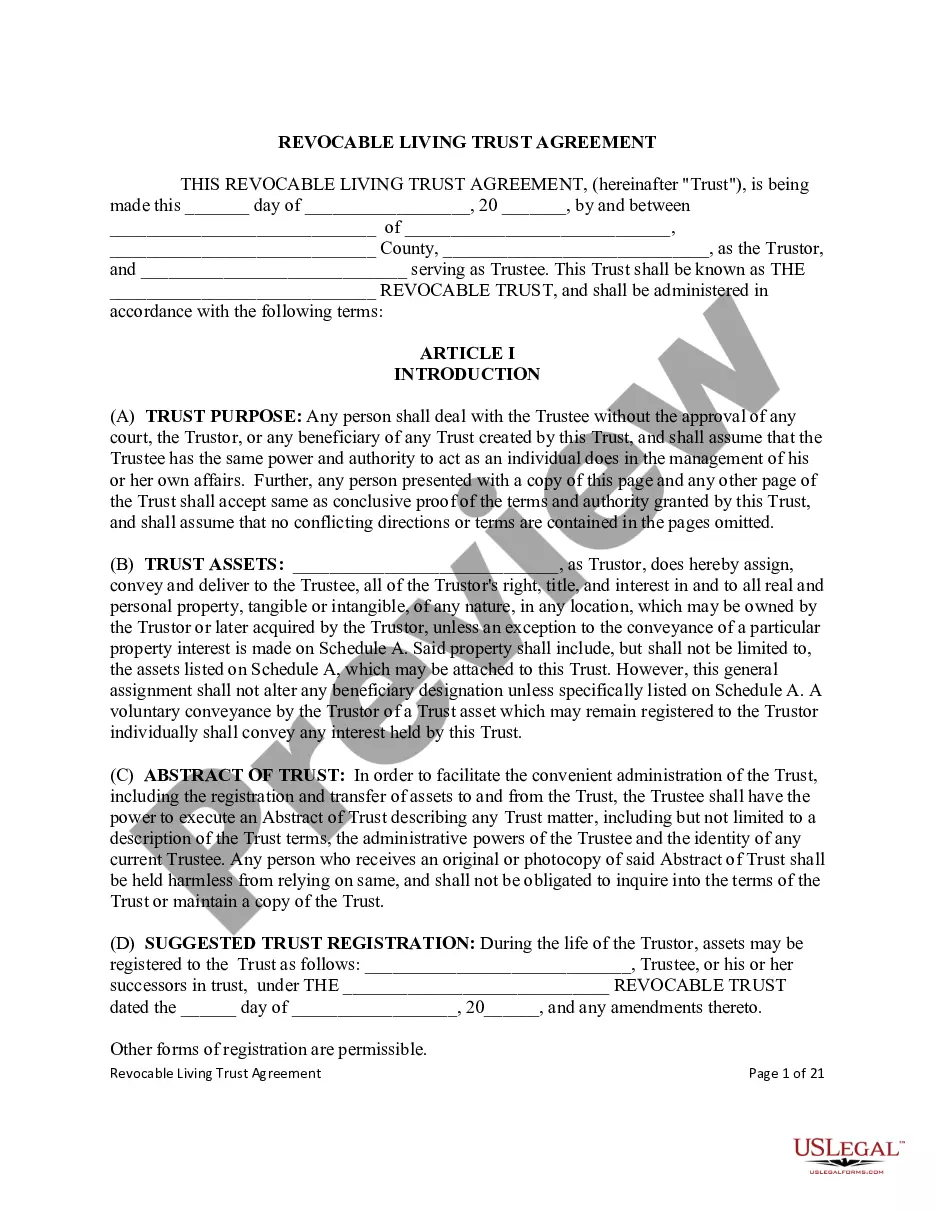
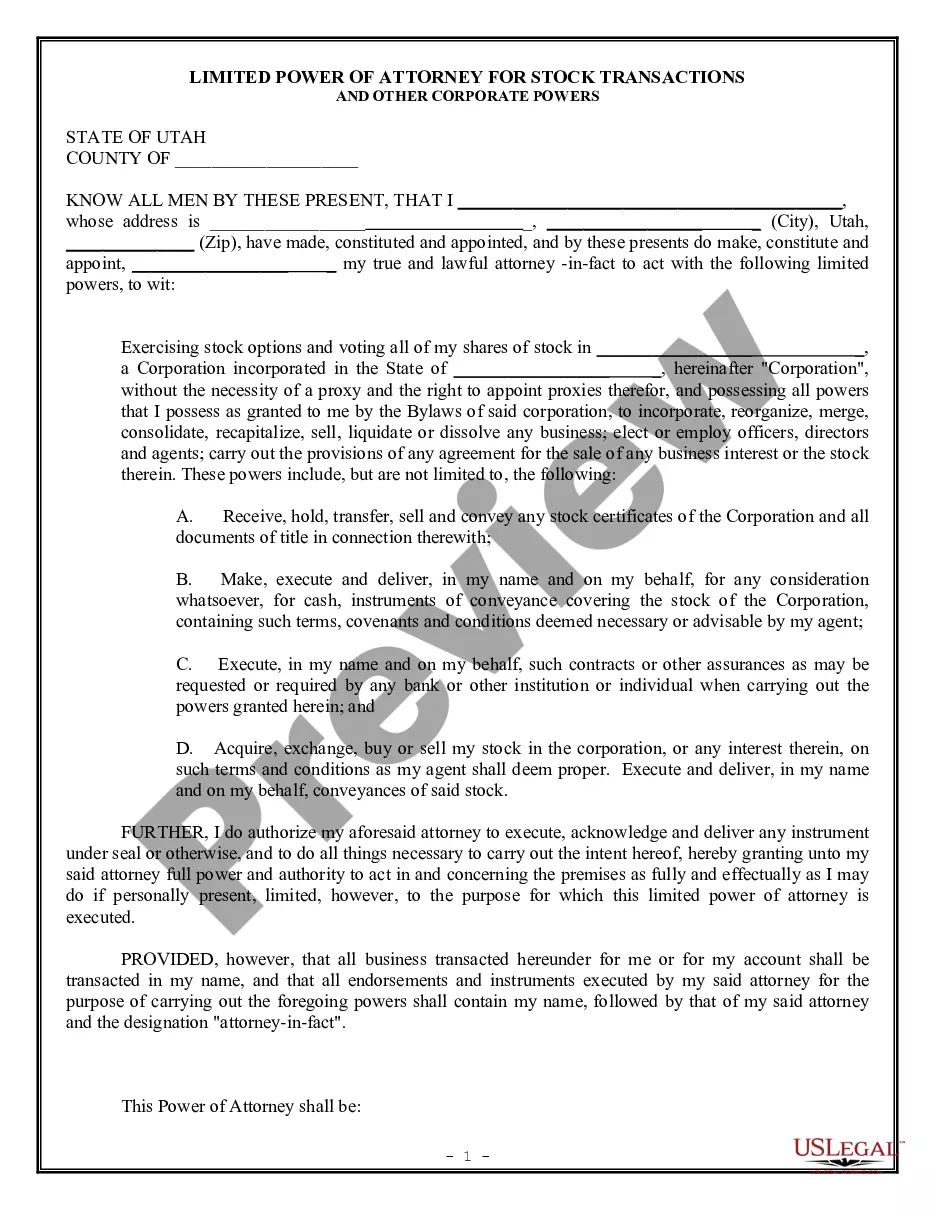

How to fill out USLegal Guide To Disabled Adults?
- Log in to your US Legal Forms account if you are a returning user. Ensure your subscription is active to access your documents.
- If you are new to the service, begin by checking the Preview mode and form descriptions to choose the correct document suited for your needs.
- Utilize the Search tab for any additional forms you might need, ensuring they meet your specific jurisdiction requirements.
- Once you've located your desired document, click the Buy Now button and select your preferred subscription plan, registering for an account if necessary.
- Proceed with your purchase by entering your credit card details or using your PayPal account for a secure transaction.
- Finally, download the form to your device and access it anytime from the My Forms menu within your profile.
In conclusion, US Legal Forms empowers users by offering a comprehensive resource library that streamlines the legal document process. With expert assistance and a robust selection of more than 85,000 legal forms, you can be assured of accurate, legally sound documentation.
Get started today and experience the ease of employing accommodation for disability with ADHD through US Legal Forms!
Form popularity
FAQ
Having ADHD should not put your job at risk if you are receiving appropriate accommodations. The law protects employees from discrimination based on disabilities, including ADHD. It's crucial to communicate openly with your employer about your needs and utilize resources, like those available on uslegalforms, to understand your rights better.
Managing an employee with ADHD involves understanding their unique challenges and providing support to leverage their strengths. For instance, maintain open communication, offer regular check-ins, and provide constructive feedback. By doing so, you create an inclusive environment where employees feel valued, ultimately leading to better performance.
Some of the best accommodations for ADHD include flexible deadlines, clear communication of expectations, and job coaching. Providing a mentor or buddy system can also help employees stay on track. Each employee's needs may differ, so it's essential to evaluate what works best for the individual in relation to the job requirements.
Accommodations for employees with ADHD may vary, but common options include structured schedules, written instructions, and regular feedback sessions. Employers should consider assistive technologies that help with organization and task management. It is beneficial to remember that the goal is to empower the employee to succeed while maintaining productivity in the workplace.
To accommodate an employee with ADHD, employers should consider various strategies tailored to individual needs. These may include offering flexible work hours, reducing distractions in the workspace, or providing designated quiet areas for focused tasks. Additionally, utilizing tools like uslegalforms can guide you through creating effective accommodations that comply with the law.
Yes, ADHD qualifies as a disability under the Americans with Disabilities Act when it substantially limits one or more major life activities. Therefore, employees can request reasonable accommodations to perform their job effectively. It is important for employers to engage in an interactive dialogue to determine the best solutions that align with the needs of both the employee and the workplace.
Yes, ADHD can be considered a protected disability under the Americans with Disabilities Act (ADA). This means that individuals with ADHD have the right to request reasonable accommodations in the workplace. Employers are required to engage in an interactive process to determine what adjustments can be made to support employees with this condition. If you need assistance in navigating your rights and options, uslegalforms can help you understand how to employ accommodation disability with ADHD effectively.
To request accommodations for ADHD at work, start by discussing your needs with your supervisor or HR department. Clearly outline how your condition affects your job performance and specify the adjustments that would help you. USLegalForms can assist you in drafting a structured accommodation request that complies with employment laws and clearly communicates your needs.
Yes, individuals with ADHD may qualify for reasonable accommodations in the workplace. Employers should provide necessary adjustments to help you perform effectively, which is essential for promoting inclusivity. By employing accommodation disability with ADHD, you can thrive professionally while managing your unique challenges.
Yes, ADHD is recognized as a disability under the Americans with Disabilities Act (ADA) when it significantly impacts your ability to perform job functions. To employ accommodation disability with ADHD, employers must understand how the condition affects your work. This recognition ensures you have the same opportunities as others in the workplace, enabling a more inclusive environment.