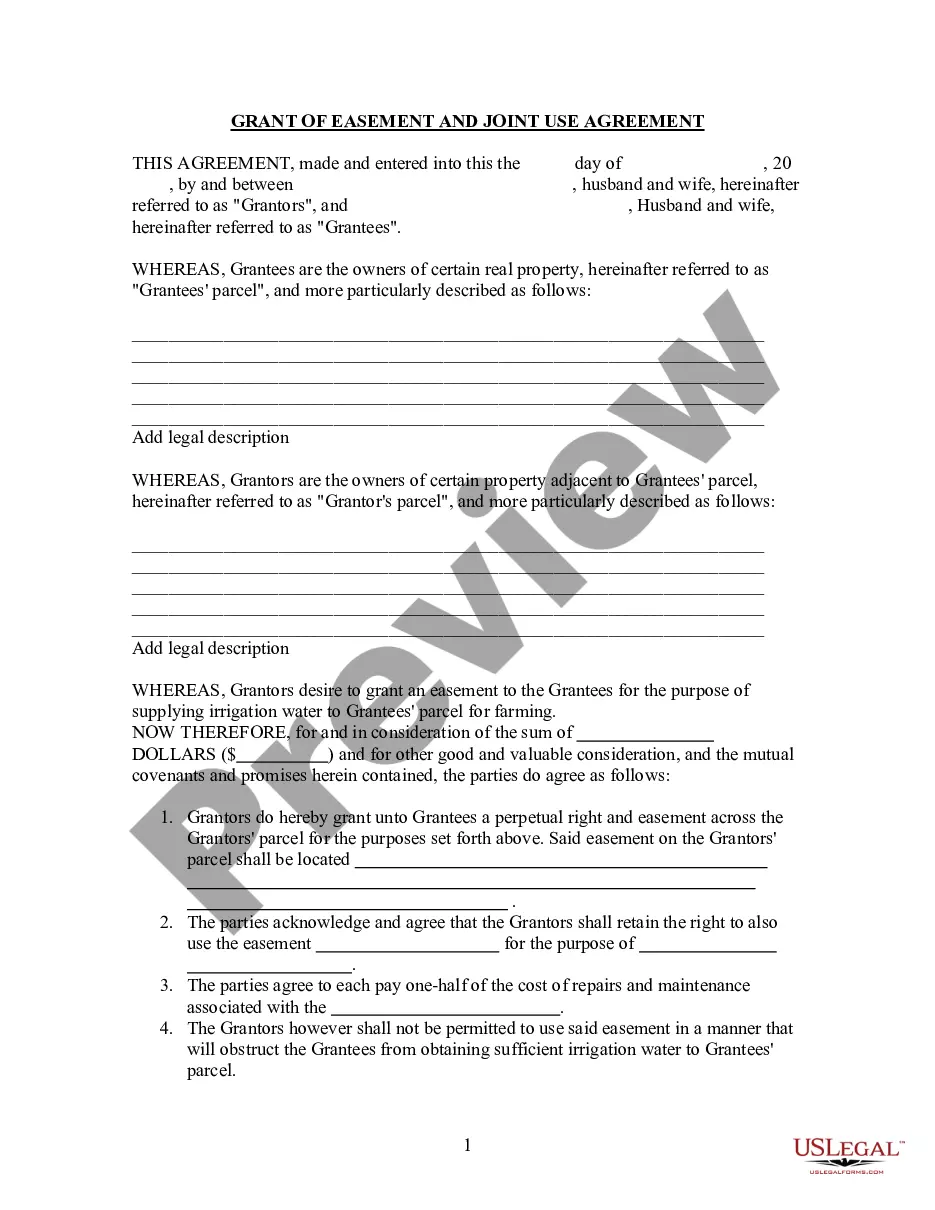
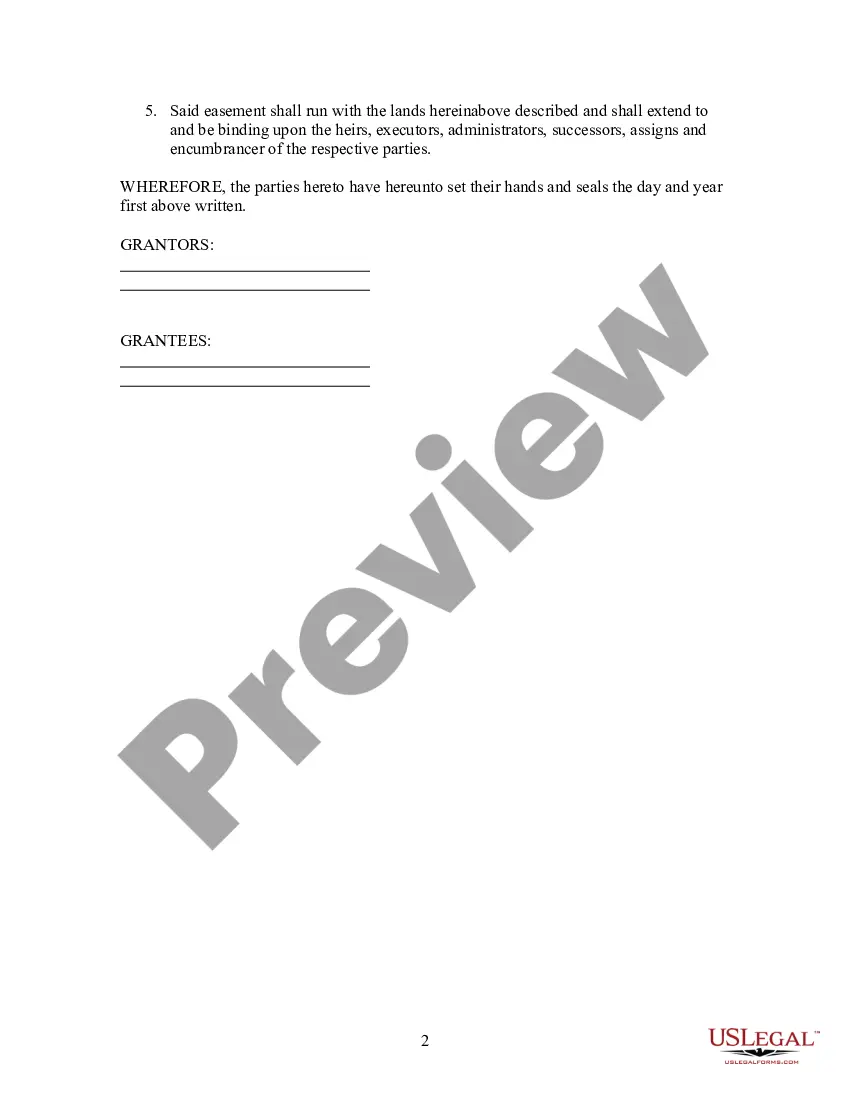
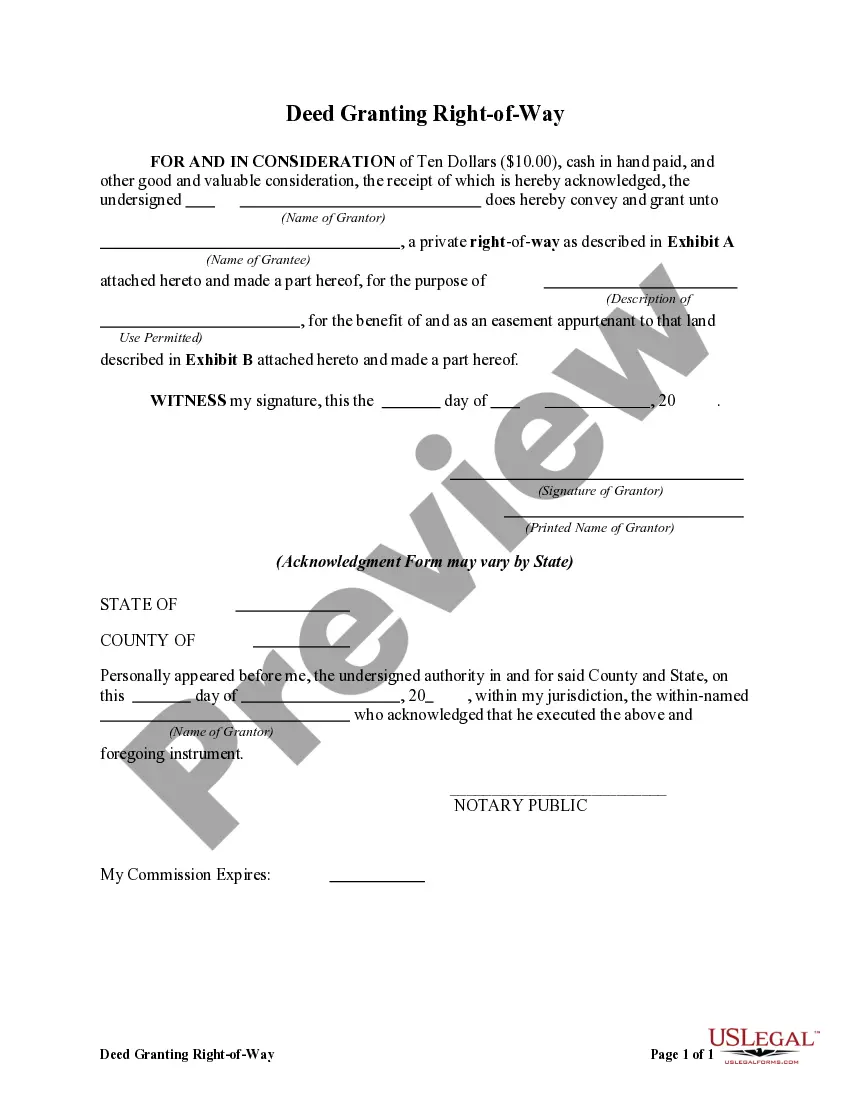
Easement With Right Of Way
Description
Get your form ready online
Our built-in tools help you complete, sign, share, and store your documents in one place.
Make edits, fill in missing information, and update formatting in US Legal Forms—just like you would in MS Word.
Download a copy, print it, send it by email, or mail it via USPS—whatever works best for your next step.
Sign and collect signatures with our SignNow integration. Send to multiple recipients, set reminders, and more. Go Premium to unlock E-Sign.
If this form requires notarization, complete it online through a secure video call—no need to meet a notary in person or wait for an appointment.
We protect your documents and personal data by following strict security and privacy standards.

Make edits, fill in missing information, and update formatting in US Legal Forms—just like you would in MS Word.

Download a copy, print it, send it by email, or mail it via USPS—whatever works best for your next step.

Sign and collect signatures with our SignNow integration. Send to multiple recipients, set reminders, and more. Go Premium to unlock E-Sign.

If this form requires notarization, complete it online through a secure video call—no need to meet a notary in person or wait for an appointment.

We protect your documents and personal data by following strict security and privacy standards.
Looking for another form?


How to fill out Grant Of Easement And Joint Use Agreement?
Handling legal documents can be exasperating, even for seasoned professionals.
When you are interested in an Easement With Right Of Way and lack the time to invest in finding the right and updated version, the procedures can be stressful.
US Legal Forms meets all your needs, ranging from personal to business documents, in one place.
Leverage advanced tools to complete and manage your Easement With Right Of Way.
Here are the steps to follow after obtaining the needed form: Verify it is the proper form by previewing it and reviewing its details. Confirm that the sample is recognized in your state or county. Select Buy Now once you are prepared. Choose a subscription plan. Determine the format you need, and Download, fill out, eSign, print, and send your document. Benefit from the US Legal Forms online library, backed by 25 years of experience and reliability. Turn your routine document management into a simple and user-friendly process today.
- Access a repository of articles, guides, and resources pertinent to your situation and needs.
- Save time and effort searching for the documents you require, and use US Legal Forms’ advanced search and Review feature to locate Easement With Right Of Way and obtain it.
- If you have a subscription, Log In to your US Legal Forms account, find the form, and download it.
- Check the My documents tab to view the documents you have saved and manage your files as desired.
- If you’re a first-time user of US Legal Forms, create an account to get unlimited access to all the features of the library.
- Utilize a robust web form library to navigate these challenges effectively.
- US Legal Forms is a leading provider of online legal forms, offering over 85,000 state-specific legal documents available at your convenience.
- Access state- or county-specific legal and business forms.
Form popularity
FAQ
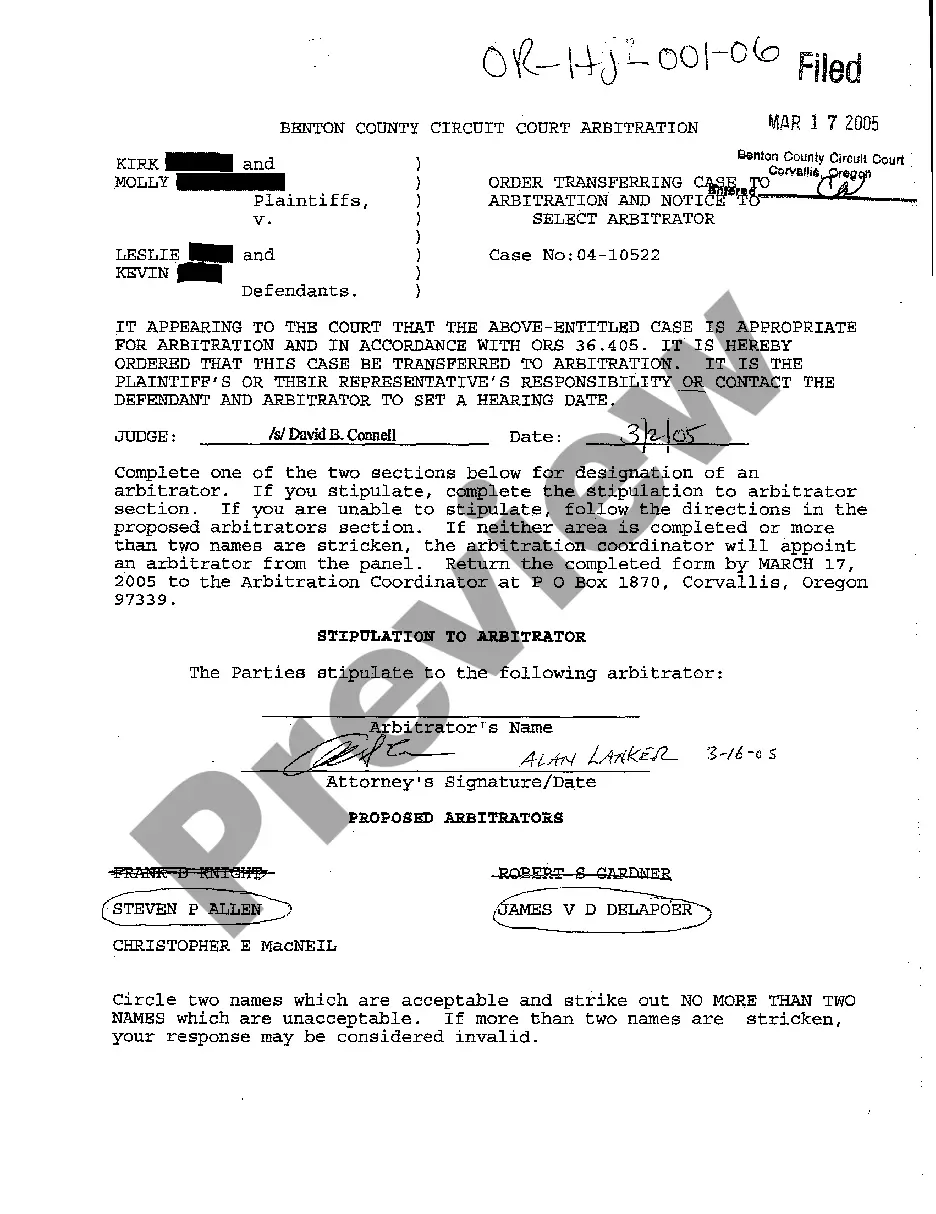
Show Cause Order: A Show Cause Order is an order of the court, directing a party in a case to appear for a hearing on a certain date to explain why the Judge should not issue a specific order or make a certain finding.
D ? Public Records ? D Death Certificates. Death Records ? Baltimore City Death Index. Deeds ? Land Records. Demographics ? Maryland State Data Center (SDC) DOC ? DPSCS Public Information Act. Divorce Records / Divorce Decrees ? Divorce Verification (Division of Vital Records) Driver License Lookup ? Real Id Information.
Criminal Background Check - contact the Maryland Department of Public Safety and Correctional Services at 1-888-795-0011 or online at dpscs.maryland.gov.
With a few exceptions, anyone may view the records in person at the clerk's office. Provide the clerk with the case number for the court record you wish to view. If you do not have the case number, the clerk may be able to locate the file with the names of the persons involved.
Court documents are those materials filed in relation to a legal case before the courts. Examples of court documents would be dockets, pleadings, motions, memoranda, briefs, orders, and expert testimony. Not every case will include all of these examples.
Court records are available through PACER or at public terminals located in the Clerk's Office. To obtain copies, including certified and exemplified copies, of documents, please send a copy work request to the Clerk's Office. Someone from the Clerk's Office will then contact you with the copy cost.
A criminal background check should be done using the Criminal Justice Information System (CJIS) of the Department of Public Safety and Correctional Services. In addition, the Maryland State Archives also contains many court records and criminal case records, depending on what each county has transferred to archives.
Public records in Maryland belong to the State. Public records sometimes end up in private hands for a variety of reasons, not all of which are sinister. Conscientious members of the public often preserve records from places where they have been illegally discarded or inadvertently misplaced.