Letter Debt Using With The Bank
Description
Get your form ready online
Our built-in tools help you complete, sign, share, and store your documents in one place.
Make edits, fill in missing information, and update formatting in US Legal Forms—just like you would in MS Word.
Download a copy, print it, send it by email, or mail it via USPS—whatever works best for your next step.
Sign and collect signatures with our SignNow integration. Send to multiple recipients, set reminders, and more. Go Premium to unlock E-Sign.
If this form requires notarization, complete it online through a secure video call—no need to meet a notary in person or wait for an appointment.
We protect your documents and personal data by following strict security and privacy standards.

Make edits, fill in missing information, and update formatting in US Legal Forms—just like you would in MS Word.

Download a copy, print it, send it by email, or mail it via USPS—whatever works best for your next step.

Sign and collect signatures with our SignNow integration. Send to multiple recipients, set reminders, and more. Go Premium to unlock E-Sign.

If this form requires notarization, complete it online through a secure video call—no need to meet a notary in person or wait for an appointment.

We protect your documents and personal data by following strict security and privacy standards.
Looking for another form?



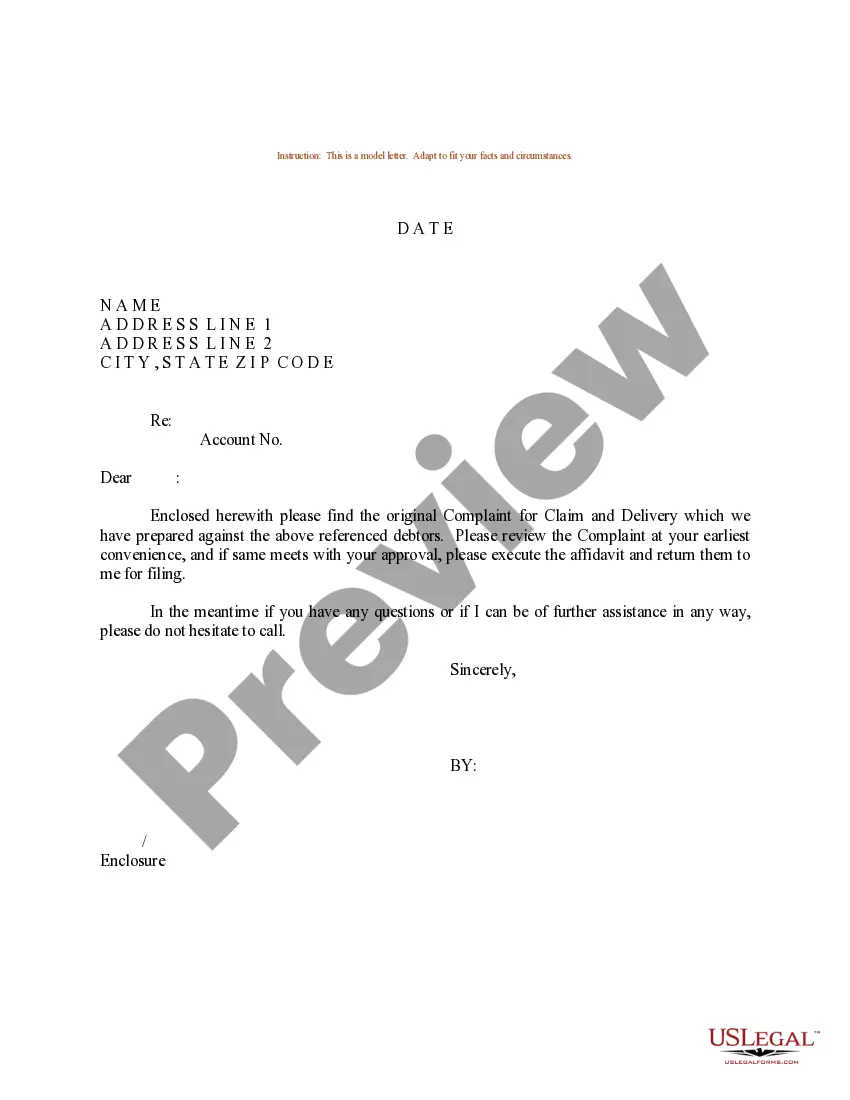
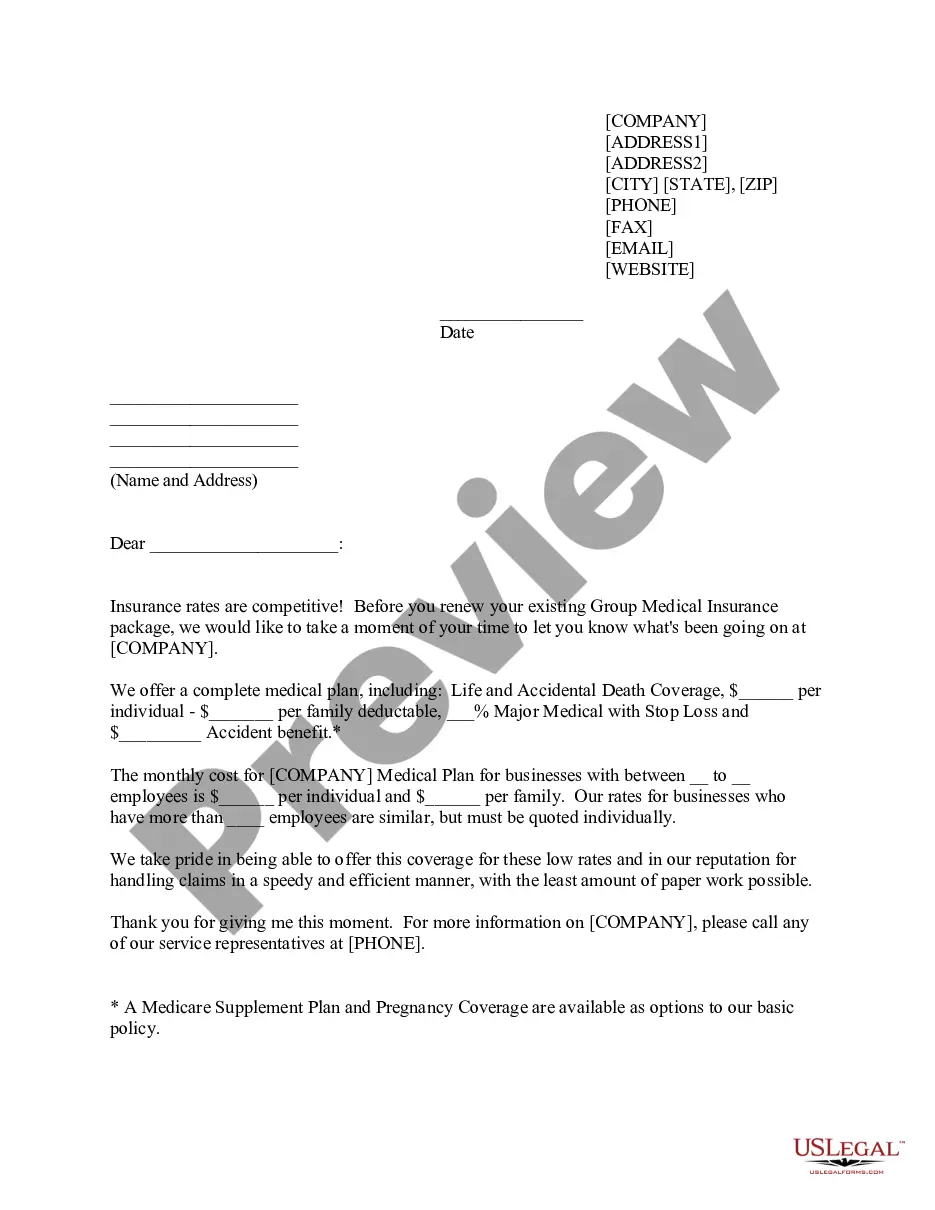


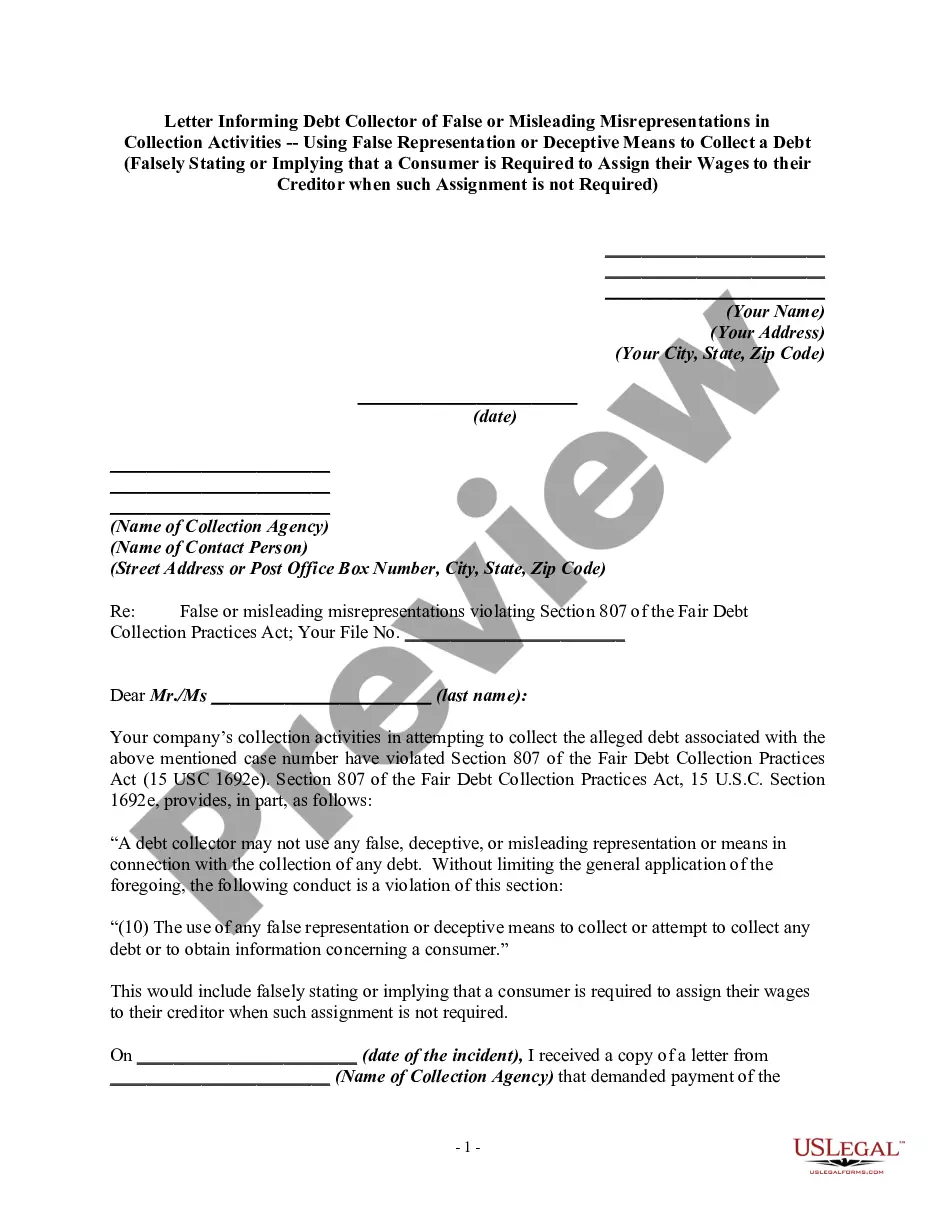
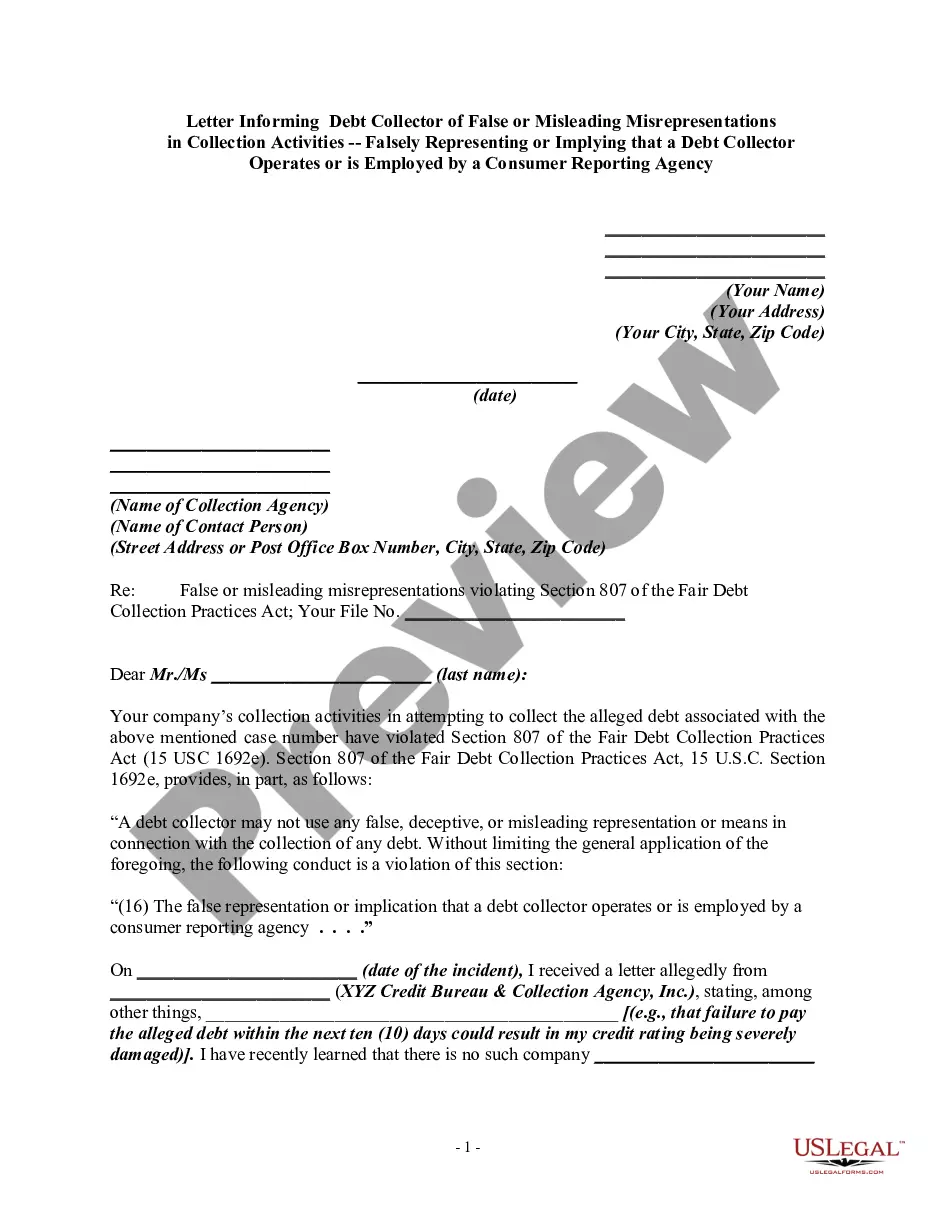
How to fill out Letter Informing Debt Collector Of False Or Misleading Misrepresentations In Collection Activities - Using False Representation Or Deceptive Means To Collect A Debt?
- Log into your existing US Legal Forms account. If you are a new user, begin by selecting the required template from the library.
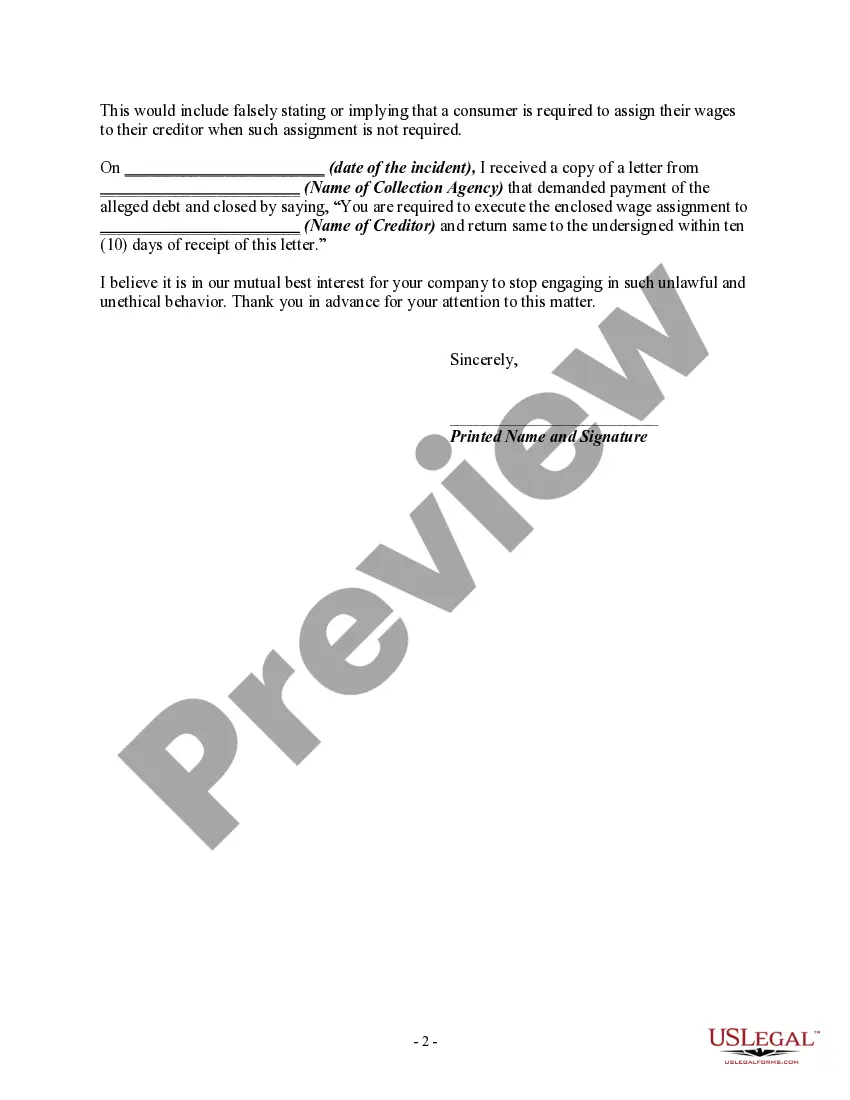
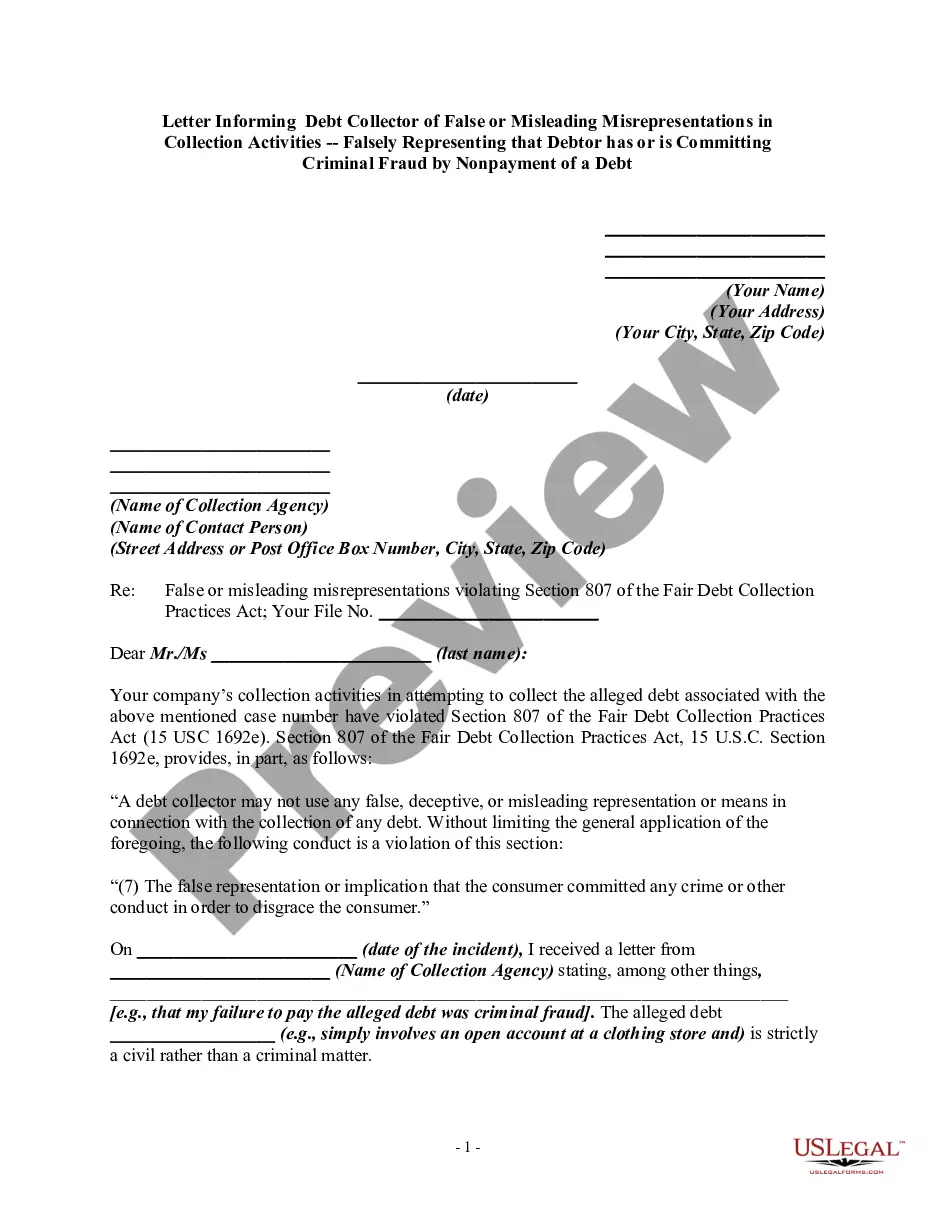
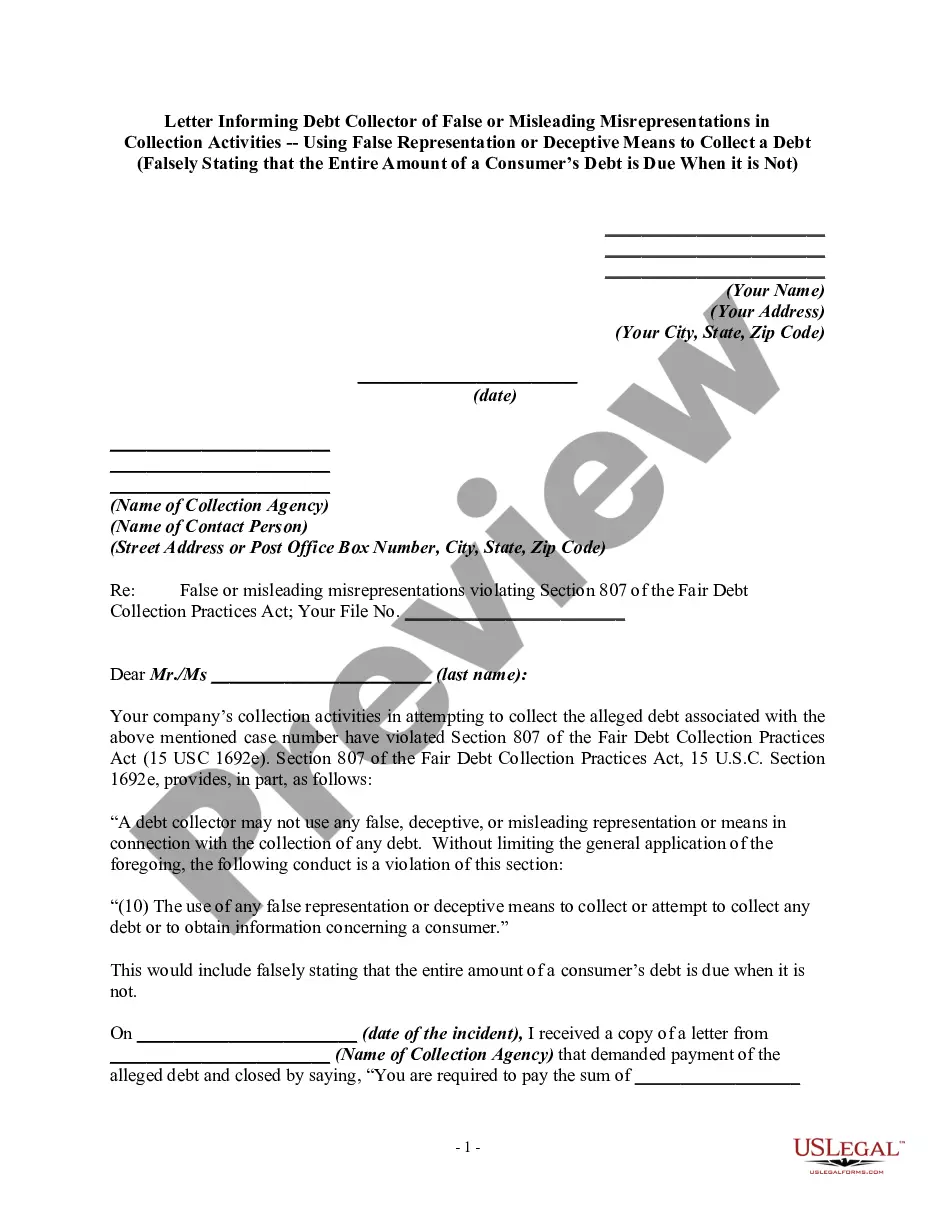
- Review the selected template in Preview mode to confirm that it meets your local jurisdiction requirements. If necessary, search for an alternate template.
- Once satisfied, click on the 'Buy Now' button to select your subscription plan. Make sure to register an account for continued access.
- Complete your purchase by entering your payment information, either through credit card or PayPal, to activate your subscription.
- Download the completed letter form and save it on your device. Access it anytime through the 'My Forms' section in your profile for easy future reference.
By following these steps, you can efficiently prepare a letter to address your debts with your bank. With US Legal Forms, you gain access to unmatched resources and expert assistance, ensuring that your documents are both accurate and compliant.
Take control of your financial future today! Visit US Legal Forms and start drafting your debt letter with ease.
Form popularity
FAQ
A debt typically becomes uncollectible after a certain period, generally ranging from three to six years, depending on your state laws. After this time, creditors can no longer legally take action to collect the debt. However, the exact timeframe can vary, so it's essential to understand the statutes of limitations involved, particularly when dealing with a letter debt using with the bank. Consulting legal forms, like those from US Legal Forms, can help you navigate this intricacy.
The 777 rule for debt collectors refers to a structured approach that outlines how collectors must behave when pursuing debts. It specifies that if you challenge the legitimacy of the debt, they must provide validation before continuing their collection efforts. Consequently, knowing this rule helps you respond appropriately when they contact you about a letter debt using with the bank. Stay informed, as it can significantly impact your financial situation.
The 777 rule is a guideline that triggers specific actions for debt collectors. Under this rule, collectors must cease communication if the debt is disputed, and they failed to appropriately verify it. This is especially crucial when dealing with a letter debt using with the bank, as you have the right to request proof of the debt. Understanding this rule empowers you to protect yourself from potential harassment.
To craft a proof of debt letter effectively, start by including your contact details and the recipient's information. Clearly state the amount owed and provide a detailed description of the debt, including any associated interest and fees. Also, make sure to mention the original creditor and include any relevant dates. You can utilize our US Legal Forms platform for templates and guidance, making the process of writing a letter debt using with the bank straightforward.
To write a letter to request the write-off of debt, begin by outlining your financial situation clearly and respectfully. Indicate why you believe the debt should be canceled, such as financial hardships. Using a 'letter debt using with the bank,' you can formally ask the bank for consideration, preserving your chance for relief in this challenging time.
If you never respond to a debt collector, the situation can worsen over time, leading to adverse legal actions. The bank may initiate a lawsuit to secure the debt amount. Engaging with the collector through a 'letter debt using with the bank' helps you assert your rights and possibly negotiate a solution.
Failing to respond to a debt collector letter may result in further actions against you, including potential lawsuits. The bank could take steps to recover the owed amount without your input. Therefore, taking action by sending a 'letter debt using with the bank' engages you in the process and can provide you with options.
If a collector fails to respond to your debt validation letter, they may lose their right to pursue the debt. This silence can indicate that they cannot prove the validity of the debt, which is in your favor. Using a 'letter debt using with the bank' can reinforce your position and highlight your demand for clarification.
Ignoring a debt collection letter is generally not advisable. Instead, take the opportunity to review the letter carefully and determine if the debt is valid. Engaging with the collector by sending a 'letter debt using with the bank' can help clarify any discrepancies and protect your rights.
Ignoring debt collection letters can lead to serious consequences, such as escalation of the collections process. The bank may report your unpaid debts to credit bureaus, which can harm your credit score. It’s vital to respond to these letters to understand your rights and options, especially through a 'letter debt using with the bank' to validate the claims against you.