Received Debt Collection Letter For Someone Else
Description
Get your form ready online
Our built-in tools help you complete, sign, share, and store your documents in one place.
Make edits, fill in missing information, and update formatting in US Legal Forms—just like you would in MS Word.
Download a copy, print it, send it by email, or mail it via USPS—whatever works best for your next step.
Sign and collect signatures with our SignNow integration. Send to multiple recipients, set reminders, and more. Go Premium to unlock E-Sign.
If this form requires notarization, complete it online through a secure video call—no need to meet a notary in person or wait for an appointment.
We protect your documents and personal data by following strict security and privacy standards.

Make edits, fill in missing information, and update formatting in US Legal Forms—just like you would in MS Word.

Download a copy, print it, send it by email, or mail it via USPS—whatever works best for your next step.

Sign and collect signatures with our SignNow integration. Send to multiple recipients, set reminders, and more. Go Premium to unlock E-Sign.

If this form requires notarization, complete it online through a secure video call—no need to meet a notary in person or wait for an appointment.

We protect your documents and personal data by following strict security and privacy standards.
Looking for another form?
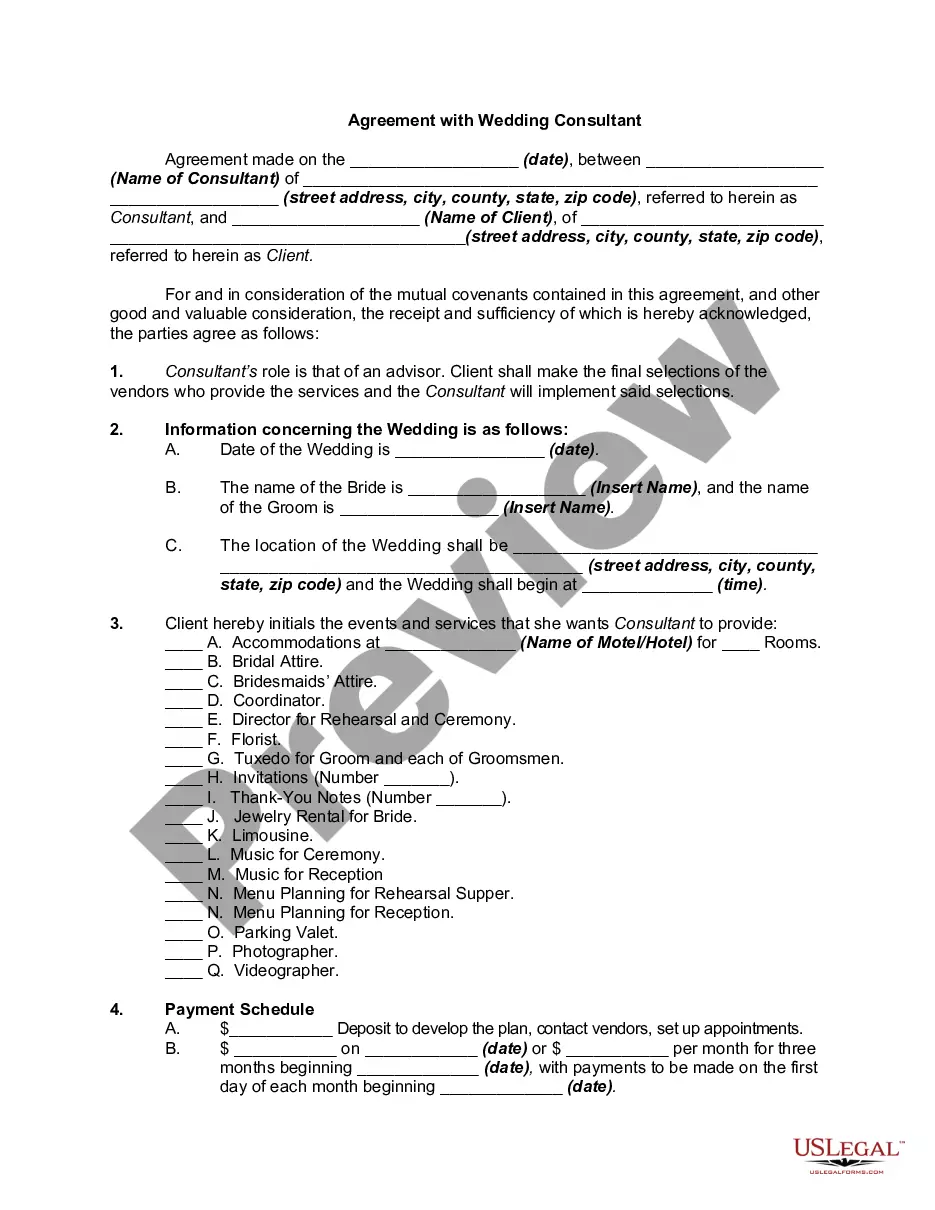
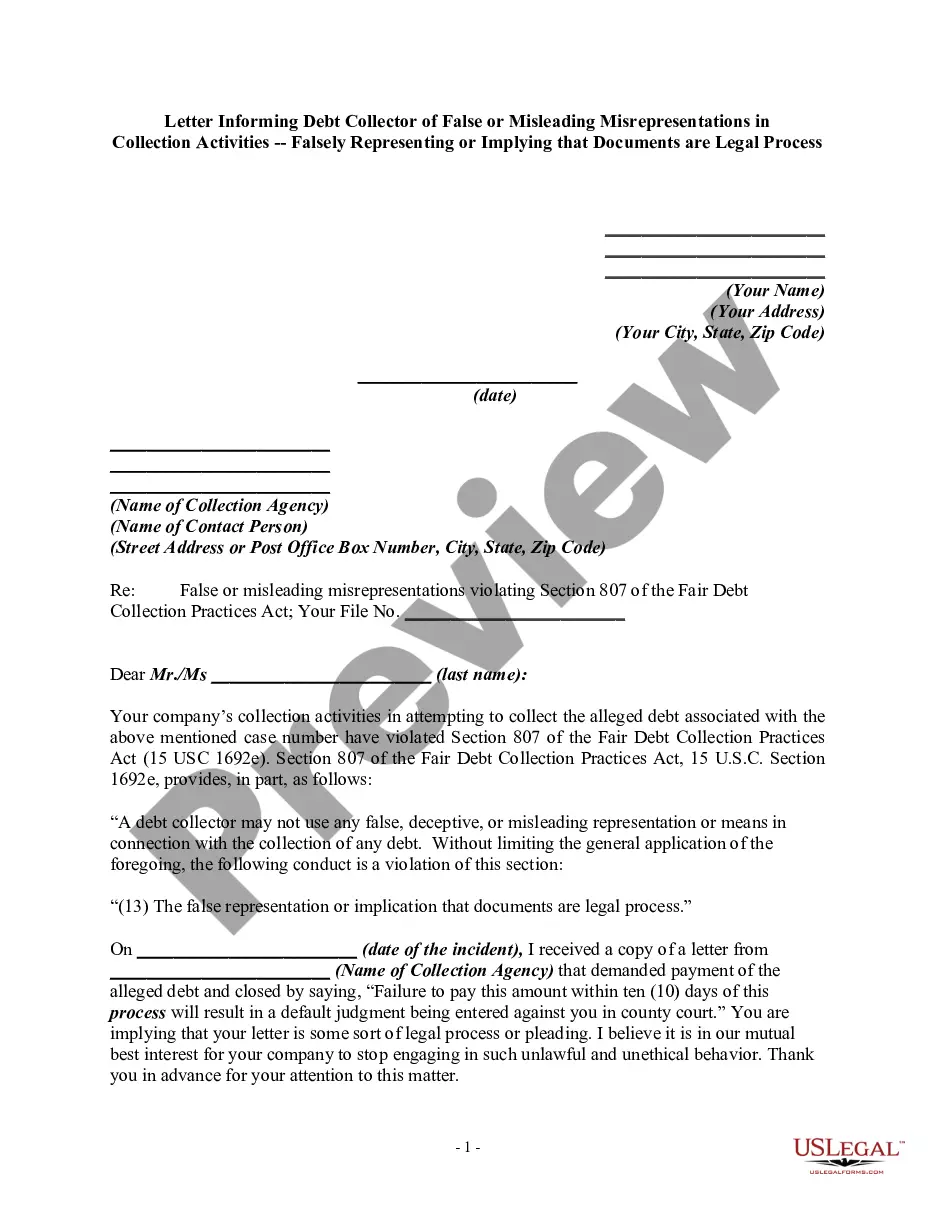
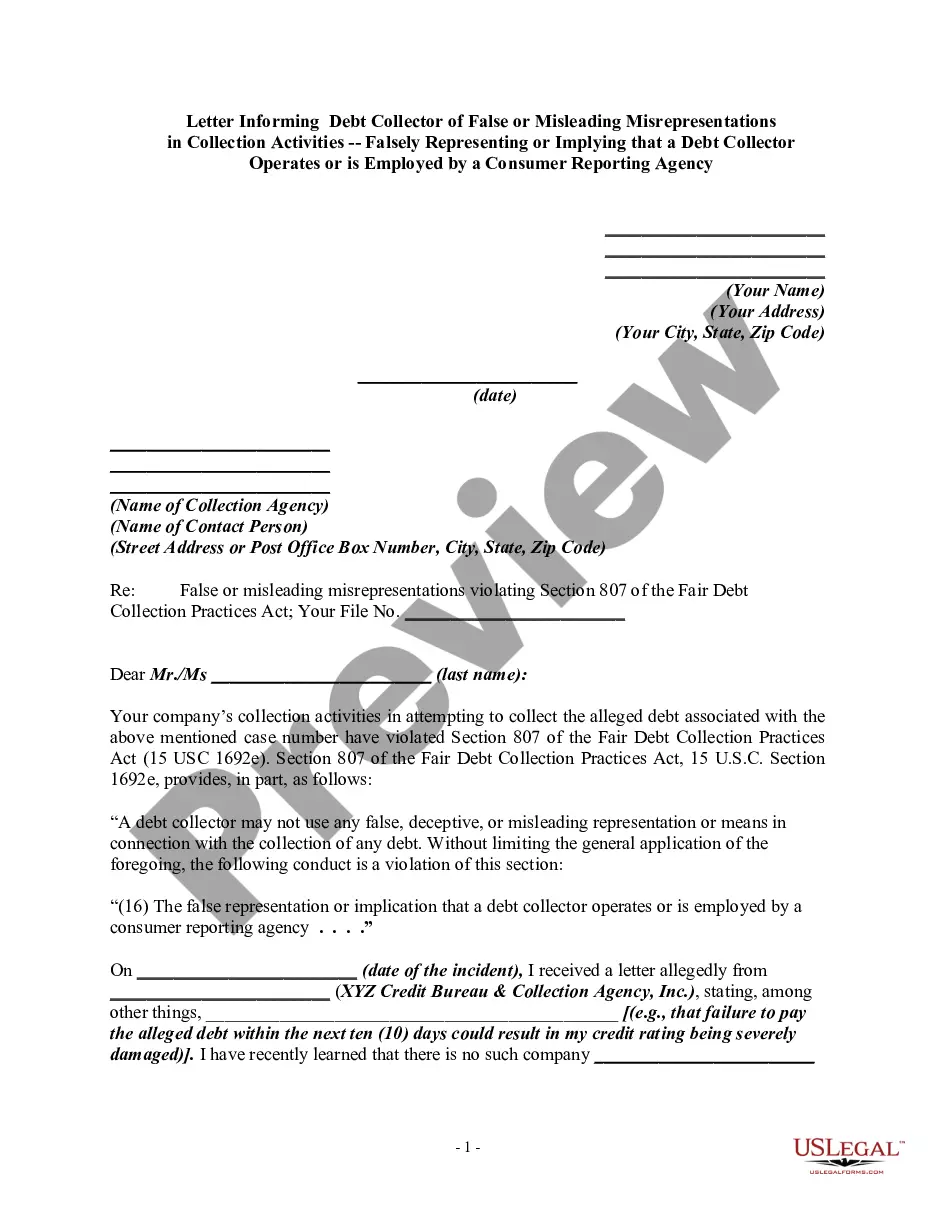
How to fill out Letter Informing Debt Collector Of False Or Misleading Misrepresentations In Collection Activities - Falsely Representing Or Implying That Documents Are Legal Process?
- If you're a returning user, log in to your account and select the form template you need by clicking the Download button. Confirm your subscription is valid; if not, renew it as per your plan.
- For first-time users, start by checking the Preview mode and read the form description to ensure it meets your needs and local legal requirements.
- If you don't find the right template, utilize the Search tab above to explore alternatives. Once you find the suitable form, proceed to the next step.
- To purchase the document, click the Buy Now button and select your preferred subscription plan. Account registration will be necessary for access to the library.
- Complete your purchase by entering your credit card information or using your PayPal account to pay for the subscription.
- Finally, download your document. Save it on your device for easy access and to complete it later via the My Forms section of your profile.
US Legal Forms empowers users by offering a vast collection of legal forms, ensuring you can quickly obtain and manage your legal documents.
Don't wait to resolve your legal concerns. Start your journey with US Legal Forms today and access over 85,000 editable templates to suit your needs.
Form popularity
FAQ
Disputing a collection that is not yours involves informing the collector in writing that you are not responsible for the debt. Clearly state the reasons why the account is incorrect, and include supporting documents if possible. It is vital to act swiftly and keep records of your communications, especially when you receive a debt collection letter for someone else.
To dispute a collection that isn't yours, begin by gathering any evidence that supports your claim. Contact the debt collector, explain that you received a debt collection letter for someone else, and request verification of the debt. Taking these steps is crucial to protecting your rights and can also be accomplished more easily with the help of platforms like USLegalForms.
If you receive a debt collection letter for someone else, do not ignore it. First, write a letter to the collector stating that the debt does not belong to you and include your address. This action is important, as it protects your credit and ensures that the debt collector knows you received a debt collection letter for someone else.
The 777 rule refers to a guideline that protects consumers from aggressive debt collection practices. It suggests that if you receive a debt collection letter for someone else, the collector must stop contacting you and verify the debt upon your request. Understanding this rule empowers you, ensuring that you respond correctly when you receive a debt collection letter for someone else.
If you received a debt collection letter for someone else, it may be concerning, but it's important to understand why this happens. Debt collectors sometimes contact individuals mistakenly due to shared names or incorrect information. Additionally, the collector may be trying to reach the previous resident at your address. If you want to resolve this situation, consider using US Legal Forms to guide you through the process of responding to debt collectors and clearing up any confusion.
Receiving a debt collection letter for someone else can be confusing and concerning. If you find yourself in this situation, it’s essential to act promptly. First, you should contact the debt collector and inform them that you received the debt collection letter for someone else. Moreover, you can request them to stop contacting you regarding this matter. For further support, consider using US Legal Forms, which offers resources to help you navigate wrongful collections and protect your rights.
If you keep receiving letters for someone else, start by contacting the debt collector to inform them of the mistake. Clearly state that you received a debt collection letter for someone else and provide the correct details. You can use tools from US Legal Forms to prepare a response, ensuring you document your communication efforts. If the letters persist, consider filing a complaint with the Consumer Financial Protection Bureau for further assistance.
To prove a debt is not yours, first, collect any documentation that shows you did not incur the debt. This may include bank statements, bills, or identification that confirms your address or personal information differs from that of the debtor. You can request validation from the collector, explaining you received a debt collection letter for someone else. This will prompt them to verify the debt and may lead to its removal from your records.