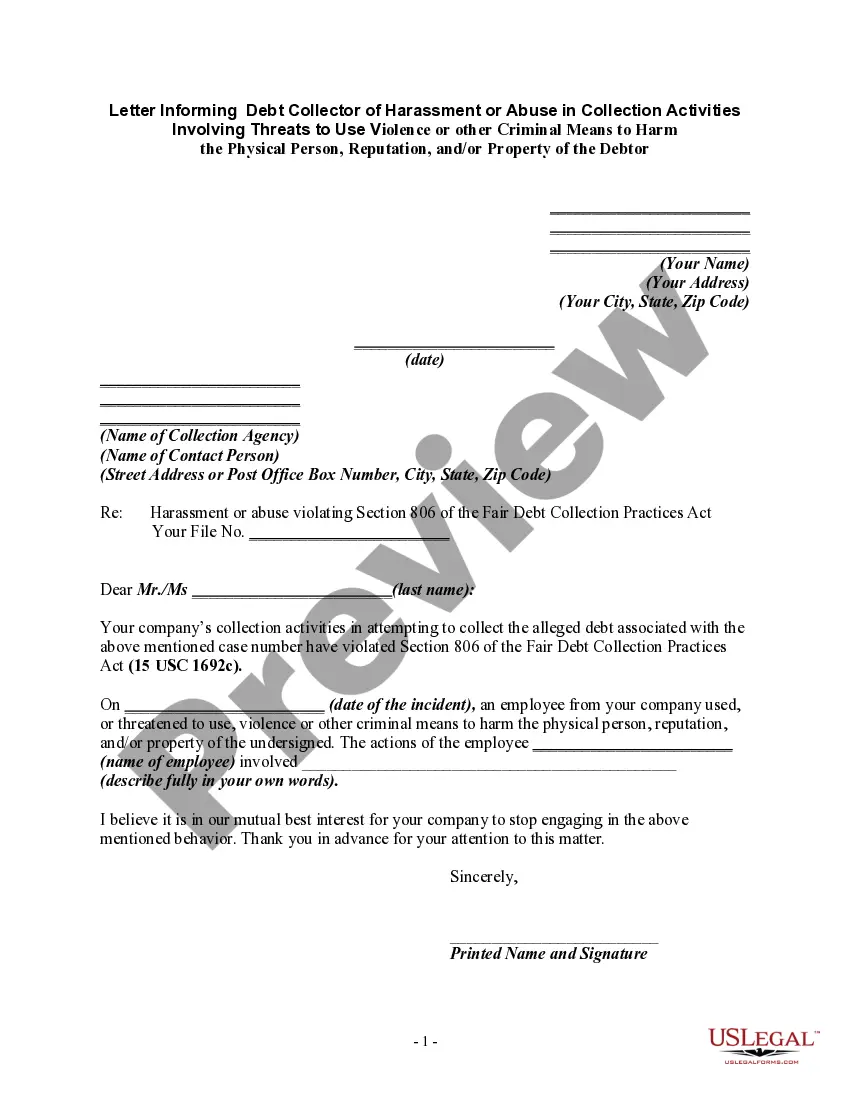
Collector Harassment Involving Withholding Information
Description
Get your form ready online
Our built-in tools help you complete, sign, share, and store your documents in one place.
Make edits, fill in missing information, and update formatting in US Legal Forms—just like you would in MS Word.
Download a copy, print it, send it by email, or mail it via USPS—whatever works best for your next step.
Sign and collect signatures with our SignNow integration. Send to multiple recipients, set reminders, and more. Go Premium to unlock E-Sign.
If this form requires notarization, complete it online through a secure video call—no need to meet a notary in person or wait for an appointment.
We protect your documents and personal data by following strict security and privacy standards.

Make edits, fill in missing information, and update formatting in US Legal Forms—just like you would in MS Word.

Download a copy, print it, send it by email, or mail it via USPS—whatever works best for your next step.

Sign and collect signatures with our SignNow integration. Send to multiple recipients, set reminders, and more. Go Premium to unlock E-Sign.

If this form requires notarization, complete it online through a secure video call—no need to meet a notary in person or wait for an appointment.

We protect your documents and personal data by following strict security and privacy standards.
Looking for another form?


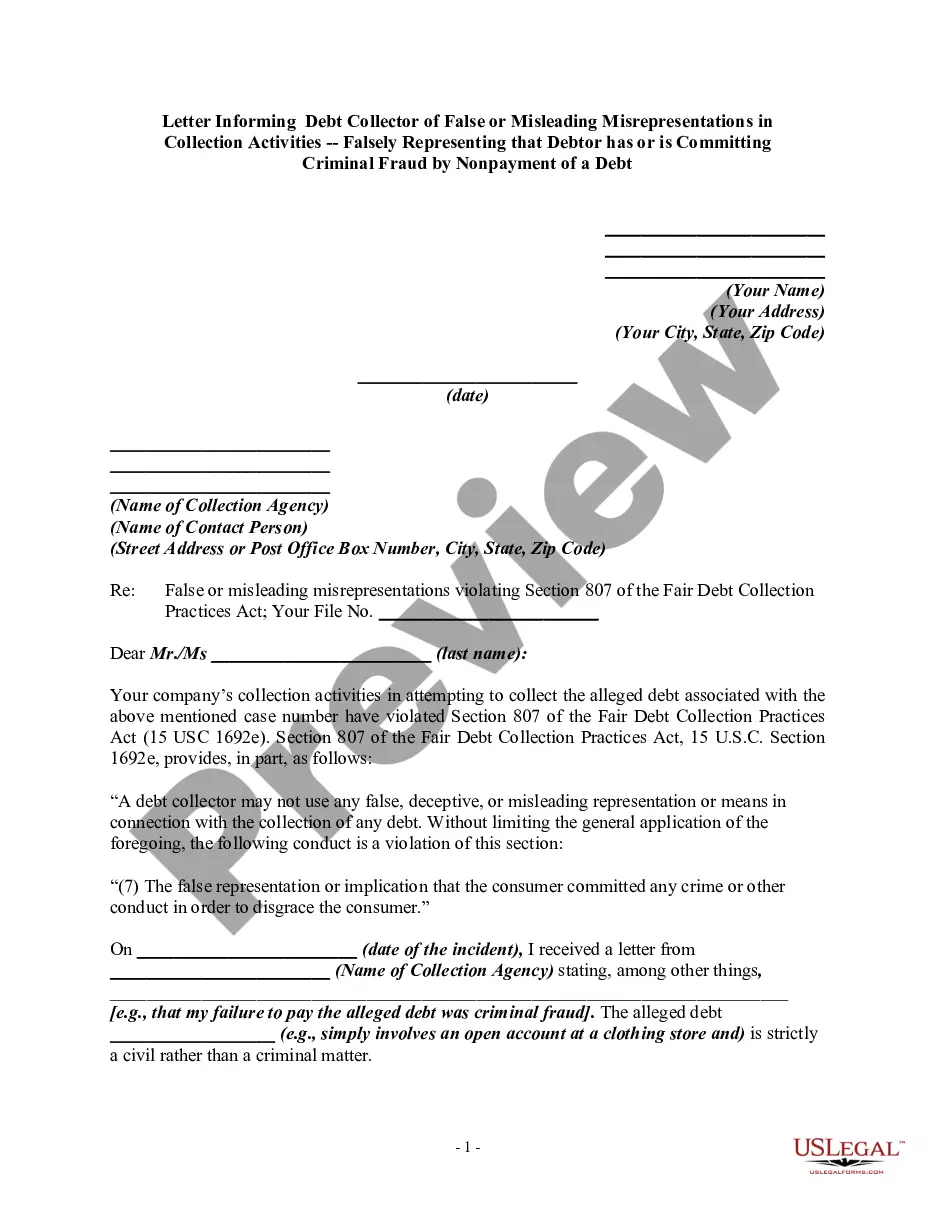
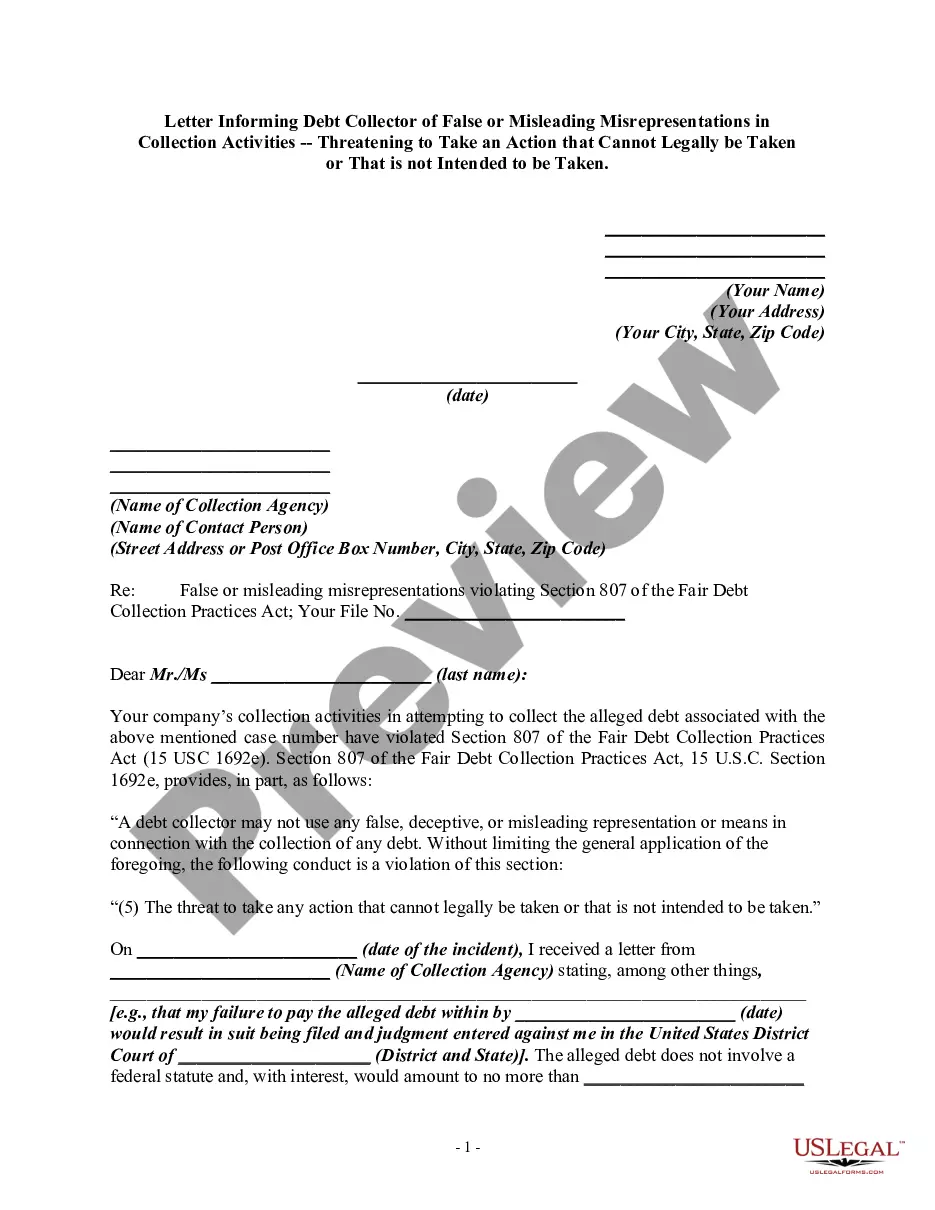
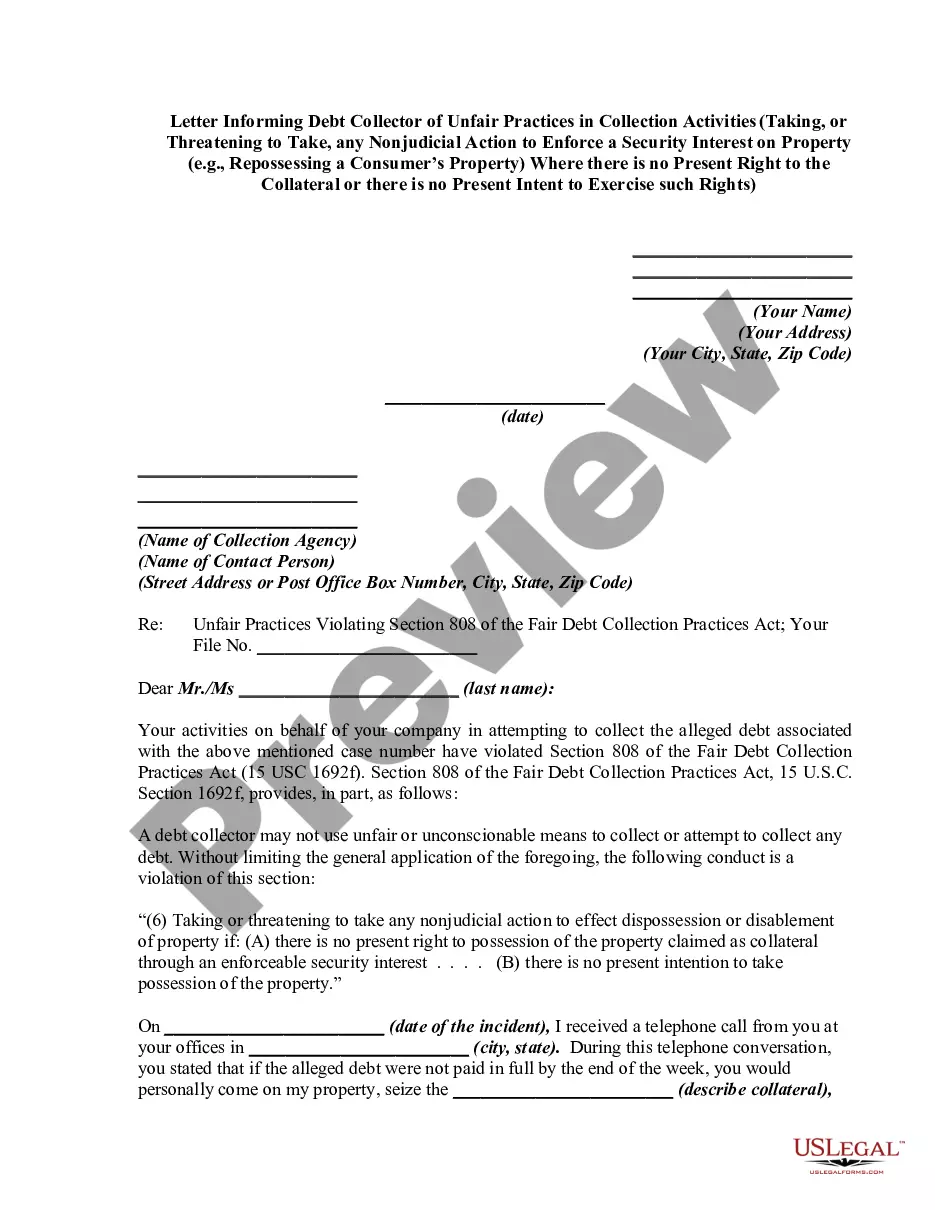
How to fill out Letter Informing Debt Collector Of Harassment Or Abuse In Collection Activities Involving Threats To Use Violence Or Other Criminal Means To Harm The Physical Person, Reputation, And/or Property Of The Debtor?
The Collector Harassment Related to Retaining Information you observe on this page is a reusable legal template crafted by expert attorneys in accordance with federal and state regulations.
For over 25 years, US Legal Forms has offered individuals, entities, and legal practitioners more than 85,000 validated, state-specific forms for any business and personal situation. It is the quickest, simplest, and most reliable method to acquire the documents you require, as the service ensures bank-level data security and anti-malware safeguards.
Subscribe to US Legal Forms to have authenticated legal templates for all of life’s circumstances at your fingertips.
- Search for the document you require and examine it.
- Choose the pricing plan that fits you and create an account.
- Select the format you desire for your Collector Harassment Related to Retaining Information (PDF, DOCX, RTF) and store the sample on your device.
- Print the template to fill it out manually or utilize an online multifunctional PDF editor.
- Access the same document again whenever necessary.
Form popularity
FAQ
Harassment by a bill collector occurs when they use aggressive tactics to pressure you into paying a debt. This can include repeated phone calls, threats, or misleading information. Specifically, collector harassment involving withholding information can happen when collectors fail to provide you with necessary details about your debt or your rights. If you believe you are experiencing such harassment, it is important to know your rights and consider using platforms like US Legal Forms to help you navigate these issues.
To report a harassing bill collector, you should first document all communication, noting dates, times, and the nature of the harassment. You can then file a complaint with the Consumer Financial Protection Bureau or your state's attorney general's office, which investigates collector harassment involving withholding information. It is also beneficial to consult with legal resources, such as US Legal Forms, to understand the proper procedures and to ensure your complaint is effectively filed. Taking action helps protect your rights and holds collectors accountable.
To stop collections from harassing you, first, communicate directly with the collector and request that they cease contact. You can also send a written request to the collector, stating that you do not wish to be contacted, as this can help reduce collector harassment involving withholding information. Additionally, consider seeking assistance from platforms like US Legal Forms, which provide resources to help you understand your rights and create necessary documents. Taking these steps can empower you to regain control over your situation.
The 7 7 7 rule for collections refers to a guideline that suggests creditors should not contact a debtor more than seven times within a seven-day period. This rule aims to prevent collector harassment involving withholding information, creating a more manageable communication process. By adhering to this rule, creditors can maintain compliance with fair debt collection practices, which helps protect consumers from excessive pressure. Understanding this rule allows you to recognize your rights during collection efforts.
To deal with harassing debt collectors, start by keeping detailed records of all communications. You may also want to communicate your desire for them to stop contacting you. If harassment persists, consider filing a complaint with the Federal Trade Commission (FTC) or seeking legal advice. US Legal Forms can provide resources that guide you through your options, ensuring you address collector harassment involving withholding information effectively.
The 11-word phrase to stop debt collectors is: 'I do not owe you this debt, please stop contacting me.' This simple statement can be effective in halting unwanted communication. Remember, if the harassment continues, you have the right to take further action. Platforms like US Legal Forms offer tools to assist you in creating formal responses to combat collector harassment involving withholding information.
The 777 rule refers to a guideline that allows debtors to request validation of the debt within seven days of initial contact. If the collector fails to provide this information, they may be violating your rights. Understanding this rule can empower you against collector harassment involving withholding information. Using resources from US Legal Forms can help you navigate this process more smoothly.
If a debt collector is harassing you, it's important to know your rights. Document all interactions, including dates, times, and the nature of the communication. You can send a written request to the collector to stop contacting you. Additionally, consider using platforms like US Legal Forms to help you draft appropriate legal documents to address collector harassment involving withholding information.