Medical Malpractice Sample Format
Description
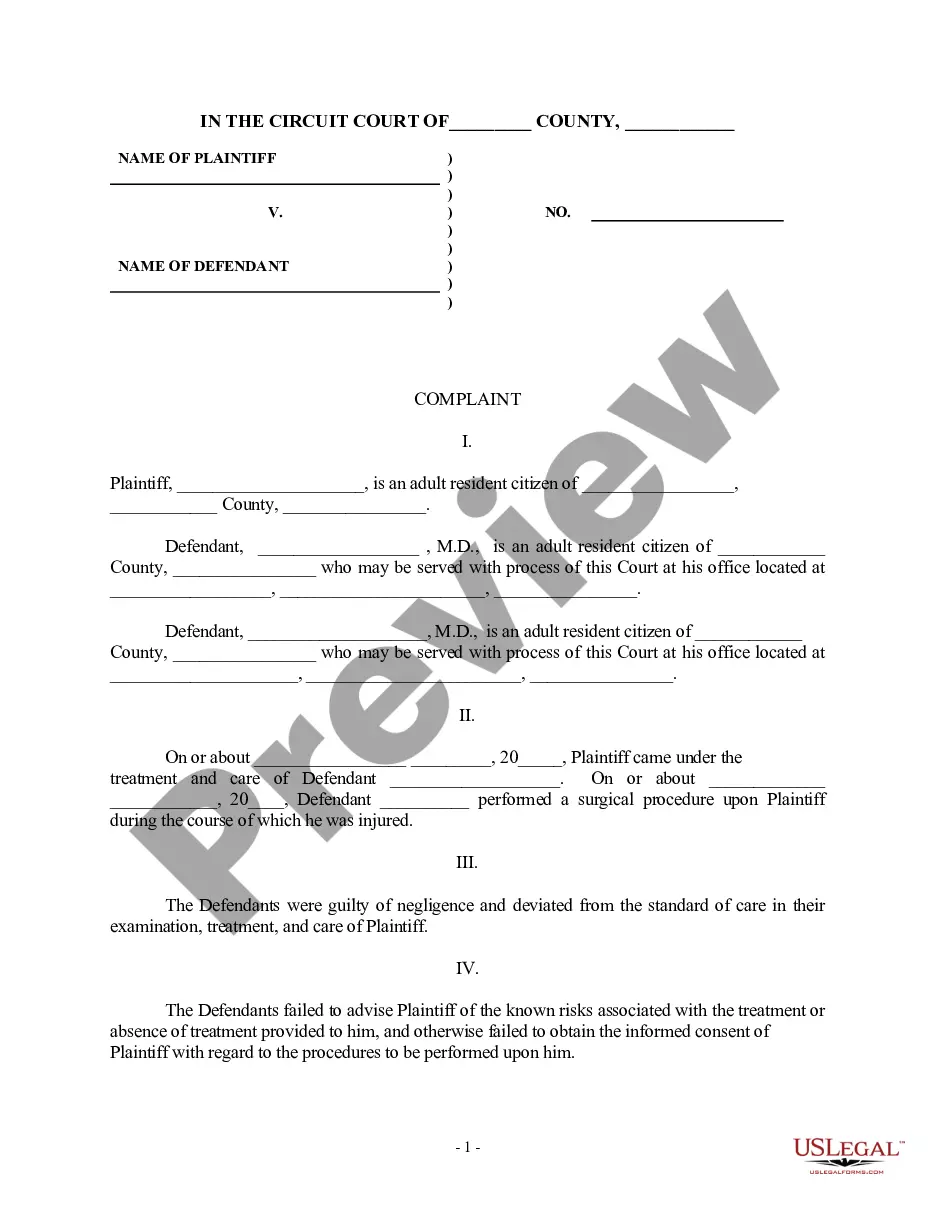
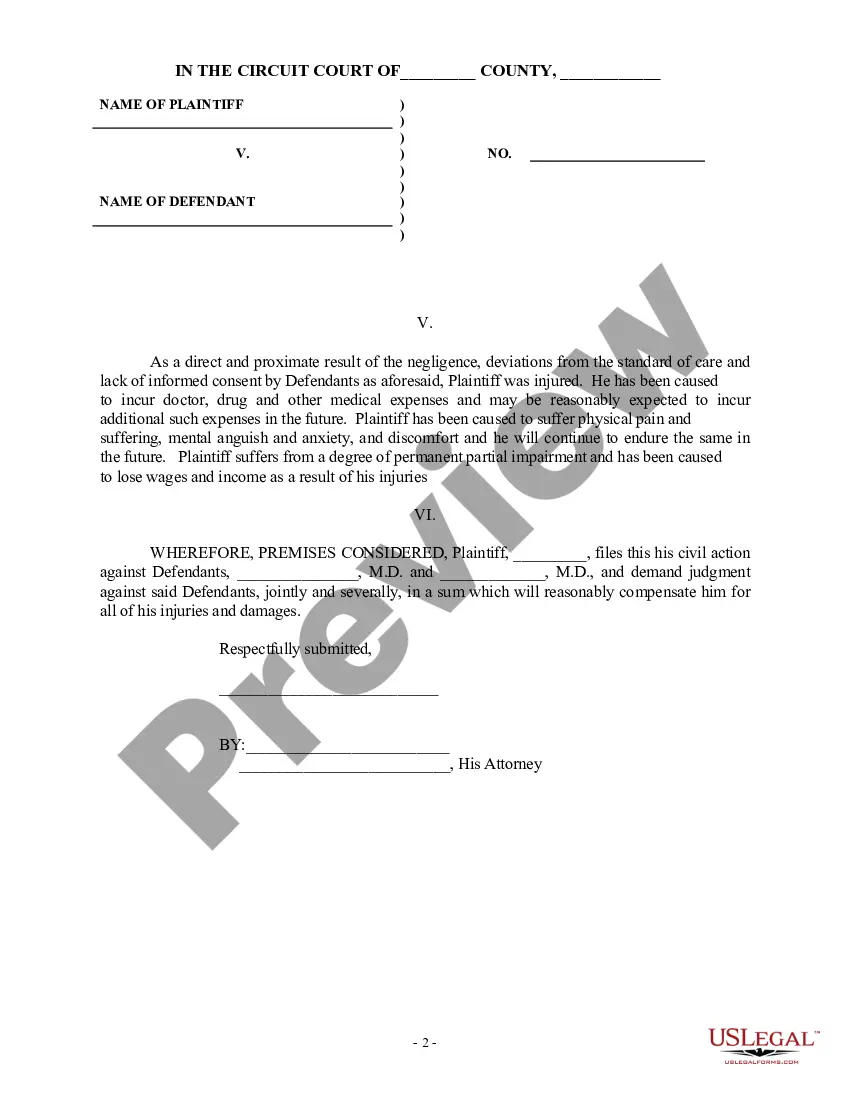
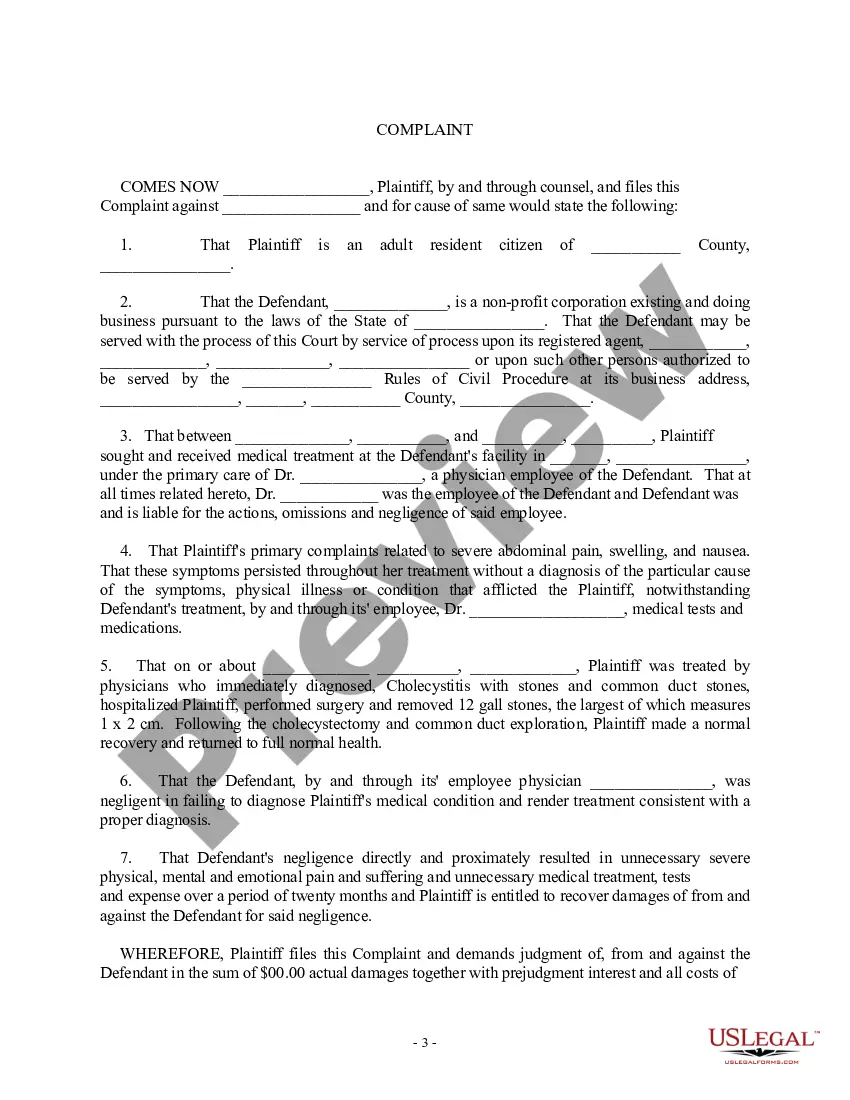
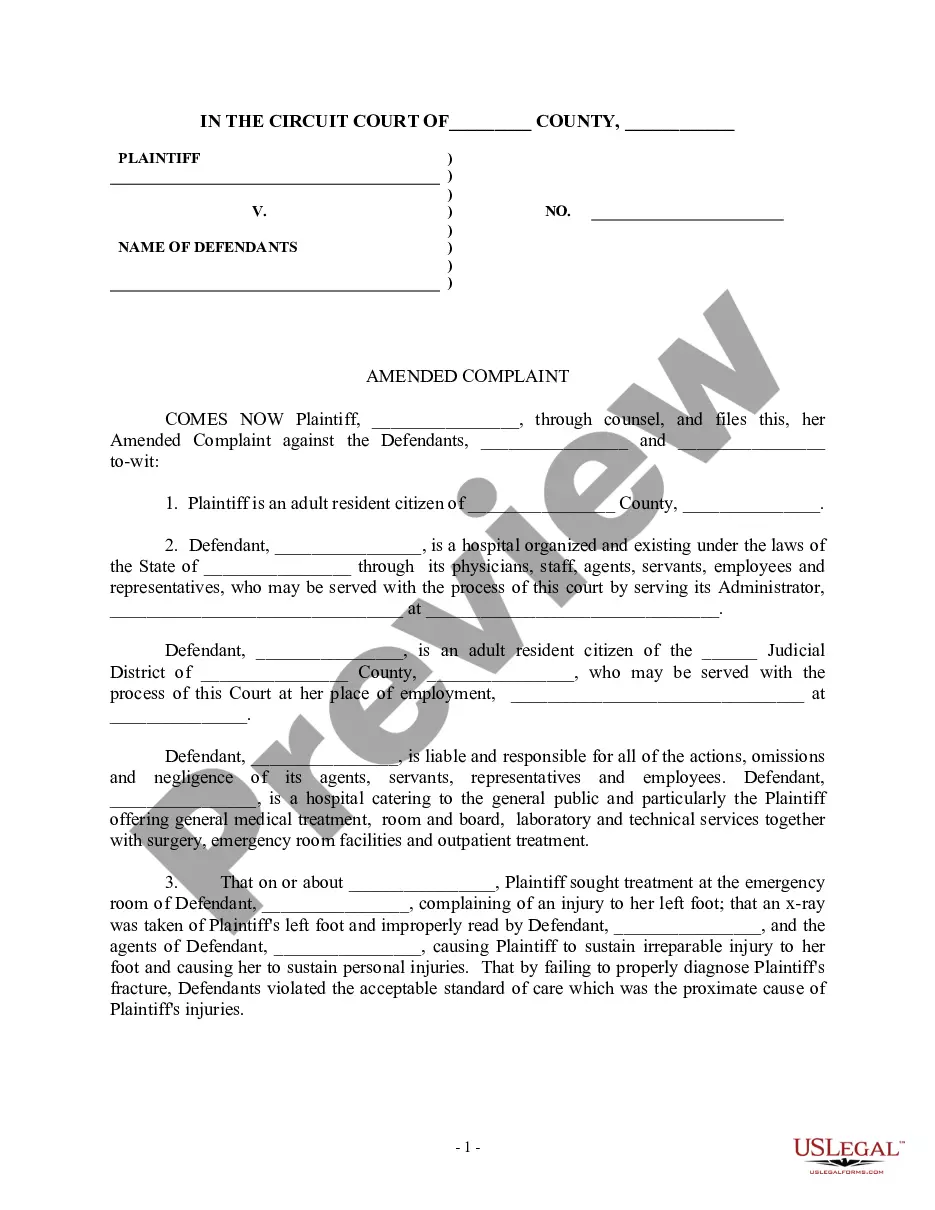
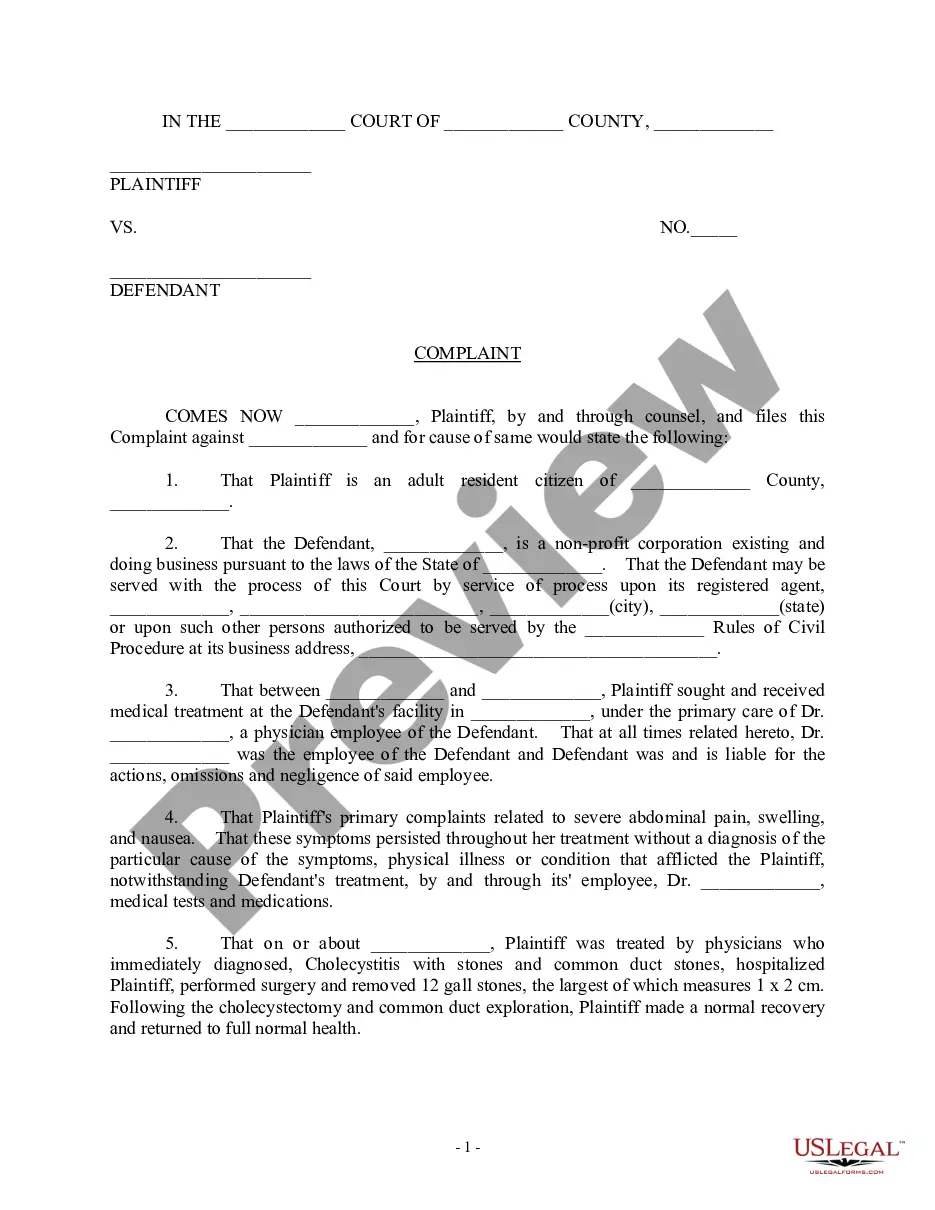
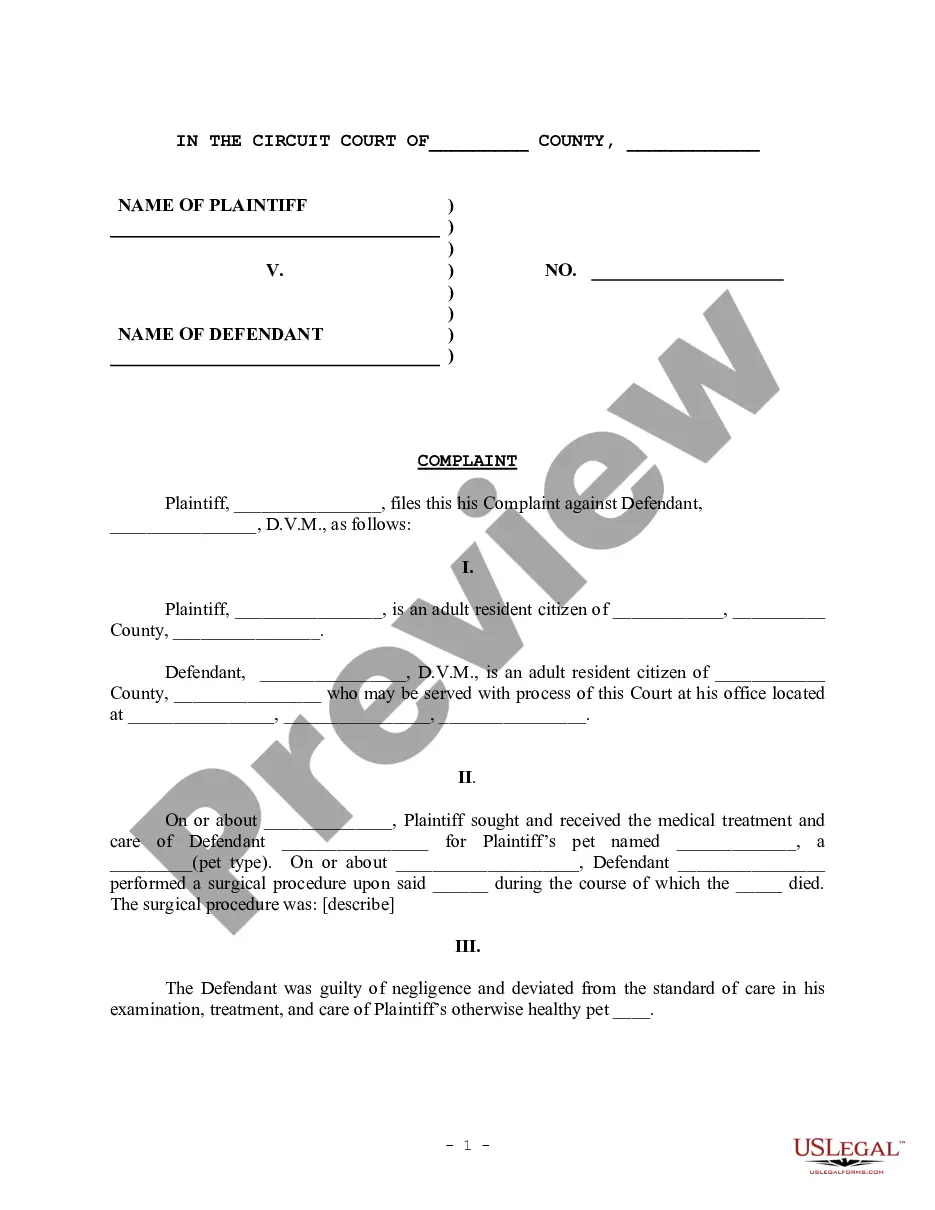
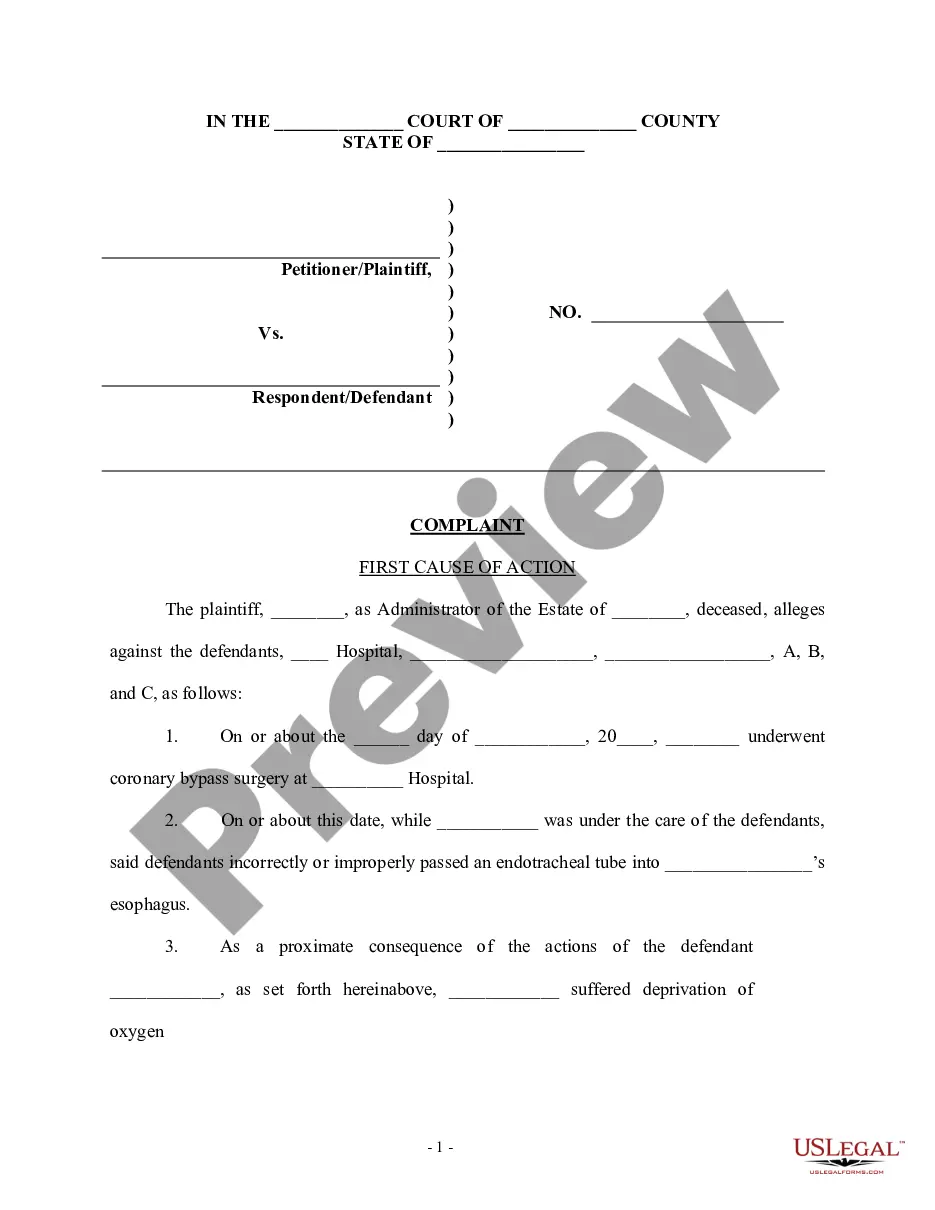
Get your form ready online
Our built-in tools help you complete, sign, share, and store your documents in one place.
Make edits, fill in missing information, and update formatting in US Legal Forms—just like you would in MS Word.
Download a copy, print it, send it by email, or mail it via USPS—whatever works best for your next step.
Sign and collect signatures with our SignNow integration. Send to multiple recipients, set reminders, and more. Go Premium to unlock E-Sign.
If this form requires notarization, complete it online through a secure video call—no need to meet a notary in person or wait for an appointment.
We protect your documents and personal data by following strict security and privacy standards.

Make edits, fill in missing information, and update formatting in US Legal Forms—just like you would in MS Word.

Download a copy, print it, send it by email, or mail it via USPS—whatever works best for your next step.

Sign and collect signatures with our SignNow integration. Send to multiple recipients, set reminders, and more. Go Premium to unlock E-Sign.

If this form requires notarization, complete it online through a secure video call—no need to meet a notary in person or wait for an appointment.

We protect your documents and personal data by following strict security and privacy standards.
Looking for another form?
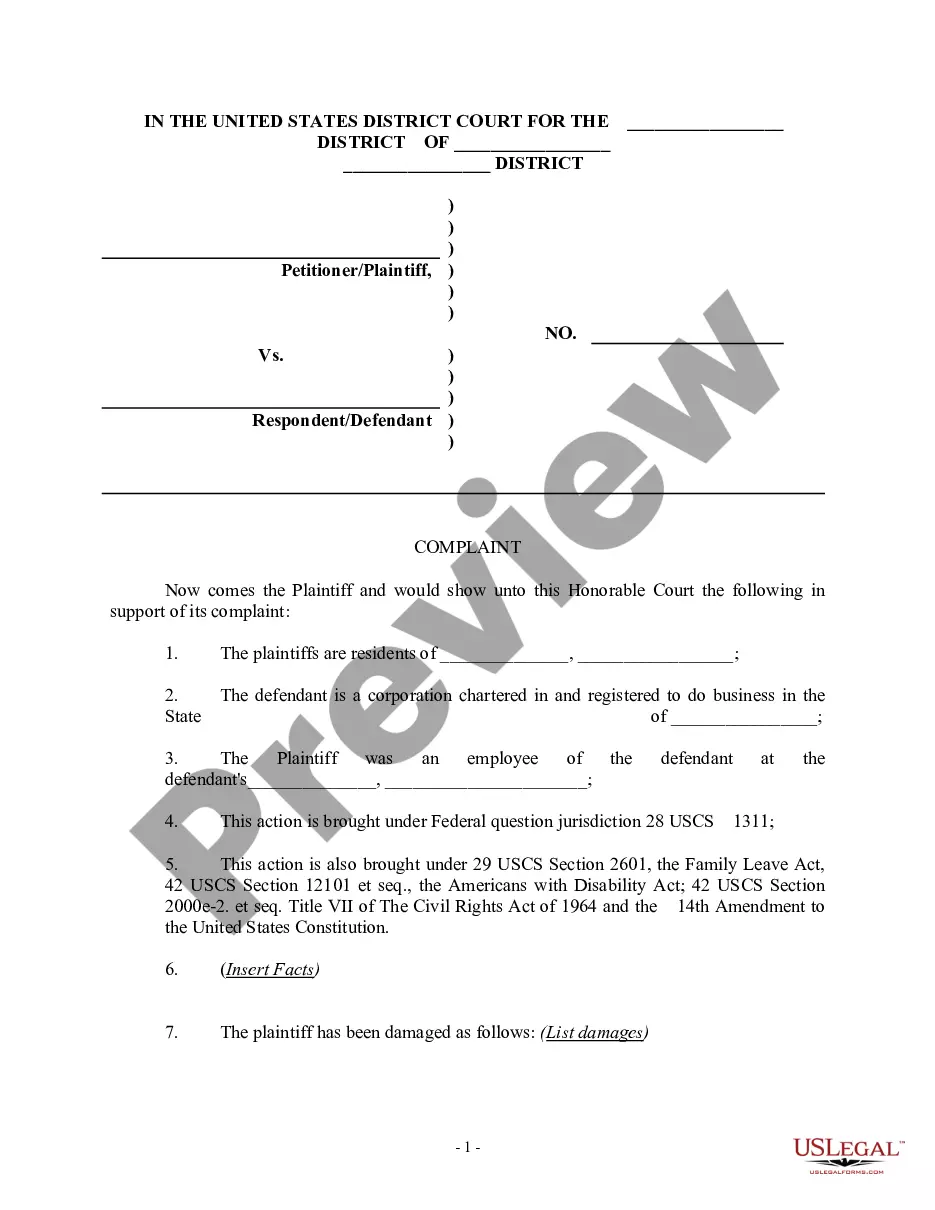
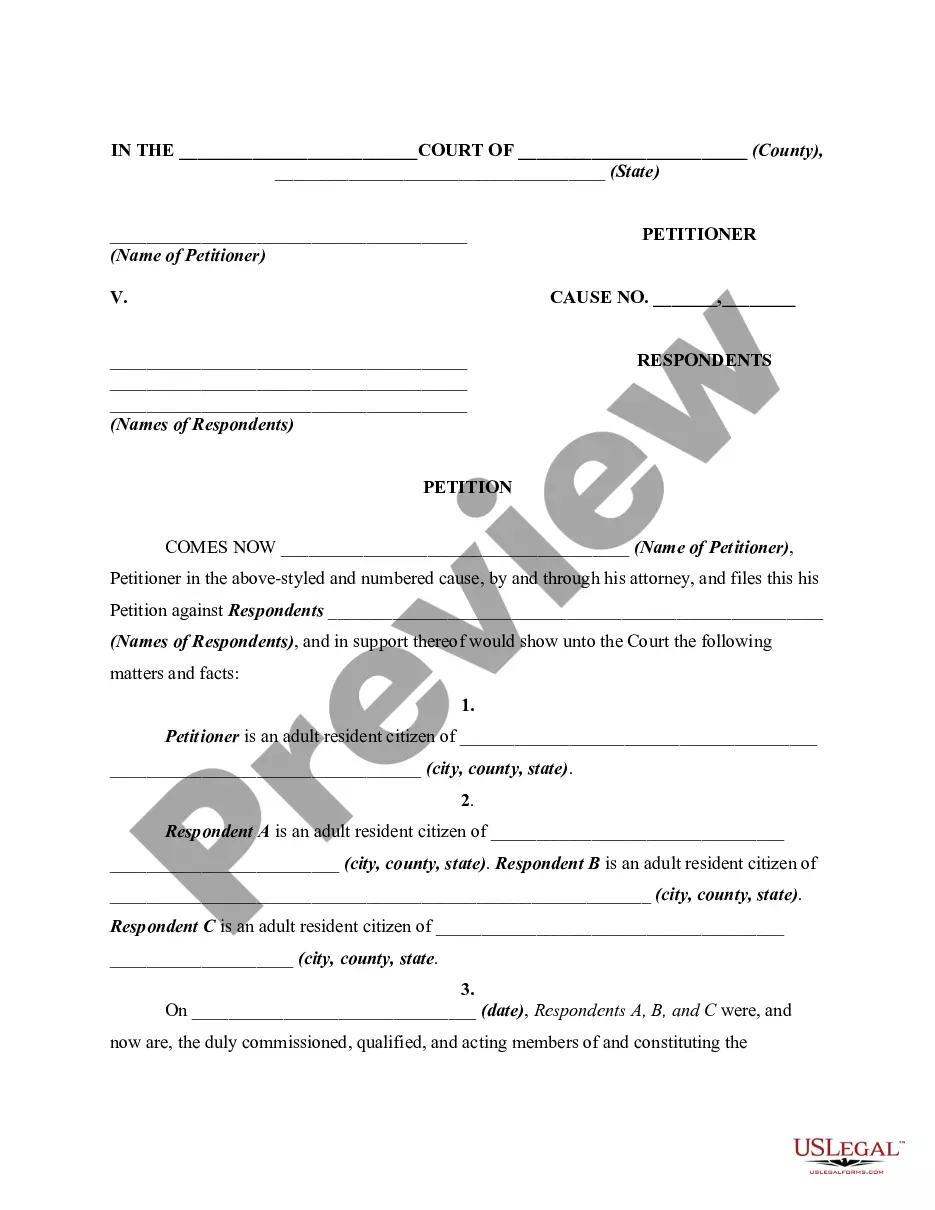
How to fill out Complaint For Medical Malpractice Regarding Surgical Procedure?
Legal management can be perplexing, even for the most adept professionals.
When you are seeking a Medical Malpractice Sample Format and lack the time to dedicate to finding the appropriate and current version, the procedures can be overwhelming.
US Legal Forms addresses any needs you may have, from personal to business documentation, all in one place.
Utilize advanced tools to fill out and manage your Medical Malpractice Sample Format.
Here are the steps to follow after obtaining the form you desire: Confirm it is the correct form by previewing it and reviewing its details. Ensure that the sample is valid in your state or county. Click Buy Now when you are ready. Choose a monthly subscription plan. Select the format you prefer, and Download, complete, sign, print, and submit your documents. Take advantage of the US Legal Forms online catalog, backed by 25 years of experience and reliability. Transform your daily document management into a straightforward and user-friendly process today.
- Access a valuable resource pool of articles, guides, and manuals pertinent to your circumstances and requirements.
- Conserve time and energy searching for the documents you require, and utilize US Legal Forms’ advanced search and Preview feature to locate and download the Medical Malpractice Sample Format.
- If you hold a subscription, Log In to your US Legal Forms account, search for the form, and download it.
- Check your My documents tab to review the documents you have previously downloaded and manage your folders as needed.
- If this is your first experience with US Legal Forms, create a free account and gain unlimited access to all platform benefits.
- A comprehensive online form directory could be transformative for anyone who wishes to handle these matters efficiently.
- US Legal Forms is a leading provider in online legal documents, offering over 85,000 state-specific legal forms accessible whenever you need them.
- With US Legal Forms, you can access state- or county-specific legal and business documents.
Form popularity
FAQ
To win a medical malpractice suit, you must prove four key elements: a doctor-patient relationship, breach of duty, causation, and damages. First, establish that a relationship existed, which obligates the provider to care for the patient. Next, show that the provider failed in their duty of care. Then, demonstrate how this breach directly caused harm to the patient. Finally, you must provide evidence of damages, such as medical bills or emotional distress. Utilizing a medical malpractice sample format can help clarify these requirements.
The 4 C's of medical malpractice refer to consent, competence, communication, and care. Consent involves ensuring that patients understand the risks and benefits of their treatment. Competence means that healthcare providers should have the necessary skills and knowledge to perform their duties. Effective communication is essential to build trust and ensure that patients are well-informed. Lastly, care encompasses the overall responsibility of providing appropriate and timely treatment, which can be illustrated through a medical malpractice sample format.
The 4 D's essential for a successful malpractice suit include duty, dereliction, direct cause, and damages. First, the healthcare provider must have a duty to care for the patient. Then, dereliction occurs when the provider fails to meet that duty, leading to direct cause, which connects the provider's actions to the resulting harm. Lastly, damages must be proven, showing that the patient suffered injuries due to the provider's failure. Understanding these elements is crucial when reviewing a medical malpractice sample format.
The basis for most medical malpractice claims involves four elements: duty, breach, injury, and damages.
How to Write a Medical Malpractice Demand Letter Keep in mind some general considerations. ... Start off with a proper heading. ... Summarize all of the relevant facts. ... Go into detail about your injuries. ... Explain your treatments and ongoing care. ... Mention the intangible damages that impact your life.
Medical records are the most important documents for beginning a medical malpractice case. Records both of the negligent care at issue as well as treatment after the fact are usually required to evaluate a potential case.
To do so, four legal elements must be proven: (1) a professional duty owed to the patient; (2) breach of such duty; (3) injury caused by the breach; and (4) resulting damages. Money damages, if awarded, typically take into account both actual economic loss and noneconomic loss, such as pain and suffering.
Doing so means you and your lawyer must prove the five elements of negligence: duty, breach of duty, cause, in fact, proximate cause, and harm.