Injunction Harassment Order For Land
Description
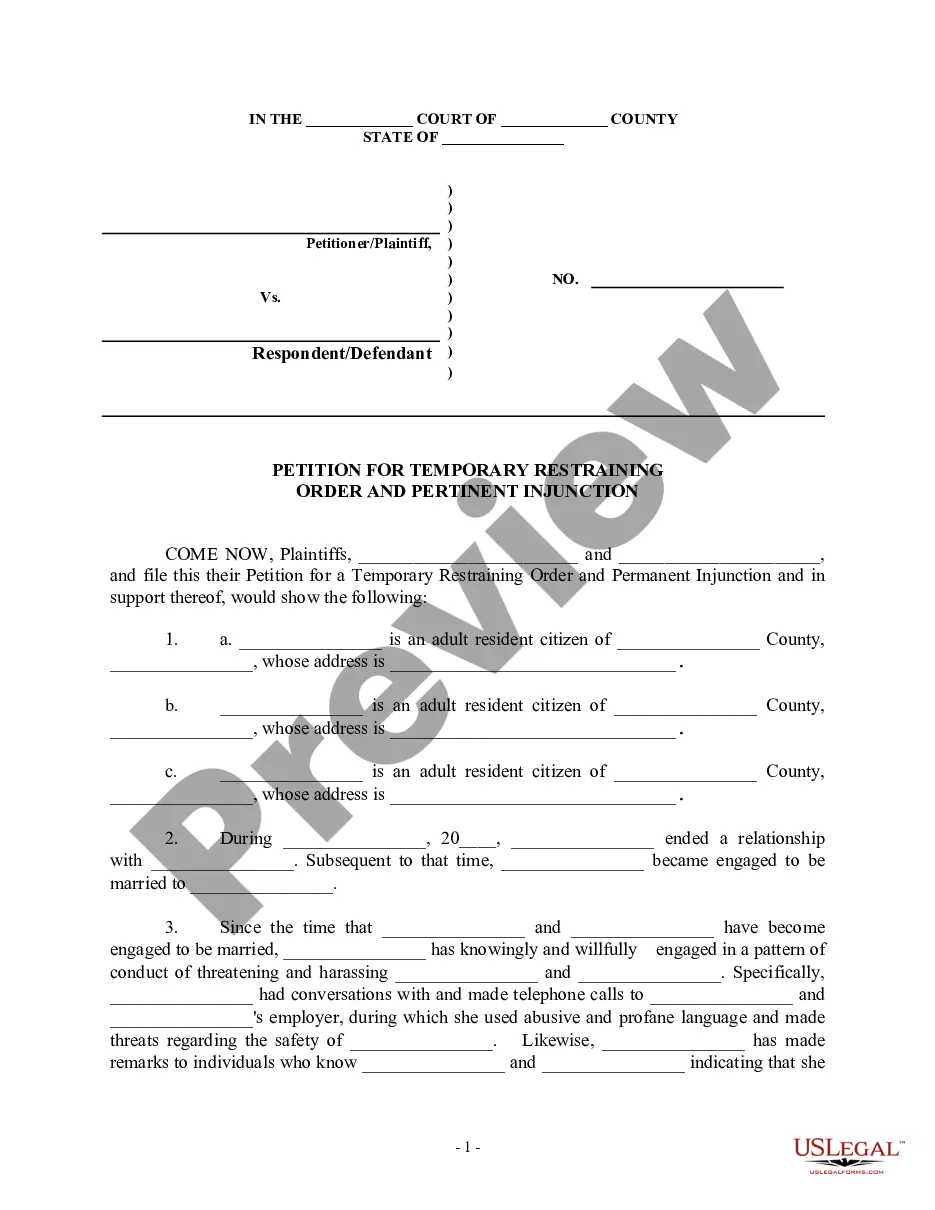
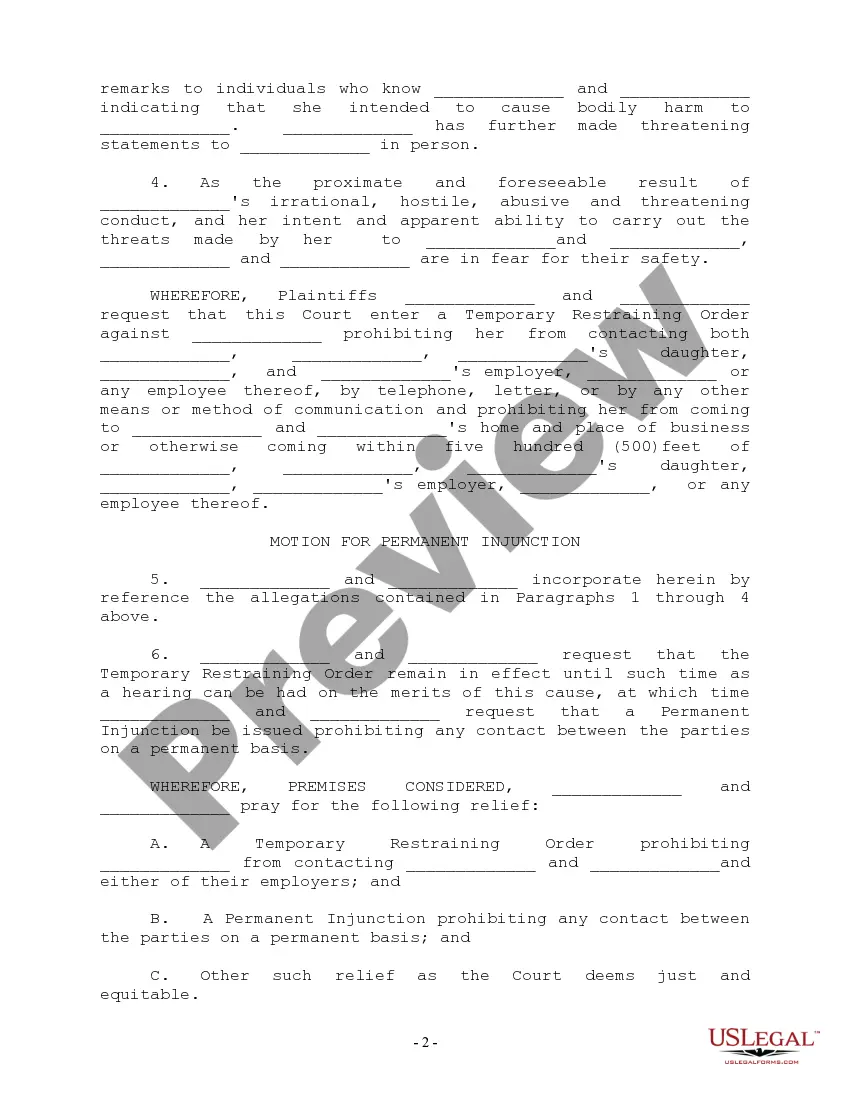
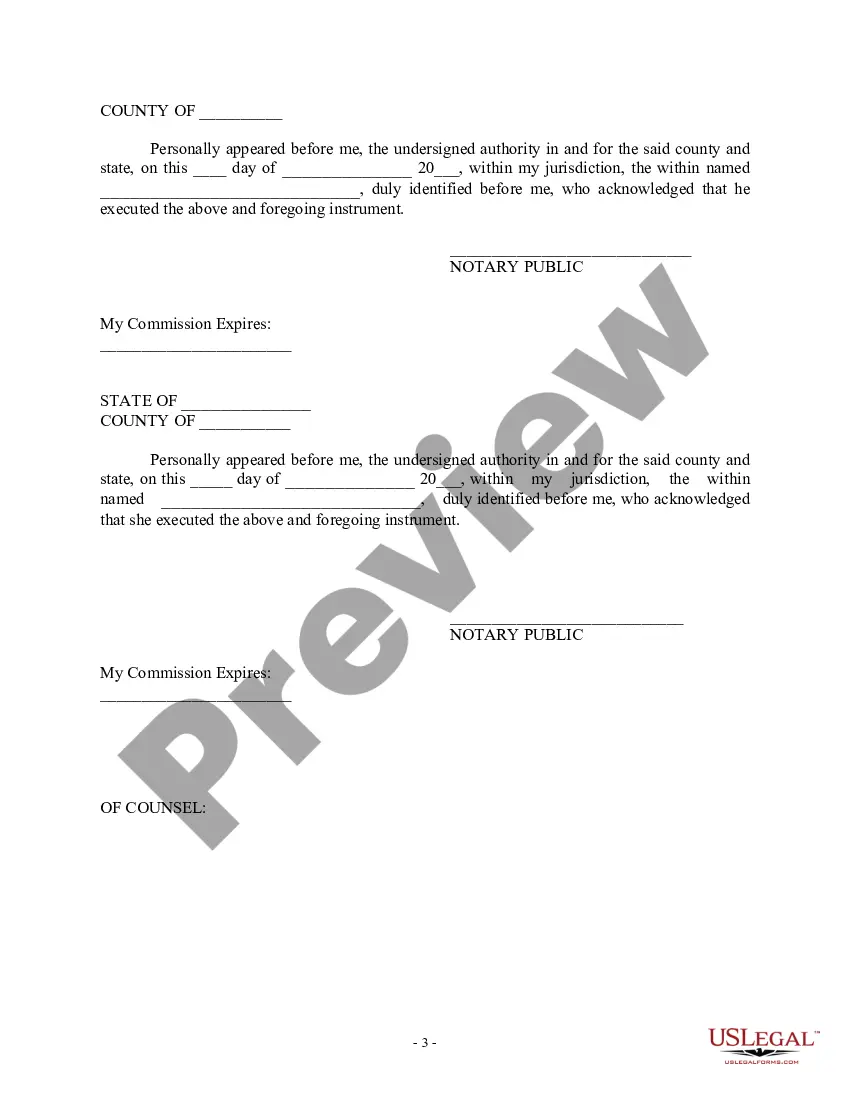

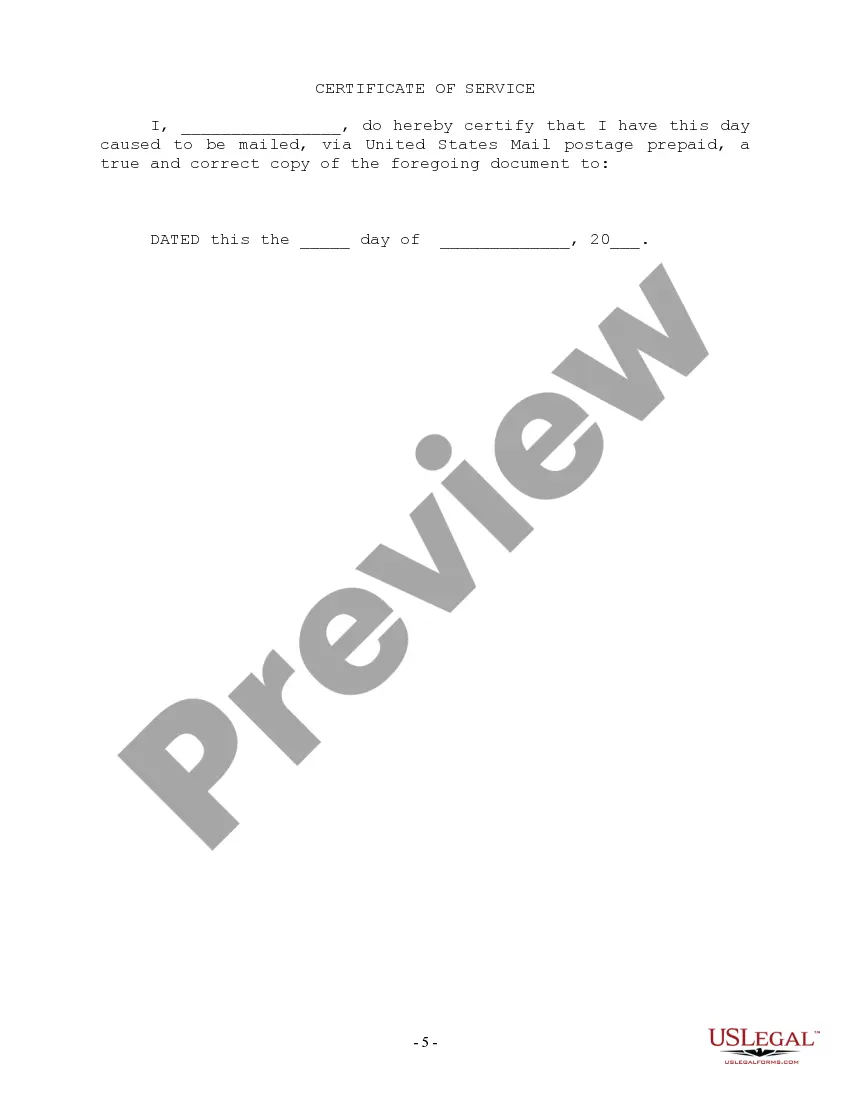

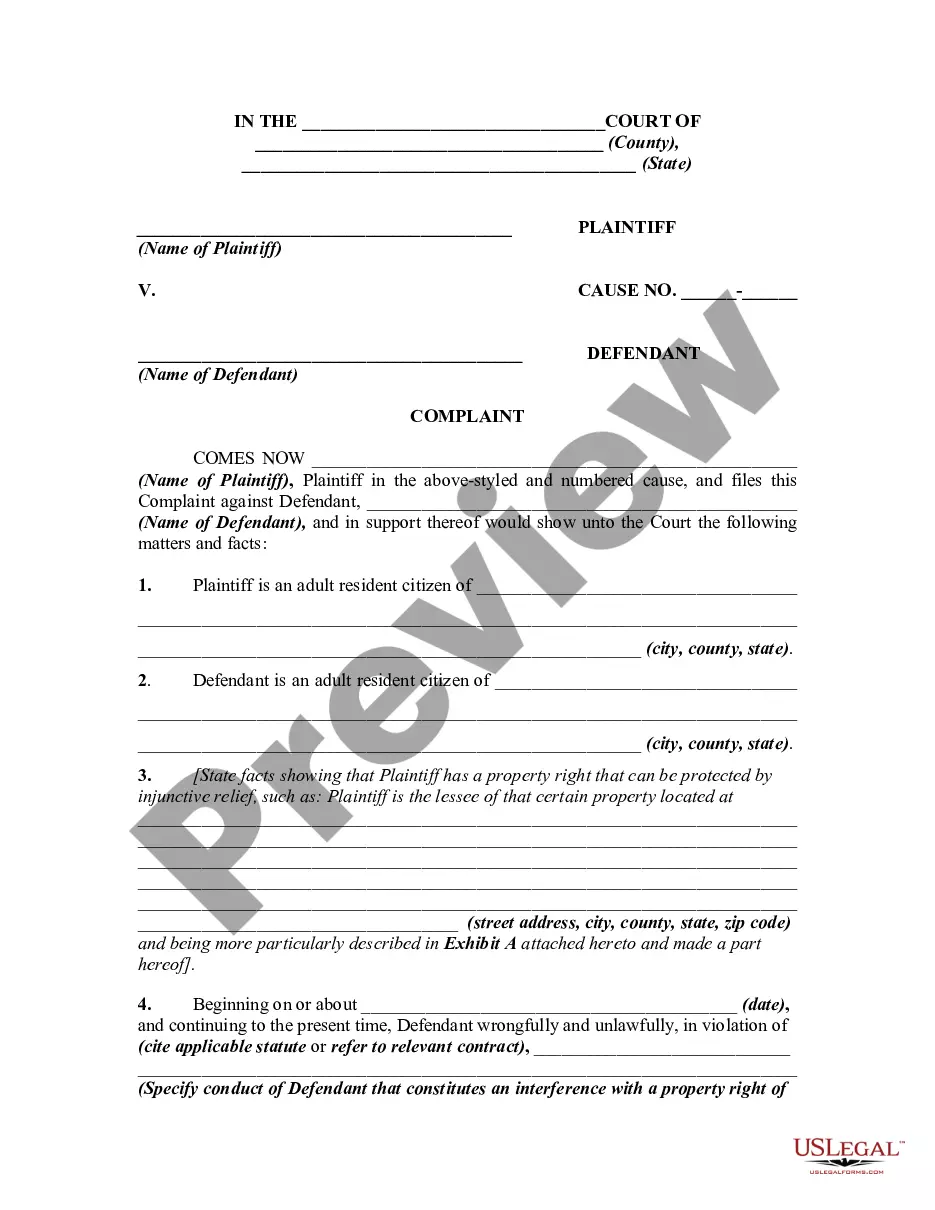
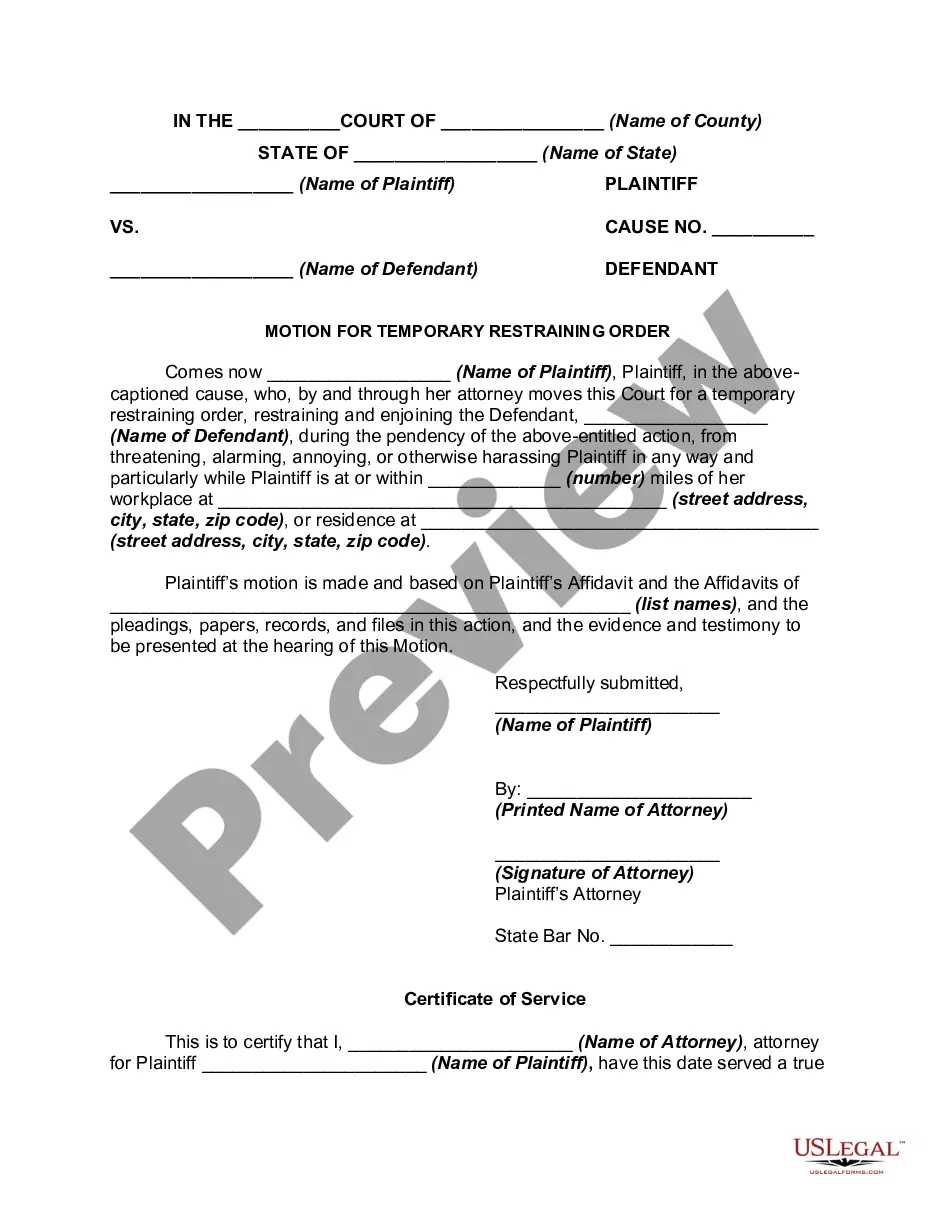


How to fill out Petition For Temporary Restraining Order And Permanent Injunction For Personal Harassment?
Finding a go-to place to take the most recent and relevant legal samples is half the struggle of handling bureaucracy. Finding the right legal files needs accuracy and attention to detail, which is why it is crucial to take samples of Injunction Harassment Order For Land only from trustworthy sources, like US Legal Forms. An improper template will waste your time and hold off the situation you are in. With US Legal Forms, you have very little to be concerned about. You may access and see all the information about the document’s use and relevance for your circumstances and in your state or county.
Take the listed steps to finish your Injunction Harassment Order For Land:
- Make use of the library navigation or search field to find your template.
- Open the form’s description to check if it suits the requirements of your state and area.
- Open the form preview, if there is one, to ensure the form is the one you are searching for.
- Get back to the search and look for the appropriate document if the Injunction Harassment Order For Land does not fit your needs.
- When you are positive about the form’s relevance, download it.
- When you are a registered customer, click Log in to authenticate and gain access to your picked forms in My Forms.
- If you do not have a profile yet, click Buy now to obtain the form.
- Pick the pricing plan that suits your needs.
- Go on to the registration to finalize your purchase.
- Complete your purchase by choosing a payment method (bank card or PayPal).
- Pick the document format for downloading Injunction Harassment Order For Land.
- When you have the form on your device, you may alter it using the editor or print it and finish it manually.
Remove the hassle that accompanies your legal paperwork. Check out the extensive US Legal Forms catalog where you can find legal samples, check their relevance to your circumstances, and download them immediately.
Form popularity
FAQ
A key difference between an order of protection and an injunction against harassment is the relationship between the person doing the harassing and the alleged victim; if the dating relationship does not fall within one of those listed above, an injunction against harassment may be the only option.
You can file interrogatories. You can take the case to trial and beat the injunction on legal technicalities. For example, if the petitioner fails to provide evidence of one of the required elements, the injunction should be dismissed.
On request of the plaintiff, an injunction against harassment that is issued by a superior court judge or commissioner may be served by the sheriff of the county. If the defendant cannot be served within that jurisdiction, the sheriff in the jurisdiction in which the defendant can be served may serve the order.
Monetary damages don't apply in criminal harassment cases, but the victim (or the victim's parent or guardian if the victim is a minor) has the right to file a civil suit seeking compensation for emotional damages stemming from the alleged harassment. The victim can also file for a restraining order or injunction.
State as briefly as possible the facts showing that each plaintiff is entitled to the injunction or other relief sought. State how each defendant was involved and what each defendant did that caused the plaintiff harm or violated the plaintiff's rights, including the dates and places of that involvement or conduct.