Employee Ownership Trust With A Trustee
Description
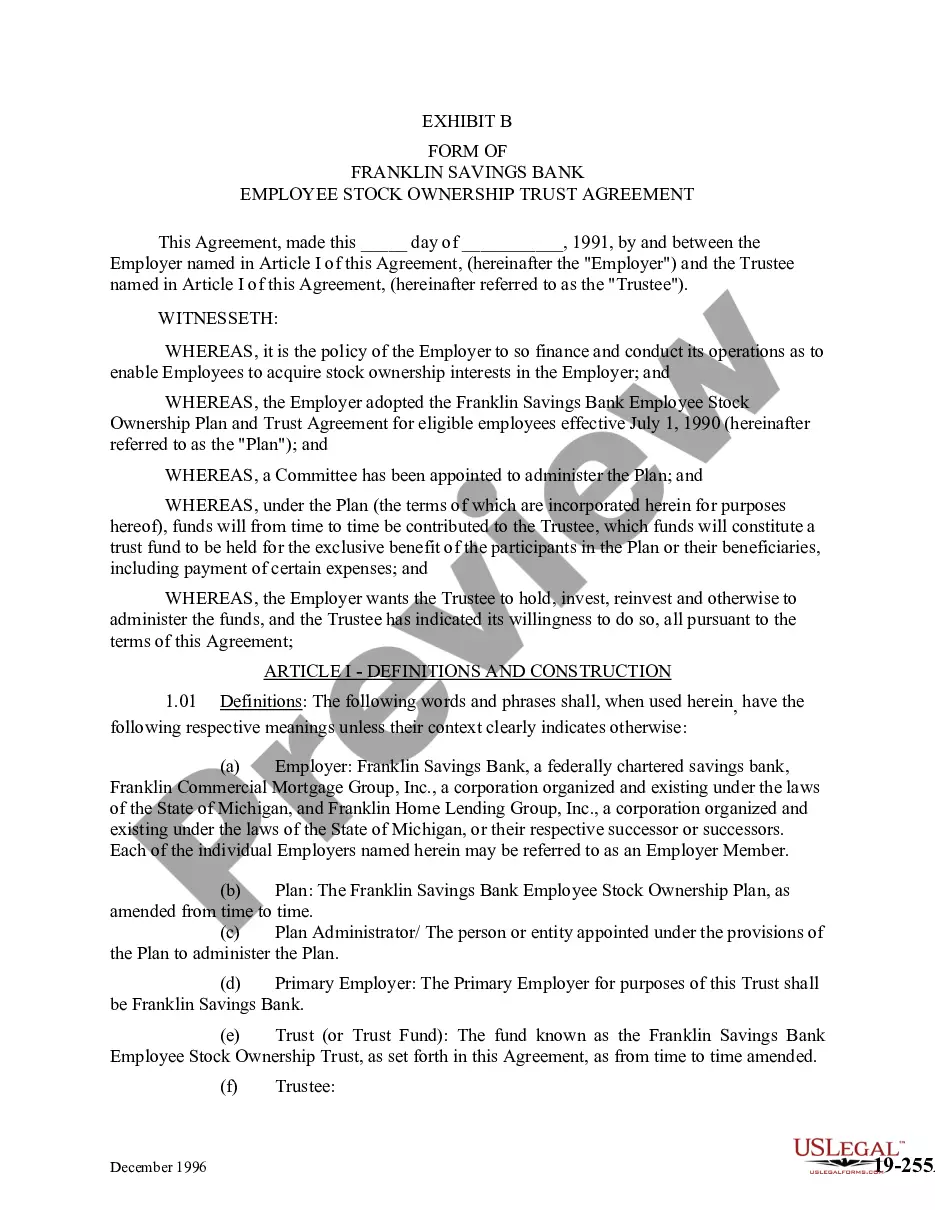
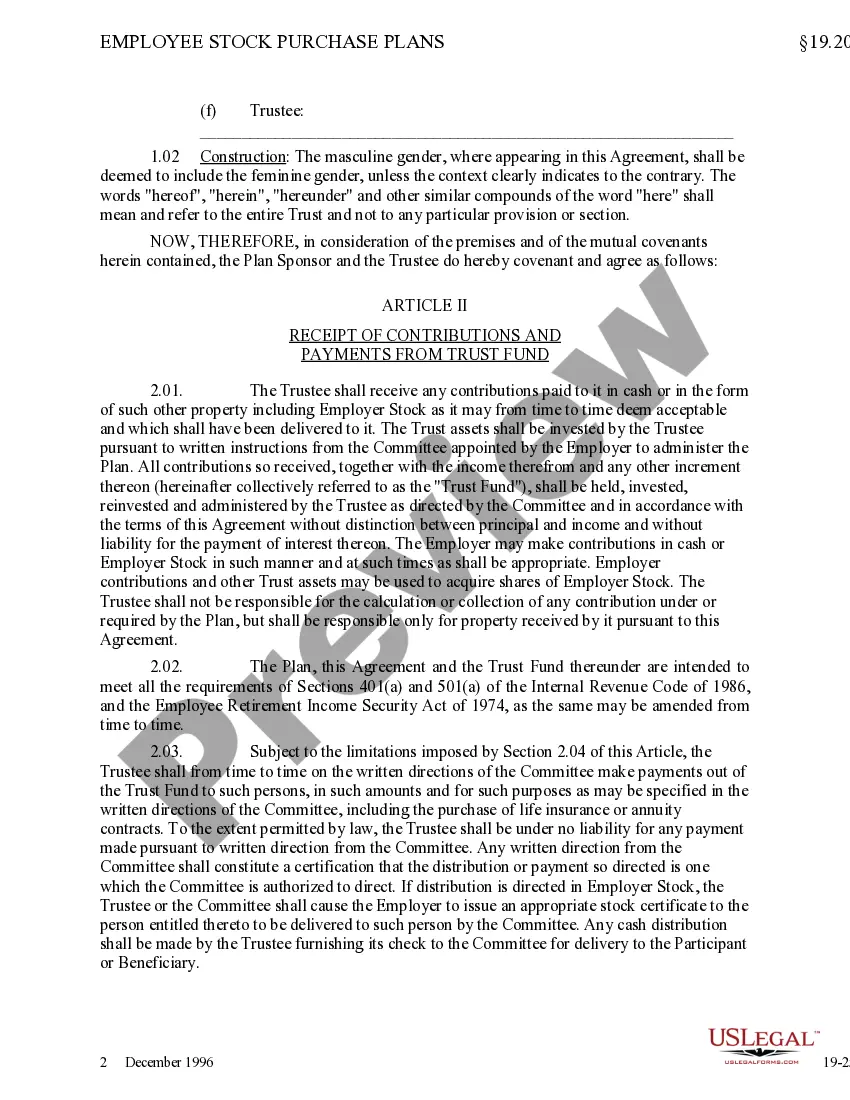
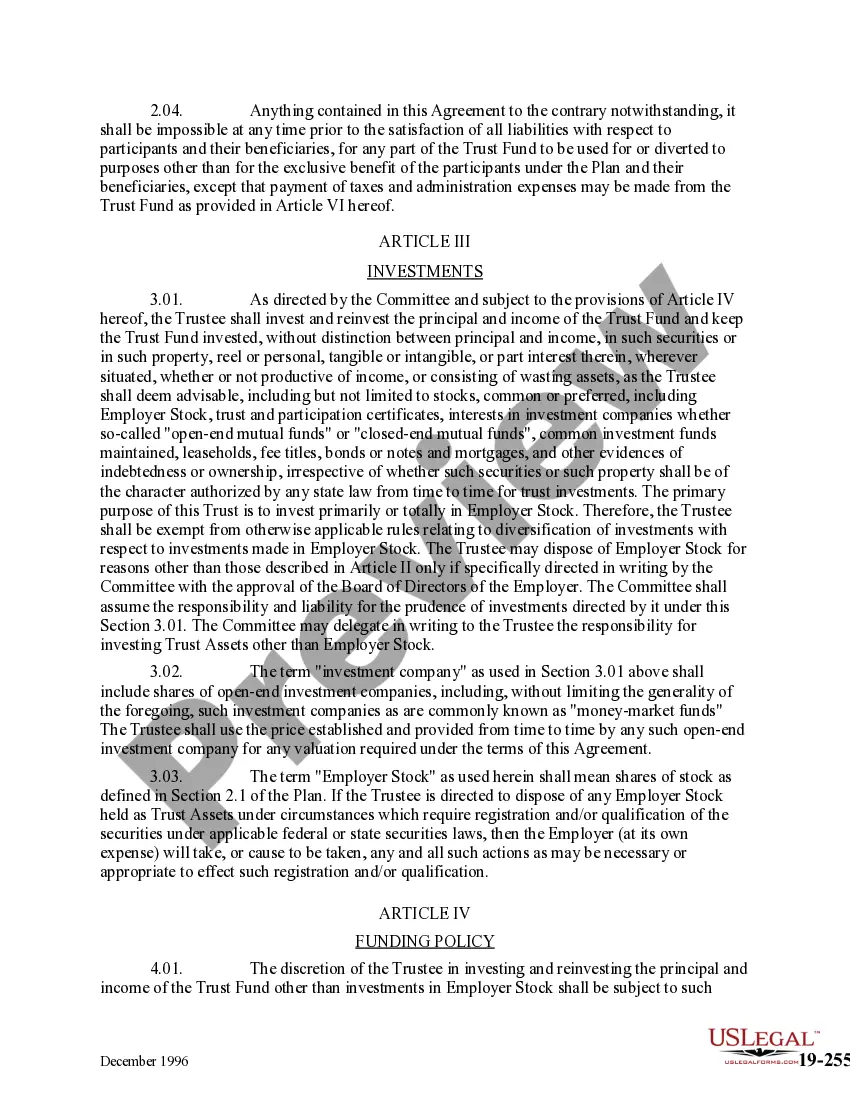
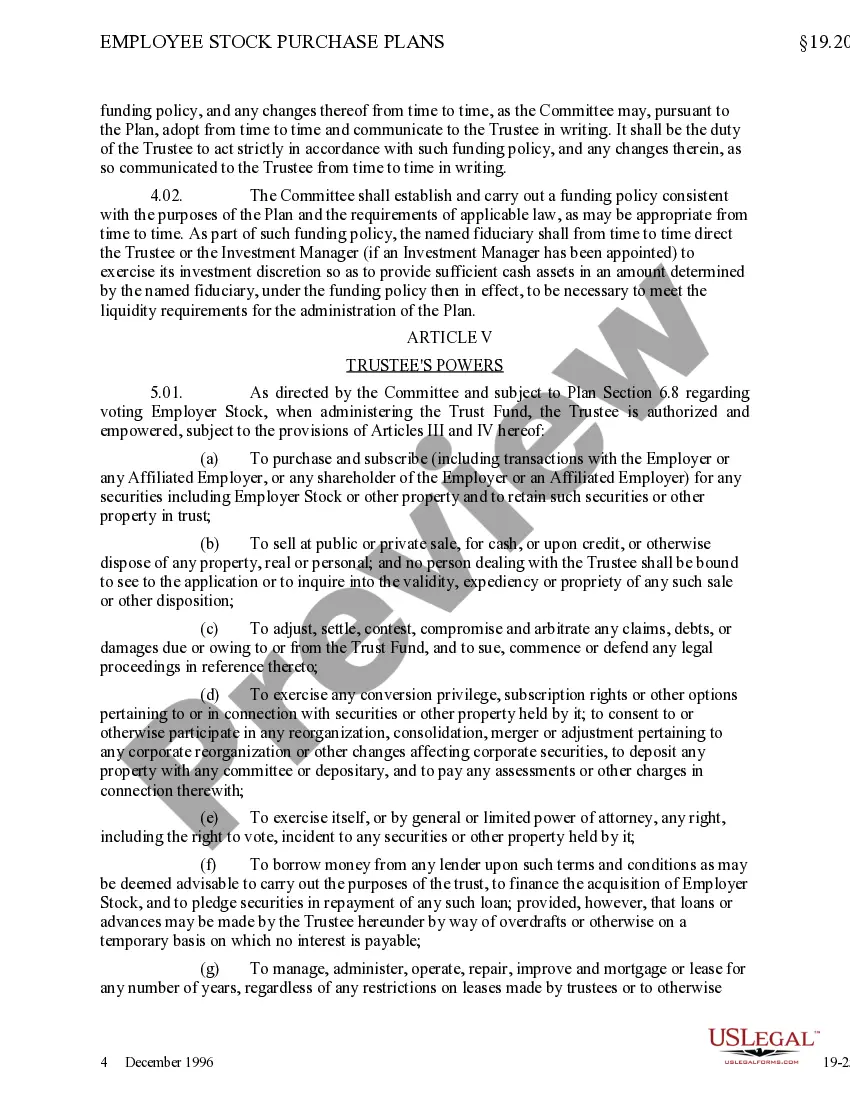
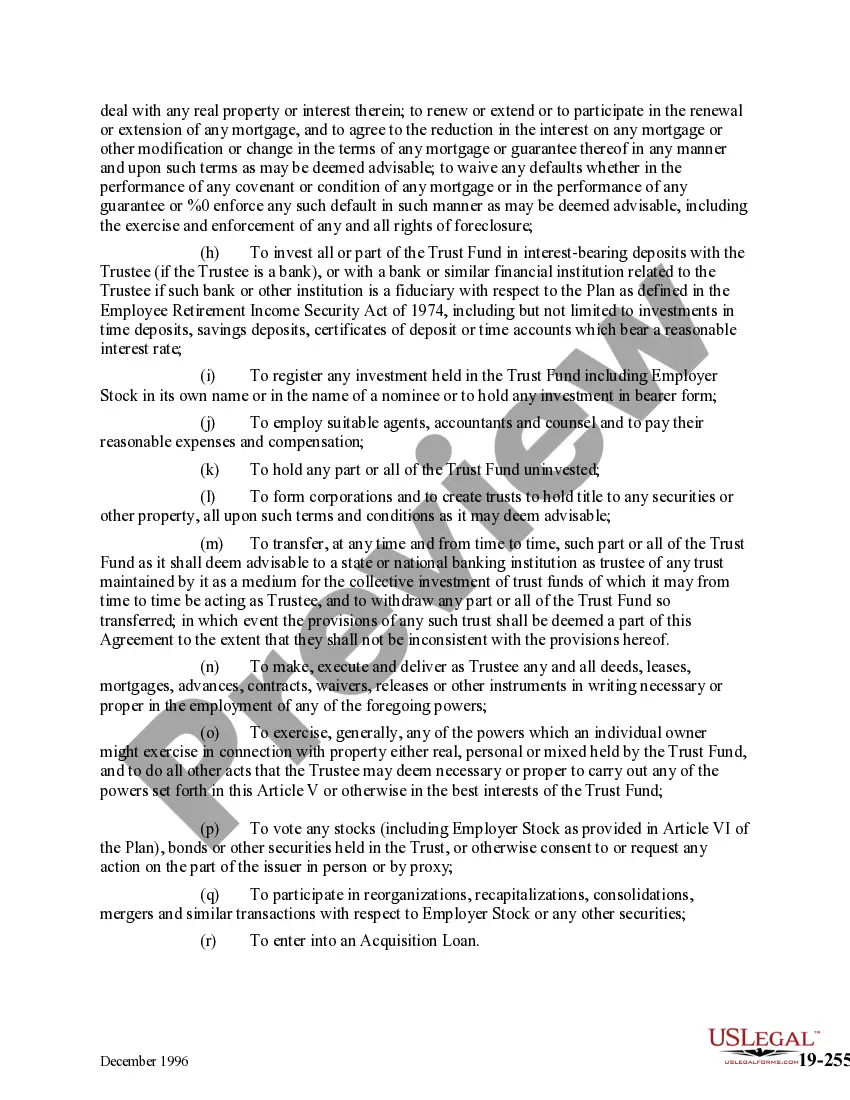
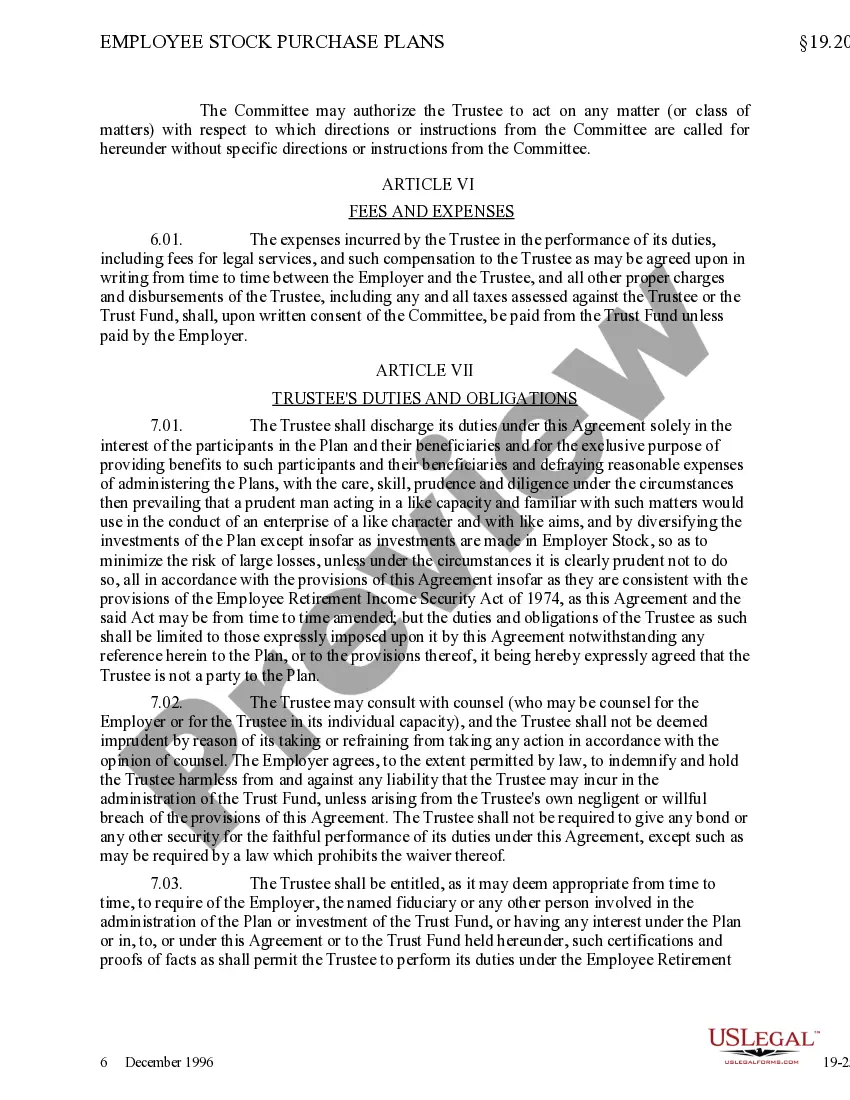
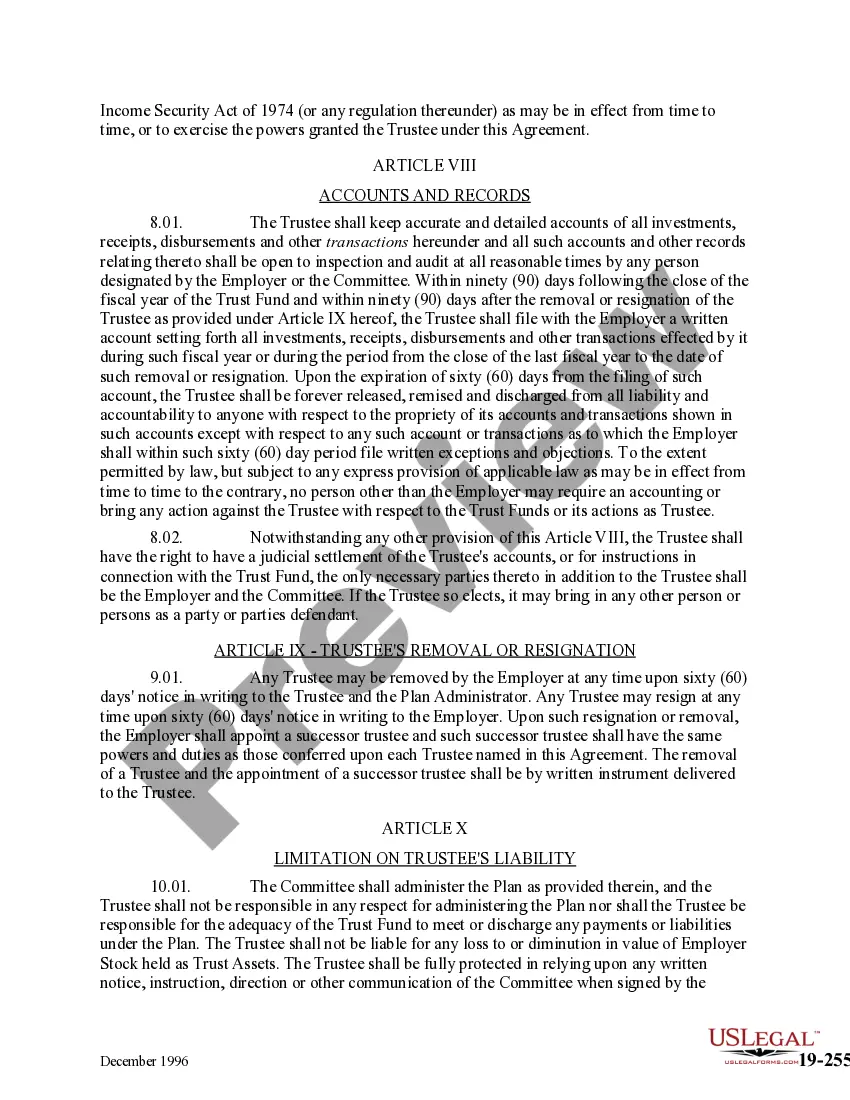
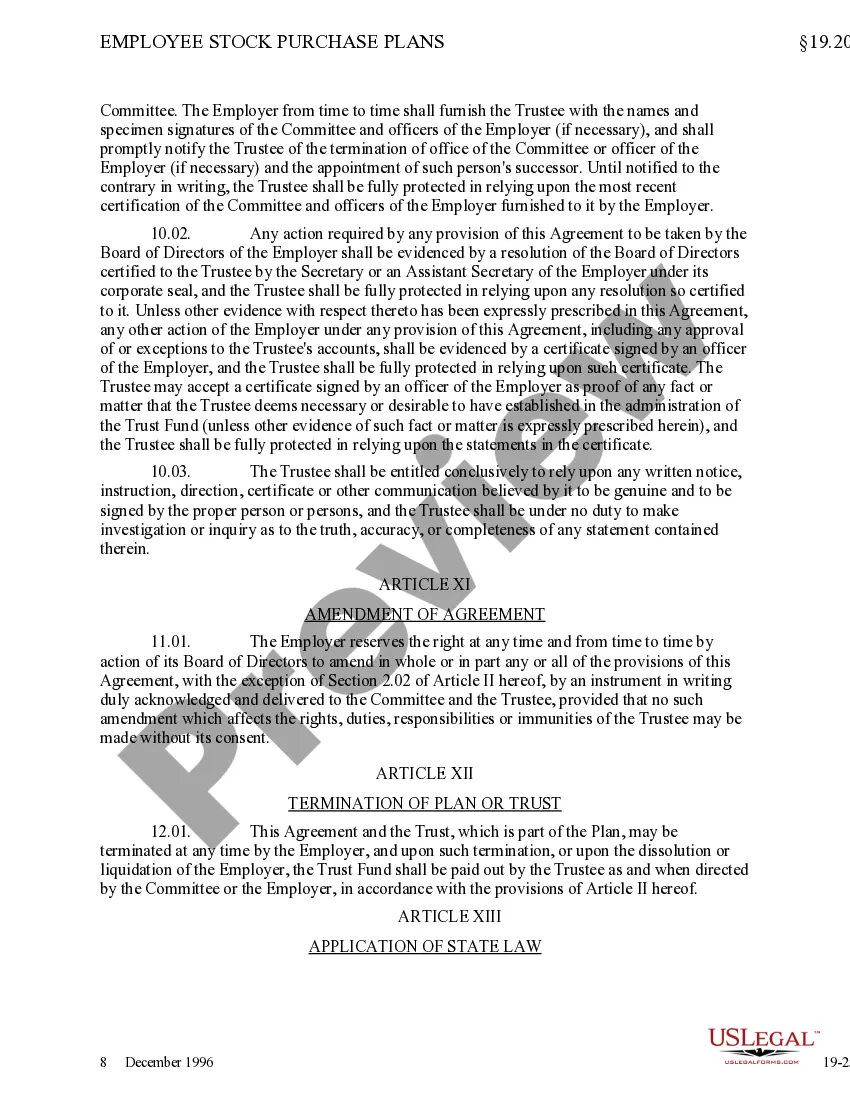
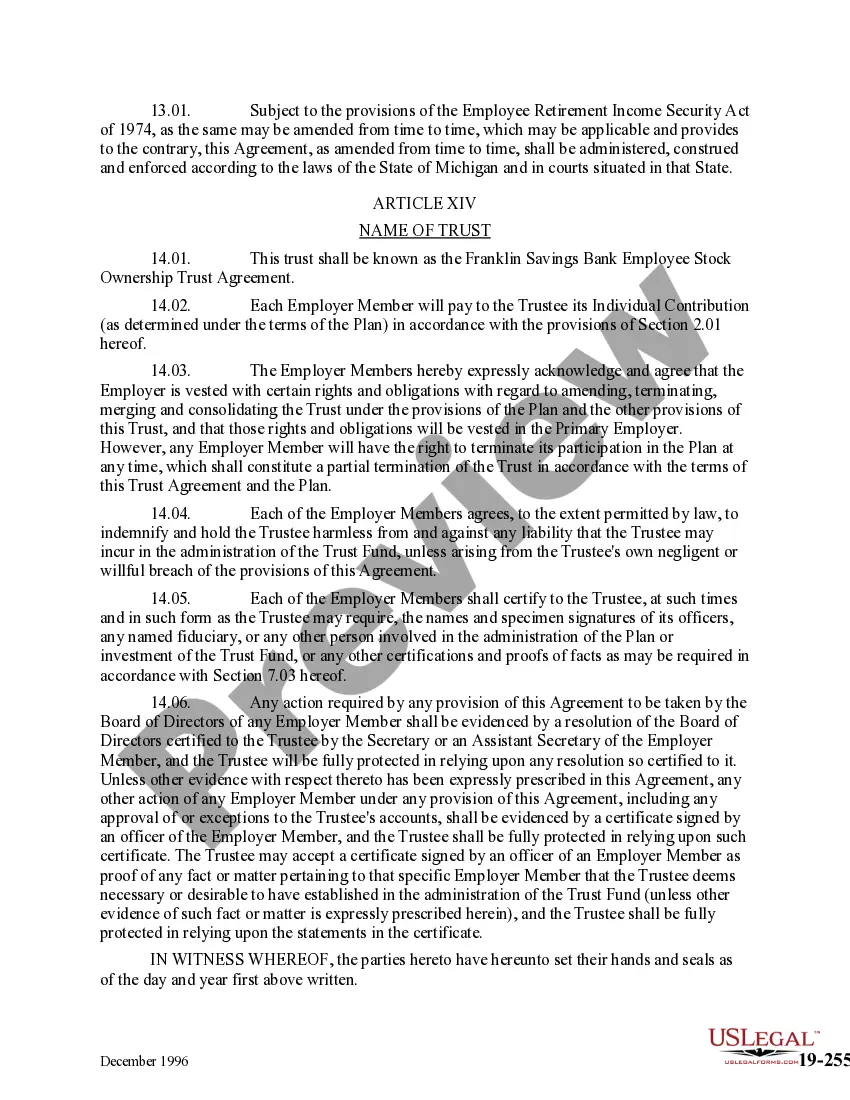
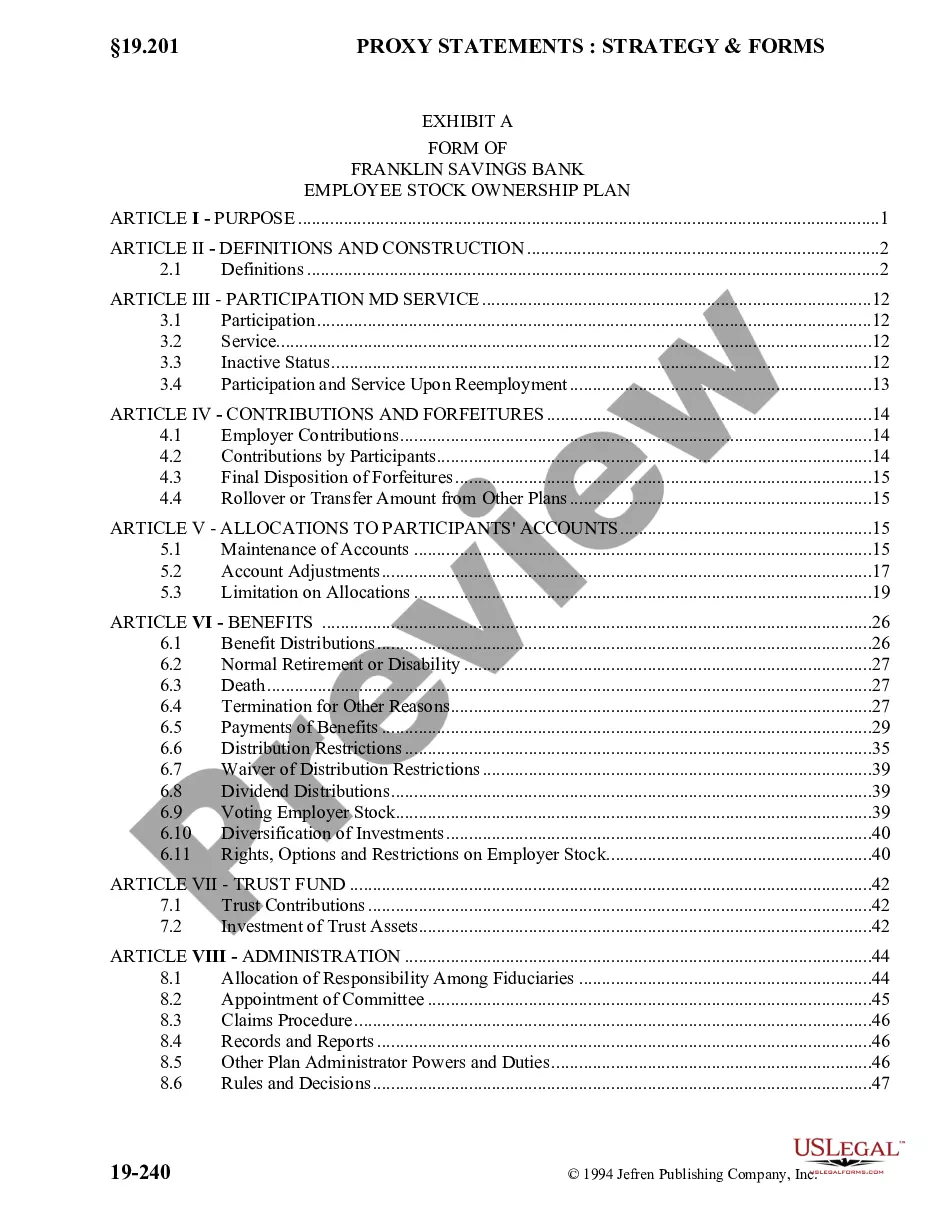
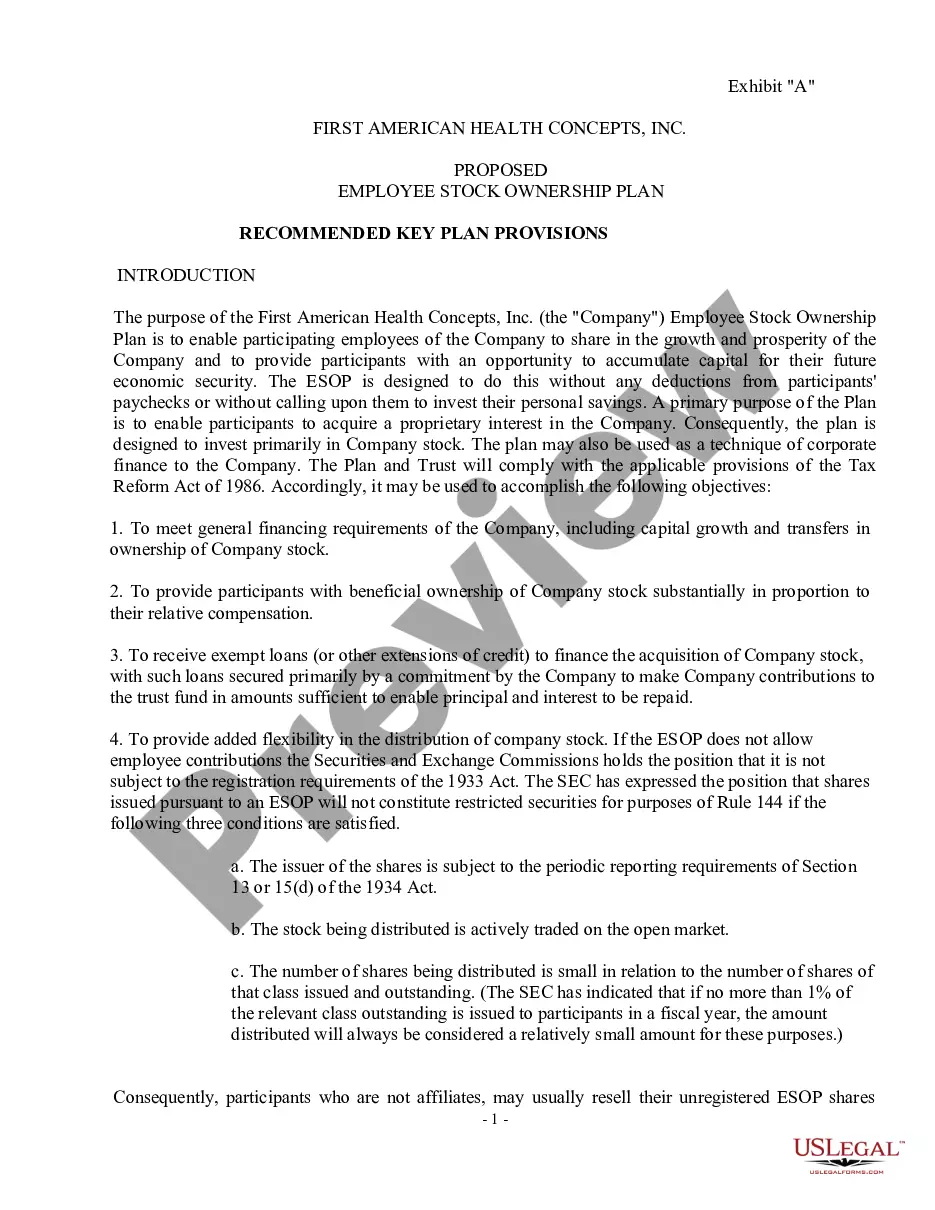
Get your form ready online
Our built-in tools help you complete, sign, share, and store your documents in one place.
Make edits, fill in missing information, and update formatting in US Legal Forms—just like you would in MS Word.
Download a copy, print it, send it by email, or mail it via USPS—whatever works best for your next step.
Sign and collect signatures with our SignNow integration. Send to multiple recipients, set reminders, and more. Go Premium to unlock E-Sign.
If this form requires notarization, complete it online through a secure video call—no need to meet a notary in person or wait for an appointment.
We protect your documents and personal data by following strict security and privacy standards.

Make edits, fill in missing information, and update formatting in US Legal Forms—just like you would in MS Word.

Download a copy, print it, send it by email, or mail it via USPS—whatever works best for your next step.

Sign and collect signatures with our SignNow integration. Send to multiple recipients, set reminders, and more. Go Premium to unlock E-Sign.

If this form requires notarization, complete it online through a secure video call—no need to meet a notary in person or wait for an appointment.

We protect your documents and personal data by following strict security and privacy standards.
Looking for another form?


How to fill out Employee Stock Ownership Trust Agreement?
- If you are a returning user, log into your account and locate your required form template. Click the Download button to save it to your device, ensuring your subscription remains active.
- For new users, begin by browsing through the forms in Preview mode to identify the one that best fits your requirements according to your local jurisdiction.
- Should you need a different template, use the Search tab at the top of the page to find the appropriate form. Select the correct one before proceeding.
- To obtain your document, click on the Buy Now button and choose the subscription plan that meets your needs. You'll need to create an account to access the comprehensive library.
- Complete your purchase by entering your payment information. You can use either a credit card or your PayPal account.
- Finally, download your form and save it to your device. You can conveniently access it later from the My Forms section of your profile.
Utilizing US Legal Forms enables you to save time and reduces the complexity involved in legal documentation. With over 85,000 forms available, you’re guaranteed to find the right one for your needs.
Start your journey to successful legal documentation today by visiting US Legal Forms and exploring their extensive offerings!
Form popularity
FAQ
Employee ownership often proves beneficial for both employees and businesses. It fosters a sense of responsibility and engagement among employees, which can lead to improved performance and innovation. That said, successful implementation relies on a solid structure, like an employee ownership trust with a trustee, to navigate challenges effectively.
In an employee ownership trust with a trustee arrangement, the trustee is not typically an employee of the trust. Instead, the trustee acts independently to manage the trust's assets and ensure they align with the beneficiaries' interests. This separation helps maintain objectivity and protects the employees' interests over time.
An ESOP can carry certain drawbacks for businesses and employees alike. Companies may face high administrative costs and legal complexities when establishing and maintaining an ESOP. As with any employee ownership structure, disagreements about share value and distribution may arise, which is why a well-defined employee ownership trust with a trustee is vital.
A notable example of employee ownership is a company that operates under an employee stock ownership plan (ESOP). In this model, employees hold shares in the company, directly participating in its success. This arrangement functions similarly to an employee ownership trust with a trustee, promoting a shared commitment to the company's growth.
While employee ownership has many benefits, it can also present some disadvantages. For instance, employees may lack the necessary experience in managing a company, which can affect decision-making and overall performance. Moreover, conflicts might arise among employees regarding profit distribution and management, necessitating a well-structured employee ownership trust with a trustee.
Employee ownership trusts come with specific challenges. One issue is the complexity in setting up the trust, which requires careful planning and legal guidance. Additionally, there may be ongoing administrative costs associated with managing the employee ownership trust with a trustee, making it essential for businesses to budget accordingly.
Yes, an ESOP trust is required to file an annual tax return. This is important for ensuring compliance with IRS regulations and maintaining its tax-exempt status. Filing also involves reporting the trust's income, deductions, and distributions. To navigate the complexities surrounding an employee ownership trust with a trustee, consider using resources from U.S. Legal Forms for proper documentation.
Despite many advantages, an Employee Ownership Trust (EOT) has potential downsides. It requires ongoing administrative efforts and may involve initial setup costs that can be high. Additionally, the trust must comply with various regulatory requirements, which can be complex. Understanding these challenges is important when creating an employee ownership trust with a trustee to ensure it aligns with your company goals.
Absolutely, an ESOP is a specific type of trust designed for employee ownership. It involves establishing a fund that holds shares for employees, allowing them to gain a stake in the company’s success. This arrangement can significantly boost employee morale and retention, illustrating the power of an employee ownership trust with a trustee. By exploring all its facets, companies can make informed decisions about their ownership structures.
Yes, an ESOP is indeed considered a trust. Specifically, it functions as a qualified retirement plan that holds shares for employee beneficiaries. This trust arrangement allows employees to benefit from company profits and encourages a sense of ownership. When looking into the concept of an employee ownership trust with a trustee, understanding the trust structure is key.