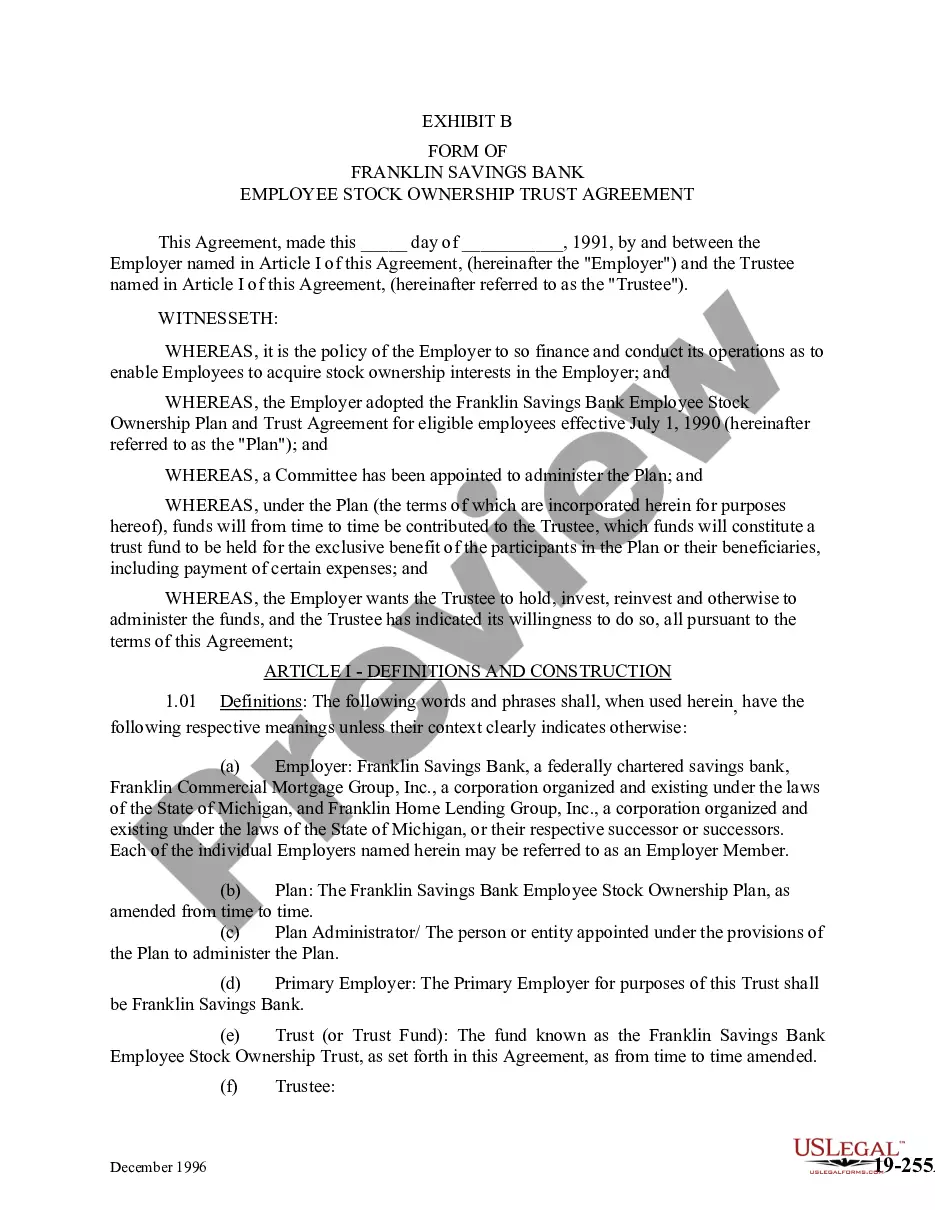
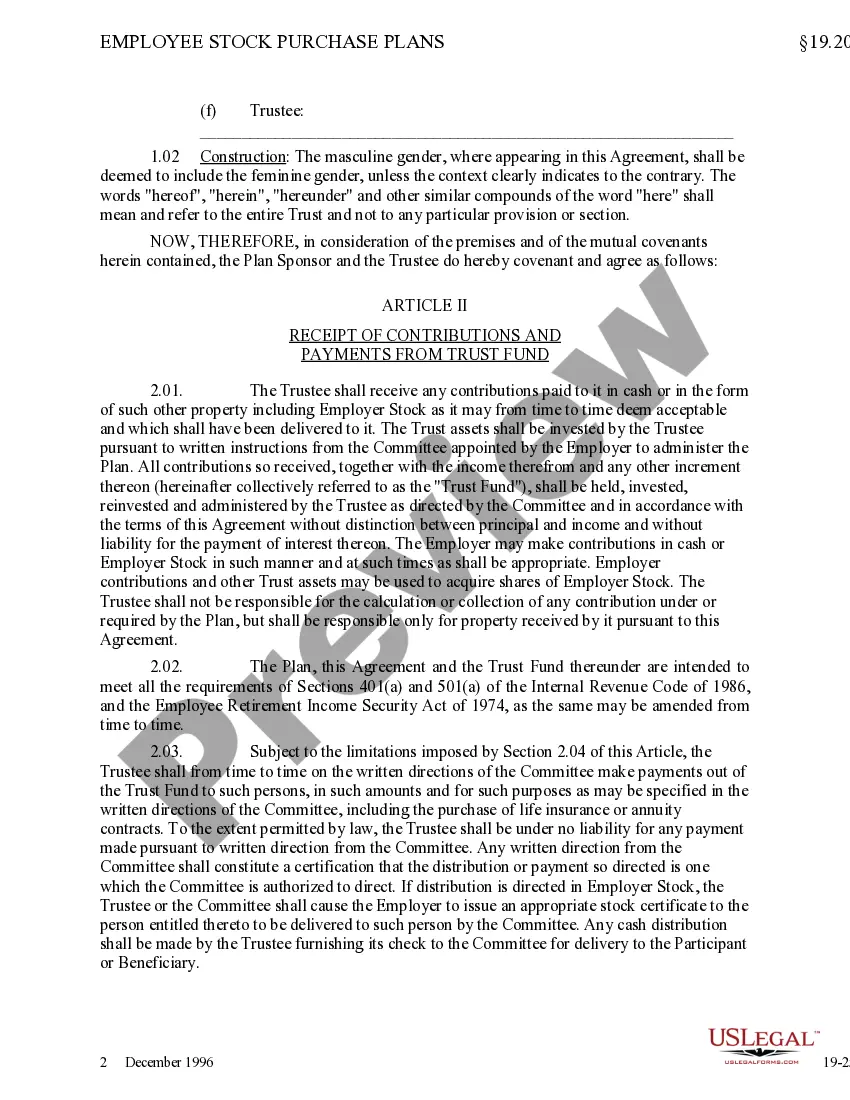
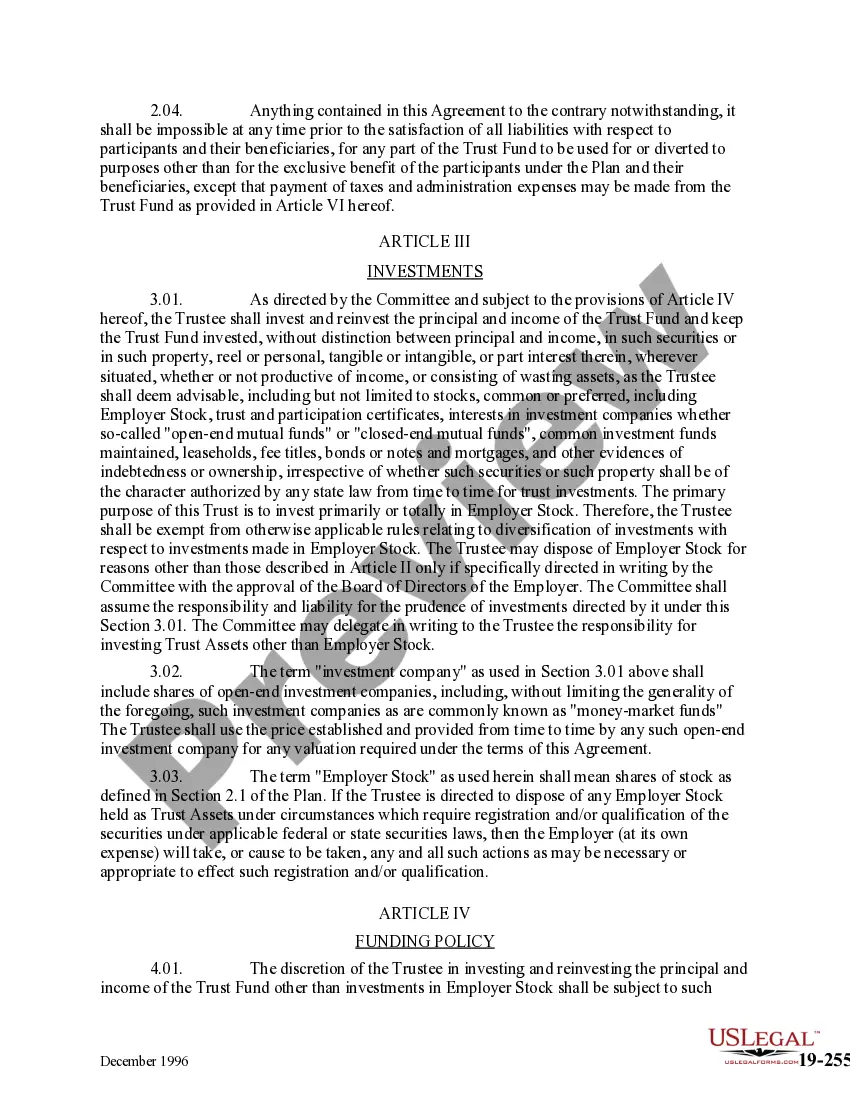
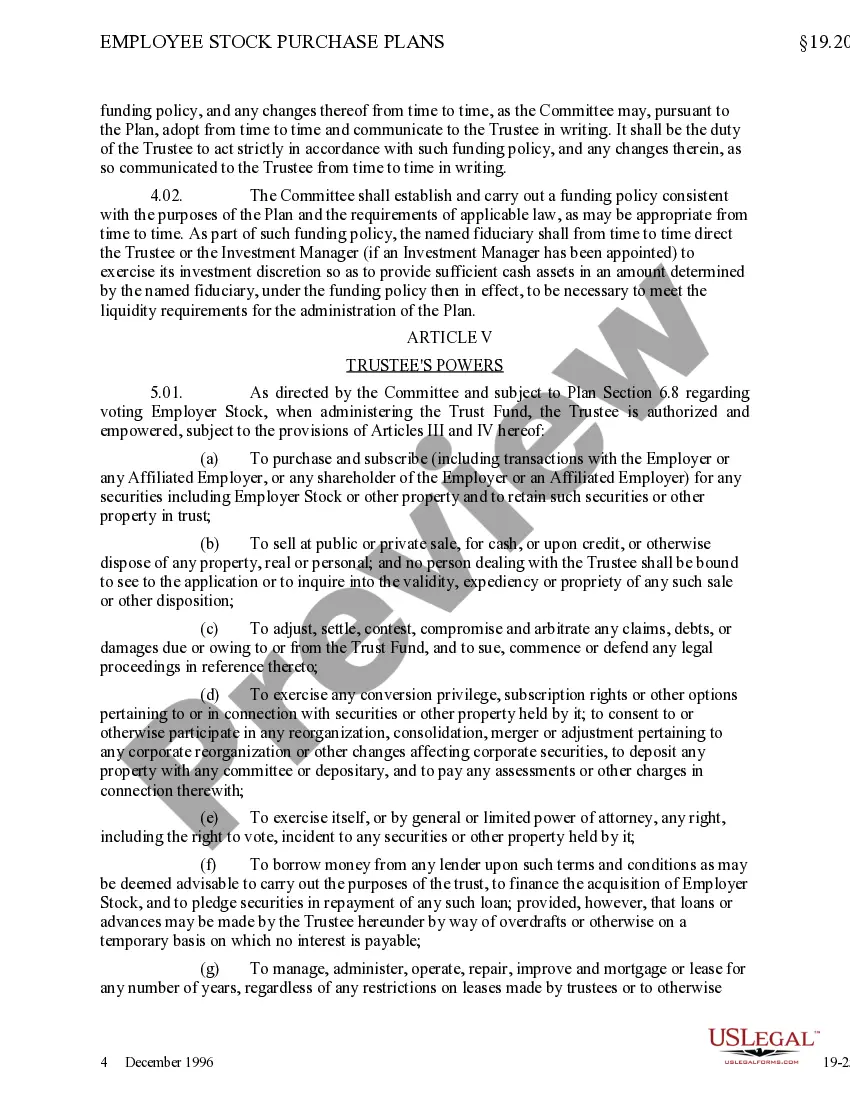
Employee Ownership Trust With A Trust
Description
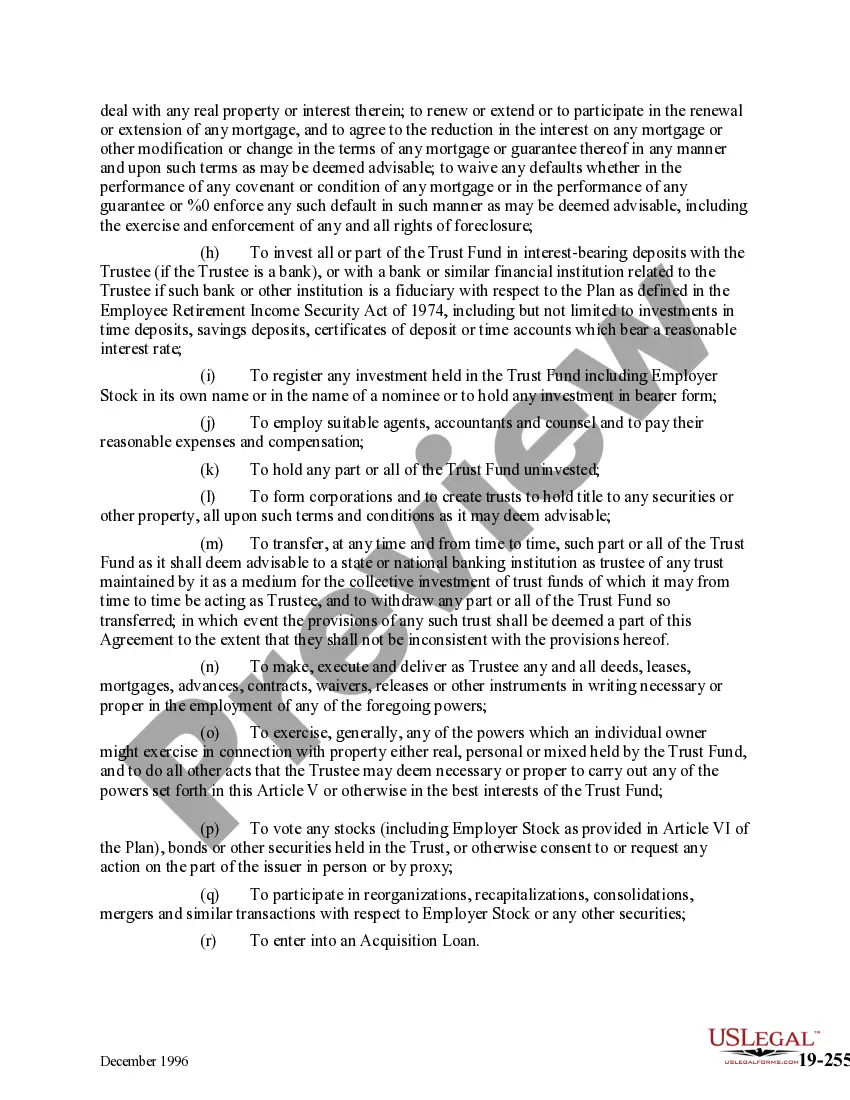
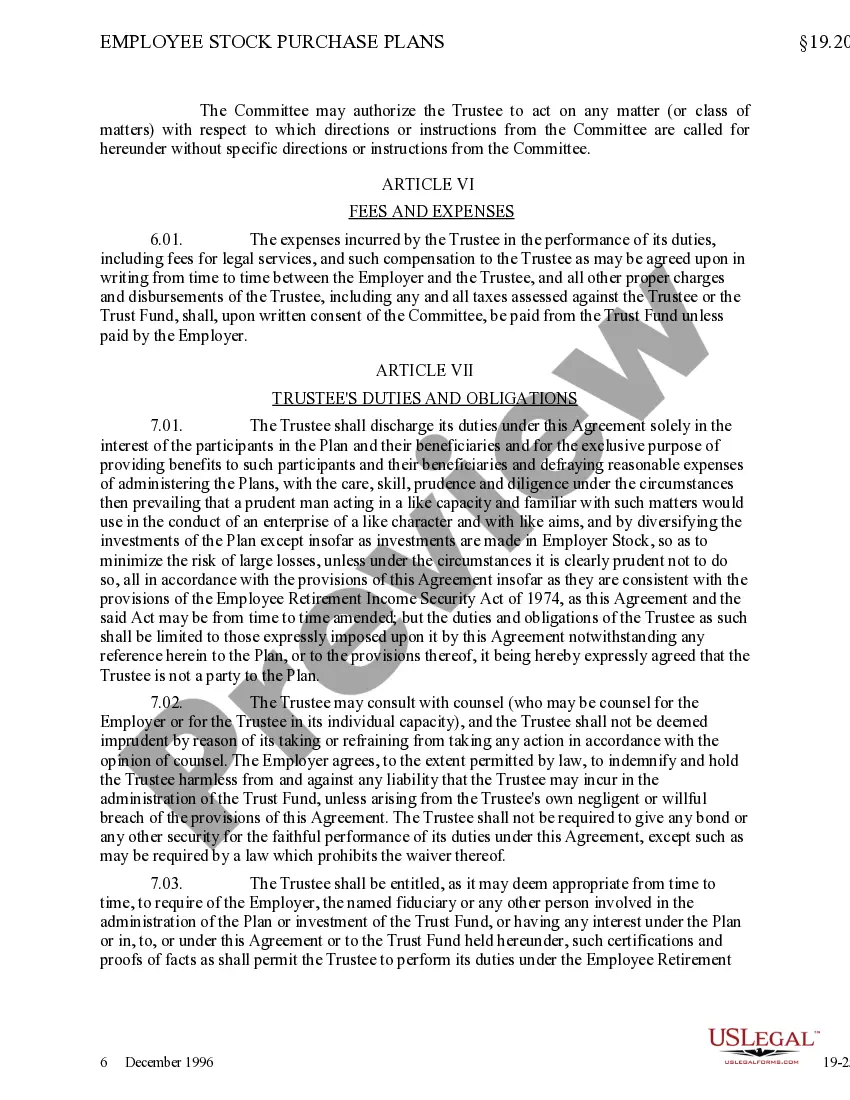
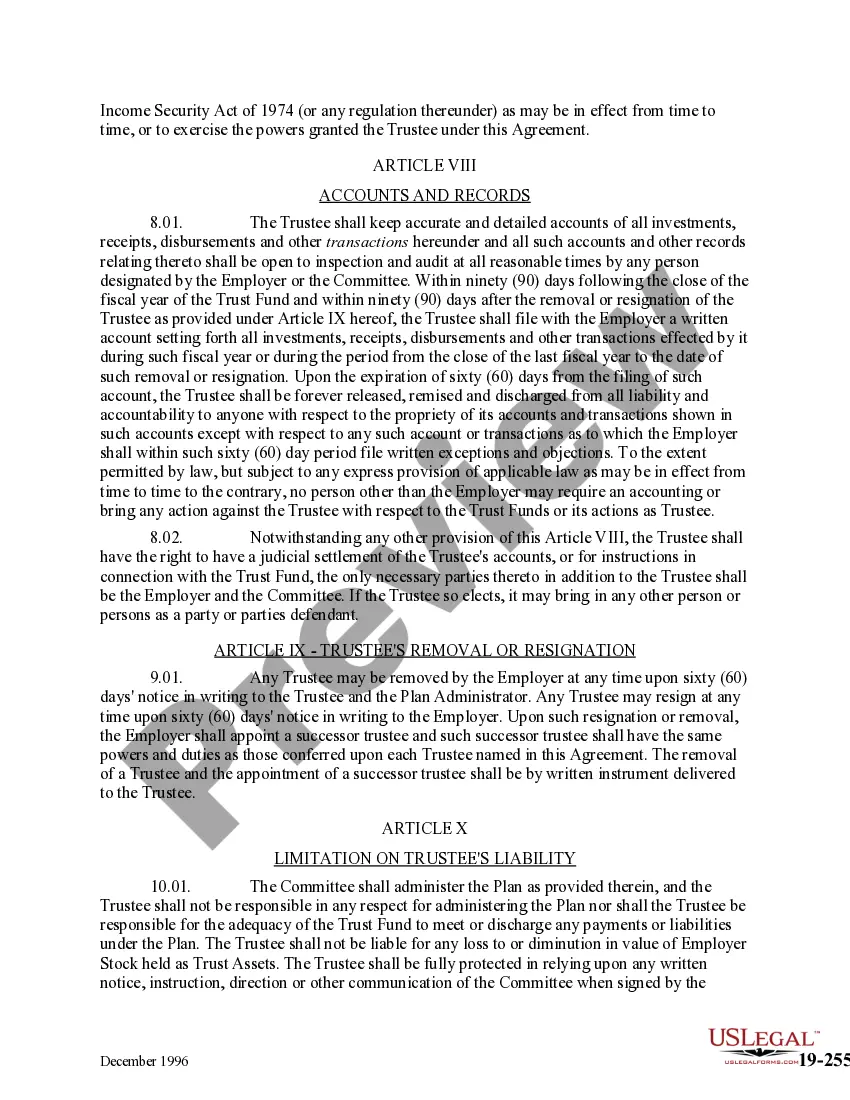
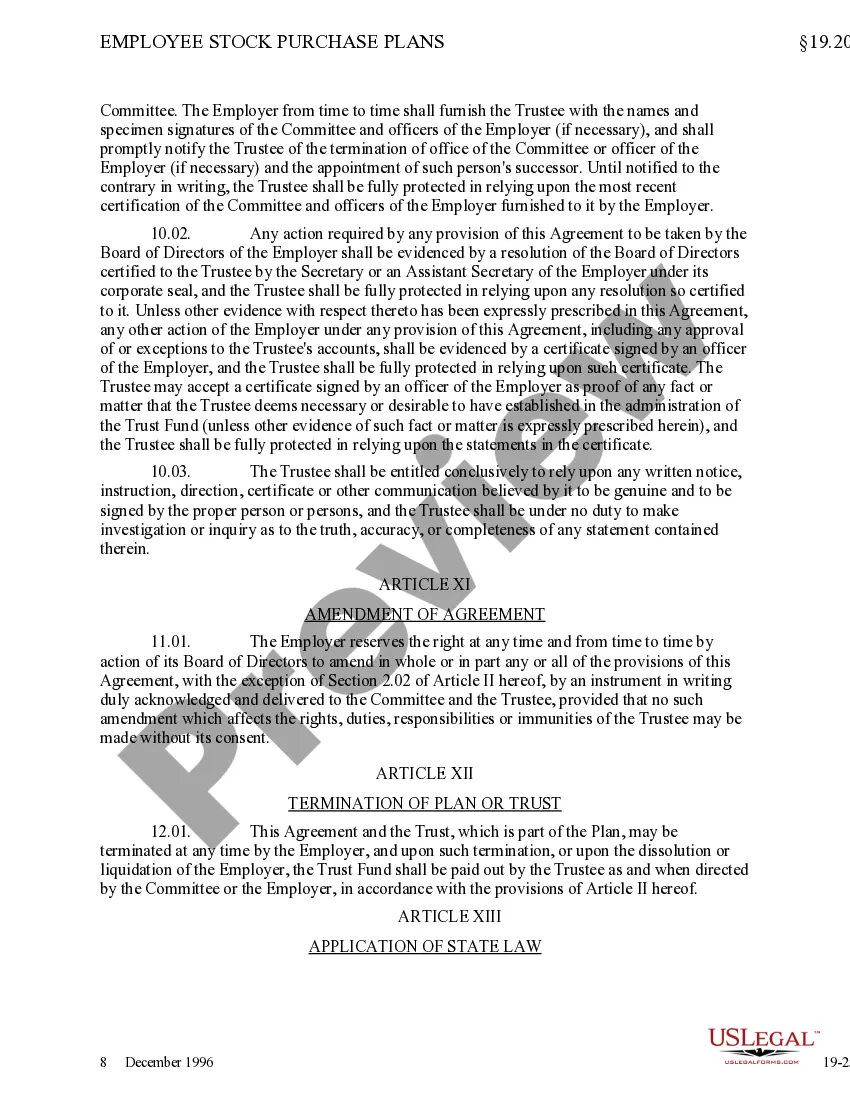
Get your form ready online
Our built-in tools help you complete, sign, share, and store your documents in one place.
Make edits, fill in missing information, and update formatting in US Legal Forms—just like you would in MS Word.
Download a copy, print it, send it by email, or mail it via USPS—whatever works best for your next step.
Sign and collect signatures with our SignNow integration. Send to multiple recipients, set reminders, and more. Go Premium to unlock E-Sign.
If this form requires notarization, complete it online through a secure video call—no need to meet a notary in person or wait for an appointment.
We protect your documents and personal data by following strict security and privacy standards.
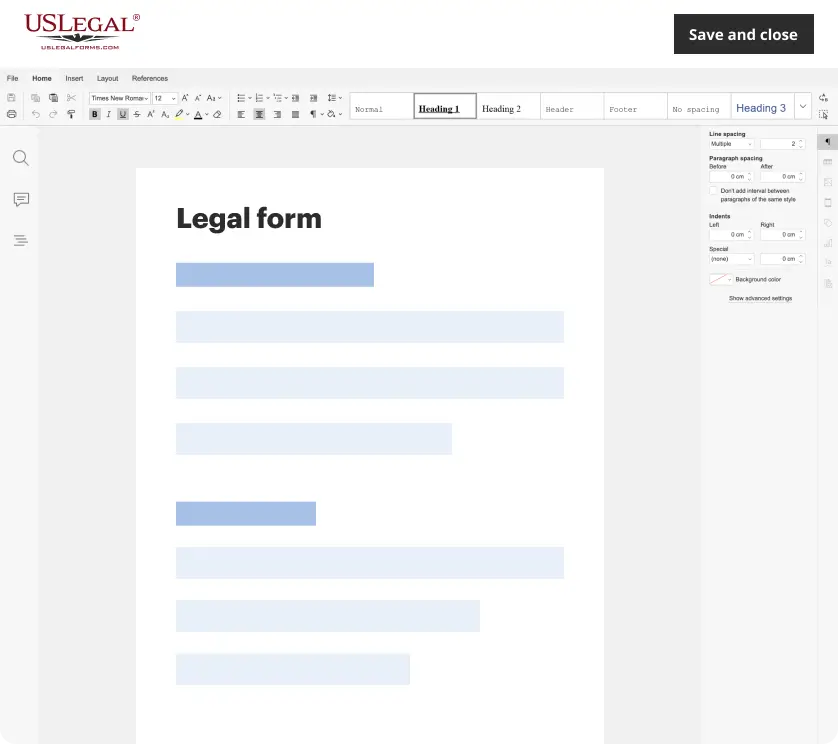
Make edits, fill in missing information, and update formatting in US Legal Forms—just like you would in MS Word.
Download a copy, print it, send it by email, or mail it via USPS—whatever works best for your next step.
Sign and collect signatures with our SignNow integration. Send to multiple recipients, set reminders, and more. Go Premium to unlock E-Sign.

If this form requires notarization, complete it online through a secure video call—no need to meet a notary in person or wait for an appointment.
We protect your documents and personal data by following strict security and privacy standards.
Looking for another form?

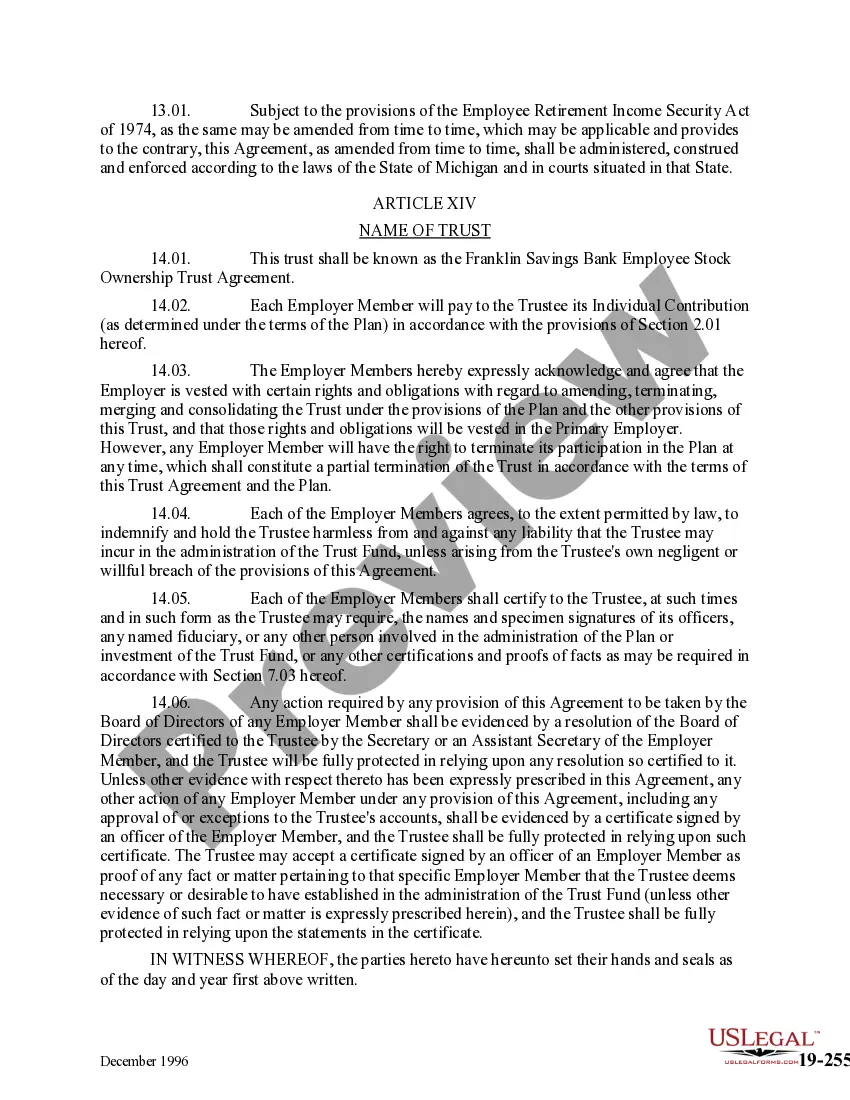
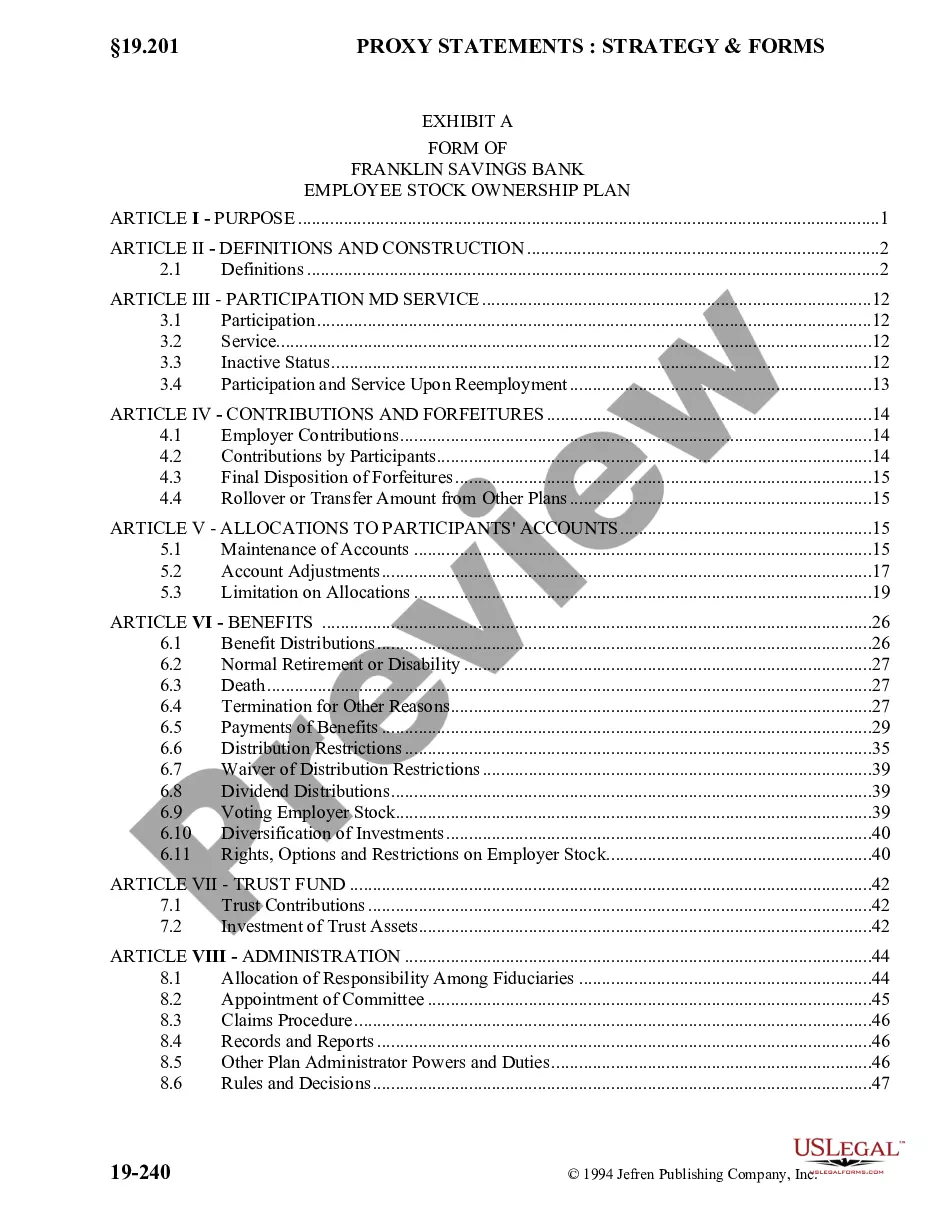
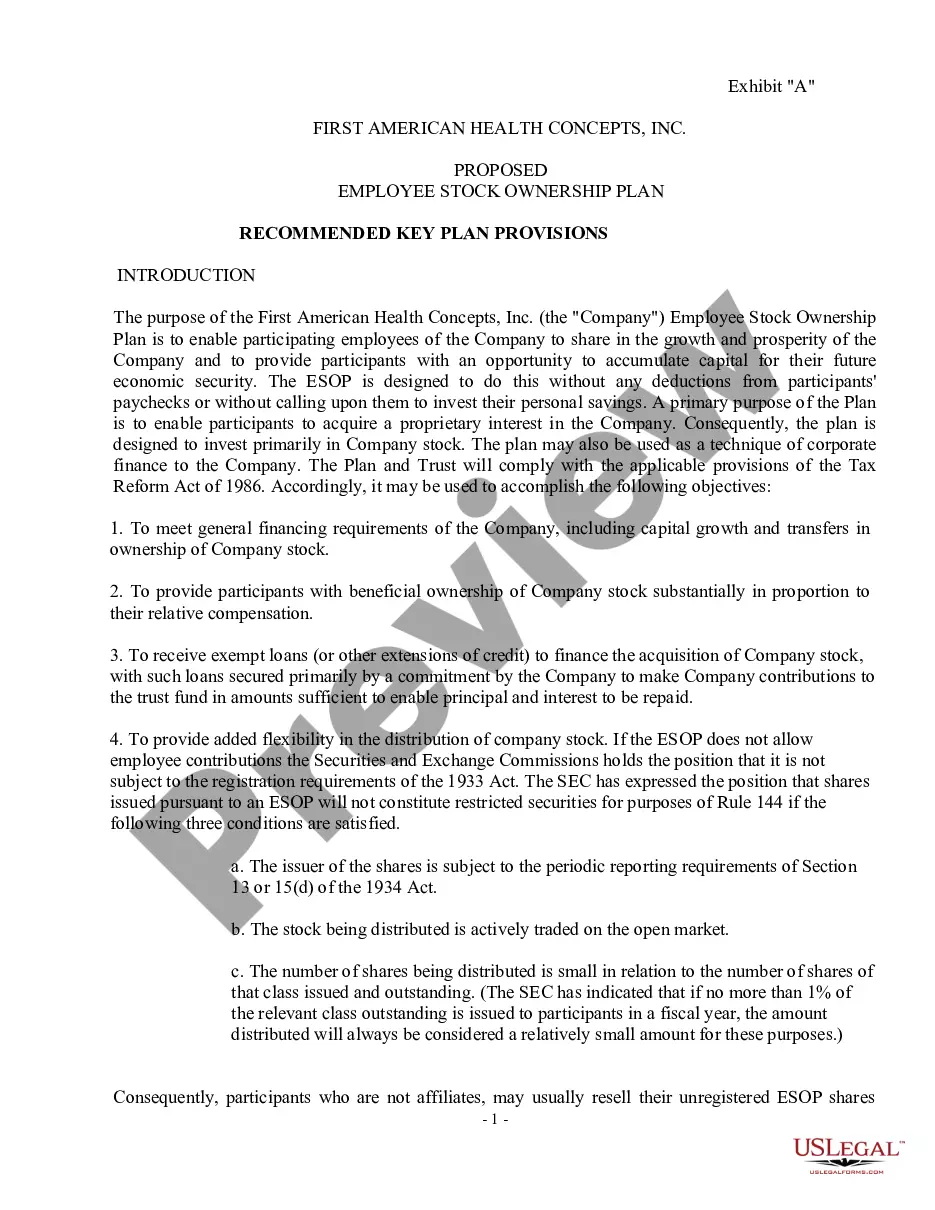
How to fill out Employee Stock Ownership Trust Agreement?
- If you're a returning user, log in to your account and download the required form template. Ensure your subscription is active; if it's expired, renew it according to your payment plan.
- Review the form description and preview mode to confirm you’ve selected the correct document that meets your local legal requirements.
- If discrepancies arise, use the Search feature to find the appropriate form that fits your needs.
- Proceed to purchase the document by clicking the Buy Now button and selecting your desired subscription plan; registration for an account is necessary for full access.
- Complete your purchase by entering your payment details via credit card or PayPal to activate your subscription.
- Download the form to your device for completion and access it later through the My Forms section of your profile.
With US Legal Forms, individuals and attorneys can swiftly execute legal documents with confidence, thanks to an extensive library of over 85,000 fillable and editable legal forms. This platform not only saves time but also ensures that the documents created are precise and legally sound.
Ready to streamline your legal documentation process? Start your journey with US Legal Forms today!
Form popularity
FAQ
Employee trusts function by holding shares on behalf of employees, thus providing them with a voice in the company’s direction and profits. These trusts operate under specific rules that govern distributions and employee benefits. To implement an employee ownership trust with a trust effectively, consider platforms like uslegalforms, which offer the necessary documentation and guidance for creating and managing your employee trust successfully.
An ownership trust is a legal arrangement meant to hold and manage a company's assets for the benefit of its employees. This model allows employees to gain a share of the profits and assists in creating a culture of shared responsibility. Establishing an employee ownership trust with a trust is an effective way to ensure sustainable growth while providing employees with a stake in the company.
When a company is 100 percent employee-owned, it means all shares are owned by its employees, creating a strong sense of investment and commitment. This structure often fosters a collaborative work environment, leading to improved morale and productivity. Utilizing an employee ownership trust with a trust ensures that employees benefit directly from the company’s success while securing their future.
An employee ownership trust with a trust and an ESOP serve similar purposes but differ significantly in structure. An employee ownership trust holds shares on behalf of employees without creating individual accounts for each employee, while an ESOP allocates shares to individual employee accounts. Understanding these differences can help businesses select the right model for their employee ownership strategy.
The disadvantages of an employee ownership trust can include complexities in governance and potential employee disputes. If the trust structure is not well-defined, it can lead to confusion about decision-making processes. Additionally, ongoing management of the employee ownership trust with a trust requires resources and expertise, making it essential for companies to stay informed and prepared.
The accounting treatment for an employee ownership trust with a trust typically involves recording the trust's shares as a liability or an asset on the company’s balance sheet. The guidance around this treatment can vary based on specific regulations and the structure of the trust. It's crucial for companies to consult with financial advisors to ensure compliance and accurate reporting.
Employee ownership trusts are generally subject to specific tax rules depending on their structure. When shares are transferred to an employee ownership trust, certain tax benefits may apply, making it a favorable option for both businesses and employees. Properly setting up the employee ownership trust with a trust can lead to significant tax advantages, promoting long-term financial gains for employees.
Yes, an ESOP can indeed be held in a trust. Typically, the ESOP creates a trust to hold shares on behalf of employees, ensuring they benefit from the company's success. This structure aligns well with the concept of an employee ownership trust with a trust. It allows for a seamless transition of ownership while offering potential tax incentives.
The EOT 5% rule states that an employee ownership trust with a trust must be structured such that no single employee can have more than a 5% stake in the company. This regulation promotes equality among employee owners and helps maintain the essence of an employee ownership model. Understanding this rule is crucial for ensuring compliance and fostering a fair ownership culture.
While an employee ownership trust with a trust offers many benefits, it also comes with some downsides. These may include potential loss of control for original owners and a complicated setup process. Additionally, if not managed well, the trust can lead to conflicts among employees regarding distribution of ownership. Understanding these challenges is key to making an informed decision.