Non Qualified Stock Options Tax
Description


Get your form ready online
Our built-in tools help you complete, sign, share, and store your documents in one place.
Make edits, fill in missing information, and update formatting in US Legal Forms—just like you would in MS Word.
Download a copy, print it, send it by email, or mail it via USPS—whatever works best for your next step.
Sign and collect signatures with our SignNow integration. Send to multiple recipients, set reminders, and more. Go Premium to unlock E-Sign.
If this form requires notarization, complete it online through a secure video call—no need to meet a notary in person or wait for an appointment.
We protect your documents and personal data by following strict security and privacy standards.

Make edits, fill in missing information, and update formatting in US Legal Forms—just like you would in MS Word.

Download a copy, print it, send it by email, or mail it via USPS—whatever works best for your next step.

Sign and collect signatures with our SignNow integration. Send to multiple recipients, set reminders, and more. Go Premium to unlock E-Sign.

If this form requires notarization, complete it online through a secure video call—no need to meet a notary in person or wait for an appointment.

We protect your documents and personal data by following strict security and privacy standards.
Looking for another form?








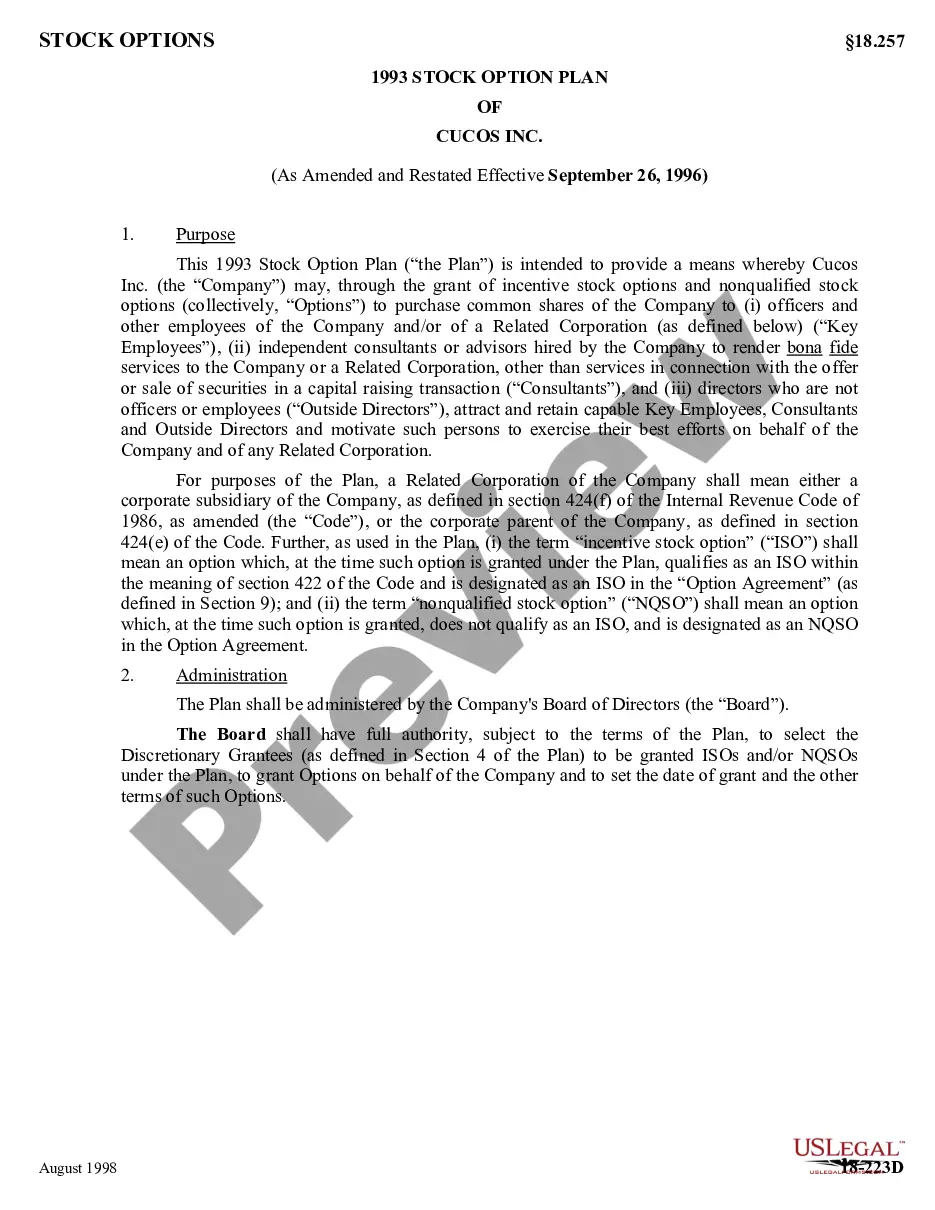
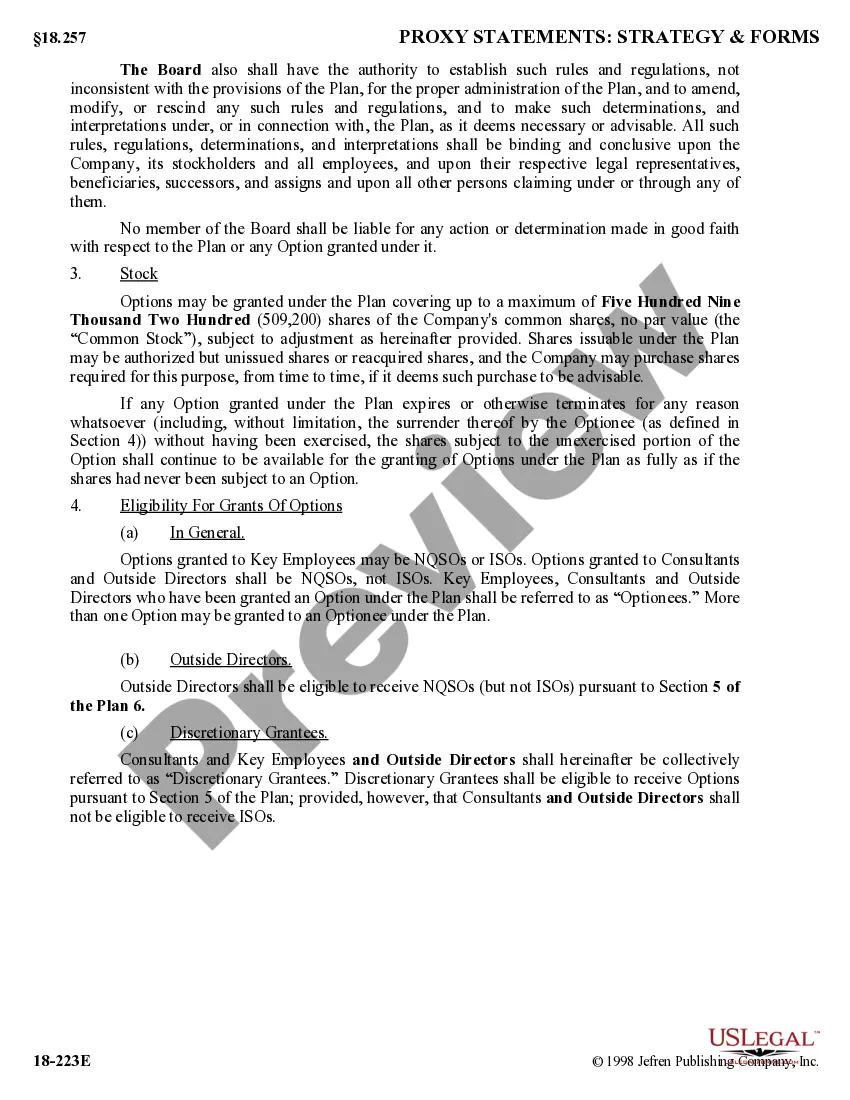
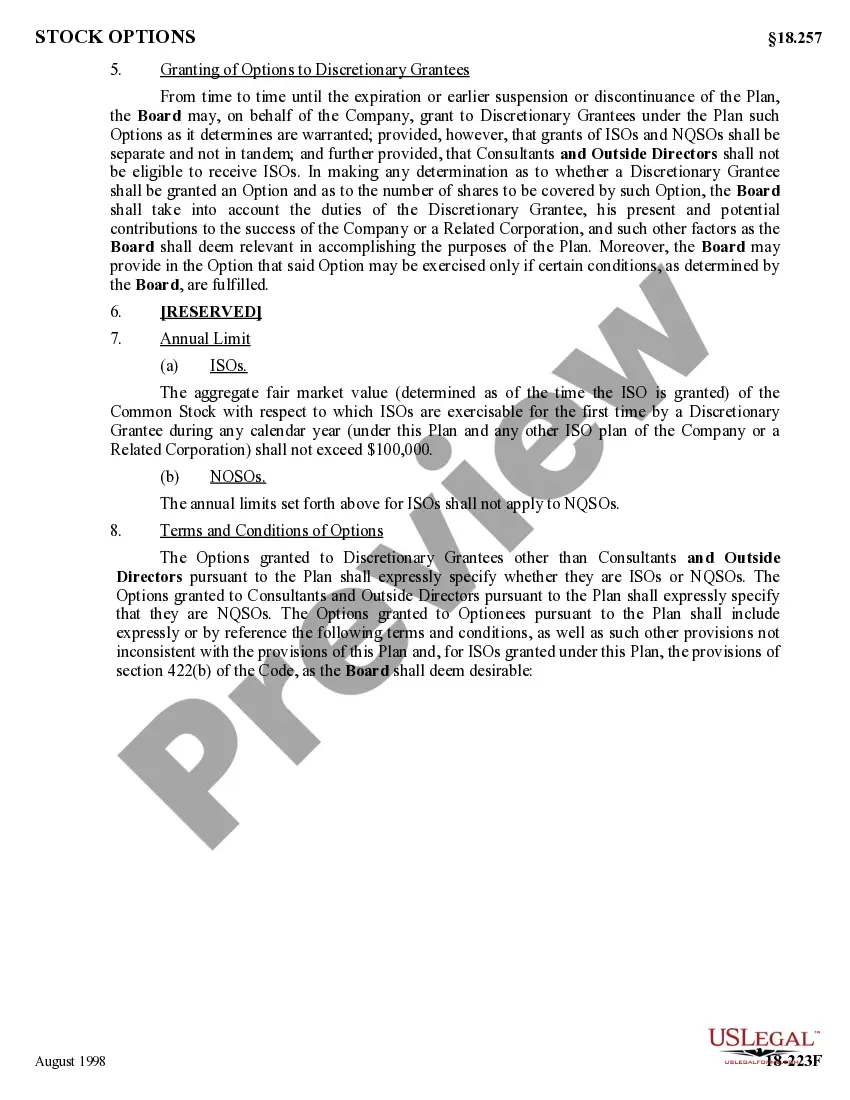
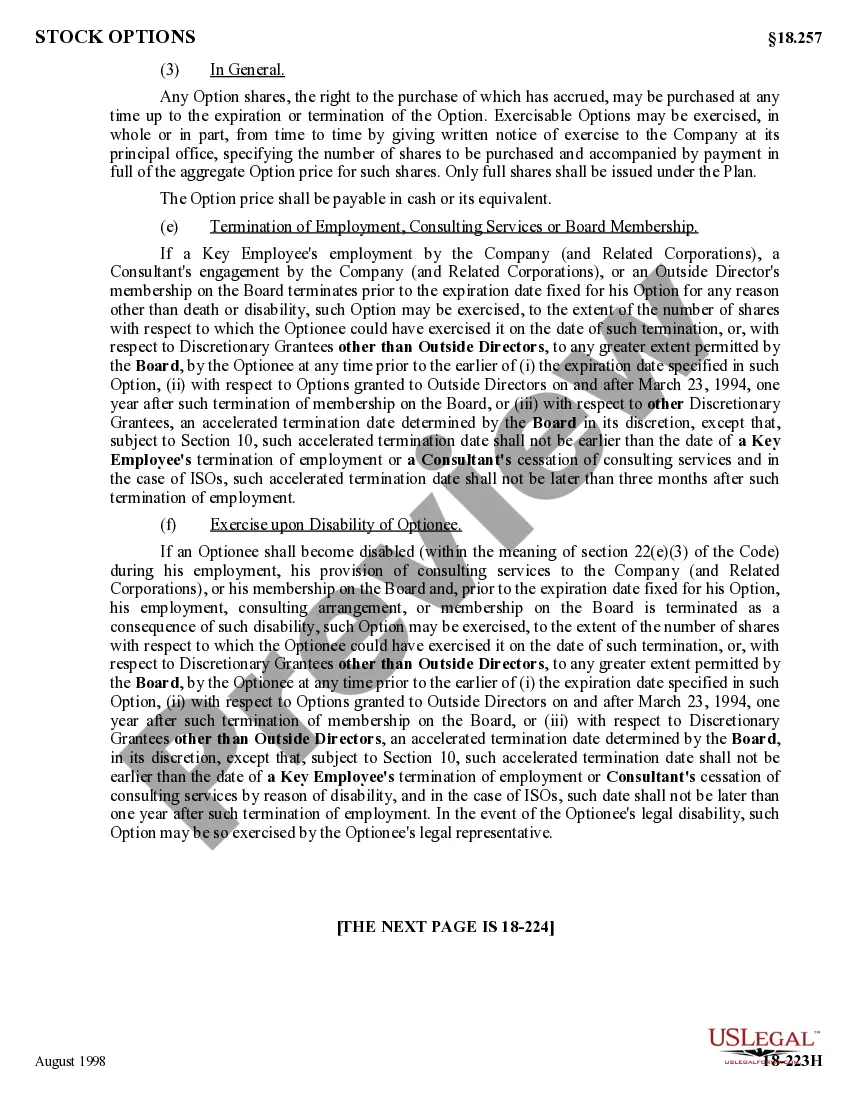
How to fill out Nonemployee Directors Nonqualified Stock Option Plan Of Cucos, Inc.?
The Non-Qualified Stock Options Tax displayed here is a reusable official template crafted by legal professionals in adherence to federal and state statutes and regulations.
For over 25 years, US Legal Forms has delivered to individuals, enterprises, and lawyers over 85,000 verified, state-specific documents for any business and personal situation. It’s the fastest, simplest, and most reliable method to acquire the paperwork you require, as the service assures bank-level data security and anti-malware safeguards.
Select the format you wish for your Non-Qualified Stock Options Tax (PDF, Word, RTF) and download the sample onto your device.
- Search for the document you require and examine it.
- Browse through the sample you sought and preview it or review the form description to confirm it meets your criteria. If it doesn’t, utilize the search feature to find the correct one. Click Buy Now once you have identified the template you need.
- Choose a subscription plan and Log In.
- Select the pricing option that fits you and create an account. Use PayPal or a credit card for a quick payment. If you already possess an account, Log In and verify your subscription to proceed.
- Acquire the editable template.
Form popularity
FAQ
When dealing with nonqualified stock options tax, it is essential to report your income accurately. You will usually report the income from exercising these options as part of your ordinary income on your tax return. Additionally, you may need to fill out specific forms, such as Form 1040 or Schedule D, depending on your situation. For further guidance, uslegalforms offers resources to help you navigate these reporting requirements.
Employers report non-qualified stock options on your W-2 form in Box 1, which includes your total taxable income. The income from exercised options will also appear in Box 12, typically with a code that identifies it as income from stock options. This ensures that the income is properly accounted for when you file your taxes. To navigate the complexities of non qualified stock options tax, consider using uslegalforms for reliable resources and documentation.
The best strategy for non-qualified stock options involves understanding the timing of your exercises and sales. Consider exercising options when your income is lower to minimize tax impact. Additionally, holding the shares for more than a year can help you benefit from long-term capital gains rates, which are often more favorable than ordinary income rates. Consulting with a tax professional can provide personalized insights on non qualified stock options tax.
When filing taxes for stock options, you must report the income from exercising non-qualified stock options on your tax return. Use Form 8949 to report any capital gains or losses related to the sale of shares. As you navigate the non qualified stock options tax, consider seeking assistance from resources like US Legal Forms to ensure you correctly handle your tax obligations and maximize your tax return.
While it is challenging to avoid tax on non-qualified stock options, you can manage your tax liability through smart planning. Consider exercising your options in a year when your income is lower, which may reduce the tax rate applied. Additionally, using tools like US Legal Forms can help you understand your options and plan effectively, ensuring you navigate the non qualified stock options tax landscape wisely.
Yes, you typically receive a 1099 form for income generated from exercising non-qualified stock options. This form reports the income you must include on your tax return, reflecting the fair market value of the stock on the exercise date. Be mindful of non qualified stock options tax, as this income is usually taxed as ordinary income, impacting your overall tax liability.
Hear this out loud PauseThe income related to the option exercise should be included in the Form W-2 you receive from your employer or 1099-NEC from the company if you are a non-employee. Any capital gain or loss amount may also be reportable on your US Individual Income Tax Return (Form 1040), Schedule D and Form 8949 in the year of sale.
Hear this out loud PauseNon-qualified stock options require payment of income tax of the grant price minus the price of the exercised option. NSOs might be provided as an alternative form of compensation. Prices are often similar to the market value of the shares.
9 Ways to Avoid Capital Gains Taxes on Stocks Invest for the Long Term. ... Contribute to Your Retirement Accounts. ... Pick Your Cost Basis. ... Lower Your Tax Bracket. ... Harvest Losses to Offset Gains. ... Move to a Tax-Friendly State. ... Donate Stock to Charity. ... Invest in an Opportunity Zone.
Hear this out loud PauseThe Cost Basis of Your Non-Qualified Stock Options The cost basis, generally speaking, is equal to the exercise price, multiplied by the number of shares exercised.