Claims Chapter 13 Within
Description
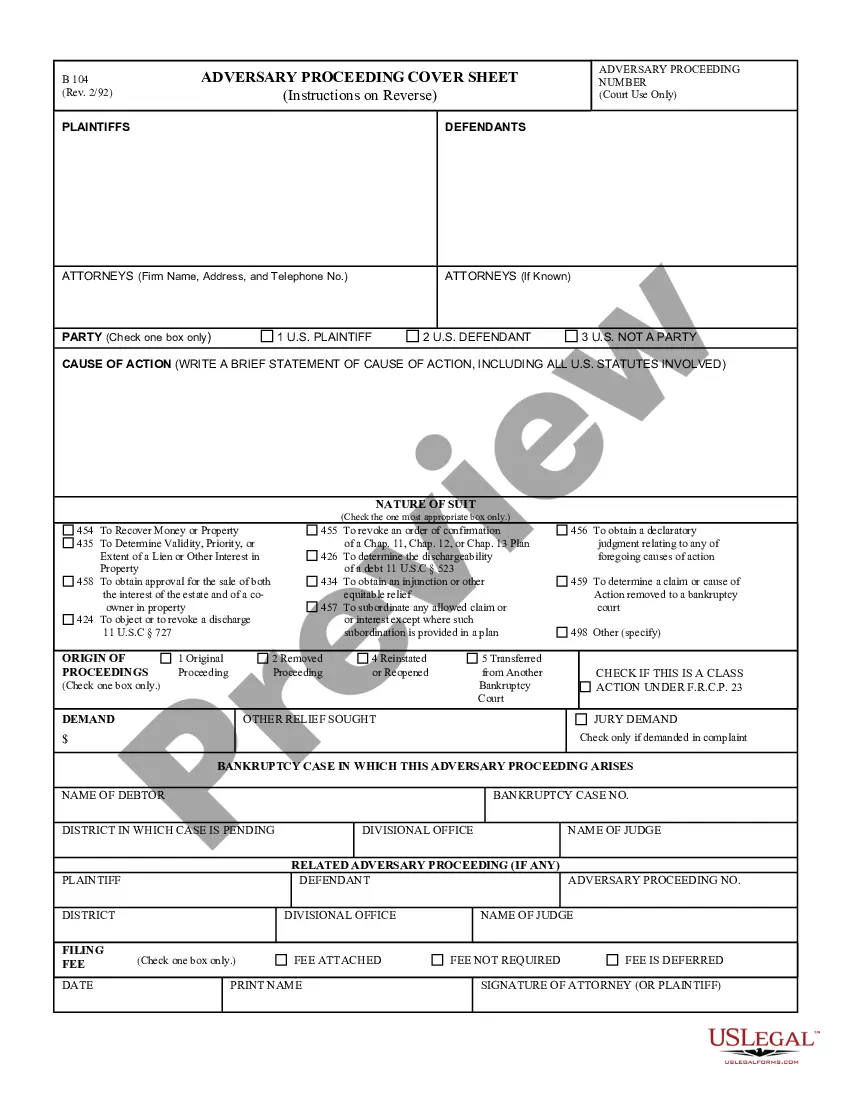
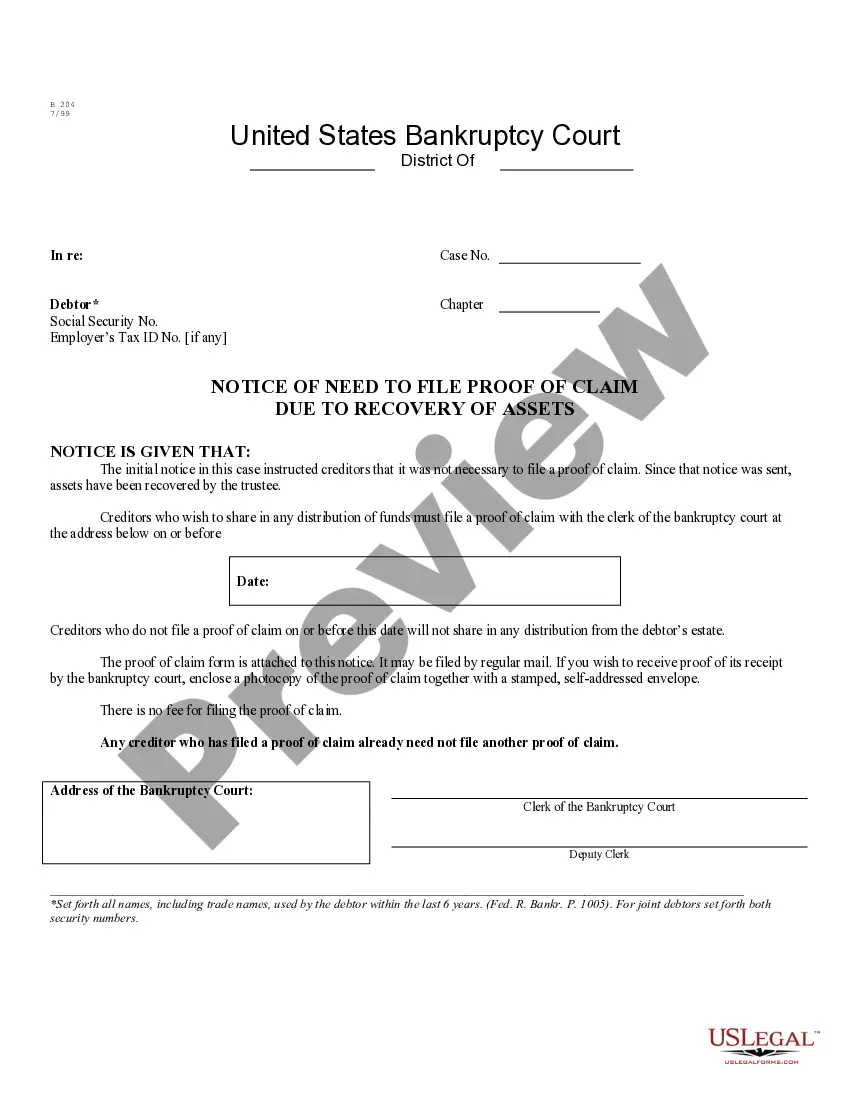
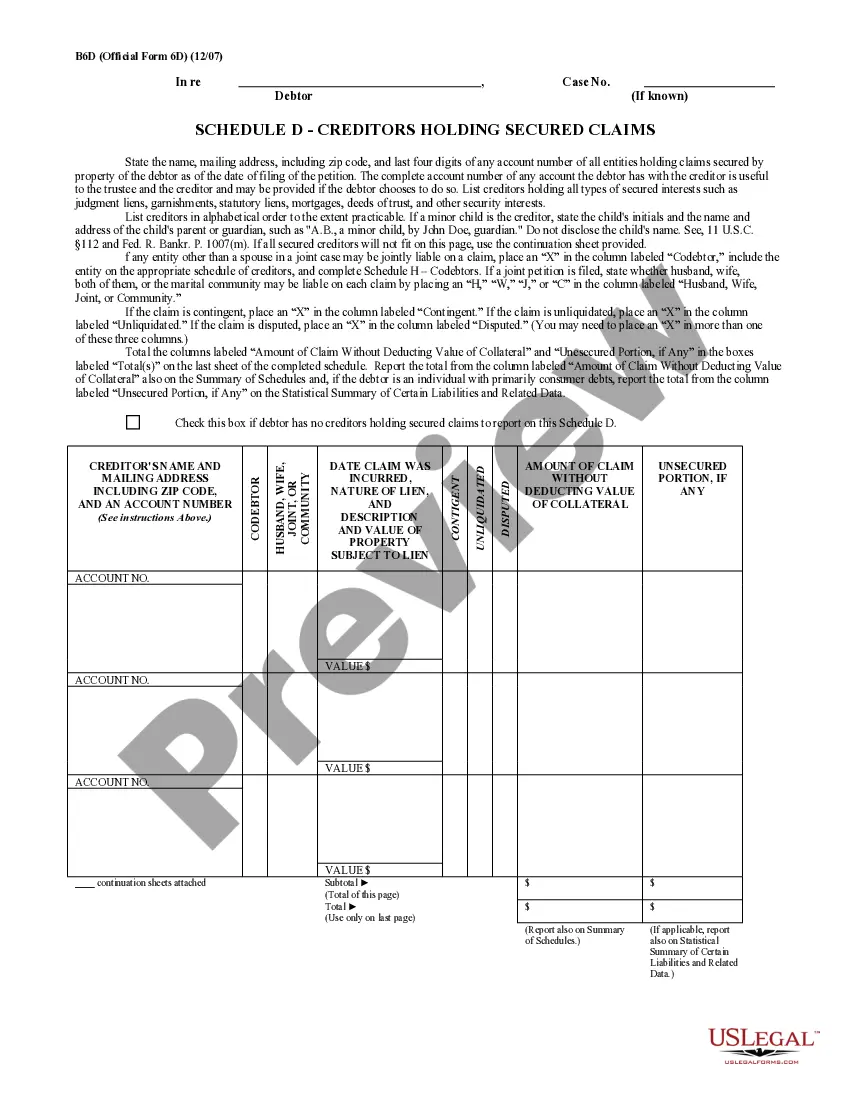
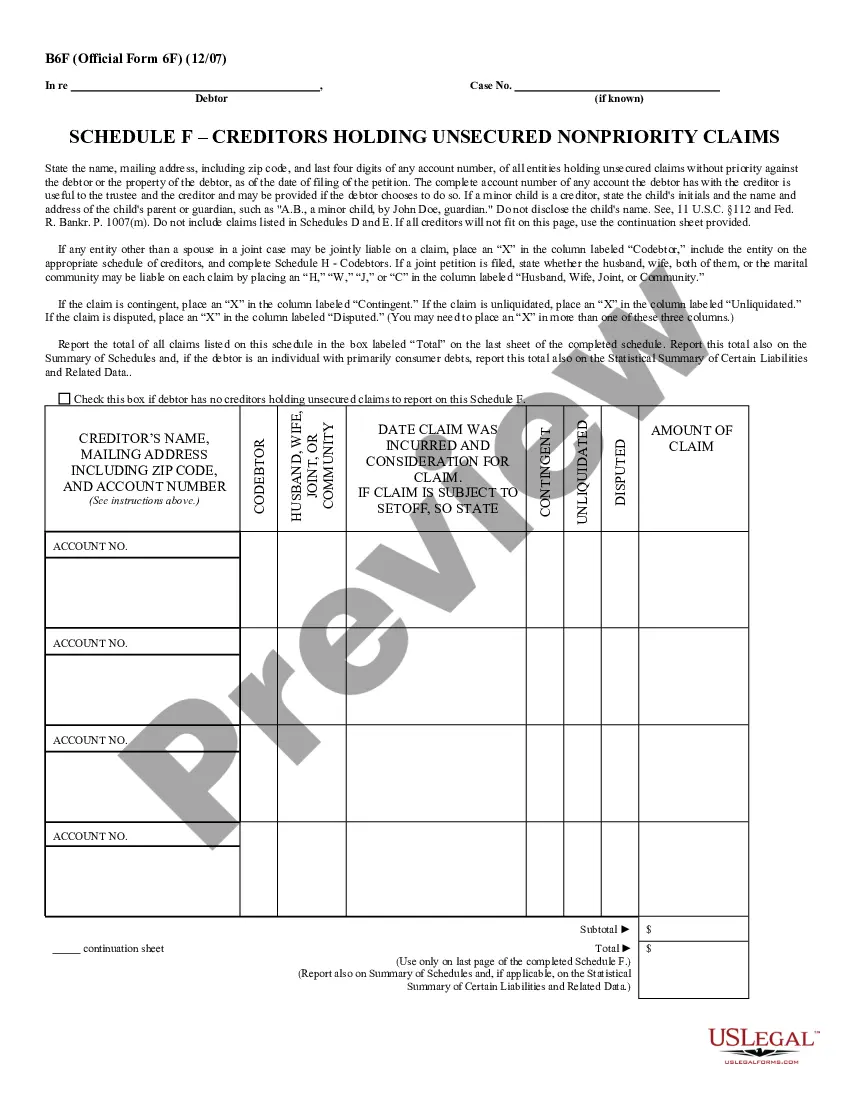


How to fill out List Of Creditors Holding 20 Largest Secured Claims - Not Needed For Chapter 7 Or 13 - Form 4 - Post 2005?
The Claims Chapter 13 Present on this page is a versatile legal template crafted by expert attorneys in accordance with federal and local laws.
For over 25 years, US Legal Forms has supplied individuals, businesses, and legal practitioners with more than 85,000 authenticated, state-specific documents for any professional and personal event. It’s the quickest, most straightforward and most dependable method to acquire the forms you require, as the service ensures bank-level data security and anti-malware safeguards.
Fill out and sign the documents. Print the template to complete it by hand. Alternatively, utilize an online multifunctional PDF editor to swiftly and accurately fill out and sign your form with a valid signature.
- Search for the document you require and examine it.
- Browse through the sample you looked for and preview it or read the form description to confirm it meets your needs. If it doesn’t, use the search bar to locate the suitable one. Click Buy Now when you have identified the template you want.
- Subscribe and sign in.
- Select the pricing option that fits you and set up an account. Utilize PayPal or a credit card to make a quick payment. If you already have an account, Log In and verify your subscription to proceed.
- Obtain the editable template.
- Choose the format you prefer for your Claims Chapter 13 Present (PDF, Word, RTF) and save the document on your device.
Form popularity
FAQ
This bankruptcy form Notice of Objecton to Proof of Claim and Notice of Hearing and Objection to Claim can be used in Chapter 13 bankruptcy by a debtor's attorney to object to the proof of claim of a creditor who has overstated the amount due.
An objection to a proof of claim must be in writing and filed with the bankruptcy court. A copy of the objection and the notice of court hearing date must be mailed to the creditor, the trustee, and the debtor at least 30 days before the hearing.
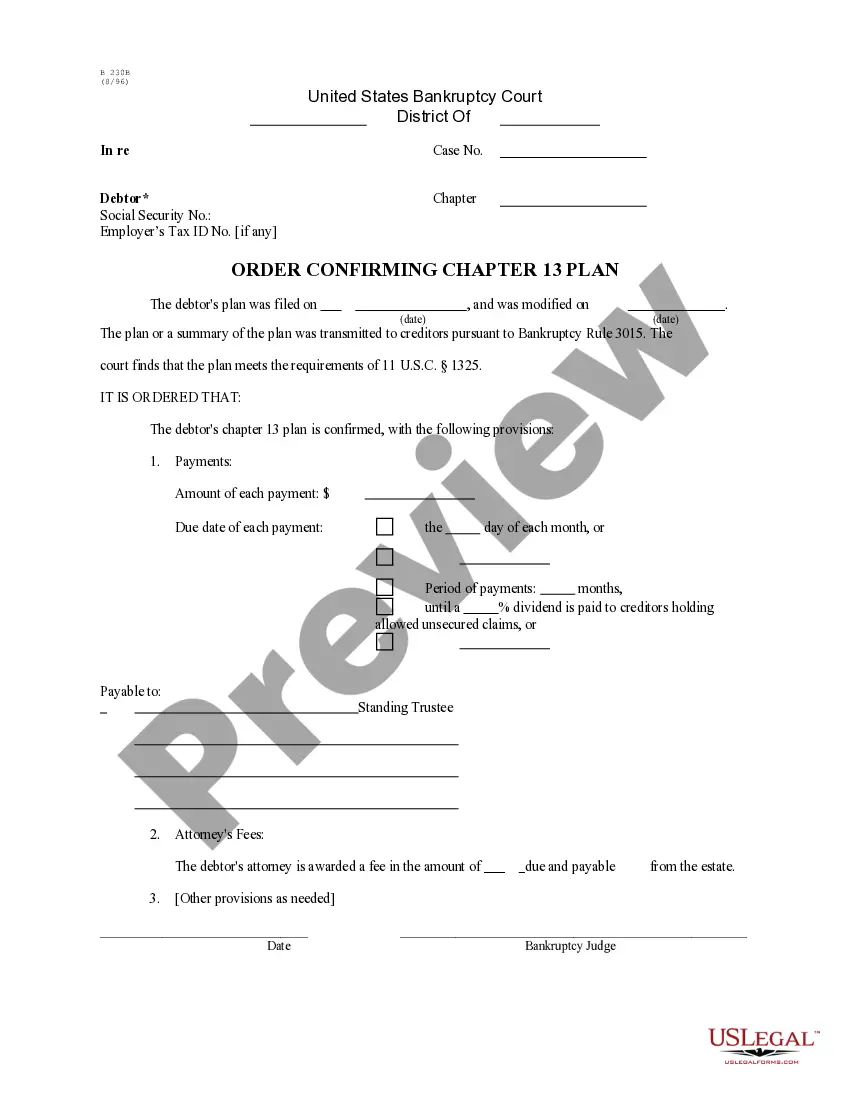
Background. A chapter 13 bankruptcy is also called a wage earner's plan. It enables individuals with regular income to develop a plan to repay all or part of their debts. Under this chapter, debtors propose a repayment plan to make installments to creditors over three to five years.
One option is a ?step plan.? What are these? As they sound, a step plan is one in which the debtor agrees to increase or decrease payments at a certain time often after a certain condition is met. These are ?step-up? or ?step-down? plans, respectively.
How to File for Chapter 13 Bankruptcy Make sure Chapter 13 is the right choice. ... Analyze your debt. ... Value your property. ... Gauge your income. ... Fill out the bankruptcy forms. ... Take the required pre-filing course. ... File your forms and pay a fee. ... Provide the trustee with documents proving your income and other assets.