Fmla Eligibility For Remote Workers
Description
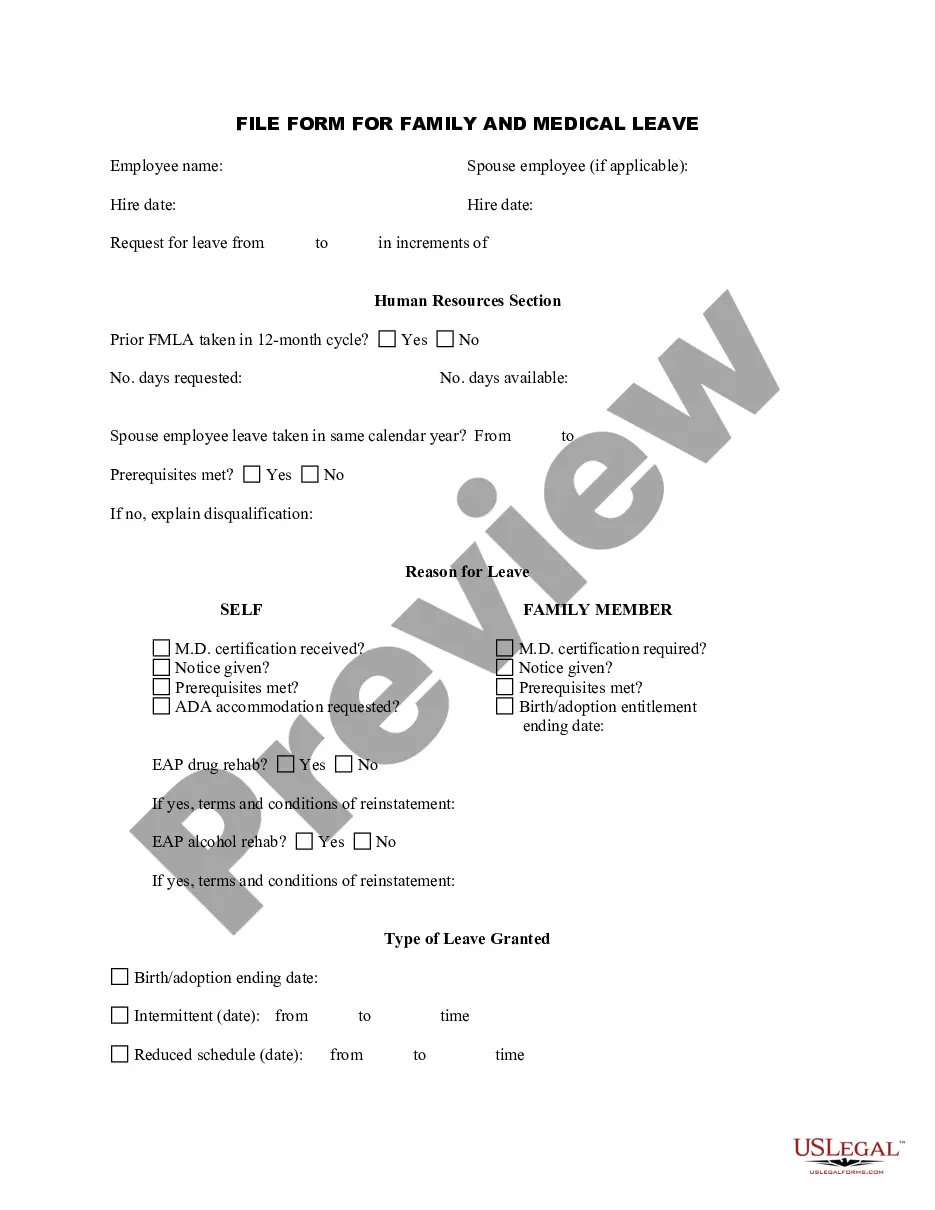
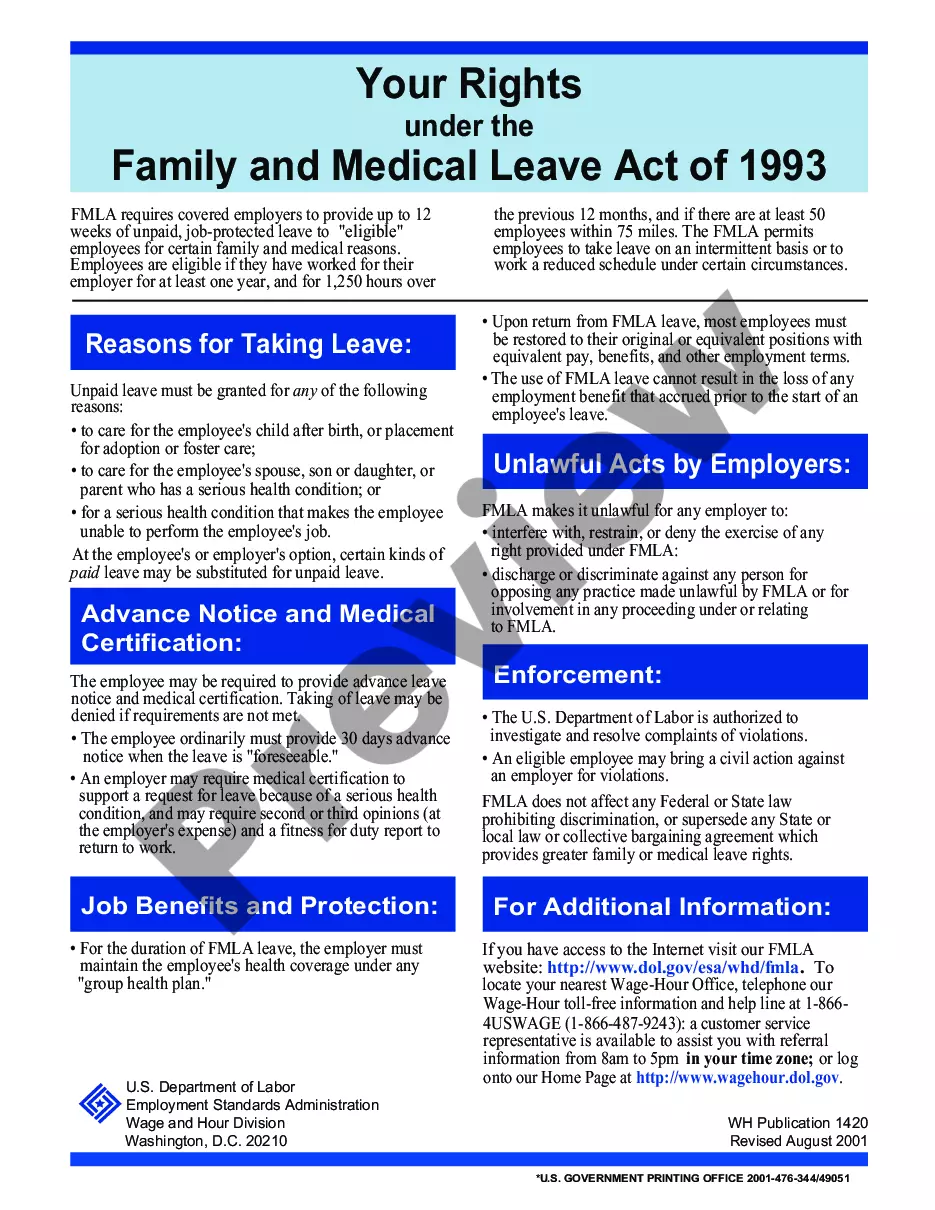
Get your form ready online
Our built-in tools help you complete, sign, share, and store your documents in one place.
Make edits, fill in missing information, and update formatting in US Legal Forms—just like you would in MS Word.
Download a copy, print it, send it by email, or mail it via USPS—whatever works best for your next step.
Sign and collect signatures with our SignNow integration. Send to multiple recipients, set reminders, and more. Go Premium to unlock E-Sign.
If this form requires notarization, complete it online through a secure video call—no need to meet a notary in person or wait for an appointment.
We protect your documents and personal data by following strict security and privacy standards.

Make edits, fill in missing information, and update formatting in US Legal Forms—just like you would in MS Word.

Download a copy, print it, send it by email, or mail it via USPS—whatever works best for your next step.

Sign and collect signatures with our SignNow integration. Send to multiple recipients, set reminders, and more. Go Premium to unlock E-Sign.

If this form requires notarization, complete it online through a secure video call—no need to meet a notary in person or wait for an appointment.

We protect your documents and personal data by following strict security and privacy standards.
Looking for another form?
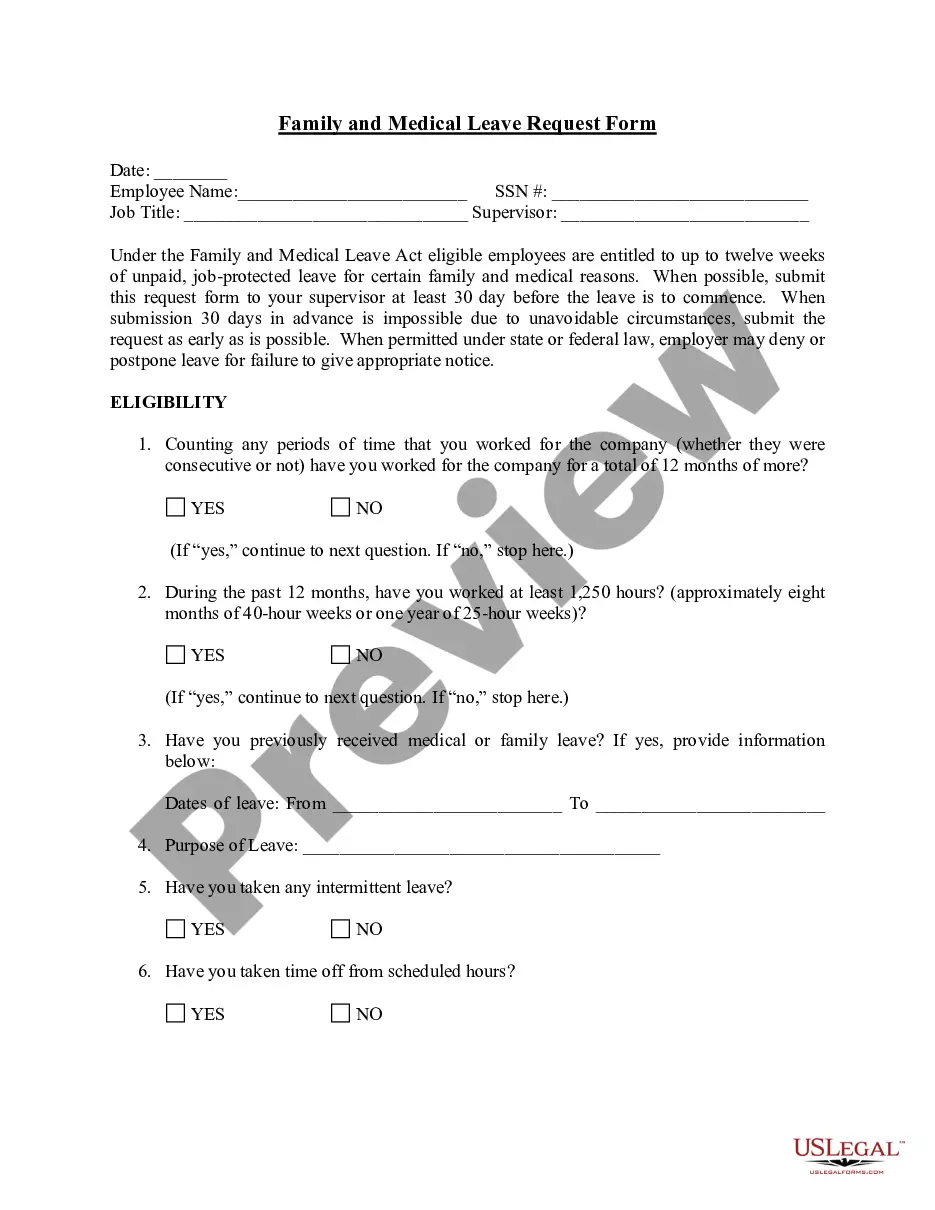

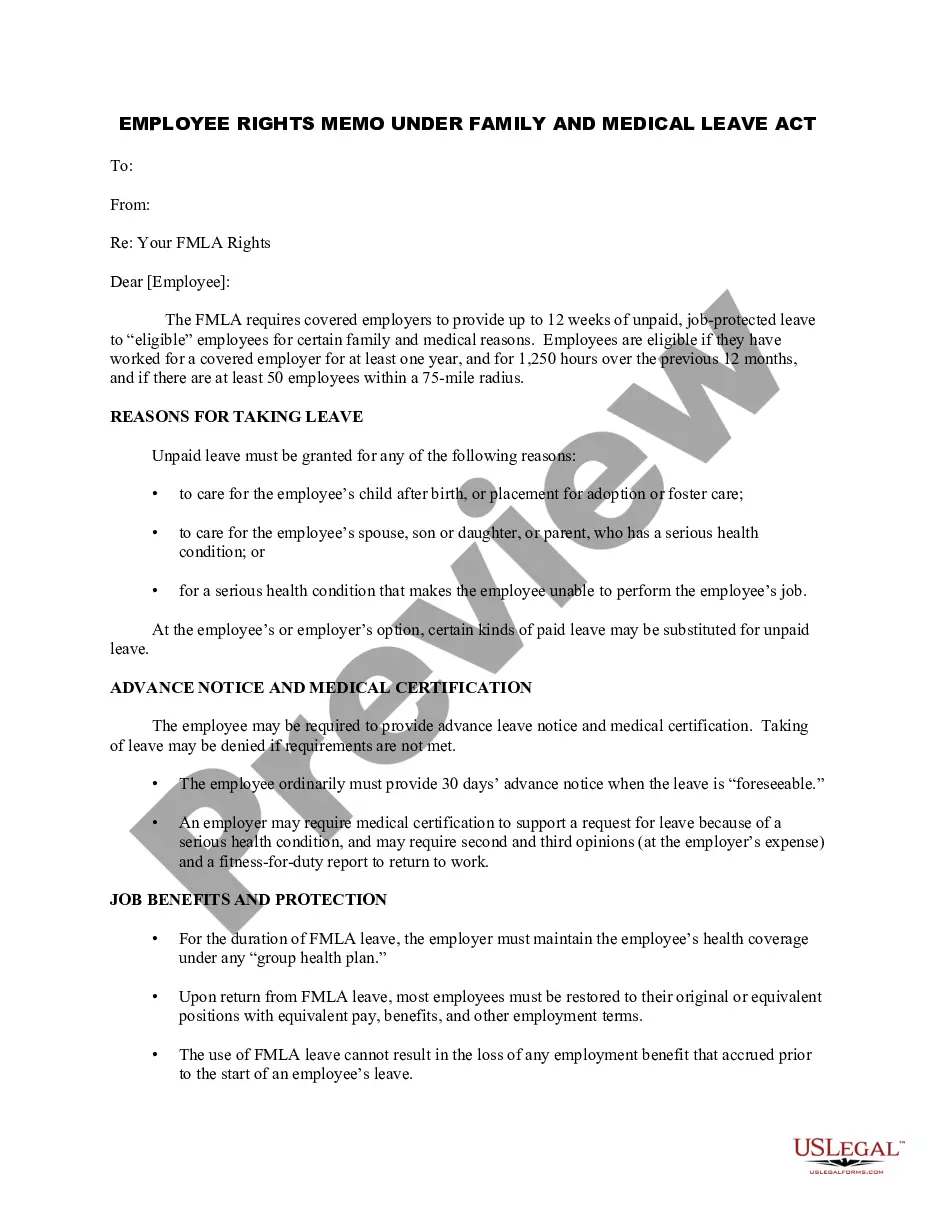
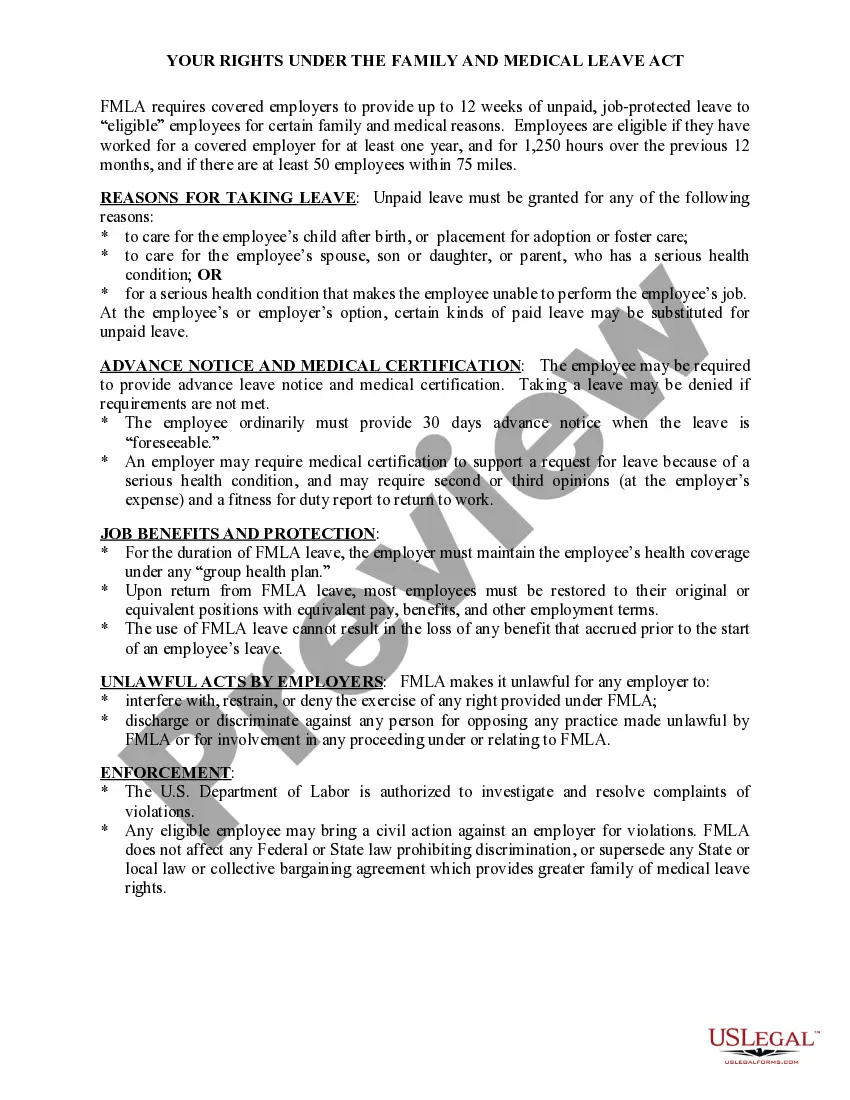
How to fill out Employee Rights Memo Under The Family And Medical Leave Act?
Handling legal documents and processes can be a lengthy addition to your schedule.
FMLA Qualification for Remote Employees and similar forms generally necessitate that you locate them and comprehend how to fill them out accurately.
Consequently, whether you are managing financial, legal, or personal affairs, utilizing a comprehensive and straightforward online repository of forms at your disposal will be highly beneficial.
US Legal Forms is the foremost online resource for legal documents, boasting over 85,000 state-specific templates and a variety of tools to help you complete your paperwork easily.
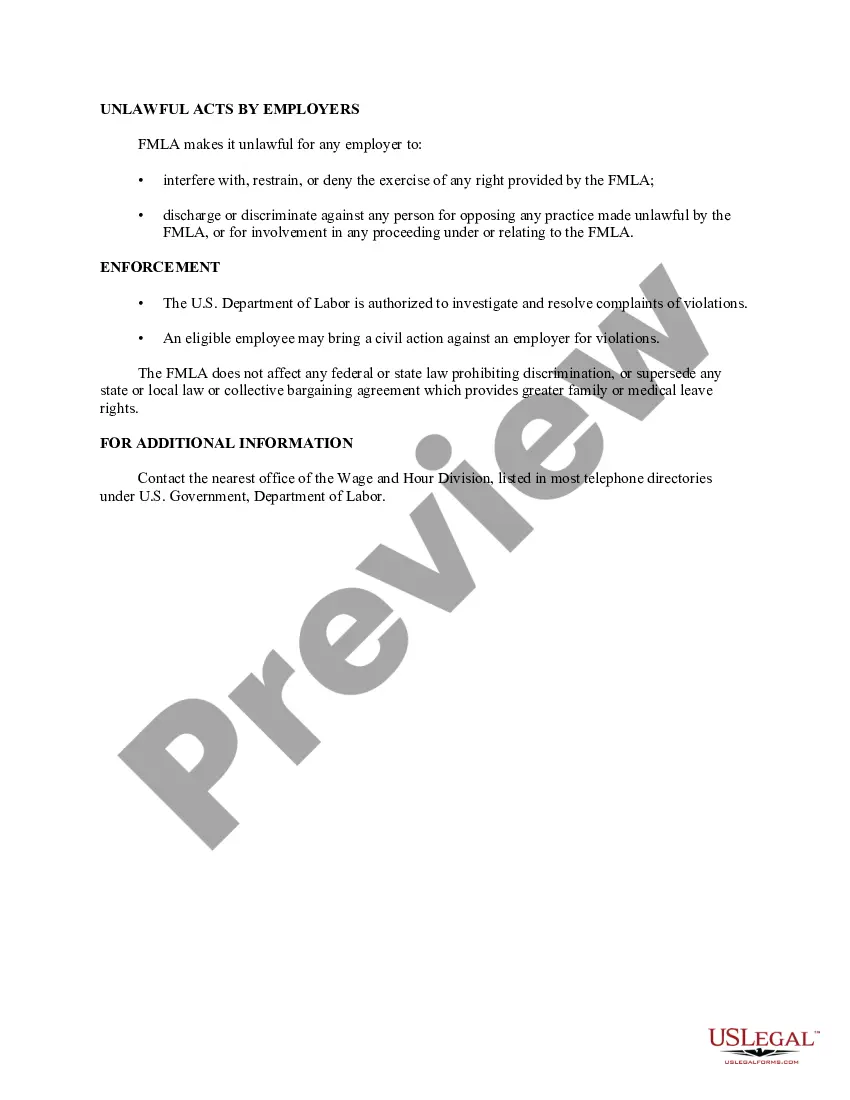
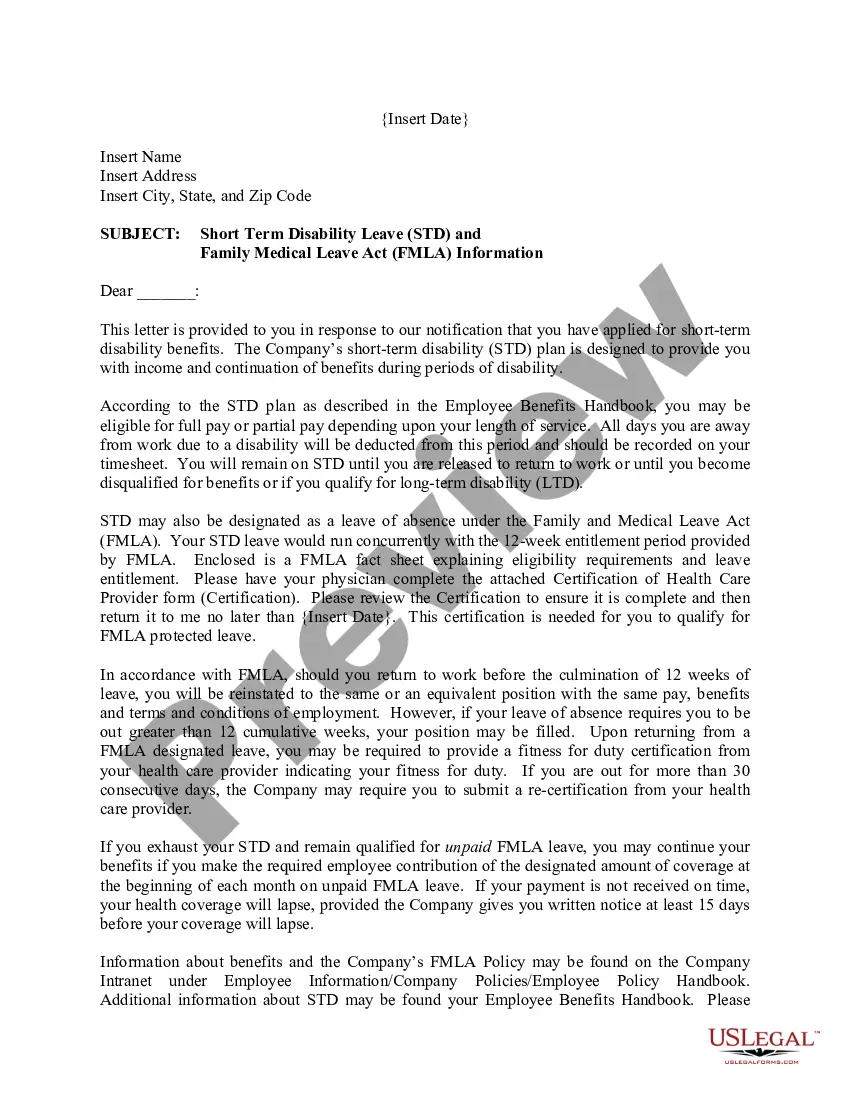
Are you using US Legal Forms for the first time? Sign up and create your account within a few minutes to gain access to the forms library and FMLA Qualification for Remote Employees. Then, follow the steps outlined below to finish your form: Ensure you have located the accurate form by utilizing the Preview feature and reviewing the form details.
- Browse the collection of relevant documents available to you with a single click.
- US Legal Forms provides state- and county-specific templates accessible at any time for download.
- Safeguard your document handling processes with top-quality support that enables you to prepare any form in minutes without additional or concealed charges.
- Simply Log In to your account, find FMLA Qualification for Remote Employees and obtain it instantly within the My documents section.
- You can also retrieve previously saved forms.
Form popularity
FAQ
Employees who do not meet the required criteria for FMLA typically include those who have not been employed for at least 12 months or have not worked the required 1,250 hours in the past year. Furthermore, part-time workers who are not considered eligible also fall outside FMLA protections. Knowing the limitations of FMLA eligibility for remote workers can help you plan your leave accordingly.
Certain employers are exempt from FMLA obligations, including those with fewer than 50 employees within a 75-mile radius. Additionally, federal government agencies and specific organizations that have been granted exemptions may also not be required to comply. Understanding these exemptions can help remote workers identify if their employer is bound by FMLA rules or not.
Yes, you can qualify for FMLA as a remote worker if you meet the necessary criteria, including working for a covered employer and having completed at least 1,250 hours of service in the past year. It's essential to ensure that your remote position falls under the relevant guidelines set by the FMLA. If you're uncertain about your FMLA eligibility for remote workers, consulting resources on this topic can provide clarity.
Employers may deny FMLA for several reasons, such as if an employee has not worked the minimum required hours or if the company does not meet the size requirement. Additionally, if an employee does not provide adequate notice or documentation for the leave, the employer might deny the request. Understanding FMLA eligibility for remote workers is crucial, as remote employees may face unique challenges in proving their entitlement.
To qualify for remote work, demonstrate your ability to perform your job effectively from a location outside the office. This typically involves meeting performance standards and maintaining communication with your team. Remember, when evaluating FMLA eligibility for remote workers, ensure you are compliant with your employer's expectations and federal regulations.
To determine eligibility for remote work, review your employer's policies and evaluate the nature of your job duties. Factors such as job performance, flexibility, and company needs play a significant role. Additionally, understanding FMLA eligibility for remote workers can help ensure that you meet the necessary qualifications for both work and leave.
Conditions for remote work can vary by employer, but they often include performance expectations, communication protocols, and eligibility criteria for benefits. For remote workers to meet FMLA eligibility, they must adhere to these conditions while making sure they provide any necessary documentation for leave requests.
A remote worker is typically someone who performs their job outside of a traditional office environment. This includes individuals who work from home or any location other than their employer's site. To clarify FMLA eligibility for remote workers, they must fulfill the employment duration and hours worked as defined by the law.
The requirements for remote jobs often include a stable internet connection, a quiet workspace, and the ability to communicate effectively. Employers may also require employees to have specific skills or experience relevant to their positions. When considering FMLA eligibility for remote workers, it's crucial to be aware of how these requirements align with federal guidelines.
FMLA applies to remote workers just as it does to in-person employees. If a remote worker meets the criteria set by the Family and Medical Leave Act, they can take leave for specific medical or family reasons. It’s essential to understand that FMLA eligibility for remote workers depends on their employer's total number of employees and their work history.