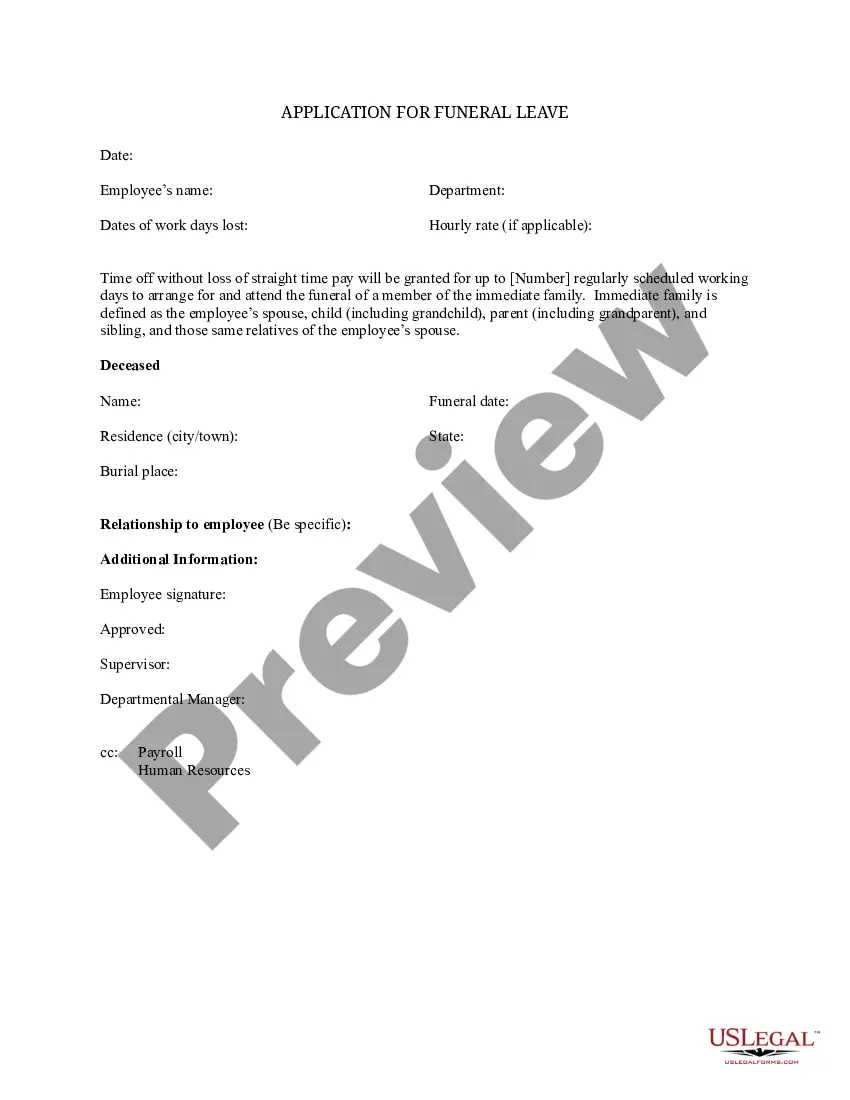
Funeral Leave With A Child
Description
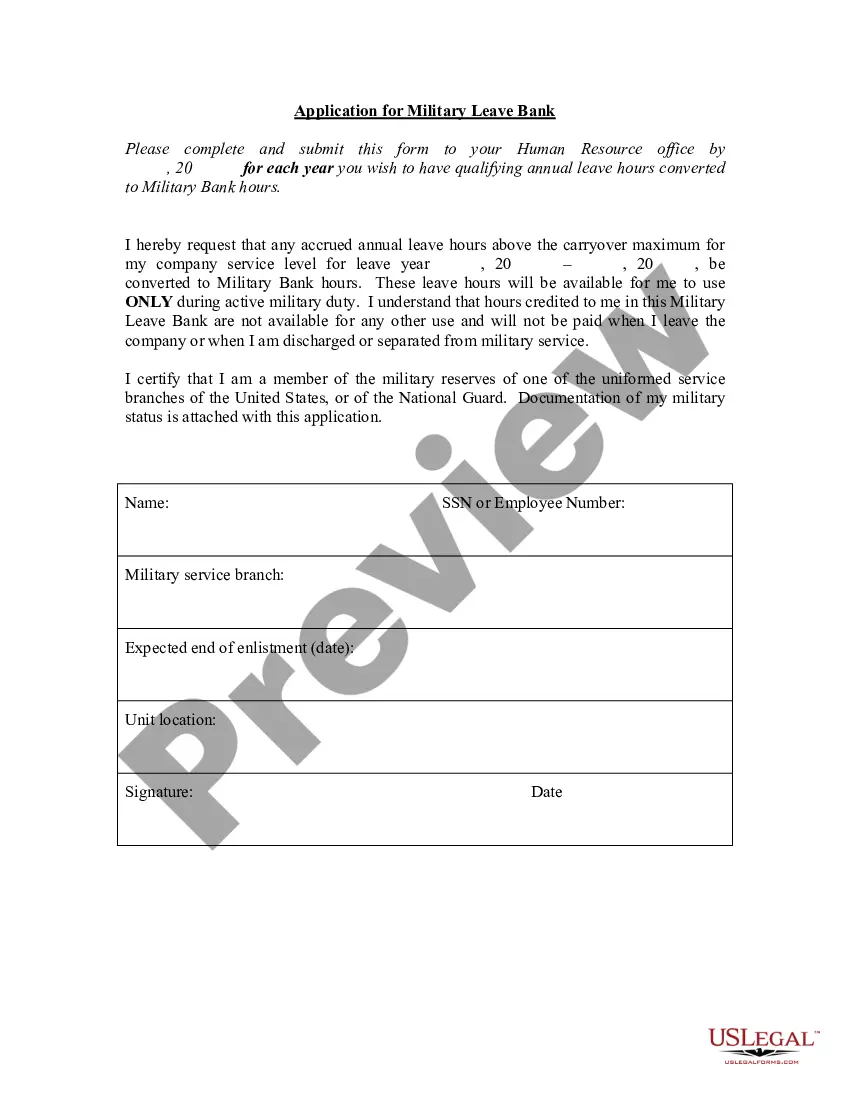
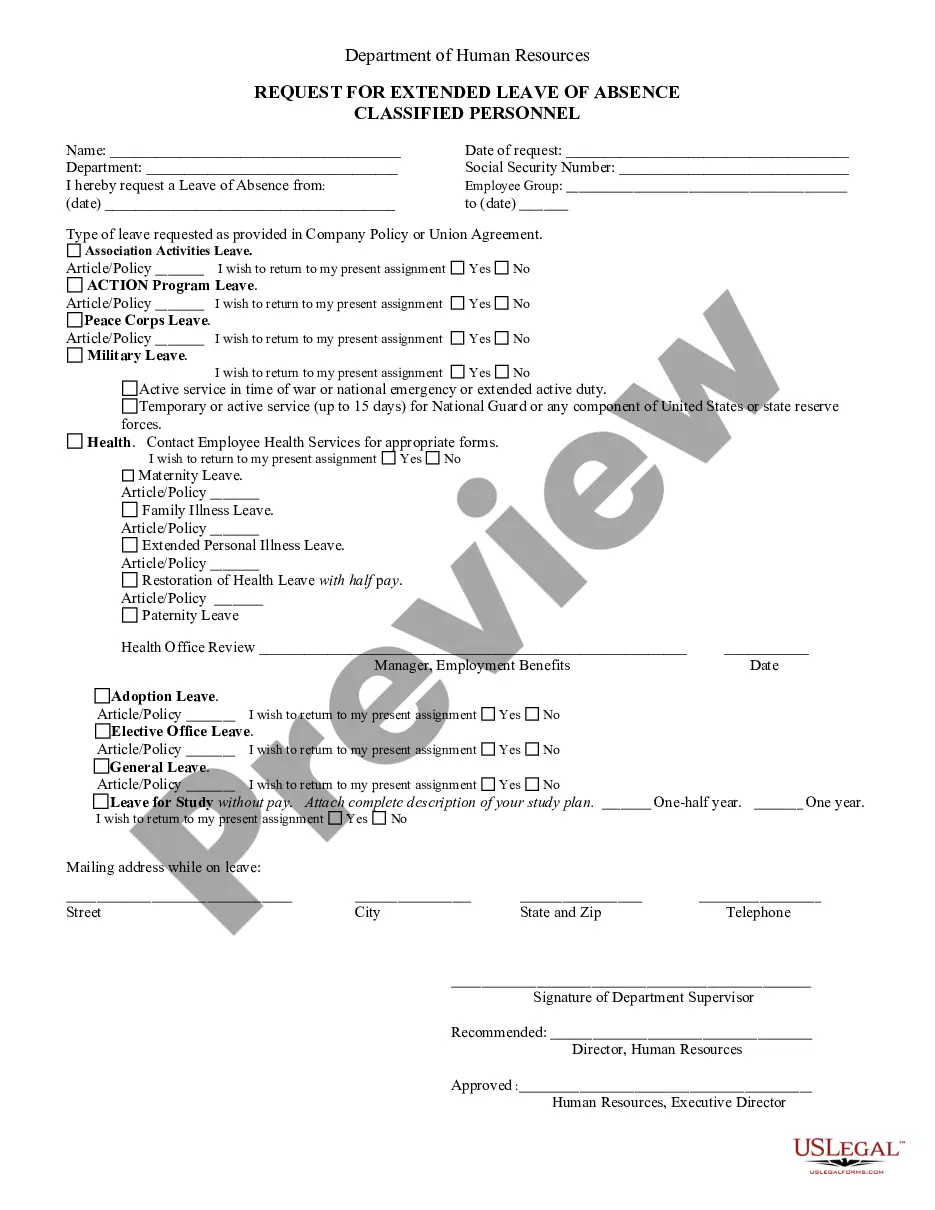
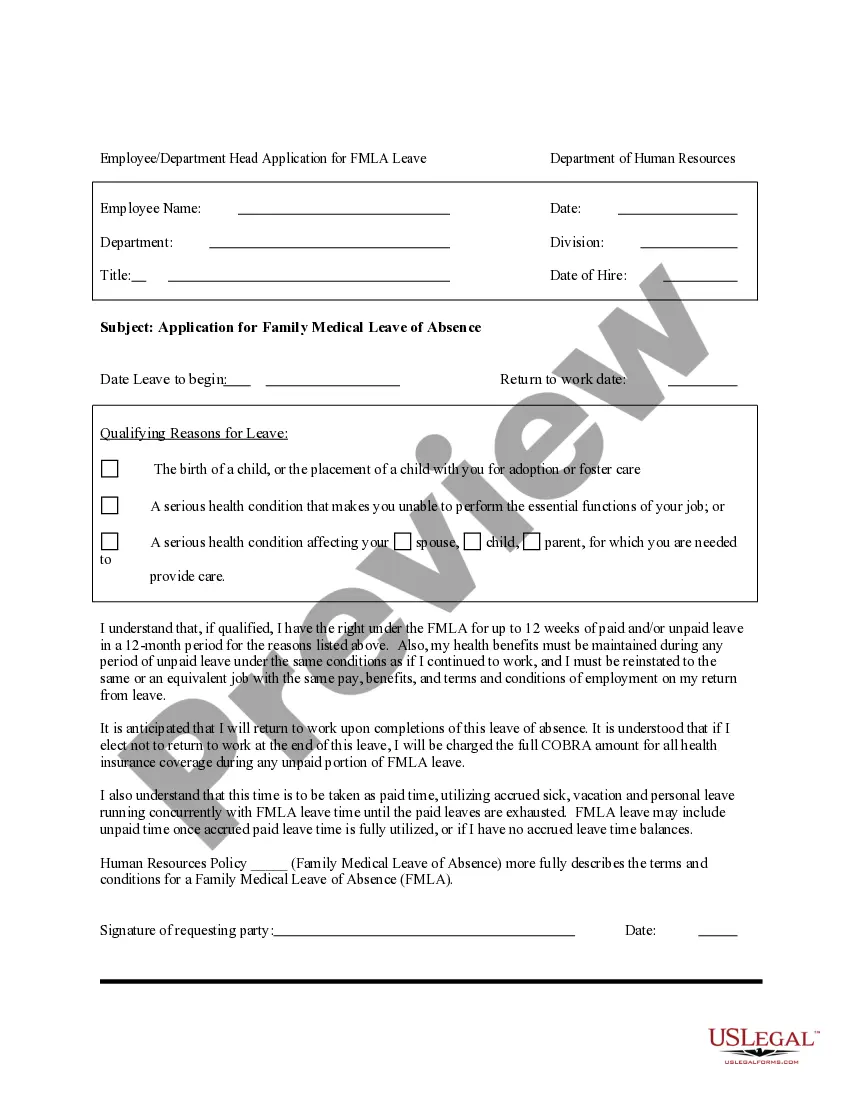
Get your form ready online
Our built-in tools help you complete, sign, share, and store your documents in one place.
Make edits, fill in missing information, and update formatting in US Legal Forms—just like you would in MS Word.
Download a copy, print it, send it by email, or mail it via USPS—whatever works best for your next step.
Sign and collect signatures with our SignNow integration. Send to multiple recipients, set reminders, and more. Go Premium to unlock E-Sign.
If this form requires notarization, complete it online through a secure video call—no need to meet a notary in person or wait for an appointment.
We protect your documents and personal data by following strict security and privacy standards.

Make edits, fill in missing information, and update formatting in US Legal Forms—just like you would in MS Word.

Download a copy, print it, send it by email, or mail it via USPS—whatever works best for your next step.

Sign and collect signatures with our SignNow integration. Send to multiple recipients, set reminders, and more. Go Premium to unlock E-Sign.

If this form requires notarization, complete it online through a secure video call—no need to meet a notary in person or wait for an appointment.

We protect your documents and personal data by following strict security and privacy standards.
Looking for another form?


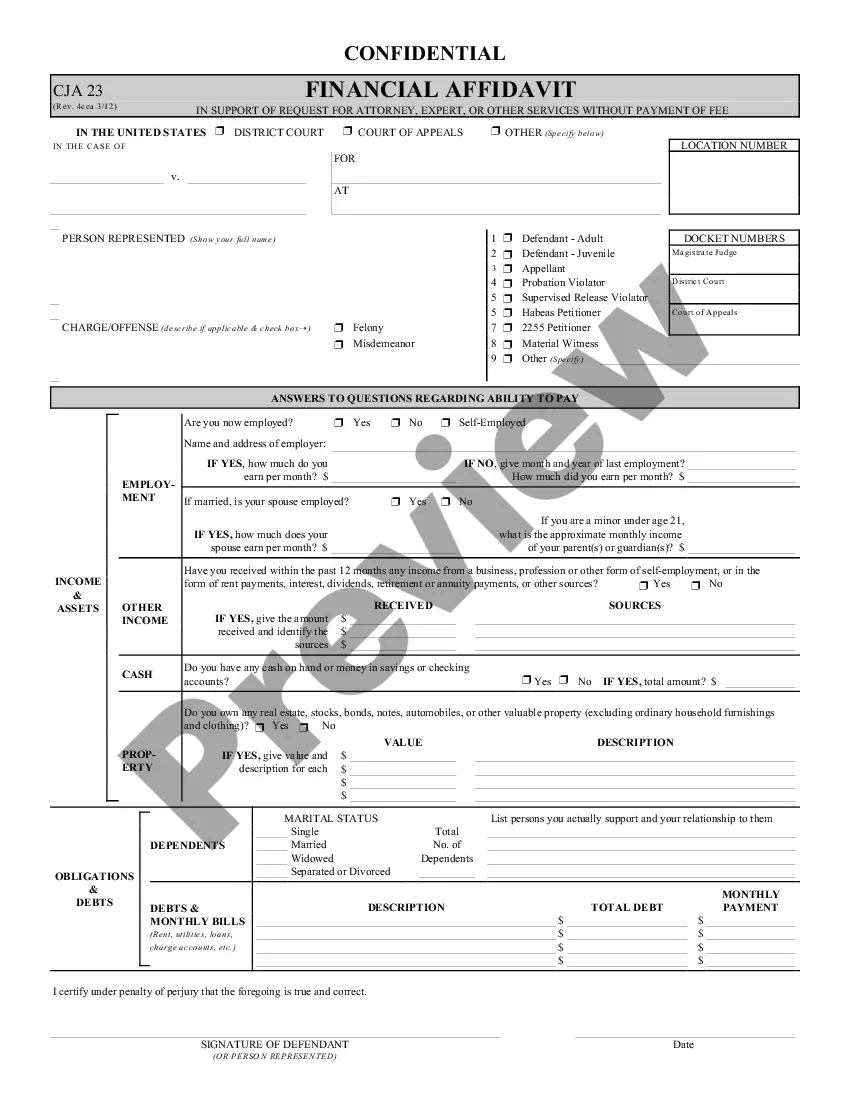
How to fill out Application For Funeral Leave?
- If you're a returning user, log in to your account to access your files. Confirm the validity of your subscription and download the required form by clicking the Download button.
- For first-time users, start by reviewing the Preview mode and form description to select an option that meets your legal requirements and regional standards.
- If you need a different template, utilize the Search tab at the top to locate a suitable document. Ensure it aligns with your needs before proceeding.
- To purchase the document, click the Buy Now button, choose your preferred subscription plan, and create an account to unlock all features.
- Complete your transaction by entering your payment details or logging into PayPal to finalize your subscription.
- Once your payment is confirmed, download the form and store it on your device for easy access and completion. You can always find it later in the My Forms section of your profile.
In summary, obtaining funeral leave documentation with a child is straightforward with US Legal Forms. Their extensive library and expert support ensure you have what you need during difficult times.
Start your journey today and access over 85,000 legal forms at your fingertips!
Form popularity
FAQ
A death in the immediate family generally includes the loss of a parent, child, sibling, or spouse. Some employers may also include partners or in-laws. Understanding what qualifies helps ensure you receive appropriate funeral leave with a child during difficult times.
Aunts and uncles generally do not fall under the standard definition of immediate family for bereavement leave. However, some companies may have more inclusive policies. Always refer to your employer’s guidelines to see if funeral leave with a child extends to these relatives.
Compassionate Friends is a support organization that offers assistance to families grieving the loss of a child. They provide a safe space for sharing feelings and coping strategies. Utilizing resources like these can be invaluable when navigating funeral leave with a child, allowing families to connect and heal.
Immediate family usually refers to those who are closely related, including parents, children, siblings, and spouses. But, this definition can differ among employers and may also include domestic partners. Make sure to consult your workplace policy regarding funeral leave with a child.
The length of bereavement leave can vary considerably by employer. Generally, companies offer three to five days for immediate family members. When dealing with funeral leave with a child, it's vital to check your organization's policy to ensure you understand your entitlements.
Immediate family typically includes parents, siblings, children, and spouses. However, laws can vary by state and by company policy. It is essential to review your specific policies on funeral leave with a child to understand who qualifies under immediate family.
Immediate family for bereavement typically includes your spouse, children, parents, and siblings. Depending on the company's policy, this can also extend to other close relatives like grandparents. Familiarizing yourself with these definitions is crucial when applying for funeral leave with a child. For any queries, reaching out to your HR team will provide clarity and support.
Most companies provide between three to five bereavement days for immediate family members, but this can vary widely. Some organizations offer flexible options, allowing you to take additional unpaid time off if necessary. When needing funeral leave with a child, always confirm your company’s specific policy. It’s important to understand your entitlements during this sensitive time.
Aunts and uncles are generally not considered immediate family members for bereavement leave. Their inclusion can vary by company policy, so it is wise to check your workplace guidelines. If you’re dealing with the loss of an aunt or uncle, consider discussing your specific circumstances with your HR department. They may provide options even if it falls outside the usual definitions.
In HR terms, an immediate family member usually refers to those who are closely related to an employee, such as parents, spouses, children, and siblings. Some policies also include grandparents and in-laws. Knowing your company’s specific definition will clarify who you can request funeral leave with a child for. This clarity helps in managing the necessary arrangements during a bereavement.