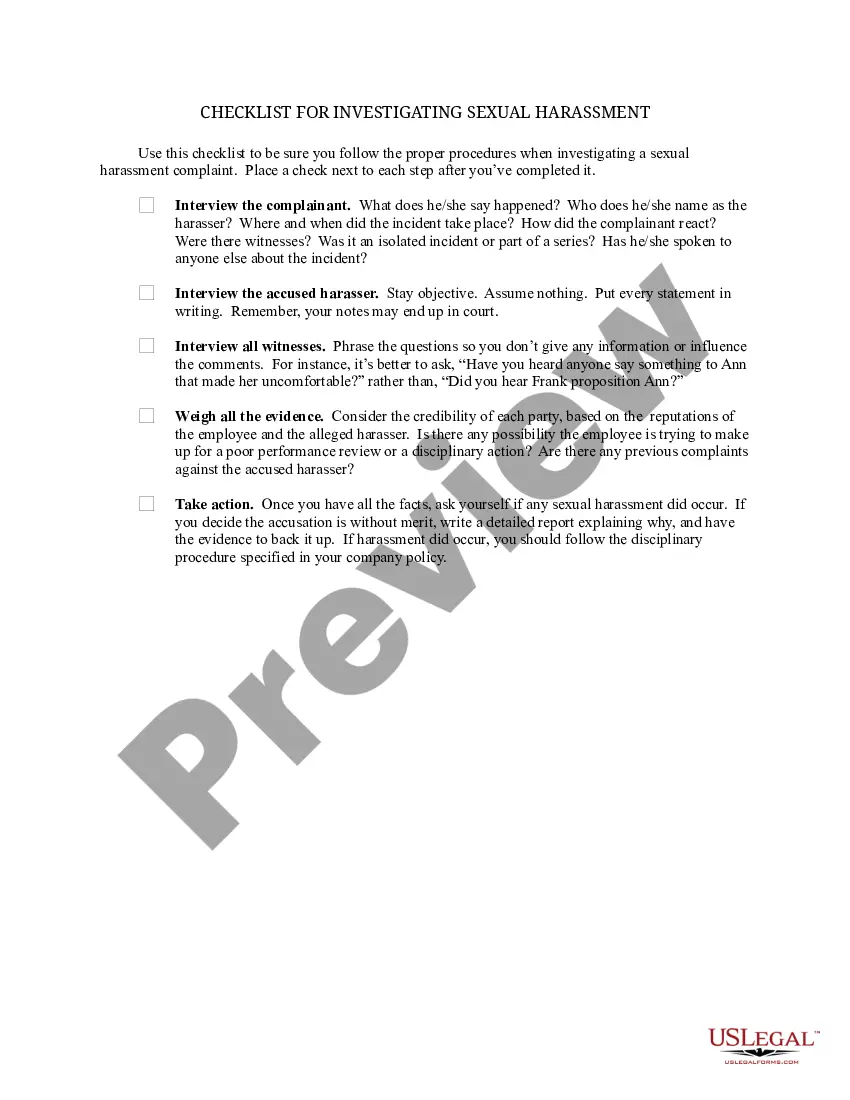
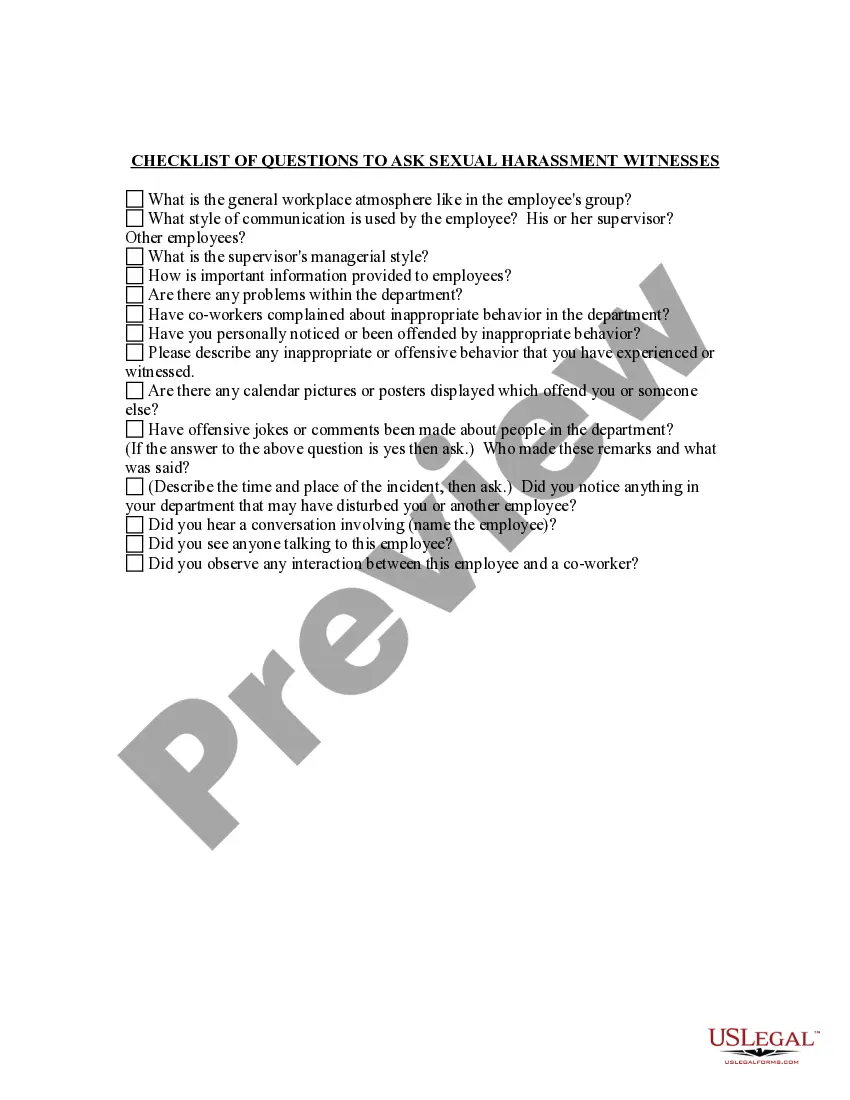
Questions To Ask When Investigating Abuse
Description
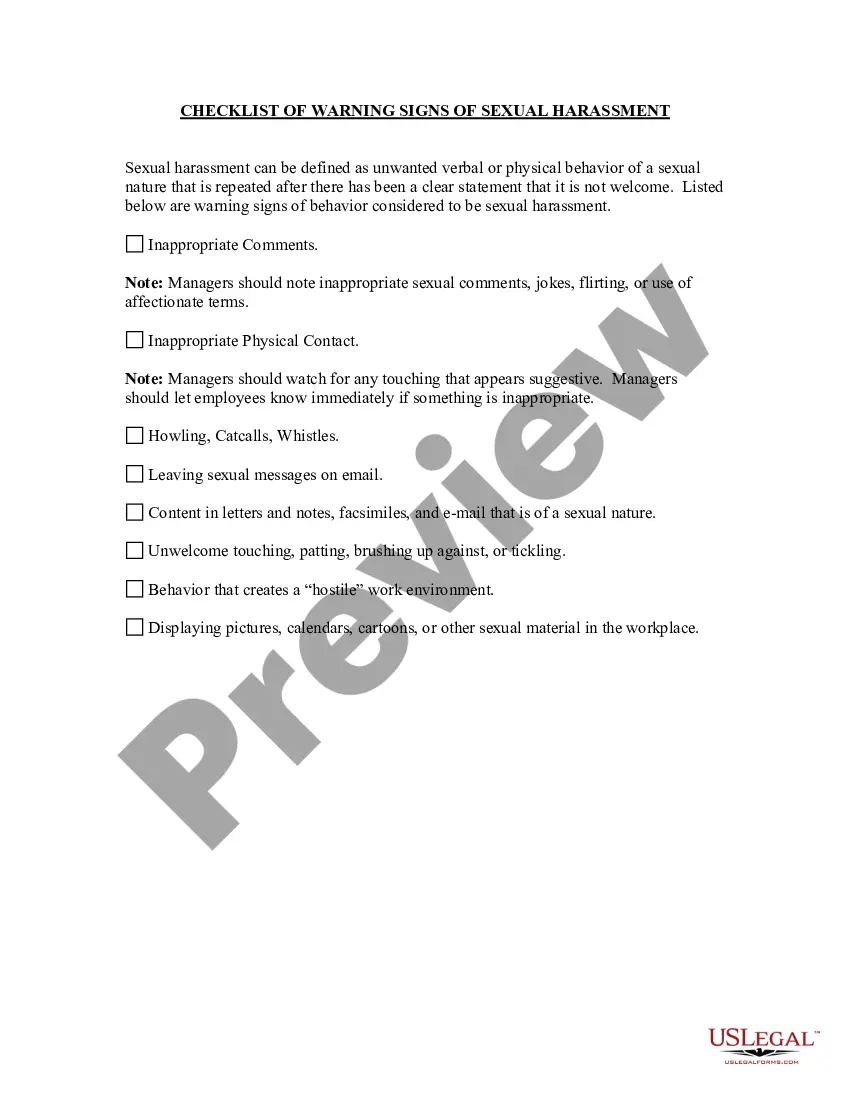
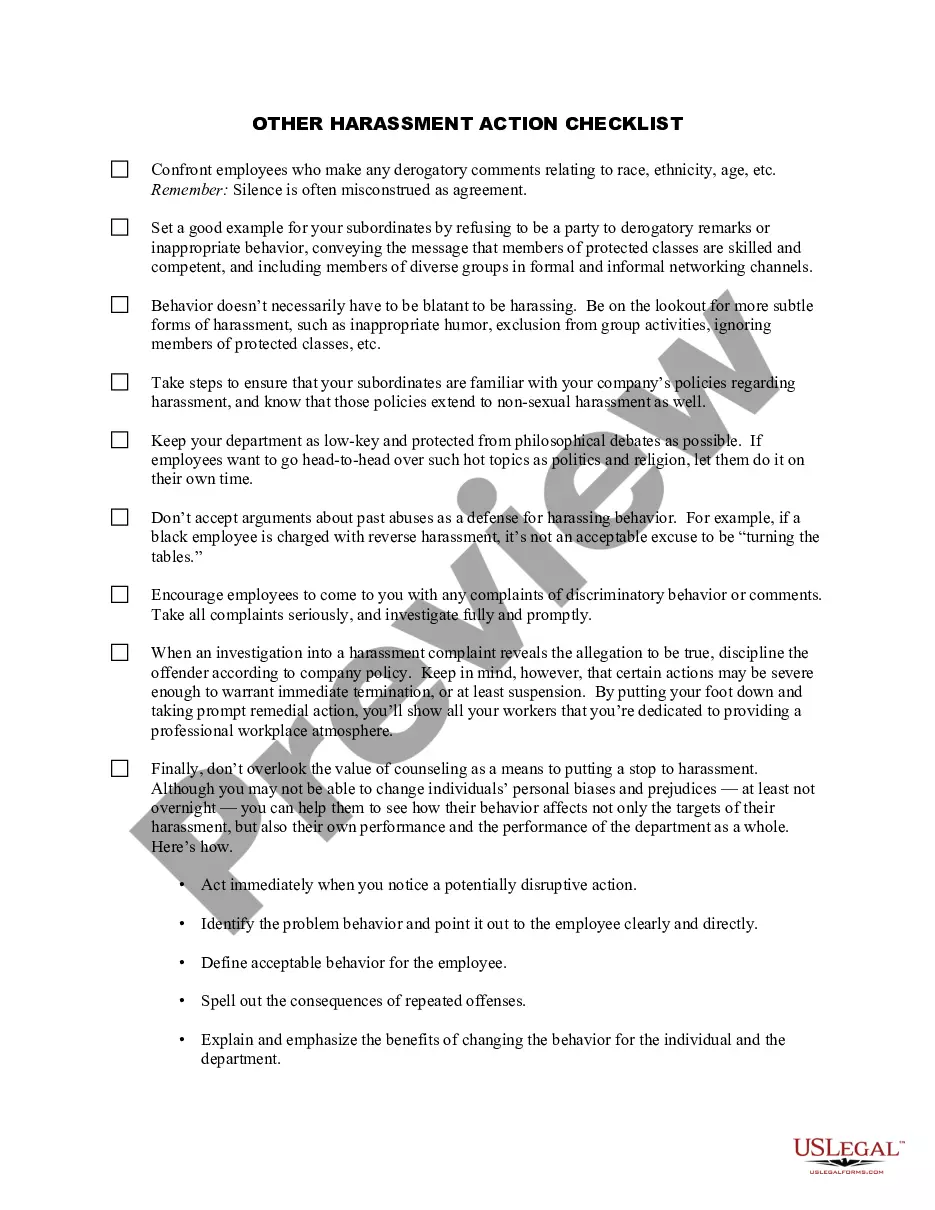
Get your form ready online
Our built-in tools help you complete, sign, share, and store your documents in one place.
Make edits, fill in missing information, and update formatting in US Legal Forms—just like you would in MS Word.
Download a copy, print it, send it by email, or mail it via USPS—whatever works best for your next step.
Sign and collect signatures with our SignNow integration. Send to multiple recipients, set reminders, and more. Go Premium to unlock E-Sign.
If this form requires notarization, complete it online through a secure video call—no need to meet a notary in person or wait for an appointment.
We protect your documents and personal data by following strict security and privacy standards.

Make edits, fill in missing information, and update formatting in US Legal Forms—just like you would in MS Word.

Download a copy, print it, send it by email, or mail it via USPS—whatever works best for your next step.

Sign and collect signatures with our SignNow integration. Send to multiple recipients, set reminders, and more. Go Premium to unlock E-Sign.

If this form requires notarization, complete it online through a secure video call—no need to meet a notary in person or wait for an appointment.

We protect your documents and personal data by following strict security and privacy standards.
Looking for another form?
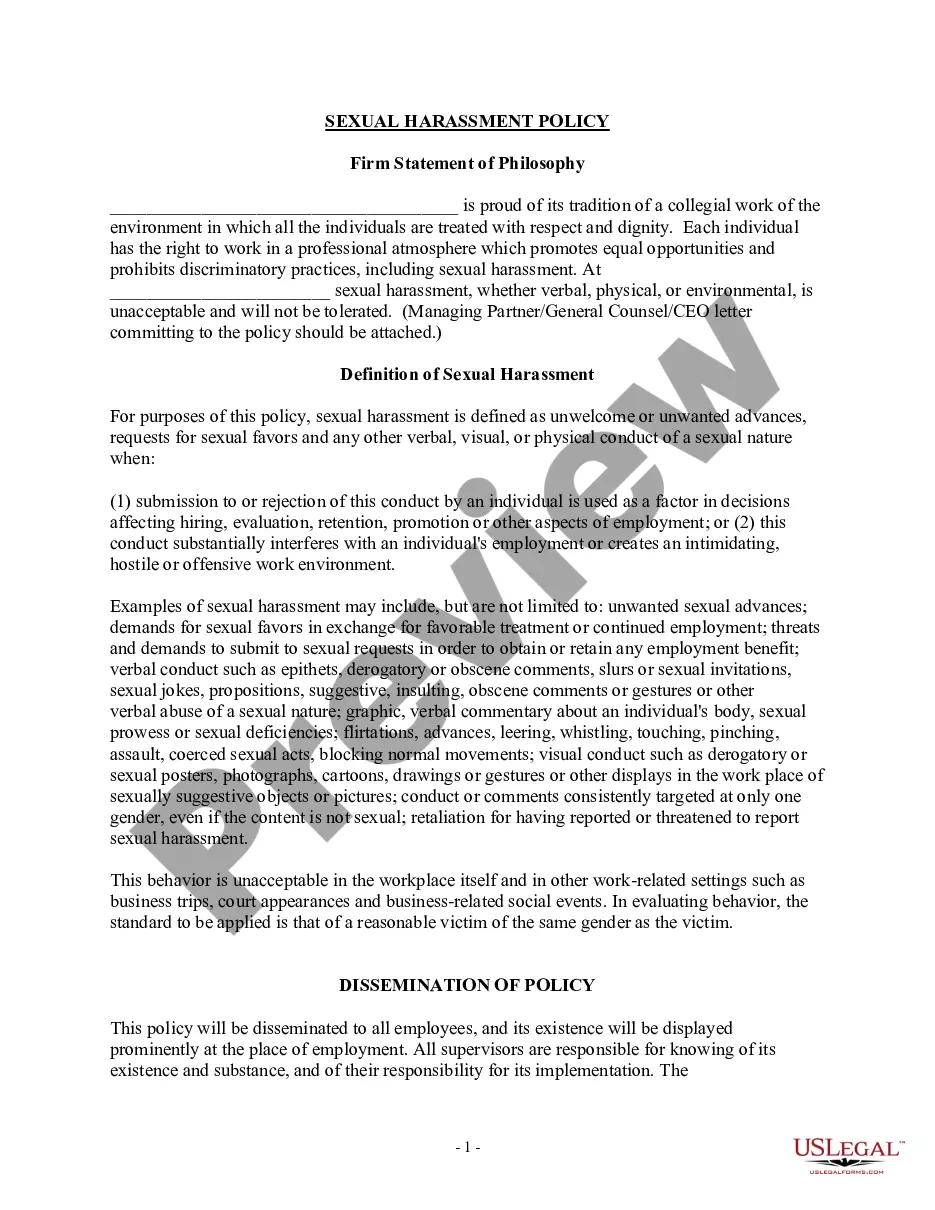
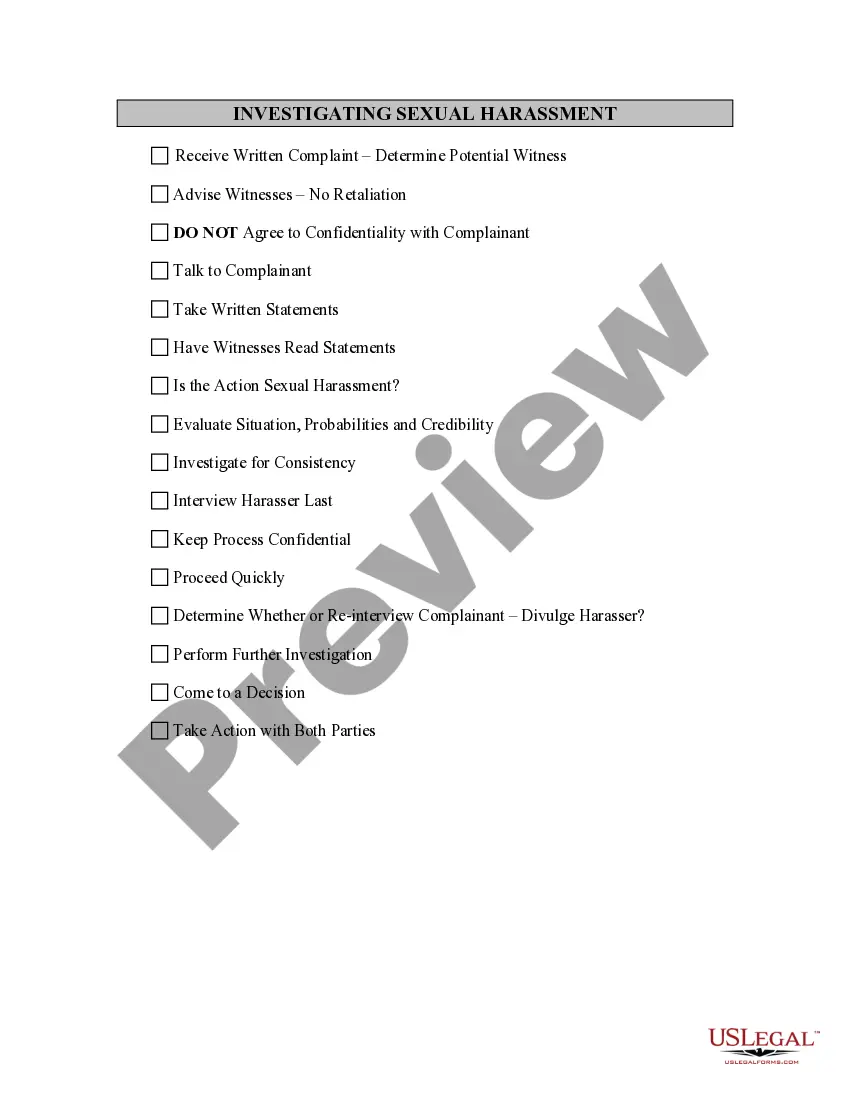
How to fill out Checklist For Investigation Sexual Harassment - Workplace?
Managing legal documents and processes can be a lengthy addition to your entire day.
Inquiries To Make When Exploring Mistreatment and similar forms typically necessitate that you look for them and find the best method to finish them accurately.
Thus, whether you are handling financial, legal, or personal issues, possessing a comprehensive and accessible online library of documents readily available will be extremely beneficial.
US Legal Forms is the leading online platform for legal templates, featuring over 85,000 state-specific documents and a range of tools that will assist you in completing your paperwork effortlessly.
Is it your first time using US Legal Forms? Sign up and create your account in just a few minutes, and you will gain access to the document library and Inquiries To Make When Exploring Mistreatment. Then, follow the steps outlined below to finish your document: Ensure you have found the correct document by utilizing the Preview feature and reviewing the document description. Choose Buy Now once ready, and select the subscription option that fits you. Click Download, then complete, eSign, and print the document. US Legal Forms has 25 years of expertise assisting customers manage their legal paperwork. Find the document you need today and enhance any process effortlessly.
- Browse the collection of relevant documents available to you with just a single click.
- US Legal Forms provides state- and county-specific forms accessible at any time for download.
- Protect your document management processes with top-notch support that enables you to create any form within minutes without extra or hidden fees.
- Simply Log In to your account, locate Inquiries To Make When Exploring Mistreatment, and download it instantly from the My documents tab.
- You can also access previously downloaded documents.
Form popularity
FAQ
If the information has not been volunteered, ask the child ONLY these four questions: What happened? Who did this to you? Where were you when this happened? When did this happen?
Here are some examples of questions to ask the witness: Can you describe what you observed during the incident? When and where did the incident occur? Who else was present during the incident? Did you hear anything that was said during the incident? Was anyone's behavior or actions particularly concerning or alarming?
?Start at the beginning and tell me what happened.? Other questions asking for a chronological account. ?Would you tell me what you are able to remember about your experience?? ?What are you able to tell me about what was happening before/during/after the assault??
Closed-ended questions are the "who, what, when, where, why" questions that help you collect specific facts about a situation. Examples: In response to open-ended question, child says, "My father hit me." Where did this happen?