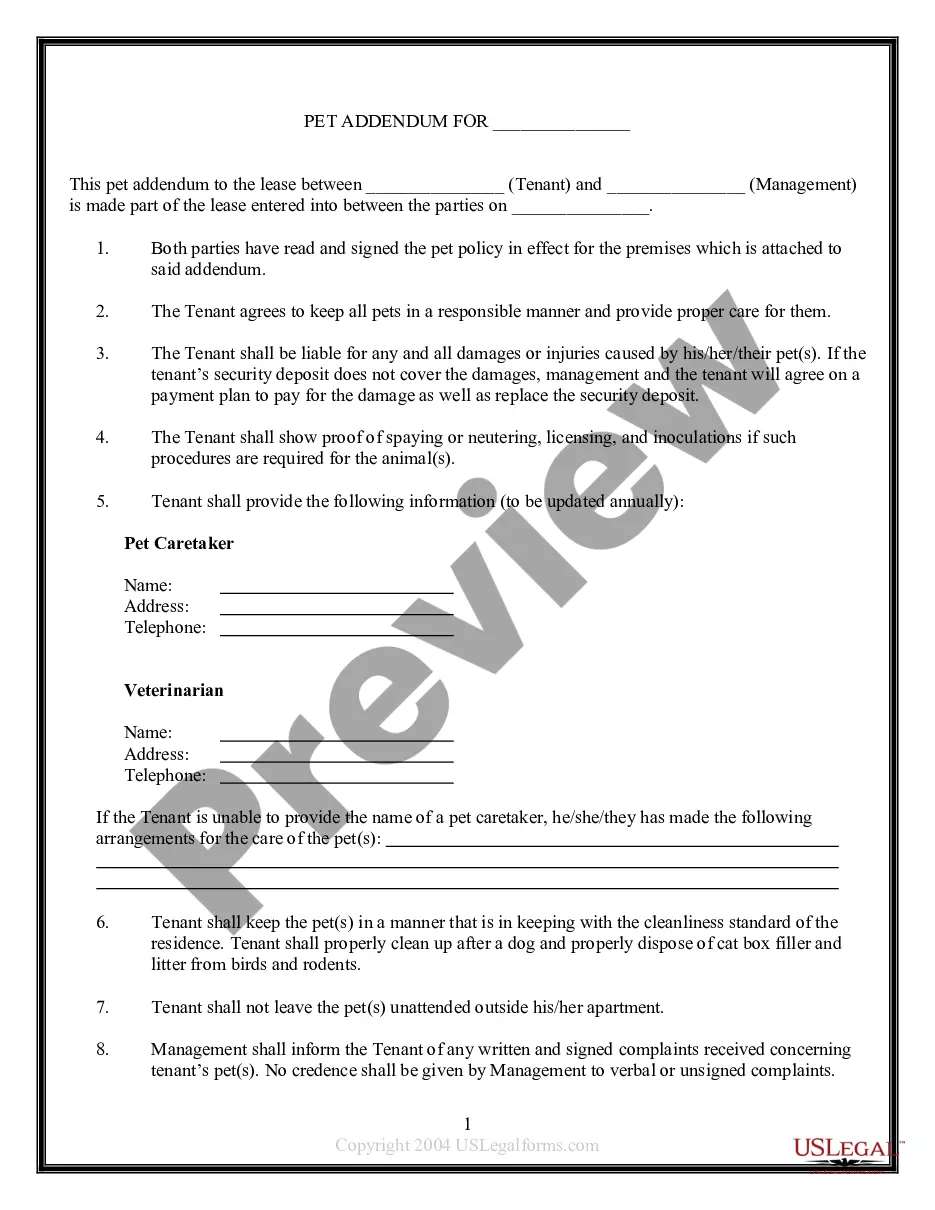
Lease Agreement With Pet Clause
Description
Get your form ready online
Our built-in tools help you complete, sign, share, and store your documents in one place.
Make edits, fill in missing information, and update formatting in US Legal Forms—just like you would in MS Word.
Download a copy, print it, send it by email, or mail it via USPS—whatever works best for your next step.
Sign and collect signatures with our SignNow integration. Send to multiple recipients, set reminders, and more. Go Premium to unlock E-Sign.
If this form requires notarization, complete it online through a secure video call—no need to meet a notary in person or wait for an appointment.
We protect your documents and personal data by following strict security and privacy standards.

Make edits, fill in missing information, and update formatting in US Legal Forms—just like you would in MS Word.

Download a copy, print it, send it by email, or mail it via USPS—whatever works best for your next step.

Sign and collect signatures with our SignNow integration. Send to multiple recipients, set reminders, and more. Go Premium to unlock E-Sign.

If this form requires notarization, complete it online through a secure video call—no need to meet a notary in person or wait for an appointment.

We protect your documents and personal data by following strict security and privacy standards.
Looking for another form?

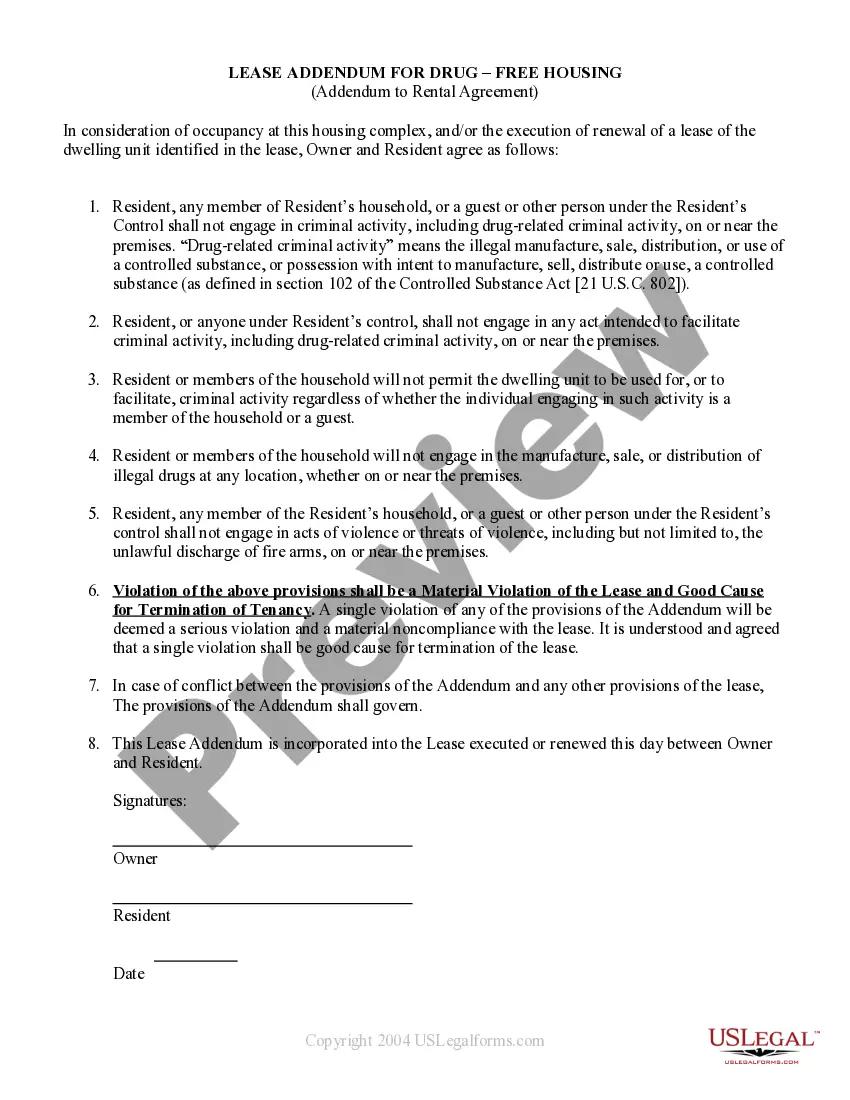
How to fill out Addendum To Apartment Lease Regarding Drug Free Housing?
- Login to your US Legal Forms account to access your existing documents, ensuring your subscription is current.
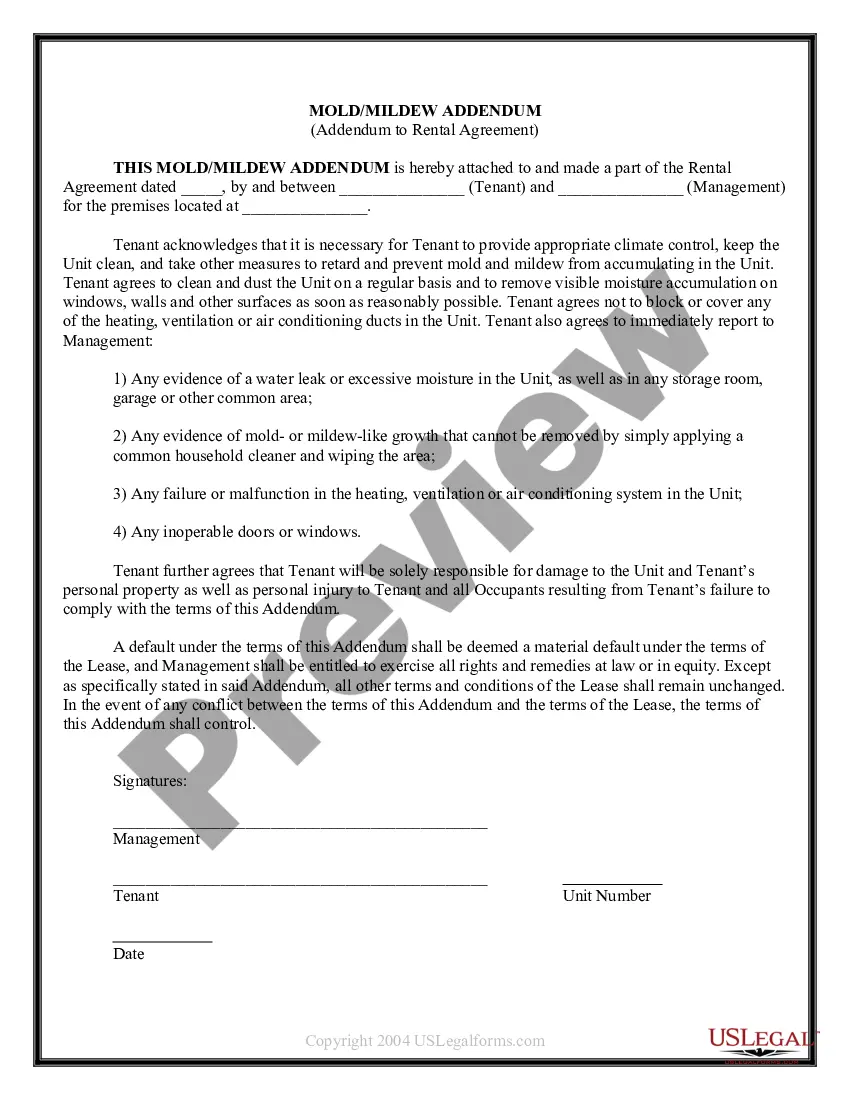
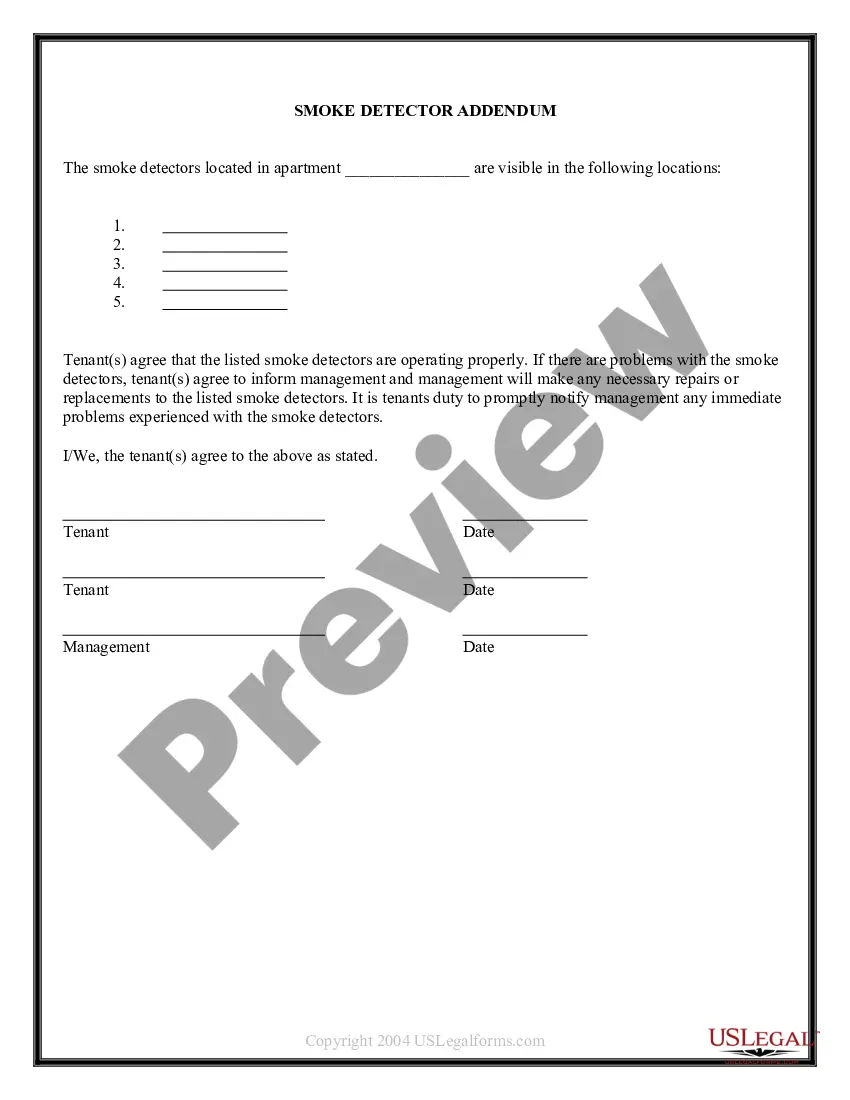
- If this is your first time using our service, preview the available lease agreement templates to select the one that meets your specific needs and adheres to local laws.
- If necessary, utilize the search function to find alternate templates that may better fit your requirements.
- Purchase the desired document by selecting a suitable subscription plan. This step requires registration for comprehensive access to our legal library.
- Complete the payment process using a credit card or PayPal for your subscription.
- Download your customized lease agreement with pet clause to your device, easily accessible in the My Forms section of your account.
In conclusion, US Legal Forms simplifies the process of creating legal documents while providing a vast collection tailored to your needs. By following these steps, you can easily draft a lease agreement with a pet clause that protects both landlords and pet owners.
Start today and ensure your lease agreements are precise and compliant by visiting US Legal Forms.
Form popularity
FAQ
Yes, you can face eviction for having too many pets if your lease agreement with pet clause limits the number of pets allowed. Therefore, it is vital to know your lease's restrictions before bringing additional animals into your home. Understanding these rules helps avoid unpleasant legal situations and ensures a harmonious living environment.
Yes, your landlord can stop you from having a pet if your lease agreement with pet clause specifically prohibits pet ownership. However, it may be possible to negotiate an amendment to the lease or obtain permission under certain circumstances. Always refer to your lease and consult legal advice if needed.
While navigating a lease that states no pets can be tricky, you have options. You might negotiate with your landlord for exceptions or additional deposits within the lease agreement with pet clause. An understanding and open dialogue could lead to a solution that satisfies both parties, allowing you to enjoy your pet at home.
Lying to your landlord about having pets can lead to significant consequences within a lease agreement with pet clause. If discovered, your landlord may choose to terminate your lease or seek eviction. Transparency is key, so it is crucial to communicate honestly about your pet situation to avoid potential legal issues.
A pet liability clause in a lease agreement with pet clause outlines the responsibilities of the tenant regarding any damage or injury caused by their pets. This clause protects landlords from potential claims and assures them that tenants will take proper care of their pets. If you're considering having a pet in a rental, make sure to review this clause carefully.
If you get caught with a pet in a rental that includes a no pets clause, your landlord may take various actions. Typically, they may issue a warning, impose penalties, or even begin eviction proceedings. To avoid these issues, it's best to clarify your lease agreement with pet clause and discuss your pet ownership intentions with your landlord beforehand.
A no pets allowed clause is a term in a lease agreement with pet clause that prohibits tenants from having pets on the rental property. This clause is often included to protect property owners from potential damage and to maintain cleanliness. As a tenant, it is important to fully understand this clause before signing the lease, as violating it can lead to serious consequences.
Navigating a no pet policy requires a thoughtful approach. You can request a meeting with your landlord to discuss possible exceptions or amendments to the lease agreement with pet clause. Sometimes, landlords may consider allowing pets with conditions like additional deposits or specific pet types. Showing responsibility towards property care can help persuade your landlord.
When informing your landlord that you have a pet, do so with honesty and respect. Explain your reasons for getting the pet and reference any relevant sections of your lease agreement with pet clause. Offer to comply with any necessary conditions, like extra deposits or regular pet inspections. Positive engagement can open the door to solutions.
While it may seem tempting to keep a pet without informing your landlord, this approach carries risks. If discovered, you could face penalties or eviction, as outlined in your lease agreement with pet clause. Instead of hiding, communicate openly; sometimes landlords allow pets with additional terms. A positive dialogue can lead to a better solution.