Court Dismissal Without Prejudice Meaning
Description

Get your form ready online
Our built-in tools help you complete, sign, share, and store your documents in one place.
Make edits, fill in missing information, and update formatting in US Legal Forms—just like you would in MS Word.
Download a copy, print it, send it by email, or mail it via USPS—whatever works best for your next step.
Sign and collect signatures with our SignNow integration. Send to multiple recipients, set reminders, and more. Go Premium to unlock E-Sign.
If this form requires notarization, complete it online through a secure video call—no need to meet a notary in person or wait for an appointment.
We protect your documents and personal data by following strict security and privacy standards.

Make edits, fill in missing information, and update formatting in US Legal Forms—just like you would in MS Word.

Download a copy, print it, send it by email, or mail it via USPS—whatever works best for your next step.

Sign and collect signatures with our SignNow integration. Send to multiple recipients, set reminders, and more. Go Premium to unlock E-Sign.

If this form requires notarization, complete it online through a secure video call—no need to meet a notary in person or wait for an appointment.

We protect your documents and personal data by following strict security and privacy standards.
Looking for another form?



How to fill out Notice Of Dismissal?
Legal administration can be exasperating, even for the most skilled experts.
When you are curious about a Court Dismissal Without Prejudice Meaning and lack the time to search for the correct and updated version, the process can be nerve-wracking.
Utilize cutting-edge tools to complete and manage your Court Dismissal Without Prejudice Meaning.
Access a wealth of articles, tutorials, and guides related to your situation and requirements.
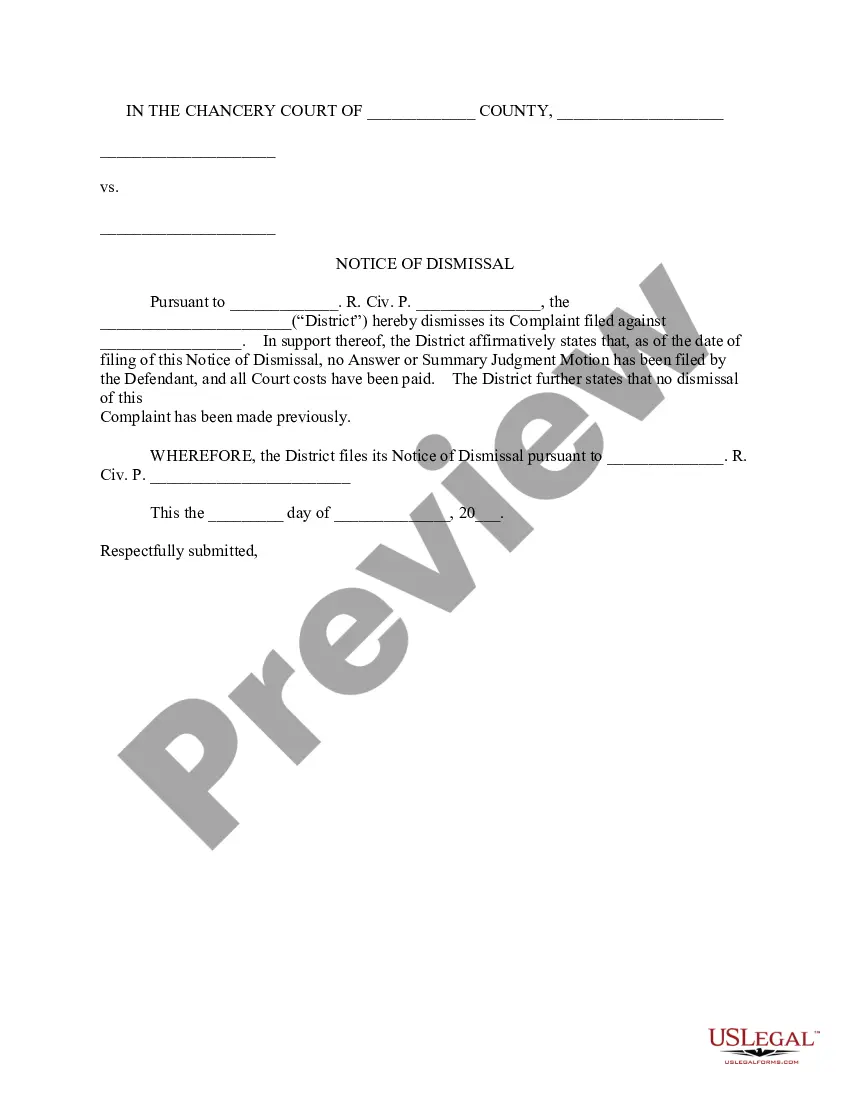
Verify that this is the correct form by previewing it and reviewing its details.
- Save energy and time searching for the necessary documents, and use US Legal Forms’ sophisticated search and Review tool to locate Court Dismissal Without Prejudice Meaning and obtain it.
- If you are a subscriber, Log In to your US Legal Forms account, look for the form, and retrieve it.
- Check the My documents tab to see the documents you have previously stored and manage your folders as needed.
- If it's your initial visit to US Legal Forms, establish a complimentary account and gain unlimited access to all the features of the platform.
- Here are the steps to follow after locating the form you need.
- A comprehensive online form library could revolutionize the way individuals handle these matters efficiently.
- US Legal Forms is a leading provider of digital legal forms, offering over 85,000 state-specific legal documents at your fingertips.
- With US Legal Forms, you can manage any needs you might have, from personal to corporate paperwork, all in one centralized location.
Form popularity
FAQ
When your case is dismissed without prejudice, it means that the court has not made a final decision on the merits of your claim. You retain the right to refile the case in the future, allowing you to address any issues that led to the dismissal. This type of dismissal provides flexibility in your legal strategy. Understanding the court dismissal without prejudice meaning is essential for navigating your next steps.
A case may be dismissed without prejudice for various reasons, such as procedural issues, lack of evidence, or if the plaintiff needs more time to prepare. This type of dismissal allows the plaintiff to address any shortcomings and refile when ready. It serves as a chance for a fresh start rather than a final judgment. Knowing the court dismissal without prejudice meaning is key to leveraging this opportunity effectively.
Whether it is better to be dismissed with or without prejudice depends on the specifics of your case. Dismissal without prejudice offers the opportunity to refile, which can be beneficial if new evidence emerges. Conversely, dismissal with prejudice closes the door on that particular claim. Understanding the court dismissal without prejudice meaning can help you make informed decisions about your legal options.
A case can be dismissed without prejudice multiple times, allowing the plaintiff to refile as needed. However, repeated dismissals may lead to increased scrutiny from the court. It's important to note that while the plaintiff has the right to refile, the circumstances must justify it. Knowing the court dismissal without prejudice meaning is crucial for strategic legal planning.
Dismissal with prejudice occurs when a court decides that a case cannot be refiled. Typical grounds include lack of jurisdiction, failure to prosecute, or a settlement agreement. This type of dismissal is often final, meaning the plaintiff cannot bring the same claim again. Understanding the court dismissal without prejudice meaning helps clarify the implications of different dismissal types.
When considering a case dismissal, understanding the court dismissal without prejudice meaning is essential. A dismissal without prejudice allows you to refile your case in the future, which may provide you with another opportunity to present your claims. In contrast, a dismissal with prejudice bars you from bringing the case again, which can limit your options. Therefore, if you believe there is still merit to your claims, a dismissal without prejudice is generally more favorable.
The choice between dismissing a case with or without prejudice depends on your specific circumstances and goals. A dismissal with prejudice permanently bars the claim from being refiled, while a dismissal without prejudice allows for the possibility of future action. If you are unsure which option suits your needs, consulting legal resources like USLegalForms can provide valuable insights. Understanding the court dismissal without prejudice meaning is pivotal in making the right choice.
When a case is dismissed without prejudice, it means the case is closed, but the door remains open for future legal action. This type of dismissal does not prevent the plaintiff from filing the same claim again. This distinction is vital for individuals or businesses considering their legal options. Knowing the court dismissal without prejudice meaning can empower you to make informed decisions about your case.
Dismissing a case without prejudice provides the opportunity to refile the case in the future if necessary. This decision can arise from various strategic considerations, including new evidence or a change in circumstances. By choosing this option, you maintain the flexibility to pursue your claims later. Grasping the court dismissal without prejudice meaning can help you determine when this strategy is most beneficial.
The term 'without prejudice' serves a crucial function in legal proceedings. It allows parties to communicate openly during negotiations without fear that their statements will be used against them later in court. Essentially, this phrase protects the parties' interests by ensuring that discussions aimed at settlement do not compromise their legal positions. Understanding court dismissal without prejudice meaning helps you navigate these conversations effectively.