Employee Warning Template With Lunch Break
Description
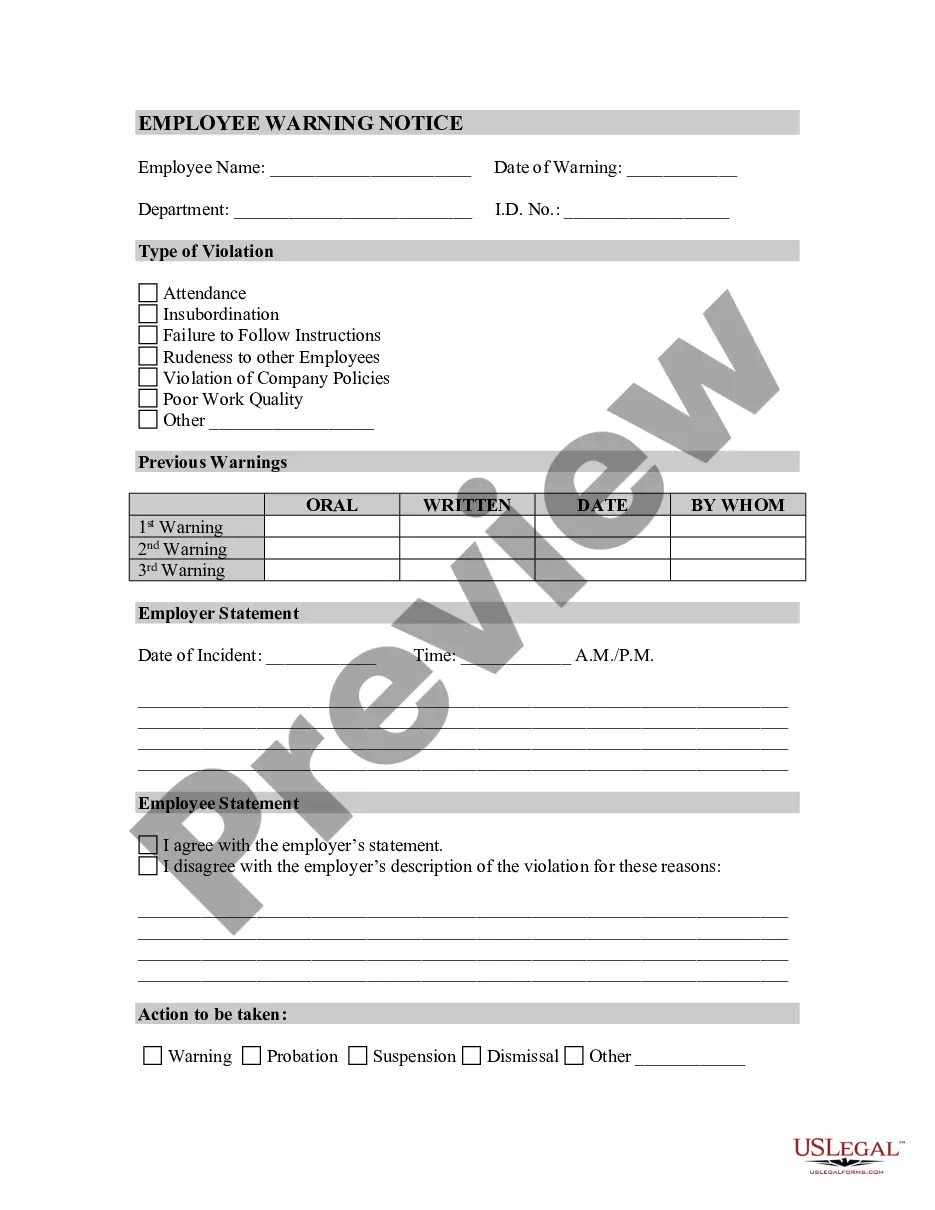
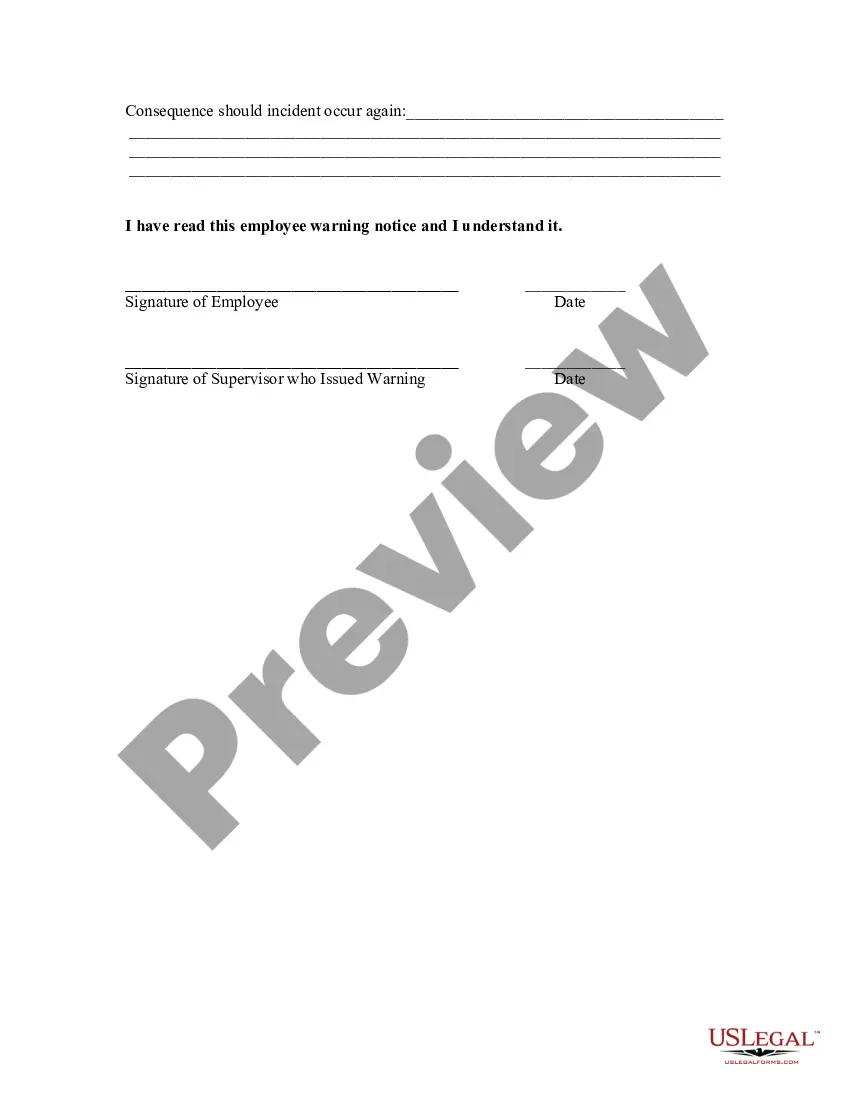
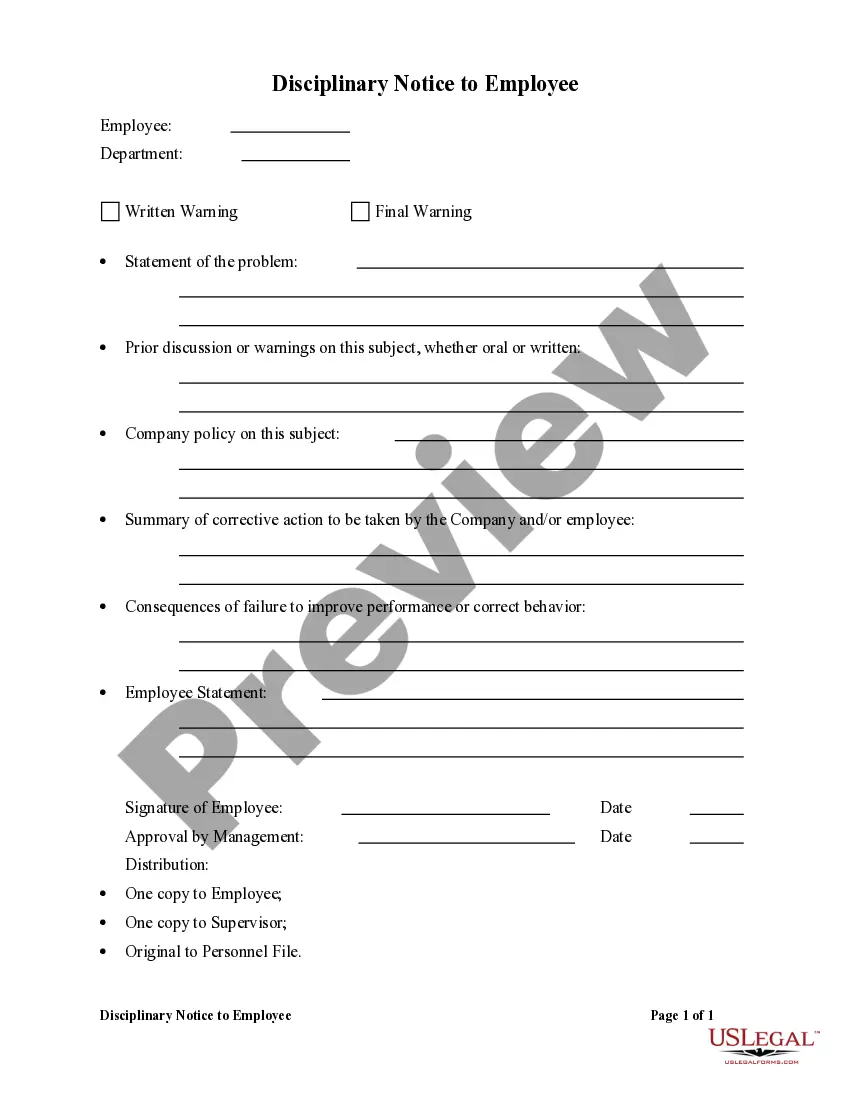
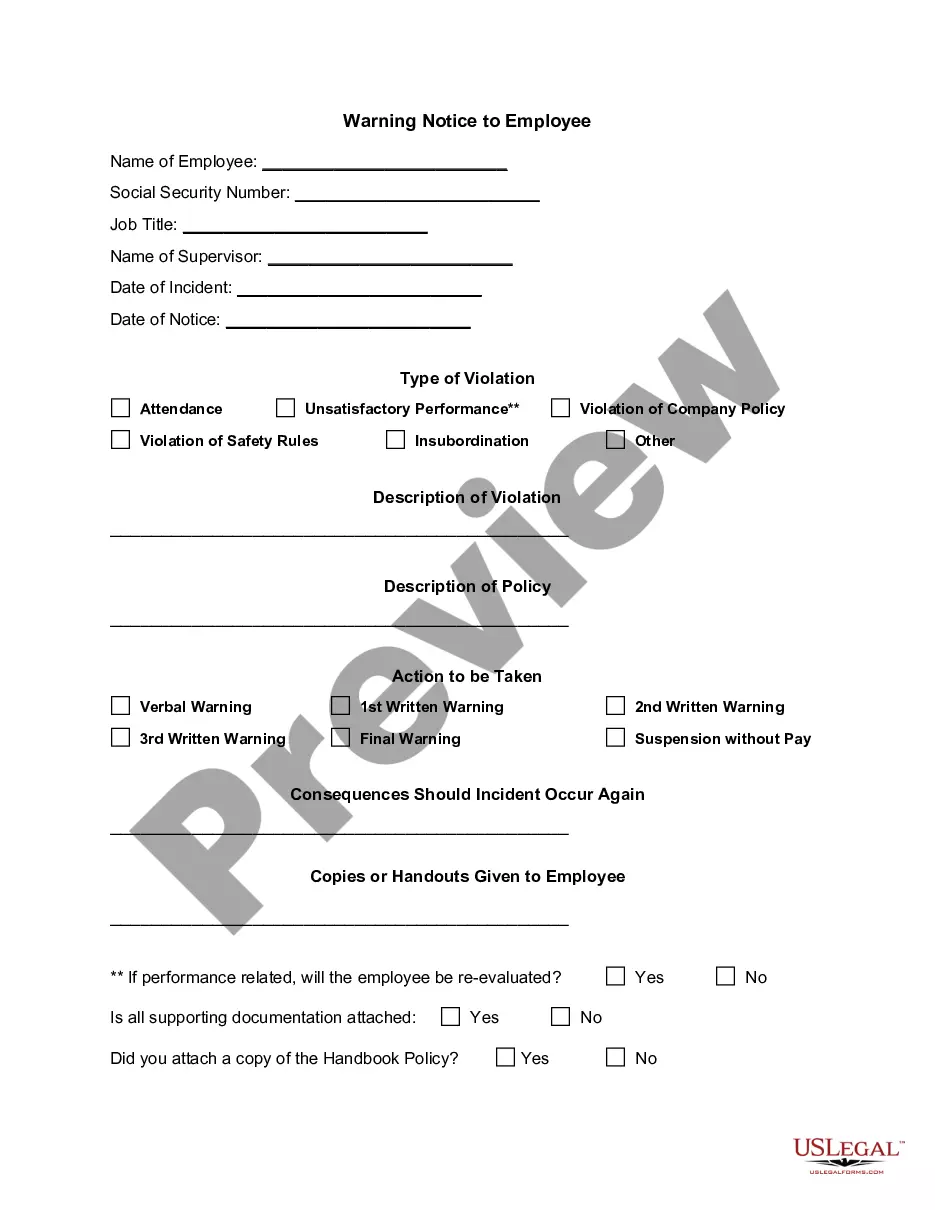
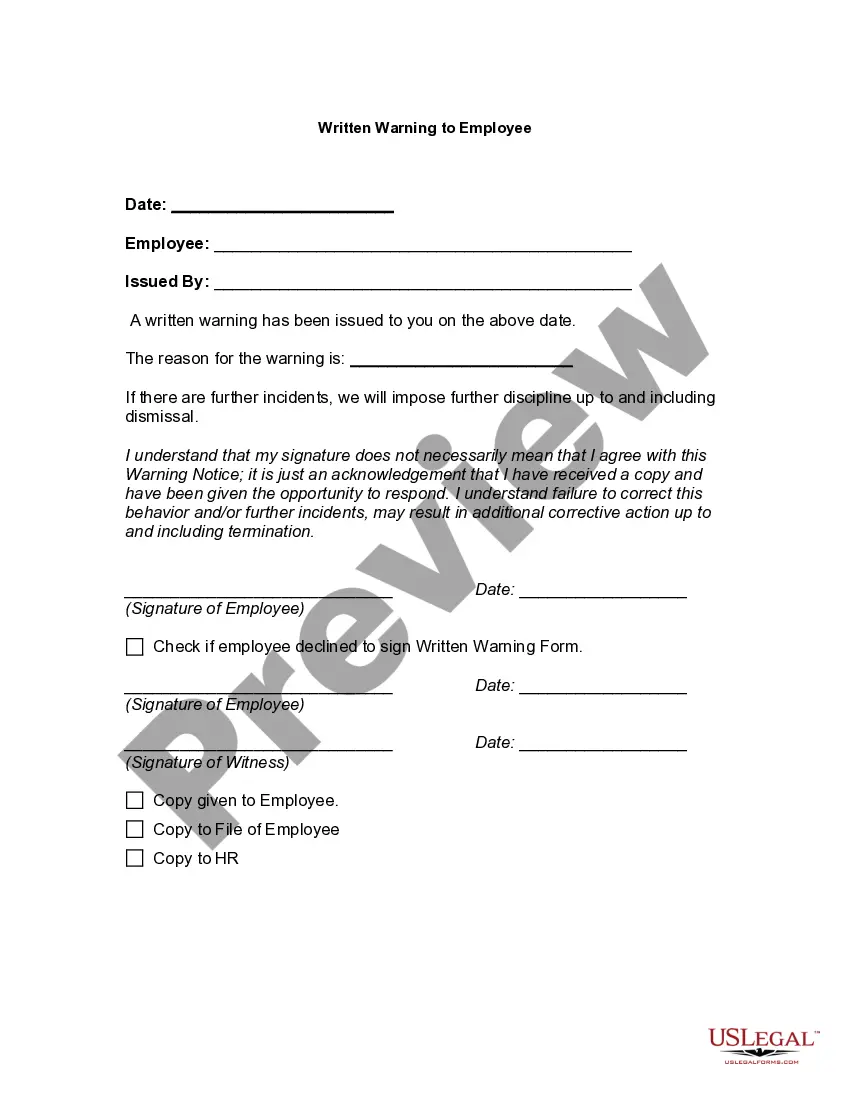
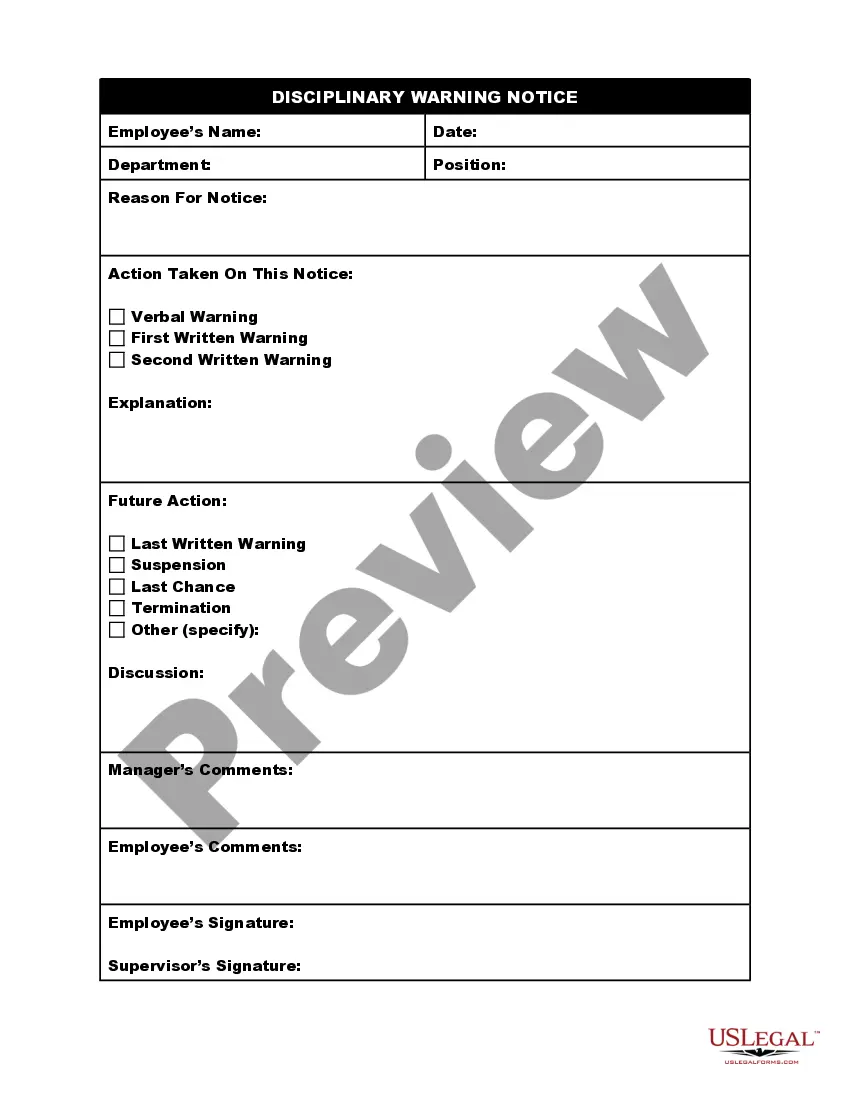
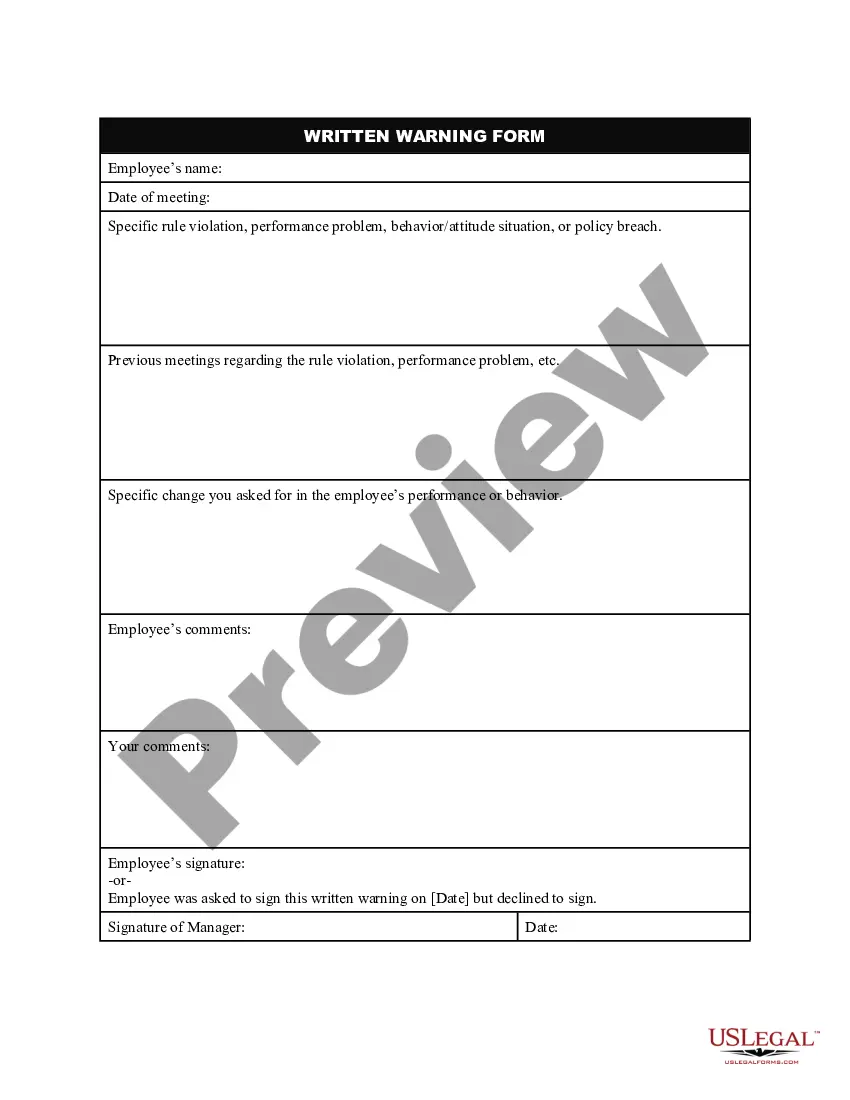
Get your form ready online
Our built-in tools help you complete, sign, share, and store your documents in one place.
Make edits, fill in missing information, and update formatting in US Legal Forms—just like you would in MS Word.
Download a copy, print it, send it by email, or mail it via USPS—whatever works best for your next step.
Sign and collect signatures with our SignNow integration. Send to multiple recipients, set reminders, and more. Go Premium to unlock E-Sign.
If this form requires notarization, complete it online through a secure video call—no need to meet a notary in person or wait for an appointment.
We protect your documents and personal data by following strict security and privacy standards.

Make edits, fill in missing information, and update formatting in US Legal Forms—just like you would in MS Word.

Download a copy, print it, send it by email, or mail it via USPS—whatever works best for your next step.

Sign and collect signatures with our SignNow integration. Send to multiple recipients, set reminders, and more. Go Premium to unlock E-Sign.

If this form requires notarization, complete it online through a secure video call—no need to meet a notary in person or wait for an appointment.

We protect your documents and personal data by following strict security and privacy standards.
Looking for another form?
How to fill out Employee Warning Notice?
Retrieving legal documents that adhere to federal and state regulations is essential, and the internet presents a multitude of choices to select from.
However, what's the benefit of spending time searching for the suitable Employee Warning Template With Lunch Break example online if the US Legal Forms digital library already houses such documents in one consolidated location.
US Legal Forms is the largest virtual legal archive with more than 85,000 editable documents prepared by attorneys for any business and personal situation.
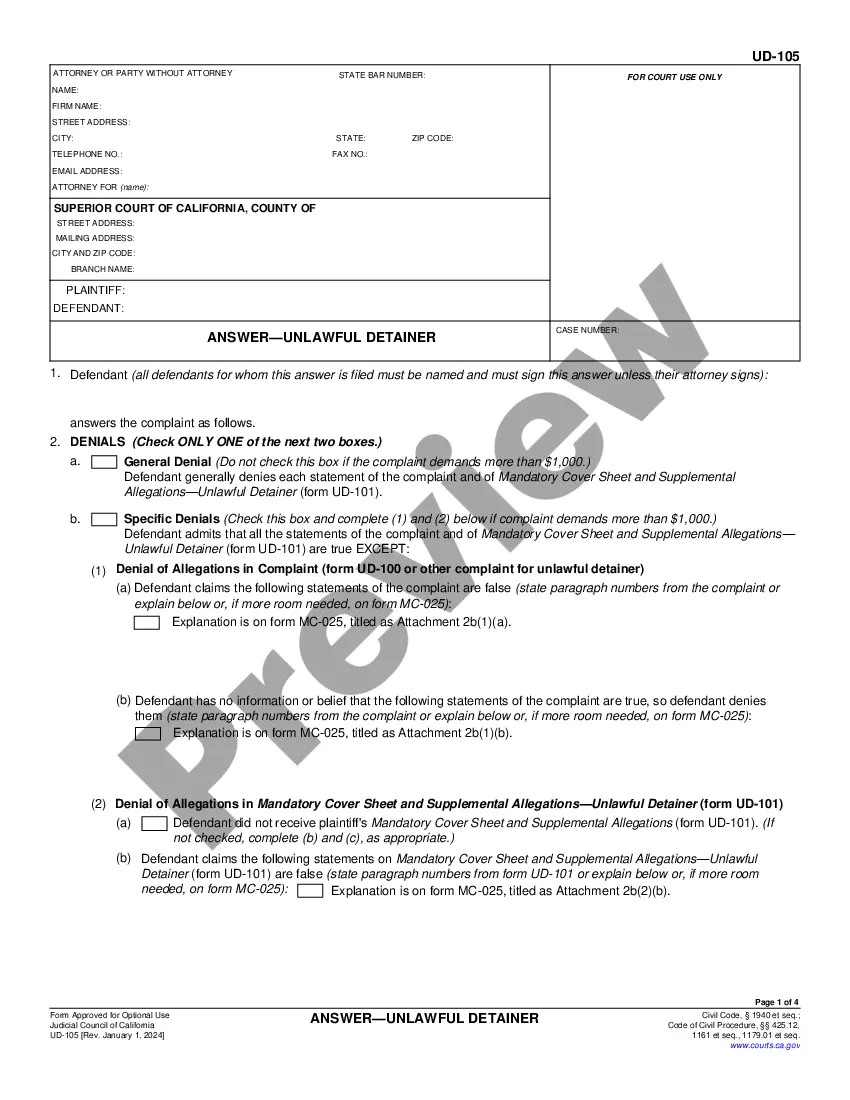
Review the template using the Preview function or via the text outline to confirm it fulfills your needs.
- They are straightforward to navigate, with all documents organized by state and intended use.
- Our professionals keep abreast of legal updates, ensuring that your form remains current and compliant when acquiring an Employee Warning Template With Lunch Break from our site.
- Acquiring an Employee Warning Template With Lunch Break is quick and efficient for both existing and new users.
- If you already possess an account with an active subscription, Log In and secure the document template you require in the appropriate format.
- For newcomers to our platform, follow the directives below.
Form popularity
FAQ
To give a warning politely, start by expressing your intention to help the employee improve. Use clear but gentle language, and reference specific instances using an Employee warning template with lunch break as a guide. This structure promotes fairness and ensures the employee understands the concerns while feeling supported in their growth.
Yes, a company can write you up for not taking a lunch break, particularly if it is mandated by labor laws or company policy. Taking a proper lunch break is important for employee health and productivity. Consistent failure to adhere to break policies may prompt formal action, and having an Employee warning template with lunch break can help outline expectations clearly.
Yes, your boss can dictate when you take your lunch break, as it falls under company policy and operational needs. Employers often establish lunch schedules to ensure adequate coverage and productivity. However, it's important that these policies are communicated clearly. If you're unsure or feel your needs aren't being met, consider discussing the matter with your supervisor.
A written warning typically includes the employee’s name, the date of the warning, and a description of the specific behavior that requires attention. It also outlines the consequences if the behavior continues, and it might use an Employee warning template with lunch break for clarity. By presenting the warning professionally, it sets clear expectations and maintains a record for future reference.
To warn someone professionally, approach the conversation with respect and a calm demeanor. Start by clearly communicating the observed behavior and how it impacts the workplace. Utilize an Employee warning template with lunch break to formalize the discussion and provide a clear record. This approach fosters a constructive environment and encourages improvement.
Documenting a written warning involves clearly outlining the issue, discussing past performance, and providing specific examples. Use a structured format, such as an Employee warning template with lunch break, to ensure consistency and clarity. Keep a copy for your records and provide the employee with a copy as well. This process promotes transparency and helps both parties understand expectations.
In Arizona, there is no state law mandating lunch breaks for employees over the age of 18. However, employers are encouraged to provide reasonable breaks, typically a 30-minute meal break after 5 hours of work. It's essential to incorporate any relevant guidelines in an employee warning template with lunch break specifications, ensuring compliance and promoting a healthy work environment. Understanding these laws can help you create clearer policies that benefit both parties.
Presenting a written warning to an employee should follow a structured approach. First, outline the specific behavior or action that led to the warning. Then, provide the context of the situation and reference applicable company policies, including any employee warning template with lunch break guidelines. It’s best to schedule a private meeting to discuss the warning, allowing you to communicate effectively and address the employee’s concerns respectfully.
An employer has some control over the workplace environment, which includes your lunch break. However, restrictions on what you can do during your break generally cannot infringe upon your personal time unduly. For instance, employers cannot prevent you from taking personal phone calls or eating away from the premises. If you need a clear approach to addressing workplace expectations, an employee warning template with lunch break provisions can clarify policies while respecting employee autonomy.