Credit Memo Meaning
Description

How to fill out Credit Memo Request Form?
- Log in to your US Legal Forms account if you are a returning user. Make sure your subscription is active to access and download the required document.
- For first-time users, start by exploring the Preview mode of your chosen form. Review the description carefully to ensure it aligns with your specific legal and jurisdictional needs.
- If you need a different template, utilize the Search tab to find alternatives that meet your criteria.
- Once you've identified the right document, click the Buy Now button and choose a subscription plan that fits your requirements. You'll need to create an account to unlock access to the extensive library.
- Proceed to complete your purchase. Enter your payment details via credit card or PayPal, ensuring a secure transaction.
- After purchasing, download the form to your device. You can also revisit your templates anytime through the My Forms section in your profile.
In conclusion, comprehending the credit memo meaning and utilizing US Legal Forms can greatly benefit your legal document needs. With an extensive library and support from experts, you can ensure precision in all your paperwork.
Start your journey today by visiting US Legal Forms and experience seamless document generation.
Form popularity
FAQ
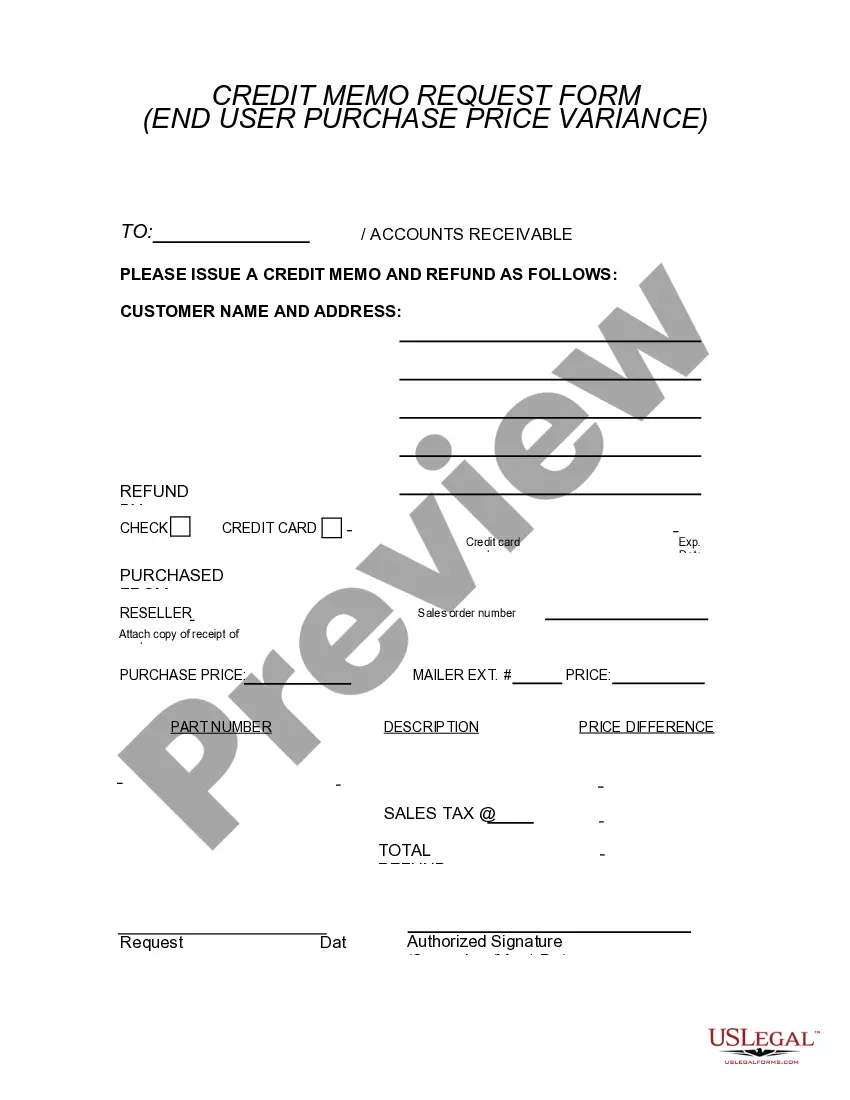
Creating a credit memo involves entering the transaction details into your accounting system. Once you identify the reason for the credit, you generate the memo, including relevant information such as the date and amount. By understanding credit memo meaning, you can streamline this process efficiently.
Typically, a credit memo is prepared by a company's accounting department or accounts receivable team. When an adjustment is necessary, they document the details to ensure accurate records. Grasping credit memo meaning helps you comprehend the workflow involved in financial management.
A credit memo, for example, may be issued when a customer returns merchandise. If a retailer processes a return for items worth $100, they would issue a credit memo showing that amount credited to the customer's account. Knowing credit memo meaning helps you utilize this tool effectively in your business transactions.
In bank reconciliation, a credit memo might appear when a bank credits your account for interest earned. For instance, if your account accrues interest, the bank might send a credit memo reflecting that amount. This showcases how understanding credit memo meaning enhances your grasp of financial statements and reconciliations.
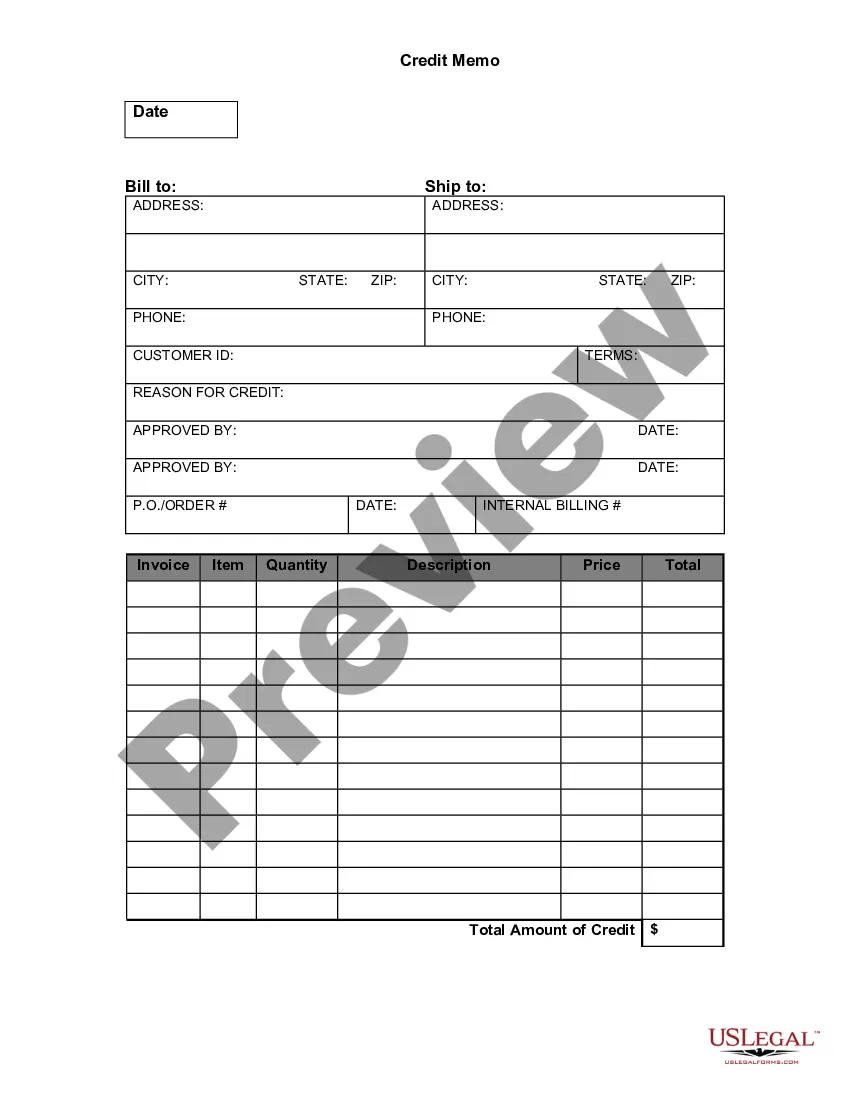
A credit memo typically includes important details like the date, the amount credited, and an explanation of the adjustment. It may resemble a regular invoice but will clearly state that it is a credit memo. By knowing the credit memo meaning, you can quickly identify its purpose in your billing documentation.
To fill out a credit memo, include your company information at the top, followed by the customer's details and the date. Clearly state the reason for issuing the credit and provide a detailed list of items or services being credited. Accurate completion of the memo reinforces the credit memo meaning and ensures proper accounting and customer satisfaction.
Writing a credit memo involves creating a clear and concise document. Begin with your company details, date, and a unique credit memo number. Specify the reasons for the credit, include itemized amounts, and ensure both parties sign if required. Mastering the credit memo meaning will streamline your accounting processes and foster transparency.
To fill out a credit note, start with your company's name, address, and contact details. Then, include the recipient's information, the original invoice number, and the date. Clearly describe the reason for the credit, the amount being credited, and reference any applicable terms. This clarity reinforces the credit memo meaning and assures both parties are on the same page.
A credit memo example is a document a seller issues to a buyer, reducing the amount owed under a previous invoice. For instance, if a customer returns merchandise, the seller may issue a credit memo for that amount, reflecting the return and allowing for future purchases. Understanding this credit memo meaning helps maintain accurate accounting and customer relationships.
You may receive a memo credit for various reasons, including billing discrepancies, returned items, or service adjustments. The credit memo meaning signifies that the company has acknowledged an error or a change in your transaction. It acts as a formal acknowledgment that your account has been adjusted positively. If you're unsure why you received one, reviewing your recent transactions can provide clarity.