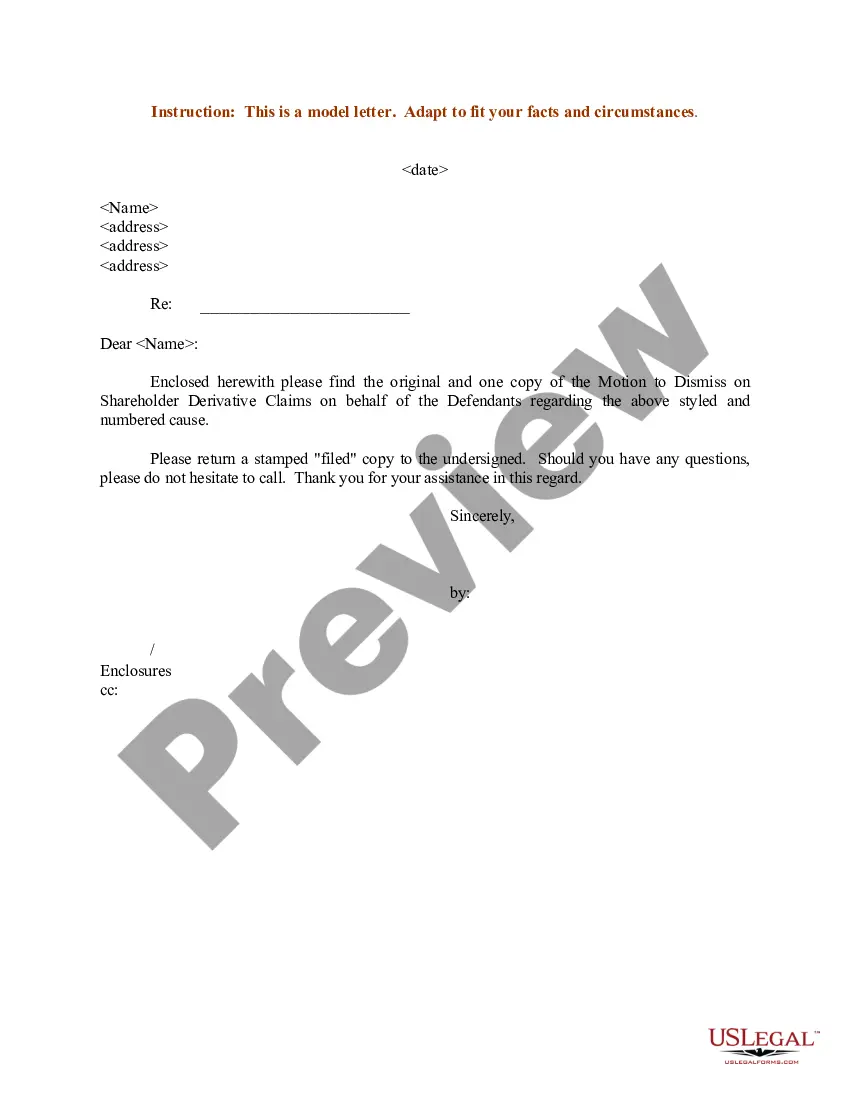
Derivative Action For A Company
Description
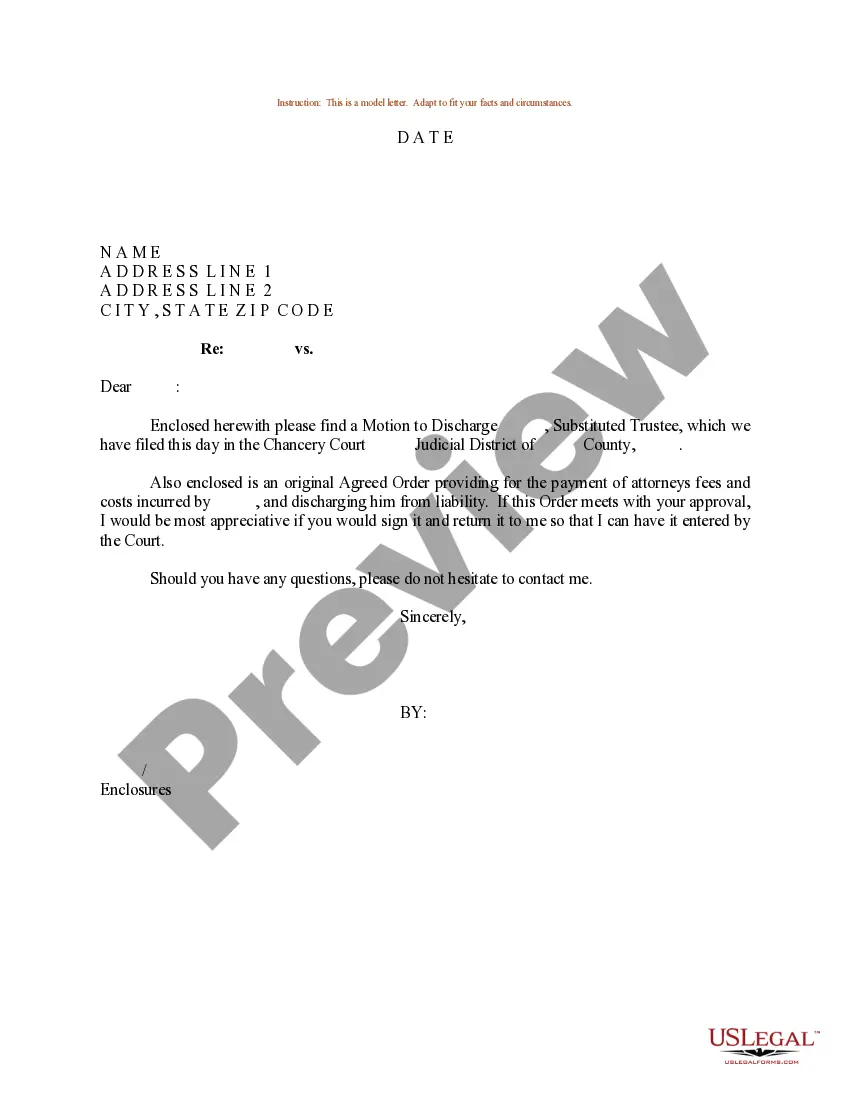
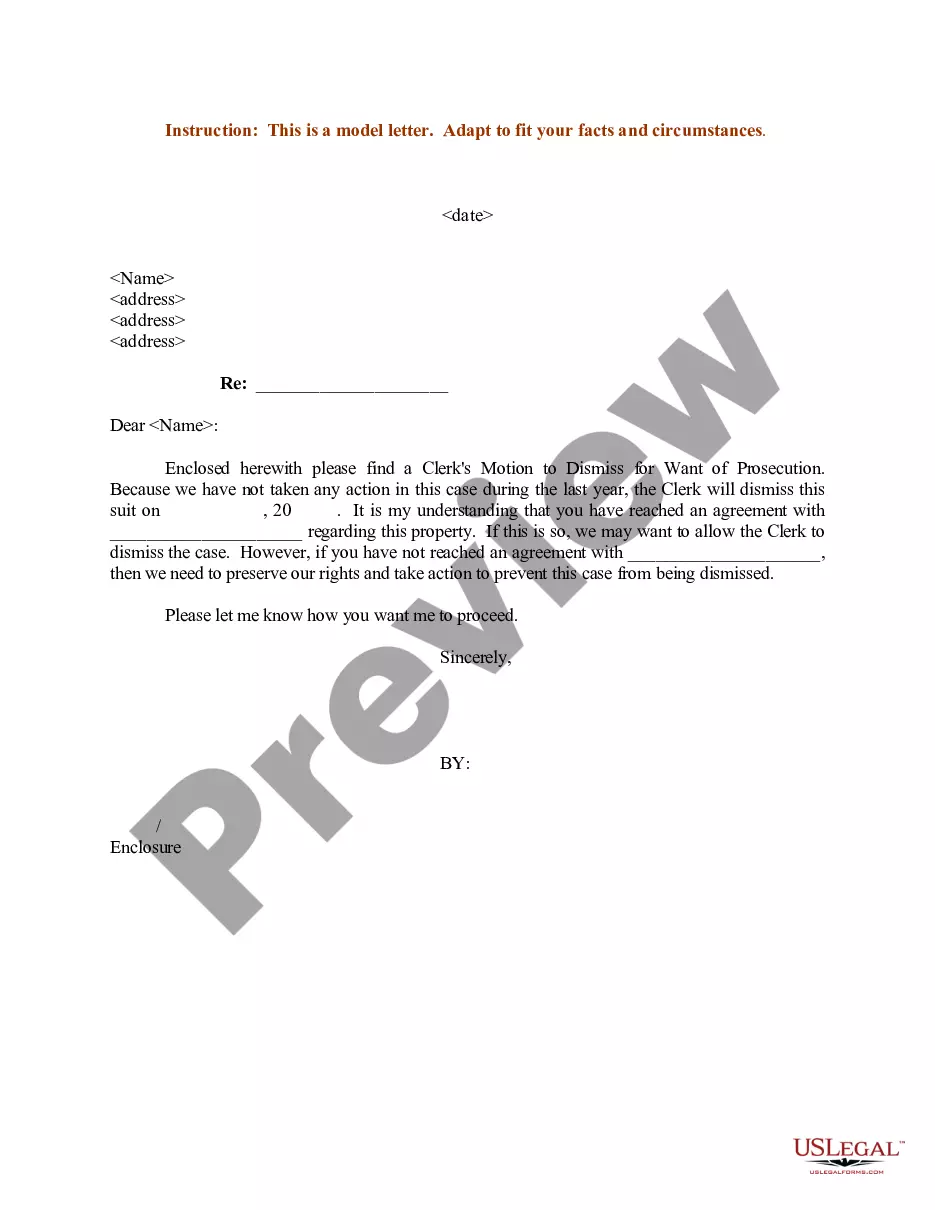
Get your form ready online
Our built-in tools help you complete, sign, share, and store your documents in one place.
Make edits, fill in missing information, and update formatting in US Legal Forms—just like you would in MS Word.
Download a copy, print it, send it by email, or mail it via USPS—whatever works best for your next step.
Sign and collect signatures with our SignNow integration. Send to multiple recipients, set reminders, and more. Go Premium to unlock E-Sign.
If this form requires notarization, complete it online through a secure video call—no need to meet a notary in person or wait for an appointment.
We protect your documents and personal data by following strict security and privacy standards.

Make edits, fill in missing information, and update formatting in US Legal Forms—just like you would in MS Word.

Download a copy, print it, send it by email, or mail it via USPS—whatever works best for your next step.

Sign and collect signatures with our SignNow integration. Send to multiple recipients, set reminders, and more. Go Premium to unlock E-Sign.

If this form requires notarization, complete it online through a secure video call—no need to meet a notary in person or wait for an appointment.

We protect your documents and personal data by following strict security and privacy standards.
Looking for another form?









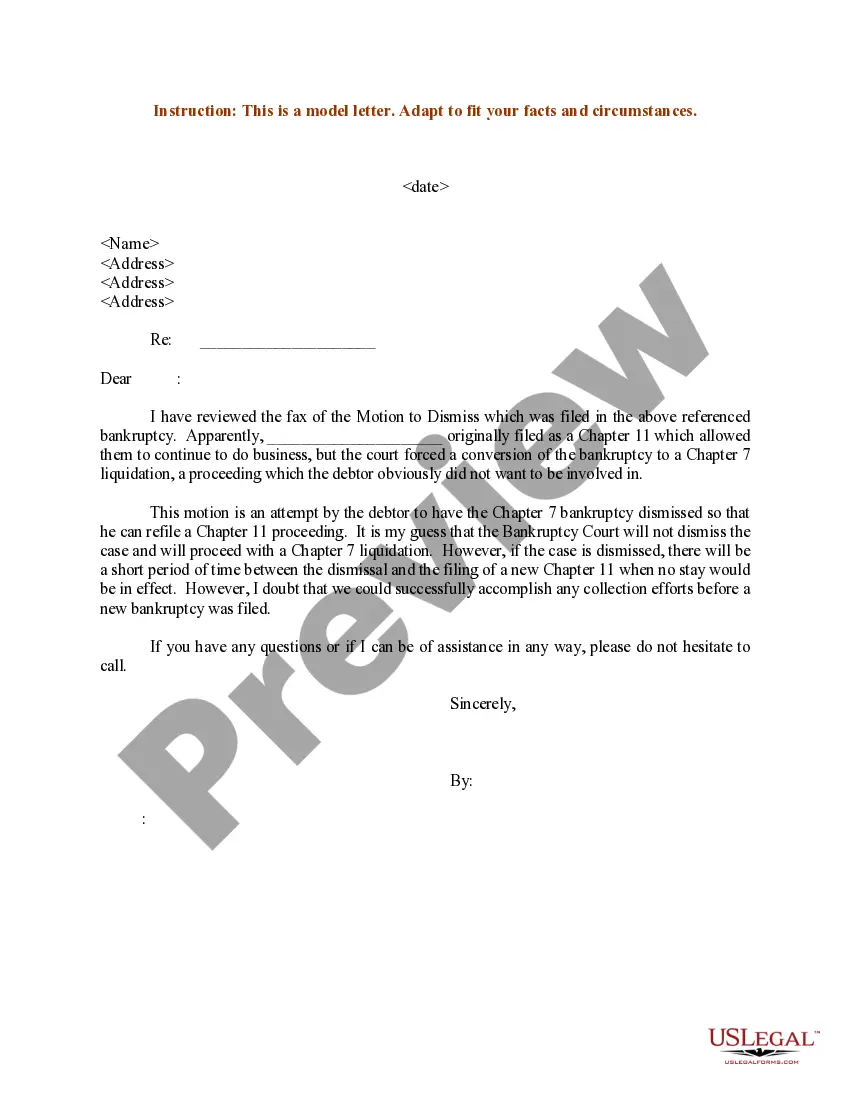
How to fill out Sample Letter Regarding Motion To Dismiss On Shareholder Derivative Claims?
Regardless of whether for commercial reasons or personal matters, everyone must handle legal issues at some stage in their life.
Filling out legal documents requires meticulous focus, starting from selecting the appropriate form template.
Once downloaded, you can complete the form using editing software or print it out and fill it out manually. With a vast catalog of US Legal Forms available, you do not need to waste time searching for the correct sample online. Utilize the library's user-friendly navigation to find the appropriate template for any situation.
- For example, if you choose an incorrect version of the Derivative Action For A Company, it will be rejected once submitted.
- Thus, it is essential to have a reliable source for legal documents like US Legal Forms.
- To obtain a Derivative Action For A Company template, follow these straightforward steps.
- Locate the sample you require by utilizing the search bar or browse through the catalog.
- Review the description of the form to confirm it aligns with your situation, state, and locality.
- Click on the preview of the form to examine it.
- If it is not the correct document, return to the search option to find the specific Derivative Action For A Company template you need.
- Download the template if it fulfills your requirements.
- If you possess a US Legal Forms account, simply click Log in to access previously stored templates in My documents.
- If you have yet to create an account, you can acquire the form by clicking Buy now.
- Select the appropriate pricing option.
- Fill out the profile registration form.
- Choose your payment method: you may use a credit card or PayPal account.
- Select the desired file format and download the Derivative Action For A Company.
Form popularity
FAQ
Generally, any shareholder of a company can file a derivative action for a company. This action is intended to protect the interests of all shareholders when the company itself is unable or unwilling to act. It's crucial to hold shares at the time of the alleged wrongdoing and to maintain ownership throughout the proceedings. US Legal Forms offers comprehensive resources to help you understand your rights and navigate the filing process effectively.
To commence a derivative action for a company, you must first ensure that you are a shareholder. Next, you should gather evidence that demonstrates the company has been harmed by the actions of its management or board. It's important to file a formal complaint in the appropriate court, outlining your claims and the harm done to the company. Using resources like US Legal Forms can simplify this process by providing templates and guidance tailored for derivative actions.
An LLC derivative action is a specific type of derivative action for a company, tailored for limited liability companies. In this context, a member of the LLC may sue on behalf of the company to address issues such as mismanagement or breaches of fiduciary duty. This action helps ensure that the LLC operates in the best interest of all its members, promoting fairness and accountability. If you need assistance with this process, consider using uslegalforms to navigate the legal requirements effectively.
A derivative action for a company occurs when a shareholder files a lawsuit on behalf of the company to address wrongs committed against it. For example, if company executives engage in fraudulent activities that harm the company's financial health, a shareholder may initiate a derivative action. This legal step allows the shareholder to seek justice and hold the wrongdoers accountable, ensuring that the company's interests are protected. Using platforms like uslegalforms can simplify the process of filing such actions.
A derivative action for a company allows shareholders to file a lawsuit on behalf of the company, especially when the company fails to protect its own interests. This legal mechanism is crucial for addressing wrongs committed against the company, often by its directors or executives. By initiating a derivative action, shareholders seek to hold these individuals accountable and recover damages for the company. This process not only helps in rectifying injustices but also promotes corporate governance and transparency.
Firstly, a shareholder has to seek permission from the court to commence derivative proceedings. The court must refuse to grant permission if it considers there is no prima facie case. If permission is not refused at that stage then the court will order the application for permission to be served on the company.
Make a demand in writing requiring the corporation to take suitable action before the action (Generally, a derivative suit can only be filed 90 days after written demand. But it may be initiated ahead of time if a) the corporation rejects the demand, or b) the corporation will suffer irreparable harm if they wait).
A derivative action is a type of lawsuit in which the corporation asserts a wrong against the corporation and seeks damages. Derivative actions represent two lawsuits in one: (1) the failure of the board of directors to sue on an existing corporate claim and (2) the existing claim.
A derivative action allows a member of the LLC to sue on behalf of the LLC when it refuses to act. The general rule is an individual member of an LLC cannot maintain a personal action against a manager or director or other third party whose action causes harm to the company.