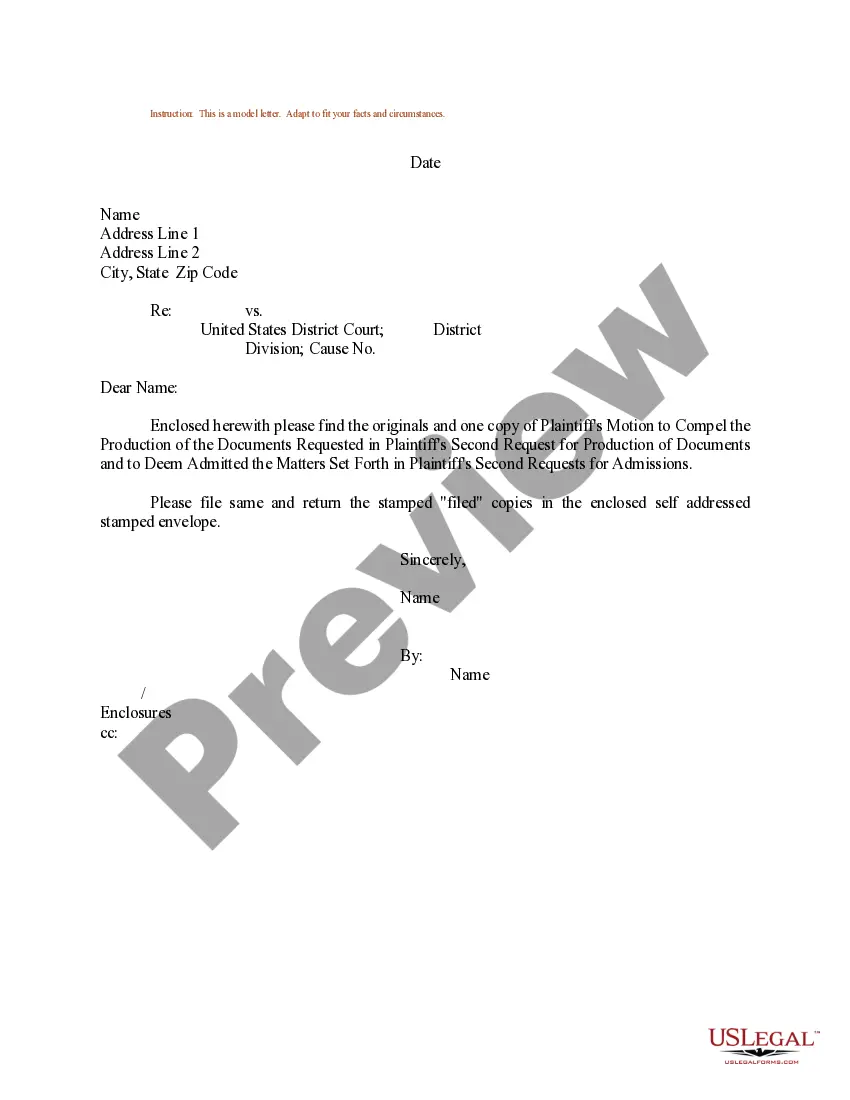
Second Request For Production Of Documents
Description
Get your form ready online
Our built-in tools help you complete, sign, share, and store your documents in one place.
Make edits, fill in missing information, and update formatting in US Legal Forms—just like you would in MS Word.
Download a copy, print it, send it by email, or mail it via USPS—whatever works best for your next step.
Sign and collect signatures with our SignNow integration. Send to multiple recipients, set reminders, and more. Go Premium to unlock E-Sign.
If this form requires notarization, complete it online through a secure video call—no need to meet a notary in person or wait for an appointment.
We protect your documents and personal data by following strict security and privacy standards.

Make edits, fill in missing information, and update formatting in US Legal Forms—just like you would in MS Word.

Download a copy, print it, send it by email, or mail it via USPS—whatever works best for your next step.

Sign and collect signatures with our SignNow integration. Send to multiple recipients, set reminders, and more. Go Premium to unlock E-Sign.

If this form requires notarization, complete it online through a secure video call—no need to meet a notary in person or wait for an appointment.

We protect your documents and personal data by following strict security and privacy standards.
Looking for another form?

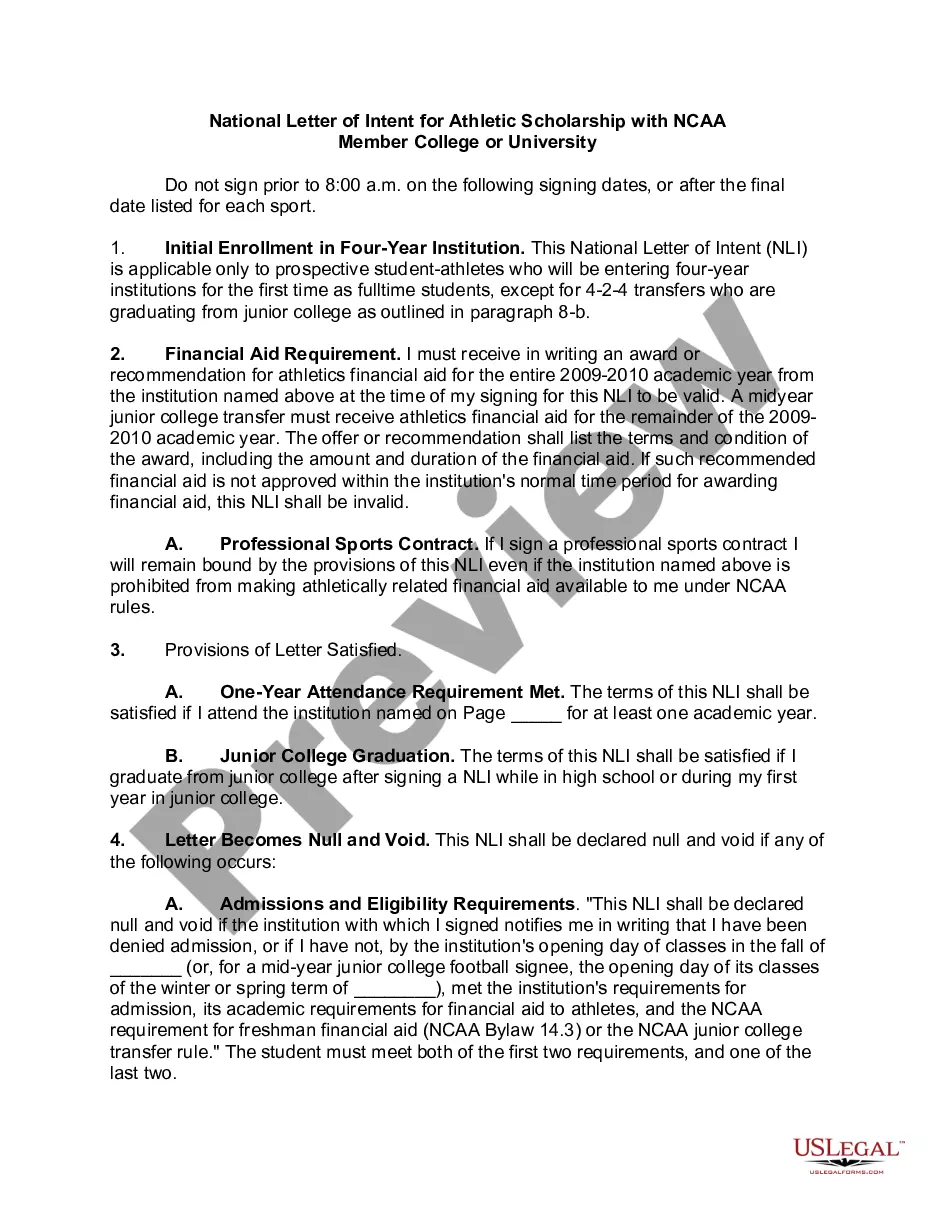



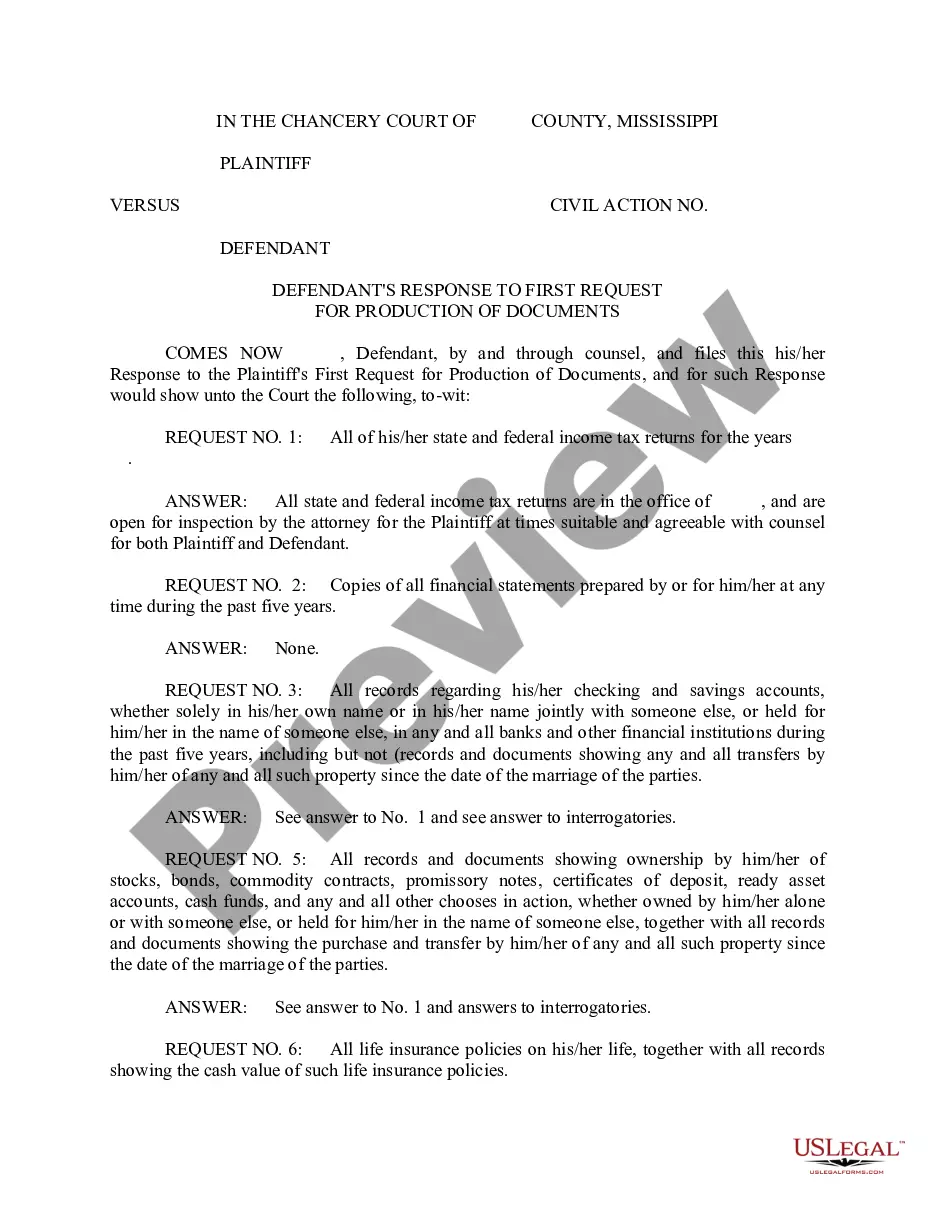
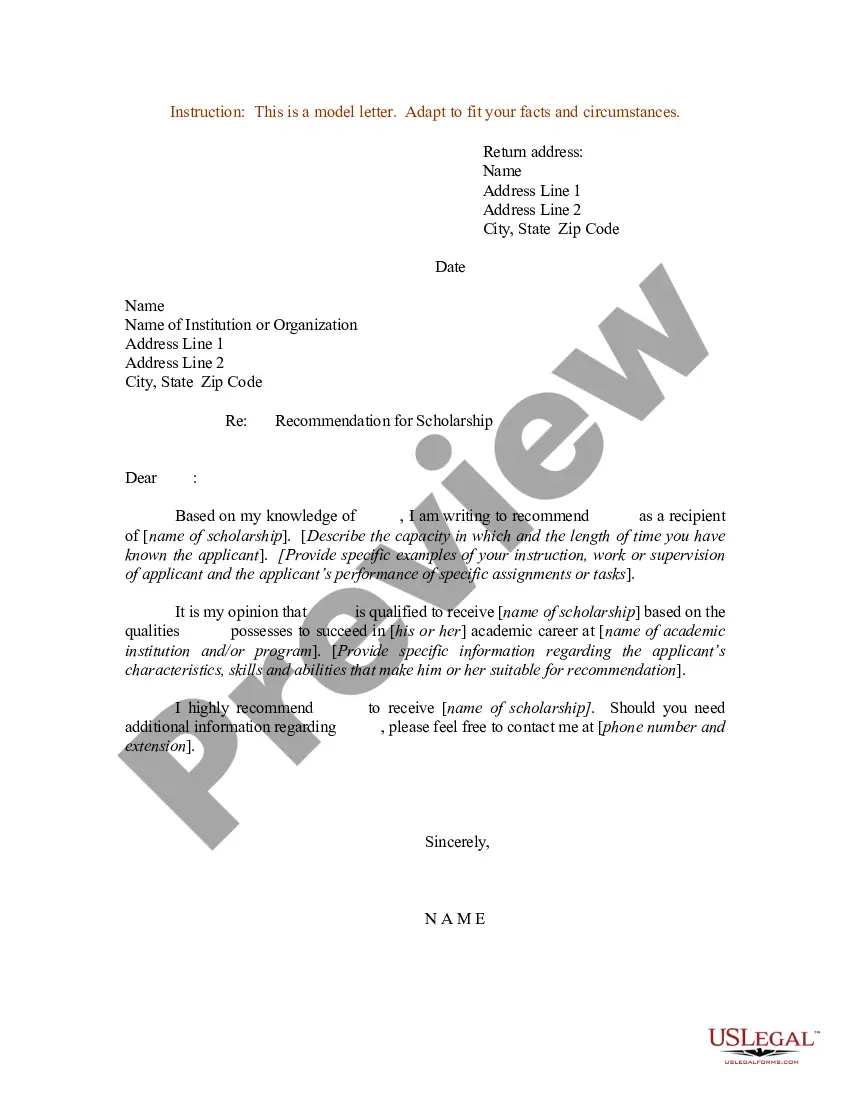
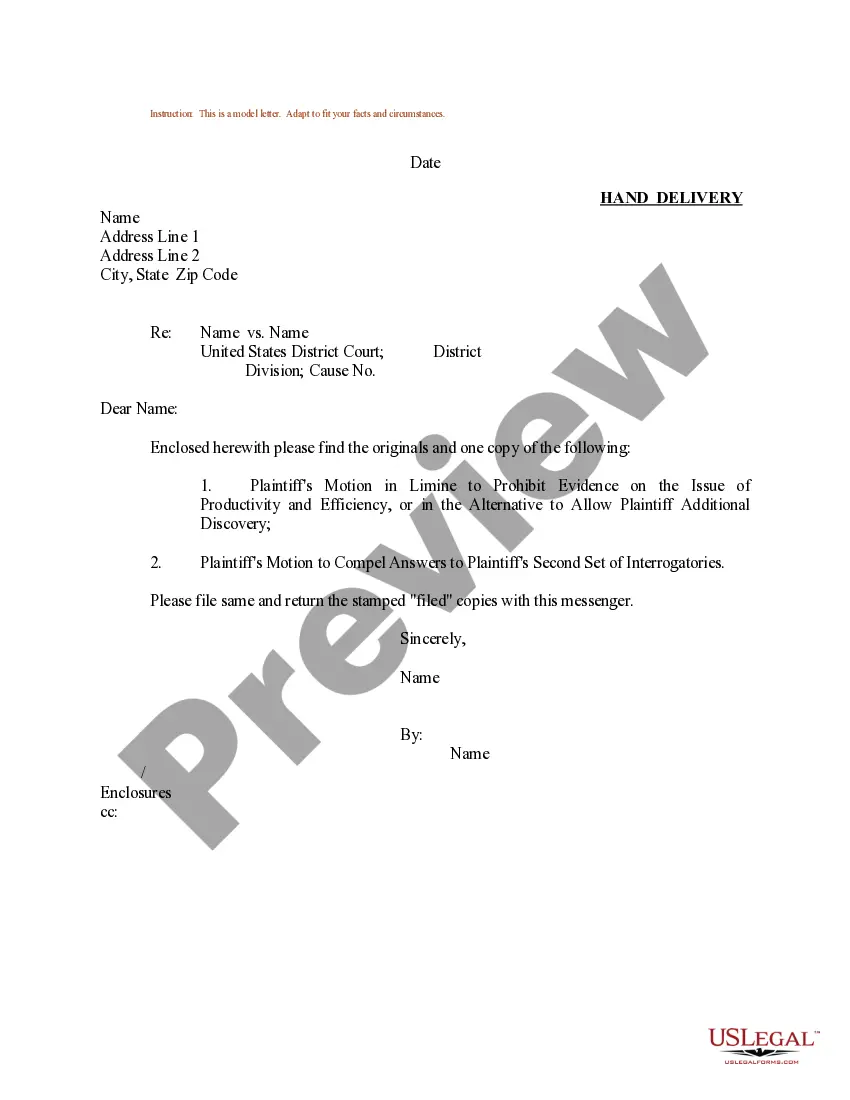
How to fill out Sample Letter For Plaintiff's Motion To Compel The Production Of The Documents Requested In Plaintiff's Second Request For Production Of Documents?
Utilizing legal templates that comply with federal and local laws is essential, and the internet provides a multitude of choices to select from.
However, what is the purpose of spending time searching for the appropriately drafted Second Request For Production Of Documents template online if the US Legal Forms digital library already has such documents compiled in one location.
US Legal Forms is the premier online legal repository with more than 85,000 fillable templates created by lawyers for any business and personal situation.
Review the template using the Preview function or through the text outline to ensure it satisfies your needs.
- They are simple to navigate with all documents organized by state and intended use.
- Our specialists stay updated with legal changes, ensuring that your form is current and compliant when obtaining a Second Request For Production Of Documents from our site.
- Acquiring a Second Request For Production Of Documents is quick and straightforward for both existing and new users.
- If you already have an account with an active subscription, Log In and download the document sample you need in the appropriate format.
- If you are new to our website, follow the instructions below.
Form popularity
FAQ
There are four types of production forms: native, near-native, image (near-paper), and paper.
The process of delivering, or making available for review, documents in response to a request for documents, such as a request for production and a subpoena. A request for documents may call for the production of paper (hard copy) documents and electronically stored information (ESI).
Your response to a request for production consists of two parts: One part is a written response to the requests, in which you state under penalty of perjury that you will produce the requested items; that you will not produce and why; or that you object to a request on legal grounds.
A Request for Production (also known as a Demand for Inspection) asks the other side to produce and allow copying or inspection and measuring of a document or thing.
Under Order 13, rule 1, the parties or their pleaders must produce "at the first hearing" the documentary evidence on which they intend to rely and which is in their possession or power and which has not already been filed in court, as also all documents which the court has ordered to be produced.