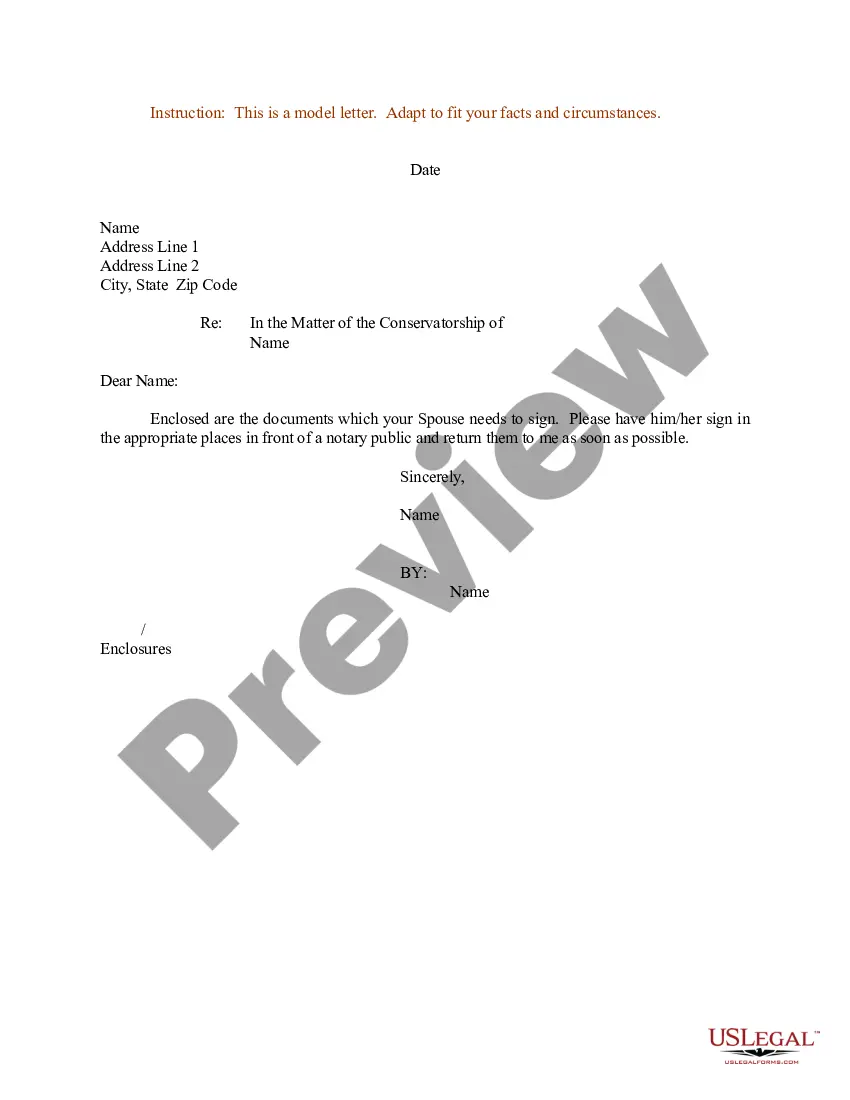
Sample Spouse Letter To Va For Ptsd For Ptsd
Description
Get your form ready online
Our built-in tools help you complete, sign, share, and store your documents in one place.
Make edits, fill in missing information, and update formatting in US Legal Forms—just like you would in MS Word.
Download a copy, print it, send it by email, or mail it via USPS—whatever works best for your next step.
Sign and collect signatures with our SignNow integration. Send to multiple recipients, set reminders, and more. Go Premium to unlock E-Sign.
If this form requires notarization, complete it online through a secure video call—no need to meet a notary in person or wait for an appointment.
We protect your documents and personal data by following strict security and privacy standards.

Make edits, fill in missing information, and update formatting in US Legal Forms—just like you would in MS Word.

Download a copy, print it, send it by email, or mail it via USPS—whatever works best for your next step.

Sign and collect signatures with our SignNow integration. Send to multiple recipients, set reminders, and more. Go Premium to unlock E-Sign.

If this form requires notarization, complete it online through a secure video call—no need to meet a notary in person or wait for an appointment.

We protect your documents and personal data by following strict security and privacy standards.
Looking for another form?






How to fill out Sample Letter For Spouse Signature?
The Example Partner Letter To VA For PTSD that you observe on this website is a reusable legal document crafted by experienced attorneys in accordance with federal and local statutes and regulations.
For over 25 years, US Legal Forms has supplied individuals, businesses, and lawyers with more than 85,000 validated, state-specific documents for any corporate and personal event. It’s the quickest, simplest, and most reliable way to secure the documents you require, as the service promises bank-level data protection and anti-malware safeguards.
Register with US Legal Forms to access verified legal templates for all of life’s circumstances.
- Explore the document you need and verify it.
- Browse through the file you searched for and preview it or review the form description to confirm it meets your needs. If it doesn’t, use the search bar to find the correct one. Click Buy Now once you’ve found the document you need.
- Register and Log In.
- Select the pricing plan that fits you and create an account. Use PayPal or a credit card for swift payment. If you already possess an account, Log In and verify your subscription to proceed.
- Acquire the editable template.
- Choose the format you prefer for your Example Partner Letter To VA For PTSD (PDF, Word, RTF) and download the document onto your device.
- Fill out and sign the form.
- Print the template to fill it out by hand. Alternatively, use an online multifunctional PDF editor to quickly and accurately complete and sign your form with an eSignature.
- Download your documents again.
- Reopen the document anytime you need it. Access the My documents tab in your profile to redownload any previously saved documents.
Form popularity
FAQ
An effective wife VA buddy letter for PTSD might recount experiences that illustrate the challenges faced by the veteran. Discuss how their condition has changed behaviors, affected priorities, and impacted family dynamics. By providing specific examples, you offer tangible context for the VA to understand the severity of the situation. This letter serves as an important ally to your sample spouse letter to the VA for PTSD.
Kentucky workers' compensation laws require every employer with one or more employees to carry workers' comp coverage. This workers' compensation insurance policy helps protect you and your employees from the costs of a work-related injury or illness.
Answer: In Kentucky, there is a two year statute of limitations to file a workers compensation claim for most injuries.
Kentucky is one of the few states with a statute of limitations of only one year. (More common is 2 to 3 years, although some states' are even longer.) So it's especially critical that you file in Kentucky as soon as possible after your accident. Keep in mind that Kentucky is a ?comparative fault? state.
It is either two years from the date of injury, or two years from the date of your last temporary total disability (TTD) payment. Filing an Application for Resolution of a Claim with the Department will keep you from failing to meet your statute of limitations.
The statute of limitations for Kentucky workers' compensation claims is two years. You must file your claim within two years of either sustaining a work-related injury in an accident or discovering the injury.
In a non-emergency, contact your supervisor immediately. Your agency will then assist you through the workers' compensation claim process. You must complete a First Report of Injury form in the event of a work related injury or illness.
You have two years from the date of your accident to file most claims for workers' comp benefits. For an illness, you have two years from when you knew or should have known you were ill. In some cases, you may have three years.
Injured workers are eligible to receive two-thirds of their average weekly wage once they have been out of work for seven days as a result of a workplace injury or illness (KRS §342.040). After 14 days, they receive payment for the first seven days of missed pay.