Attorney Information Online With Fake Credentials
Description
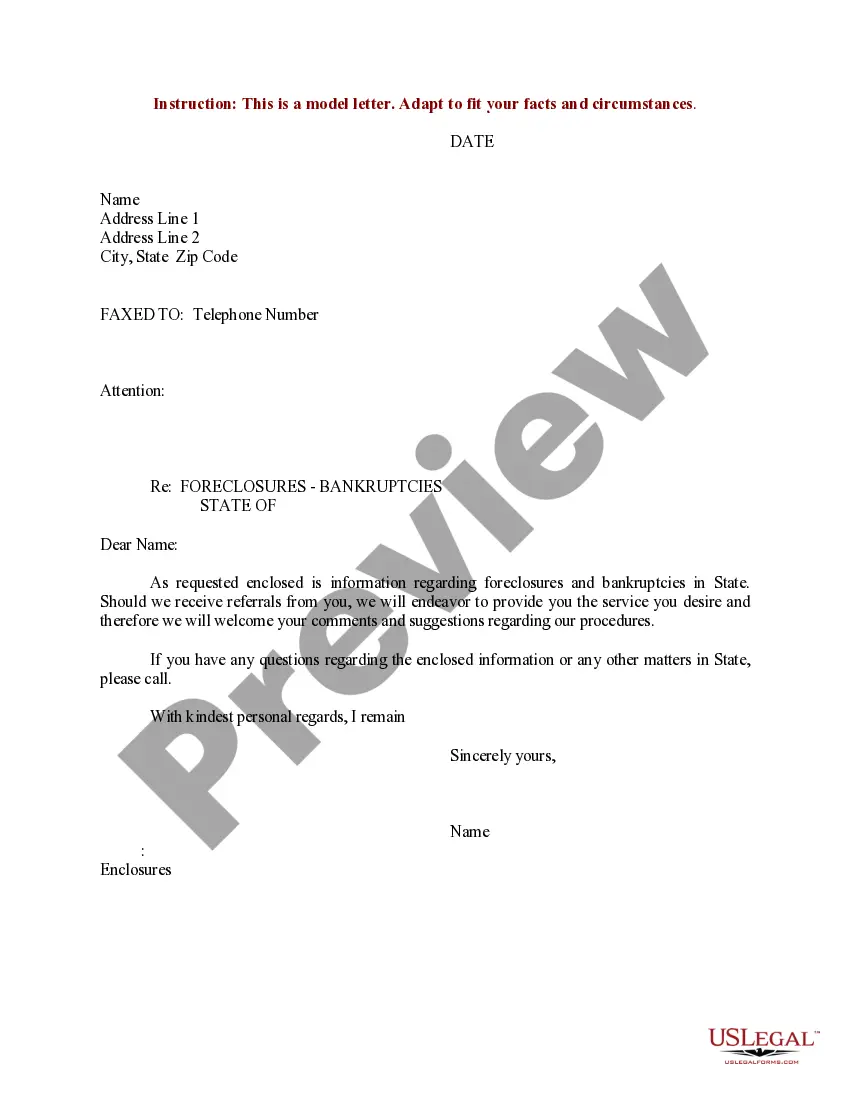
Get your form ready online
Our built-in tools help you complete, sign, share, and store your documents in one place.
Make edits, fill in missing information, and update formatting in US Legal Forms—just like you would in MS Word.
Download a copy, print it, send it by email, or mail it via USPS—whatever works best for your next step.
Sign and collect signatures with our SignNow integration. Send to multiple recipients, set reminders, and more. Go Premium to unlock E-Sign.
If this form requires notarization, complete it online through a secure video call—no need to meet a notary in person or wait for an appointment.
We protect your documents and personal data by following strict security and privacy standards.

Make edits, fill in missing information, and update formatting in US Legal Forms—just like you would in MS Word.

Download a copy, print it, send it by email, or mail it via USPS—whatever works best for your next step.

Sign and collect signatures with our SignNow integration. Send to multiple recipients, set reminders, and more. Go Premium to unlock E-Sign.

If this form requires notarization, complete it online through a secure video call—no need to meet a notary in person or wait for an appointment.

We protect your documents and personal data by following strict security and privacy standards.
Looking for another form?








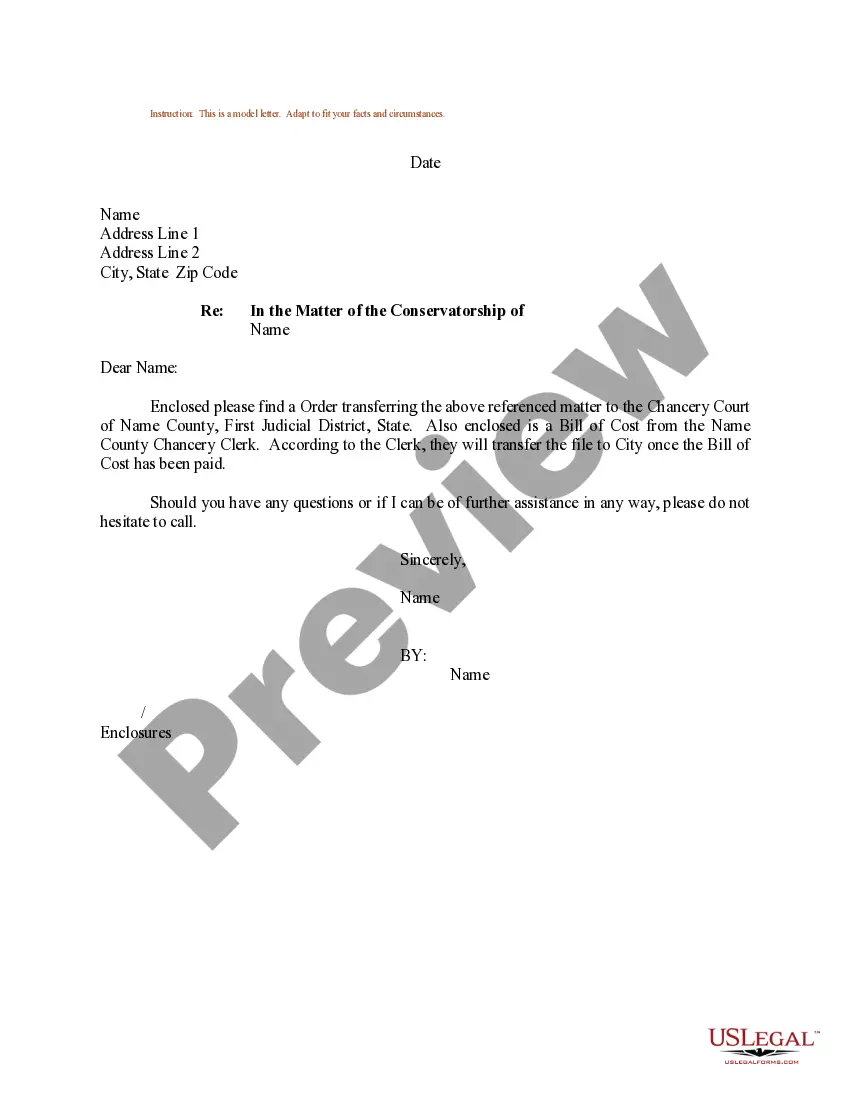
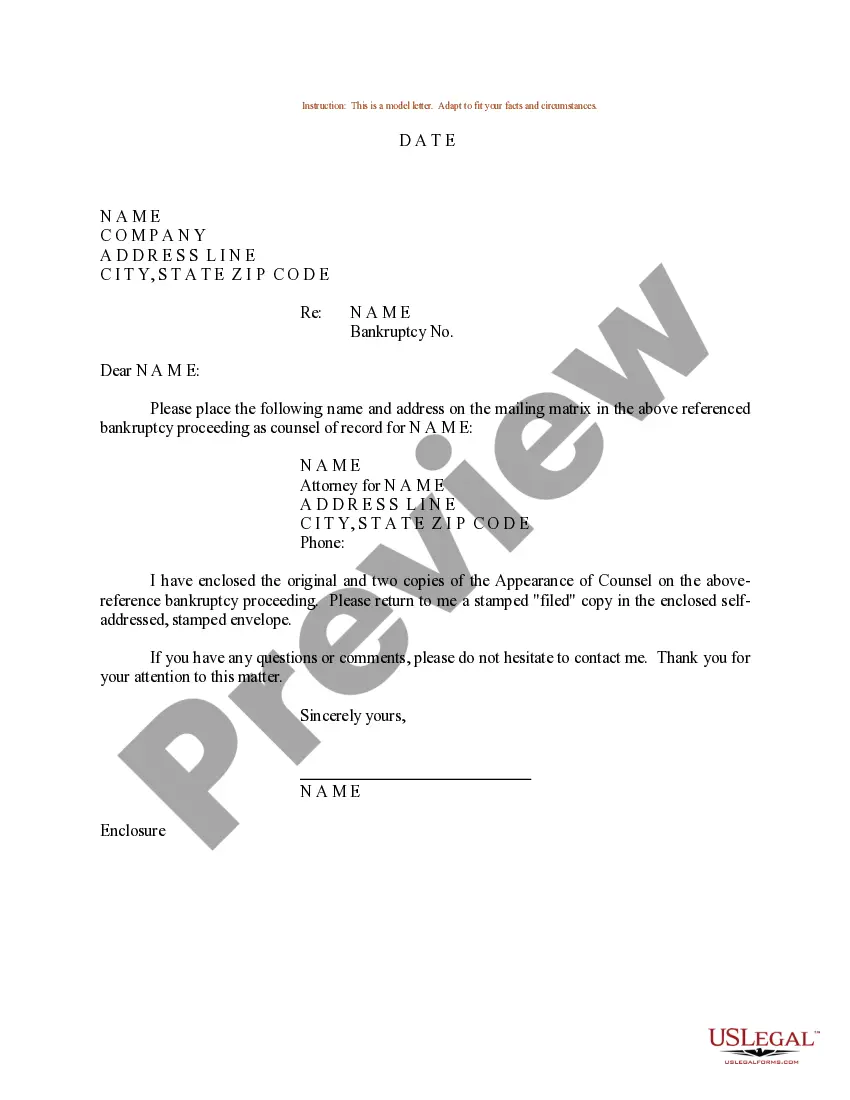
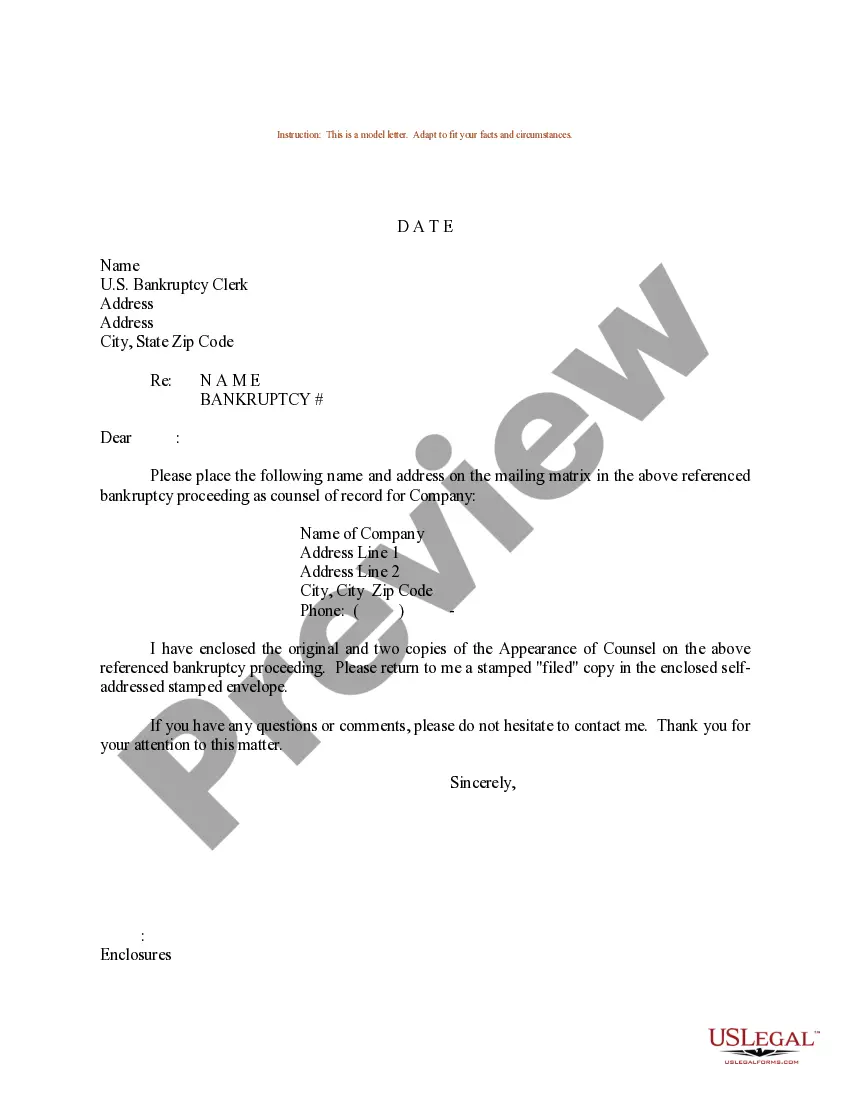
How to fill out Sample Letter For Appointment Of Attorney's Information On Mailing Matrix Concerning Bankruptcy Proceeding?
Regardless of whether it is for commercial reasons or for personal affairs, everyone must confront legal issues at some point in their lives.
Completing legal paperwork requires meticulous care, beginning with selecting the correct form template. For example, if you opt for an incorrect version of an Attorney Information Online With Fake Credentials, it will be rejected upon submission.
Once downloaded, you can fill out the form using editing software or print it out and complete it by hand. With an extensive US Legal Forms catalog available, you won't have to waste time searching for the correct template online. Utilize the library's user-friendly navigation to find the right form for any situation.
- Therefore, it is crucial to have a reliable source of legal documents like US Legal Forms.
- If you need to acquire an Attorney Information Online With Fake Credentials template, adhere to these straightforward steps.
- Locate the template you require by using the search bar or browsing the catalog.
- Review the description of the form to ensure it corresponds with your situation, state, and county.
- Click on the form's preview to inspect it.
- If it is not the correct document, return to the search feature to find the Attorney Information Online With Fake Credentials sample you need.
- Obtain the template when it aligns with your requirements.
- If you possess a US Legal Forms account, click Log in to access your previously saved templates under My documents.
- If you do not yet have an account, you may download the form by clicking Buy now.
- Select the appropriate pricing option.
- Complete the profile registration form.
- Choose your payment method: you can utilize a credit card or a PayPal account.
- Select the document format you desire and download the Attorney Information Online With Fake Credentials.
Form popularity
FAQ
You can look up attorney credentials by visiting your state's bar association website, which typically offers a directory of licensed attorneys. This directory provides essential attorney information online with fake credentials, ensuring that you can verify their qualifications. Additionally, you can use platforms like US Legal Forms, which offer resources to help you understand the legal landscape and find trustworthy legal professionals.
Yes, it is illegal to pretend to be a lawyer online. This act constitutes fraud and can lead to serious legal consequences. If you come across attorney information online with fake credentials, report it to the appropriate authorities immediately. Protecting consumers from such deceitful practices is essential for maintaining trust in the legal profession.
To check the legitimacy of an attorney, visit your state's bar association website. Most states provide a searchable database where you can find verified attorney information online with fake credentials. This tool allows you to confirm their status, any disciplinary actions, and their practice areas. Additionally, consider reading client reviews and testimonials for more insights.
Yes, impersonating someone online is illegal in many jurisdictions. This can involve identity theft or fraud, both of which carry significant legal repercussions. If you suspect someone is using your information, report it immediately and seek assistance from a professional who can help you navigate the situation.
Yes, pretending to be a lawyer online is illegal and can lead to severe penalties. This act can deceive individuals seeking legal assistance and undermine the legal profession. Always check attorney information online to ensure you are consulting a licensed and legitimate lawyer.
Pretending to be a lawyer in texts is also illegal. This act constitutes fraud and can lead to criminal charges. Always verify attorney information online to ensure you are communicating with a real legal professional, rather than someone using fake credentials.
Yes, it is illegal to impersonate a lawyer on the phone. Doing so can mislead individuals seeking legal advice and can result in serious legal consequences. Always ensure you are speaking with a verified attorney to avoid falling victim to someone using attorney information online with fake credentials.
To verify if an attorney is legitimate, you can start by checking state bar association websites, which provide attorney information online, including their credentials and disciplinary history. Additionally, look for online reviews and testimonials from previous clients. This research can help you identify any potential issues associated with the attorney, especially those with fake credentials.