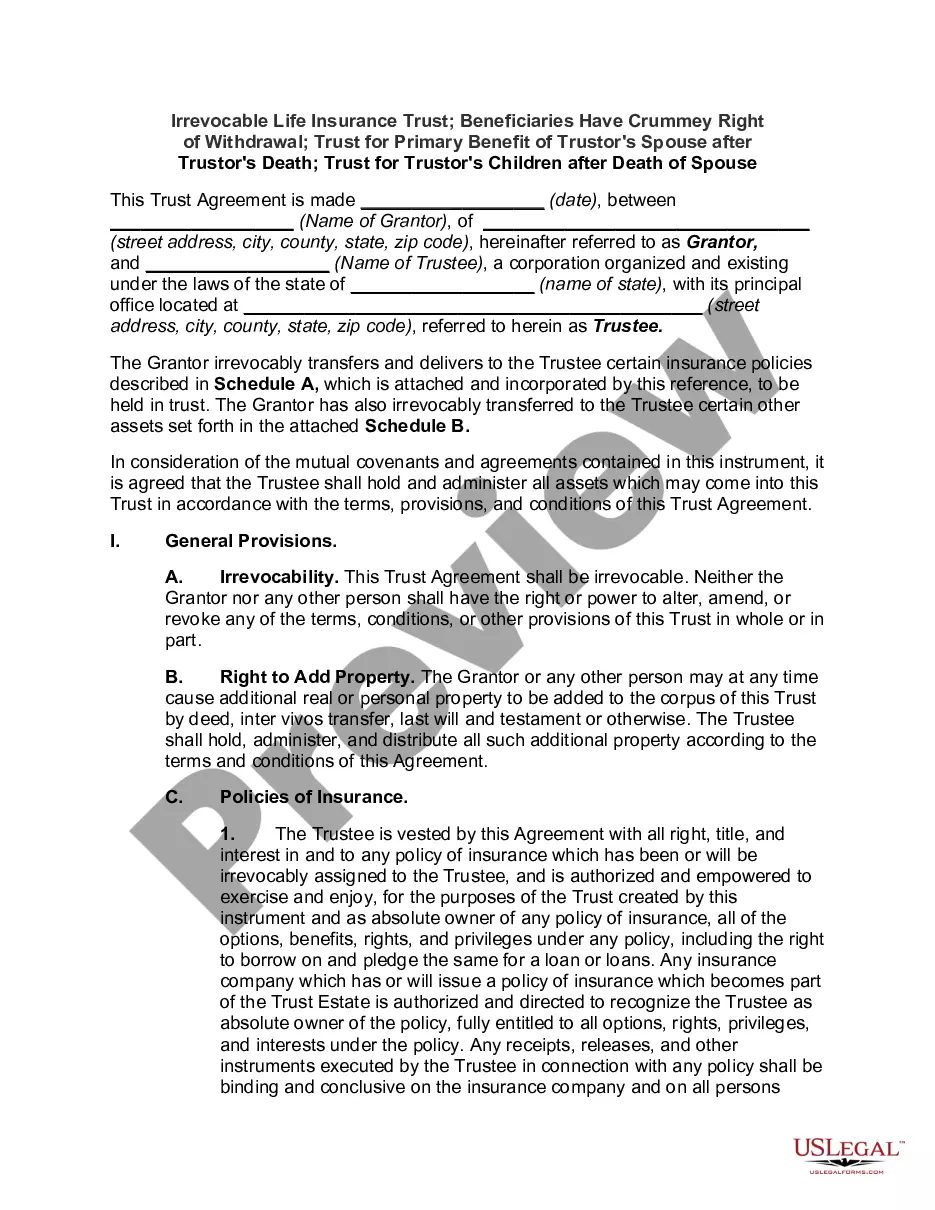
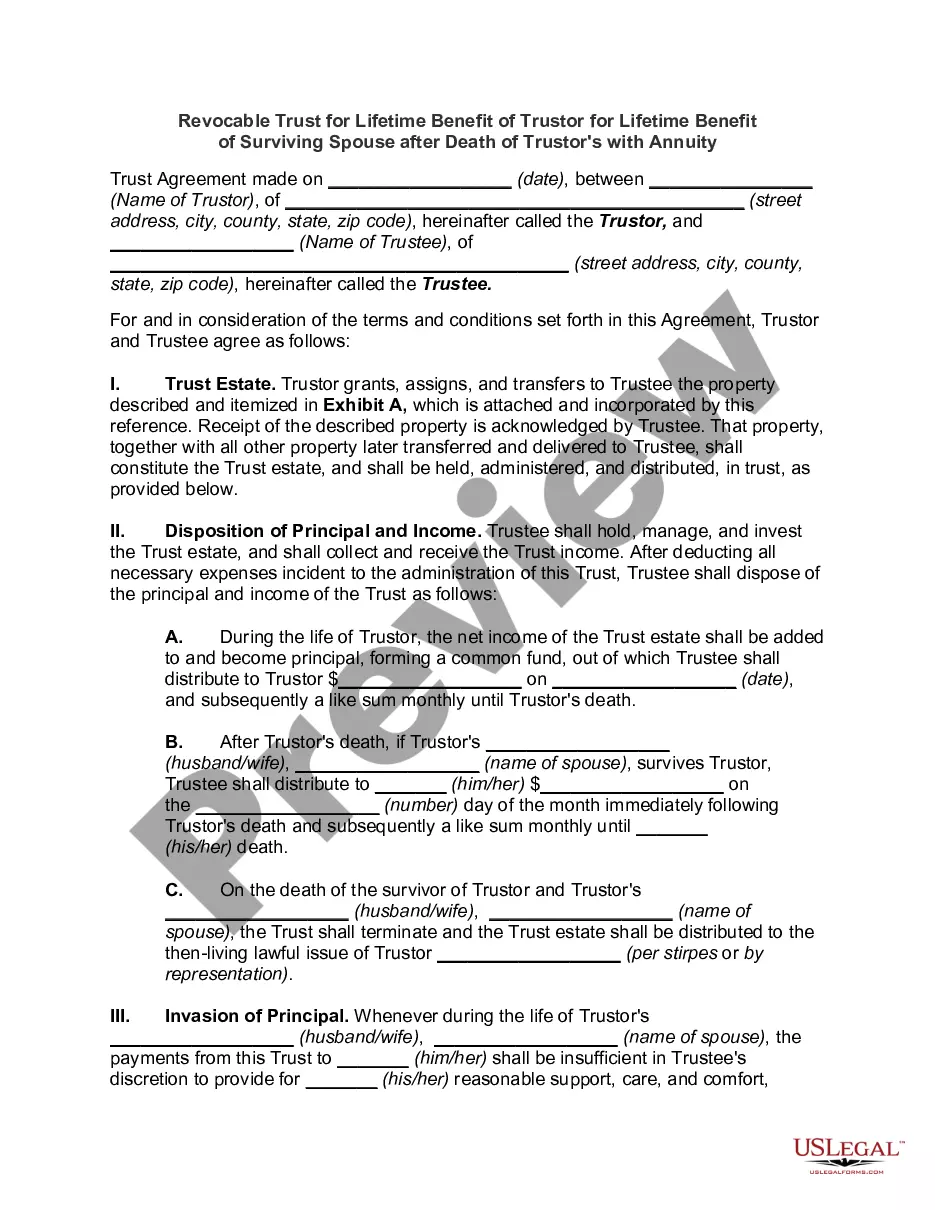
Life Insurance Trust With With A Trust
Description
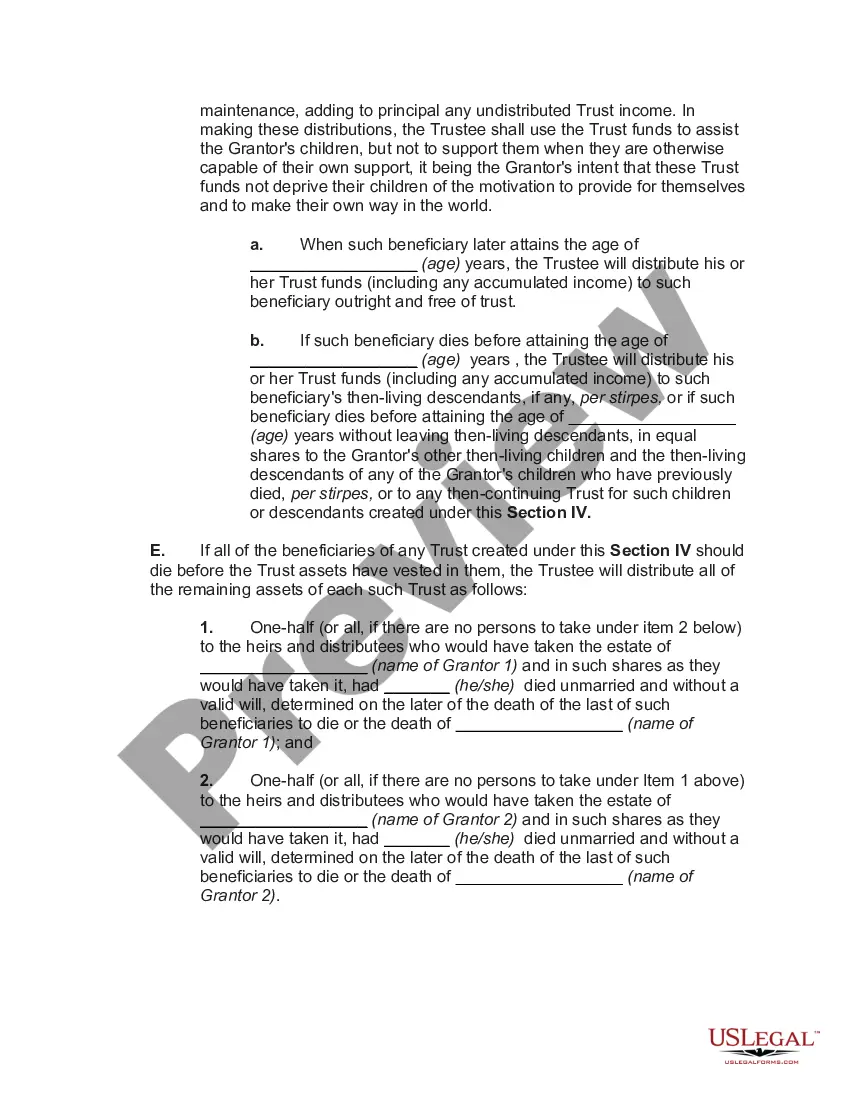
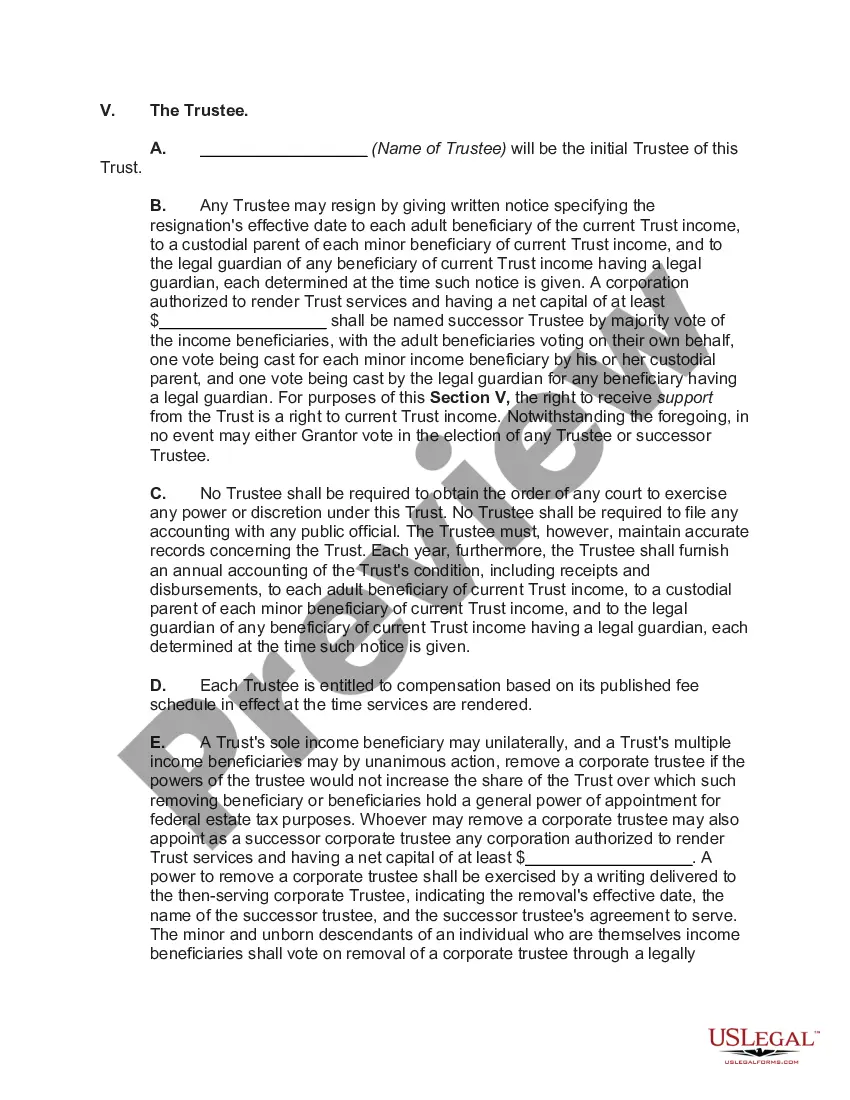
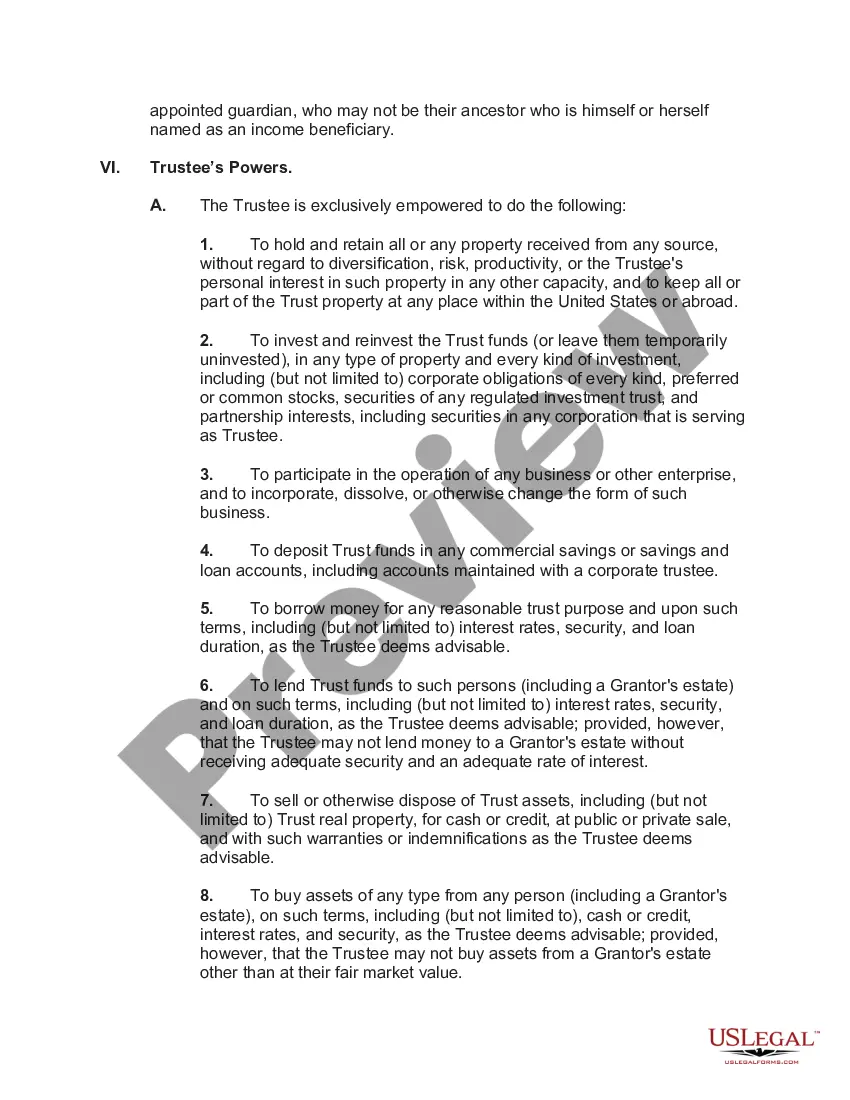
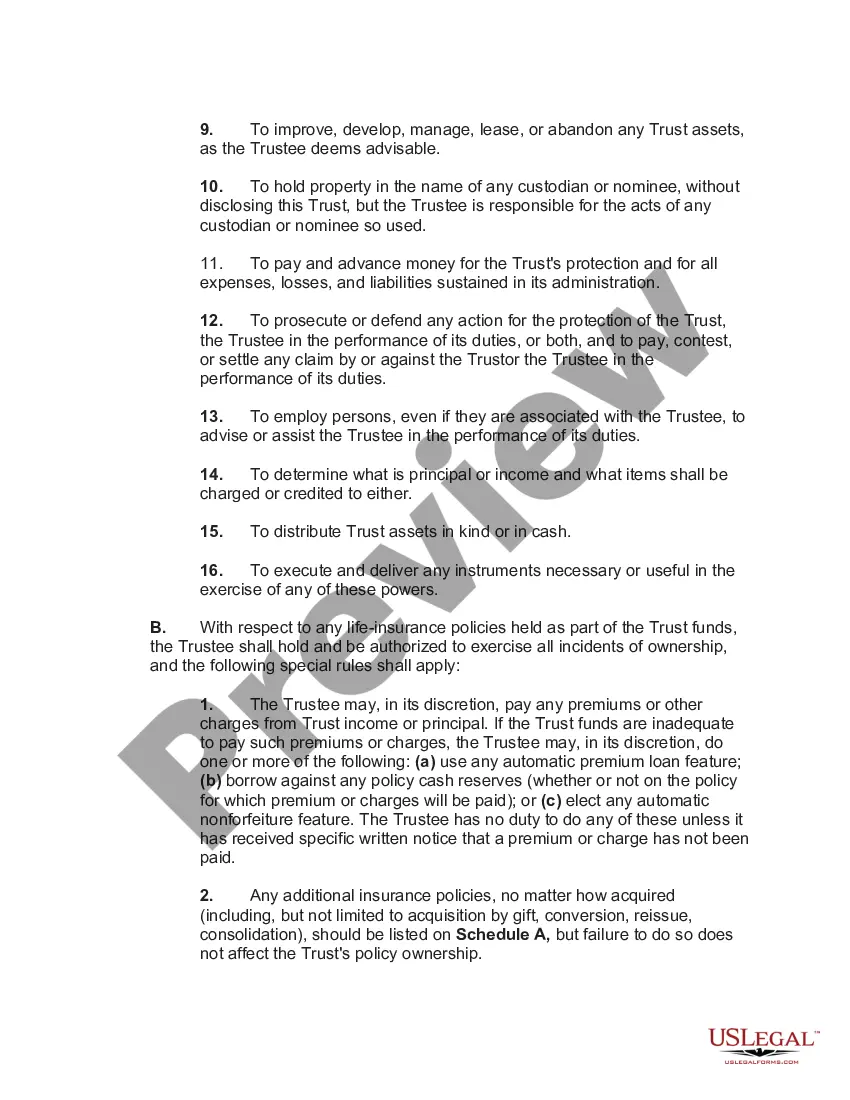
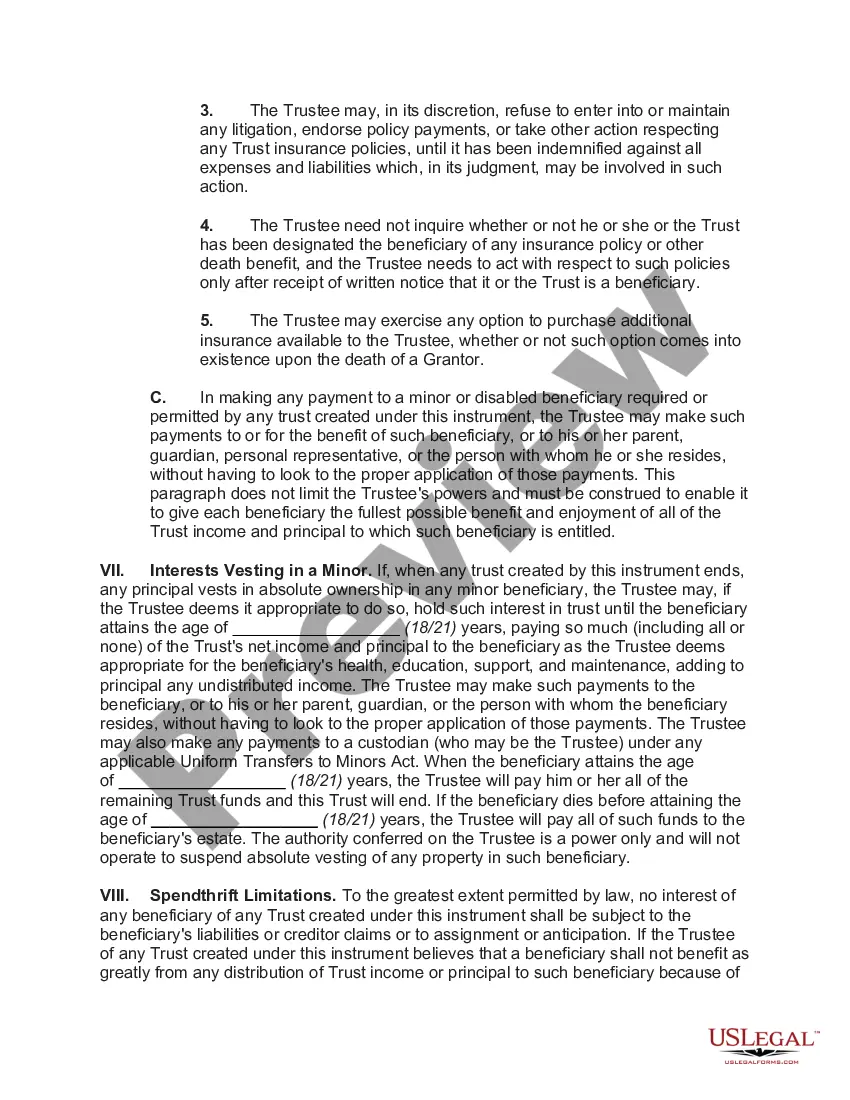
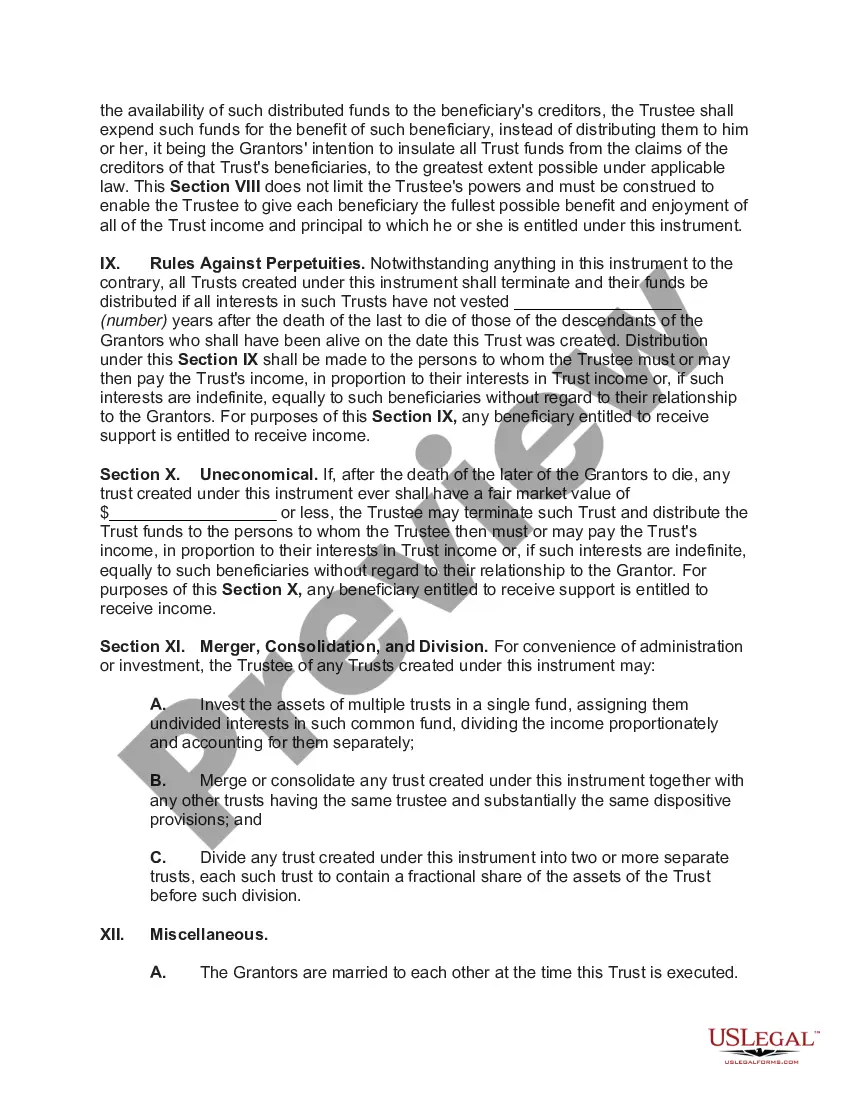

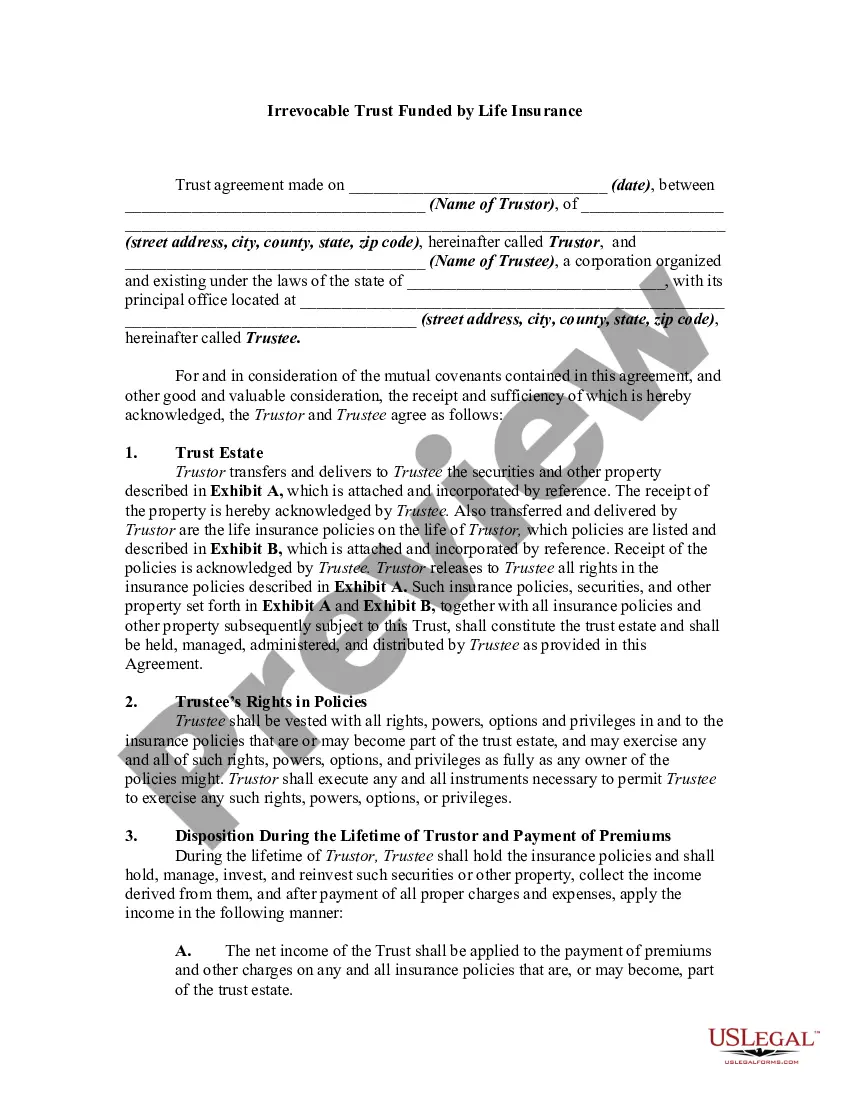
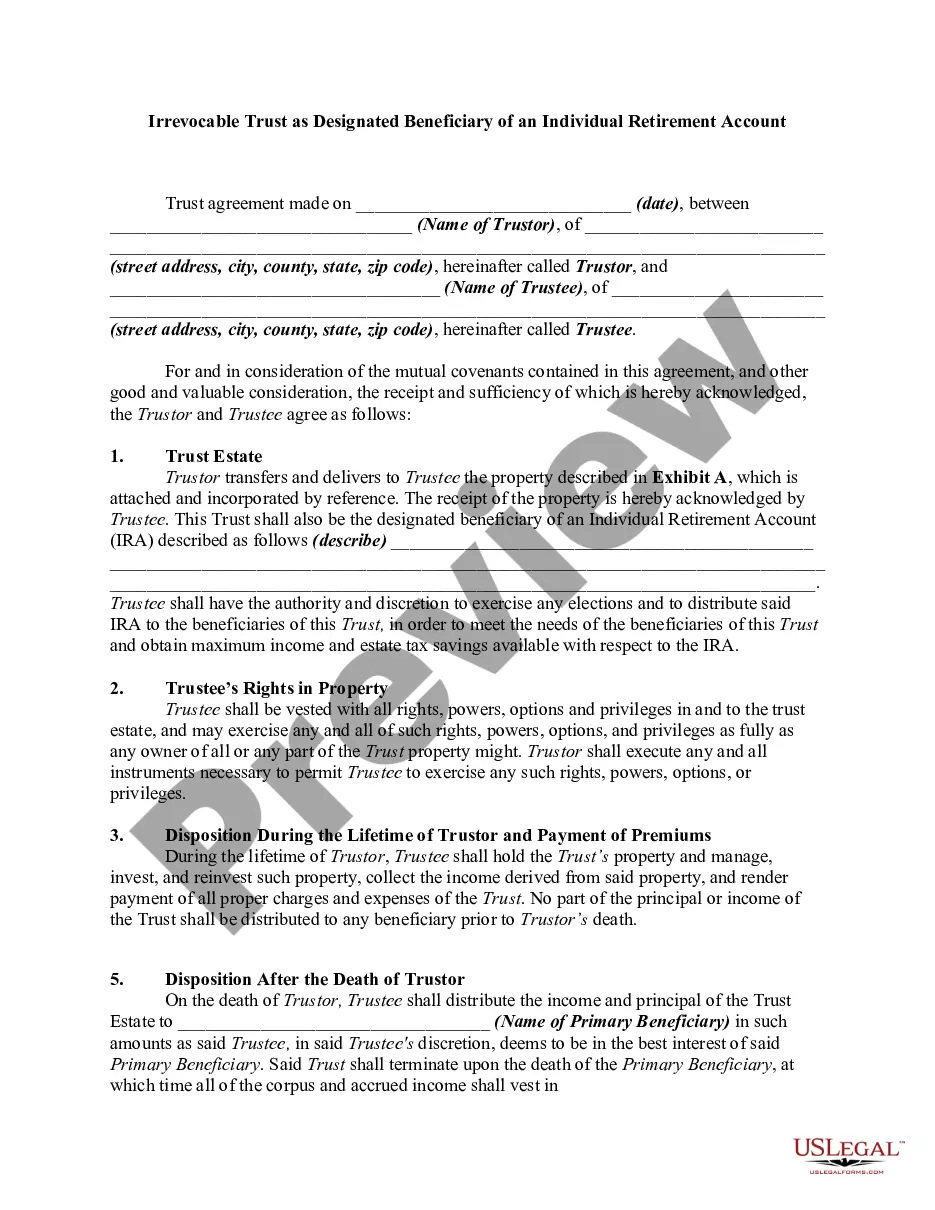
Get your form ready online
Our built-in tools help you complete, sign, share, and store your documents in one place.
Make edits, fill in missing information, and update formatting in US Legal Forms—just like you would in MS Word.
Download a copy, print it, send it by email, or mail it via USPS—whatever works best for your next step.
Sign and collect signatures with our SignNow integration. Send to multiple recipients, set reminders, and more. Go Premium to unlock E-Sign.
If this form requires notarization, complete it online through a secure video call—no need to meet a notary in person or wait for an appointment.
We protect your documents and personal data by following strict security and privacy standards.

Make edits, fill in missing information, and update formatting in US Legal Forms—just like you would in MS Word.

Download a copy, print it, send it by email, or mail it via USPS—whatever works best for your next step.

Sign and collect signatures with our SignNow integration. Send to multiple recipients, set reminders, and more. Go Premium to unlock E-Sign.

If this form requires notarization, complete it online through a secure video call—no need to meet a notary in person or wait for an appointment.

We protect your documents and personal data by following strict security and privacy standards.
Looking for another form?




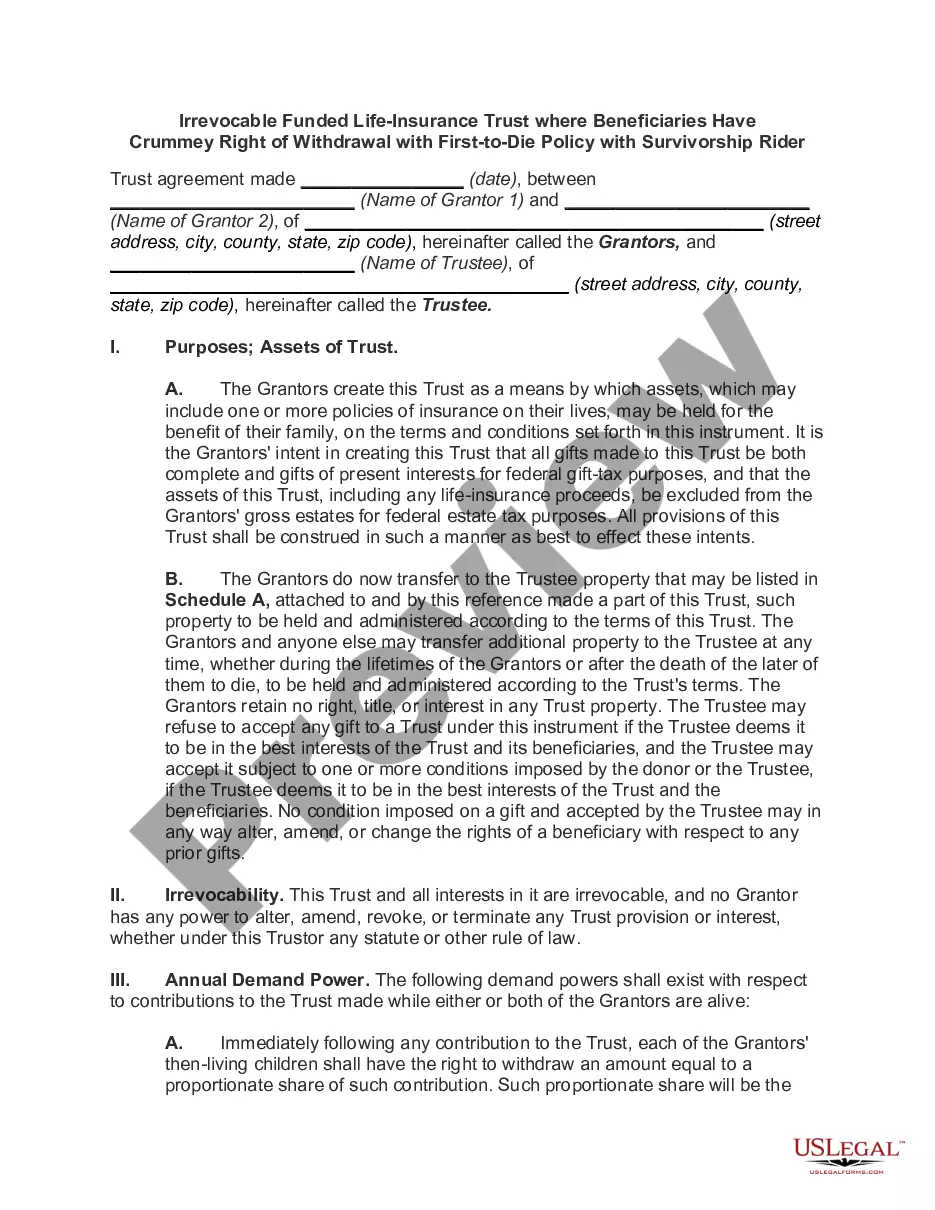
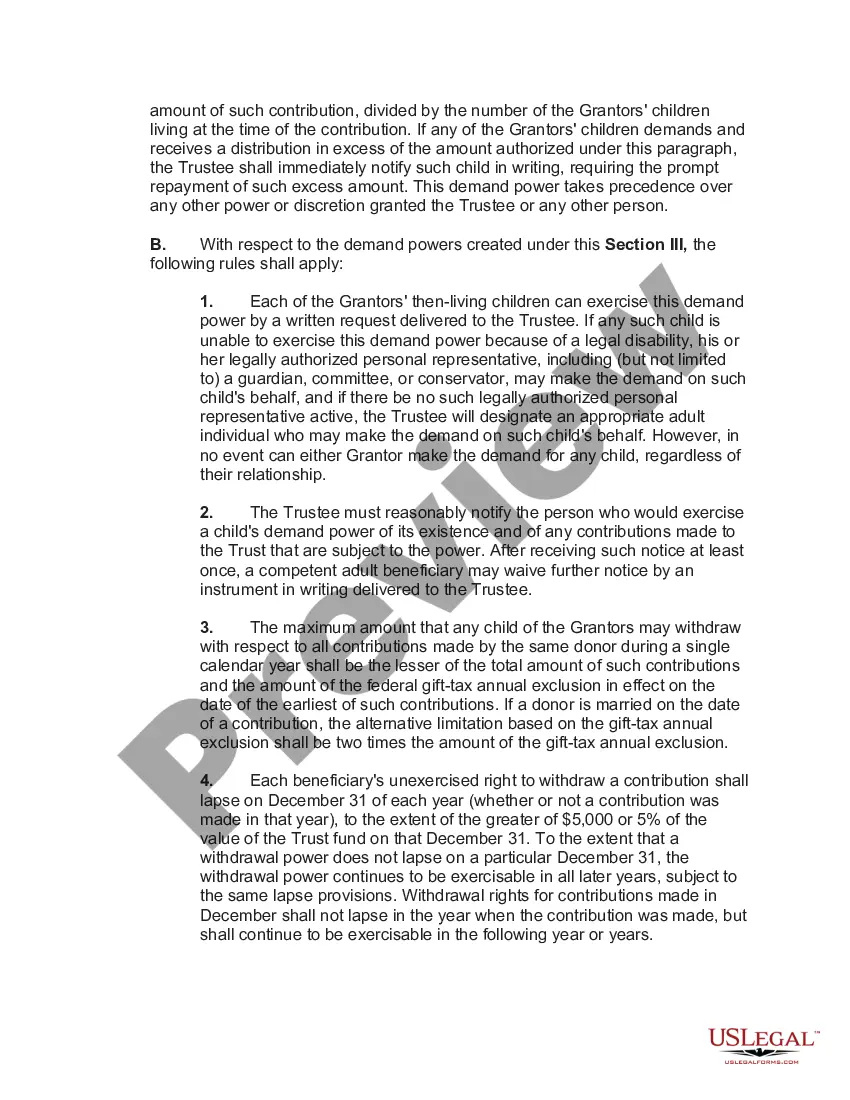
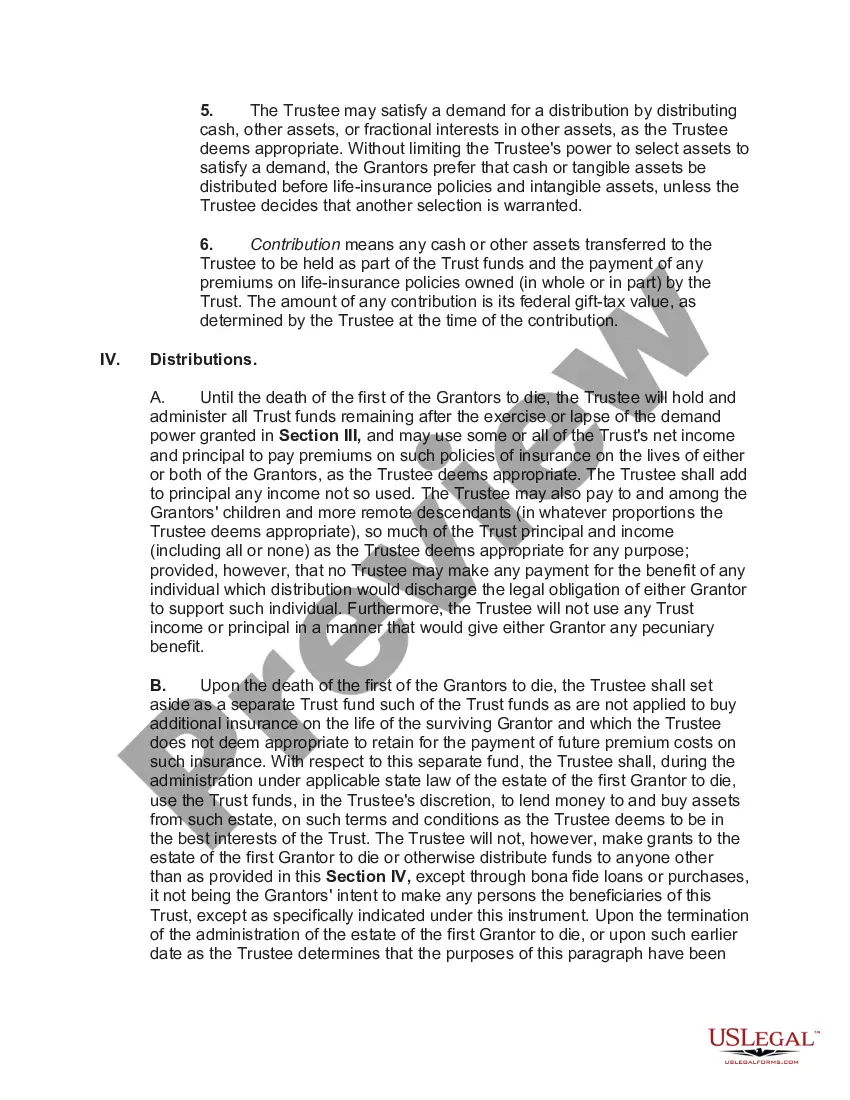
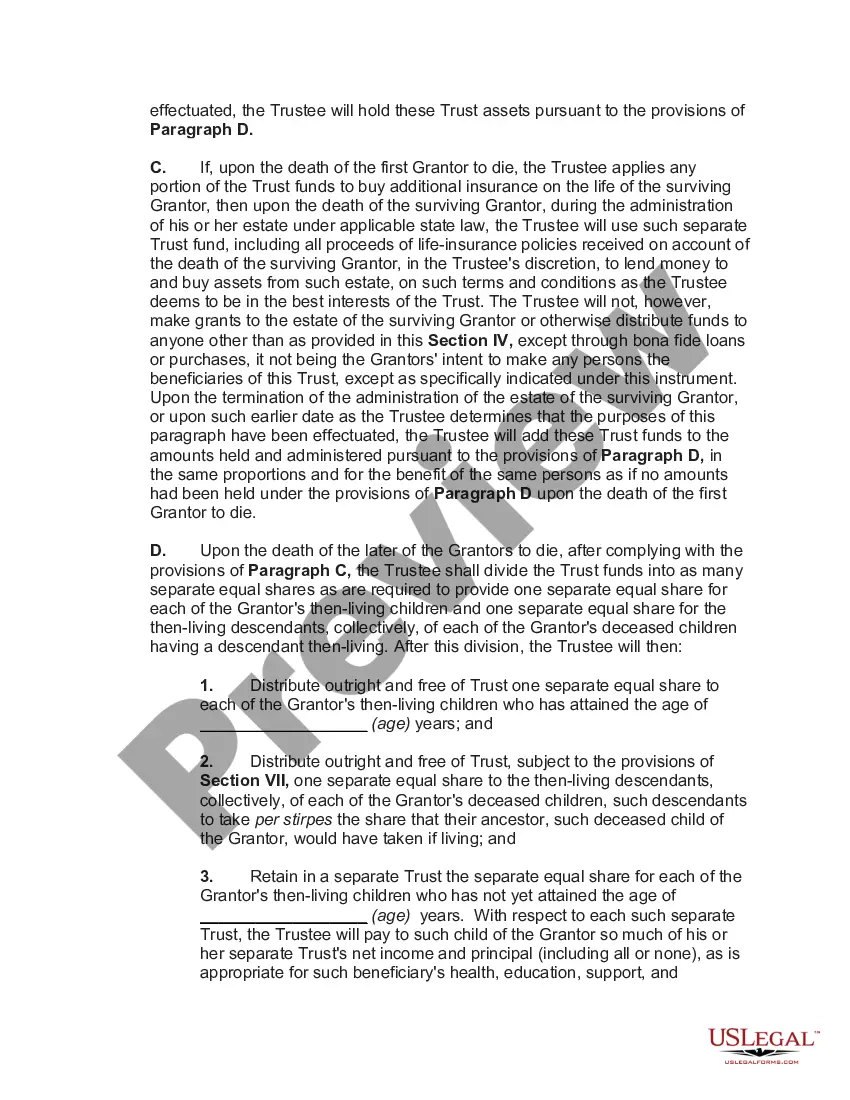
How to fill out Irrevocable Funded Life Insurance Trust Where Beneficiaries Have Crummey Right Of Withdrawal With First To Die Policy With Survivorship Rider?
- Access the US Legal Forms website and log in to your account, or create a new account if you are a first-time user.
- Use the Search feature to find the specific life insurance trust form that meets your requirements and local jurisdiction.
- Review the document preview and form description to ensure it aligns with your specifics.
- Select the form and click on the Buy Now button to choose your preferred subscription plan.
- Enter your payment details for the subscription and complete your purchase.
- Download your form and save it to your device for easy access in the 'My Forms' section of your account.
US Legal Forms simplifies the process of creating legal documents, empowering individuals and professionals to manage their legal needs with ease. With over 85,000 legal forms available, users can ensure their documents are thorough and legally sound.
Get started today to secure your financial future with the right life insurance trust. Visit US Legal Forms now!
Form popularity
FAQ
The main downfall of having a trust, such as a life insurance trust with a trust, is the complexity of the terms and management. Trusts require diligent upkeep, including accurate bookkeeping and adherence to legal requirements, which could be overwhelming. Furthermore, if not properly funded, a trust might not function as intended, negating its benefits. Seeking guidance from platforms like USLegalForms can simplify the process and help ensure everything is set up correctly.
A family trust, including a life insurance trust with a trust, may present challenges like limited flexibility in asset management. Once assets are placed in the trust, it can be difficult to access or modify the terms as family circumstances change. Also, setting up a family trust can involve extensive paperwork and ongoing costs, which might not be suitable for everyone. It's important to evaluate these disadvantages against potential benefits.
Consider a life insurance trust with a trust if your parents want to manage their assets efficiently and reduce estate taxes. A trust can help protect their wealth and pass it on smoothly to heirs. However, it requires careful planning and consideration of their specific financial situation. Encouraging them to consult a legal expert will ensure they make informed decisions tailored to their needs.
One downside of placing assets in a trust, such as a life insurance trust with a trust, is the potential loss of control over those assets. Once the assets are transferred, the trust typically becomes the legal owner, which may limit your ability to access funds quickly. Additionally, legal and administrative fees may arise in establishing and maintaining the trust, adding to your overall costs. It's crucial to weigh these factors carefully.
To place your life insurance in a trust, first, you need to create a life insurance trust with a trust document outlining your intentions. Next, name the trust as the beneficiary of your life insurance policy or transfer ownership to the trust. This process can be complex, so it's wise to consult with a legal professional or use a platform like US Legal Forms to access the necessary documents and ensure your trust is set up correctly.
Yes, you can place your life insurance policy into a life insurance trust with a trust. This strategy helps you manage the policy's benefits and control how they are distributed after your passing. By designating a trust as the policy owner, you can also help reduce estate taxes and ensure the proceeds go directly to your chosen beneficiaries. With the right guidance, creating a life insurance trust with a trust can be straightforward and beneficial.
Yes, a trust can absolutely be the beneficiary of a life insurance policy. This arrangement allows for the proceeds to go directly to the trust upon your passing, ensuring that the funds are managed according to your established guidelines. Choosing a life insurance trust with a trust can offer significant advantages, such as avoiding probate and providing structured financial support for your beneficiaries. Exploring options on platforms like USLegalForms can streamline the process further.
In most cases, a trust can supersede an individual beneficiary designation. When a trust is named as the beneficiary of a life insurance policy, the insurance proceeds will be directed to the trust rather than an individual. This structure can provide more control over how those funds are utilized. Establishing a life insurance trust with a trust can be a smart choice for effective estate planning.
Life insurance works with a trust by transferring the ownership of the policy to the trust. This allows the trust to receive the policy's proceeds upon your passing. As a result, the funds can be managed according to the trust's rules, enabling you to provide for beneficiaries in a structured way. By leveraging a life insurance trust with a trust, you can ensure that your family receives financial security in the manner you envision.
One common mistake parents often make is failing to clearly define the terms of the trust. Without specific guidelines, trustees may face challenges in managing the funds. It's essential to detail how and when assets are distributed to ensure that the life insurance trust with a trust aligns with your family's financial goals and values. Creating a comprehensive plan can streamline the process and protect your loved ones.